纺织学报 ›› 2025, Vol. 46 ›› Issue (10): 143-151.doi: 10.13475/j.fzxb.20250204701

• 染整工程 • 上一篇    下一篇

乙烯砜醋酸酯活性分散染料的合成及其对锦纶66的染色应用

李健阁1, 吴伟1, 韩伟鹏2, 纪柏林1,3, 徐红1, 毛志平1,3,4()   

  1. 1.东华大学 化学与化工学院, 上海 201620
    2.上海安诺其集团股份有限公司, 上海 201703
    3.东华大学 国家染整工程技术研究中心, 上海 201620
    4.国家先进印染技术创新中心, 山东 泰安 271000
  • 收稿日期:2025-02-21 修回日期:2025-06-13 出版日期:2025-10-15 发布日期:2025-10-15
  • 通讯作者: 毛志平(1969—),男,研究员,博士。主要研究方向为纺织品生态染整及绿色环保助剂。E-mail:zhpmao@dhu.edu.cn
  • 作者简介:李健阁(2000—),男,硕士生。主要研究方向为新型染料合成及其染色应用。
  • 基金资助:
    国家自然科学基金项目(22208049);山东省自然科学基金重大基础研究项目(ZR2020ZD22)

Synthesis of new ethylene sulfone acetate reactive disperse dyes and its dyeing performance for polyamide 66 fabrics

LI Jian'ge1, WU Wei1, HAN Weipeng2, JI Bolin1,3, XU Hong1, MAO Zhiping1,3,4()   

  1. 1. College of Chemistry and Chemical Engineering, Donghua University, Shanghai 201620, China
    2. Anoky Group Co., Ltd., Shanghai 201703, China
    3. National Engineering Research Center for Dyeing and Finishing of Textiles, Donghua University, Shanghai 201620, China
    4. National Innovation Center for Advanced Dyeing and Finishing Technology, Taian, Shandong 271000, China
  • Received:2025-02-21 Revised:2025-06-13 Published:2025-10-15 Online:2025-10-15

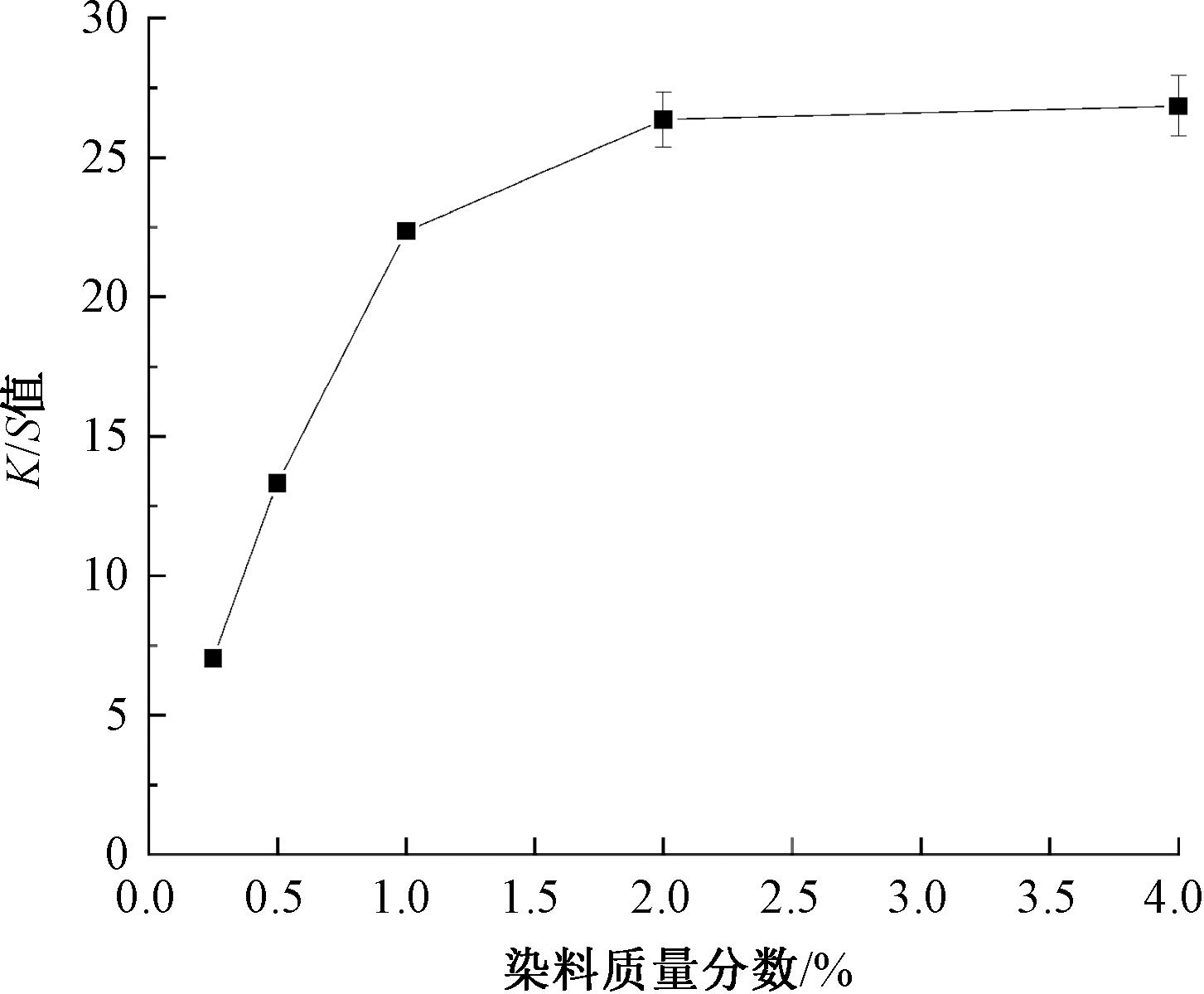
摘要: 为解决常规染料对锦纶66染深性差的问题,以2-[(3-氨基苯基)磺酰基]乙醇为重氮组分,N,N-二乙基苯胺为偶合组分,并经过醋酸酐对羟基的乙酰化改性,制备了对锦纶66亲和力更好的小分子疏水活性分散染料。借助红外光谱仪与核磁共振氢谱仪对所合成的染料结构进行表征,采用紫外-可见分光光度计分析染料颜色性质,通过单因素实验,优化新型活性分散染料上染锦纶66织物的染色工艺条件,并使用常规低温型分散橙25染料进行对比实验,同时分析染色动力学及热力学行为。结果表明:该染料最大吸收波长为450 nm,色光为橙黄色;当染色温度为100 ℃、染浴pH值为7、浴比为1∶30、染料用量为2%(o.w.f)、染色时间为30 min时,锦纶66织物K/S值可达到27,染深性优于分散橙25染料,透染性良好,耐皂洗色牢度、耐升华色牢度、耐干摩擦及湿摩擦色牢度均达到4~5级,耐日晒牢度达到4级;活性分散染料在锦纶66上的染色吸附符合准二级动力学方程,吸附等温线符合能斯特模型。

关键词: 活性分散染料, 乙烯砜醋酸酯, 染料改性, 锦纶66, 染深性, 动力学, 热力学

Abstract:

Objective Polyamide 66 fiber has high crystalline degree, dense structure, and less active amino content at the end of the molecular chain, and it is difficult to achieve deep dyeing of polyamide 66 with acidic dyes or disperse dyes or reactive dyes. To achieve deep dyeing, it is necessary to use acidic dyes containing heavy metal complexes, which causes a certain pressure on environmental protection. It is of great significance to synthesize special dyes for polyamide 66.

Method Small molecular disperse dyes were synthesized by diazotization and coupling reaction with 2-[(3-aminophenyl) sulfonyl] ethanol as diazo component and N, N-diethylaniline as the coupling component. The synthesized small molecular disperse dyes were then modified by acetic anhydride to prepare small molecular hydrophobic active disperse dyes with better affinity for polyamide 66. The structure of the dyes was characterized by fourier transform infrared spectroscopy and proton nuclear magnetic resonance spectroscopy, and the spectral properties of the dyes were analyzed by ultraviolet-visible spectroscopy. The dyeing process conditions of the polyamide 66 fabric were optimized by single factor experiment with K/S value of the dyed fabric as the index. The kinetics and thermodynamics of reactive disperse dyes for dyeing polyamide 66 were analyzed through the constant temperature dyeing rate curve and the adsorption isotherm. The color fastness test of the dyed fabrics was conducted to examine the color fastness of polyamide 66 fabrics dyed with reactive disperse dyes in various aspects, and the penetration property analysis was carried out.

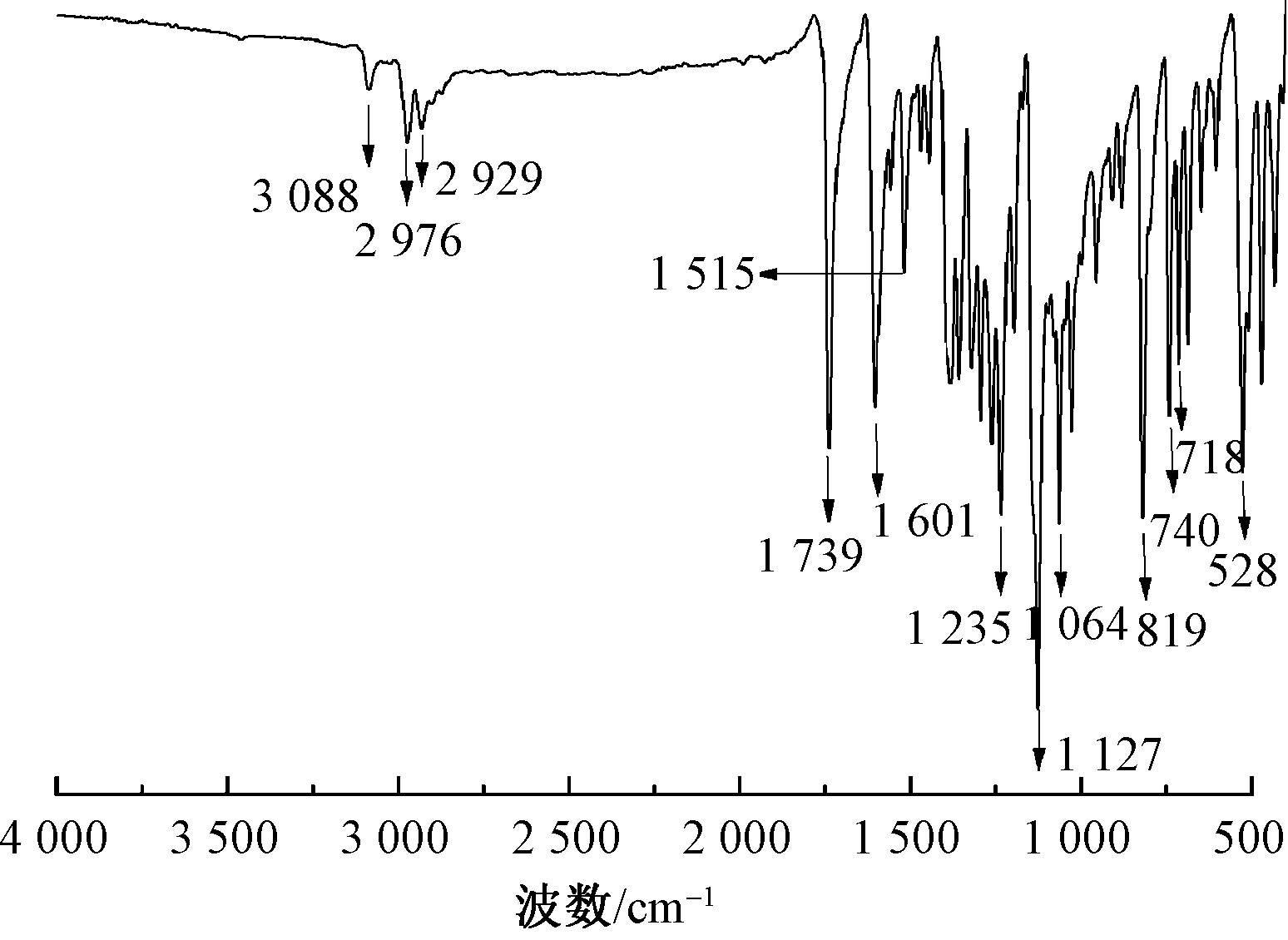
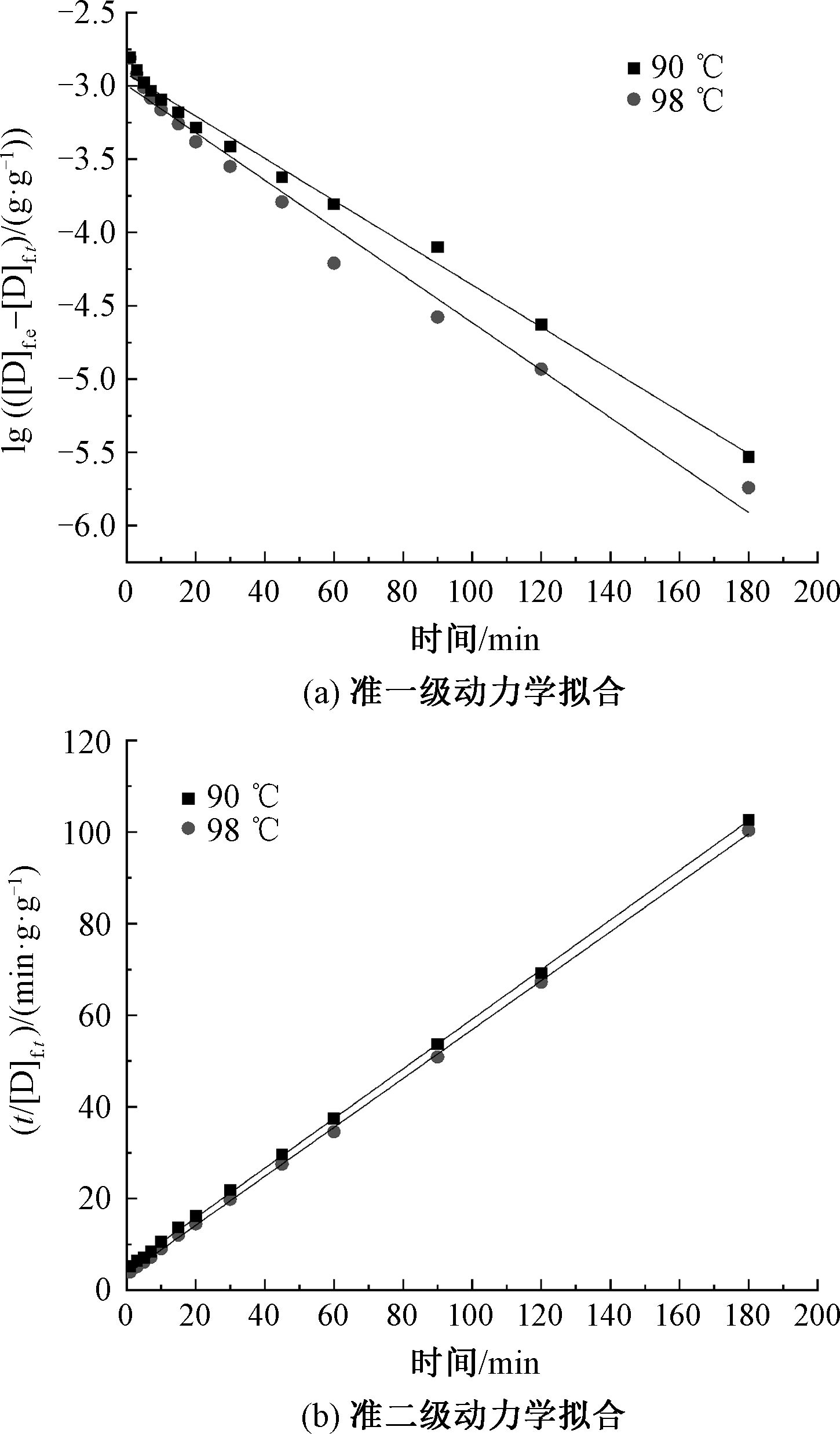
Results The structure of the dye was confirmed to be correct by infrared spectroscopy and hydrogen nuclear magnetic resonance spectroscopy. The dye had a maximum absorption wavelength at 450 nm, the color light was yellow, and the molar extinction coefficient reached 14 104 L/(mol·cm). The optimal dyeing of nylon 66 fabric was processed at dyeing temperature 100 ℃, pH 7, and dyeing time 30 min. When 2%(o.w.f) dye was added into the dyeing bath, the K/S value of the dyed fabric was 27. The fastness of polyamide 66 fabric dyed by reactive disperse dyes was good, with the fastness to soap washing, sublimation and dry/wet friction reaching 4-5. The fastness to sunlight was 4 and achieved dye penetration. The adsorption dyeing kinetics equation of reactive disperse dyes on polyamide 66 conforms to the quasi-second-order kinetics equation, and the adsorption isotherm conforms to the Nernst thermodynamic adsorption model. The reactive disperse dyes demonstrated good dye penetration for polyamide 66.

Conclusion Due to its low polarity, the developed reactive disperse dyes show good affinity for polyamide 66 fibers. During the dyeing process, the saturated dyeing amount is at a relatively high level, solving the problem of poor depth of polyamide 66 fabrics. Each color fastness is excellent and meet the production requirements and consumption needs short process flow, high efficiency and energy saving.

Key words: reactive disperse dye, vinyl sulfone acetate, dye modification, polyamide 66, dye depth, dynamics, thermodynamics

中图分类号: 

  • O647.9

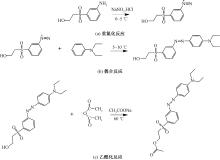
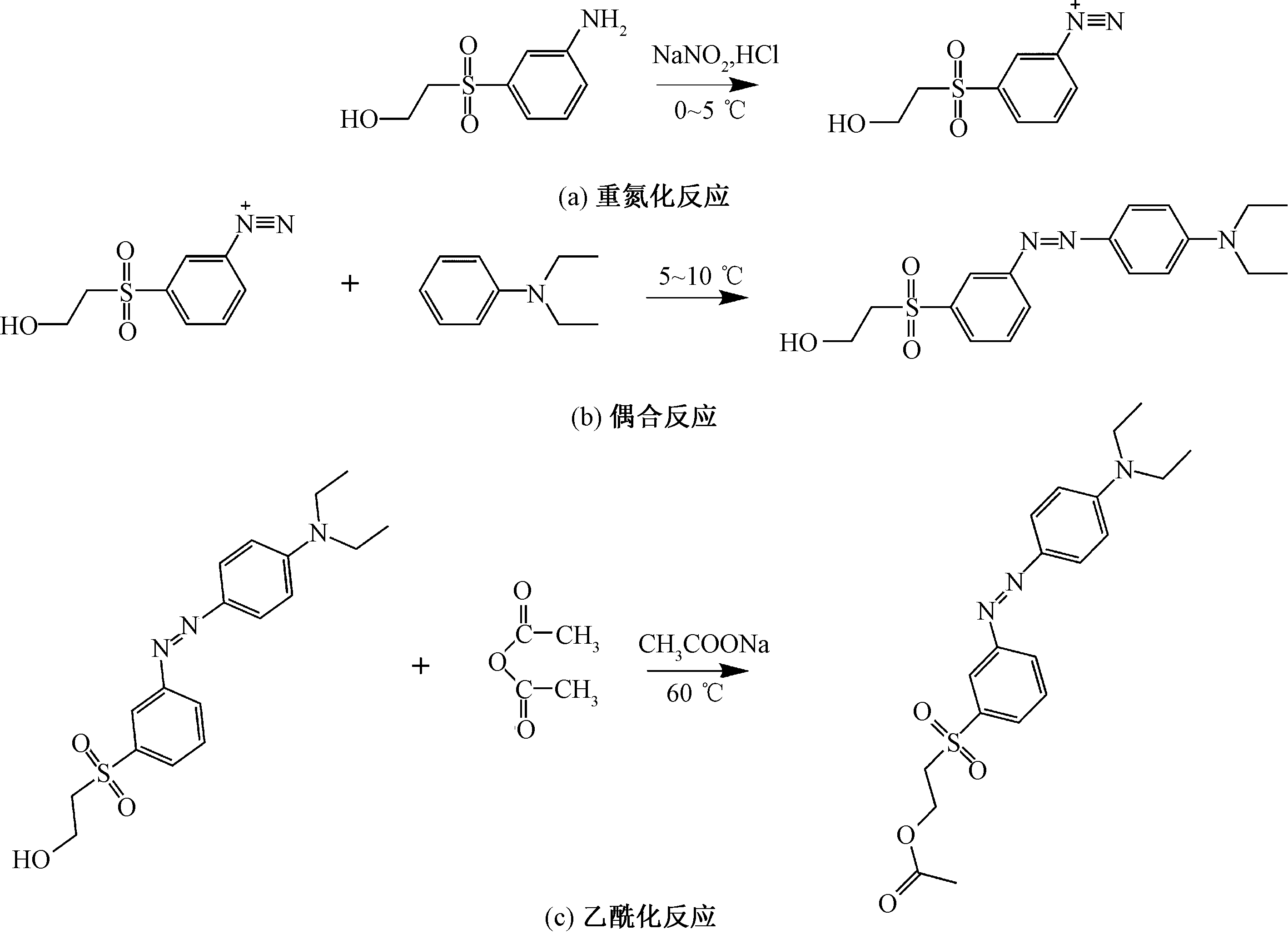
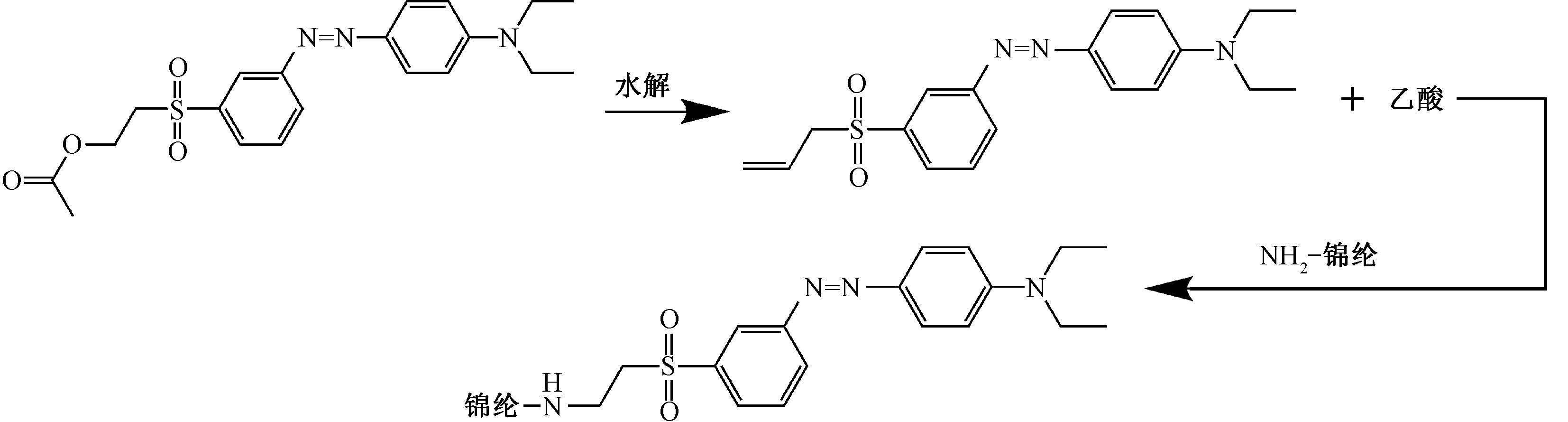
图1

染料合成路线"

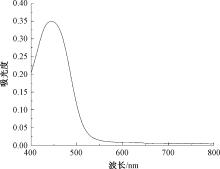
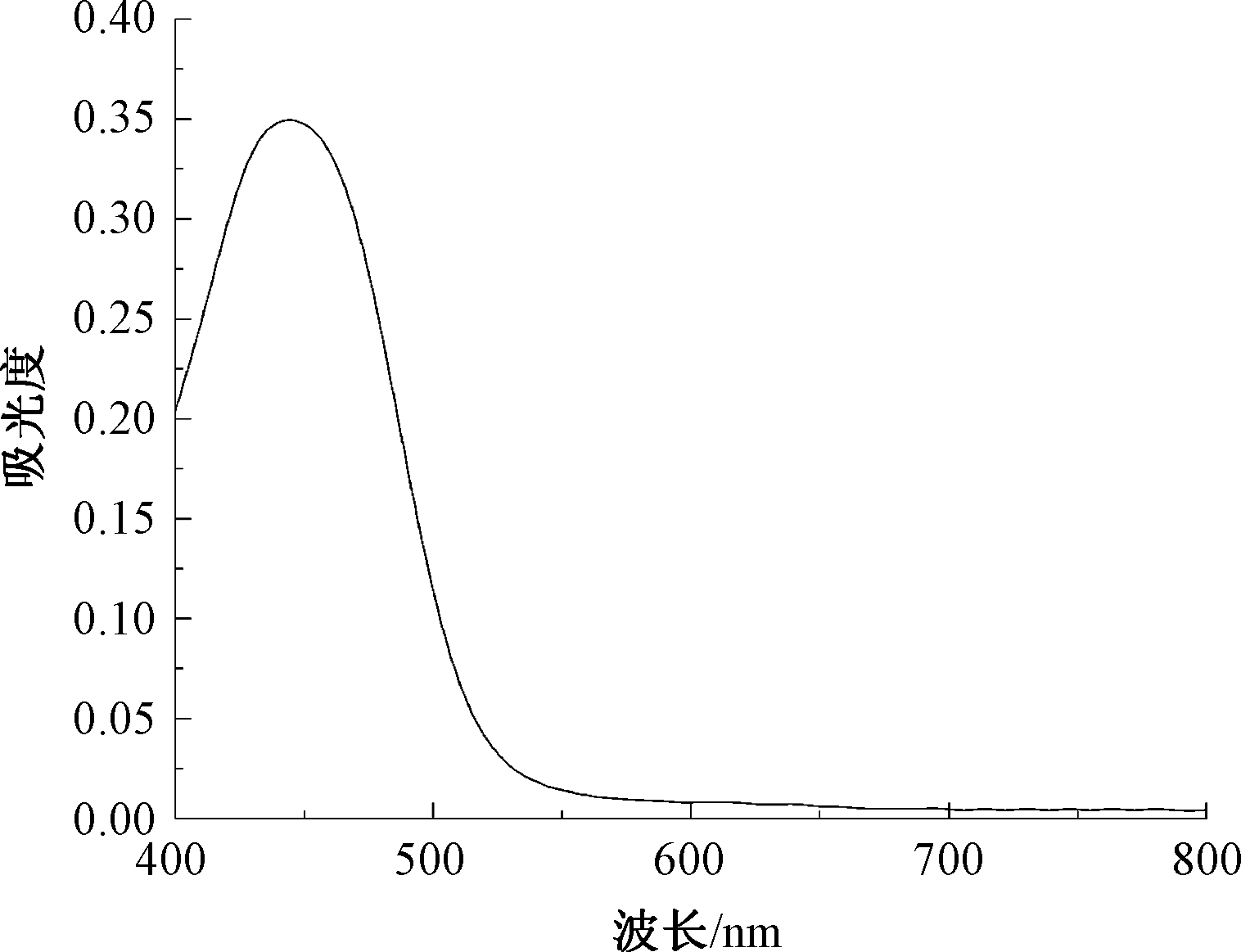
图2

染料紫外-可见吸收光谱"

图3

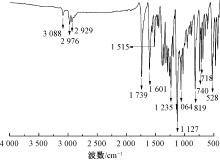
活性分散染料红外光谱"

图4

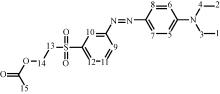
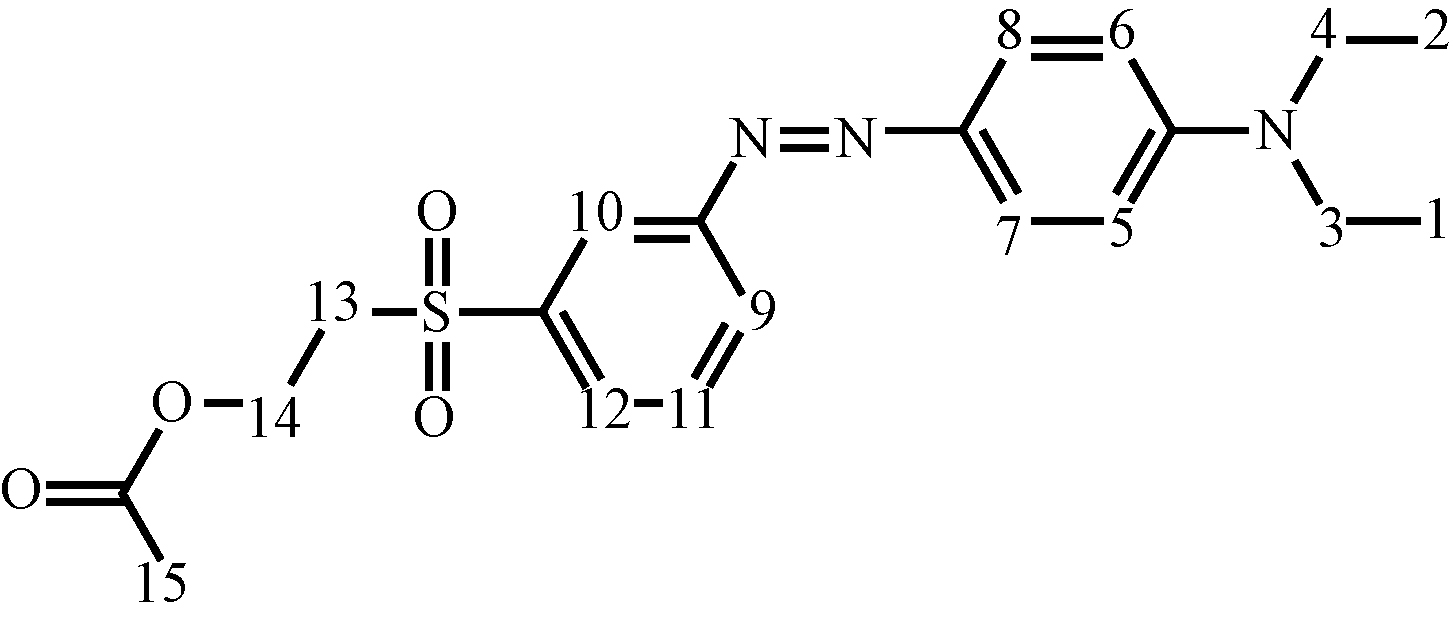
活性分散染料分子结构图"

图5

活性分散染料与锦纶纤维反应机制"

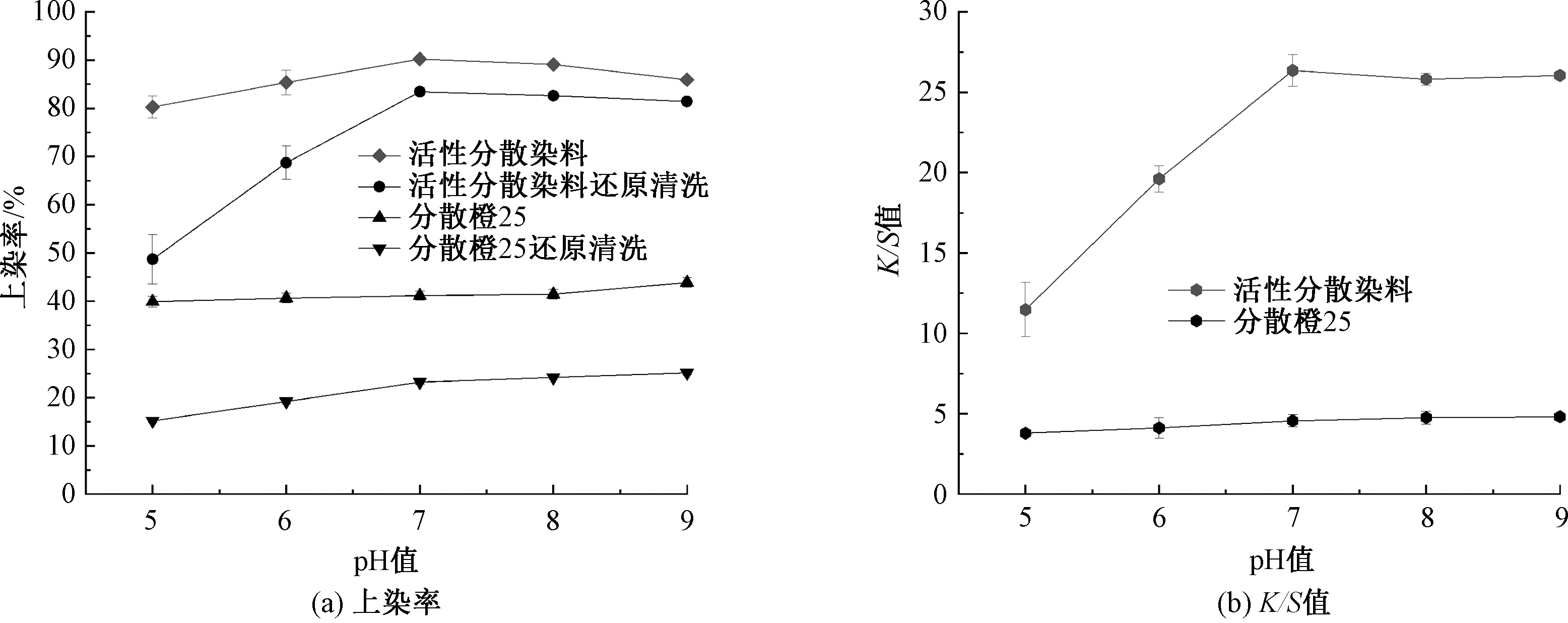
图6

染色pH值对上染锦纶66织物上染率及K/S值的影响"

图7

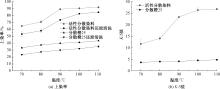
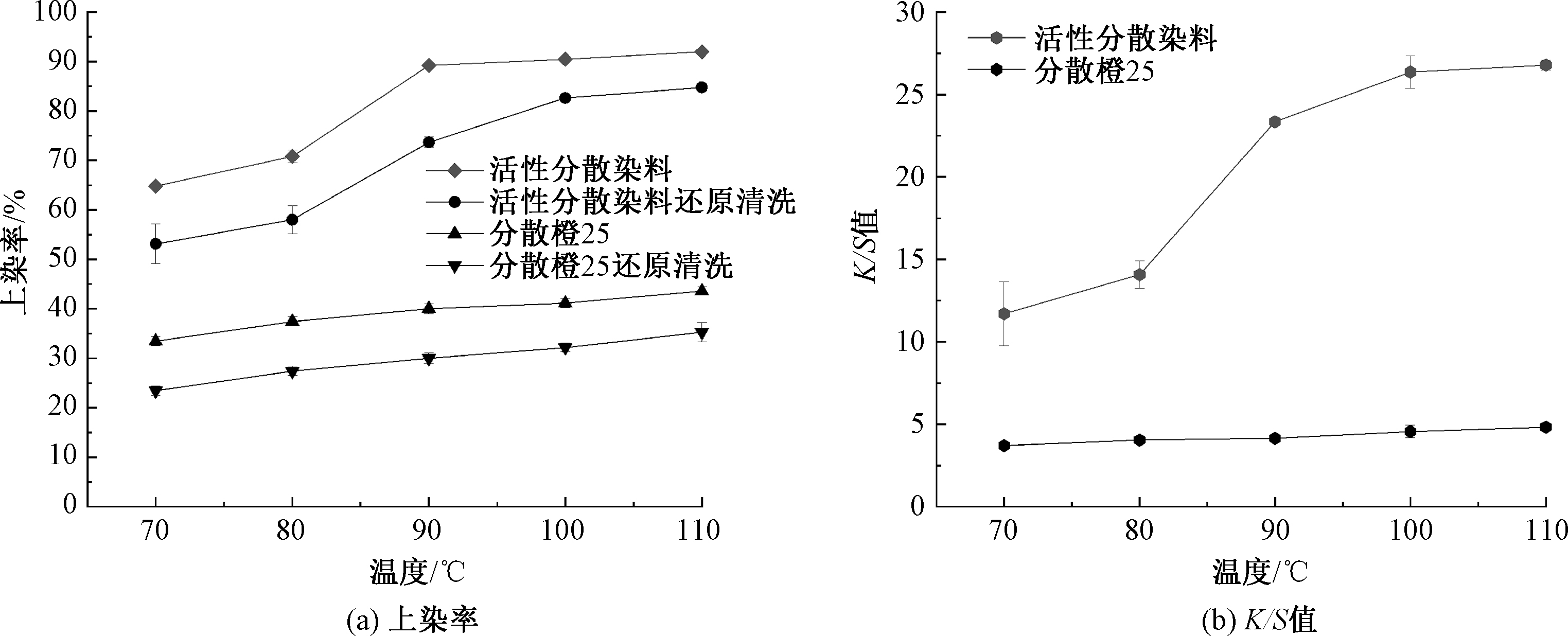
染色温度对上染锦纶66织物上染率及K/S值的影响"

图8

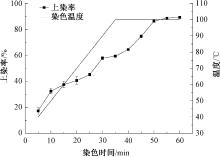
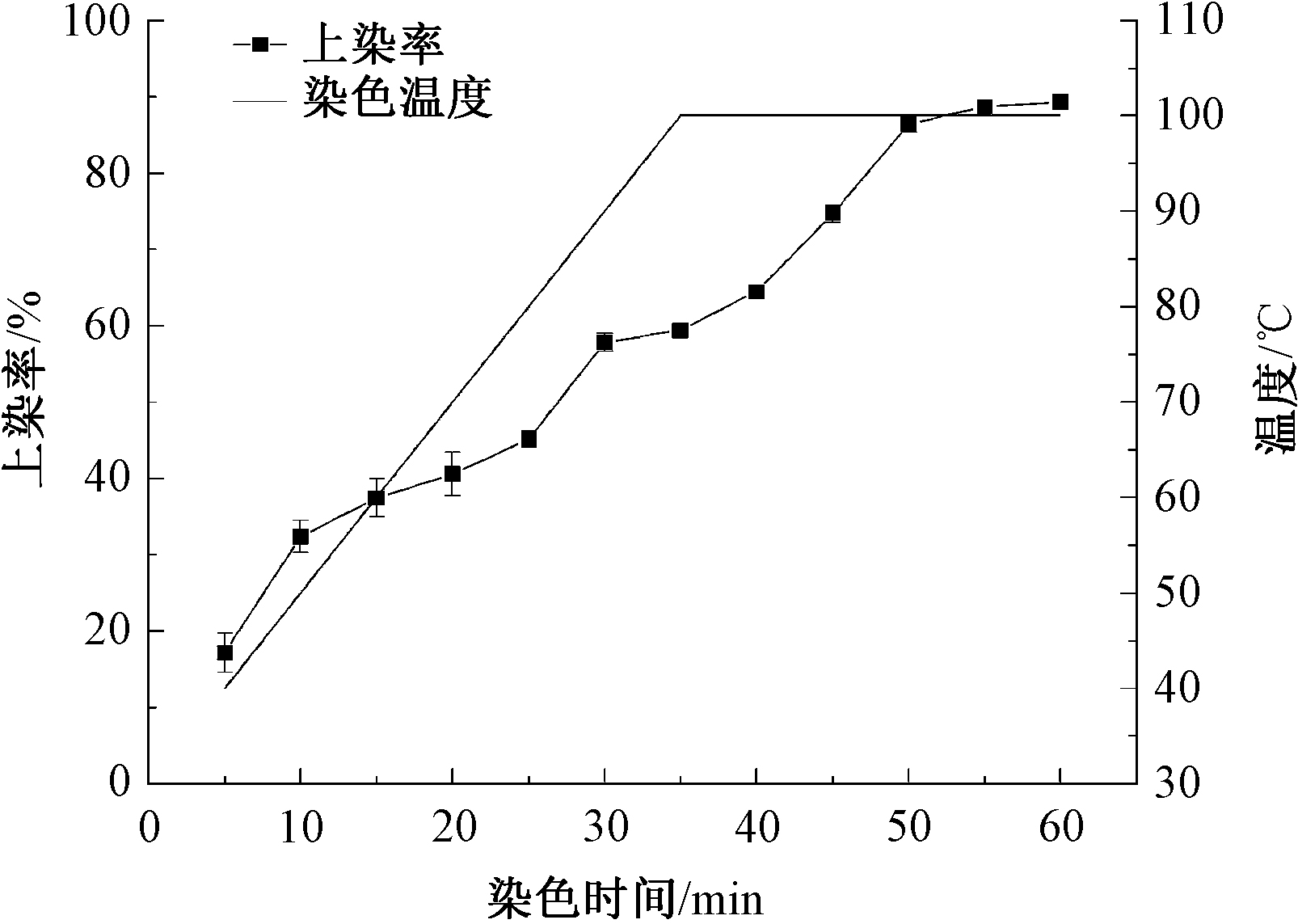
活性分散染料对锦纶66升温上染速率曲线"

图9

活性分散染料对锦纶66染色提升性曲线"

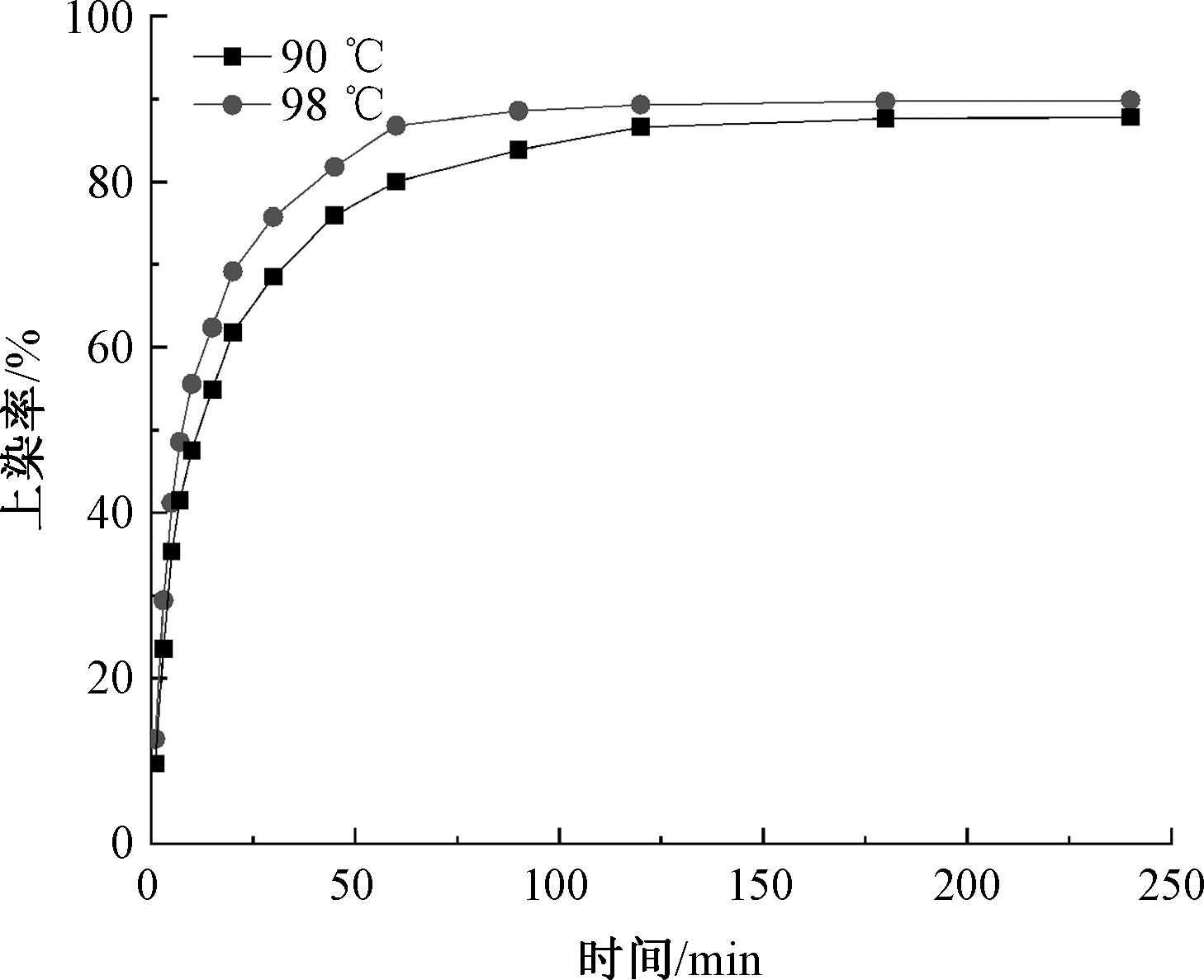
图10

活性分散染料对锦纶66恒温上染速率曲线"

图11

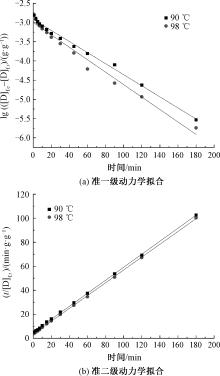
活性分散染料在锦纶66上吸附的动力学方程拟合"

表1

活性分散染料在锦纶66上吸附的动力学拟合参数"

模型 温度/
K1/K2 [D]f.e
预测值
R2 [D]f.e
实验值
准一级 90 0.033 09 0.001 207 0.993 02 0.001 754
98 0.037 24 0.001 011 0.981 39 0.001 794
准二级 90 58.835 7 0.001 847 0.999 79 0.001 754
98 81.942 0 0.001 873 0.999 75 0.001 794

图12

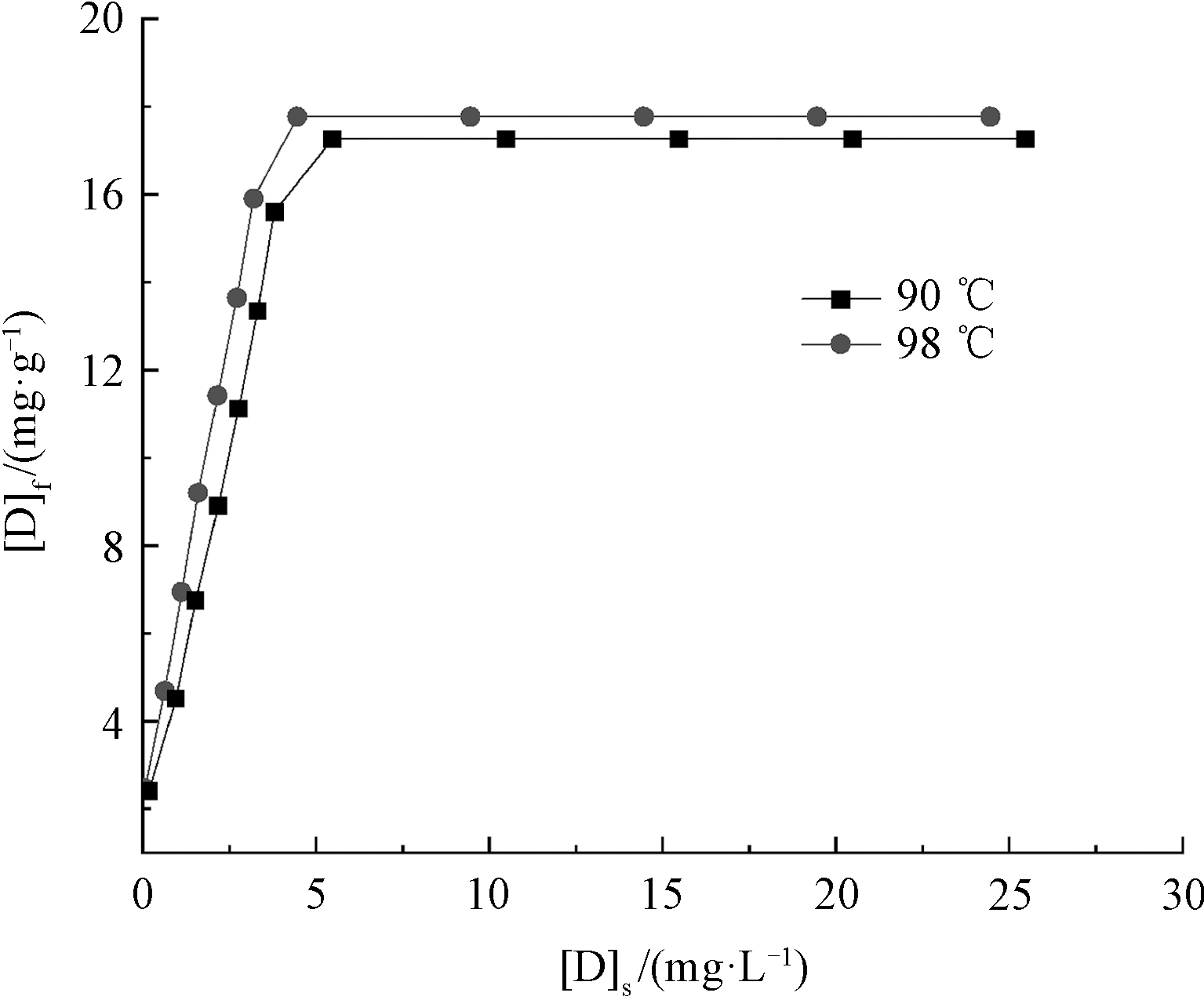
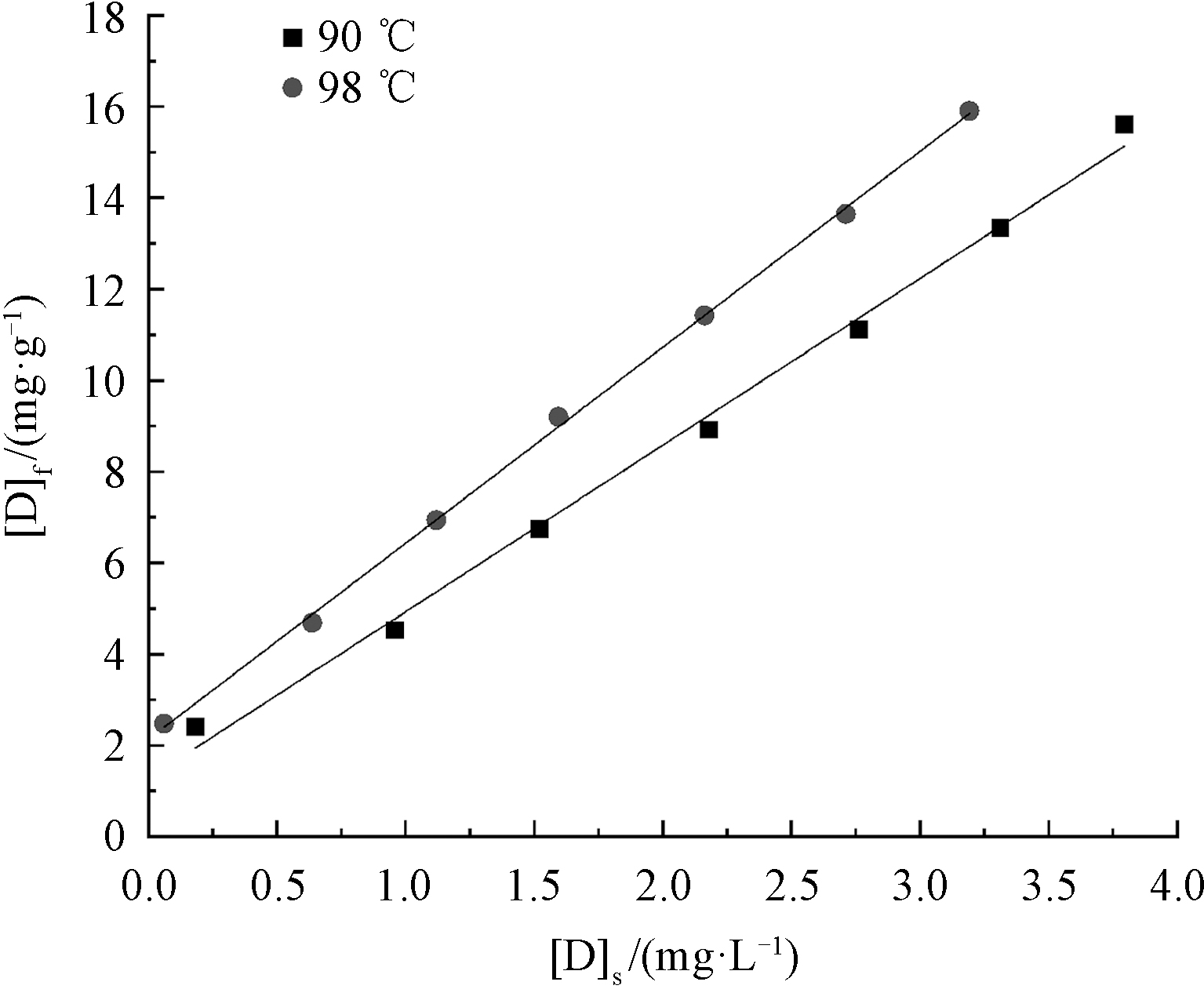
活性分散染料对锦纶66吸附等温线"

图13

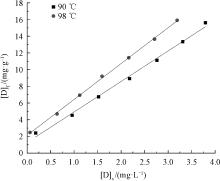
能斯特型拟合曲线"

表2

能斯特型拟合参数"

温度/ ℃ 吸附常数Kn 拟合公式 拟合系数R2
90 3.652 85 y=3.652 85x+1.273 6 0.994 93
98 4.294 83 y=4.294 83x+2.133 7 0.999 20

表3

活性分散染料上染锦纶66的热力学参数"

温度/
亲和力-Δμ°/
(kJ·mol-1)
染色热ΔH°/
(kJ·mol-1)
染色熵ΔS°/
(J·(K·mol)-1)
90 24.77 22.44 130
98 25.81

图14

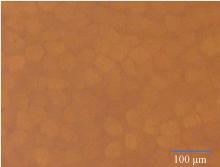
活性分散染料染色锦纶66横截面超景深图片"

[1] 华阳, 刘振明, 刘权毅, 等. 尼龙66国内外生产现状及发展建议[J]. 弹性体, 2010, 20(6): 78-82.
HUA Yang, LIU Zhenming, LIU Quanyi, et al. Present situation and development suggestion of nylon-66[J]. China Elastomerics, 2010, 20(6): 78-82.
[2] 张炜栋, 黄旭. 丙烯酸接枝改性对锦纶66染色性能的影响[J]. 纺织学报, 2013, 34(7): 85-89.
ZHANG Weidong, HUANG Xu. Influence of acrylic acid grafting on dyeing property of nylon 66[J]. Journal of Textile Research, 2013, 34(7): 85-89.
doi: 10.1177/004051756403400117
[3] 李明春. 锦纶66长丝生产中纤维染色性能的影响因素探讨[J]. 合成纤维工业, 2019, 42(5): 77-80.
LI Mingchun. Influential factors on dyeing properties of nylon 66 filament during production[J]. China Synthetic Fiber Industry, 2019, 42(5): 77-80.
[4] 王路芳. 锦纶织物常见染整问题及应对方法研究[J]. 纺织报告, 2023, 42(1): 46-48.
WANG Lufang. Study on common dyeing and finishing problems of chinlon fabric and their solutions[J]. Textile Reports, 2023, 42(1): 46-48.
[5] 郝新敏, 李岳玲, 王建明, 等. 锦纶纤维酸性染料染色动力学对比研究[J]. 纺织学报, 2015, 36(2): 77-80, 97.
HAO Xinmin, LI Yueling, WANG Jianming, et al. Study on acid dyestuff dyeing kinetics of polyamide 56 fiber compared with polyamide 6 and 66[J]. Journal of Textile Research, 2015, 36(2): 77-80, 97.
[6] 崔浩然. 分散染料染锦纶对染料性能的要求[J]. 染整技术, 2011, 33(7): 47-49.
CUI Haoran. Requirements of disperse dyes for dyeing nylon on dye properties[J]. Textile Dyeing and Finishing Journal, 2011, 33(7): 47-49.
[7] 马康海, 王耀华, 阎克路. 活性染料上染尼龙66织物染色工艺探讨[J]. 染料与染色, 2005, 42(5): 29-31.
MA Kanghai, WANG Yaohua, YAN Kelu. A study of exhaust dyeing of nylon 66 fabric with reactive dyes[J]. Dyestuffs and Coloration, 2005, 42(5): 29-31.
[8] IBRAHIM S A, MOHAMED F A, IBRAHIM H M, et al. Synthesis, characterization, antibacterial activity, and applications of new reactive disperse rhodanine dyes for silk and nylon fabrics[J]. Fibers and Polymers, 2024, 25(1): 243-255.
doi: 10.1007/s12221-023-00390-7
[9] KIM S D, CHOI Y J, LEE H Y, et al. Dyeing properties of nylon, PET, and N/P mixture fabric with reactive-disperse dyes having a sulfatoethylsulfone group[J]. Fibers and Polymers, 2012, 13(2): 199-205.
doi: 10.1007/s12221-012-0199-4
[1] 张新宇, 金小培, 朱金唐, 崔华帅, 吴鹏飞, 崔宁, 史贤宁. 聚乳酸熔喷非织造布热尺寸稳定性提升方法[J]. 纺织学报, 2025, 46(08): 127-135.
[2] 姜庭国, 况军, 司虎, 张玉梅, 陈烨, 王华平. 工业丝用钛系聚酯的结晶动力学研究[J]. 纺织学报, 2025, 46(08): 53-61.
[3] 于晓坤, 易萍, 谢冠婧, 蔡凌霄. 基于人体动力学的服装衣袖运动舒适性探究[J]. 纺织学报, 2025, 46(06): 196-202.
[4] 陈亚娟, 郭瀚宇, 张陈恬, 李欣欣, 张雪萍. 聚乙烯醇/海藻酸钠/锦纶66复合水凝胶包芯纱的制备及其吸湿性能[J]. 纺织学报, 2025, 46(06): 103-110.
[5] 殷连博, 李家炜, 段慧敏, 宋理想, 陈玉霜, 厉巽巽, 戚栋明. 液体分散染料染色废水的循环染色[J]. 纺织学报, 2025, 46(03): 131-140.
[6] 畅博彦, 韩芳孝, 周杨, 关鑫. 精梳机钳板机构接触碰撞动力学建模与仿真[J]. 纺织学报, 2025, 46(01): 179-186.
[7] 张琦, 左露娇, 屠佳妮, 聂美婷. 经编贾卡鞋面材料透气性的数值模拟[J]. 纺织学报, 2024, 45(09): 78-83.
[8] 邓钢, 张涛, 吴超平, 王军, 张磊. 异形二醋酯纤维干法纺丝成形过程模拟及其截面分析[J]. 纺织学报, 2024, 45(09): 42-49.
[9] 黄连香, 王祥荣, 侯学妮, 钱琴芳. 茜草色素对生物基聚酰胺56的染色性能[J]. 纺织学报, 2024, 45(07): 94-103.
[10] 赵向阳, 闫凯, 龙家杰. 超临界二氧化碳流体中SCFX-AYRL染料的溶解性研究[J]. 纺织学报, 2024, 45(06): 98-104.
[11] 袁野, 张安莹, 魏丽菲, 高建伟, 陈咏, 王锐. 含磷阻燃聚酯的合成动力学及其性能[J]. 纺织学报, 2024, 45(04): 50-58.
[12] 杨美慧, 李博, 沈艳琴, 武海良. 再生角蛋白凝胶对纺织退浆废水中浆料分子的吸附性能[J]. 纺织学报, 2024, 45(02): 142-152.
[13] 常辰玉, 王雨薇, 原旭阳, 刘锋, 卢致文. 基于交织点改进弹簧-质点模型的纬编针织物动态变形模拟[J]. 纺织学报, 2024, 45(01): 99-105.
[14] 许高平, 孙以泽. 移动机械臂牵引卷装纱线的动态建模与控制[J]. 纺织学报, 2024, 45(01): 1-11.
[15] 刘金儒, 李新荣, 王浩, 师帅星. 棉精梳机分离罗拉混合驱动系统优化[J]. 纺织学报, 2023, 44(11): 190-198.
Viewed
Full text


Abstract

Cited

  Shared   
  Discussed   
No Suggested Reading articles found!