纺织学报 ›› 2025, Vol. 46 ›› Issue (10): 46-53.doi: 10.13475/j.fzxb.20250203701
周小叶1,2, 曹爱玲3( ), 苏日娜3, 石文军4, 赵仙梅5, 杜达生6, 蔡路昀1,2
ZHOU Xiaoye1,2, CAO Ailing3(), SU Rina3, SHI Wenjun4, ZHAO Xianmei5, DU Dasheng6, CAI Luyun1,2
摘要:
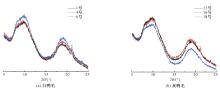
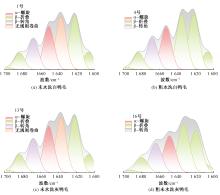
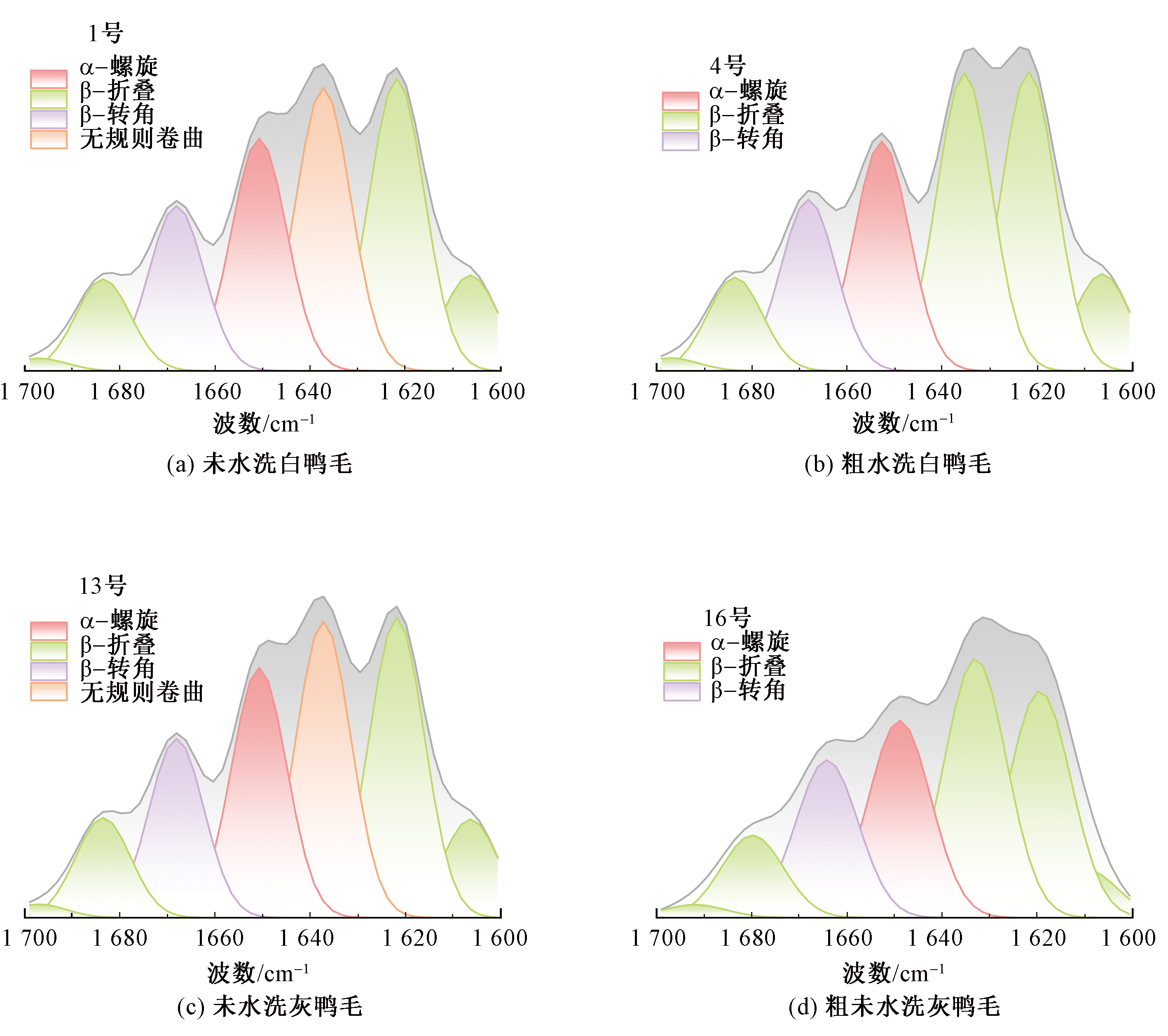
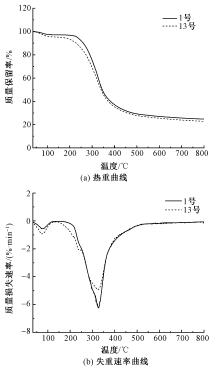
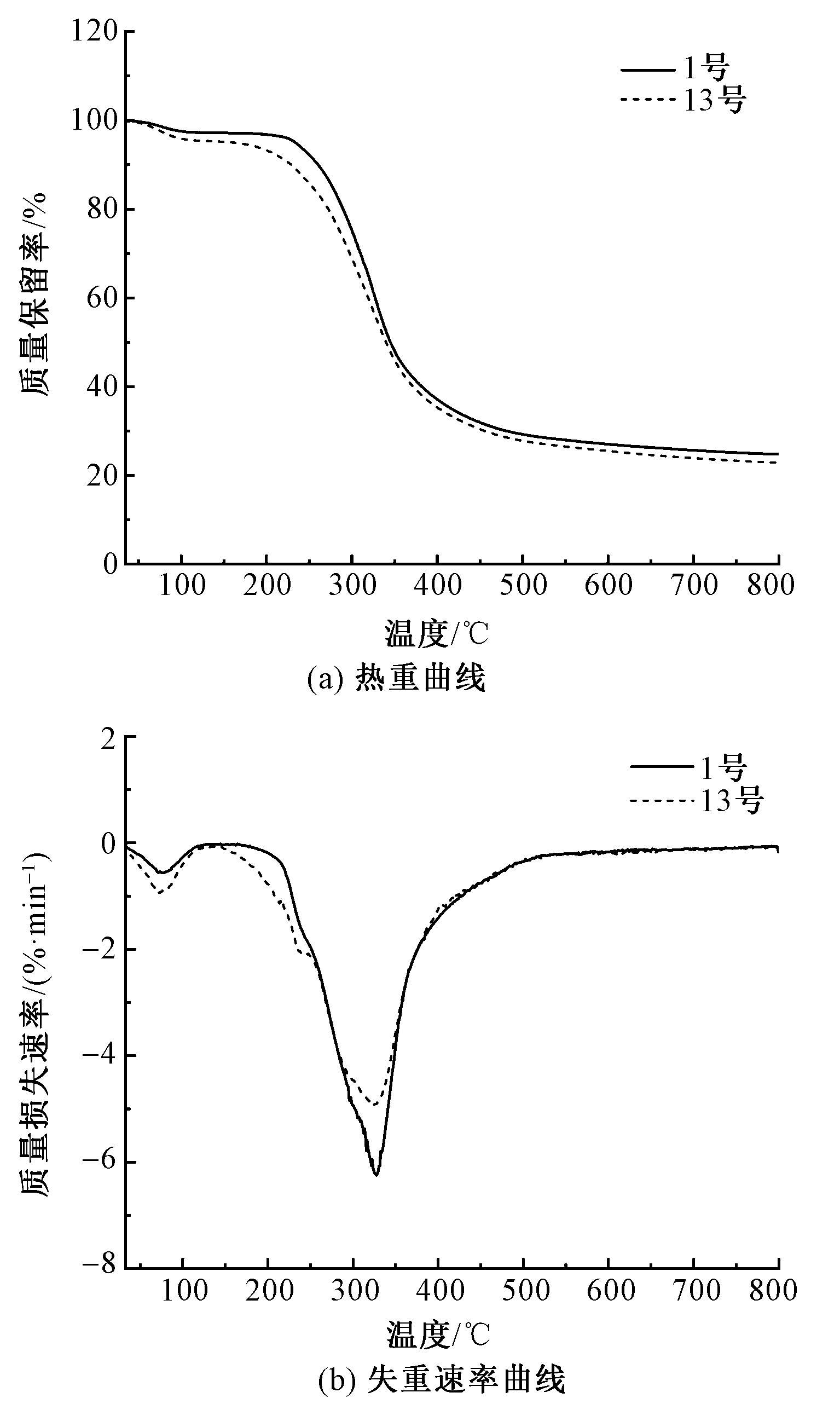
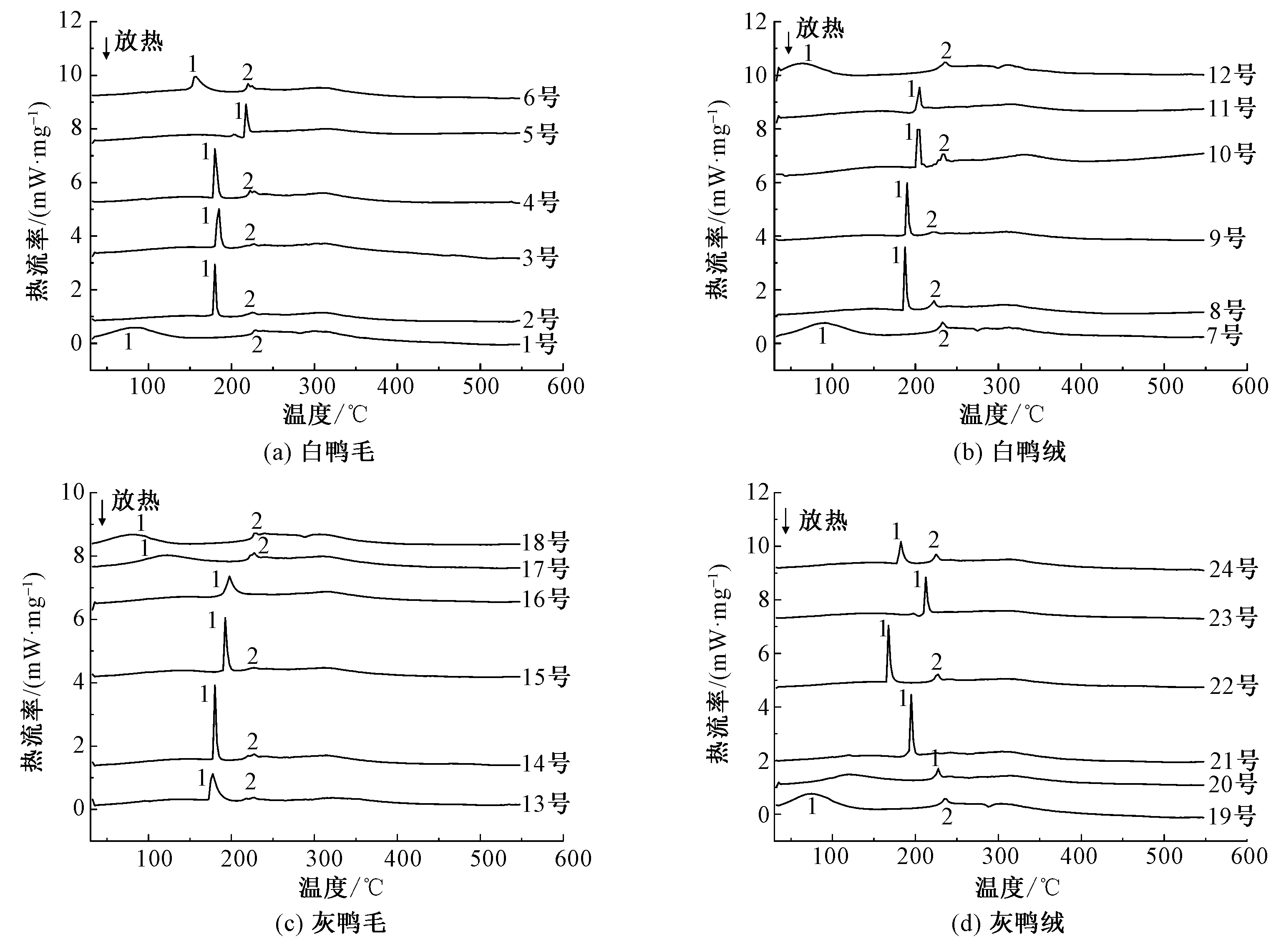
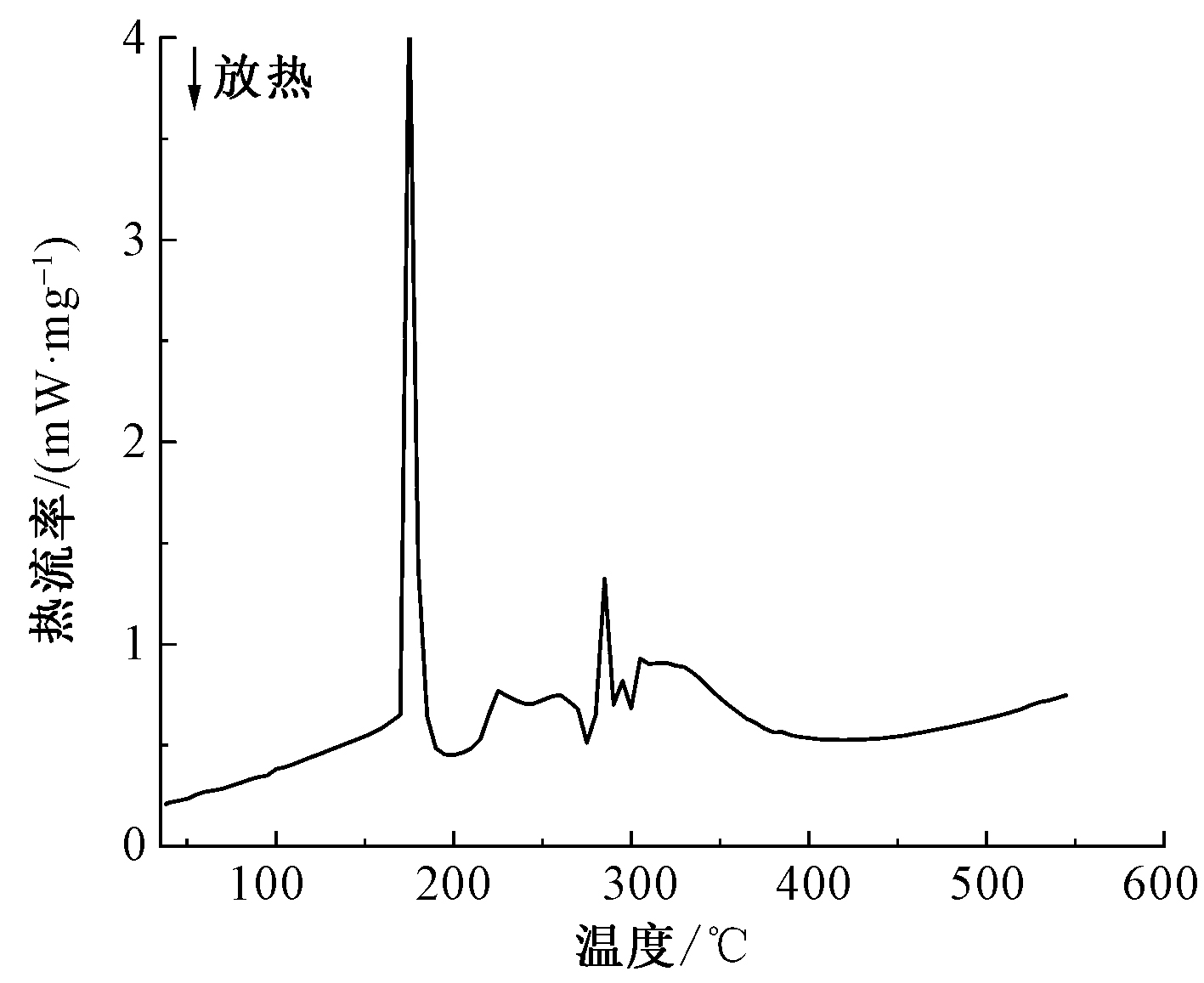
针对进口粗水洗羽毛绒监管中存在的鉴别难题,建立未水洗与粗水洗羽毛绒的快速检测方法,采用差示扫描量热法(DSC)为核心检测手段,结合热重分析(TG)、X射线衍射(XRD)及红外光谱分析进行方法验证,选取自然风干及80~160 ℃热处理的粗水洗羽毛绒样品,系统分析其角蛋白热稳定性、晶体结构及二级结构变化特征,最后通过对比白鸭毛、灰鸭毛及其羽绒制品的DSC曲线差异,建立特征峰识别体系。TG结果显示羽毛绒热分解呈现水分蒸发、角蛋白降解和残余分解三阶段特征;XRD证实热处理引起角蛋白晶体结构重构;红外光谱定量分析表明样品粗水洗后β-折叠结构比例增加,无规卷曲结构减少;DSC检测显示白鸭毛、白鸭绒和灰鸭绒粗水洗样品在170~220 ℃区间产生明显特征峰。基于DSC曲线特征峰差异,建立了一种快速检测方法,用于区分未水洗与粗水洗羽毛绒,该方法可定性分析80~140 ℃热处理对羽毛角蛋白结构的影响,为海关监管及行业标准修订提供了技术支撑。
中图分类号:
| [1] | 徐浩, 曹爱玲, 于力, 等. 我国羽绒毛进出口贸易现状与海关检疫监管措施[J]. 中国动物检疫, 2024, 41(6): 90-96. |
| XU Hao, CAO Ailing, YU Li, et al. Import and export trade of down feather and quarantine supervision by customs in China[J]. China Animal Health Inspection, 2024, 41(6): 90-96. | |
| [2] |
KURIL A K. Differential scanning calorimetry: a powerful and versatile tool for analyzing proteins and peptides[J]. Journal of Pharmaceutical Research International, 2024, 36(7): 179-187.
doi: 10.9734/jpri/2024/v36i77549 |
| [3] |
刘功明, 孙京新, 徐幸莲, 等. 差示扫描量热法检测猪、牛、羊肉加热终点温度[J]. 中国农业科学, 2015, 48(6): 1186-1194.
doi: 10.3864/j.issn.0578-1752.2015.06.14 |
|
LIU Gongming, SUN Jingxin, XU Xinglian, et al. Detection of endpoint temperature of pork, beef and mutton by differential scanning calorimetry[J]. Scientia Agricultura Sinica, 2015, 48(6): 1186-1194.
doi: 10.3864/j.issn.0578-1752.2015.06.14 |
|
| [4] |
BERTRAM H C, WU Z Y, VAN DEN BERG F, et al. NMR relaxometry and differential scanning calorimetry during meat cooking[J]. Meat Science, 2006, 74(4): 684-689.
doi: 10.1016/j.meatsci.2006.05.020 pmid: 22063224 |
| [5] | 陆英, 王黎明, 张振华, 等. 羽绒纤维的结构及理化性能研究进展[J]. 上海纺织科技, 2015, 43(11): 6-8, 36. |
| LU Ying, WANG Liming, ZHANG Zhenhua, et al. The research progress of feather fiber structure and its physical and chemical properties[J]. Shanghai Textile Science & Technology, 2015, 43(11): 6-8, 36. | |
| [6] | 向宇, 周爱晖, 王思翔, 等. 基于拉曼光谱的羊毛二硫键及构象含量分析[J]. 纺织学报, 2024, 45(2): 45-51. |
| XIANG Yu, ZHOU Aihui, WANG Sixiang, et al. Analysis of disulfide bonds and conformational content of wool based on Raman spectroscopy[J]. Journal of Textile Research, 2024, 45(2): 45-51. | |
| [7] | 李长龙, 汤立洋, 王宗乾, 等. 不同体系下羽毛绒的溶解性能及光谱特性[J]. 纺织学报, 2017, 38(4): 27-31. |
| LI Changlong, TANG Liyang, WANG Zongqian, et al. Solubility and spectral characteristic of feather and down in different dissolution systems[J]. Journal of Textile Research, 2017, 38(4): 27-31. | |
| [8] |
LIU X, GU S J, XU W L. Thermal and structural characterization of superfine down powder[J]. Journal of Thermal Analysis and Calorimetry, 2013, 111(1): 259-266.
doi: 10.1007/s10973-012-2202-0 |
| [9] |
WORTMANN F J, STAPELS M, ELLIOTT R, et al. The effect of water on the glass transition of human hair[J]. Biopolymers, 2006, 81(5): 371-375.
pmid: 16358248 |
| [10] |
ÉHEN Z, NOVÁK C, SZTATISZ J, et al. Thermal characterization of hair using TG-MS combined thermoanalytical technique[J]. Journal of Thermal Analysis and Calorimetry, 2004, 78(2): 427-440.
doi: 10.1023/B:JTAN.0000046108.29225.b2 |
| [11] |
FRANCIOSO A, PUNZI P, BOFFI A, et al. β-sheet interfering molecules acting against β-amyloid aggregation and fibrillogenesis[J]. Bioorganic & Medicinal Chemistry, 2015, 23(8): 1671-1683.
doi: 10.1016/j.bmc.2015.02.041 |
| [12] |
TAKAHASHI K, YAMAMOTO H, YOKOTE Y, et al. Thermal behavior of fowl feather keratin[J]. Bioscience, Biotechnology, and Biochemistry, 2004, 68(9): 1875-1881.
pmid: 15388962 |
| [13] |
BRUCE FRASER R D, PARRY D A D. The structural basis of the filament-matrix texture in the avian/reptilian group of hard β-keratins[J]. Journal of Structural Biology, 2011, 173(2): 391-405.
doi: 10.1016/j.jsb.2010.09.020 pmid: 20869443 |
| [14] | 吴安成, 宋修彩, 易曙晖, 等. 羽绒(毛)结构和性能研究[J]. 中国纺织大学学报, 1990, 16(2): 94-99. |
| WU Ancheng, SONG Xiucai, YI Shuhui, et al. The structure and properties of feather and down[J]. Journal of China Textile University, 1990, 16(2): 94-99. | |
| [15] |
TESFAYE T, SITHOLE B, RAMJUGERNATH D, et al. Valorisation of chicken feathers: characterisation of thermal, mechanical and electrical properties[J]. Sustainable Chemistry and Pharmacy, 2018, 9: 27-34.
doi: 10.1016/j.scp.2018.05.003 |
| [16] |
WANG B, YANG W, MCKITTRICK J, et al. Keratin: structure, mechanical properties, occurrence in biological organisms, and efforts at bioinspiration[J]. Progress in Materials Science, 2016, 76: 229-318.
doi: 10.1016/j.pmatsci.2015.06.001 |
| [17] |
KUZUHARA A. Analysis of structural changes in bleached keratin fibers (black and white human hair) using Raman spectroscopy[J]. Biopolymers, 2006, 81(6): 506-514.
pmid: 16425172 |
| [18] | 邹涛, 陈宇迪, 莫单丹, 等. 差示扫描量热(DSC)图谱匹配识别法在鱼腥草产地快速鉴别中的应用[J]. 分析仪器, 2022(1): 93-99. |
| ZOU Tao, CHEN Yudi, MO Dandan, et al. Application of differential scanning calorimetry (DSC) in origin identification of Houttuynia cordata[J]. Analytical Instrumentation, 2022(1): 93-99. |
| [1] | 张莎莎, 蔡牧航, 吕晓静, 胡丹, 刘娟, 吉星照, 曹根阳, 王浩娜. 静电场协同构象羽绒/二氧化硅气凝胶保暖材料[J]. 纺织学报, 2025, 46(07): 10-18. |
| [2] | 卜凡, 应丽丽, 李长龙, 王宗乾. 羽绒在乳酸/半胱氨酸低共熔溶剂中的溶解行为及其机制[J]. 纺织学报, 2023, 44(10): 24-30. |
| [3] | 万颖萍, 王宗乾, 王英沣, 杨海伟, 吴开明, 谢伟. 抗菌羽绒的短流程制备及其性能[J]. 纺织学报, 2023, 44(01): 149-155. |
| [4] | 吴佳玥, 吴巧英. 羽绒制品热传递的有限元仿真[J]. 纺织学报, 2022, 43(11): 154-162. |
| [5] | 张文欢, 江舒, 李俊. 羽绒服装系统的面积因子预测及适用性分析[J]. 纺织学报, 2022, 43(11): 148-153. |
| [6] | 吴黛唯, 黄家成, 王云仪. 服装形变对羽绒服隔热能力的影响[J]. 纺织学报, 2022, 43(09): 167-174. |
| [7] | 应丽丽, 李长龙, 王宗乾, 王邓峰, 吴开明, 谢伟, 程欢. 植酸作用下锆离子修饰羽绒及其保温性能[J]. 纺织学报, 2020, 41(10): 94-100. |
| [8] | 马颜雪, 王世娜, 李毓陵, 温润. 方格立衬结构机织物的一次成形设计实践[J]. 纺织学报, 2020, 41(06): 42-47. |
| [9] | 万旺军 邓同乐 计芬芬 葛建 付贤树 邬佳丽. 羽毛绒种类鉴定及气味检测方法研究[J]. 纺织学报, 2013, 34(3): 15-19. |
| [10] | 周岚;汤利桥;俞杭芳;邵建中;. 灰色羽绒的漂白技术[J]. 纺织学报, 2011, 32(1): 59-66. |
| [11] | 吴刚;赵珊红;王华雄;吴俭俭;郭方龙;王力君;谢维斌;宋保国;叶庆富. 加速溶剂萃取-高效液相色谱测定羽绒羽毛中的烷基苯酚与聚氧乙烯醚[J]. 纺织学报, 2010, 31(3): 72-77. |
| [12] | 刘维;周苏萌;韩仕峰;王府梅. 羽绒/木棉混纤絮料的性能[J]. 纺织学报, 2007, 28(11): 17-20. |
| [13] | 高晶;于伟东;潘宁. 羽绒纤维的形态结构表征[J]. 纺织学报, 2007, 28(1): 1-4. |
| [14] | 高晶;于伟东. 羽绒纤维的吸湿性能[J]. 纺织学报, 2006, 27(11): 28-31. |
| [15] | 张建春;郝新敏;岳素娟;郭玉海. 羽绒絮毡复合PTFE膜保暖材料的研究[J]. 纺织学报, 2004, 25(04): 38-39. |
|
||
 京公网安备11010502044800号