纺织学报 ›› 2025, Vol. 46 ›› Issue (12): 198-207.doi: 10.13475/j.fzxb.20250703901

• 服装工程 • 上一篇    下一篇

基于体型特征的连衣裙综合评价模型的构建和应用

尹俏琳1, 倪沈伊嘉1, 郑琪1, 何瑛1,2,3()   

  1. 1.浙江理工大学 服装学院, 浙江 杭州 310018
    2.丝绸文化传承与产品设计数字化技术文化和旅游部重点实验室, 浙江 杭州 310018
    3.浙江理工大学 浙江省服装工程技术研究中心, 浙江 杭州 310018
  • 收稿日期:2025-07-14 修回日期:2025-09-17 出版日期:2025-12-15 发布日期:2026-02-06
  • 通讯作者: 何瑛(1978—),女,副教授,硕士。主要研究方向为服装人体工学和数字化技术。E-mail:daisy_jacky@163.com
  • 作者简介:尹俏琳(2000—),女,硕士生。主要研究方向为服装人体工学和数字化技术。
  • 基金资助:
    浙江省服装工程技术研究中心开放基金项目(2018FZKF13);文化和旅游部重点实验室开放基金项目(2020WLB09);国家级大学生创新创业训练计划项目(202510338005)

Construction and application of comprehensive dress evaluation model based on body shape characteristics

YIN Qiaolin1, NI Shenyijia1, ZHENG Qi1, HE Ying1,2,3()   

  1. 1. School of Fashion Design & Engineering, Zhejiang Sci-Tech University, Hangzhou, Zhejiang 310018, China
    2. Key Laboratory of Silk Culture Inheritance and Product Design Digital Technology, Ministry of Culture and Tourism,Hangzhou, Zhejiang 310018, China
    3. Zhejiang Provincial Research Center of Clothing Engineering Technology,Zhejiang Sci-Tech University, Hangzhou, Zhejiang 310018, China
  • Received:2025-07-14 Revised:2025-09-17 Published:2025-12-15 Online:2026-02-06

摘要:

针对服装个性化推荐过程中缺乏对体型因素的考虑,导致推荐精准度不高的问题,提出一种基于体型特征的连衣裙综合评价模型,进而应用于针对体型特征的产品推荐。采用女性体型识别技术和虚拟试衣软件对女性人体进行分类,并构建5类基础体型虚拟模特;基于形态分析法提取廓形、合体度、腰位和裙长4个连衣裙关键款式要素,并生成不同体型与款式组合的实验样本,通过2次情景实验收集消费者的主观评价数据。根据多因素方差分析结果可知,体型显著影响消费者对廓形和合体度的偏好,且廓形与合体度交互作用显著;不同体型消费者对腰位的偏好无显著差异,对裙长的偏好差异显著;腰位、裙长与体型存在显著的三因素交互作用。最后,通过关键要素权重分析、交互修正值量化交互效应,构建了基于体型特征的连衣裙综合评价模型。经验证,该模型输出的款式平均满意度达72.3%,可较为有效地匹配消费者体型与款式偏好。

关键词: 连衣裙推荐, 体型特征, 综合评价模型, 虚拟试衣, 交互效应, 服装个性化推荐

Abstract:

Objective To address the inaccuracy in clothing personalization systems resulting from the neglect of body type factors, this study proposes a comprehensive dress evaluation model that integrates anthropometric characteristics and design element interactions. The model aims to enhance recommendation accuracy through the quantification of body-type-specific preferences and the analysis of their interactions.

Method Five female body types (inverted-triangle, rectangular, triangular, hourglass, and oval) were identified using virtual fitting technology combined with anthropometric classification. Key dress design elements, namely silhouette, fit, waist position and dress length, were extracted through morphological analysis. Experimental samples combining body types with design variations were generated, and subjective evaluations were collected through two scenario-based experiments. Multivariate repeated-measures ANOVA was applied to analyze the influence of body type on preference patterns, with interaction effects quantified using effect size and correction values. A comprehensive evaluation model was constructed by integrating feature weights, preference scores, and interaction adjustments.

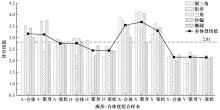
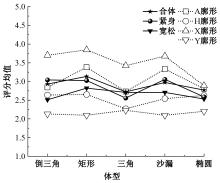
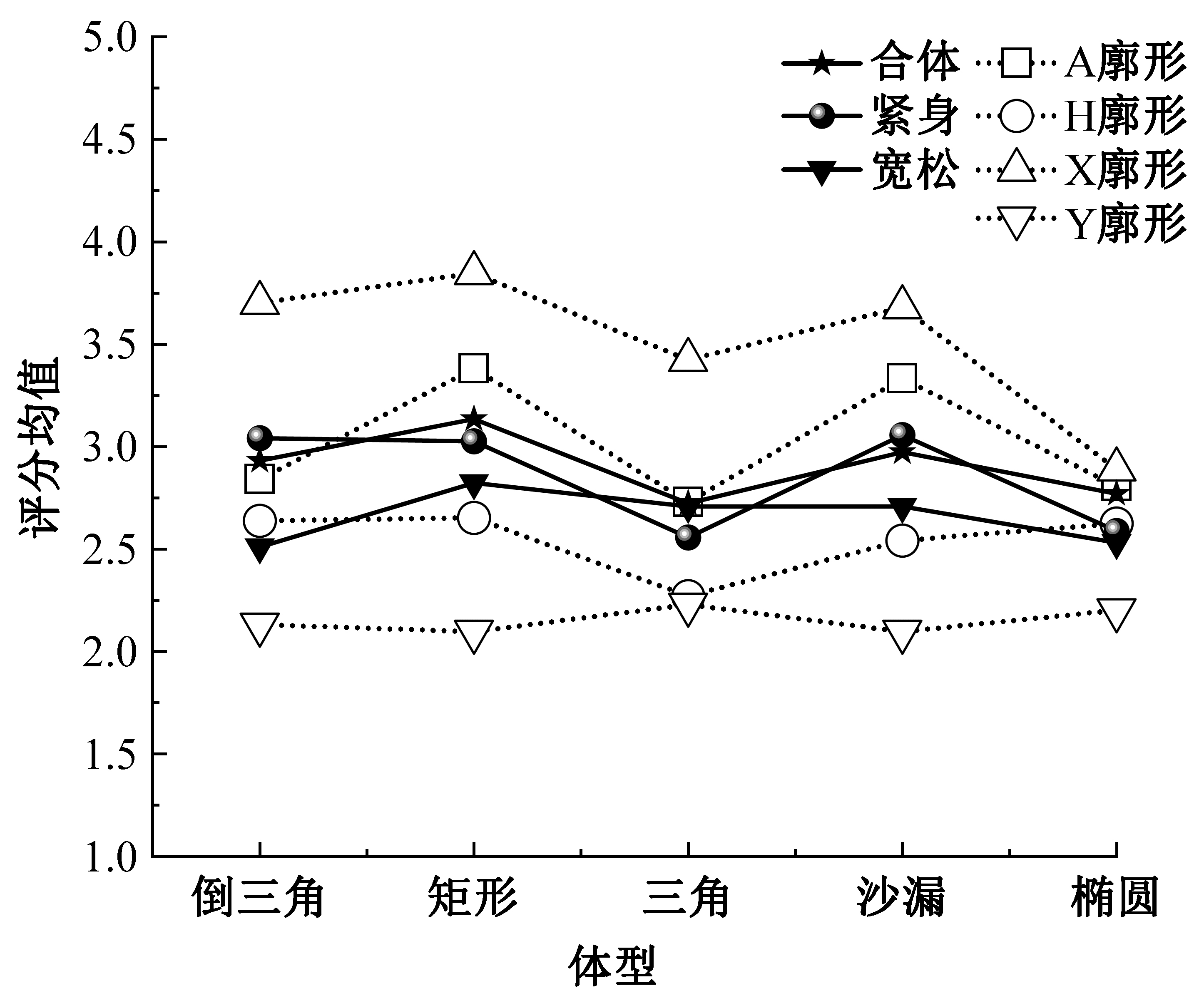
Results The study used a multifactorial repeated-measures ANOVA to assess consumer preferences for dress design attributes. The results revealed significant main effects for both silhouette and fit; silhouette exhibited the largest effect size, and all two-way interactions were significant despite their relatively small effect sizes. The average preference score across all combinations was 2.81. The X-tight combination received the highest score (3.68), while the Y-loose combination scored the lowest (2.14). The line chart revealed considerable variation in ratings across silhouettes compared to the relative stability observed across fit levels, indicating silhouette's substantial impact on consumer preference. For silhouettes, consumers consistently preferred X-line and A-line, while fitted styles were preferred in terms of fit. Body type also influenced consumer preferences, with rectangular types showing the greatest sensitivity to changes in silhouette, and inverted-triangle types being the most responsive to fit.

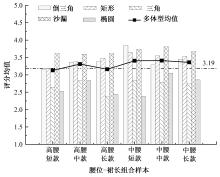
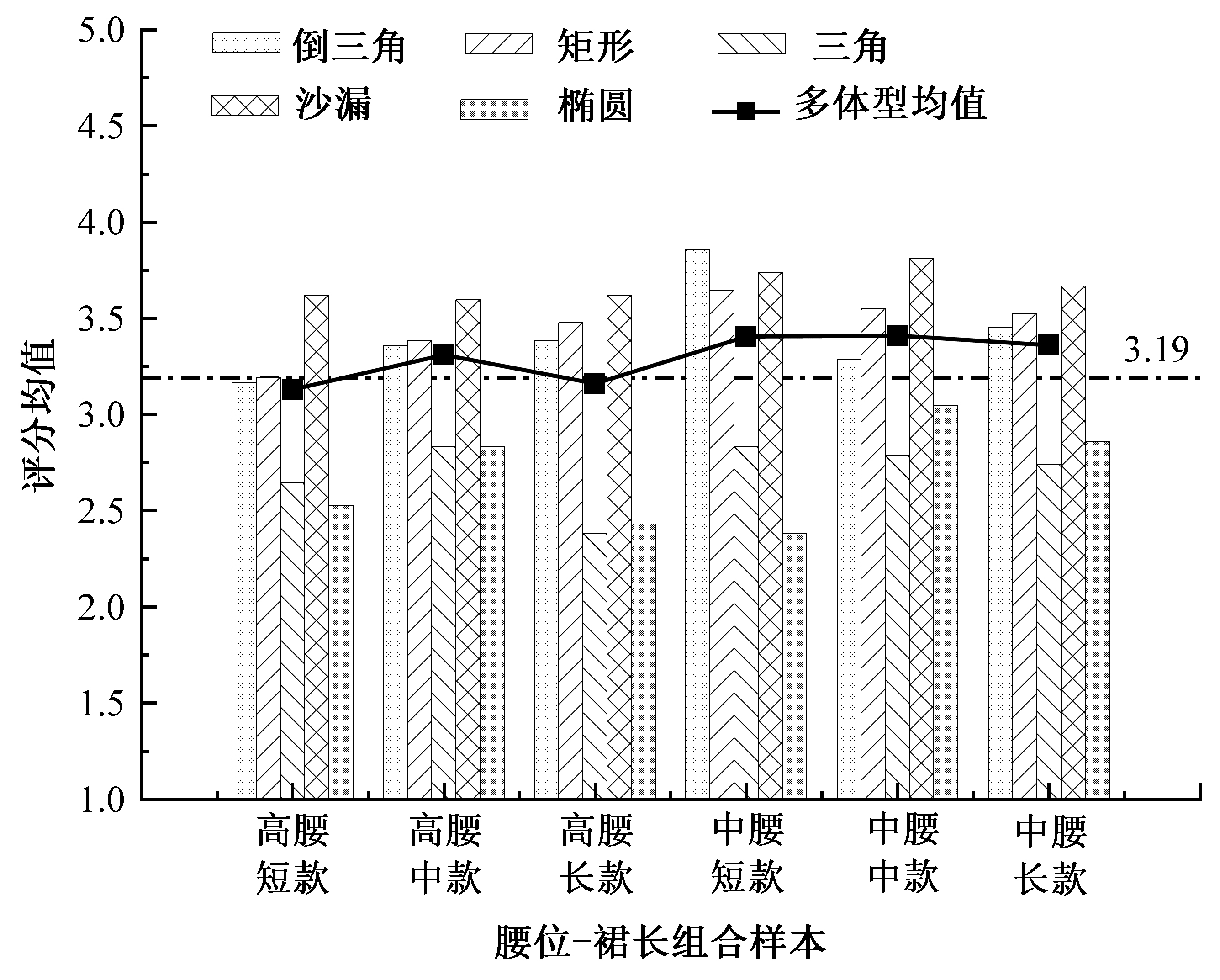
The multifactorial repeated-measures ANOVA revealed a significant main effect for waist position, a significant two-way interaction between dress length and body type, and a significant three-way interaction among waist position, dress length, and body type. The overall mean rating across all combinations was 3.19. Among all combinations, dresses with mid-waist and mid-length received the highest rating (3.30), whereas high-waist, short-length dresses received the lowest (3.03). Mid-waist designs were consistently preferred over high-waist designs across all body types. However, dress length preferences varied significantly: inverted-triangle types favored shorter lengths, while oval and triangle types preferred medium lengths. Although variations in waist position or dress length resulted in only slight differences within a single body type, the same combination of waist position and length received significantly different scores across different body types.

The interaction effect between silhouette and fit was significantly moderated by body type. A complex three-way interaction among waist position, dress length, and body type led to significant differences in composite scores. Different body types demonstrated significantly different prioritization of style elements, including silhouette, fit, waist position, and dress length. To quantify these differences, feature weights were used to represent the relative importance of specific style element categories for each body type. To measure the deviation between actual composite scores and theoretical scores caused by interaction effects, an interaction adjustment value was introduced. Therefore, a comprehensive evaluation model that considers individual body type characteristics is necessary to provide tailored clothing style recommendations for consumers.

Conclusion Body type significantly influences the interaction between silhouette and garment fit. A complex three-way interaction exists among waist position, dress length, and body type, resulting in notable differentiation in composite scores. These findings confirm the necessity of incorporating body-type-specific parameters in predictive models to account for attribute interactions. Model validation demonstrated 72.3% average alignment between predicted and observed preferences through weighted calculations and interaction adjustments. This research establishes quantitative relationships between anthropometric characteristics and design preference patterns, providing a methodological framework applicable to other apparel categories. Statistical evidence supports the inclusion of interaction modifiers and body-specific weights in fashion data analysis systems to enhance predictive accuracy.

Key words: dress recommendation, body type characteristic, comprehensive evaluation model, virtual fitting, interaction effect, clothing personal recommendation

中图分类号: 

  • TS941.2

表1

基础体型分类及判定标准"

体型编号 体型分类 体型判定条件
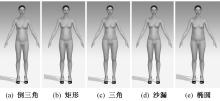
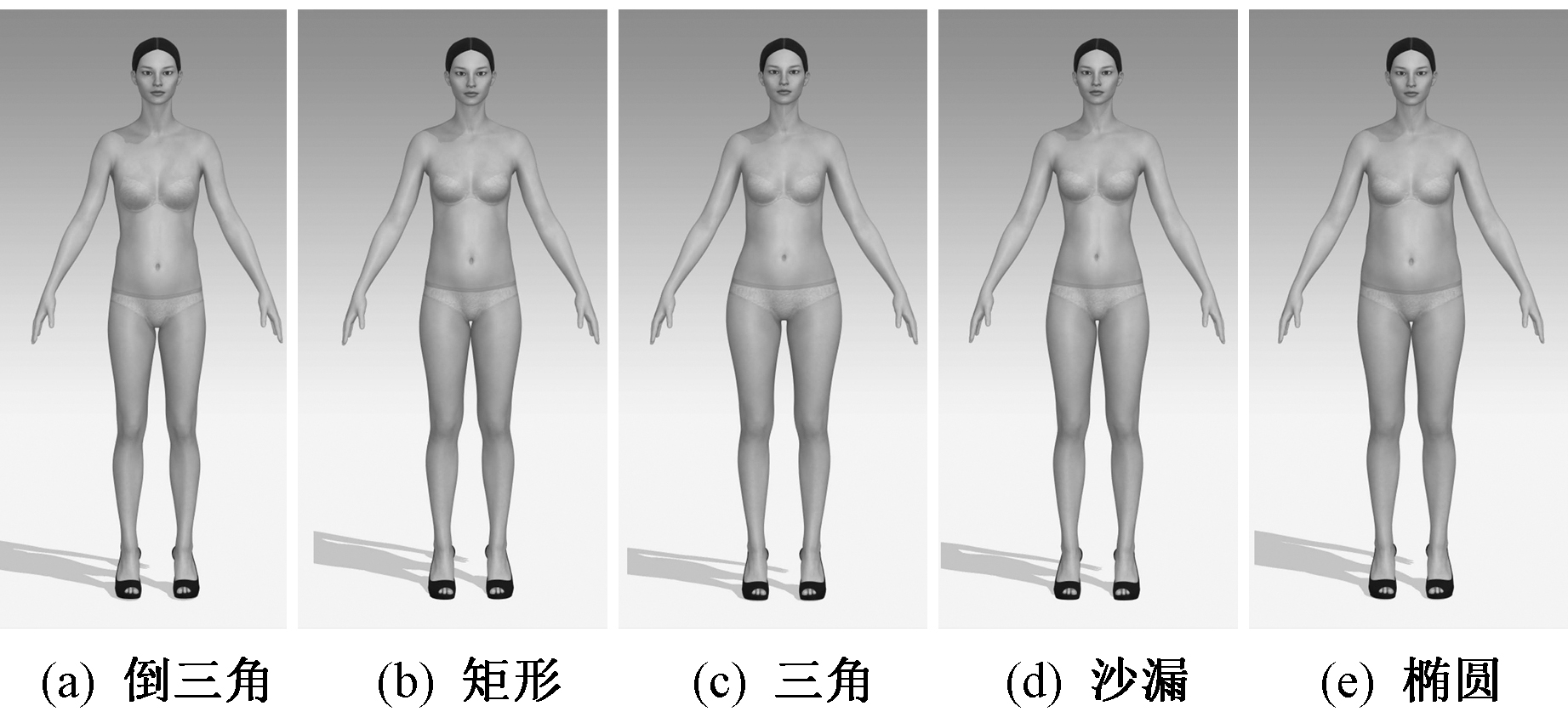
T1 倒三角 胸臀差≥9 cm
T2 矩形 臀胸差绝对值<9 cm,胸腰差<22 cm,
臀腰差<25 cm
T3 三角 臀胸差≥9 cm
T4 沙漏 胸腰差≥22 cm,臀腰差≥25 cm
T5 椭圆 腹围≥胸围,腹围≥臀围

图1

5类基础体型的虚拟模特"

表2

连衣裙款式要素及编码"

款式要素 子要素及编码
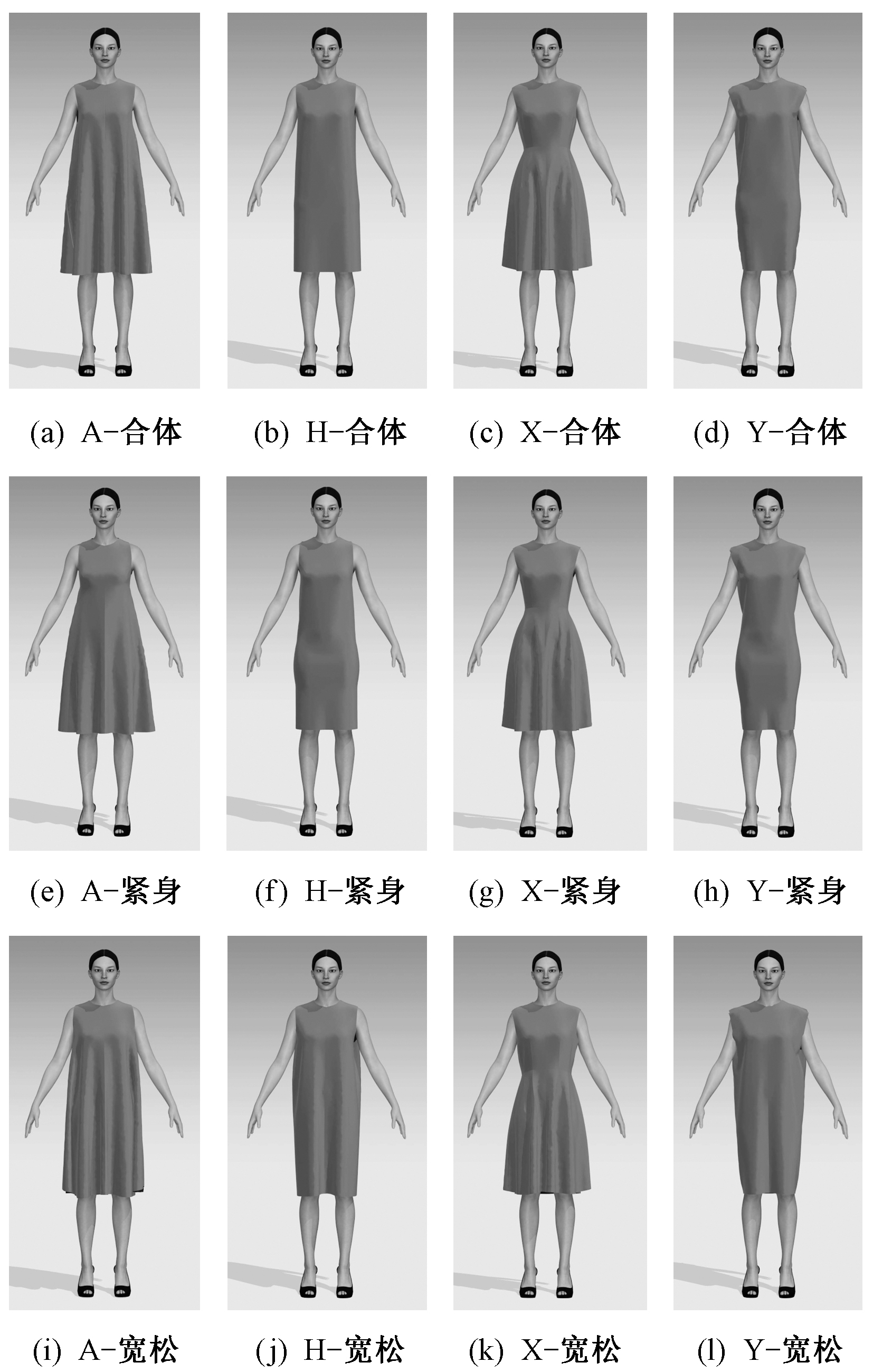
廓形S A廓形S1 H廓形S2 X廓形S3 Y廓形S4
合体度F 紧身F1 合体F2 宽松F3
腰位Y 高腰Y1 中腰Y2 无腰Y3
裙长L 短款L1 中款L2 长款L3

图2

沙漏型虚拟模特部分试穿样本(廓形与合体度)"

表3

体型×廓形×合体度的重复测量方差分析结果"

因子 自由度 F P η p 2
廓形 3 308.824 0.000 0.397
廓形×体型 12 10.238 0.000 0.080
合体度 2 47.917 0.000 0.093
合体度×体型 8 10.083 0.000 0.079
廓形×合体度 6 8.586 0.000 0.068

图3

不同体型下廓形-合体度组合的评分趋势"

表4

不同廓形与合体度的消费者评分均值"

评价
变量
A廓形
评分
H廓形
评分
X廓形
评分
Y廓形
评分
行均值
合体款 3.17 2.76 3.55 2.15 2.91
紧身款 3.14 2.44 3.68 2.16 2.86
宽松款 2.75 2.44 3.30 2.14 2.66
列均值 3.02 2.55 3.51 2.15 2.81

图4

不同体型下廓形与合体度的综合评价"

图5

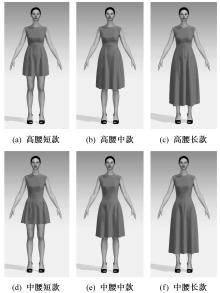
矩形型虚拟模特部分试穿样本"

表5

体型×腰位×裙长的重复测量方差分析结果"

因子 自由度 F P η p 2
腰位 1 18.478 0.003 0.043
腰位×体型 4 0.206 0.981 0.002
裙长 2 3.870 0.146 0.009
裙长×体型 8 5.142 0.010 0.048
腰位×裙长 2 3.772 0.151 0.009
腰位×裙长×体型 8 8.262 0.000 0.075

图6

不同体型下连衣裙腰位-裙长组合的评分"

表6

连衣裙腰位与裙长的评分均值"

评价变量 不同裙长评分均值 行均值
短款 中款 长款
高腰款 3.03 3.20 3.06 3.10
中腰款 3.29 3.30 3.25 3.28
列均值 3.16 3.25 3.15 3.19

图7

不同体型下连衣裙腰位与裙长的综合评价"

表7

不同体型下的款式要素特征权重"

体型类别 廓形Wt,S 合体度Wt,F 腰位Wt,Y 裙长Wt,L
倒三角 0.499 0.360 0.117 0.025
矩形 0.741 0.181 0.069 0.009
三角 0.735 0.094 0.064 0.106
沙漏 0.716 0.239 0.040 0.005
椭圆 0.349 0.165 0.064 0.422

表8

款式要素间交互特征权重"

体型类别 $W_{t, S}^{\text {int }}$ $W_{t, F}^{\text {int }}$ $W_{t, Y}^{\text {int }}$ $W_{t, L}^{\mathrm{int}}$
倒三角 0.581 0.419 0.824 0.176
矩形 0.804 0.196 0.885 0.115
三角 0.886 0.114 0.376 0.624
沙漏 0.750 0.250 0.889 0.111
椭圆 0.680 0.320 0.132 0.868

图8

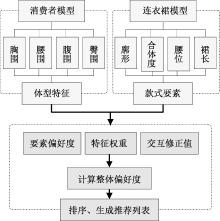
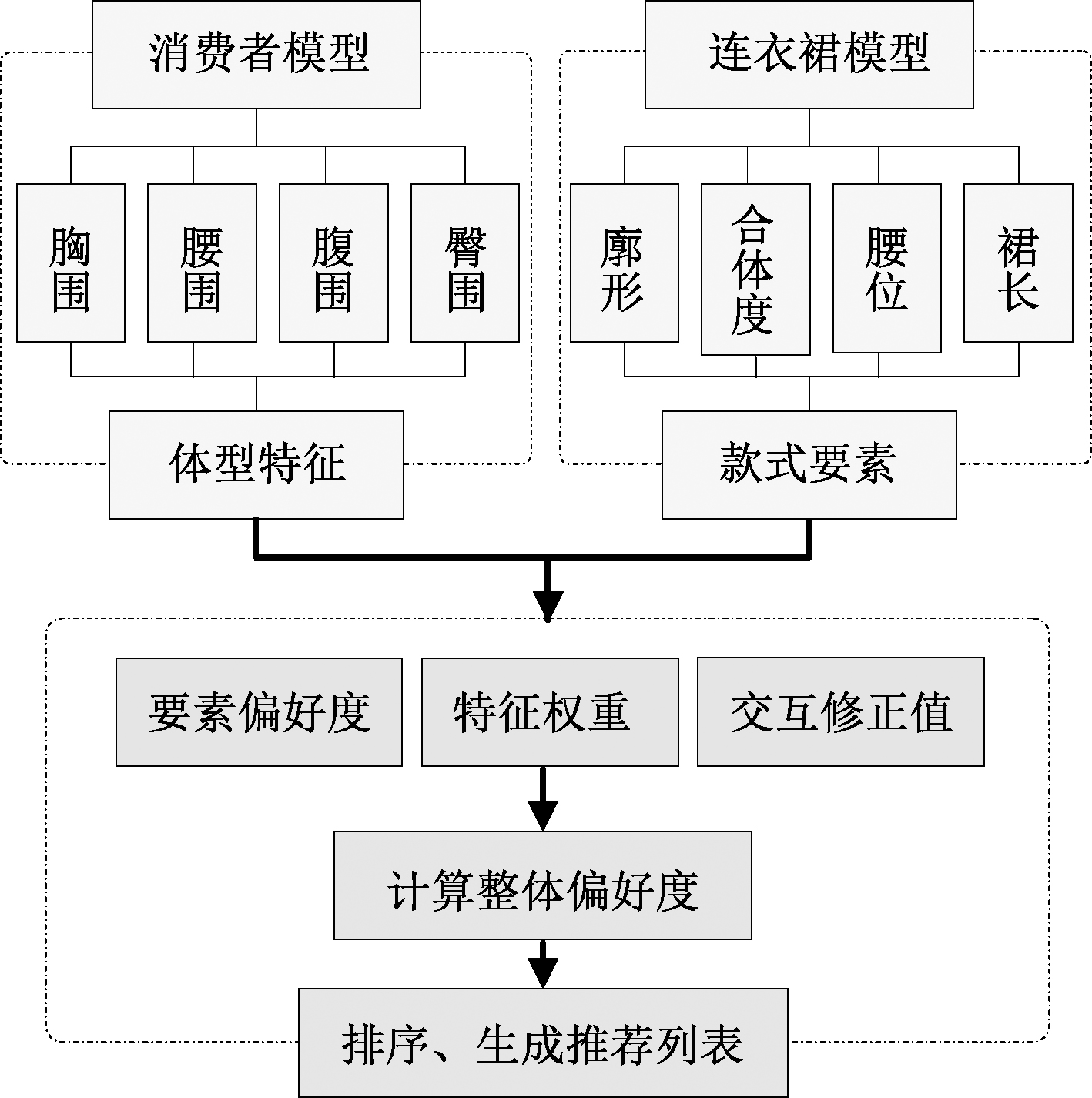
基于体型特征的连衣裙款式推荐流程图"

图9

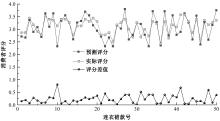
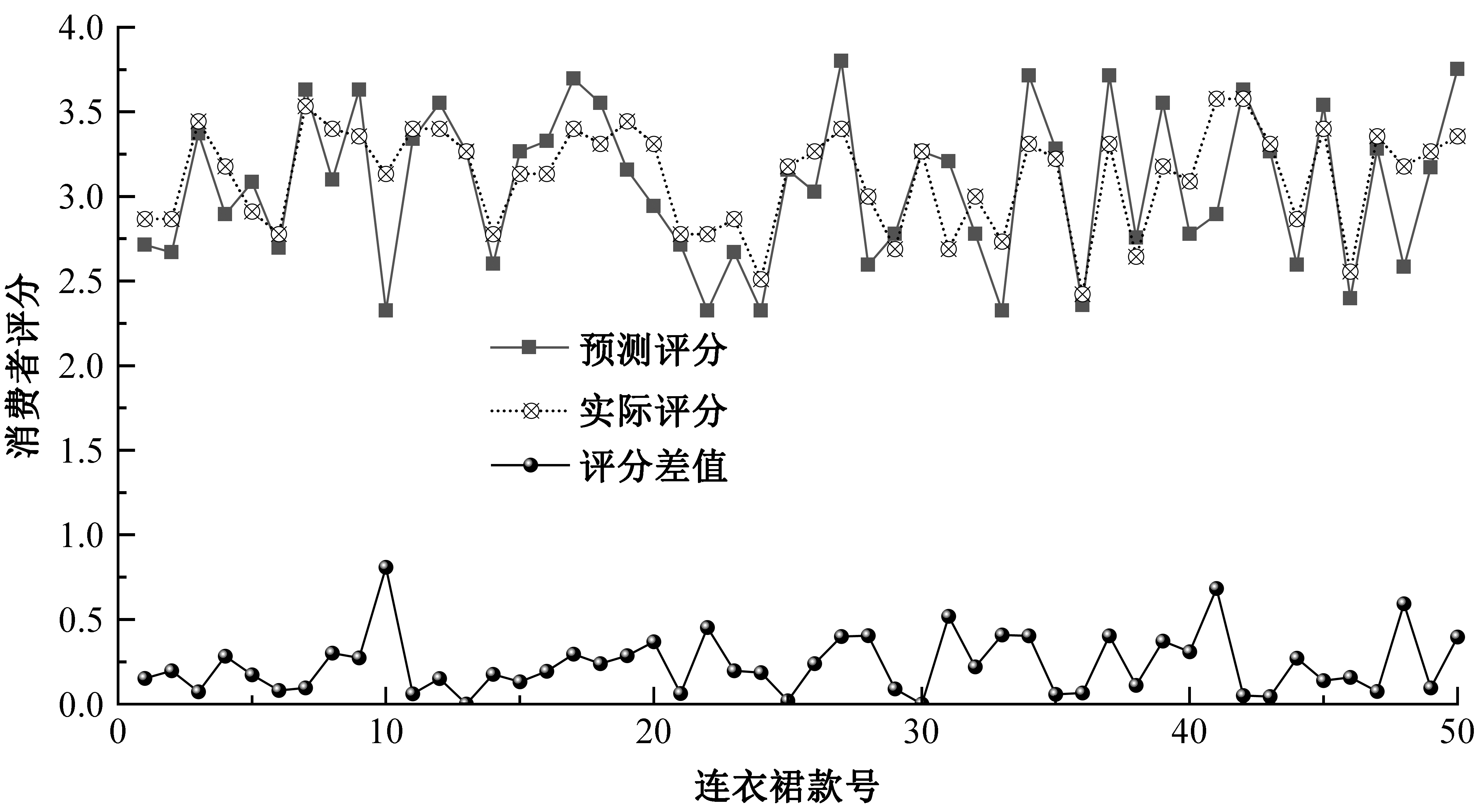
连衣裙款式的预测评分与实际评分折线图"

[1] 孟利云, 何瑛. 基于体型和身体满意度的年轻女性连衣裙偏好分析[J]. 浙江理工大学学报(社会科学版), 2019, 42(4): 423-429.
MENG Liyun, HE Ying. Analysis of young women's dress preferences based on body shape and body satisfaction[J]. Journal of Zhejiang Sci-Tech Univer-sity (Social Sciences), 2019, 42(4): 423-429.
[2] 张韩, 应君雅, 杨允出. 30-45岁女性身体满意度与连衣裙款式偏好分析[J]. 浙江理工大学学报(社会科学版), 2016, 36(3): 252-257.
ZHANG Han, YING Junya, YANG Yunchu. Analysis of body satisfaction and dress style preferences of women aged 30-45[J]. Journal of Zhejiang Sci-Tech University (Social Sciences), 2016, 36(3): 252-257.
[3] TOSELLI S, RINALDO N, GUALDI-RUSSO E. Body image perception of African immigrants in Europe[J]. Globalization and Health, 2016, 12(1): 48.
doi: 10.1186/s12992-016-0184-6 pmid: 27558365
[4] NAIGAGA D A, JAHANLU D, CLAUDIUS H M, et al. Body size perceptions and preferences favor overweight in adult Saharawi refugees[J]. Nutrition Journal, 2018, 17(1): 17.
doi: 10.1186/s12937-018-0330-5 pmid: 29426331
[5] 江学为, 田润雨, 卢方骁, 等. 基于模拟评分的服装推荐改进算法[J]. 纺织学报, 2021, 42(12): 138-144.
doi: 10.13475/j.fzxb.20210204107
JIANG Xuewei, TIAN Runyu, LU Fangxiao, et al. Improved algorithm for garment recommendation based on simulation scoring[J]. Journal of Textile Research, 2021, 42(12): 138-144.
doi: 10.13475/j.fzxb.20210204107
[6] 王安琪, 刘骊, 付晓东, 等. 面向个性化服装推荐的判断优化模型[J]. 计算机工程与应用, 2018, 54(11): 204-210.
doi: 10.3778/j.issn.1002-8331.1612-0318
WANG Anqi, LIU Li, FU Xiaodong, et al. Judgment optimization model for personalized garment recommendation[J]. Computer Engineering and Applications, 2018, 54(11): 204-210.
doi: 10.3778/j.issn.1002-8331.1612-0318
[7] SIDBERRY P A. Effects of body shape on body cathexis and dress shape preferences of female consumers: a balancing perspective[D]. Auburn: Auburn University, 2011:56-60.
[8] ZONG W J. Dress style recommendation based on female body shapes[D]. Ithaca: Cornell University, 2022:73-75.
[9] 皮珂珂, 陈敏之. 连衣裙感性因子与款式要素关系模型的构建[J]. 浙江理工大学学报(自然科学版), 2022, 47(2): 173-180.
PI Keke, CHEN Minzhi. Construction of a relationship model between perceptual factors and style elements of dresses[J]. Journal of Zhejiang Sci-Tech Univer-sity (Natural Science Edition), 2022, 47(2): 173-180.
[10] 王利, 孙迎, 刘正. 收腰结构对X连衣裙廓形的影响[J]. 现代纺织技术, 2022, 30(2): 222-228.
doi: 10.19398/j.att.202103033
WANG Li, SUN Ying, LIU Zheng. Influence of waist-tucking structure on the silhouette of X-style dresses[J]. Journal of Modern Textile Technology, 2022, 30(2): 222-228.
[11] 程碧莲, 蒋高明, 李炳贤. 三维服装虚拟展示技术的研究进展[J]. 纺织学报, 2024, 45(5): 248-257.
CHENG Bilian, JIANG Gaoming, LI Bingxian. Research progress on 3D garment virtual display technology[J]. Journal of Textile Research, 2024, 45(5): 248-257.
[12] 张悌忠. 基于3D虚拟技术的服装个性化定制系统设计研究[J]. 化纤与纺织技术, 2024, 53(1): 126-129.
ZHANG Tizhong. Design of personalized customized clothing system based on 3D virtual technology[J]. Chemical Fiber & Textile Technology, 2024, 53(1): 126-129.
[13] CONNELL L J, ULRICH P V, BRANNON E L, et al. Body shape assessment scale: instrument development for analyzing female figures[J]. Clothing and Textiles Research Journal, 2006, 24(2): 80-95.
doi: 10.1177/0887302X0602400203
[14] LI P, CORNER B, PAQUETTE S. Shape analysis of female torsos based on discrete cosine transform[J]. International Journal of Clothing Science and Technology, 2015, 27(5): 677-691.
doi: 10.1108/IJCST-03-2014-0035
[15] SIMMONS K, ISTOOK C L, DEVARAJAN P. Female figure identification technique (FFIT) for apparel, part I: describing female shapes[J]. Journal of Textile and Apparel, Technology and Management, 2004, 1(4): 1-14.
[16] 戴司易, 肖平, 周文迪, 等. 虚拟模特特征要素的视觉感知与评价效应[J]. 毛纺科技, 2025, 53(1): 83-89.
DAI Siyi, XIAO Ping, ZHOU Wendi, et al. Visual perception and evaluation effects of virtual model characteristic elements[J]. Wool Textile Journal, 2025, 53(1): 83-89.
[17] 吴迪星. 女性身体满意度与连衣裙款式偏好的关系[D]. 重庆: 西南大学, 2012:23-39.
WU Dixing. Relationship between female body satisfaction and dress style preferences[D]. Chongqing: Southwest University, 2012:31-33.
[18] 张韩. 连衣裙的造型要素与感性意象关联量化及款式推荐研究[D]. 杭州: 浙江理工大学, 2017:45-48.
ZHANG Han. Quantitative research on the relationship between modeling elements and perceptual images of dresses and style recommendation[D]. Hangzhou: Zhejiang Sci-Tech University, 2017:45-48.
[1] 陶晨, 洪兴华, 印梅芬. 仿真服装压力的虚拟皮肤建模[J]. 纺织学报, 2025, 46(10): 197-205.
[2] 纪梦琪, 何瑛, 马咏倩. 基于三维试衣的凸肚体男西裤样板的优化[J]. 纺织学报, 2025, 46(06): 187-195.
[3] 罗瑞奇, 常大顺, 胡新荣, 梁金星, 彭涛, 陈佳, 李丽. 基于改进外观流网络的跨体态虚拟试衣[J]. 纺织学报, 2025, 46(06): 203-211.
[4] 荆建伟, 胡裕鹏, 马王菲, 袁子舜, 顾冰菲, 徐望. 防弹衣间隙量与防护效果的有限元分析[J]. 纺织学报, 2025, 46(04): 187-196.
[5] 马帅, 张西临, 黄宽, 王崴, 瞿珏. 中国男性飞行员体型特征分类[J]. 纺织学报, 2025, 46(01): 163-169.
[6] 侯珏, 丁焕, 杨阳, 陆寅雯, 余灵婕, 刘正. 基于混合知识蒸馏和特征增强技术的轻量级无解析式虚拟试衣网络[J]. 纺织学报, 2024, 45(09): 164-174.
[7] 陆寅雯, 侯珏, 杨阳, 顾冰菲, 张宏伟, 刘正. 基于姿态嵌入机制和多尺度注意力的单张着装图像视频合成[J]. 纺织学报, 2024, 45(07): 165-172.
[8] 刘咏梅, 刘思忆, 于晓坤, 薛惠心, 张向辉. 中国东部地区中老年女性体型特征与分类[J]. 纺织学报, 2023, 44(07): 184-191.
[9] 袁甜甜, 王鑫, 罗炜豪, 梅琛楠, 韦京艳, 钟跃崎. 基于注意力机制和视觉转换器的三维虚拟试衣网络[J]. 纺织学报, 2023, 44(07): 192-198.
[10] 叶勤文, 王朝晖, 黄荣, 刘欢欢, 万思邦. 虚拟服装迁移在个性化服装定制中的应用[J]. 纺织学报, 2023, 44(06): 183-190.
[11] 鲁虹, 宋佳怡, 李圆圆, 滕峻峰. 基于合体两片袖的内旋造型结构设计[J]. 纺织学报, 2022, 43(08): 140-146.
[12] 刘咏梅, 薛惠心, 徐丹娘, 张向辉. 2020版东华女装原型的持续性结构修正[J]. 纺织学报, 2022, 43(07): 135-140.
[13] 晋金迪, 姚彤, 王军, 孙见梅, 潘力. 大连地区老年女性体型分类研究[J]. 纺织学报, 2022, 43(05): 150-155.
[14] 王春茹, 袁月, 曹晓梦, 范依琳, 钟安华. 立领结构参数对服装造型的影响[J]. 纺织学报, 2022, 43(03): 153-159.
[15] 张建新, 黄钢, 胡旭东. 基于光谱成像技术的织物光泽模糊综合评价[J]. 纺织学报, 2021, 42(06): 106-113.
Viewed
Full text


Abstract

Cited

  Shared   
  Discussed   
No Suggested Reading articles found!