纺织学报 ›› 2026, Vol. 47 ›› Issue (02): 222-229.doi: 10.13475/j.fzxb.20250906801
单梦琪1,2,3, 杨则琦1,2,3, 王富军1,2,3, 王璐1,2,3, 毛吉富1,2,3( )
)
SHAN Mengqi1,2,3, YANG Zeqi1,2,3, WANG Fujun1,2,3, WANG Lu1,2,3, MAO Jifu1,2,3()
摘要:
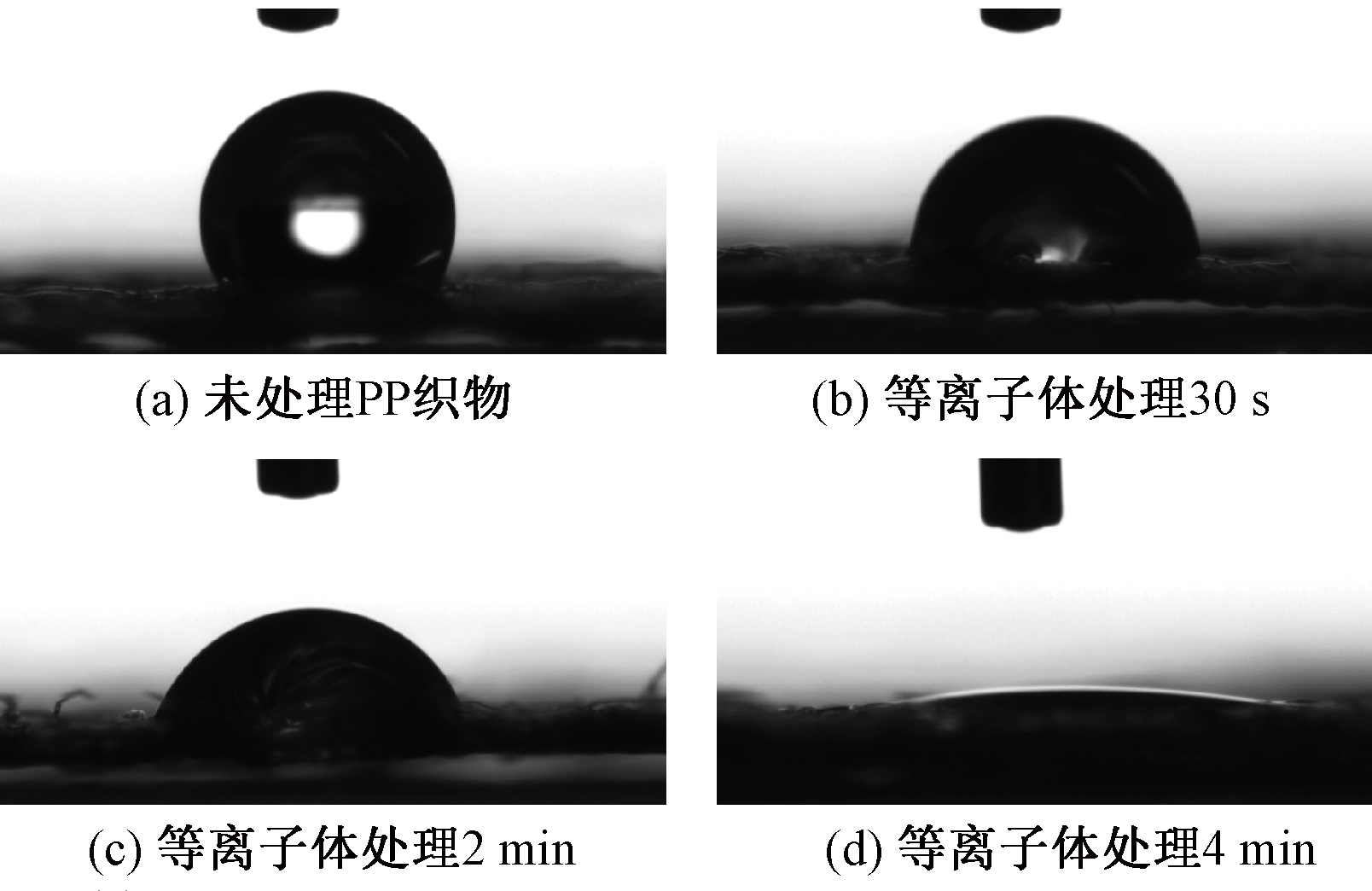
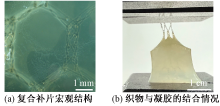
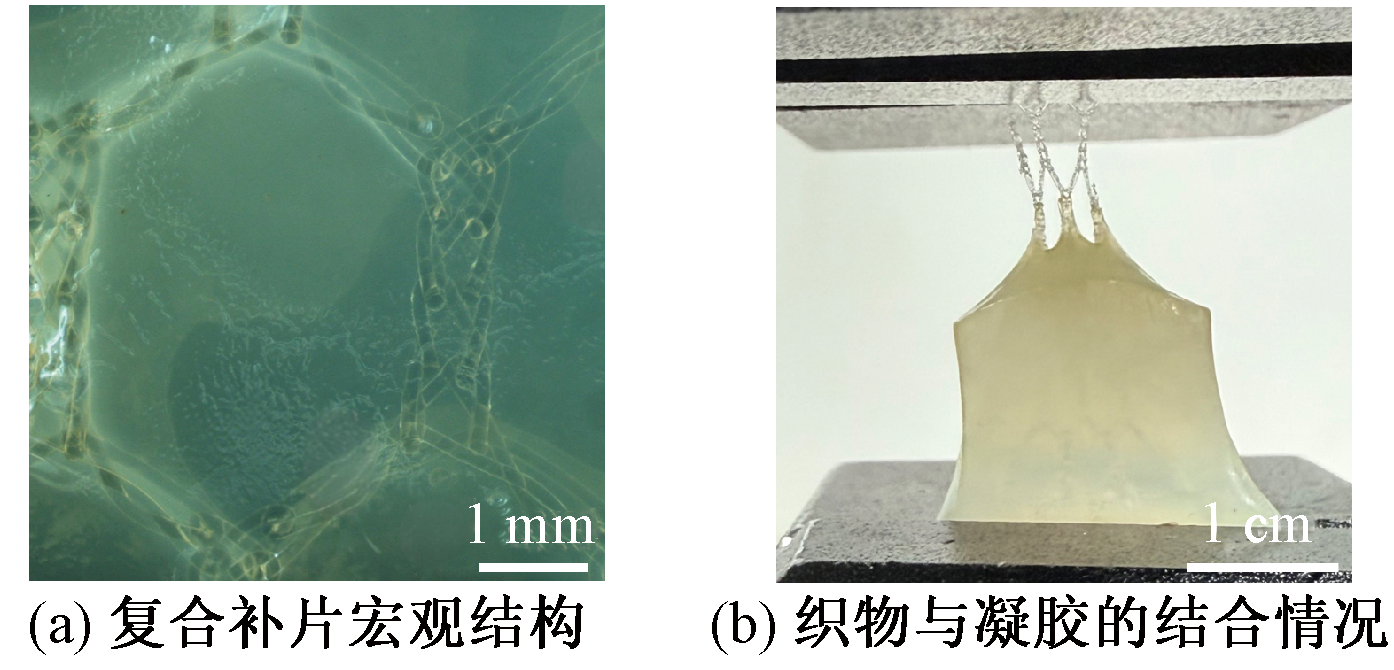
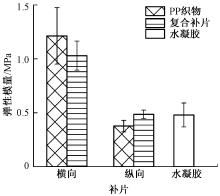
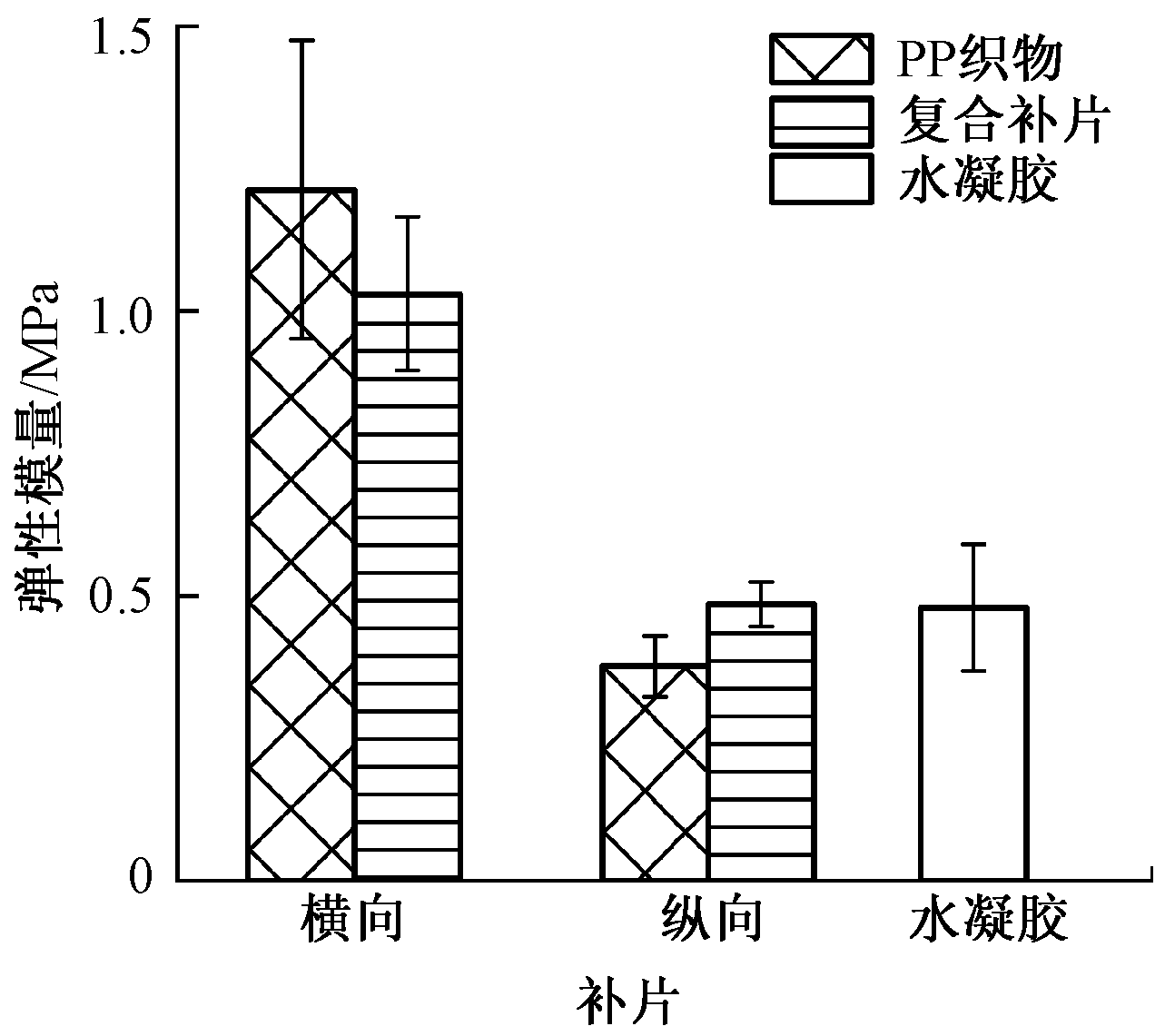
针对现有心肌补片缺乏各向异性及其移植时需缝合的问题,利用针织成形、等离子处理及原位凝胶技术,通过羟基介导聚乙烯醇(PVA)凝胶层固定在经氧等离子体改性的聚丙烯(PP)经编织物上,随后利用单宁酸(TA)对PVA原位交联,制备了兼具黏附性能和各向异性的织物-凝胶复合心肌补片,并对补片的微观形貌、化学结构、亲水性、织物-凝胶界面结合性能、黏附及力学性能等进行探究。结果表明:经氧等离子体处理后的PP织物具有良好的亲水性,水接触角为9.7°,与凝胶结合牢固;补片因PP织物的六角网眼结构展现出与天然心肌匹配的各向异性(各向异性比为2.1);PVA和TA交联时间为6 h,TA质量浓度为0.20 g/mL时,补片的黏附性能达到最优,黏附强度为15.73 kPa;补片在模拟动态条件和潮湿微环境中均能牢固附着于目标组织,具有在实际应用中免缝合移植并为梗死心脏提供机械支撑的潜能。研究结果有望为纺织基心肌补片的设计、成形及功能化提供参考。
中图分类号:
| [1] | TSAO C W, ADAY A W, ALMARZOOQ Z I, et al. Heart disease and stroke statistics-2022 update: a report from the American heart association[J]. Circulation, 2022, 145(8): E153-E639. |
| [2] | 国家心血管病中心, 中国心血管健康与疾病报告编写组, 胡盛寿. 中国心血管健康与疾病报告2023概要[J]. 中国循环杂志, 2024, 39(7): 625-660. |
| National Center for Cardiovascular Diseases, The Writing Committee of the Report on Cardiovascular Health and Diseases in China, HU Shengshou. Report on cardiovascular health and diseases in china 2023:an updated summary[J]. Chinese Circulation Journal, 2024, 39(7): 625-660. | |
| [3] |
LI M, WU H, YUAN Y H, et al. Recent fabrications and applications of cardiac patch in myocardial infarction treatment[J]. VIEW, 2022, 3(2): 20200153.
doi: 10.1002/viw2.v3.2 |
| [4] |
LIU T L, HAO Y, ZHANG Z X, et al. Advanced cardiac patches for the treatment of myocardial infarction[J]. Circulation, 2024, 149(25): 2002-2020.
doi: 10.1161/CIRCULATIONAHA.123.067097 pmid: 38885303 |
| [5] |
WANG Y B, LI G C, YANG L, et al. Development of innovative biomaterials and devices for the treatment of cardiovascular diseases[J]. Advanced Materials, 2022, 34(46): 2201971.
doi: 10.1002/adma.v34.46 |
| [6] |
DWYER K D, COULOMBE K L K. Cardiac mechanostructure: using mechanics and anisotropy as inspiration for developing epicardial therapies in treating myocardial infarction[J]. Bioactive Materials, 2021, 6(7): 2198-2220.
doi: 10.1016/j.bioactmat.2020.12.015 pmid: 33553810 |
| [7] |
LIN X, LIU Y, BAI A B, et al. A viscoelastic adhesive epicardial patch for treating myocardial infarction[J]. Nature Biomedical Engineering, 2019, 3(8): 632-643.
doi: 10.1038/s41551-019-0380-9 pmid: 30988471 |
| [8] |
YAO Y J, LI A Q, WANG S Q, et al. Multifunctional elastomer cardiac patches for preventing left ventricle remodeling after myocardial infarction in vivo[J]. Biomaterials, 2022, 282: 121382.
doi: 10.1016/j.biomaterials.2022.121382 |
| [9] |
KAPNISI M, MANSFIELD C, MARIJON C, et al. Auxetic cardiac patches with tunable mechanical and conductive properties toward treating myocardial infarction[J]. Advanced Functional Materials, 2018, 28(21): 1800618.
doi: 10.1002/adfm.v28.21 |
| [10] |
OLVERA D, SOHRABI MOLINA M, HENDY G, et al. Electroconductive melt electrowritten patches matching the mechanical anisotropy of human myocardium[J]. Advanced Functional Materials, 2020, 30(44): 1909880.
doi: 10.1002/adfm.v30.44 |
| [11] |
JIA X M, LIU W Y, AI Y J, et al. A multifunctional anisotropic patch manufactured by microfluidic manipulation for the repair of infarcted myocardium[J]. Advanced Materials, 2024, 36(44): 2404071.
doi: 10.1002/adma.v36.44 |
| [12] |
CASTILHO M, DE RUIJTER M, BEIRNE S, et al. Multitechnology biofabrication: a new approach for the manufacturing of functional tissue structures?[J]. Trends in Biotechnology, 2020, 38(12): 1316-1328.
doi: 10.1016/j.tibtech.2020.04.014 pmid: 32466965 |
| [13] |
MAO Y, MENG Y X, LI S J, et al. Alginate-assistant nanofiber integrated with polypropylene hernia mesh for efficient anti-adhesion effects and enhanced tissue compatibility[J]. Composites Part B: Engineering, 2022, 235: 109761.
doi: 10.1016/j.compositesb.2022.109761 |
| [14] |
JIAO Y J, LI C J, LI S J, et al. Hernia mesh with biomechanical and mesh-tissue interface dual compliance for scarless abdominal wall reconstruction[J]. Advanced Functional Materials, 2023, 33(48): 2305714.
doi: 10.1002/adfm.v33.48 |
| [15] |
WALSH R G. Design and features of the acorn CorCapTM cardiac support device: the concept of passive mechanical diastolic support[J]. Heart Failure Reviews, 2005, 10(2): 101-107.
doi: 10.1007/s10741-005-4637-x |
| [16] |
BOUBLIK J, PARK H, RADISIC M, et al. Mechanical properties and remodeling of hybrid cardiac constructs made from heart cells, fibrin, and biodegradable, elastomeric knitted fabric[J]. Tissue Engineering, 2005, 11(7/8): 1122-1132.
doi: 10.1089/ten.2005.11.1122 |
| [17] |
XUE B, GU J, LI L, et al. Hydrogel tapes for fault-tolerant strong wet adhesion[J]. Nature Communications, 2021, 12: 7156.
doi: 10.1038/s41467-021-27529-5 pmid: 34887418 |
| [18] |
HUANG S X, LEI D, YANG Q, et al. A perfusable, multifunctional epicardial device improves cardiac function and tissue repair[J]. Nature Medicine, 2021, 27(3): 480-490.
doi: 10.1038/s41591-021-01279-9 pmid: 33723455 |
| [19] |
DENG J, YUK H, WU J J, et al. Electrical bioadhesive interface for bioelectronics[J]. Nature Materials, 2021, 20(2): 229-236.
doi: 10.1038/s41563-020-00814-2 |
| [20] |
CHEN P E, ZHANG W, FAN X L, et al. A polyphenol-derived redox-active and conductive nanoparticle-reinforced hydrogel with wet adhesiveness for myocardial infarction repair by simultaneously stimulating anti-inflammation and calcium homeostasis pathways[J]. Nano Today, 2024, 55: 102157.
doi: 10.1016/j.nantod.2024.102157 |
| [21] |
PARK J, KIM T Y, KIM Y, et al. A mechanically resilient and tissue-conformable hydrogel with hemostatic and antibacterial capabilities for wound care[J]. Advanced Science, 2023, 10(30): 2303651.
doi: 10.1002/advs.v10.30 |
| [22] |
HOANG A P, RUPRAI H, FIDANOVSKI K, et al. Porous and sutureless bioelectronic patch with retained electronic properties under cyclic stretching[J]. Applied Materials Today, 2019, 15: 315-322.
doi: 10.1016/j.apmt.2019.02.013 |
| [23] |
HE Y T, LI Q, CHEN P E, et al. A smart adhesive Janus hydrogel for non-invasive cardiac repair and tissue adhesion prevention[J]. Nature Communications, 2022, 13: 7666.
doi: 10.1038/s41467-022-35437-5 pmid: 36509756 |
| [24] |
CHOI H, KIM Y, KIM S, et al. Adhesive bioelectronics for sutureless epicardial interfacing[J]. Nature Electronics, 2023, 6(10): 779-789.
doi: 10.1038/s41928-023-01023-w |
| [25] |
HE H, ZHANG Q, ZHANG Y M, et al. Injectable bioadhesive and lubricating hydrogel with polyphenol mediated single atom nanozyme for rheumatoid arthritis therapy[J]. Nature Communications, 2025, 16: 2768.
doi: 10.1038/s41467-025-58059-z |
| [26] |
ZHANG J, FU C S, TIAN T, et al. In situ ultrafast self-gelling coacervate powder with antibacterial, antioxidant, and robust wet adhesion properties for hemostasis and wound healing[J]. Advanced Functional Materials, 2025, 35(36): 2502577.
doi: 10.1002/adfm.v35.36 |
| [27] |
XIA Y L, ZHOU X Z, WANG Z Z, et al. Muscle-inspired self-growing anisotropic hydrogels with mechanical training-promoting mechanical properties[J]. Advanced Materials, 2025, 37(17): 2416744.
doi: 10.1002/adma.v37.17 |
| [28] |
ZHENG Y T, BAIDYA A, ANNABI N. Molecular design of an ultra-strong tissue adhesive hydrogel with tunable multifunctionality[J]. Bioactive Materials, 2023, 29: 214-229.
doi: 10.1016/j.bioactmat.2023.06.007 pmid: 37520304 |
| [29] | 王茜, 乔燕莎, 王君硕, 等. 金属酚醛/两性离子聚合物涂层聚丙烯补片的制备及其抗蛋白吸附性能[J]. 纺织学报, 2022, 43(6): 9-14. |
| WANG Qian, QIAO Yansha, WANG Junshuo, et al. Preparation of metal phenolic network/zwitterionic polymer coated polypropylene mesh and its resistance to protein adsorption[J]. Journal of Textile Research, 2022, 43(6): 9-14. | |
| [30] |
CHEN W, LI N, MA Y, et al. Superstrong and tough hydrogel through physical cross-linking and molecular alignment[J]. Biomacromolecules, 2019, 20(12): 4476-4484.
doi: 10.1021/acs.biomac.9b01223 pmid: 31644270 |
| [31] |
LIN X J, HUANG Z X, HUANG H J, et al. A tough Janus poly(vinyl alcohol)-based hydrogel for wound closure and anti postoperative adhesion[J]. Acta Biomaterialia, 2024, 188: 103-116.
doi: 10.1016/j.actbio.2024.08.049 pmid: 39243837 |
| [32] |
HE X, LIU X Z, YANG J, et al. Tannic acid-reinforced methacrylated chitosan/methacrylated silk fibroin hydrogels with multifunctionality for accelerating wound healing[J]. Carbohydrate Polymers, 2020, 247: 116689.
doi: 10.1016/j.carbpol.2020.116689 |
| [33] |
HE G H, ZHOU Y Q, CHEN X H, et al. Preparation of poly (vinyl alcohol)/polydopamine/tannin acid composite hydrogels with dual adhesive, antioxidant and antibacterial properties[J]. European Polymer Journal, 2024, 205: 112708.
doi: 10.1016/j.eurpolymj.2023.112708 |
| [34] |
XIE J Q, YAO Y J, WANG S Q, et al. Alleviating oxidative injury of myocardial infarction by a fibrous polyurethane patch with condensed ROS-scavenging backbone units[J]. Advanced Healthcare Materials, 2022, 11(4): 2101855.
doi: 10.1002/adhm.v11.4 |
| [35] |
李沂蒙, 单梦琪, 李雯昕, 等. 聚吡咯基可拉伸导电心肌补片的制备及其电传导性能[J]. 纺织学报, 2024, 45(12): 89-97.
doi: 10.13475/j.fzxb.20230904101 |
|
LI Yimeng, SHAN Mengqi, LI Wenxin, et al. Preparation of polypyrrole-based stretchable conductive myocardial patches and their electroconductive properties[J]. Journal of Textile Research, 2024, 45(12): 89-97.
doi: 10.13475/j.fzxb.20230904101 |
|
| [36] |
GHANTA R K, PUGAZENTHI A, ZHAO Y G, et al. Influence of supraphysiologic biomaterial stiffness on ventricular mechanics and myocardial infarct reinforcement[J]. Acta Biomaterialia, 2022, 149: 30-39.
doi: 10.1016/j.actbio.2022.07.006 |
| [1] | 席立锋, 张爱军, 贾伟, 马丕波, 蒋高明. 体外膜肺氧合膜织物模型构建与编织损伤机制[J]. 纺织学报, 2026, 47(02): 162-171. |
| [2] | 代文居, 张天雨, 吴倩, 支超. 三维间隔织物/离子凝胶复合材料的光热电性能[J]. 纺织学报, 2026, 47(02): 181-187. |
| [3] | 季巧, 于清源, 周爱晖, 马博谋, 徐进, 袁久刚. 细菌纤维素及其复合材料的应用研究进展[J]. 纺织学报, 2025, 46(12): 243-250. |
| [4] | 杨孟晓, 邱小雪, 吴芳, 刘琳, 姚菊明. 蚕丝基导电凝胶纤维的制备及其应变传感性能[J]. 纺织学报, 2025, 46(12): 49-56. |
| [5] | 姚晓军, 徐恩婷, 杨雪媛, 房磊, 包伟, 房宽峻. 聚乙烯吡咯烷酮对聚对苯二甲酸乙二醇酯中空纤维膜结构与性能的调控[J]. 纺织学报, 2025, 46(12): 66-73. |
| [6] | 张朝辉, 邹梨花, 李伟, 张自豪, 邢晓雨. 阳离子-丙烯酸酯型接枝淀粉浆料的黏附性能[J]. 纺织学报, 2025, 46(11): 164-169. |
| [7] | 曾一洪, 付开秀, 王彦, 罗健, 陈国宝. 不同动物来源脱细胞骨骼肌基质-丝素蛋白复合支架理化性质比较[J]. 纺织学报, 2025, 46(11): 43-51. |
| [8] | 侯颖慧, 刘肖燕, 柳东辰, 郝矿荣, 邹婷. 基于体外降解的输尿管支架管的多目标优化[J]. 纺织学报, 2025, 46(09): 154-162. |
| [9] | 张莎莎, 蔡牧航, 吕晓静, 胡丹, 刘娟, 吉星照, 曹根阳, 王浩娜. 静电场协同构象羽绒/二氧化硅气凝胶保暖材料[J]. 纺织学报, 2025, 46(07): 10-18. |
| [10] | 陈亚娟, 郭瀚宇, 张陈恬, 李欣欣, 张雪萍. 聚乙烯醇/海藻酸钠/锦纶66复合水凝胶包芯纱的制备及其吸湿性能[J]. 纺织学报, 2025, 46(06): 103-110. |
| [11] | 王惠婷, 陈宇鉴, 刘诗仪, 张显涛, 陆斌, 邹专勇, 王建, 张寅江. 海藻酸盐基非织造医用敷料的研究进展[J]. 纺织学报, 2025, 46(06): 240-249. |
| [12] | 谭文萍, 张硕, 张倩, 张寅, 刘润政, 黄晓卫, 明津法. 聚乳酸纤维气凝胶制备及其辐射制冷性能[J]. 纺织学报, 2025, 46(06): 63-72. |
| [13] | 王薇, 高建南, 裴笑涵, 陆鑫, 孙银银, 吴建兵. 纤维素/甲基三甲氧基硅烷气凝胶的制备及其油水分离效能[J]. 纺织学报, 2025, 46(05): 135-142. |
| [14] | 丁凯, 符芬, 张智翔, 杨语童, 李超婧, 赵帆, 王璐, 王富军. 按压排尿用针织人工膀胱的设计及其力学性能[J]. 纺织学报, 2025, 46(05): 169-178. |
| [15] | 符芬, 王钰涵, 丁凯, 赵帆, 李超靖, 王璐, 曾泳春, 王富军. 纤维素基止血材料的研究进展[J]. 纺织学报, 2025, 46(04): 226-234. |
|
||
 京公网安备11010502044800号