纺织学报 ›› 2026, Vol. 47 ›› Issue (02): 230-238.doi: 10.13475/j.fzxb.20251002601
刘济民1,2, 任亚杰1,2, 王志强1,2, 陈贺3, 王怀芳1,2( )
)
LIU Jimin1,2, REN Yajie1,2, WANG Zhiqiang1,2, CHEN He3, WANG Huaifang1,2()
摘要:
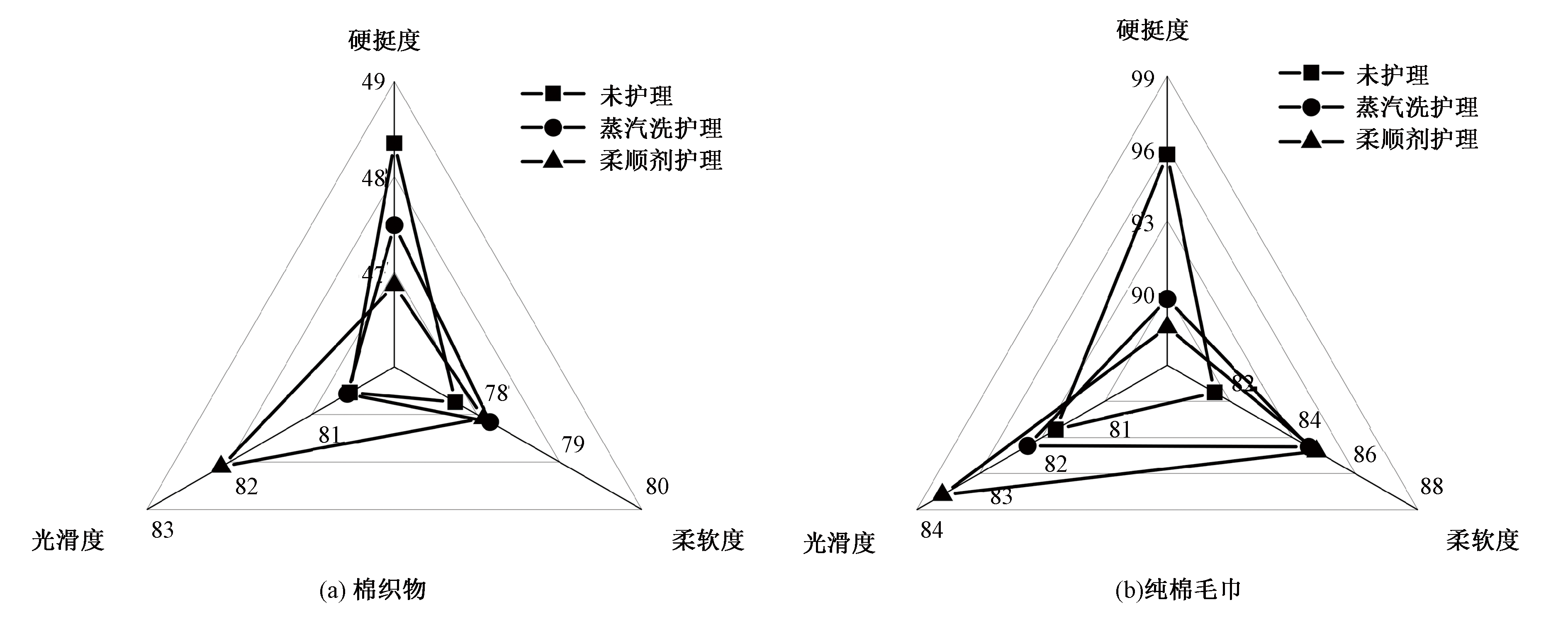
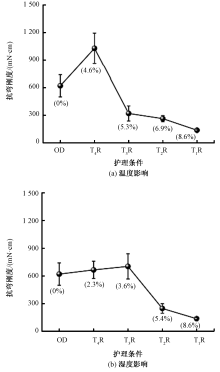
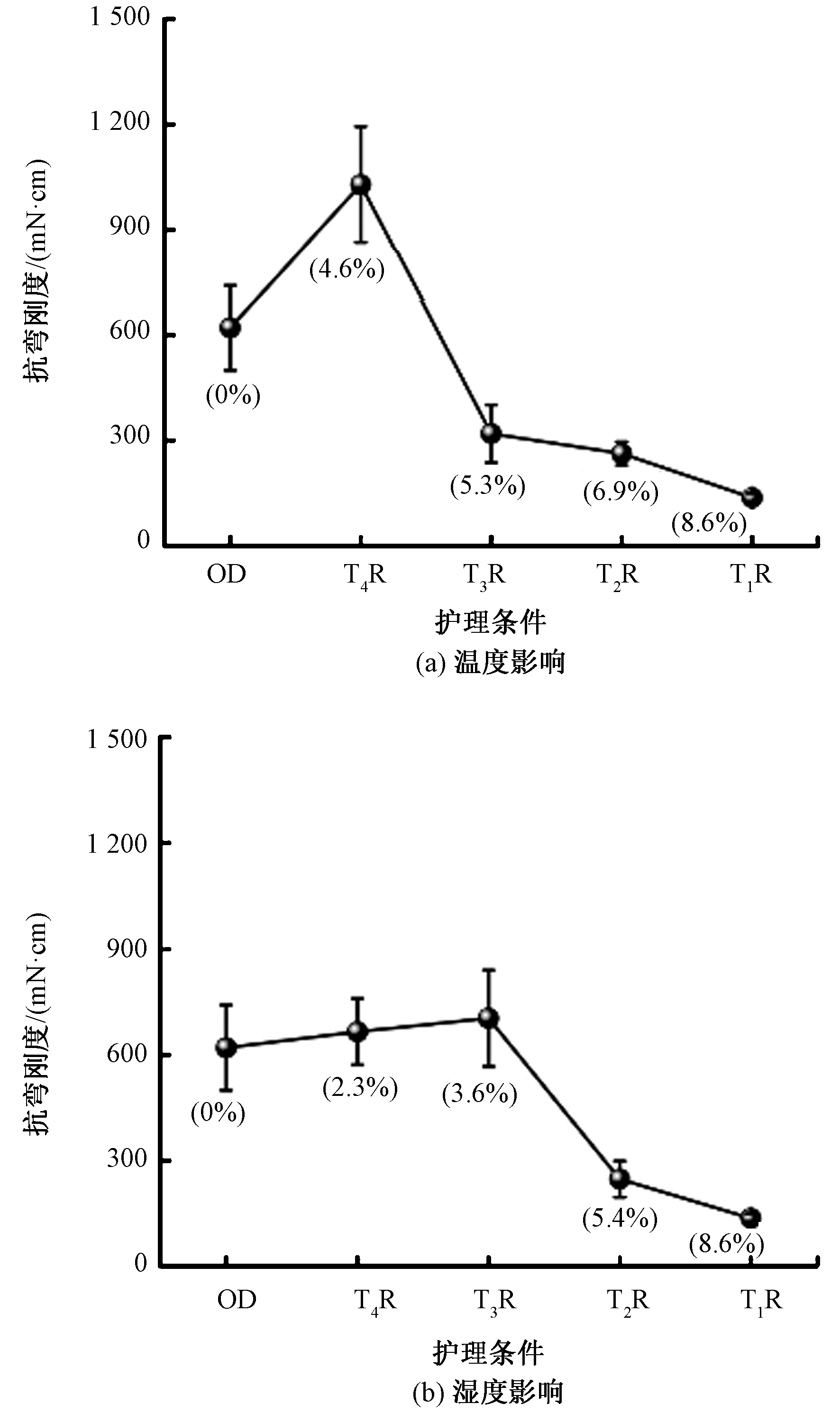
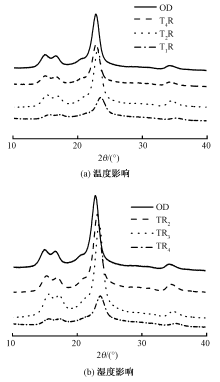
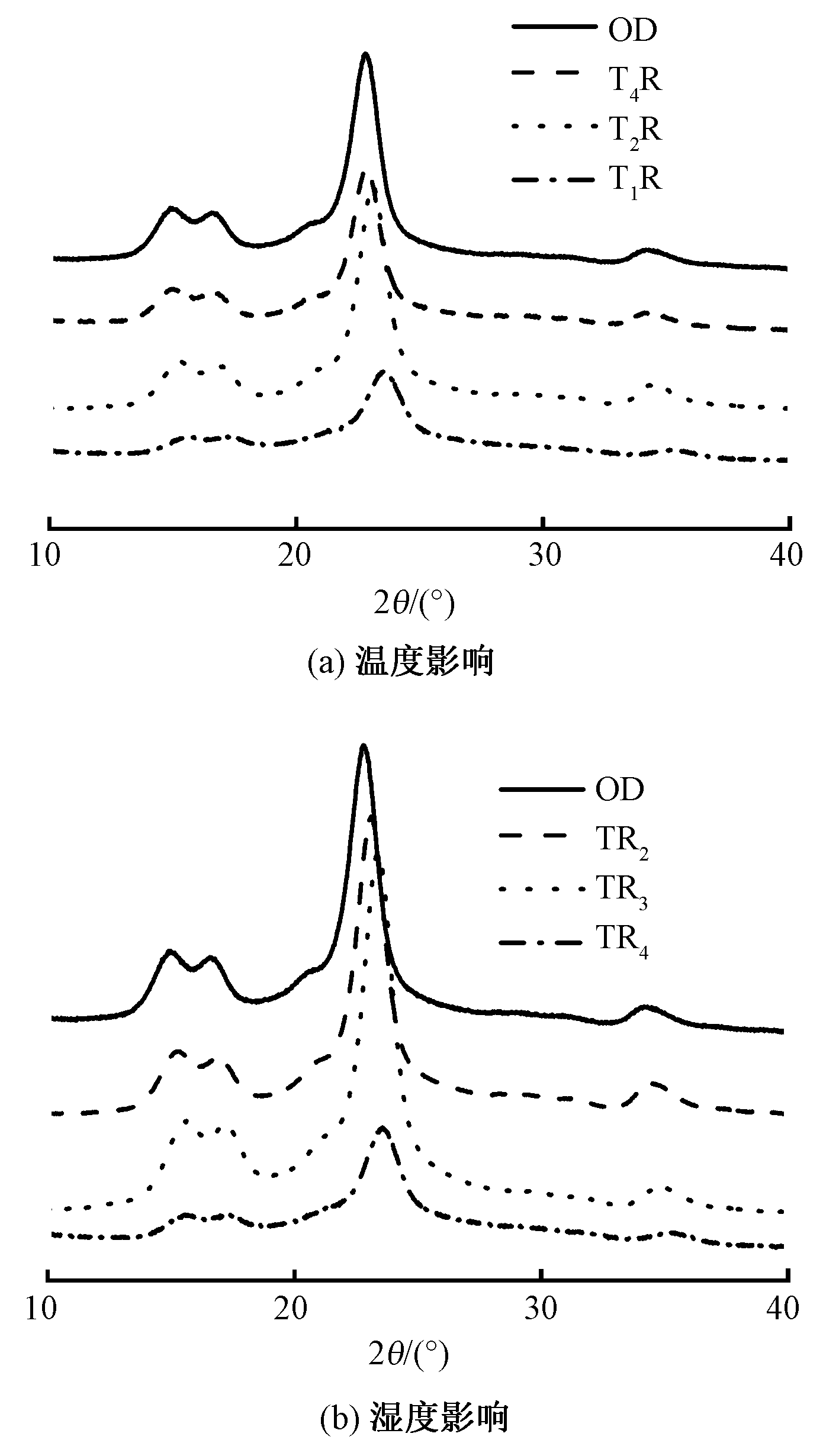
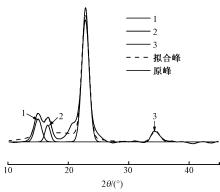
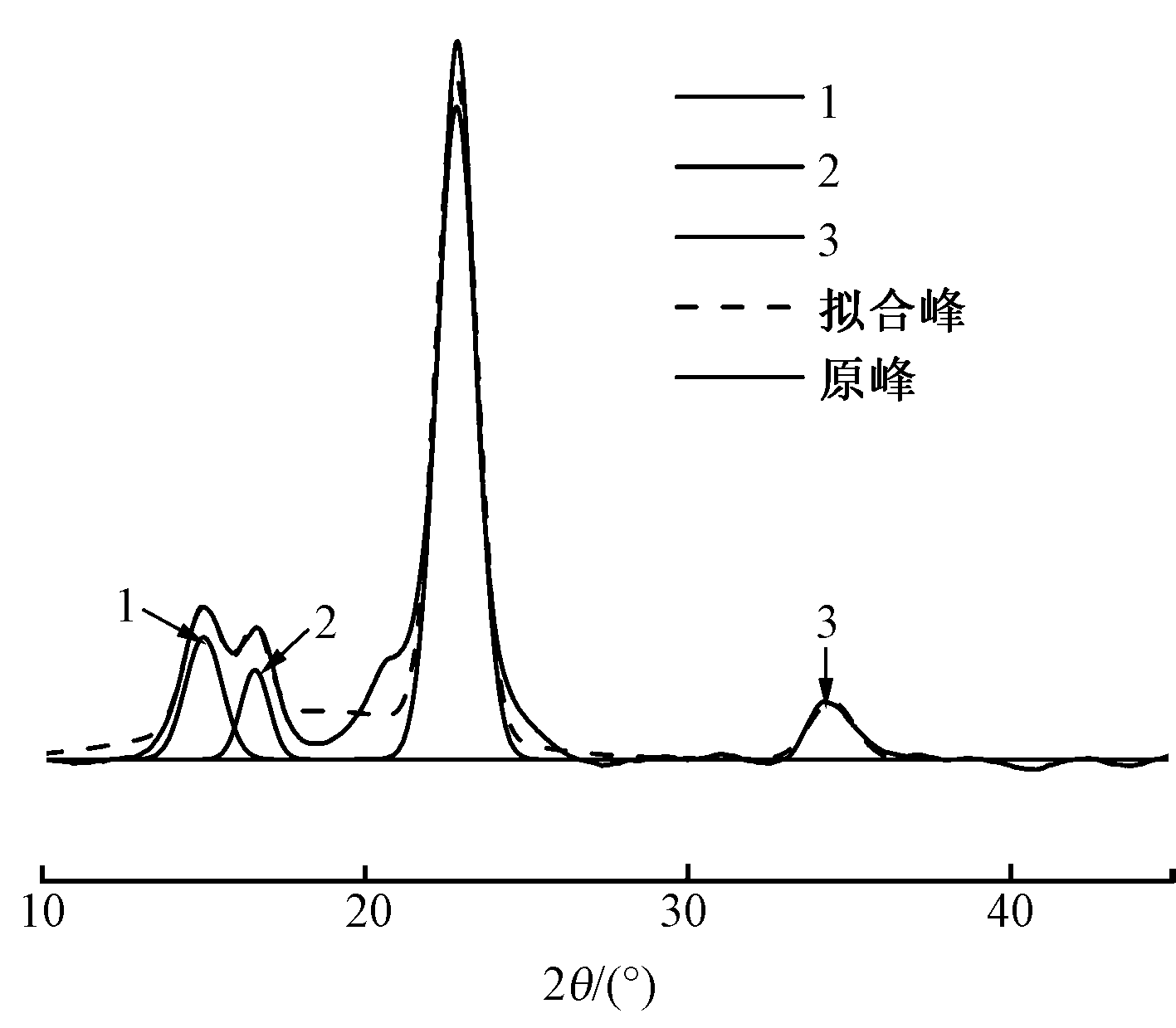
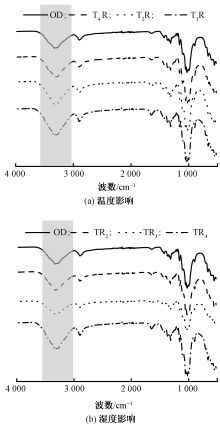
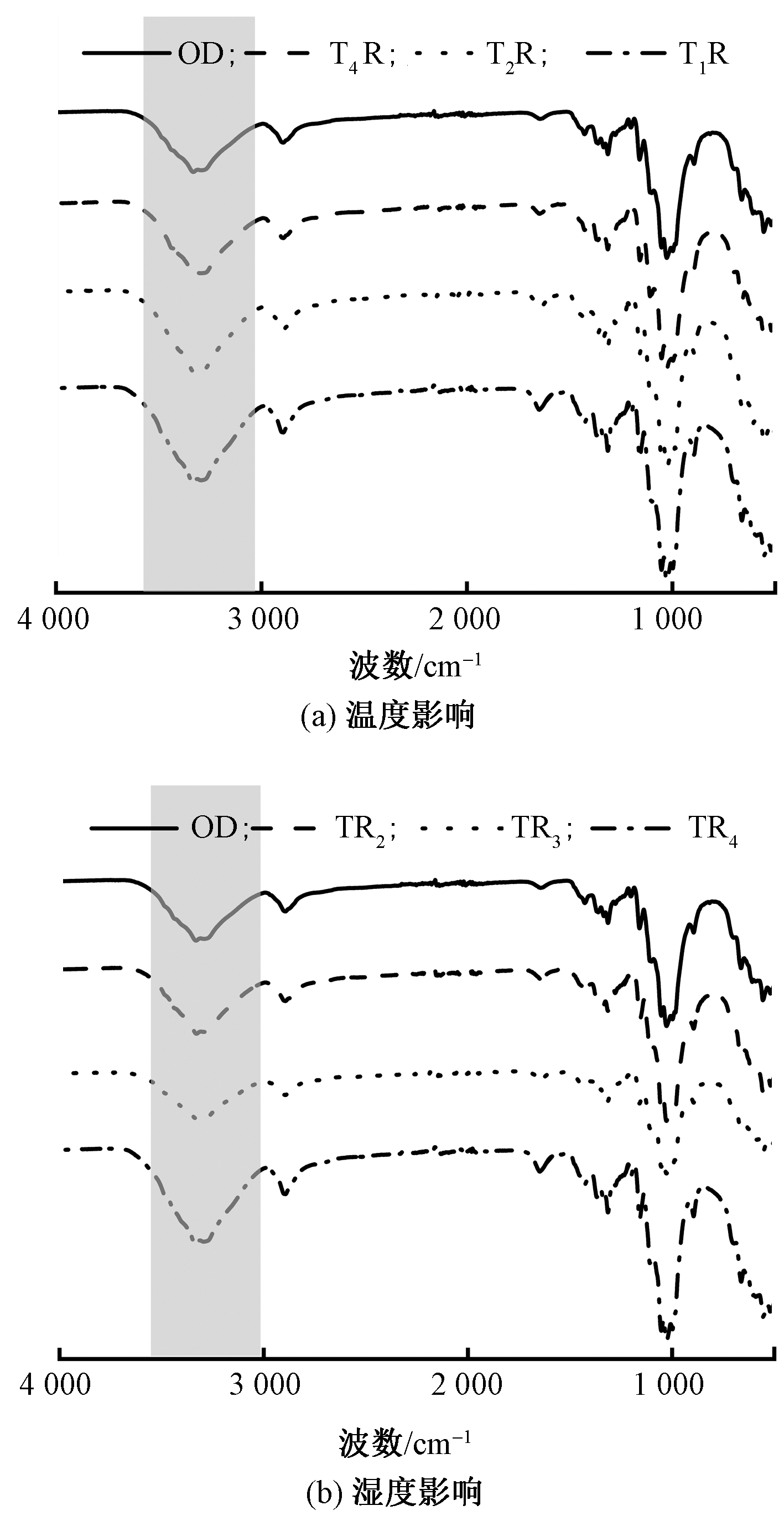
为提高织物蒸汽护理效果,以纯棉织物为对象,研究了蒸汽护理对其手感的影响;采用恒温恒湿箱控制织物所处环境温湿度,研究温度和湿度对织物手感的影响规律;通过X射线衍射仪、傅里叶变换红外光谱仪等手段,研究湿热处理过程中织物含湿率变化对结晶度、分子间氢键的影响,并探讨其与棉织物柔软度的关联性。结果表明:蒸汽洗护理后的织物手感得到改善,柔软度提高;棉织物手感受织物含湿率影响,含湿率受环境温湿度影响。在湿度恒定时,升高温度织物含湿率下降;在温度恒定时,增加湿度织物含湿率增加。当棉织物含湿率低于4.6%时,随着含湿率的增加,结晶指数、分子间氢键和抗弯刚度增加,不利于织物手感提高;当棉织物含湿率超过4.6%时,结晶指数、分子间氢键和抗弯刚度均随含湿率的增加而下降,织物手感提高。
中图分类号:
| [1] | 王风霞, 曾靖峰, 丁雪梅. 家庭洗涤中织物磨损性能的研究[J]. 家电科技, 2014(12): 86-89. |
| WANG Fengxia, ZENG Jingfeng, DING Xuemei. Study on fabric’s abrasion during home laundering[J]. China Appliance Technology, 2014(12): 86-89. | |
| [2] | SÜLAT V, GÜRBÜZER B, 王文义. 水洗过程对织物性能和外观的影响[J]. 国际纺织导报, 2010, 38(9): 54-56, 58. |
| SÜLAT V, GÜRBÜZER B, WANG Yiwen. Effects of washing cycles on some fabric properties and surface apperance[J]. Melliand China, 2010, 38(9): 54-56, 58. | |
| [3] | 宁琳, 方艳萍, 魏新, 等. “空气洗”后衬衣平整度的评价及其影响因素研究[C]// 2020年中国家用电器技术大会论文集. 宁波: 中国家用电器协会, 2020:1016-1019. |
| NING Lin, FANG Yanping, WEI Xin, et al. Evaluation of smoothness appearance of shirt after air refresh and its influencing factors[C]// Proceedings of 2020 China Household Electrical Appliances Technology Conference. Ningbo: China Household Electrical Appliances Association, 2020:1016-1019. | |
| [4] | 万梓豪, 孙琦, 韦玉辉, 等. 空气洗洗护机制及其在衣物除皱护理中的应用研究[J]. 河南工程学院学报(自然科学版), 2024, 36(2): 18-24. |
| WAN Zihao, SUN Qi, WEI Yuhui, et al. Research on the mechanism of air washing and its application in wrinkle removal care of clothing[J]. Journal of Henan University of Engineering (Natural Science Edition), 2024, 36(2): 18-24. | |
| [5] | 陈贺, 明津法, 石伟泽, 等. 蒸汽洗技术对不同材质面料性能影响研究[J]. 家电科技, 2022(4): 102-104, 111. |
| CHEN He, MING Jinfa, SHI Weize, et al. Effect of steam washing technology on properties of different fabrics[J]. Journal of Appliance Science & Technology, 2022(4): 102-104, 111. | |
| [6] | 陈贺, 明津法, 石伟泽, 等. 蒸汽洗技术对蛋白质纤维材质面料性能影响[C]// 2022年中国家用电器技术大会论文集. 宁波: 中国家用电器协会, 2023:1274-1278. |
| CHEN He, MING Jinfa, SHI Weize, et al. Effect of steam washing technology on properties of protein fiber fabric[C]// Proceedings of 2022 China Household Electrical Appliances Technology Conference. Ningbo: China Household Electrical Appliances Association, 2023:1274-1278. | |
| [7] | 张姝, 刘红, 黄绥, 等. 滚筒洗衣机机洗与“空气洗”对织物外观性能影响研究[C]// 2019年中国家用电器技术大会论文集. 佛山: 中国家用电器协会, 2019:691-695. |
| ZHANG Shu, LIU Hong, HUANG Sui, et al. Research on the effect of drum washer washing and air fresh textile surface properties[C]// Proceedings of 2019 China Household Electrical Appliances Technology Conference. Foshan: China Household Electrical Appliances Association, 2019:691-695. | |
| [8] | 陈小文, 吴伟, 钟毅, 等. 棉织物的活性染料低含水率焙蒸固色工艺[J]. 纺织学报, 2021, 42(7): 115-122. |
| CHEN Xiaowen, WU Wei, ZHONG Yi, et al. Low-moisture content baking and steaming color fixation process for cotton fabrics padded with reactive dyes[J]. Journal of Textile Research, 2021, 42(7): 115-122. | |
| [9] | MATYJAS E, BLUS K, RYBICKI E J F, et al. Sorption studies of reactive red dyes[J]. Fibres and Textiles in Eastern Europe, 2003, 11(2):66-70. |
| [10] | 潘宁. 一套用于织物感官性能评价的新型测量仪器系统[J]. 纺织导报, 2012(3): 101-104. |
| PAN Ning. A new instrument for evaluating fabric performance related to human sensory perception-principles and applications[J]. China Textile Leader, 2012(3): 101-104. | |
| [11] | 孙妍, 应芬, 邵慧奇, 等. 基于PhabrOmeter研究车用经编面料手感与其结构参数的关系[J]. 纺织科学与工程学报, 2022, 39(4): 47-51. |
| SUN Yan, YING Fen, SHAO Huiqi, et al. Relationship between the hand feel and structural parameters of auto warp knitted fabric based on PhabrOmeter[J]. Journal of Textile Science and Engineering, 2022, 39(4): 47-51. | |
| [12] | 朱婉萍. 基于PhabrOmeter的纯棉面料手感分析与评价[D]. 无锡: 江南大学, 2021. |
| ZHU Wanping. Analysis and evaluation of hand feel of pure cotton fabric based on PhabrOmeter[D]. Wuxi: Jiangnan University, 2021. | |
| [13] | 陈国雄. 织物柔软剂的发展回顾和方向探讨[J]. 印染助剂, 2019, 36(2): 5-8. |
| CHEN Guoxiong. Development retrospect and direction discuss of fabric softeners[J]. Textile Auxiliaries, 2019, 36(2): 5-8. | |
| [14] | 李妮妮, 于文. 几种常用织物柔顺剂的性能研究[J]. 日用化学品科学, 2016, 39(7): 30-33, 49. |
| LI Nini, YU Wen. Study on the performance of fabric softeners in common use[J]. Detergent & Cosmetics, 2016, 39(7): 30-33, 49. | |
| [15] | 陆惠忠, 丁杰. 纯棉特白产品泛黄原因的分析[J]. 针织工业, 2003(4): 21-22, 60-62. |
| LU Huizhong, DING Jie, et al. Causes for yellowing of ultra-white pure cotton knitted fabrics[J]. Knitting Industries, 2003(4): 21-22, 60-62. | |
| [16] | 西川哲二, 岳霄. 洗涤浴比和柔顺剂引起的逆污染及其对织物的影响[J]. 中国洗涤用品工业, 2014(2): 71-77. |
| XI Chuanzheer, YUE Xiao. Reverse pollution caused by washing bath ratio and softener and its influence on fabric[J]. China Cleaning Industry, 2014(2): 71-77. | |
| [17] |
JIANG K X, YAN Z, FANG W J, et al. Effect of moisture content on the microscopic properties of amorphous cellulose: a molecular dynamics simulations[J]. Materials Research Express, 2022, 9(12): 125308.
doi: 10.1088/2053-1591/acaa8c |
| [18] | 季萍, 王春霞, 刘丽, 等. “天然纺织纤维初加工化学”教学大纲改革[J]. 山东纺织经济, 2013, 30(12): 104-106. |
| JI Ping, WANG Chunxia, LIU Li, et al. Reform of teaching syllabus of primary processing chemistry of natural textile fibers[J]. Shandong Textile Economy, 2013, 30(12): 104-106. | |
| [19] | HEINZE T. Cellulose: structure and proper-ties[M]//Cellulose chemistry and properties: fibers, nanocelluloses and advanced materials. Cham: Springer International Publishing, 2015: 1-52. |
| [20] |
HUANG C L, YU H Y, ABDALKARIM S Y H, et al. A comprehensive investigation on cellulose nanocrystals with different crystal structures from cotton via an efficient route[J]. Carbohydrate Polymers, 2022, 276: 118766.
doi: 10.1016/j.carbpol.2021.118766 |
| [21] |
ZHANG J F, WANG Y X, ZHANG L Y, et al. Understanding changes in cellulose crystalline structure of lignocellulosic biomass during ionic liquid pretreatment by XRD[J]. Bioresource Technology, 2014, 151: 402-405.
doi: 10.1016/j.biortech.2013.10.009 pmid: 24269347 |
| [22] |
SEGAL L, CREELY J J, MARTIN A E Jr, et al. An empirical method for estimating the degree of crystallinity of native cellulose using the X-ray diffractometer[J]. Textile Research Journal, 1959, 29(10): 786-794.
doi: 10.1177/004051755902901003 |
| [23] | HE Jianxin, TANG Yuyuan, WANG S.-Y, et al. Differences in morphological characteristics of bamboo fibres and other natural cellulose fibres: Studies on X-ray diffraction, solid state C-13-CP/MAS NMR, and second derivative FTIR spectroscopy data[J]. IRAN POLYM, 2007, 16(12):807-818. |
| [24] |
NISHIYAMA Y, LANGAN P, CHANZY H. Crystal structure and hydrogen-bonding system in cellulose Iβ from synchrotron X-ray and neutron fiber diffraction[J]. Journal of the American Chemical Society, 2002, 124(31): 9074-9082.
doi: 10.1021/ja0257319 |
| [25] |
OH S Y, YOO D I, SHIN Y, et al. Crystalline structure analysis of cellulose treated with sodium hydroxide and carbon dioxide by means of X-ray diffraction and FTIR spectroscopy[J]. Carbohydrate Research, 2005, 340(15): 2376-2391.
doi: 10.1016/j.carres.2005.08.007 pmid: 16153620 |
| [26] |
POPESCU C M, SINGUREL G, POPESCU M C, et al. Vibrational spectroscopy and X-ray diffraction methods to establish the differences between hardwood and softwood[J]. Carbohydrate Polymers, 2009, 77(4): 851-857.
doi: 10.1016/j.carbpol.2009.03.011 |
| [27] |
FEI P F, LIAO L, CHENG B W, et al. Quantitative analysis of cellulose acetate with a high degree of substitution by FTIR and its application[J]. Analytical Methods, 2017, 9(43): 6194-6201.
doi: 10.1039/C7AY02165H |
| [28] |
PARTHASARATHI R, SUBRAMANIAN V, SATHYAMURTHY N. Hydrogen bonding without borders: an atoms-in-molecules perspective[J]. The Journal of Physical Chemistry A, 2006, 110(10): 3349-3351.
doi: 10.1021/jp060571z |
| [29] | 袁龙婷, 万金泉, 马邕文, 等. 不同干燥方式对纤维形态和超分子结构的影响研究[J]. 造纸科学与技术, 2013, 32(6): 1-5. |
| YUAN Longting, WAN Jinquan, MA Yongwen, et al. The effect of different drying method on the fiber morphology and supramolecular structures[J]. Paper Science & Technology, 2013, 32(6): 1-5. |
| [1] | 任萧, 潘林洁, 姜海霞, 葛凤燕, 高洪国. 生物质多酚-亚铁离子多色系染料制备及其在棉织物上的应用[J]. 纺织学报, 2026, 47(01): 132-141. |
| [2] | 冯品淇, 张丽宁, 王娜娜, 吕仲, 周存. 低温高效精练剂的制备及其应用性能[J]. 纺织学报, 2026, 47(01): 159-167. |
| [3] | 宋佳怡, 王政驿, 程献伟, 关晋平, 朱亚伟. 液态靛蓝染料的制备及其对棉织物的染色性能[J]. 纺织学报, 2025, 46(12): 133-141. |
| [4] | 候志文, 任泽苹, 王晓宁, 张天骄. 棉织物的壳聚糖/海藻酸盐抗菌阻燃整理及其性能[J]. 纺织学报, 2025, 46(12): 171-180. |
| [5] | 王梁宇, 高晓红, 于彩娇, 张雪婷, 杨旭礼. 还原氧化石墨烯/铜纳米颗粒导电棉织物的制备及其传感性能[J]. 纺织学报, 2025, 46(12): 181-187. |
| [6] | 龙红霞, 吴伟, 刘娅岚, 徐红, 毛志平. 纤维素纤维孔道吸湿溶胀行为的分子动力学模拟[J]. 纺织学报, 2025, 46(11): 155-163. |
| [7] | 张帆, 蔡再生, 刘慧景, 陆少锋, 黄旭明. 高牢固光致变色棉织物的点击化学法制备及其性能[J]. 纺织学报, 2025, 46(11): 196-202. |
| [8] | 王瀚文, 李万鑫, 李晨, 喻麟洁, 王文庆, 董振峰, 魏建斐, 朱志国, 王锐. 金属氯化物对聚酰胺66氢键调控及力学性能的影响[J]. 纺织学报, 2025, 46(11): 9-18. |
| [9] | 王子涵, 李勇, 陈晓川, 汪军, 梁凌杰. 废旧棉织物破碎加工过程的建模与仿真[J]. 纺织学报, 2025, 46(07): 136-143. |
| [10] | 赵强强, 王韩星, 张奉轩, 何瑾馨, 周俊, 周兆昌, 董霞. 聚六亚甲基双胍盐酸盐改性对棉织物耐日晒色牢度的影响[J]. 纺织学报, 2025, 46(04): 109-118. |
| [11] | 黄春月, 黄鑫, 杜海娟, 徐文杰, 杨雪梅, 万科研, 李旭, 高杰. 钼氧簇复合物整理剂制备及其整理棉织物的防紫外线性能[J]. 纺织学报, 2025, 46(04): 138-145. |
| [12] | 姚一婷, 敖利民, 张展望, 苏友朋. 针织呢绒织物绒面性质的测试方法[J]. 纺织学报, 2025, 46(03): 100-108. |
| [13] | 廖喜林, 曾媛, 刘淑萍, 李亮, 李淑静, 刘让同. 磷/氮/硅复配协效阻燃棉织物制备及其性能[J]. 纺织学报, 2025, 46(03): 151-157. |
| [14] | 张帆, 程春祖, 郭翠彬, 张东, 程敏, 李婷, 徐纪刚. Lyocell纤维直接成网工艺优化与性能分析[J]. 纺织学报, 2025, 46(03): 34-40. |
| [15] | 张洁, 郭鑫源, 关晋平, 程献伟, 陈国强. 磷/氮阻燃剂原位沉积对棉织物的耐久阻燃改性[J]. 纺织学报, 2025, 46(02): 180-187. |
|
||
 京公网安备11010502044800号