纺织学报 ›› 2026, Vol. 47 ›› Issue (02): 239-246.doi: 10.13475/j.fzxb.20250606901

• 染整工程 • 上一篇    下一篇

阻抗不对称型三维间隔织物的制备及其电磁屏蔽性能

张苗1, 曹高涛2, 俞丹2, 王玉1()   

  1. 1 绍兴文理学院 浙江省清洁染整技术研究重点实验室, 浙江 绍兴 312000
    2 东华大学 化学与化工学院, 上海 201620
  • 收稿日期:2025-06-30 修回日期:2025-11-20 出版日期:2026-02-15 发布日期:2026-04-24
  • 通讯作者: 王玉(1993—),男,助理研究员,博士。主要研究方向为电磁功能纤维/材料。E-mail:yuwang@usx.edu.cn
  • 作者简介:张苗(2000—),女,硕士生。主要研究方向为防辐射纺织品的开发及应用。

    说明:本文入围中国纺织工程学会第26届陈维稷论文卓越行动计划

  • 基金资助:
    国家自然科学基金项目(52403071);绍兴文理学院国家级大学生创新创业训练项目(202510349028)

Preparation and electromagnetic shielding performance of three-dimensional spacer fabric with impedance asymmetric structure

ZHANG Miao1, CAO Gaotao2, YU Dan2, WANG Yu1()   

  1. 1 Key Laboratory of Clean Dyeing and Finishing Technology of Zhejiang Province, Shaoxing University, Shaoxing, Zhejiang 312000, China
    2 College of Chemistry and Chemical Engineering, Donghua University, Shanghai 201620, China
  • Received:2025-06-30 Revised:2025-11-20 Published:2026-02-15 Online:2026-04-24

摘要:

为实现兼顾电磁屏蔽织物的高屏蔽与低反射特性,以三维纬编间隔织物(SF)为基底,通过浸涂羧基化多壁碳纳米管(MWCNTs)制得复合织物,随后依次沉积镍-钨-磷(Ni-W-P),并采用水热-煅烧法原位生长钴酸镍(NiCo2O4),成功制备了具有Janus结构的NiCo2O4/Ni-W-P/MCSF复合织物。通过扫描电子显微镜和能谱仪对复合织物的微观结构进行表征,利用万用表和矢量网络分析仪测试了复合织物的导电性和电磁屏蔽性能;考察了硝酸镍和硝酸钴质量比对织物导电性和电磁屏蔽性能的影响,探究了Janus结构对织物屏蔽反射/吸收特性的调节机制。结果表明:纤维表面的MWCNTs涂层与Ni-W-P镀层致密且连续,NiCo2O4纳米针生长均匀;基于织物厚度方向的宏观Janus结构与纤维径向的微观电磁异质结构,构建了电磁波的“吸收-反射-再吸收”损耗路径;复合织物在K波段的电磁屏蔽效能达到63.14 dB,平均反射系数低至0.095,呈现出吸收为主的屏蔽机制,在纺织基材上实现了低反射与高屏蔽的有效集成。此外,所制备的NiCo2O4/Ni-W-P/MCSF复合织物也展示出超疏水特性(152.1°)和良好的透气性。

关键词: Janus结构, 电磁屏蔽性能, 三维间隔织物, 钴酸镍, 碳纳米管, 浸涂法, 水热法, 阻抗不对称结构

Abstract:

Objective With the development of wireless communication technology, the application of electronic devices in various scenarios has shown explosive growth, resulting in the increasingly electromagnetic radiation pollution. This not only can interfere the normal operation of electronic devices, but also seriously affect human health. Fabric-based electromagnetic shielding (EMI) material is an effective solution for protecting both the human body and sensitive electronic devices from electromagnetic radiation hazards, but traditional metalized or metal-coated EMI shielding textiles mainly rely on their high conductivity to reflect electromagnetic waves, inevitably causing secondary pollution. Therefore, it is necessary to develop high-performance EMI shielding textiles with low-reflection feature. However, according to Schelkunoff's theory, low reflectivity (R) and high shielding effectiveness (SE) exhibit the inherent incompatibility, especially on traditional textile substrates. Therefore, developing efficient EMI shielding textiles with low-reflection feature remains a huge challenge.

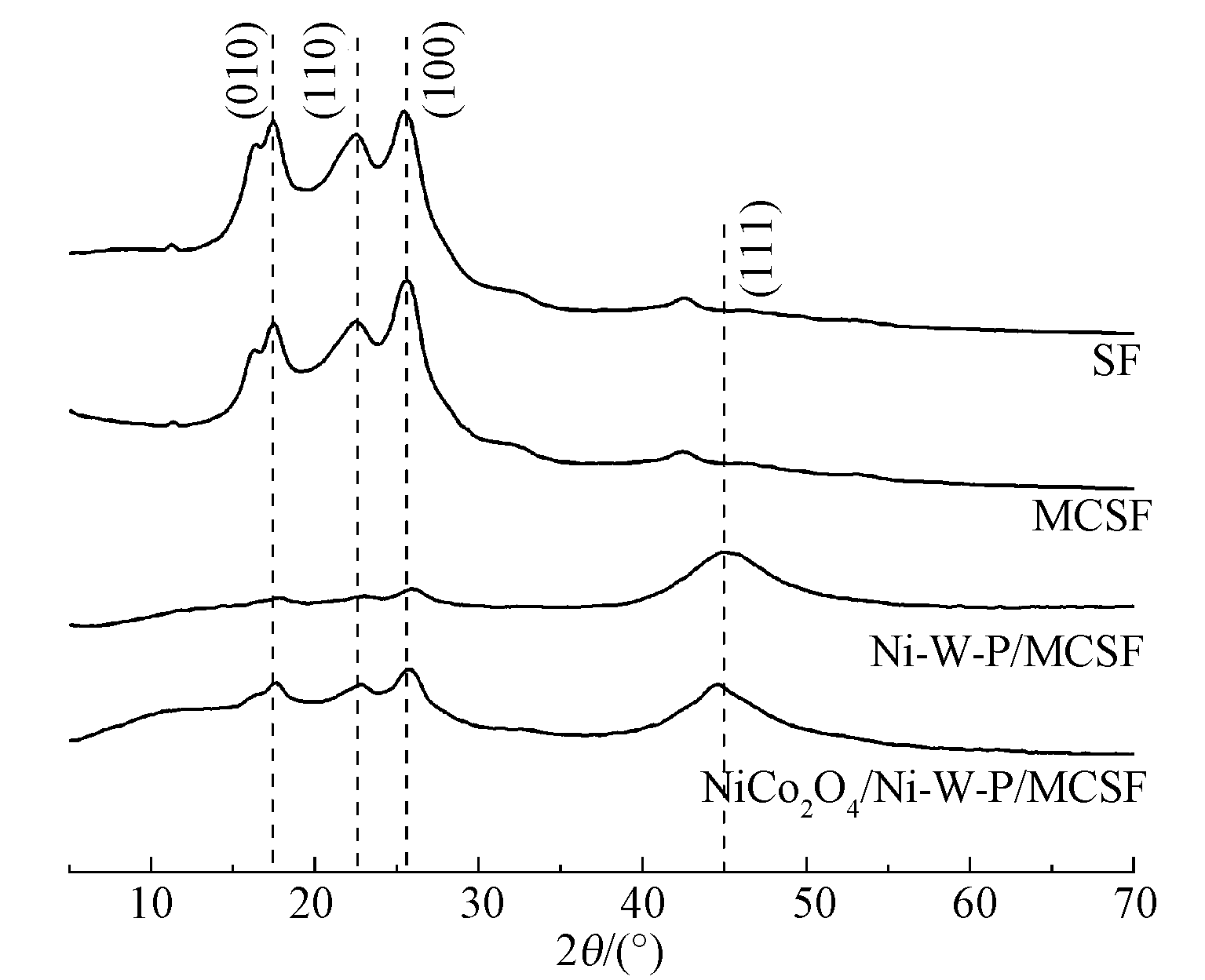
Method Impedance gradient structure can significantly reduce microwave reflection at the air-material interface, while enhancing energy dissipation through the "absorption-reflection-reabsorption" mechanism has been proven to be a promising solution. Herein, a NiCo2O4/Ni-W-P/MCSF composite fabric with Janus structure was successfully prepared by sequentially carboxyl-functionalized carbon nanotubes (MWCNTs) coating, localized electroless Ni-W-P plating, and hydrothermal-calcination of nickel cobalt oxide (NiCo2O4). The microstructure of composite fabric was characterized using scanning electron microscopy, energy dispersive spectroscopy, and X-ray diffraction. The surface resistivity and EMI shielding performance of composite fabric were tested using a multimeter and vector network analyzer. The influence of Ni-Co mass ratio on the EMI shielding performance of composite fabrics was investigated, and the modulation mechanism of Janus structure on the microwave reflection/absorption characteristics of composite fabrics was also explored.

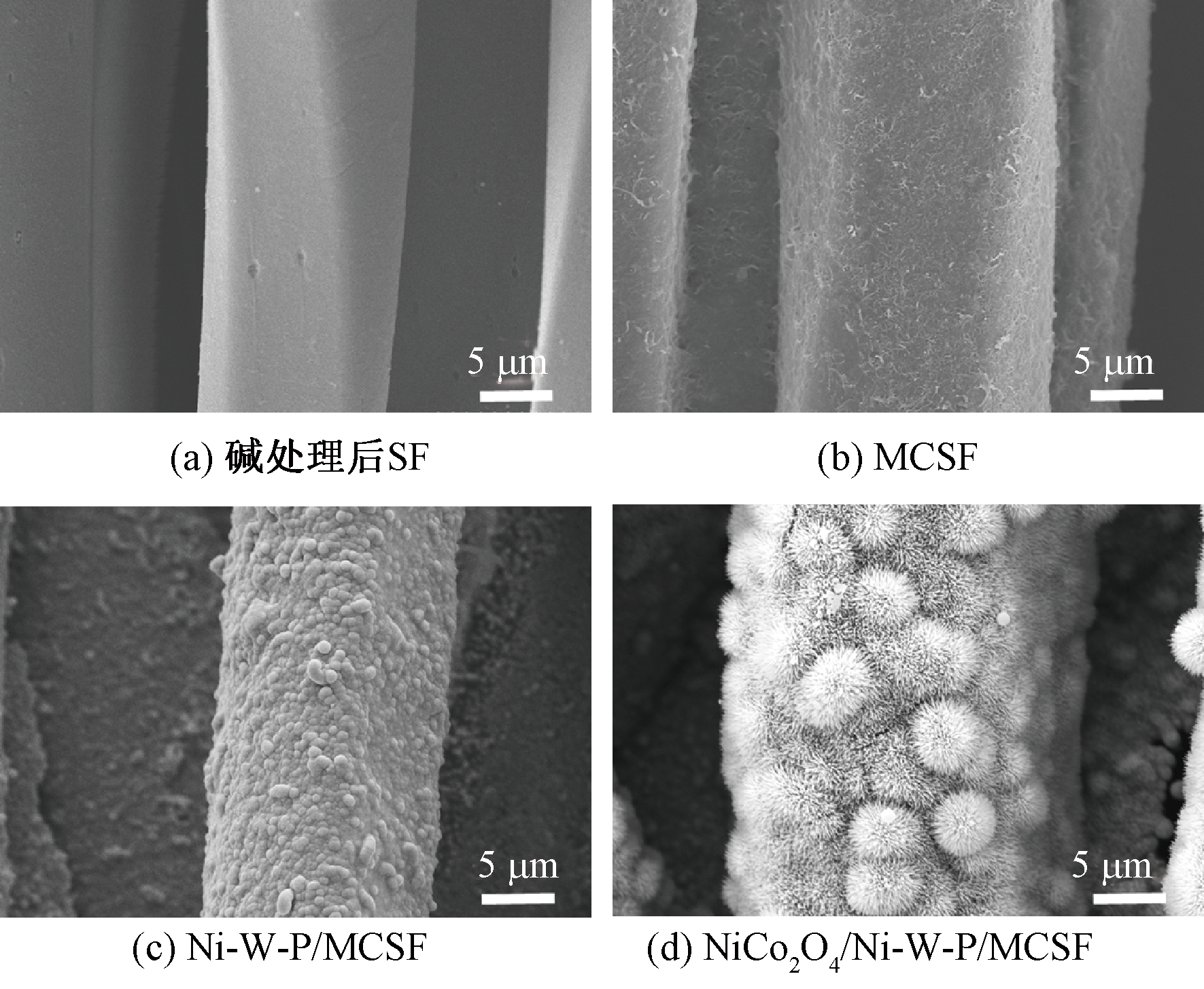
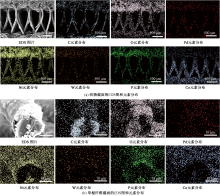
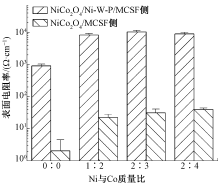
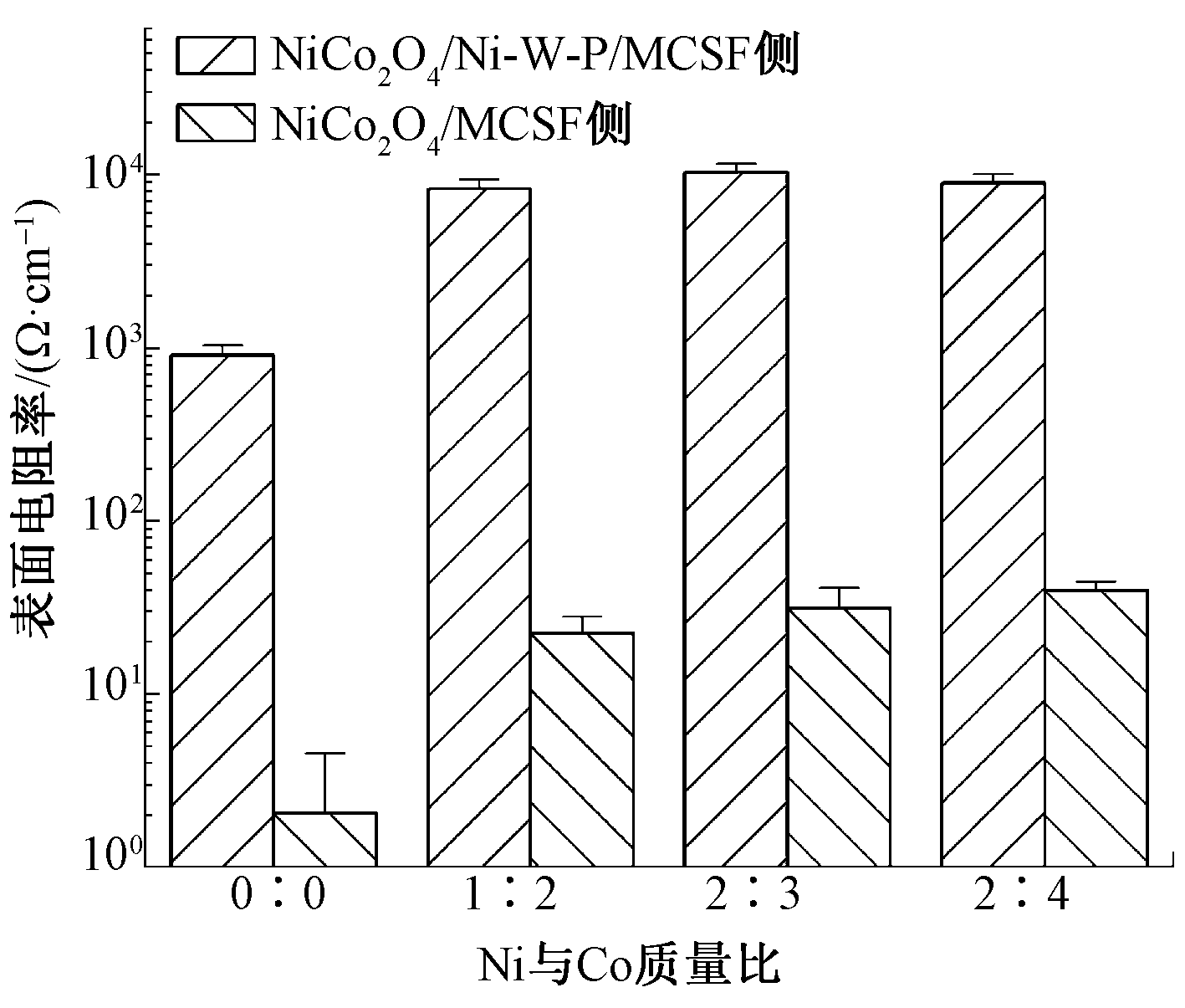
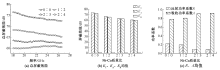
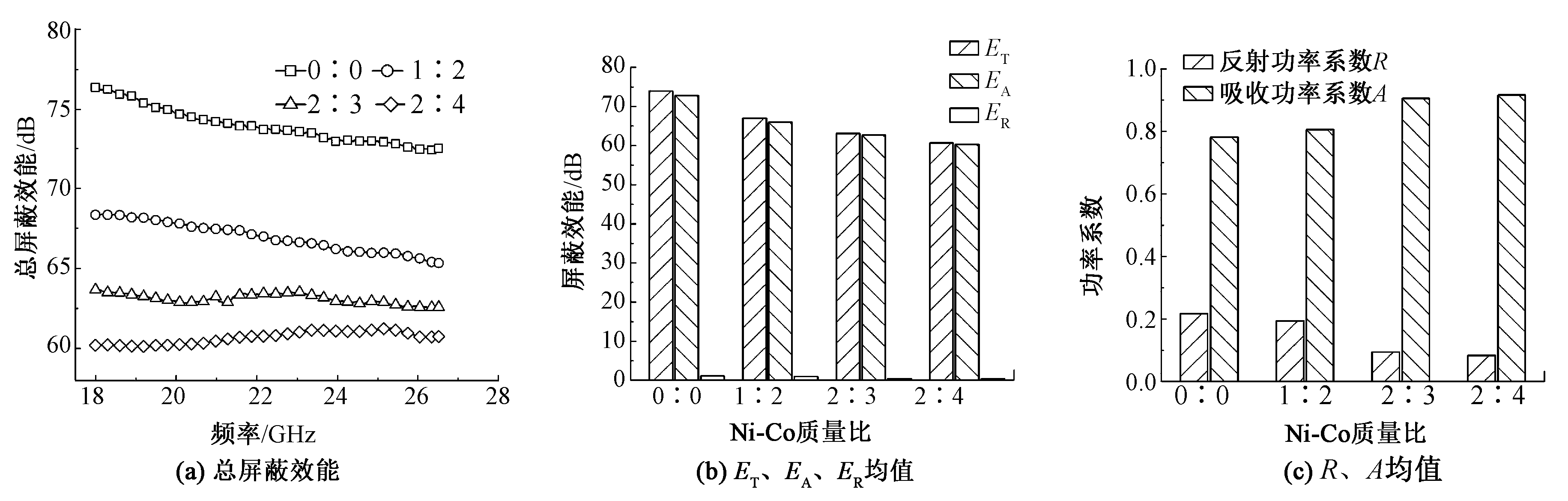
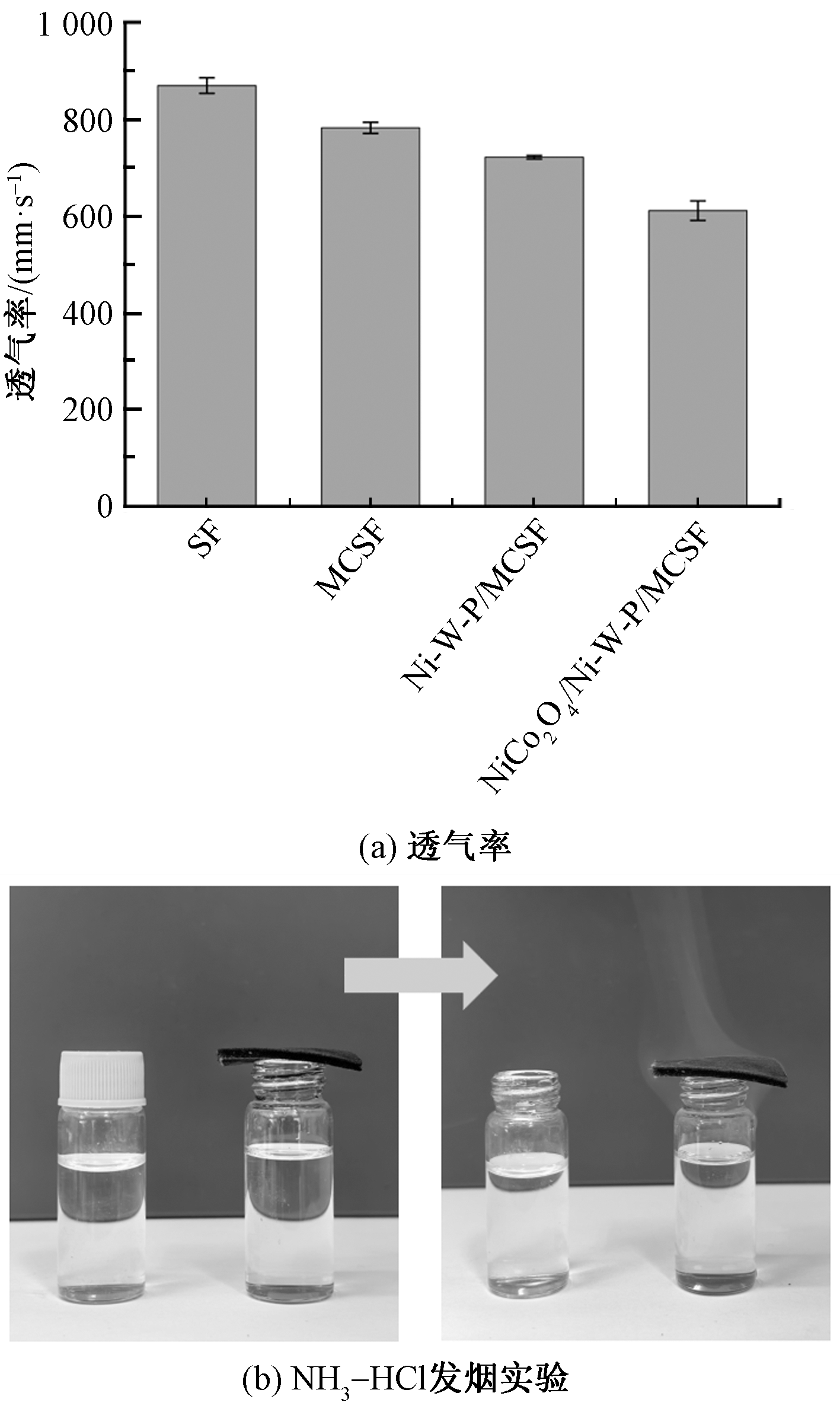
Results Microstructure characterization confirmed that the MWCNTs coating and Ni-W-P plating on the fiber surface were dense and continuous, and the needle-like NiCo2O4 grows uniformly on fiber surface. Combined with cross-sectional analysis of composite fabric and individual fibers, a synergistic system with macroscopic Janus structure and microscopic fiber-radial heterostructure was successfully constructed. The results of surface resistance and EMI shielding properties showed that with the increase of Ni-Co mass ratio, a high impedance shell layer was covered on the fiber surface, resulting in an increase in surface resistance and a decrease in EMI SE value. However, the enhanced magnetic loss significantly improved the contribution for microwave absorption, achieving an absorption-dominated shielding mechanism. At an optimal Ni-Co mass ratio of 2∶3, the as-prepared NiCo2O4/Ni-W-P/MCSF composite fabric achieved an EMI SE of 63.14 dB within the K-band (18-26.5 GHz), coupled with an exceptionally low average R value of 0.095 (corresponding to >91% electromagnetic wave absorption), achieving the effective integration of the low reflection and high shielding properties onto a single textile substrate. Furthermore, the composite fabric also exhibited excellent superhydrophobicity (water contact angle of 152.1°) and good breathability.

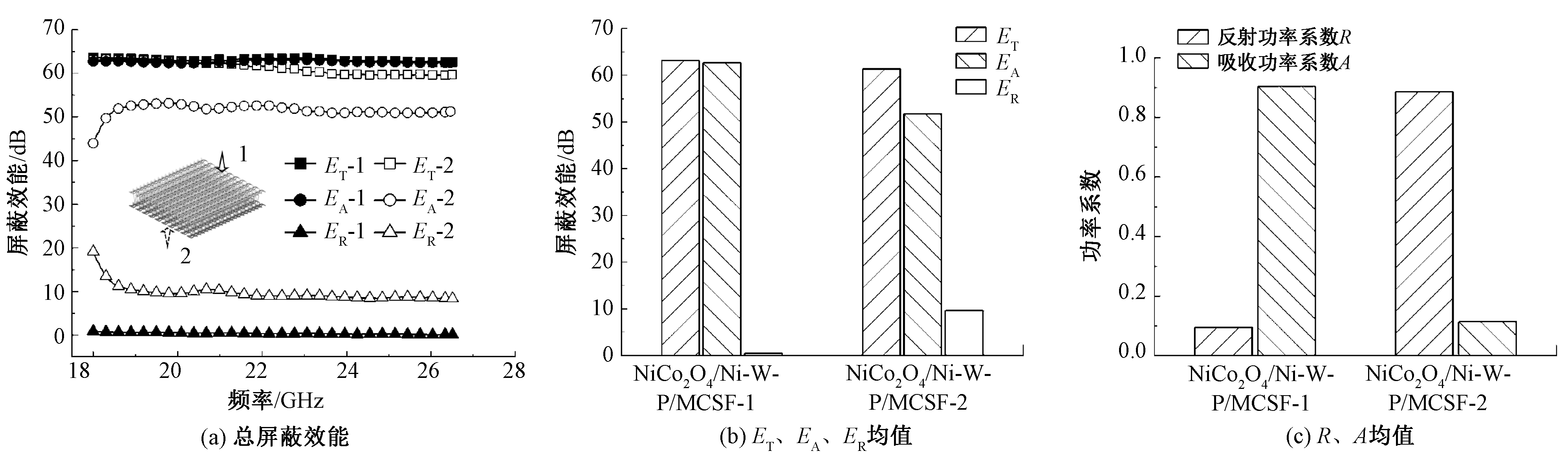
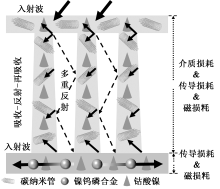
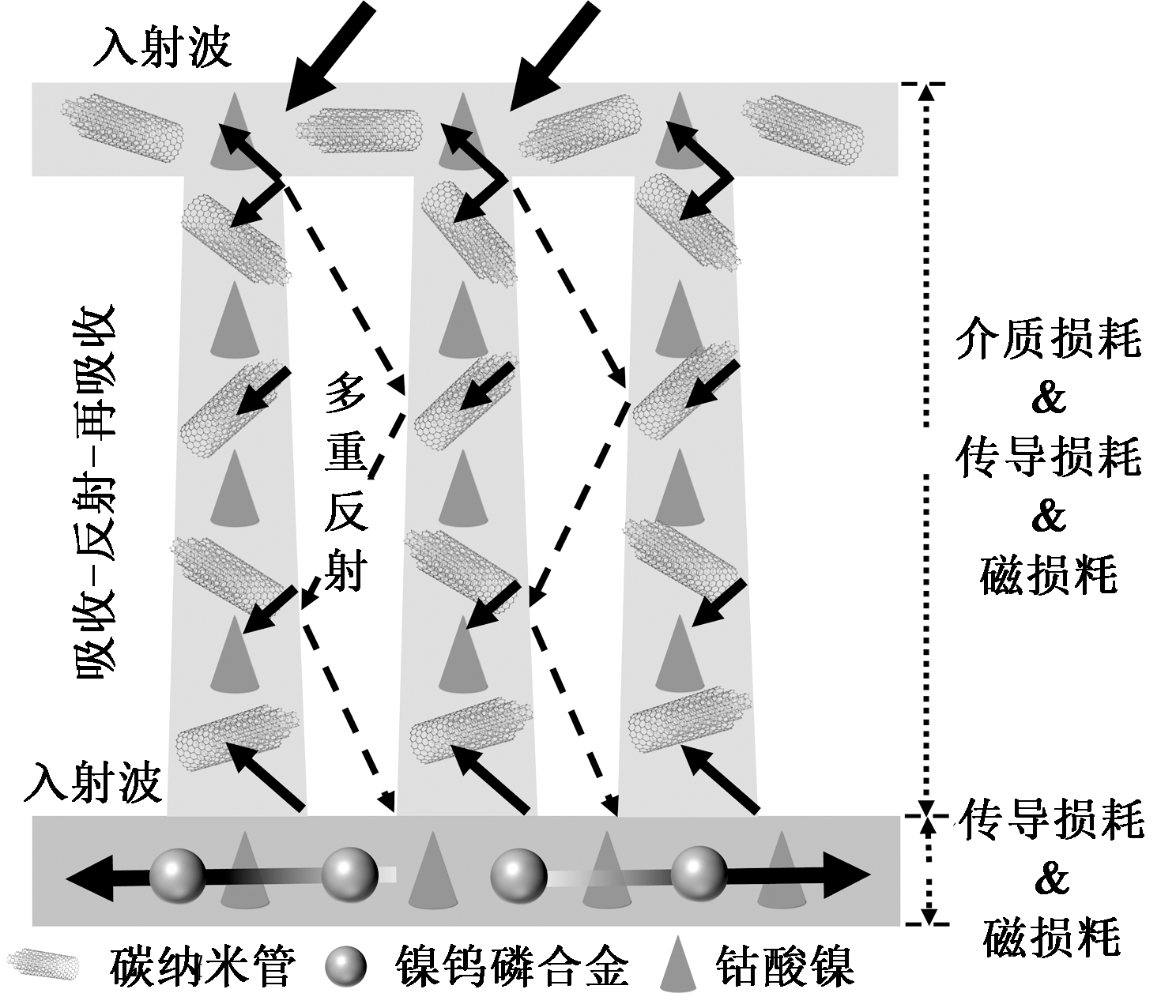
Conclusion This study provides a significant reference for developing high-performance EMI shielding fabrics with low reflection and high EMI SE. The Janus structure architecture is achieved by constructing electrical-magnetic functional layers with distinct impedance characteristics on a 3-D spacer fabric substrate, and this asymmetric architecture establishes a special "absorption-reflection-reabsorption" dissipation pathway for electromagnetic waves, thereby overcoming the intrinsic incompatibility between low reflection and high shielding. The operational mechanism shows that when electromagnetic waves are incident from the NiCo2O4/MCSF side, the electrical/magnetic dual-functional conductive network with good impedance matching allows more electromagnetic waves penetration into the fabric interior, where the synergistic magnetic loss (from NiCo2O4), dielectric loss (from MWCNTs) and interface loss would attenuate the electromagnetic waves. Residual waves reaching the highly conductive NiCo2O4/Ni-W-P/MCSF side with severe impedance mismatch would be reflected back towards the NiCo2O4/MCSF side for secondary absorption. The as-prepared composite fabric exhibits great application potential for wearable electromagnetic protection.

Key words: Janus structure, electromagnetic shielding performance, 3D spacer fabric, nickel cobalt oxide, carbon nanotube, dip-coating method, hydrothermal method, impedance-asymmetric structure

中图分类号: 

  • TS195

图1

不同样品的扫描电镜照片"

图2

复合织物的XRD图谱"

图3

NiCo2O4/Ni-W-P/MCSF复合织物截面和单根纤维截面的EDS图片和元素分布"

图4

不同Ni与Co质量比下复合织物的表面电阻率"

图5

不同Ni-Co质量比下复合织物的电磁屏蔽效能及其均值、功率系数均值"

图6

NiCo2O4/Ni-W-P/MCSF复合织物两侧的电磁屏蔽性能及其均值、功率系数均值对比"

图7

NiCo2O4/Ni-W-P/MCSF复合织物的电磁屏蔽机制"

图8

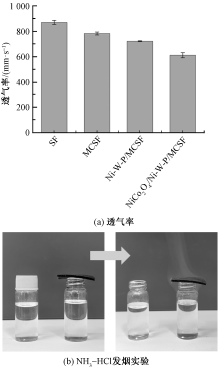
复合织物的透气性测试"

图9

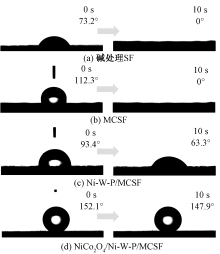
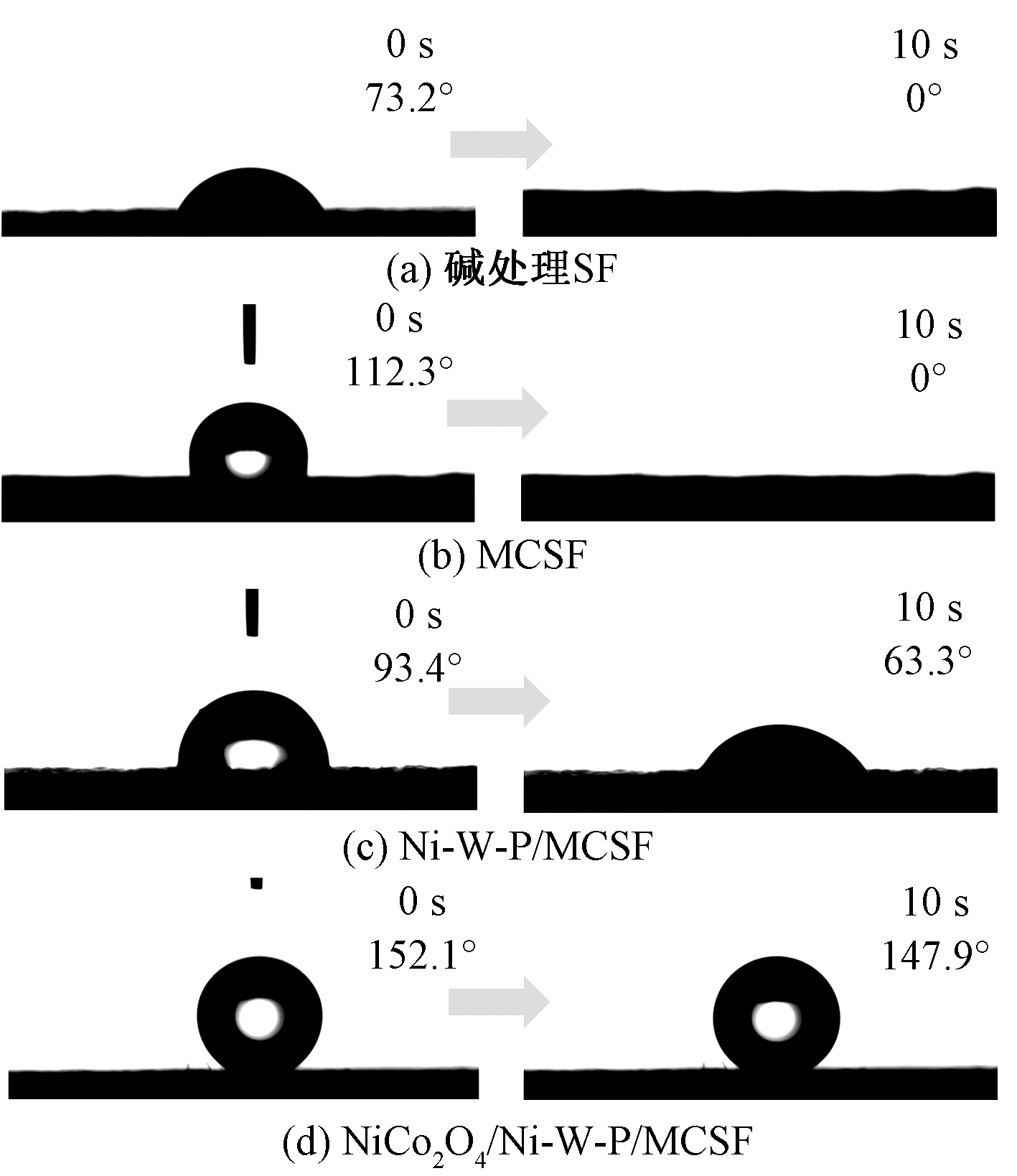
不同阶段所得样品的疏水性"

[1] ZHENG X Y, ZHANG H W, JIANG R J, et al. Lightweight polyurethane composite foam for electromagnetic interference shielding with high absorption characteristic[J]. Journal of Colloid and Interface Science, 2023, 649: 279-289.
doi: 10.1016/j.jcis.2023.06.104 pmid: 37348347
[2] YANG Y Q, LI J Y, WANG Z Z, et al. Structural design and performance regulation of green electromagnetic interference shielding conductive polymer composites: a review[J]. Advanced Nanocomposites, 2024, 1(1): 290-303.
doi: 10.1016/j.adna.2024.08.002
[3] ZHAO X, TANG X W, QIAO Y L, et al. Ultrathin polyimide-based composites with efficient low-reflectivity electromagnetic shielding and infrared stealth performance[J]. Nano Research, 2024, 17(7): 6700-6712.
doi: 10.1007/s12274-024-6650-1
[4] MENG L S, MA Y, ZOU Y P, et al. Lightweight, breathable and self-cleaning polypyrrole-modified multifunctional cotton fabric for flexible electromagnetic interference shielding[J]. International Journal of Biological Macromolecules, 2024, 274: 133347.
doi: 10.1016/j.ijbiomac.2024.133347
[5] LI Y, LIU J J, ZHANG M, et al. Carbon fabric composites with NiCo compounds: structure evolution and EMI shielding performance[J]. Applied Surface Science, 2023, 627: 157275.
doi: 10.1016/j.apsusc.2023.157275
[6] 郑贤宏, 唐金好, 李长龙, 等. 中空磁性Fe3O4纳米球/MXene复合棉织物的制备及其电磁屏蔽性能[J]. 纺织学报, 2023, 44(11): 142-150.
doi: 10.13475/j.fzxb.20220804501
ZHENG Xianhong, TANG Jinhao, LI Changlong, et al. Preparation and electromagnetic shielding performance of hollow magnetic Fe3O4 nanosphere/MXene composite cotton fabrics[J]. Journal of Textile Research, 2023, 44(11): 142-150.
doi: 10.13475/j.fzxb.20220804501
[7] MEN Q Q, WANG S, YAN Z K, et al. Iron-encapsulated CNTs on carbon fiber with high-performance EMI shielding and electrocatalytic activity[J]. Advanced Composites and Hybrid Materials, 2022, 5(3): 2429-2439.
doi: 10.1007/s42114-022-00457-8
[8] HE W J, CHEN G, LI C, et al. Magnetically aligned CNT/magnetite heterogeneous composite membranes for electromagnetic wave shielding and heat dissipation[J]. Materials Research Bulletin, 2022, 149: 111748.
doi: 10.1016/j.materresbull.2022.111748
[9] LI Y, LIU J J, WANG E W, et al. Controllable growth of NiCo compounds with different morphologies and structures on carbon fabrics as EMI shields with improved absorptivity[J]. Carbon, 2022, 197: 508-518.
doi: 10.1016/j.carbon.2022.06.085
[10] GUO Q, PAN Y F, HU S Q, et al. Two birds with one stone: a "needle-like" structure constructed on multifunctional PET fabric surface for flame retardancy and electromagnetic interference shielding[J]. Chemical Engineering Journal, 2024, 490: 151656.
doi: 10.1016/j.cej.2024.151656
[11] LIU Q Z, HE X W, YI C, et al. Fabrication of ultra-light nickel/graphene composite foam with 3D interpenetrating network for high-performance electromagnetic interference shielding[J]. Composites Part B: Engineering, 2020, 182: 107614.
doi: 10.1016/j.compositesb.2019.107614
[12] 朱雪, 钱鑫, 郝梦圆, 等. MXene/碳纳米纤维膜的静电纺丝-电泳沉积复合工艺制备及其电磁屏蔽性能[J]. 纺织学报, 2025, 46(1): 1-8.
ZHU Xue, QIAN Xin, HAO Mengyuan, et al. Preparation and electromagnetic shielding performance of MXene/carbon nanofiber membranes by electrospinning/electrophoretic deposition[J]. Journal of Textile Research, 2025, 46(1): 1-8.
doi: 10.1177/004051757604600101
[1] 张苒, 祝仕玲, 王栋, 刘琼珍, 陆莹. 硫化铋/碳纳米管/聚偏二氟乙烯复合温度传感纤维的制备与性能[J]. 纺织学报, 2026, 47(02): 18-25.
[2] 代文居, 张天雨, 吴倩, 支超. 三维间隔织物/离子凝胶复合材料的光热电性能[J]. 纺织学报, 2026, 47(02): 181-187.
[3] 岳献阳, 王少博, 黄鑫, 王艳芝, 李冲冲, 张晓晓. 黄麻织物基磁性含氮多孔碳对Cr(VI)的吸附性能[J]. 纺织学报, 2026, 47(02): 255-263.
[4] 王小虎, 包安娜, 魏静雯, 赵晓曼, 韩潇, 洪剑寒. 基于静电纺丝-静电喷涂协同工艺的跨尺度传感纱一步法制备及其应用[J]. 纺织学报, 2025, 46(12): 101-109.
[5] 唐曾华, 李宏杰, 毕思伊, 邵光伟, 蒋金华, 陈南梁, 邵慧奇. 增强结构对碳纤维/热塑性聚氨酯柔性复合材料电磁屏蔽性能的影响[J]. 纺织学报, 2025, 46(10): 111-119.
[6] 权英, 张爱琴, 张曼, 刘淑强, 张钰晶. 基于三维编织结构的柔性应变传感器制备及其性能[J]. 纺织学报, 2025, 46(08): 136-144.
[7] 孙晚红, 张鹏飞, 陈勇, 张林, 潘跃山, 宋飞虎, 刘恩星, 王玉萍. 智能发热服装用柔性碳纳米管电加热元件的制备及应用[J]. 纺织学报, 2025, 46(05): 17-22.
[8] 李润, 常梓洋, 张如范. 碳纳米管功能纤维的可控制备与性能调控研究进展[J]. 纺织学报, 2025, 46(05): 30-40.
[9] 廖昙倩, 李文雅, 杨晓宇, 赵静娜, 张骁骅. 碳纳米管/聚乙二醇复合相变纤维的制备及其热性能[J]. 纺织学报, 2025, 46(03): 9-16.
[10] 张蕊, 叶苏娴, 王建, 邹专勇. 全织物型离电式柔性压力传感器的制备及其性能[J]. 纺织学报, 2025, 46(02): 113-121.
[11] 张喆, 王瑞, 蔡涛. 图案化耐久水性聚氨酯/碳纳米管涂层多功能抗静电复合织物的高效经济制备[J]. 纺织学报, 2025, 46(02): 207-217.
[12] 赵方, 邵光伟, 邵慧奇, 毕思伊, 李明昊, 海文清, 张鑫, 姜子洋, 蒋金华, 陈南梁. 镍/铜/镍-碳纳米管复合纱线的制备及其性能[J]. 纺织学报, 2024, 45(12): 144-151.
[13] 张蕊, 应迪, 陈冰冰, 田欣, 郑莹莹, 王建, 邹专勇. 碳纳米管修饰三维纤维网非织造布传感器的制备及其性能[J]. 纺织学报, 2024, 45(11): 46-54.
[14] 卢道坤, 王仕飞, 董倩, 史纳蔓, 李思琦, 干露露, 周爽, 沙莎, 张如全, 罗磊. 基于MXene的导电织物构筑及其多功能应用[J]. 纺织学报, 2024, 45(09): 137-145.
[15] 王楠, 孙辉, 于斌, 许磊, 朱祥祥. 基于熔喷非织造材料的温度传感器制备及其传感性能[J]. 纺织学报, 2024, 45(05): 138-146.
Viewed
Full text


Abstract

Cited

  Shared   
  Discussed   
No Suggested Reading articles found!