纺织学报 ›› 2026, Vol. 47 ›› Issue (02): 18-25.doi: 10.13475/j.fzxb.20251006801
张苒1, 祝仕玲2, 王栋1, 刘琼珍1, 陆莹1,2( )
)
ZHANG Ran1, ZHU Shiling2, WANG Dong1, LIU Qiongzhen1, LU Ying1,2()
摘要:
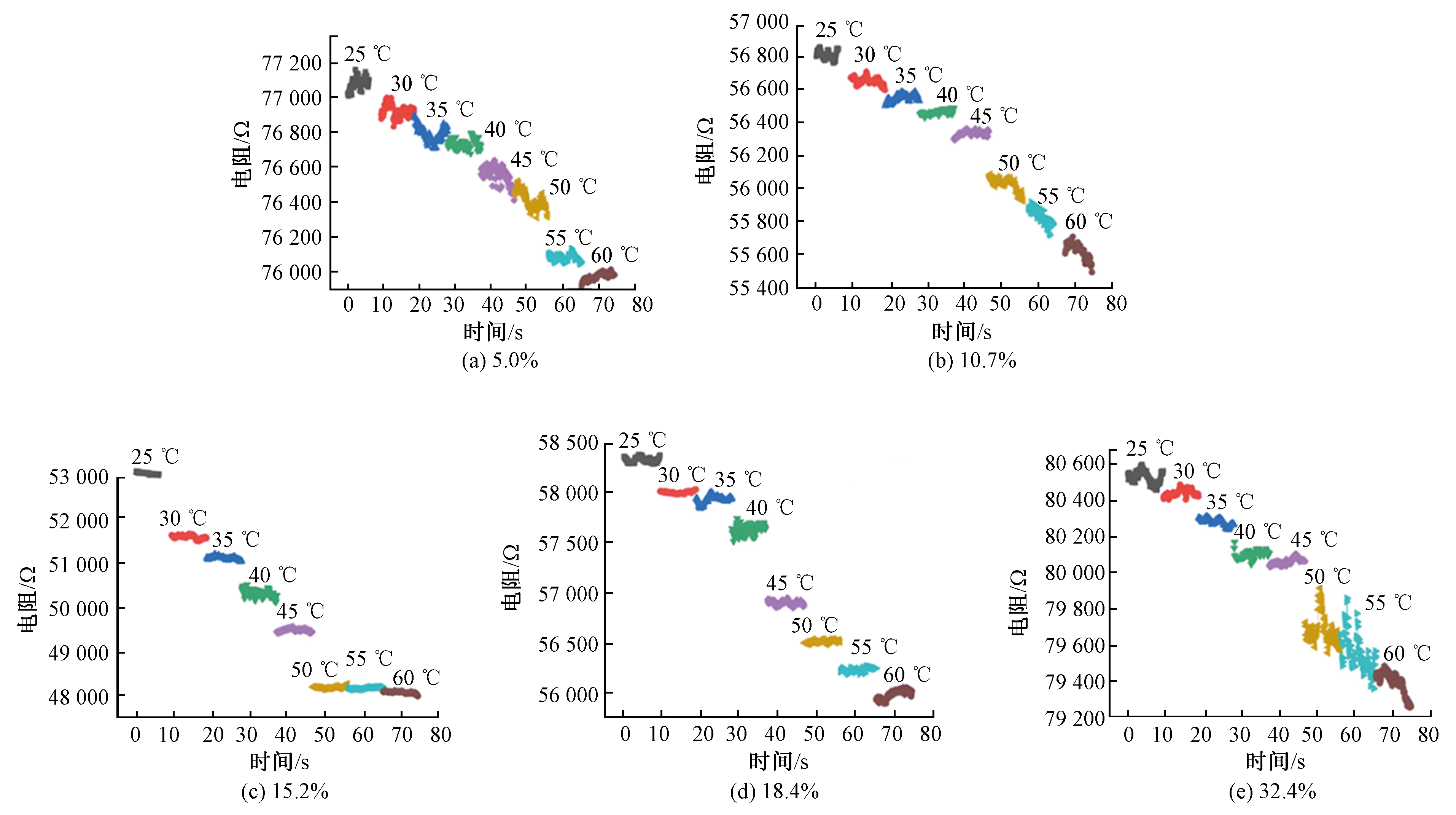
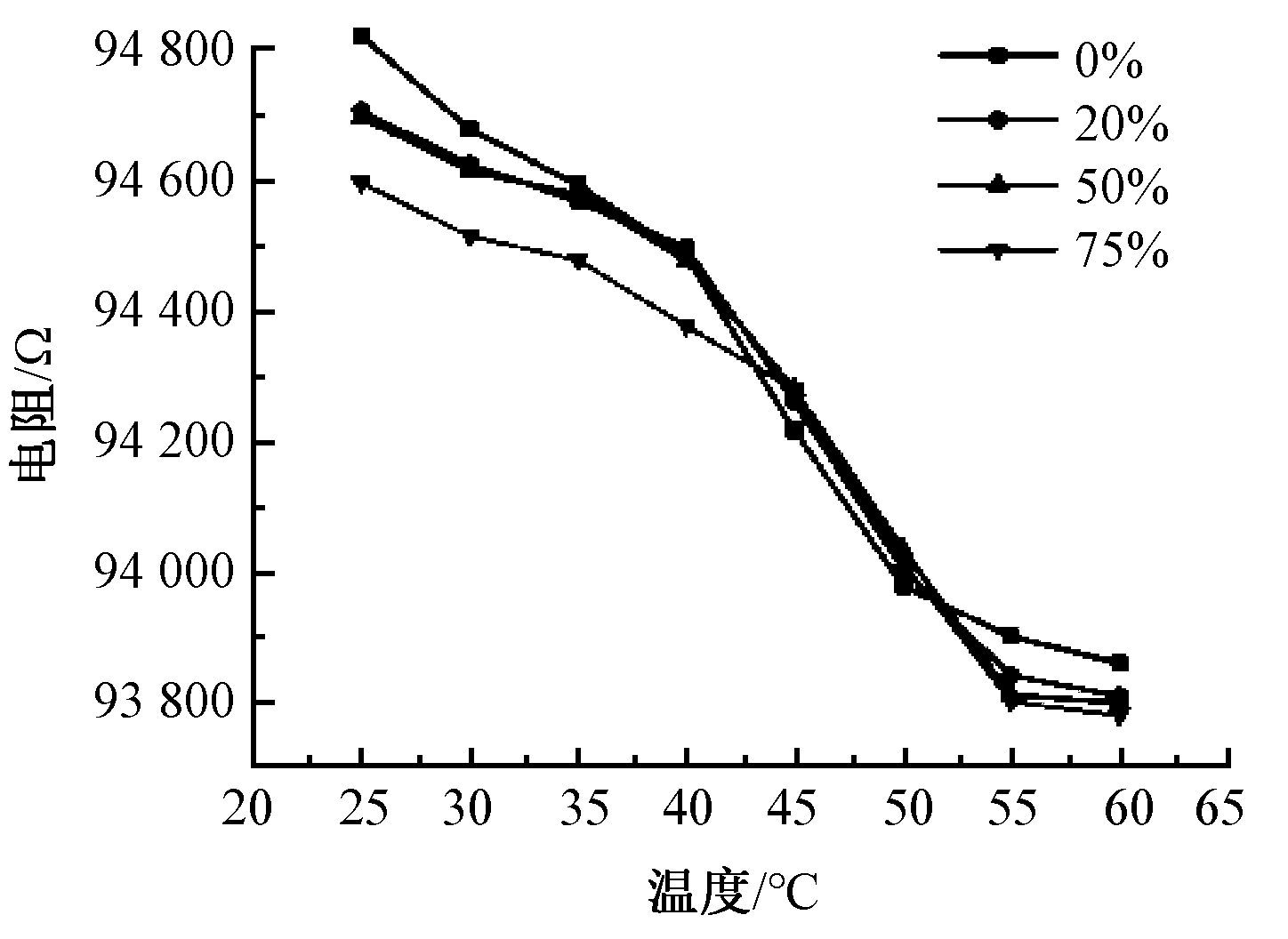
智能可穿戴技术的快速发展推动了对柔性温度传感器的需求,但现有技术面临温度响应低、脆性大或结构不稳定等核心挑战,因此,亟需开发兼具高温度敏感性、优异柔性和稳定性的新型传感材料。通过湿法纺丝技术成功制备了硫化铋/碳纳米管/聚偏二氟乙烯(Bi2S3/CNT/PVDF)复合温度传感纤维,旨在解决柔性温度传感器以上不足。采用水热法合成硫化铋(Bi2S3)纳米棒,并将其与碳纳米管(CNT)和聚偏二氟乙烯(PVDF)复合,探究了不同含量的Bi2S3对于Bi2S3/CNT/PVDF复合温度传感纤维性能的影响。结果表明:Bi2S3/CNT/PVDF复合温度传感纤维在25~60 ℃范围内有优异的温度响应特性,电阻随温度升高而降低,表现出负温度系数特性,具备高温度敏感性和低电阻优势,此外该纤维还具备良好的柔韧性和热稳定性;CNT构建的三维导电网络与Bi2S3的窄带隙半导体特性协同作用,显著提升了材料的传感性能。该复合纤维在智能医疗监测、可穿戴设备和柔性电子领域具有广阔的应用前景,为高性能温度传感器的开发提供了新思路。
中图分类号:
| [1] |
LIU S Q, MEI Z X, LI Y C, et al. An electrochemical sensing platform for highly sensitive analysis of Sudan I based on Bi2S3/CQDs/GCE[J]. Microchemical Journal, 2024, 207: 112189.
doi: 10.1016/j.microc.2024.112189 |
| [2] |
AYODHYA D, VEERABHADRAM G. BSA mediated Ag@Bi2S3 composites: synthesis, characterization, photodegradation of mixed dyes via metal-semiconductor interface, antimicrobial and antioxidant activities[J]. Materials Today Chemistry, 2020, 17: 100320.
doi: 10.1016/j.mtchem.2020.100320 |
| [3] |
BAI Y N, LI X R, OUYANG T Y, et al. High thermoelectric performance in the n-type Bi2S3/f-MWCNTs nanocomposites prepared by hydrothermal method[J]. Carbon, 2023, 212: 118158.
doi: 10.1016/j.carbon.2023.118158 |
| [4] | 姜晓龙, 杨永超, 高云鹏, 等. Bi2S3微球室温NO2传感性能研究[J]. 传感器与微系统, 2025, 44(6): 59-62. |
| JIANG Xiaolong, YANG Yongchao, GAO Yunpeng, et al. Research on NO2 sensing performance at room temperature based on Bi2S3 microspheres[J]. Transducer and Microsystem Technologies, 2025, 44(6): 59-62. | |
| [5] |
GAO B, HUANG Y, GAO Y, et al. Hierarchical Bi2O3 nanosheets and ZIF-8 derived porous nitrogen-doped carbon fibers as novel assembled nanocomposites for high-performance flexible supercapacitors[J]. Journal of Colloid and Interface Science, 2025, 677: 560-570.
doi: 10.1016/j.jcis.2024.08.070 |
| [6] | 王劲苗. 光电材料Bi2S3/MWCNT-COOH的制备与表征[J]. 安徽化工, 2024, 50(5): 92-95. |
| WANG Jinmiao. Preparation and characterization of photoelectrochemical material Bi2S3/MWCNT-COOH[J]. Anhui Chemical Industry, 2024, 50(5): 92-95. | |
| [7] |
GOVARTHINI R, VIGNESH S, VISITHIRA E, et al. Eco-friendly CuMoO4/Bi2S3 nanocomposites: superior solar-light catalysts for indigo carmine dye degradation and its antibacterial efficacy[J]. Journal of Cluster Science, 2025, 36(3): 113.
doi: 10.1007/s10876-025-02835-w |
| [8] | 李润, 常梓洋, 张如范. 碳纳米管功能纤维的可控制备与性能调控研究进展[J]. 纺织学报, 2025, 46(5): 30-40. |
|
LI Run, CHANG Ziyang, ZHANG Rufan. Review of controlled synthesis and performance regulation of functional carbon nanotube fibers[J]. Journal of Textile Research, 2025, 46(5): 30-40.
doi: 10.1177/004051757604600105 |
|
| [9] | RODRIGUES-MARINHO T, CORREIA V, TUBIO C R, et al. Flexible thermoelectric energy harvesting system based on polymer composites[J]. Chemical Engineering Journal, 2023, 473: 14529. |
| [10] | 刘银鹏, 石磊, 胡艳丽, 等. 静电纺PVDF/TPU纳米纤维膜的压电性能研究[J]. 纺织科学与工程学报, 2025, 42(3): 54-60. |
| LIU Yinpeng, SHI Lei, HU Yanli, et al. Piezoelectric properties of electrospinning PVDF/TPU nanofiber membranes[J]. Journal of Textile Science and Engineering, 2025, 42(3): 54-60. | |
| [11] |
GUO Y, ZHANG X X, ZHANG R, et al. Polyvinylpyrrolidone-modified Bi2O3 and Bi2S3 nanocomposites for improved supercapacitive performance[J]. Journal of Materials Science: Materials in Electronics, 2023, 34(7): 670.
doi: 10.1007/s10854-023-10114-5 |
| [12] |
HAO T R, XU H L, YU H, et al. Novel synthesis of Bi2S3 short nanorods and Bi2S3/BiOBr composite with superior photocatalytic performance for degrading organic pollutants[J]. Separation and Purification Technology, 2025, 360: 131072.
doi: 10.1016/j.seppur.2024.131072 |
| [13] |
HE Y Z, LIU X F, HE K, et al. High-performance supercapacitors based on NiMn layered double hydroxides/Ni3S2 nanocomposite[J]. Journal of Power Sources, 2025, 634: 236465.
doi: 10.1016/j.jpowsour.2025.236465 |
| [14] |
LI X, QUAN W J, YANG R, et al. Bismuth sulfide nanorod/vanadium carbide MXene as nitrogen dioxide gas sensor operating at room temperature under ultraviolet-assisted recovery[J]. ACS Applied Nano Materials, 2024, 7(20): 23882-23893.
doi: 10.1021/acsanm.4c04414 |
| [15] |
CHENG Z Y, YAN Y F, ZHOU E, et al. Synergistic optimization of pore and conductive network of short-cut graphene porous fibers for lightweight broadband electromagnetic wave absorption[J]. Small, 2025, 21(38): e05866.
doi: 10.1002/smll.v21.38 |
| [16] |
MAO H H, HUA Y T, CHEN F K, et al. The interfacial electric field enhanced piezo-catalytic performance of Bi2S3/Ni/CN composites for peroxymonosulfate activation advanced oxidation processes (AOP) systems[J]. Journal of Alloys and Compounds, 2024, 994: 174645.
doi: 10.1016/j.jallcom.2024.174645 |
| [17] |
NAZIR A, TAHIR M S, KAMAL G M, et al. Fabrication of ternary MoS2/CdS/Bi2S3-based nano composites for photocatalytic dye degradation[J]. Molecules, 2023, 28(7): 3167.
doi: 10.3390/molecules28073167 |
| [18] |
SHI X X, LI X Q, WEI X P, et al. Molecularly imprinted photoelectrochemical sensor based on AgBiS2/Bi2S3 for determination of propoxur[J]. Chinese Journal of Analytical Chemistry, 2020, 48(3): 396-404.
doi: 10.1016/S1872-2040(20)60004-4 |
| [19] |
SI W S, LV W W, TANG H L, et al. Bi2S3/UiO-66 S-scheme heterojunction with efficient charge transfer and photothermal conversion for antibiotic elimination[J]. Applied Surface Science, 2025, 708: 163746.
doi: 10.1016/j.apsusc.2025.163746 |
| [20] | SUN B C, XU G B, YANG Z H, et al. Dual-mode temperature monitoring using high-performance flexible thermocouple sensors based on PEDOT: PSS/CNTs and MXene/Bi2Se3[J]. Microsystems & Nanoengineering, 2025, 11: 31. |
| [21] |
YANG L, CHEN X, DUTTA A, et al. Thermoelectric porous laser-induced graphene-based strain-temperature decoupling and self-powered sensing[J]. Nature Communications, 2025, 16: 792.
doi: 10.1038/s41467-024-55790-x |
| [22] |
GUO H X, LU L C, HATTON F L, et al. Wearable body temperature sensing with autonomous self-regulated joule heating and passive cooling for healthcare applications[J]. Advanced Functional Materials, 2025, 35(13): 2417961.
doi: 10.1002/adfm.v35.13 |
| [23] |
QIN J X, SHEN C L, YANG X G, et al. Thermal desorption-driven temperature sensor with unprecedented high sensitivity[J]. Nano Energy, 2025, 135: 110666.
doi: 10.1016/j.nanoen.2025.110666 |
| [24] |
BAN J L, LU Y, LU J, et al. Highly sensitive stretchable fiber-based temperature sensor enhanced by surface-chemically modified silver nanowires[J]. Chemical Engineering Journal, 2024, 482: 148772.
doi: 10.1016/j.cej.2024.148772 |
| [25] | 廖昙倩, 李文雅, 杨晓宇, 等. 碳纳米管/聚乙二醇复合相变纤维的制备及其热性能[J]. 纺织学报, 2025, 46(3): 9-16. |
| LIAO Tanqian, LI Wenya, YANG Xiaoyu, et al. Preparation and thermal properties of carbon nanotube/polyethylene glycol composite phase change fiber[J]. Journal of Textile Research, 2025, 46(3): 9-16. | |
| [26] |
刘文杰, 孙静, 李信荣, 等. 硫化铋/钨酸铋/碳纳米管三元复合材料的制备及其光催化性能的研究[J]. 现代化工, 2023, 43(11): 172-178.
doi: 10.16606/j.cnki.issn0253-4320.2023.11.032 |
|
LIU Wenjie, SUN Jing, LI Xinrong, et al. Preparation of Bi2S3/Bi2WO6/CNTs composites and its application in photocatalytic degradation[J]. Modern Chemical Industry, 2023, 43(11): 172-178.
doi: 10.16606/j.cnki.issn0253-4320.2023.11.032 |
|
| [27] |
张蕊, 应迪, 陈冰冰, 等. 碳纳米管修饰三维纤维网非织造布传感器的制备及其性能[J]. 纺织学报, 2024, 45(11): 46-54.
doi: 10.13475/j.fzxb.20230804201 |
|
ZHANG Rui, YING Di, CHEN Bingbing, et al. Preparation and properties of carbon nanotube modified three-dimensional fiber-mesh nonwoven sensors[J]. Journal of Textile Research, 2024, 45(11): 46-54.
doi: 10.13475/j.fzxb.20230804201 |
|
| [28] |
WANG C H, ZHANG D, SHI Y, et al. Multidimensional synergistic strategy: "anchoring-coordination-conductivity" to assist high-performance zinc-ion batteries[J]. Advanced Functional Materials, 2025, 35(44): 2508251.
doi: 10.1002/adfm.v35.44 |
| [1] | 王何一帆, 吕家安, 孙丰鑫. 全天候热湿自适应织物的分级设计及其性能[J]. 纺织学报, 2026, 47(02): 144-152. |
| [2] | 黄雍宝, 王一洲, 李梦琪, 万贝贝, 宋悦, 杨帆. 光致变色纺织品的制备及其防伪应用[J]. 纺织学报, 2026, 47(02): 214-221. |
| [3] | 张苗, 曹高涛, 俞丹, 王玉. 阻抗不对称型三维间隔织物的制备及其电磁屏蔽性能[J]. 纺织学报, 2026, 47(02): 239-246. |
| [4] | 王彬, 侯泽明, 徐英俊, 王玉忠. 高阻燃性再生纤维素纤维的制备及其性能[J]. 纺织学报, 2026, 47(02): 47-55. |
| [5] | 刘一鸣, 李琳, 杜鲜晶, 刘攀, 殷霞, 田明伟. 内螺旋结构弹性导电纱线的制备及其应变不敏感性能的调控[J]. 纺织学报, 2026, 47(01): 115-122. |
| [6] | 邵剑波, 岳欣琰, 陈雨, 韩潇, 洪剑寒. 全针织结构多模态柔性电容传感器的构筑及其传感性能[J]. 纺织学报, 2026, 47(01): 123-131. |
| [7] | 张宁讴, 王海龙, 胡星友, 孙彬, 游超瑜. 电致发光纤维的技术创新与研究进展[J]. 纺织学报, 2026, 47(01): 250-258. |
| [8] | 胡崴琳, 白洁, 刘丹, 白濛, 李娟, 李启正. 基于机器学习模型的电子纺织品研究进展[J]. 纺织学报, 2026, 47(01): 268-276. |
| [9] | 陈克林, 李卓, 王晓歌, 李成晋, 胡建臣, 张克勤. 微流控湿法纺丝制备基于聚羟基脂肪酸酯的光致变色纤维及其性能[J]. 纺织学报, 2026, 47(01): 46-53. |
| [10] | 王小虎, 包安娜, 魏静雯, 赵晓曼, 韩潇, 洪剑寒. 基于静电纺丝-静电喷涂协同工艺的跨尺度传感纱一步法制备及其应用[J]. 纺织学报, 2025, 46(12): 101-109. |
| [11] | 张莹, 郭明靖, 王利君. 针织结构温度传感器设计及其着装传感性能[J]. 纺织学报, 2025, 46(12): 123-132. |
| [12] | 王梁宇, 高晓红, 于彩娇, 张雪婷, 杨旭礼. 还原氧化石墨烯/铜纳米颗粒导电棉织物的制备及其传感性能[J]. 纺织学报, 2025, 46(12): 181-187. |
| [13] | 季巧, 于清源, 周爱晖, 马博谋, 徐进, 袁久刚. 细菌纤维素及其复合材料的应用研究进展[J]. 纺织学报, 2025, 46(12): 243-250. |
| [14] | 邓晶, 王蕊宁, 孙润军, 张亚娟, 郭海冰, 雷轲. 用于脉搏监测的海藻酸钠改性水性聚氨酯/液态金属导电传感纤维[J]. 纺织学报, 2025, 46(12): 74-82. |
| [15] | 梁治, 姬康瑞, 黎张成, 何钰, 王灿, 侯冲. 热致变色纤维膜的制备及其温度传感性能[J]. 纺织学报, 2025, 46(11): 1-8. |
|
||
 京公网安备11010502044800号