纺织学报 ›› 2026, Vol. 47 ›› Issue (06): 19-25.doi: 10.13475/j.fzxb.20250707201
徐佳琦1, 曹琪1, 洪剑寒1,2,3,4, 葛烨倩1,2,3,4( )
)
XU Jiaqi1, CAO Qi1, HONG Jianhan1,2,3,4, GE Yeqian1,2,3,4()
摘要:
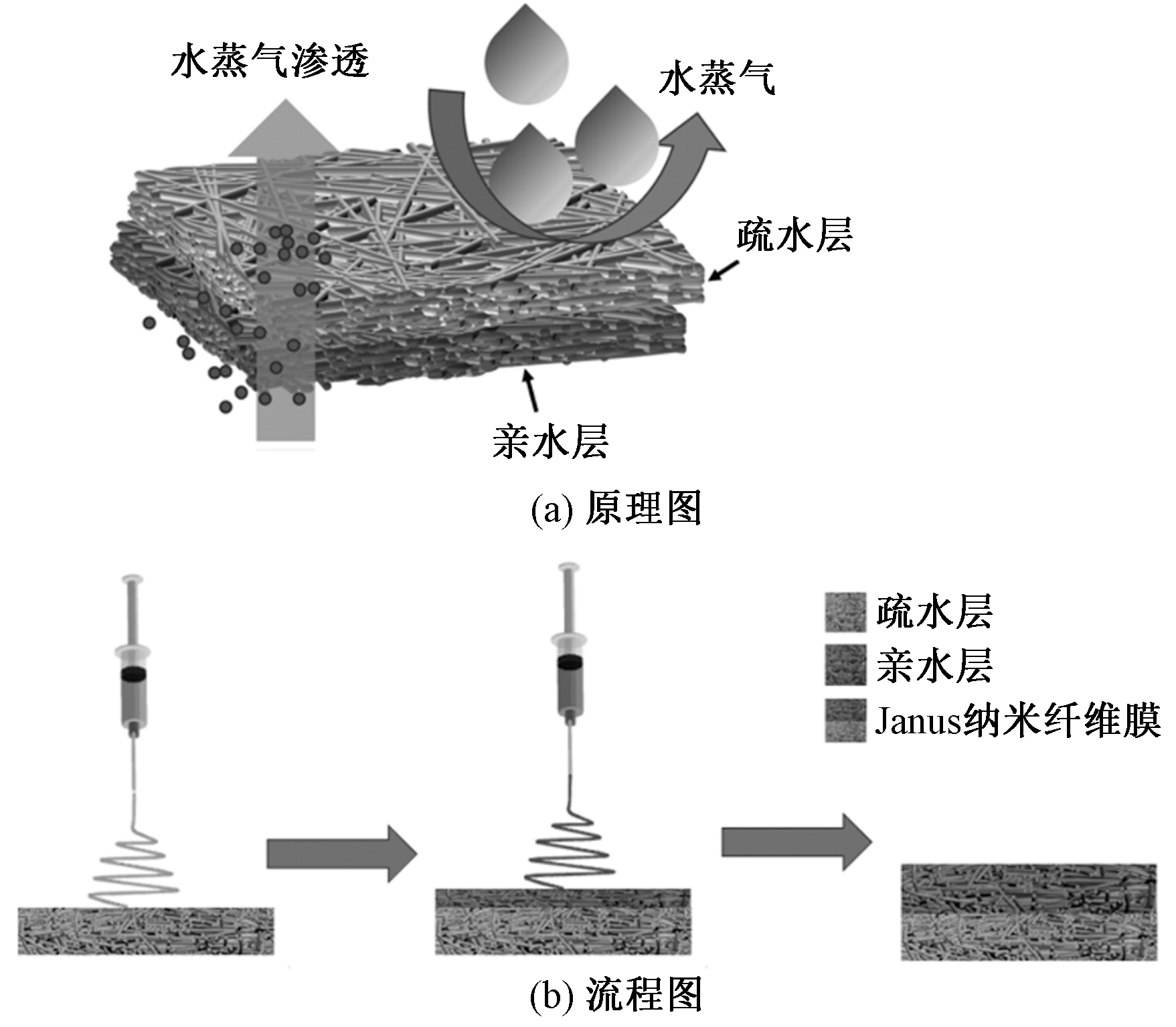
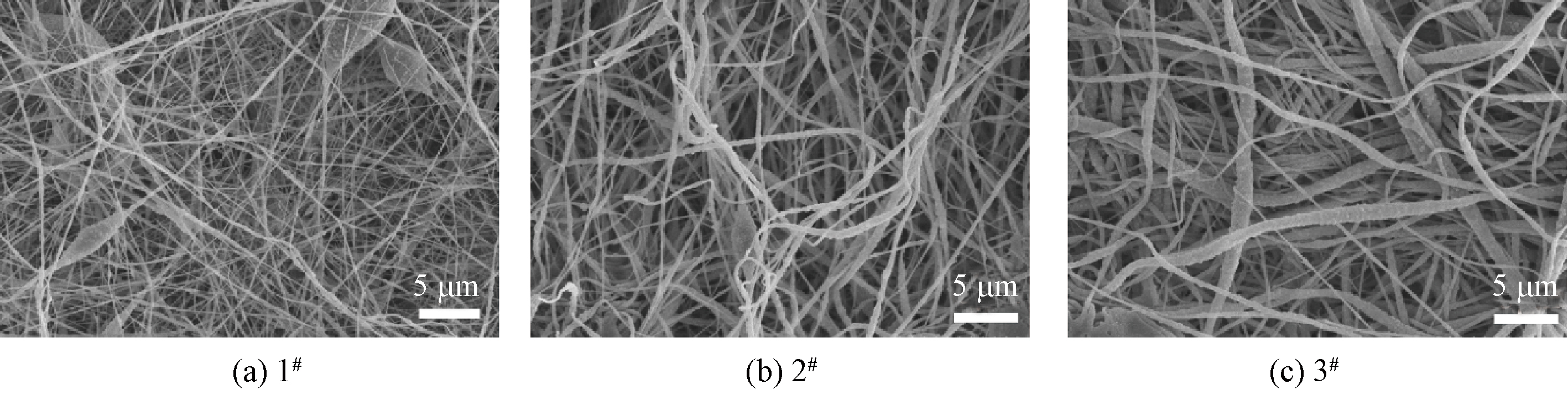
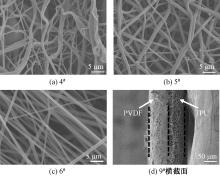
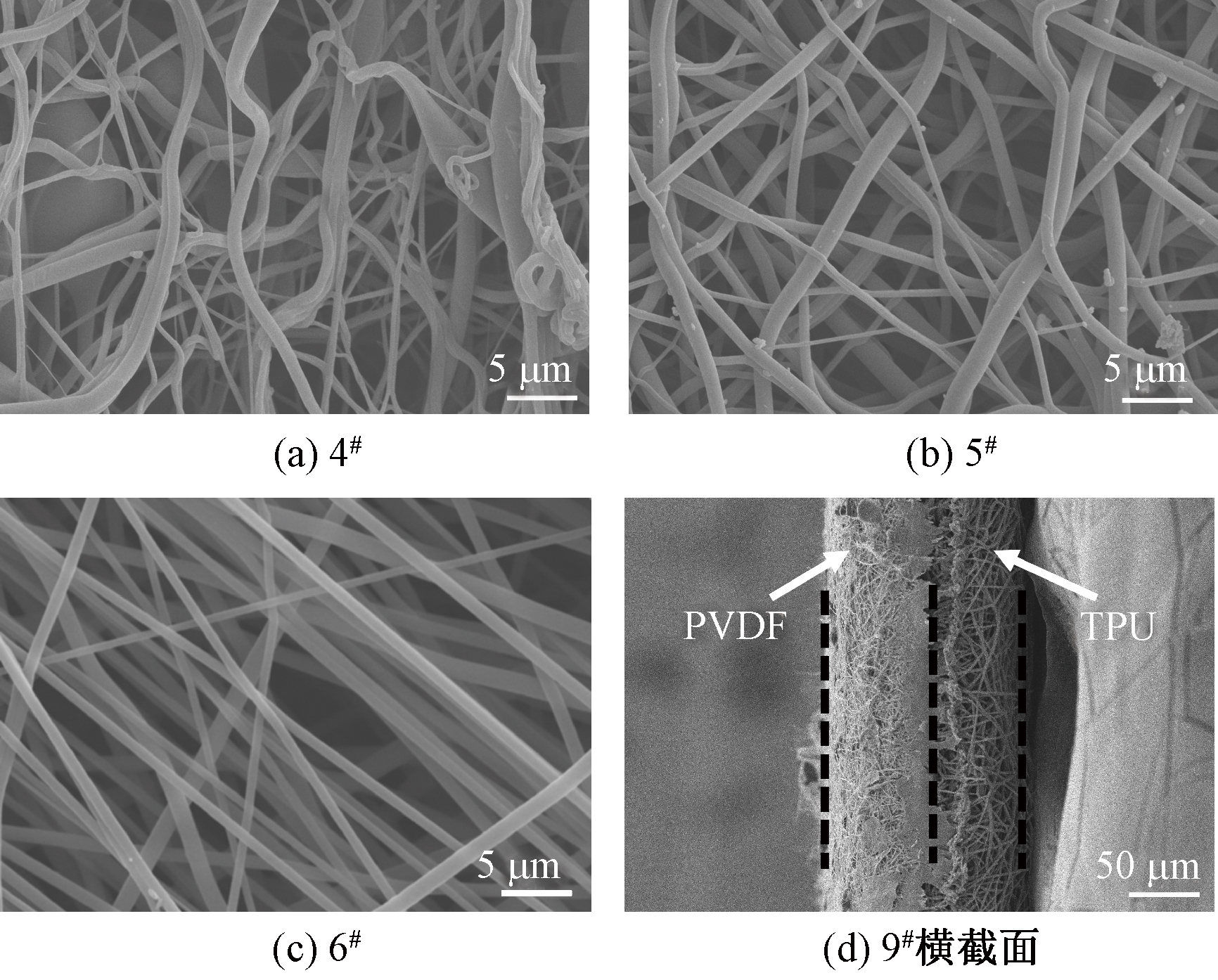
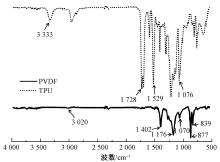
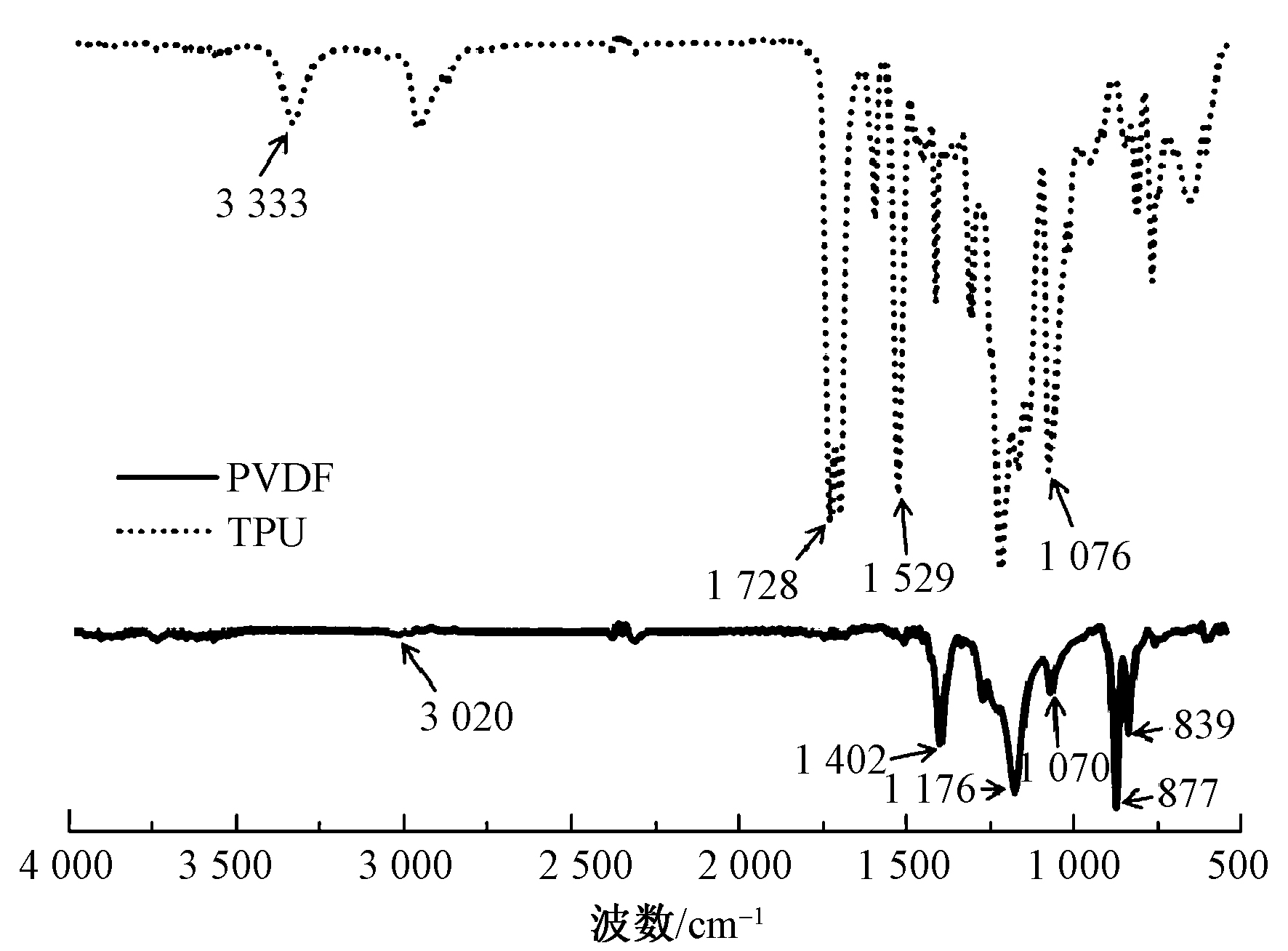
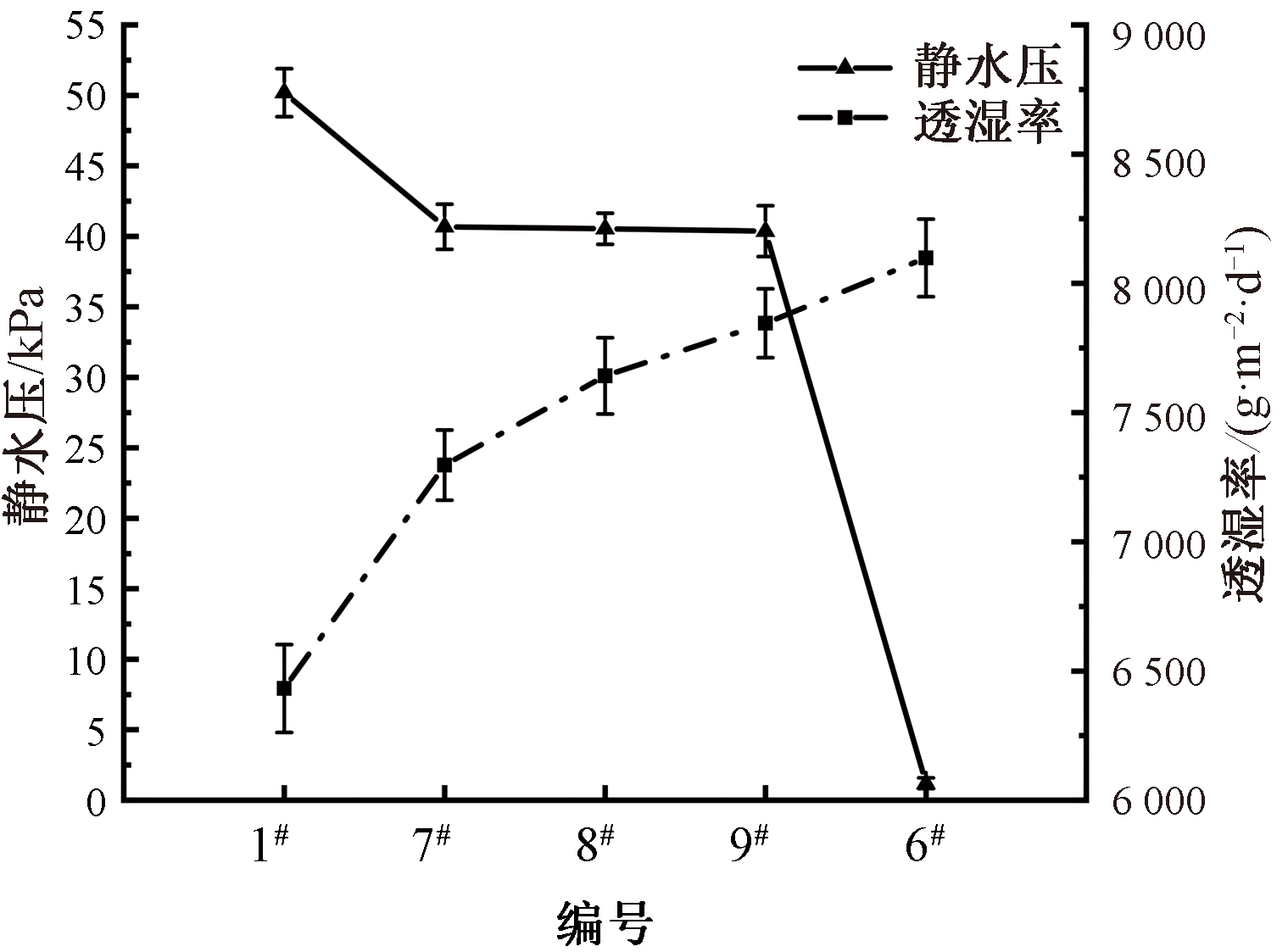
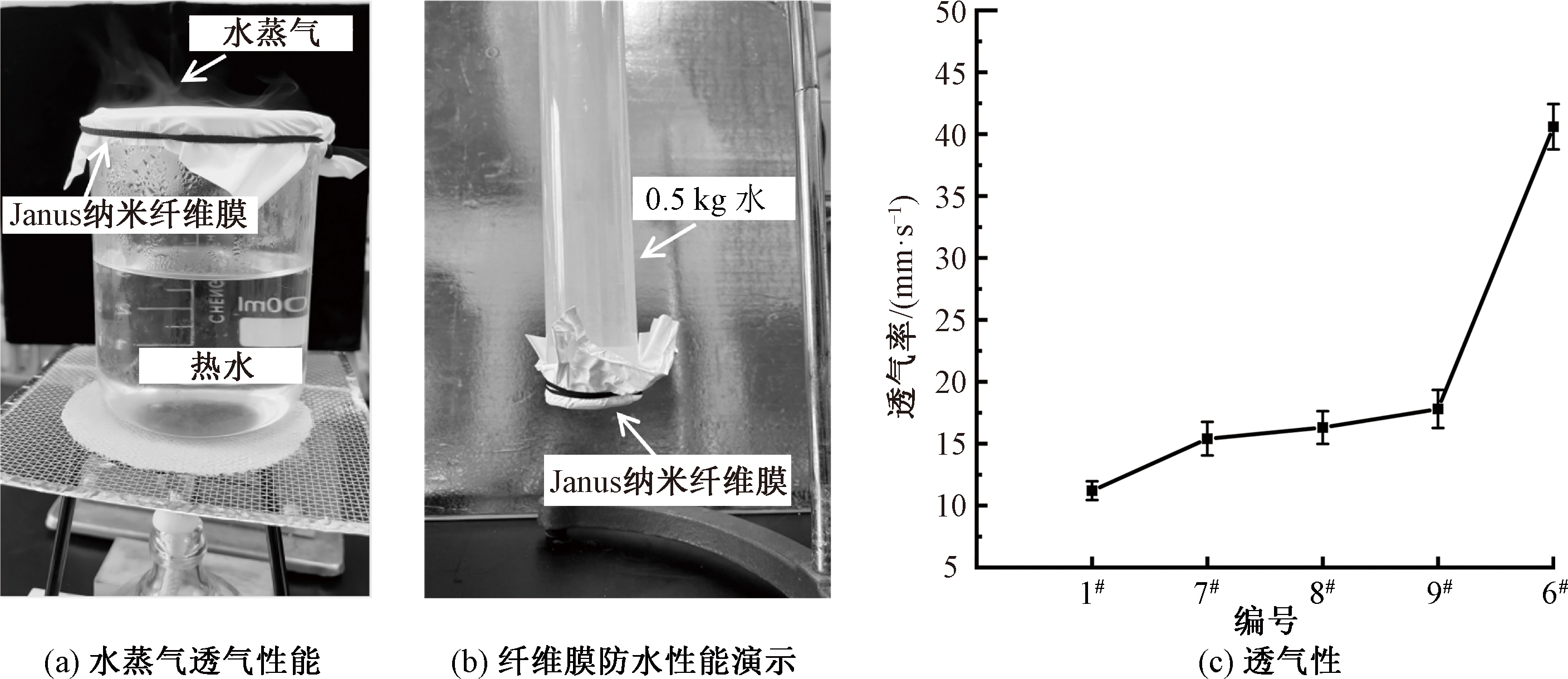
为获得具有防水透湿功能的新型非对称结构设计(Janus)的纳米纤维膜,利用静电纺丝和非对称复合构建由疏水性聚偏氟乙烯(PVDF)层和亲水性热塑性聚氨酯(TPU)层组成的Janus膜,并优化工艺参数实现高静水压与高渗透性的平衡。通过扫描电镜、孔隙率、接触角、力学性能、透湿性、透气性和静水压等测试对样品的结构和性能进行研究和分析。结果表明,当PVDF溶液质量分数为12%,TPU溶液质量分数为30%时,Janus纳米纤维膜表现出理想的防水和透湿性能,接触角为138.7°,透湿率达7 335.7 g/(m2·d),Janus膜的制备为防水透湿膜材料的开发提供了新的方向。
中图分类号:
| [1] | ZHOU W, YU X, CAO L T, et al. Green and ethanol-resistant polyurethane nanofibrous membranes based on an ethanol solvent for waterproof and breathable textiles[J]. Advanced Sustainable Systems, 2020, 4(9): 2000105. |
| [2] | ZHAO J, WANG X F, XU Y Q, et al. Multifunctional, waterproof, and breathable nanofibrous textiles based on fluorine-free, all-water-based coatings[J]. ACS Applied Materials & Interfaces, 2020, 12(13): 15911-15918. |
| [3] | YUE Y P, GONG X B, JIAO W L, et al. In-situ electrospinning of thymol-loaded polyurethane fibrous membranes for waterproof, breathable, and antibacterial wound dressing application[J]. Journal of Colloid and Interface Science, 2021, 592: 310-318. |
| [4] | GONG X B, YIN X, WANG F, et al. Electrospun nanofibrous membranes: a versatile medium for waterproof and breathable application[J]. Small, 2023, 19(2): 2205067. |
| [5] | ZHAO J, ZHU W X, WANG X F, et al. Fluorine-free waterborne coating for environmentally friendly, robustly water-resistant, and highly breathable fibrous textile[J]. ACS Nano, 2020, 14(1): 1045-1054. |
| [6] | FENG S S, ZHONG Z X, WANG Y, et al. Progress and perspectives in PTFE membrane: preparation, modification, and applications[J]. Journal of Membrane Science, 2018, 549: 332-349. |
| [7] | JIANG G S, LUO L Q, TAN L, et al. Microsphere-fiber interpenetrated superhydrophobic PVDF microporous membranes with improved waterproof and breathable performance[J]. ACS Applied Materials & Interfaces, 2018, 10(33): 28210-28218. |
| [8] | GU J T, GU H H, CAO J, et al. Robust hydrophobic polyurethane fibrous membranes with tunable porous structure for waterproof and breathable application[J]. Applied Surface Science, 2018, 439: 589-597. |
| [9] | SHI S, SI Y F, HAN Y T, et al. Recent progress in protective membranes fabricated via electrospinning: advanced materials, biomimetic structures, and functional applications[J]. Advanced Materials, 2022, 34(17): 2107938. |
| [10] | YANG H C, XIE Y S, HOU J W, et al. Janus membranes: creating asymmetry for energy efficiency[J]. Advanced Materials, 2018, 30(43): 1801495. |
| [11] | SHAO Z G, WANG Q F, CHEN J Y, et al. Directional water transport Janus composite nanofiber membranes for comfortable bioprotection[J]. Langmuir, 2022, 38(1): 309-319. |
| [12] | LI Y, ZHANG Q Y, WEI X Y, et al. Curvature adjustable liquid transport on anisotropic microstructured elastic film[J]. ACS Nano, 2023, 17(6): 6036-6044. |
| [13] | SUN J, QIN X Z, SONG Y X, et al. Selective liquid directional steering enabled by dual-scale reentrant ratchets[J]. International Journal of Extreme Manufacturing, 2023, 5(2): 025504. |
| [14] | YAN L L, YANG X B, LONG J, et al. Universal unilateral electro-spinning/spraying strategy to construct water-unidirectional Janus membranes with well-tuned hierarchical micro/nanostructures[J]. Chemical Communications, 2020, 56(3): 478-481. |
| [15] | DAI B, LI K, SHI L X, et al. Bioinspired Janus textile with conical micropores for human body moisture and thermal management[J]. Advanced Materials, 2019, 31(41): 1904113. |
| [16] | GU J, XU S D, LU X L, et al. Study on the membrane formation mechanism of PVDF/PVDF-CTFE blends[J]. Journal of the Taiwan Institute of Chemical Engineers, 2023, 142: 104655. |
| [17] | TIAN M M, YUAN S S, DECAESSTECKER F, et al. One-step fabrication of isotropic poly(vinylidene fluoride) membranes for direct contact membrane distillation (DCMD)[J]. Desalination, 2020, 477: 114265. |
| [18] | GONG X B, JI Y, LIU X Y, et al. Biomimetic and durably superhydrophobic nanofibrous membranes for high-performance waterproof and breathable textiles[J]. Advanced Functional Materials, 2024, 34(26): 2316030. |
| [19] | JIN C F, GONG X B, JIAO W L, et al. Superhydrophobic polyvinylidene fluoride nanofibrous membranes with stable hierarchical structures for protective textiles[J]. Composites Communications, 2023, 38: 101500. |
| [20] | LI X, XIE H, LIN J Y, et al. Microstructure evolution of electrospun polyvinylidene fluoride fibers via stretching at varying temperatures[J]. Polymer, 2022, 262: 125434. |
| [21] | DENG L, LIU K, LI P Y, et al. Engineering construction of robust superhydrophobic two-tier composite membrane with interlocked structure for membrane distillation[J]. Journal of Membrane Science, 2020, 598: 117813. |
| [22] | SUT A, METZSCH-ZILLIGEN E, GROßHAUSER M, et al. Synergy between melamine cyanurate, melamine polyphosphate and aluminum diethylphosphinate in flame retarded thermoplastic polyurethane[J]. Polymer Testing, 2019, 74: 196-204. |
| [23] | CALVO-CORREAS T, UGARTE L, TRZEBIATOWSKA P J, et al. Thermoplastic polyurethanes with glycolysate intermediates from polyurethane waste recycling[J]. Polymer Degradation and Stability, 2017, 144: 411-419. |
| [1] | 王亚云, 蔺多佳, 高远, 王杰, 夏鑫. 皮芯结构复合纱线电极的制备及其储锂与电致变色性能[J]. 纺织学报, 2026, 47(07): 136-143. |
| [2] | 包安娜, 洪剑寒. 静电纺丝制备辐射制冷纳米纤维材料的研究进展[J]. 纺织学报, 2026, 47(07): 239-246. |
| [3] | 郭小敏, 冯意清, 吕欢, 王伟, 董凯, 缪东洋, 张瑞云. 高吸湿单向导液复合纳米纤维膜的制备及其性能[J]. 纺织学报, 2026, 47(07): 93-103. |
| [4] | 邓富坤, 陈智杰, 银倩琳, 陈宇, 温蕾, 戚栋明. CO2基聚氨酯热熔胶的制备及其在数码烫画中的应用[J]. 纺织学报, 2026, 47(06): 122-130. |
| [5] | 孙刚, 朱可欣, 陈玉, 常迎迎, 杨俊彦, 刘航, 夏鑫. 纤维状结构支撑高负载增塑剂聚氧化乙烯基固态电解质的性能优化[J]. 纺织学报, 2026, 47(06): 43-52. |
| [6] | 王晓辉, 王宇航, 徐锦龙, 刘金星, 陈哲, 谭晶, 梅锋, 王华平. 熔融静电纺丝泰勒锥成形及纤维可纺性[J]. 纺织学报, 2026, 47(05): 28-36. |
| [7] | 桂振宇, 兰平, 杨晓达, 陈昊, 庄静. 肝素化铜基金属有机框架/聚乙烯醇复合膜的制备及其血液净化性能[J]. 纺织学报, 2026, 47(05): 56-64. |
| [8] | 张哲, 陈卓明, 李帆, 宋文雅, 覃思宇, 侯锦东, 余仡杰. 多功能非对称结构纳米纤维膜的制备及其抗菌抗氧化性能[J]. 纺织学报, 2026, 47(04): 34-42. |
| [9] | 杨鸿杰, 徐丽亚, 汪蔚. 含一氧化氮供体的生物基聚酰胺56纳米纤维膜制备及其性能[J]. 纺织学报, 2026, 47(04): 43-51. |
| [10] | 郭一铭, 喻爽, 赵帆, 王富军. 血管监测用纤维基压电传感器的构建及性能评价[J]. 纺织学报, 2026, 47(03): 118-128. |
| [11] | 杨潇, 章语墨, 李彦, 王璐, 王富军. 糖触抗菌与渗液管理一体化的短纤维重构复合敷料及其性能[J]. 纺织学报, 2026, 47(03): 44-51. |
| [12] | 陈泳良, 杨潇, 王朝荣, 黄俊鸿, 李彦, 王璐. 静电纺丝-恒应力退火协同构建的湿态稳定型聚乳酸/I型胶原肩袖补片[J]. 纺织学报, 2026, 47(03): 60-69. |
| [13] | 李好义, 田鑫哲, 张毅, 牟文英, 张超, 赵千龙, 杨卫民. 导电各向异性复合心脏补片的熔体静电纺丝/直写构建及体外评价[J]. 纺织学报, 2026, 47(03): 70-76. |
| [14] | 刘金枝, 赵回汇, 吴焕友, 张建明, 高晶. 壳聚糖/聚己内酯取向纳米纤维膜的结构调控与物理引导作用[J]. 纺织学报, 2026, 47(03): 9-17. |
| [15] | 张曼琦, 孙艳丽, 张晓茹, 李博, 刘哲. 共轭静电纺双模态调温织物的制备及其性能[J]. 纺织学报, 2026, 47(02): 153-161. |
|
||
 京公网安备11010502044800号