纺织学报 ›› 2025, Vol. 46 ›› Issue (06): 38-44.doi: 10.13475/j.fzxb.20241100401

• 纤维新材料与纺织绿色发展青年科学家沙龙专栏 • 上一篇    下一篇

双向调温阻燃防静电纺织品的制备及其性能

林思伶1,2, 刘赋瑶1,2, 张成1,2, 侯琳3, 徐炎炎3, 付冉迁1, 樊威1,2()   

  1. 1.西安工程大学 纺织科学与工程学院, 陕西 西安 710048
    2.西安工程大学 功能性纺织材料及制品教育部重点实验室, 陕西 西安 710048
    3.陕西元丰新材料科技有限公司, 陕西 西安 710025
  • 收稿日期:2024-11-05 修回日期:2025-03-13 出版日期:2025-06-15 发布日期:2025-07-02
  • 通讯作者: 樊威(1986—),男,教授,博士。主要研究方向为三维纺织复合材料结构与性能、智能纤维及智能可穿戴、废旧纺织品高值化利用以及安全用防护纺织品。E-mail:fanwei@xpu.edu.cn
  • 作者简介:林思伶(1996—),女,博士生。主要研究方向为智能纤维、智能可穿戴及废旧纺织品高值化利用等。
  • 基金资助:
    国家自然科学基金项目(12472141);国家自然科学基金项目(52073224);陕西省杰出青年科学基金项目(2024JC-JCQN-03);陕西省自然科学基础研究计划(2023KXJ-034);西安市科技计划项目(23ZDCYJSGG0032-2022);陕西省教育厅服务地方专项计划项目(22JC035)

Preparation and performance of dual-directional temperature-regulating flame-retardant and anti-static textiles

LIN Siling1,2, LIU Fuyao1,2, ZHANG Cheng1,2, HOU Lin3, XU Yanyan3, FU Ranqian1, FAN Wei1,2()   

  1. 1. School of Textile Science and Engineering, Xi'an Polytechnic University, Xi'an, Shaanxi 710048, China
    2. Key Laboratory of Functional Textile Materials and Products, Ministry of Education, Xi'an Polytechnic University, Xi'an, Shaanxi 710048, China
    3. Shaanxi Yuanfeng Prosafe Co., Ltd., Xi'an, Shaanxi 710025, China
  • Received:2024-11-05 Revised:2025-03-13 Published:2025-06-15 Online:2025-07-02

摘要: 为获得兼具调温、阻燃及防静电功能的智能面料,首先,分别将相变温度为28 ℃和33 ℃的相变微胶囊乳液与粘胶纤维纺丝原液进行混合,通过湿法纺丝工艺制备出具有温度调节功能的粘胶纤维。其次,采用环锭纺工艺将其与本质阻燃纤维(包括腈氯纶、芳纶1313和阻燃粘胶纤维)进行混纺,通过优化混纺比例制得具有阻燃特性的可调温纱线。最后,将阻燃可调温纱线与导电锦纶纱线进行合股,制备出兼具阻燃、防静电的可调温智能纱线,并通过半自动织机织制出具有调温、阻燃及防静电功能的智能纺织品。对该智能纱线及其织物的表面形貌、调温性能、阻燃性能及防静电性能进行表征及分析。结果表明:将相变微胶囊-粘胶纤维与本质阻燃纤维通过环锭纺制备获得的混纺纤维具有明显的阻燃协同效应;相比于28 ℃相变阻燃纱线,将33 ℃相变阻燃纱线与锦纶导电纱线通过捻合获得的智能纱线在纺织品应用上具有更为优异的性能。

关键词: 多功能织物, 相变微胶囊, 粘胶纤维, 智能调温纺织品, 阻燃, 防静电, 智能纱线

Abstract:

Objective In order to address the limitations of traditional clothing in temperature regulation and meet the higher demand for thermal comfort in contemporary society, this research develops smart textiles with temperature-regulating, flame-retardant, and anti-static functions. The research focused on effectively combining textile materials with phase change microcapsules (PCMs) to endow textiles with the ability to store and release heat, thereby achieving bidirectional temperature regulation.

Method The study involved three main steps. First, viscose fibers with temperature-regulating functions were prepared by mixing phase change microcapsules with viscose fiber spinning solutions and using a wet spinning process. Second, these fibers were blended with intrinsic flame-retardant fibers (acrylic chlorine, aramid 1313, and flame-retardant viscose) through a ring spinning process to produce temperature-regulating flame-retardant yarns. Finally, these yarns were combined with polyamide conductive yarns to create intelligent yarns with flame-retardant, anti-static, and temperature-regulating properties, which were then woven into fabrics using a semi-automatic loom.

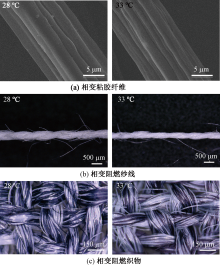
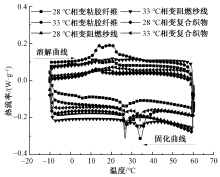
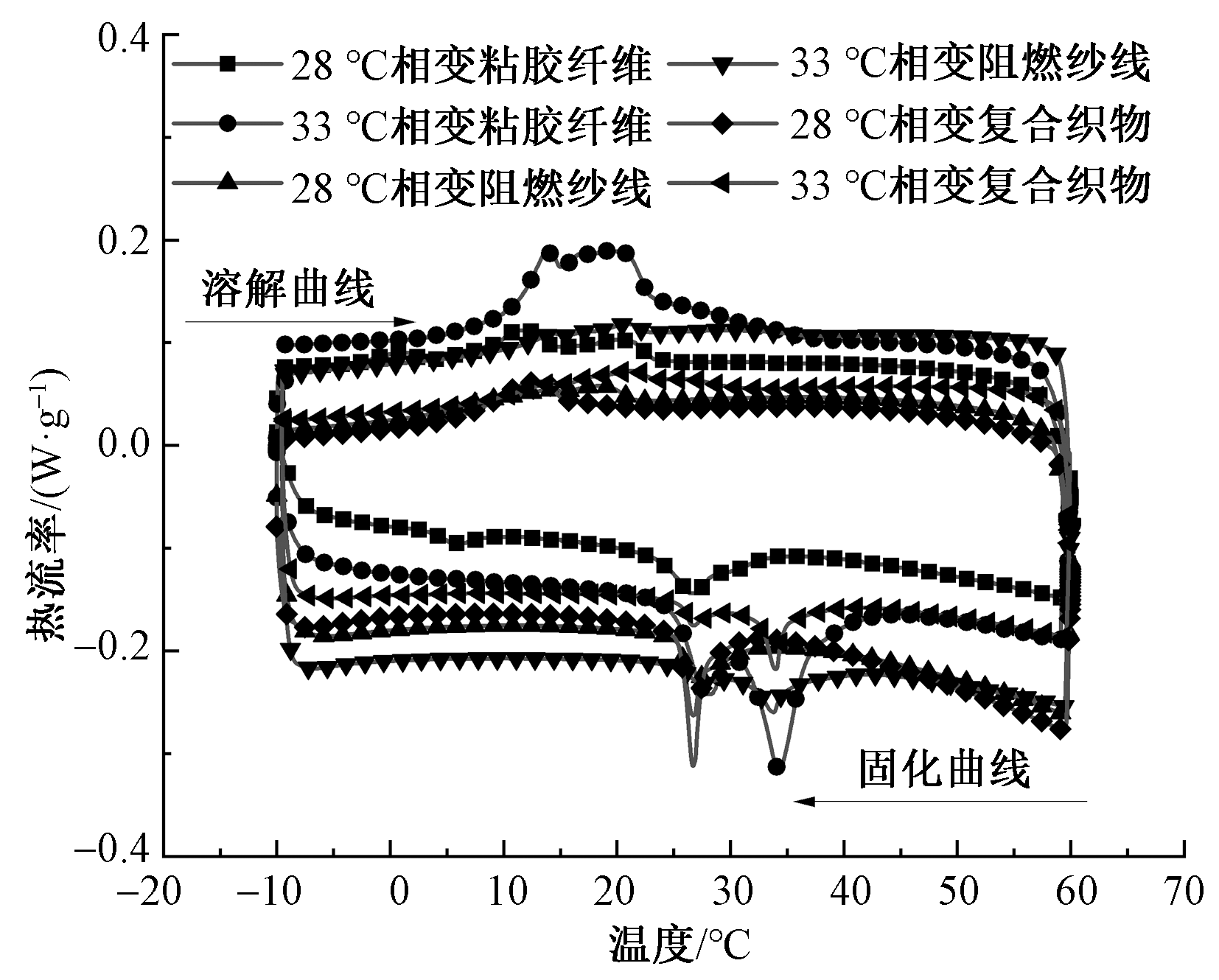
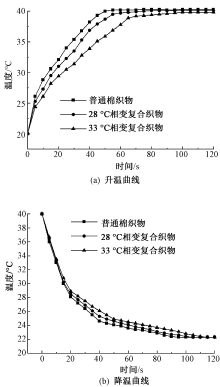
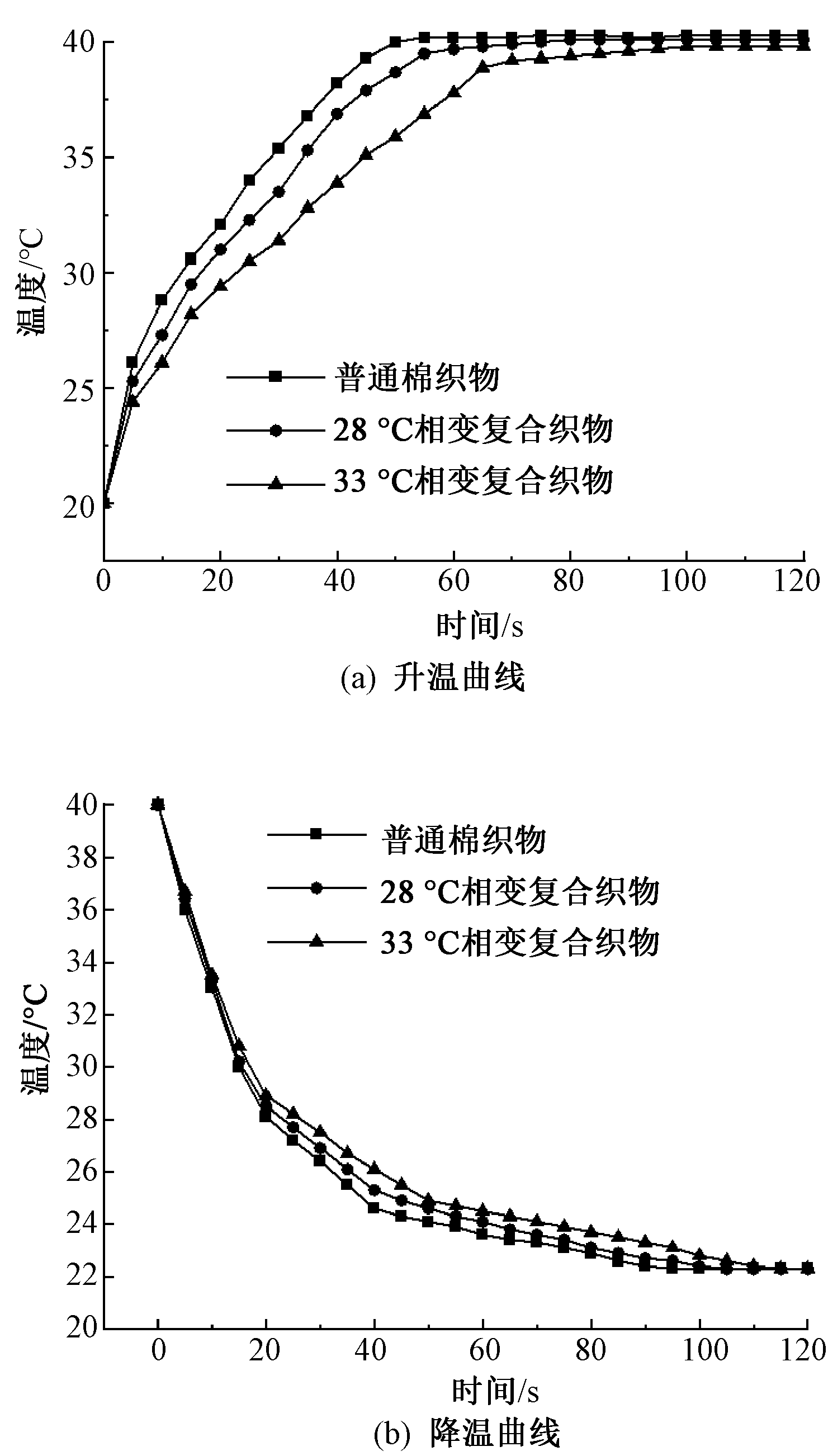
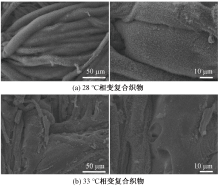
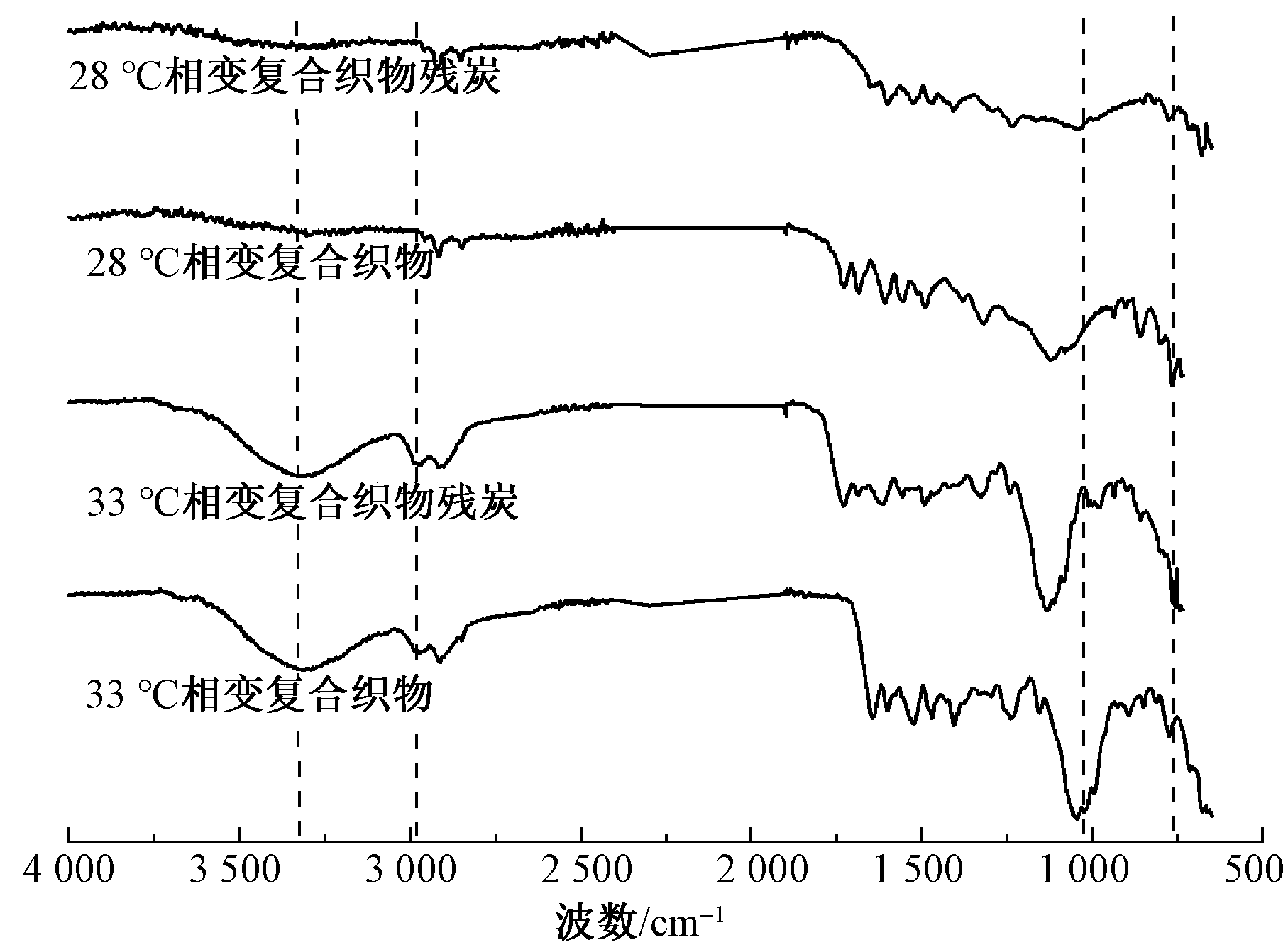
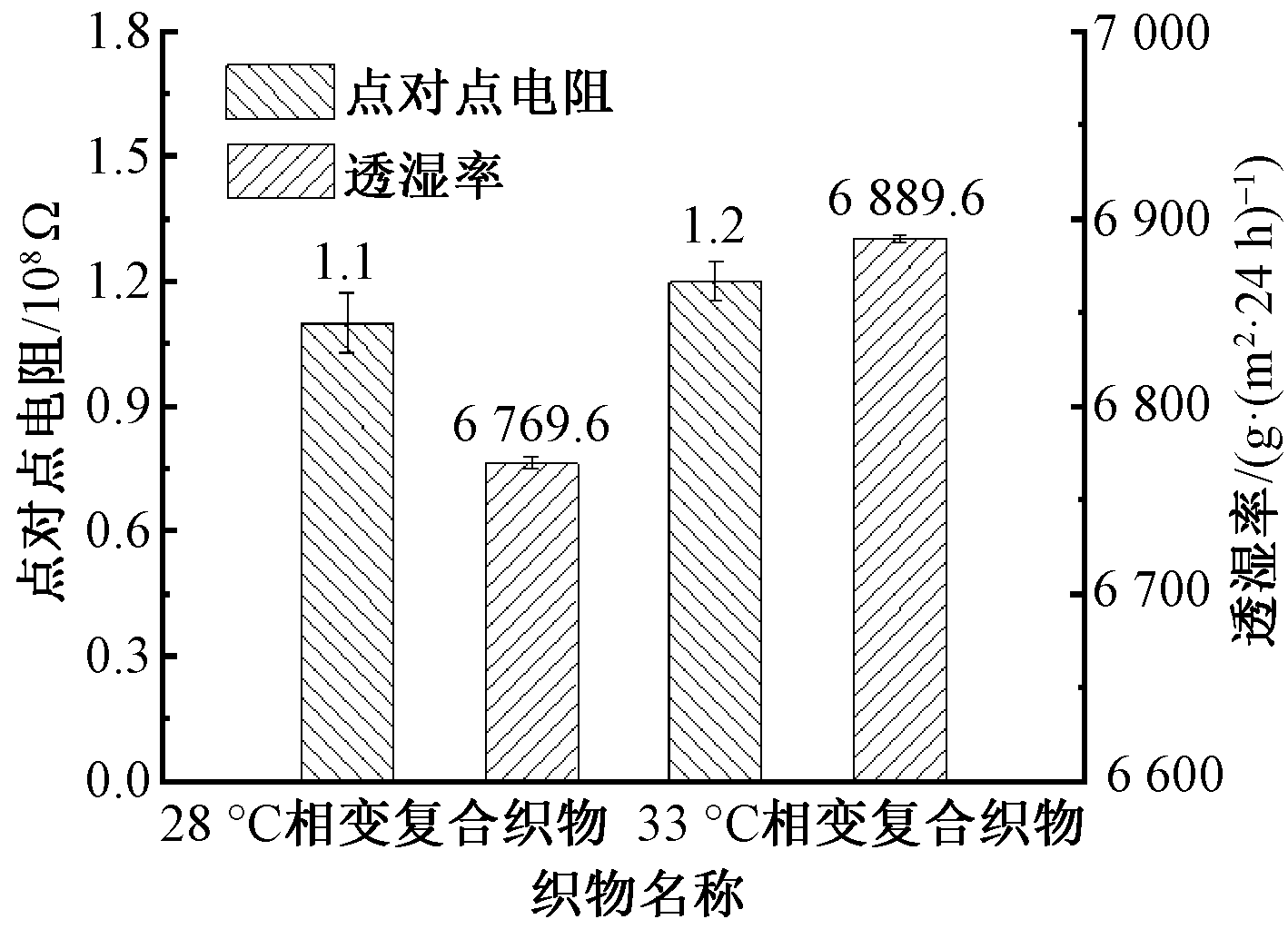
Results The blended fibers obtained by combining phase change microcapsule-viscose fibers with intrinsic flame-retardant fibers through ring spinning exhibited an obvious flame-retardant synergistic effect. The optimal fiber ratio was determined to be 30% phase change microcapsule-viscose fibers, 20% flame-retardant viscose, and 50% aramid 1313. The 33 ℃ temperature-regulating flame-retardant yarn combined with polyamide conductive yarn showed better performance in textile applications compared to the 28 ℃ temperature-regulating flame-retardant yarn. The surface morphology analysis revealed that the phase change microcapsule-viscose fibers had a rough surface with distinct longitudinal groove structures due to the stretching during the wet spinning process. The composite yarns and fabrics exhibited good appearance characteristics. The thermoregulation performance analysis showed that both 28 ℃ and 33 ℃ phase change composite fabrics had bidirectional temperature regulation capabilities. The 33 ℃ phase change composite fabric had a higher temperature regulation range and greater latent heat of fusion and crystallization, indicating stronger temperature regulation ability. The flame retardancy analysis demonstrated that both composite fabrics met the national standard requirements for B-level flame-retardant protective clothing. The 33 ℃ phase change composite fabric showed better flame retardancy, with no after-flame or smoldering during the test, and the damage length was less than 100 mm. The char residue analysis indicated that the dense char structure formed during combustion effectively inhibited heat and smoke release, contributing to the flame-retardant performance. The anti-static performance analysis revealed that both phase change composite fabrics met the national standard requirements for anti-static clothing, with point-to-point resistance values below the specified upper limit, indicating good charge dissipation ability. The 33 ℃ composite fabric exhibited better anti-static performance with lower resistance values.

Conclusion This research successfully developed a multi-functional intelligent textiles with bidirectional temperature regulation, flame-retardant, and anti-static performance. The textiles were prepared by optimizing the blending ratio of phase change microcapsule-viscose fibers with different flame-retardant fibers and combining them with polyamide conductive yarns. The results showed that the developed textile had good thermoregulation, flame-retardant, and anti-static performance, meeting national standards and demonstrating significant potential for application in industries such as petroleum, chemical engineering, and fire protection. The study provides a new solution for improving safety and comfort in these fields and offers valuable insights for future research and development in intelligent textiles.

Key words: multifunctional fabric, phase change microcapsule, viscose fiber, intelligent temperature-regulation textiles, flame-retardant, anti-static, intelligent yarn

中图分类号: 

  • TQ314.248

表1

混合纤维配比"

试样编号 纤维配比
1 相变粘胶纤维30%,腈氯纶70%
2 相变粘胶纤维40%,腈氯纶60%
3 相变粘胶纤维30%,阻燃粘胶纤维70%
4 相变粘胶纤维30%,芳纶1313 70%
5 相变粘胶纤维30%,腈氯纶15%,阻燃粘胶纤维15%,芳纶1313 30%,芳纶1414 10%
6 相变粘胶纤维30%,阻燃粘胶纤维20%,芳纶1313 50%

表2

阻燃性能测试结果"

试样编号 LOI值/% 续燃时间/s 阴燃时间/s
1 <26
2 <26
3 28.0 3 12
4 <26
5 28.0 3 7
6 28.2 0 0

图1

相变粘胶纤维、相变阻燃纱线及其织物的表面形貌照片"

图2

相变纤维、纱线及其织物的DSC曲线"

图3

相变复合织物的升降温曲线"

表3

相变复合织物的垂直燃烧测试结果"

相变温
度/℃
织物
方向
损毁长
度/mm
续燃时
间/s
阴燃时
间/s
熔融
滴落
28 经向 88 0 0.7
28 纬向 98 0.6 1.0
33 经向 95 0 0
33 纬向 93 0 0

图4

不同相变复合织物燃烧后表面形貌照片"

图5

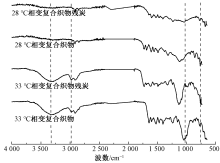
不同相变复合织物与其燃烧残炭的红外光谱图"

图6

相变复合织物的点对点电阻值和透湿率"

[1] 陈乔丹, 牛蒙蒙, 卢业虎. 充气调温抗浸服的研制与保暖性评价[J]. 纺织学报, 2024, 45(7): 159-164.
CHEN Qiaodan, NIU Mengmeng, LU Yehu. Development and evaluation of heat retention properties of inflatable thermostatic anti-immersion clothing[J]. Journal of Textile Research, 2024, 45(7): 159-164.
[2] 李彩霞. 树脂基高强高模及保温复合材料的制备与性能[D]. 西安: 西安工程大学, 2016:4-8.
LI Caixia. Preparation and properties of resin-based high strength and high mold thermal insulation composites[D]. Xi'an: Xi'an Polytechnic University, 2016:4-8.
[3] 马亮, 俞旭华, 刘文武, 等. 气凝胶复合材料在干式潜水服内胆隔热性能提升中的应用[J]. 纺织学报, 2024, 45(7): 181-188.
MA Liang, YU Xuhua, LIU Wenwu, et al. Application of aerogel composites in improving thermal insulation performance of dry wetsuit inner liner[J]. Journal of Textile Research, 2024, 45(7): 181-188.
[4] 刘文静, 张欣睿, 赵晓曼, 等. 相变材料微胶囊的研究进展[J]. 纺织学报, 2024, 45(9): 235-243.
LIU Wenjing, ZHANG Xinrui, ZHAO Xiaoman, et al. Research progress of phase change materials microcapsules[J]. Journal of Textile Research, 2024, 45(9): 235-243.
[5] 刘雨婷, 宋泽涛, 赵胜男, 等. 个体冷却服的研究现状与发展趋势[J]. 纺织学报, 2023, 44(12): 233-241.
doi: 10.13475/j.fzxb.20221003402
LIU Yuting, SONG Zetao, ZHAO Shengnan, et al. Research status and development trend of individual cooling suits[J]. Journal of Textile Research, 2023, 44(12): 233-241.
doi: 10.13475/j.fzxb.20221003402
[6] LI Jun, ZHU Xiaoyun, WANG Huichang, et al. Synthesis and properties of multifunctional microencapsulated phase change material for intelligent textiles[J]. Journal of Materials Science, 2021, 56: 2176-2191.
[7] DE Castro Paula F, MINKO Sergiy, VINOKUROV Vladimir, et al. Long-term autonomic thermoregulating fabrics based on microencapsulated phase change materials[J]. ACS Applied Energy Materials, 2021, 4(11): 12789-12797.
doi: 10.1021/acsaem.1c02170 pmid: 35128339
[8] LI Chen, FU Jijie, HUANG Fangsheng, et al. Controlled latent heat phase-change microcapsules for temperature regulation[J]. ACS Applied Materials & Interfaces, 2023, 15(25): 30383-30393.
[9] ZHANG Guoqing, CAI Changwei, WANG Yilai, et al. Preparation and evaluation of thermo-regulating bamboo fabric treated by microencapsulated phase change materials[J]. Textile Research Journal, 2019, 89(16): 3387-3393.
doi: 10.1177/0040517518813681
[10] GUO Yanhong, HOU Tuo, WANG Jing, et al. Phase change materials meet microfluidic encapsulation[J]. Advanced Science, 2024, 11(37): 1-24.
[11] LIN Xianxian, GUO Xi, QIU Chendong, et al. A reversibly flame-retardant thermal regulation material inspired by leaf transpiration[J]. Chemical Engineering Journal, 2023.DOI:10.1016/j.cej.2023.144221.
[12] ZHANG Zetian, LIU Yang, DU Weining, et al. Construction of layered double hydroxide-modified silica integrated multilayer shell phase change capsule with flame retardancy and highly efficient thermoregulation performance[J]. Journal of Colloid and Interface Science, 2023, 632: 311-325.
[1] 丁圆, 赵云霞, 靳高岭, 杨涛, 徐静, 柯福佑, 陈烨. 阻燃聚丙烯腈长丝织物的层层自组装法制备及其性能[J]. 纺织学报, 2025, 46(06): 168-177.
[2] 廖昙倩, 李文雅, 杨晓宇, 赵静娜, 张骁骅. 碳纳米管/聚乙二醇复合相变纤维的制备及其热性能[J]. 纺织学报, 2025, 46(03): 9-16.
[3] 廖喜林, 曾媛, 刘淑萍, 李亮, 李淑静, 刘让同. 磷/氮/硅复配协效阻燃棉织物制备及其性能[J]. 纺织学报, 2025, 46(03): 151-157.
[4] 郭庆, 毛阳顺, 任亚杰, 刘济民, 王怀芳, 朱平. 基于漆酶一步催化法的羊毛织物原位染色及阻燃功能化[J]. 纺织学报, 2025, 46(02): 161-169.
[5] 张洁, 郭鑫源, 关晋平, 程献伟, 陈国强. 磷/氮阻燃剂原位沉积对棉织物的耐久阻燃改性[J]. 纺织学报, 2025, 46(02): 180-187.
[6] 宋婉萌, 王宝弘, 孙宇, 杨家祥, 刘云, 王玉忠. 兼具力学性能与高效阻燃性能粘胶织物的制备及其性能[J]. 纺织学报, 2025, 46(02): 188-196.
[7] 魏一, 徐红, 钟毅, 张琳萍, 毛志平. 聚(环三磷腈-间苯三酚)微球的制备及其在聚酯阻燃中的应用[J]. 纺织学报, 2025, 46(01): 119-129.
[8] 章红豆, 陈芳, 楚祥婷, 陆惠文, 刘新金, 苏旭中. 基于示踪纤维法测试的化纤条内纤维弯钩[J]. 纺织学报, 2024, 45(12): 74-79.
[9] 黄田田, 宋媛珠, 赵斌. 单宁酸基阻燃多功能涂层及表面整理Lyocell织物[J]. 纺织学报, 2024, 45(12): 152-158.
[10] 关玉, 王冬, 郭一凡, 付少海. MoS2/MXene阻燃气敏棉织物的制备及其性能[J]. 纺织学报, 2024, 45(12): 159-165.
[11] 杜蕾, 王士杰, 蒋之铭, 朱平. 无卤无磷阻燃聚酰胺超细纤维合成革的制备及其性能[J]. 纺织学报, 2024, 45(11): 162-169.
[12] 邴琳涵, 王锐, 吴雨航, 刘博同, 黄寒江, 魏建斐. 聚对苯二甲酸乙二醇酯基碳点热解法制备及其在阻燃改性中的应用[J]. 纺织学报, 2024, 45(10): 1-8.
[13] 肖宁宁, 陈智杰, 欧阳裕福, 孟金贵, 孙阳艺, 戚栋明. 超细纤维合成革用阻燃水性聚氨酯的制备及其性能[J]. 纺织学报, 2024, 45(09): 113-120.
[14] 刘慧, 李平, 朱平, 刘云. γ-脲基丙基三乙氧基硅烷/苯基膦酸阻燃抗菌棉织物的制备及其性能[J]. 纺织学报, 2024, 45(08): 205-214.
[15] 徐豫松, 周杰, 甘佳怡, 张涛, 张先明. 含磷氮水性聚氨酯的制备及其在涤纶织物阻燃整理中应用[J]. 纺织学报, 2024, 45(07): 112-120.
Viewed
Full text


Abstract

Cited

  Shared   
  Discussed   
No Suggested Reading articles found!