纺织学报 ›› 2025, Vol. 46 ›› Issue (06): 45-55.doi: 10.13475/j.fzxb.20241104802
• 纤维新材料与纺织绿色发展青年科学家沙龙专栏 • 上一篇 下一篇
余厚咏( ), 黄程玲, 陈毅, 高智英
YU Houyong(), HUANG Chengling, CHEN Yi, GAO Zhiying
摘要:
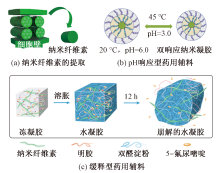
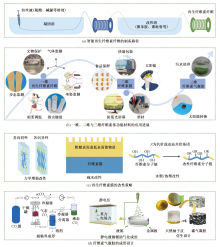
在全球可持续发展目标的推动下,减少石化塑料依赖并开发绿色低碳材料已成为重要研究课题。纤维素基材料具有良好的生物相容性和低毒性,通过纳米技术、材料科学和化学改性可赋予其多维结构与多样化功能。为提高天然纤维素资源的利用率和高价值转化,基于天然纤维素固有结构及物化特性,系统分析了天然纤维素的多维结构材料的制备方法、特性及应用,阐明天然纤维素多维结构演变机制及其核心驱动力。从结构维度出发,详细讨论了不同纤维素材料在力学性能、加工工艺和功能特性上的显著差异,概述了多维结构纤维素在药用辅料、智能纺织品、可降解包装材料与节能净水材料等领域的应用进展,总结了多维结构调控与设计对纤维素基功能材料的影响,指出其面临的生产挑战及技术瓶颈。最后,展望了各类纤维素材料在多维结构转化应用方面的潜力,以期为纤维素基材料的多维应用提供理论依据和方向。
中图分类号:
| [1] | HUANG C, YU H Y, ABDALKARIM S Y H, et al. A comprehensive investigation on cellulose nanocrystals with different crystal structures from cotton via an efficient route[J]. Carbohydrate Polymers, 2022. DOI: 10.1016/j.carbpol.2021.118766. |
| [2] | SHI X, WANG Z, LIU S, et al. Scalable production of carboxylated cellulose nanofibres using a green and recyclable solvent[J]. Nature Sustainability, 2024, 7(3): 315-325. |
| [3] | DROGUET B E, LIANG H L, FRKA-PETESIC B, et al. Large-scale fabrication of structurally coloured cellulose nanocrystal films and effect pigments[J]. Nature Materials, 2022, 21(3): 352-358. |
| [4] | DHALI K, GHASEMLOU M, DAVER F, et al. A review of nanocellulose as a new material towards environmental sustainability[J]. Science of the Total Environment, 2021. DOI: 10.1016/j.scitotenv.2021.145871. |
| [5] | DONG Y, JIA B, FU F, et al. Fabrication of hollow materials by fast pyrolysis of cellulose composite fibers with heterogeneous structures[J]. Angewandte Chemie International Edition, 2016, 55(43): 13504-13508. |
| [6] | CAPRIE Steering. A randomised, blinded, trial of clopidogrel versus aspirin in patients at risk of ischaemic events[J]. The Lancet, 1996, 348: 1329-1339. |
| [7] | SAYYED A J, DESHMUKH N A, PINJARI D V. A critical review of manufacturing processes used in regenerated cellulosic fibres: viscose, cellulose acetate, cuprammonium, LiCl/DMAc, ionic liquids, and NMMO based lyocell[J]. Cellulose, 2019, 26(5): 2913-2940. |
| [8] | WANG C, LI Y, YU H Y, et al. Continuous meter-scale wet-spinning of cornlike composite fibers for eco-friendly multifunctional electronics[J]. ACS Applied Materials & Interfaces, 2021, 13(34): 40953-40963. |
| [9] | HEINZE T, LIEBERT T. Unconventional methods in cellulose functionalization[J]. Progress in Polymer Science, 2001, 26(9): 1689-1762. |
| [10] | SWATLOSKI R P, SPEAR S K, HOLBREY J D, et al. Dissolution of celluose with ionic liquids[J]. Journal of the American Chemical Society, 2002, 124(18): 4974-4975. |
| [11] | SHEN H, SUN T, ZHOU J. Recent progress in regenerated cellulose fibers by wet spinning[J]. Macromolecular Materials and Engineering, 2023. DOI: 10.1002/mame.202300089. |
| [12] | WANG C, LIAO Y, YU H Y, et al. Homogeneous wet-spinning construction of skin-core structured PANI/cellulose conductive fibers for gas sensing and e-textile applications[J]. Carbohydrate Polymers, 2023. DOI:10.1016/j.carbpol.2023.121175. |
| [13] | CHEN Y, YU H Y, LI Y. Highly efficient and superfast cellulose dissolution by green chloride salts and its dissolution mechanism[J]. ACS Sustainable Chemistry and Engineering, 2020, 8(50): 18446-18454. |
| [14] | YANG M, CHEN Y, ABDALKARIM S Y H, et al. Efficient cellulose dissolution and derivatization enabled by oxalic/sulfuric acid for high-performance cellulose films as food packaging[J]. International Journal of Biological Macromolecules, 2024. DOI: 10.1016/j.ijbiomac.2024.133799. |
| [15] | WOLFS J, NICKISCH R, WANNER L, et al. Sustainable one-pot cellulose dissolution and derivatization via a tandem reaction in the DMSO/DBU/CO2 switchable solvent system[J]. Journal of the American Chemical Society, 2021, 143(44): 18693-18702. |
| [16] | FRANCISCO M, VAN Den Bruinhorst A, KROON M C. New natural and renewable low transition temperature mixtures (LTTMs): screening as solvents for lignocellulosic biomass processing[J]. Green Chemistry, 2012. DOI: 10.1039/C2GC35660K. |
| [17] | HUANG C, YU H Y, CHEN L, et al. A binder-free method to produce heat-sealable and transparent cellulose films driven by confined green solvent[J]. Green Chemistry, 2023. DOI: 10.1039/D2GC04655E. |
| [18] | HUANG C, GAO Y, CHEN Y, et al. Molecular dissociation of DTMS tailoring cellulose regeneration and hydrophobic modification for building highly transparent cellulose films[J]. Journal of Cleaner Production, 2024. DOI: 10.1016/j.jclepro.2024.142107. |
| [19] |
杨浩, 陈琪, 马新华, 等. 不同凝固浴对纤维素膜特征影响的研究[J]. 现代化工, 2020, 40(8): 162-172.
doi: 10.16606/j.cnki.issn0253-4320.2020.08.034 |
|
YANG Hao, CHEN Qi, MA Xinhua, et al. Effect of different coagualtion baths on characteristics of cellulose membrane[J]. Modern Chemical Industry, 2020, 40(8): 162-172.
doi: 10.16606/j.cnki.issn0253-4320.2020.08.034 |
|
| [20] |
CHEN Y, HUANG C, MIAO Z, et al. Tailoring hydronium ion driven dissociation-chemical cross-linking for superfast one-pot cellulose dissolution and derivatization to build robust cellulose films[J]. ACS Nano, 2024, 18(12): 8754-8767.
doi: 10.1021/acsnano.3c11335 pmid: 38456442 |
| [21] | ZHANG R, WU N, PAN F, et al. Scalable manufacturing of light, multifunctional cellulose nanofiber aerogel sphere with tunable microstructure for microwave absorption[J]. Carbon, 2023, 203: 181-190. |
| [22] | HUANG Z, ZHANG H, GUO M, et al. Large-scale preparation of electrically conducting cellulose nanofiber/carbon nanotube aerogels: ambient-dried, recyclable, and 3D-printable[J]. Carbon, 2022, 194: 23-33. |
| [23] |
CHEN Q, ZONG Z, GAO X, et al. Preparation and characterization of nanostarch-based green hard capsules reinforced by cellulose nanocrystals[J]. International Journal of Biological Macromolecules, 2021, 167: 1241-1247.
doi: 10.1016/j.ijbiomac.2020.11.078 pmid: 33189752 |
| [24] | 杨艳. 纳米纤维素及其衍生物作为药物缓释材料的研究[D]. 兰州: 兰州大学, 2014: 28-54. |
| YANG Yan. The study of nanocellulose nanocrystal and its derivatives as drug slow release material[D]. Lanzhou: Lanzhou University, 2014: 28-54. | |
| [25] | 张燕洁, 黄进, 马小舟. 多羧基纤维素纳米晶的制备与性能研究[J]. 中国造纸学报, 2019, 34(3): 6-12. |
| ZHANG Yanjie, HUANG Jin, MA Xiaozhou. Study on preparation and properties of multi-carboxyl cellulose nanocrystal[J]. Transactions of China Pulp and Paper, 2019, 34(3): 6-12. | |
| [26] | SVAGAN A J, BENJAMINS J W, AL-ANSARI Z, et al. Solid cellulose nanofiber based foams: towards facile design of sustained drug delivery systems[J]. Journal of Controlled Release, 2016, 244: 74-82. |
| [27] | YUNESSNIA Lehi A, SHAGHOLANI H, GHORBANI M, et al. Chitosan nanocapsule-mounted cellulose nanofibrils as nanoships for smart drug delivery systems and treatment of avian trichomoniasis[J]. Journal of the Taiwan Institute of Chemical Engineers, 2019, 95: 290-299. |
| [28] | LI J, WANG Y, ZHANG L, et al. Nanocellulose/gelatin composite cryogels for controlled drug release[J]. ACS Sustainable Chemistry & Engineering, 2019, 7(6): 6381-6389. |
| [29] | GAO Z, WANG C, DONG Y, et al. Freeze polymerization to modulate transverse-longitudinal polypyrrole growth on robust cellulose composite fibers for multi-scenario signal monitoring[J]. Chemical Engineering Journal, 2024. DOI: 10.1016/j.cej.2024.149785. |
| [30] | ZENG C, WANG H, BU F, et al. A regenerated cellulose fiber with high mechanical properties for temperature-adaptive thermal management[J]. International Journal of Biological Macromolecules, 2024. DOI: 10.1016/j.ijbiomac.2024.133550. |
| [31] | UDANGAWA W M R N, WILLARD C F, MANCINELLI C, et al. Coconut oil-cellulose beaded microfibers by coaxial electrospinning: an eco-model system to study thermoregulation of confined phase change materials[J]. Cellulose, 2019, 26(3): 1855-1868. |
| [32] | OTT E. Cellulose derivatives as basic materials for plastics[J]. Industrial & Engineering Chemistry, 1940, 32(12): 1641-1647. |
| [33] | XIE Z, LIU D, TANG X, et al. Largely improved dielectric energy performances and safety of BOPP film via surface engineering[J]. Composites Science and Technology, 2023. DOI: 10.1016/j.compscitech.2022.109856. |
| [34] | OPREA M, VOICU S I. Recent advances in composites based on cellulose derivatives for biomedical applica-tions[J]. Carbohydrate Polymers, 2020. DOI: 10.1016/j.carbpol.2020.116683. |
| [35] | ZHU M, WANG Y, ZHU S, et al. Anisotropic, transparent films with aligned cellulose nanofibers[J]. Advanced Materials, 2017. DOI: 10.1002/adma.201606284. |
| [36] | CHEN Q, YING D, CHEN Y, et al. Highly transparent, hydrophobic, and durable anisotropic cellulose films as electronic screen protectors[J]. Carbohydrate Polymers, 2023. DOI: 10.1016/j.carbpol.2023.120735. |
| [37] | ZHANG L, ZHOU A G, SUN B R, et al. Functional and versatile superhydrophobic coatings via stoichiometric silanization[J]. Nature Communications, 2021, 12(1): 1-7. |
| [38] | BARTHLOTT W, NEINHUIS C. Purity of the sacred lotus, or escape from contamination in biological surfaces[J]. Planta, 1997, 202(1): 1-8. |
| [39] |
FÜRSTNER R, BARTHLOTT W, NEINHUIS C, et al. Wetting and self-cleaning properties of artificial superhydrophobic surfaces[J]. Langmuir, 2005, 21(3): 956-961.
pmid: 15667174 |
| [40] | LIAO Y, WANG C, DONG Y, et al. Robust and versatile superhydrophobic cellulose-based composite film with superior UV shielding and heat-barrier performances for sustainable packaging[J]. International Journal of Biological Macromolecules, 2023. DOI:10.1016/j.ijbiomac.2023.127178. |
| [41] | TAN H, MA R, LIN C, et al. Quaternized chitosan as an antimicrobial agent: antimicrobial activity, mechanism of action and biomedical applications in orthopedics[J]. International Journal of Molecular Sciences, 2013, 14(1): 1854-1869. |
| [42] | CUI B, LIU L, LI S, et al. Bio-inspired, UV-blocking, water-stable and antioxidant lignin/cellulose films combining high strength, toughness and flexibility[J]. Materials Chemistry Frontiers, 2023, 7(5): 897-905. |
| [43] | ZHOU G, ZHANG H, SU Z, et al. A biodegradable, waterproof, and thermally processable cellulosic bioplastic enabled by dynamic covalent modification[J]. Advanced Materials, 2023. DOI: 10.1002/adma.202301398. |
| [44] | WANG J, EMMERICH L, WU J, et al. Hydroplastic polymers as eco-friendly hydrosetting plastics[J]. Nature Sustainability, 2021, 4(10): 877-883. |
| [45] | GONG K, HOU L, WU P. Hydrogen-bonding affords sustainable plastics with ultrahigh robustness and water-assisted arbitrarily shape engineering[J]. Advanced Materials, 2022. DOI: 10.1002/adma.202201065. |
| [46] | KOH J J, KOH X Q, CHEE J Y, et al. Reprogrammable, sustainable, and 3D-printable cellulose hydroplastic[J]. Advanced Science, 2024. DOI: 10.1002/advs.202402390. |
| [47] | HUANG C, LIAO Y, ZOU Z, et al. Novel strategy to interpret the degradation behaviors and mechanisms of bio- and non-degradable plastics[J]. Journal of Cleaner Production, 2022. DOI: 10.1016/j.jclepro.2022.131757. |
| [48] | LI R, ZHU X, PENG F, et al. Biodegradable, colorless, and odorless PLA/PBAT bioplastics incorporated with corn stover[J]. ACS Sustainable Chemistry & Engineering, 2023, 11(24): 8870-8883. |
| [49] | BASAK S, SINGHAL R S. The potential of supercritical drying as a ″green″ method for the production of food-grade bioaerogels: a comprehensive critical review[J]. Food Hydrocolloids, 2023. DOI: 10.1016/j.foodhyd.2023.108738. |
| [50] | XIONG Y, WANG C, WANG H, et al. A 3D titanate aerogel with cellulose as the adsorption-aggregator for highly efficient water purification[J]. Journal of Materials Chemistry A, 2017, 5(12): 5813-5819. |
| [51] | ZHANG X, ELSAYED I, NAVARATHNA C, et al. Biohybrid hydrogel and aerogel from self-assembled nanocellulose and nanochitin as a high-efficiency adsorbent for water purification[J]. ACS Applied Materials & Interfaces, 2019, 11(50): 46714-46725. |
| [52] | JI Z, ABDALKARIM S Y H, LI H, et al. Waste pomelo peels-derived ultralow density 3D-porous carbon aerogels: mechanisms of ″soft-rigid″ structural formation and solar-thermal energy storage conversion[J]. Solar Energy Materials and Solar Cells, 2023. DOI: 10.1016/j.solmat.2023.112453. |
| [53] | LI Z, WANG M, CHEN L, et al. Highly efficient carbonization of nanocellulose to biocarbon aerogels with ultrahigh light absorption efficiency and evaporation rate as bifunctional solar/electric driven steam generator for water purification[J]. Sustainable Materials and Technologies, 2023. DOI: 10.1016/j.susmat.2023.e00649. |
| [1] | 陈枭, 赵继忠, 董凯. 基于接触起电效应的新型机电转化纤维性能提升策略[J]. 纺织学报, 2025, 46(05): 41-48. |
| [2] | 李亿鸿, 蔡君怡, 诸葛晓洁, 吴东芮, 滕德英, 俞建勇, 丁彬, 李召岭. 羧基化纳米纤维素增强的柔性透明导电弹性体[J]. 纺织学报, 2025, 46(04): 11-19. |
| [3] | 罗欣, 王磊, 王筱悠, 伍韬, 张贞贞, 张一帆. 丝素蛋白多级结构的自组装机制及其重构材料研究进展[J]. 纺织学报, 2025, 46(03): 225-235. |
| [4] | 杨露, 孟家光, 陈雨青, 支超. 基于废旧纺织品的湿度响应纤维素/聚氨酯复合材料的制备及其性能[J]. 纺织学报, 2025, 46(02): 26-34. |
| [5] | 雷福旺, 冯其, 侯奥菡, 赵振鸿, 谭佳兆, 赵景, 王先锋. 聚偏氟乙烯-聚丙烯腈/SiO2单向导湿纤维膜的制备及其性能[J]. 纺织学报, 2024, 45(12): 1-8. |
| [6] | 刘鑫, 王婵, 窦皓, 孟家光, 陈莉, 樊威. 废旧棉/纳米纤维素自增强复合纸的制备与性能[J]. 纺织学报, 2024, 45(06): 39-45. |
| [7] | 王汉琛, 吴嘉茵, 黄彪, 卢麒麟. 生物相容性纳米纤维素自愈合水凝胶的构建及其性能[J]. 纺织学报, 2023, 44(12): 17-25. |
| [8] | 何满堂, 王黎明, 覃小红, 俞建勇. 静电纺纳米纤维在界面太阳能蒸汽转化应用中的研究进展[J]. 纺织学报, 2023, 44(03): 201-209. |
| [9] | 韩非, 郎晨宏, 邱夷平. 废旧纺织品循环经济的监督检验体系研究进展[J]. 纺织学报, 2023, 44(03): 231-238. |
| [10] | 廖云珍, 朱亚楠, 葛明桥, 孙同明, 张欣宇. 聚对苯二甲酸乙二醇酯/SrAl2O4:Eu2+,Dy3+含杂纤维醇解及其回收产物性能[J]. 纺织学报, 2023, 44(02): 44-54. |
| [11] | 李琴, 李兴兴, 解芳芳, 周文龙, 陈恺宜, 刘宇清. 静电纺丝和炭化法制备纳米纤维素储能材料研究进展[J]. 纺织学报, 2022, 43(05): 178-184. |
| [12] | 李兴兴, 李琴, 岳甜甜, 刘宇清. 微纳米纤维素材料的微流控制备技术研究进展[J]. 纺织学报, 2022, 43(04): 180-186. |
| [13] | 孔维庆, 胡述锋, 俞森龙, 周哲, 朱美芳. 木质纤维素功能材料的研究进展[J]. 纺织学报, 2022, 43(04): 1-9. |
| [14] | 金耀峰, 刘雷艮, 王薇, 陆鑫. 纳米纤维素室温诱导下的金红石型纳米二氧化钛制备及其紫外线屏蔽性能[J]. 纺织学报, 2022, 43(02): 176-182. |
| [15] | 吴嘉茵, 王汉琛, 黄彪, 卢麒麟. 氯离子响应性纳米纤维素荧光水凝胶的构筑[J]. 纺织学报, 2022, 43(02): 44-52. |
|
||
 京公网安备11010502044800号