纺织学报 ›› 2025, Vol. 46 ›› Issue (08): 209-216.doi: 10.13475/j.fzxb.20241105201

• 服装工程 • 上一篇    下一篇

面向虚拟展示的三维扫描服装纸样生成

胡安妮1, 王婕1, 杨五世1, 钟跃崎1,2()   

  1. 1.东华大学 纺织学院, 上海 201620
    2.东华大学 纺织面料技术教育部重点实验室, 上海 201620
  • 收稿日期:2024-11-25 修回日期:2025-04-24 出版日期:2025-08-15 发布日期:2025-08-15
  • 通讯作者: 钟跃崎(1972—),男,教授,博士。研究方向为数字化纺织服装及人工智能技术应用。E-mail:zhyq@dhu.edu.cn
  • 作者简介:胡安妮(2000—),女,硕士生。主要研究方向为基于曲面展平的三维服装重建。

Pattern generation from 3-D scanned garments for virtual display

HU Anni1, WANG Jie1, YANG Wushi1, ZHONG Yueqi1,2()   

  1. 1. College of Textiles, Donghua University, Shanghai 201620, China
    2. Key Laboratory of Textiles Science & Technology, Ministry of Education, Donghua University, Shanghai 201620, China
  • Received:2024-11-25 Revised:2025-04-24 Published:2025-08-15 Online:2025-08-15

摘要: 为提高由三维扫描数据重建所得的服装模型精度,提出了一套获取高精度二维纸样的数字化流程。以西装上衣、西裤和半身裙作为研究对象,通过扫描、切割、展平及纸样优化生成二维纸样,通过对比实验确定展平以及纸样优化最优方法,并利用三维重建分析虚拟服装与原始扫描模型之间的形态差异来评估所得纸样。结果表明:服装展平算法在展平形变上表现最优,其平均相对面积误差以及平均相对边长误差均最低;纸样优化中,结合道格拉斯-普克算法和贝塞尔曲线的曲线拟合方案,不仅能够精确提取特征点,且可实现最佳光滑度。在此基础上的三维重建评估显示:服装简单款式(西裤和半身裙)平均误差约为0.3 cm左右;复杂款式(西装上衣)平均误差为0.774 cm。证明了所用方法在三维扫描服装展平和二维纸样优化中的有效性。

关键词: 服装虚拟展示, 三维扫描, 服装纸样, 曲面展平, 曲线优化, 服装设计

Abstract:

Objective In the process of performing virtual display-oriented reconstruction based on 3-D scanned garments, pattern generation is crucial for ensuring the accuracy of the 3-D reconstruction model, and it is influenced by the flattening and curve-fitting methods. Therefore, the selection of appropriate methods is pivotal in enhancing the accuracy of the generated 2-D patterns, which in turn enables the reconstruction of highly faithful 3-D garment models.

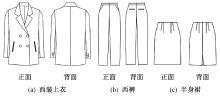
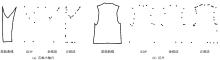
Method The study was focused on three types of garments, i.e., the suit jacket, trousers, and skirt. 2-D patterns were generated through a digital process, including scanning, cutting, flattening, and pattern modification. In the flattening process, the optimal flattening algorithm was selected based on the comparison of changes in length and area during the flattening process. Subsequently, comparative experiments were conducted to determine the most effective approach for curve optimization. Building upon these results, the geometric discrepancies between virtual reconstruction results and the original scanned garment results were analysed using 3-D reconstruction techniques.

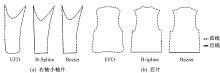
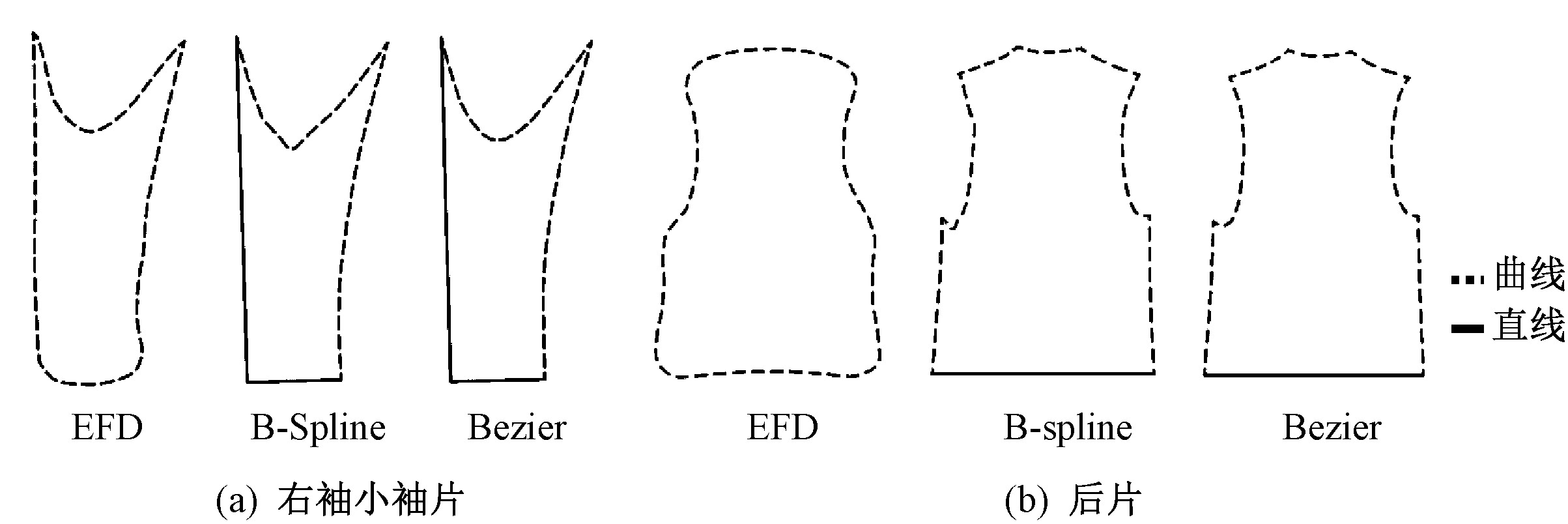
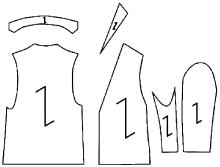
Results In the context of flattening methods, the pattern shapes obtained using least squares conformal mapping, boundary-first flattening, and garment flattening(GF) were found generally similar. To quantify the differences, the flattening error was assessed using two metrics, namely, the average relative area difference and the average relative edge length difference between the flattened pieces and the original 3-D surfaces. GF was found to be the superior choice, achieving the lowest average relative area difference and edge length difference values for the right sleeve under panel and the back panel of the suit jacket, indicating minimal flattening deformation. During the pattern optimization process, comparative experiments were conducted on feature point selection and curve-fitting methods. For feature point selection, the vector angle method (sine/cosine) and the Ramer-Douglas-Peucker(R-D-P) algorithm were compared, while for curve fitting, elliptic Fourier descriptors, B-spline curves, and Bezier curves were evaluated. The combination of the R-D-P algorithm and Bezier curves yielded optimal curve-fitting results. In the armhole area of the under panel of the right sleeve of the suit jacket, as well as the armhole and hemline areas of the back panel, the feature points extracted by the R-D-P algorithm were reasonably distributed and demonstrated higher accuracy in capturing curve characteristics, effectively reflecting the curve fluctuations. Additionally, Bezier curves achieved optimal smoothness in the armhole regions of the right sleeve under panel and back panel of the suit jacket. Based on the experimental results, GF was adopted as the flattening method, with feature points extracted using the R-D-P algorithm. Bezier curves were applied to fit pattern edge curves and reconstruct interrupted curves in the pattern symmetry processing, enabling the generation of suit jacket, trousers, and skirt patterns. In the evaluation of 3-D reconstructed model, the virtual reconstruction obtained using CLO3D was overlapped with the original scanned garment model to measure the average deviation of their contours. For simpler styles, such as the trousers and the skirt, the average error between the virtual fitting result and the original scan was approximately 0.3 cm. In contrast, for more structurally complex garments, such as the suit jacket, the average error was 0.774 cm. Overall, these results indicate that the 3-D reconstructed garment models achieve high accuracy.

Conclusion This paper presents a process for generating high-precision patterns from 3-D scanned garments for virtual display. The experimental results show that it can be successfully applied to the suit jacket, trousers, and skirt, and the reconstructed models obtained through virtual sewing of these patterns exhibited high accuracy, which validates the practical applicability of this approach. Hence, the effectiveness of the proposed method for 3-D garment flattening and 2-D curve optimization was confirmed. The 2D patterns generated through the proposed workflow, can accurately reconstruct garment appearance after undergoing physical engine simulation. This approach provides high-quality virtual garment models for diverse applications, including digital preservation of cultural heritage, film and costume production, and virtual fitting scenarios.

Key words: garment virtual display, 3-D scanning, pattern generation, surface flattening, curve optimization, clothing design

中图分类号: 

  • TS941.2

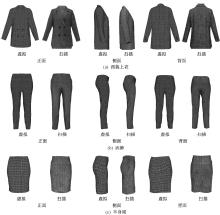
图1

服装款式图"

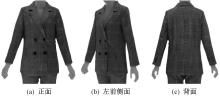
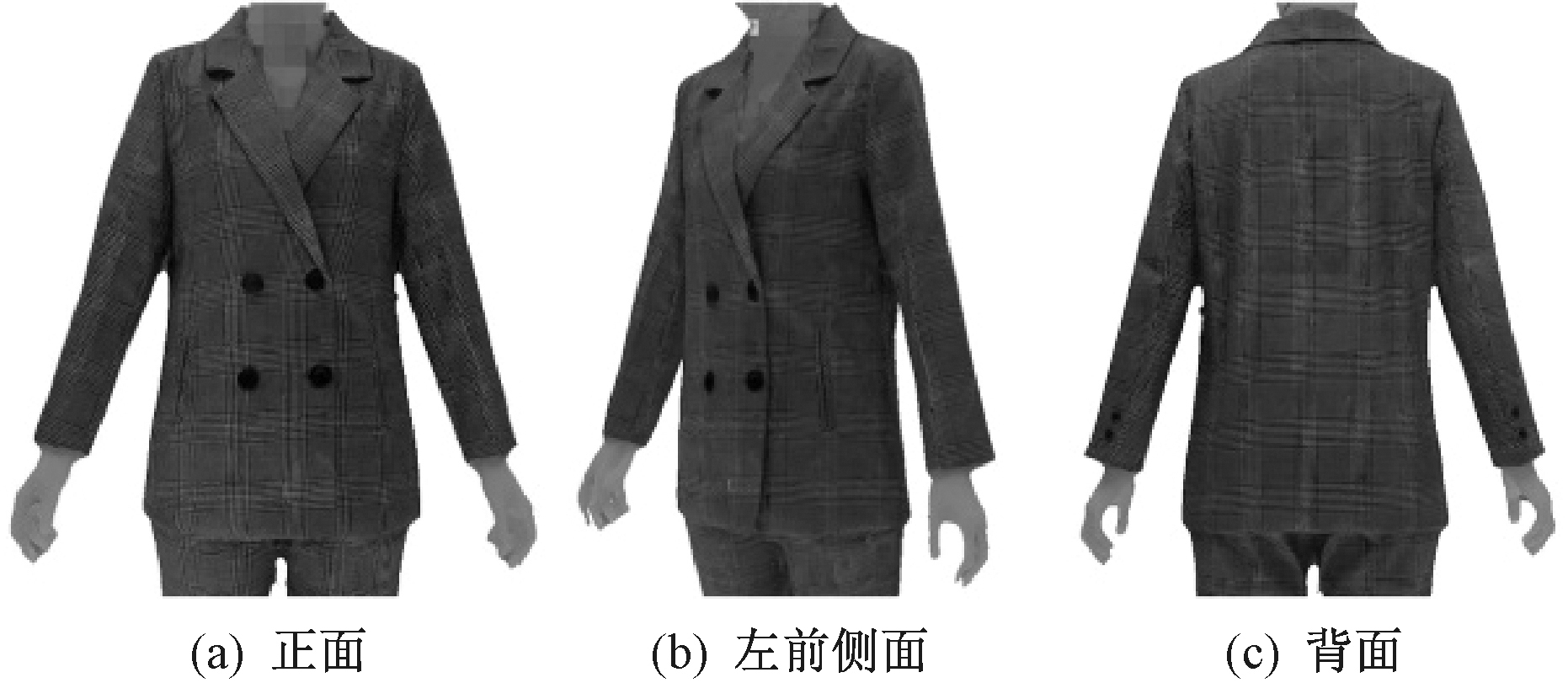
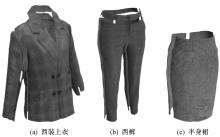
图2

三维服装扫描与重建结果"

图3

三维服装切片"

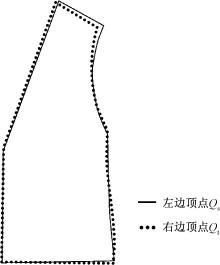
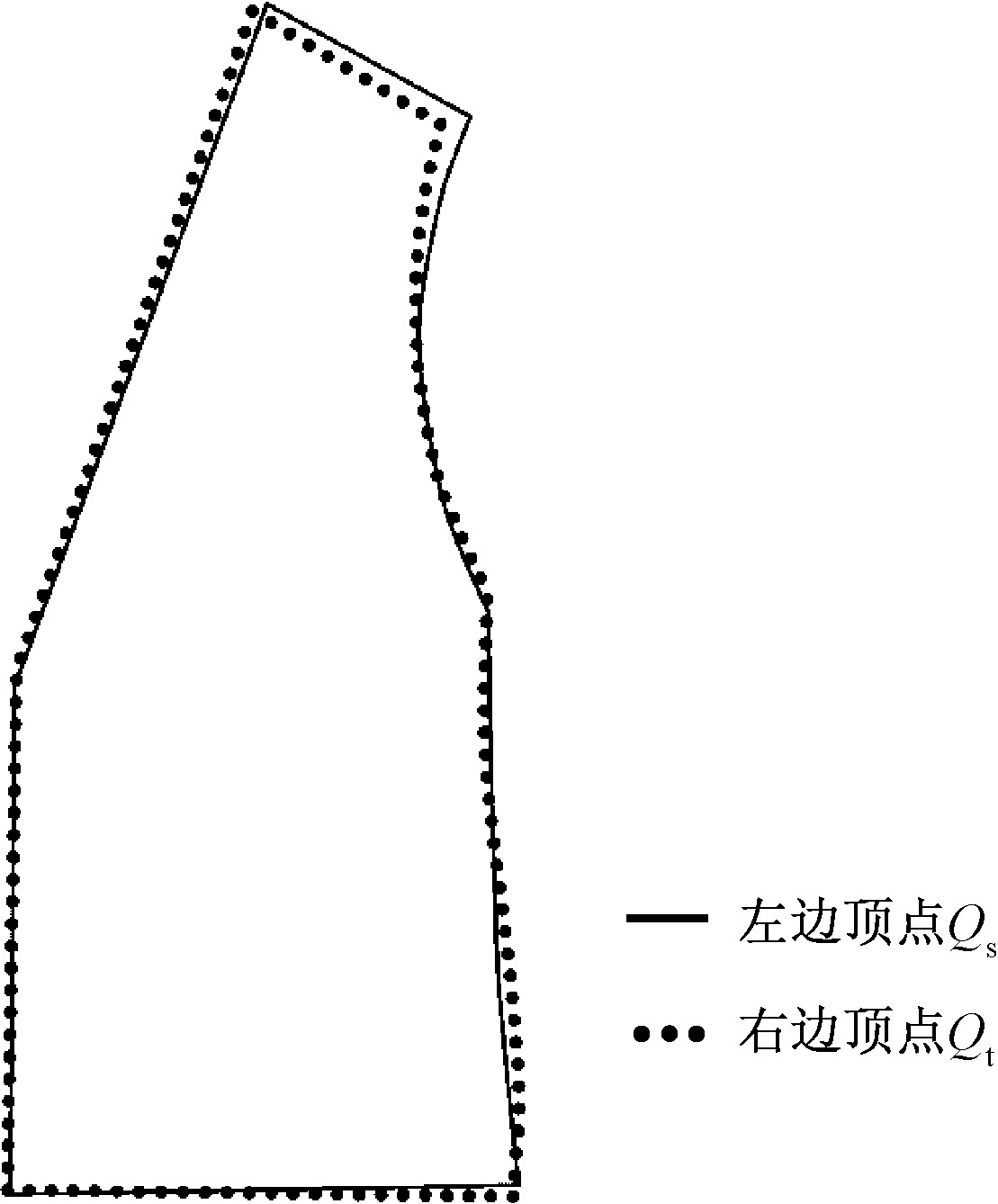
图4

左右纸样(以西装上衣前片为例)"

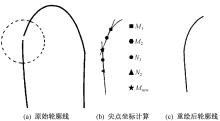
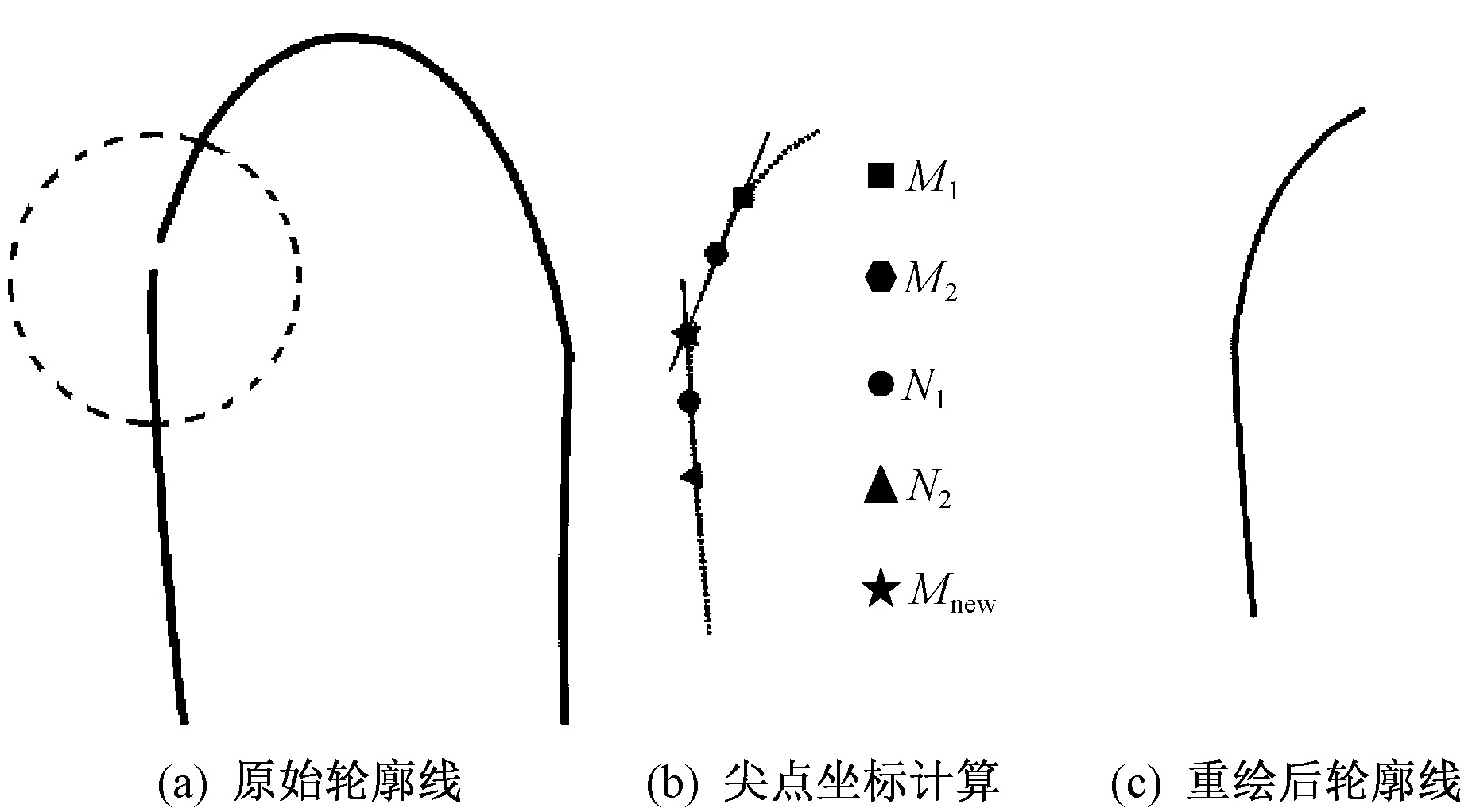
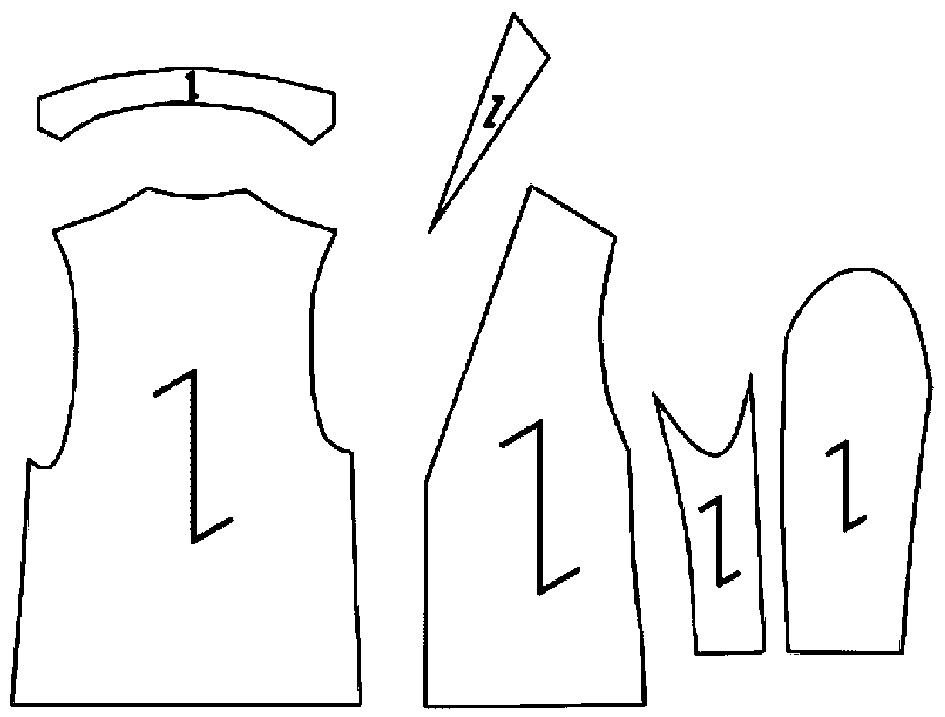
图5

基于区域重绘的尖点补充算法"

表1

展平变形误差"

展平部位 LSCM BFF GF
E ¯ A E ¯ L E ¯ A E ¯ L E ¯ A E ¯ L
右袖小袖片 6.392 0 1.717 0 0.038 2 0.018 9 0.010 7 0.005 2
后片 0.979 1 0.406 5 0.034 3 0.017 1 0.011 4 0.005 9

图6

特征点提取结果"

图7

曲线拟合结果"

图8

本文方法生成的西装上衣纸样"

图9

虚拟重建结果与原始扫描服装结果对比"

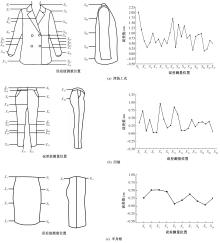
图10

误差值测量位置及相应的测量值"

表2

平均误差值以及变异系数"

西装上衣 西裤 半身裙
平均值/
cm
变异
系数
平均值/
cm
变异
系数
平均值/
cm
变异
系数
0.774 8 0.591 1 0.335 5 0.765 4 0.297 1 0.549 7

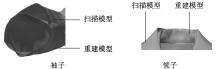
图11

西装上衣局部形态对比"

[1] 高璐. 西方女性紧身胸衣形制演变与结构研究[D]. 上海: 东华大学, 2017:24-44.
GAO Lu. Research on the evolution and structure of western women's underwear[D]. Shanghai: Donghua University, 2017:24-44.
[2] 王朝晖, 曹姗姗, 吴雨曦, 等. 18世纪西方男士马裤的形制及结构研究[J]. 丝绸, 2019, 56(6): 89-96.
WANG Chaohui, CAO Shanshan, WU Yuxi, et al. Study on shape and construction of western male breeches in the 18th century[J]. Journal of Silk, 2019, 56(6): 89-96.
[3] 林聪瑾. 中国古代乐舞服饰形制及数字化复原研究[D]. 杭州: 浙江理工大学, 2020:40-56.
LIN Congjin. Research on the form and digital restoration of chinese ancient musical and dance costumes[D]. Hangzhou: Zhejiang Sci-Tech University, 2020:40-56.
[4] ZHANG D, LIU Y, WANG J, et al. An integrated method of 3D garment design[J]. The Journal of the Textile Institute, 2018, 109(12): 1595-1605.
[5] BANG S, KOROSTELEVA M, LEE S H. Estimating garment patterns from static scan data[J]. Computer Graphics Forum, 2021, 40(6): 273-287.
[6] MOSKVIN A, MOSKVINA M, KUZMICHEV V. Block pattern generation of the scanned historical gar-ments[J]. Technologia Tekstilnoj Promyslennosti, 2022, 400(4): 147-152.
[7] WU C. Towards linear-time incremental structure from motion[C]// 2013 International Conference on 3D Vision-3DV 2013. Seattle: IEEE, 2013: 127-134.
[8] SCHONBERGER J L, FRAHM J M. Structure-from-motion revisited[C]// Proceedings of the IEEE Conference on Computer Vision and Pattern Recognition. Las Vegas: IEEE, 2016: 4104-4113.
[9] FURUKAWA Y, HERNANDEZ C. Multi-view stereo: a tutorial[J]. Foundations and Trends® in Computer Graphics and Vision, 2015, 9(1/2): 1-148.
[10] LEVY B, PETITJEAN S, RAY N, et al. Least squares conformal maps for automatic texture atlas genera-tion[J]. ACM Transactions on Graphics (ToG), 2002, 21(3): 362-371.
[11] SAWHNEY R, CRANE K. Boundary first flatte-ning[J]. ACM Transactions on Graphics (ToG), 2017, 37(1): 1-14.
[12] PIETRONI N, DUMERY C, FALQUE R, et al. Computational pattern making from 3D garment models[J]. ACM Transactions on Graphics (ToG), 2022, 41(4): 157:1-157:14.
[13] 陈华伟, 袁小翠, 伍权, 等. 点云特征型面的边界曲线拟合及曲面裁剪算法[J]. 机械设计与制造, 2020(1): 5-8.
CHEN Huawei, YUAN Xiaocui, WU Quan, et al. Algorithm of boundary fitting and surface trimming for point feature surface[J]. Machinery Design & Manufacture, 2020 (1): 5-8.
[14] JOHN F H, ANDRIES V D, MORGAN M D F, et al. Computer graphics: principles and practice[M]. Boston: Addison-Wesley Professional, 2014: 595-606.
[1] 莫雁婷, 周莉, 陈思羽. 基于空间延展功能的菱形褶皱结构造型方法[J]. 纺织学报, 2025, 46(08): 191-198.
[2] 罗玉玲, 杨喜竹, 王星岚, 郑晓慧, 赵胜男, 常素芹. 以相变包为冷源的冷却服研究进展[J]. 纺织学报, 2025, 46(07): 253-261.
[3] 杨子田, 王诗琪, 雷梦洁. 马面裙坠感指数及结构解析[J]. 纺织学报, 2025, 46(07): 186-192.
[4] 陈晓真, 吴莹, 杨叶, 鲁礼豪. 基于三维虚拟模特转换的女士连体长裤参数化纸样生成[J]. 纺织学报, 2025, 46(07): 193-201.
[5] 于晓坤, 易萍, 谢冠婧, 蔡凌霄. 基于人体动力学的服装衣袖运动舒适性探究[J]. 纺织学报, 2025, 46(06): 196-202.
[6] 吕迎蕊, 王朝晖, 叶勤文, 刘欢欢, 孙月鑫. 运动服装的设计方法及发展趋势[J]. 纺织学报, 2025, 46(03): 256-265.
[7] 庹武, 杜聪, 陈谦, 吴超, 魏新桥, 张欣汝, 刘思雨. 基于计算机视觉与Canny算法的服装纸样轮廓提取[J]. 纺织学报, 2024, 45(05): 174-182.
[8] 程碧莲, 蒋高明, 李炳贤. 三维服装虚拟展示技术的研究进展[J]. 纺织学报, 2024, 45(05): 248-257.
[9] 周莉, 樊培宏, 金玉婷, 张龙琳, 李新荣. 服装逆向造型的数字化设计方法[J]. 纺织学报, 2023, 44(12): 138-144.
[10] 杨钰蝶, 李承璋, 金剑, 郑晶晶. 基于上肢活动性的灭火防护服背带的设计与评价[J]. 纺织学报, 2023, 44(11): 183-189.
[11] 任泽, 钟安华. 基于男性腰臀裆部NURBS曲面模型的内裤数字化制版[J]. 纺织学报, 2023, 44(08): 167-173.
[12] 刘咏梅, 刘思忆, 于晓坤, 薛惠心, 张向辉. 中国东部地区中老年女性体型特征与分类[J]. 纺织学报, 2023, 44(07): 184-191.
[13] 叶勤文, 王朝晖, 黄荣, 刘欢欢, 万思邦. 虚拟服装迁移在个性化服装定制中的应用[J]. 纺织学报, 2023, 44(06): 183-190.
[14] 赖安琪, 蒋高明, 李炳贤. 全成形毛衫花式结构三维仿真[J]. 纺织学报, 2023, 44(02): 103-110.
[15] 陈佳, 杨聪聪, 刘军平, 何儒汉, 梁金星. 手绘草图到服装图像的跨域生成[J]. 纺织学报, 2023, 44(01): 171-178.
Viewed
Full text


Abstract

Cited

  Shared   
  Discussed   
No Suggested Reading articles found!