纺织学报 ›› 2025, Vol. 46 ›› Issue (11): 111-117.doi: 10.13475/j.fzxb.20241103401
余志才1,2, 余晓娜3, 丁笑君1, 顾冰菲1( )
)
YU Zhicai1,2, YU Xiaona3, DING Xiaojun1, GU Bingfei1()
摘要:
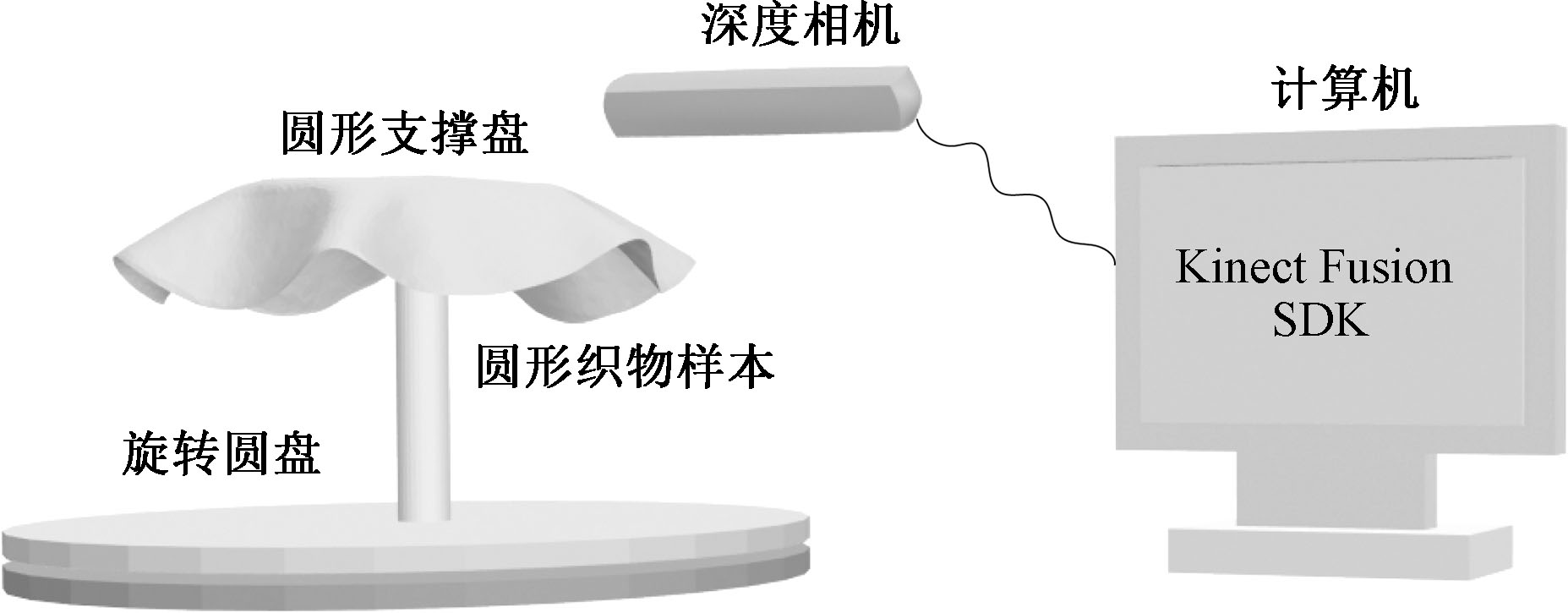
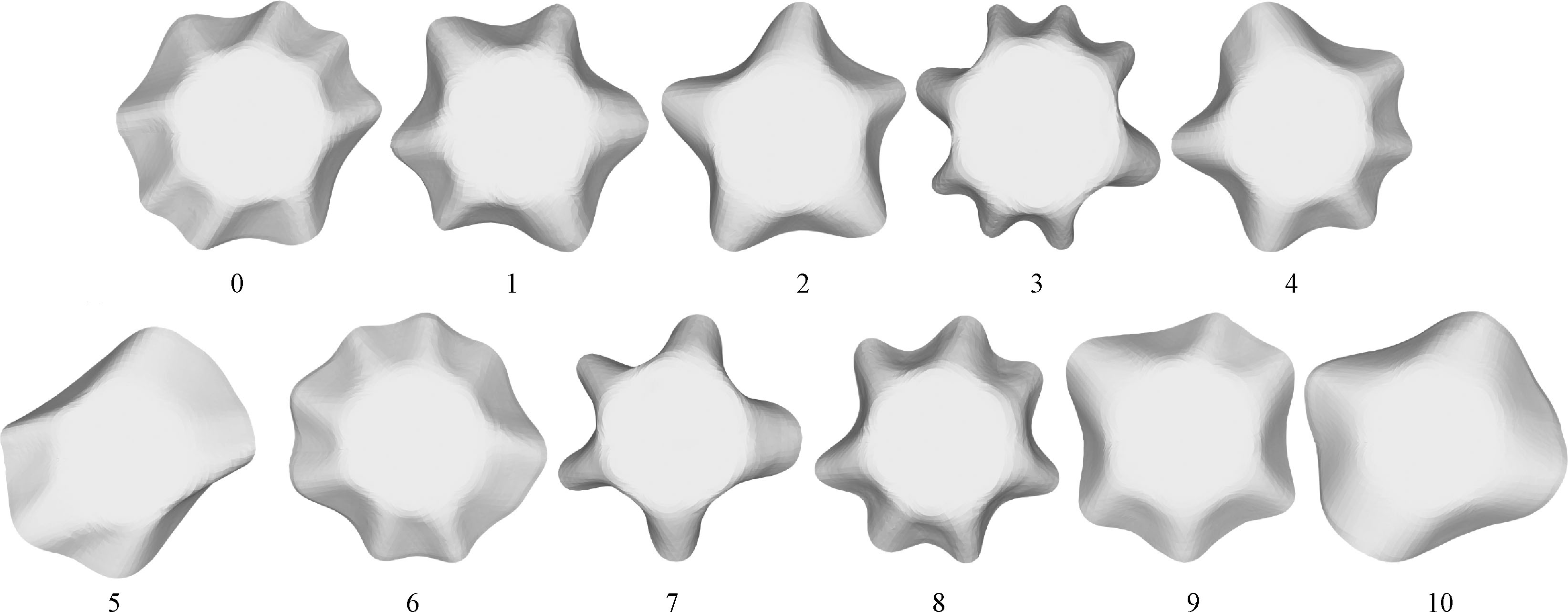
为实现基于三维悬垂模型的织物匹配,提出一种基于PointNet分类模型的织物三维悬垂模型匹配方法。首先利用三维扫描装置采集50种织物的三维悬垂模型,从中筛选出11种悬垂结果差异较大的织物,其对应的三维悬垂模型组成了织物三维悬垂模型分类数据集DPN;剩余39种织物的三维悬垂模型组成织物三维悬垂模型匹配测试数据集DRC;对数据集DPN扩增后,利用重采样方法将数据集DPN和DRC中的所有三维悬垂模型重采样为具有相同顶点数目和拓扑结构的三维三角形网格;然后用数据集DPN训练PointNet分类模型;最后利用训练完成的PointNet分类模型提取数据集DRC中所有织物三维悬垂模型的特征向量νPN,以该特征向量为依据实现织物三维悬垂模型的匹配。结果表明:PointNet能有效实现数据集DPN的分类,利用PointNet提取的特征向量νPN能实现数据集DRC中织物三维悬垂模型的匹配,且基于PointNet分类模型的织物三维悬垂模型召回率可达39.91%,相对于基于悬垂指标和悬垂模型曲率的织物匹配方法(召回率38.55%)更优。
中图分类号:
| [1] | 佐同林, 李汝勤. 织物静态悬垂性能评价指标提取的研究[J]. 东华大学学报(自然科学版), 2004, 30(5): 87-90. |
| ZUO Tonglin, LI Ruqin. Study on selection of evaluation index of fabric static drape[J]. Journal of Donghua University(Natural Science), 2004, 30(5): 87-90. | |
| [2] |
YU Z, ZHONG Y, GONG R, et al. New indicators on fabric drape evaluation based on three-dimensional model[J]. Textile Research Journal, 2020, 90(11/12): 1291-1300.
doi: 10.1177/0040517519888669 |
| [3] | 王寿兵, 周华, 沈毅, 等. 基于光栅成像的织物悬垂三维形态重建算法[J]. 工程图学学报, 2008, 29(2): 136-141. |
| WANG Shoubing, ZHOU Hua, SHEN Yi, et al. Three-dimensional shape reconstruction algorithm of fabric drapability based on raster imaging[J]. Journal of Engineering Graphics, 2008, 29(2): 136-141. | |
| [4] |
MAH T, SONG G. An investigation of the assessment of fabric drape using three-dimensional body scanning[J]. Journal of the Textile Institute, 2010, 101(4): 324-335.
doi: 10.1080/00405000802417122 |
| [5] | 胡堃. 基于图像序列的织物悬垂形态重建及测量[D]. 上海: 东华大学, 2016:25-34. |
| HU Kun. Reconstruction and measurement of fabric drape shape based on image sequences[D]. Shanghai: Donghua University, 2016:25-34. | |
| [6] |
WU G, YU Z, HUSSAIN A, et al. 3D drape reconstruction and parameterization based on smartphone video and elliptical Fourier analysis[J]. Procedia Computer Science, 2017, 108: 1552-1561.
doi: 10.1016/j.procs.2017.05.057 |
| [7] | NIWA M, SETO F. Relationship between drapability and mechanical properties of fabrics[J]. Sen'i Kikai Gakkaishi (Journal of the Textile Machinery Society of Japan), 1986, 39(11): T161-T168. |
| [8] |
BREEN D E, HOUSE D H, WOZNY M J. A particle-based model for simulating the draping behavior of woven cloth[J]. Textile Research Journal, 1994, 64(11): 663-685.
doi: 10.1177/004051759406401106 |
| [9] |
JEONG Y J. A study of fabric-drape behaviour with image analysis part I: measurement, characterisation, and instability[J]. Journal of the Textile Institute, 1998, 89(1): 59-69.
doi: 10.1080/00405009808658597 |
| [10] | LOJEN Darja uni, JEVNIK Simona. Some aspects of fabric drape[J]. Fibres & Textiles in Eastern Europe, 2007, (15): 39-45. |
| [11] |
KENKARE N, LAMAR T A M, PANDURANGAN P, et al. Enhancing accuracy of drape simulation: part I: investigation of drape variability via 3D scanning[J]. Journal of the Textile Institute, 2008, 99(3): 211-218.
doi: 10.1080/00405000701489222 |
| [12] | 余志才. 基于三维模型和深度学习的织物悬垂性能研究[D]. 上海: 东华大学, 2020:60-74. |
| YU Zhicai. A study on fabric drape based on three-dimnesional model and deep learning[D]. Shanghai: Donghua University, 2020:60-74. | |
| [13] |
余志才, 钟跃崎, GONG R Hugh, 等. 基于三维悬垂模型和织物面密度的织物匹配[J]. 纺织学报, 2020, 41(10): 46-51.
doi: 10.13475/j.fzxb.20190306806 |
|
YU Zhicai, ZHONG Yueqi, GONG Rong Hugh, et al. Fabric matching based on three-dimensional drape model and fabric weight[J]. Journal of Textile Research, 2020, 41(10): 46-51.
doi: 10.13475/j.fzxb.20190306806 |
|
| [14] | CHARLES R Q, HAO S, MO K C, et al. PointNet:deep learning on point sets for 3D classification and segmentation[C]// 2017 IEEE Conference on Computer Vision and Pattern Recognition (CVPR). New York: IEEE, 2017: 77-85. |
| [15] |
CARRERA-GALLISSÀ E, CAPDEVILA X, VALLDEPERAS J. Evaluating drape shape in woven fabrics[J]. The Journal of the Textile Institute, 2017, 108(3): 325-336.
doi: 10.1080/00405000.2016.1166804 |
| [16] | COHEN-STEINER D, MORVAN J M. Restricted delaunay triangulations and normal cycle[C]// Proceedings of the Nineteenth Annual Symposium on Computational Geometry. New York: ACM, 2003: 312-321. |
| [1] | 邓云涛, 谭艳君, 张洪松, 燕雨, 余秋雨, 林风喜, 王一鑫, 安乐乐. 织物起毛起球等级评定系统[J]. 纺织学报, 2025, 46(11): 102-110. |
| [2] | 谢宜轩, 钟林, 徐柠浩, 黄晓梅, 曹海建. 三维深角联芳纶织物/环氧树脂复合材料的弯曲性能[J]. 纺织学报, 2025, 46(11): 118-125. |
| [3] | 李欣田, 周玄, 王展翾, 杜忠华, 徐立志. 层数与铺层方式对多层芳纶平纹织物抗侵彻性能的影响[J]. 纺织学报, 2025, 46(11): 126-136. |
| [4] | 高龙威, 蒋金华, 陈南梁, 邵慧奇. 经编双轴向碳纤维织物增强复合材料的冲击损伤特性[J]. 纺织学报, 2025, 46(11): 147-154. |
| [5] | 龙红霞, 吴伟, 刘娅岚, 徐红, 毛志平. 纤维素纤维孔道吸湿溶胀行为的分子动力学模拟[J]. 纺织学报, 2025, 46(11): 155-163. |
| [6] | 马颖媛, 李建芳, 胡毅. 活性红195在异构烷烃体系中对蚕丝织物的少水染色性能[J]. 纺织学报, 2025, 46(11): 178-187. |
| [7] | 张帆, 蔡再生, 刘慧景, 陆少锋, 黄旭明. 高牢固光致变色棉织物的点击化学法制备及其性能[J]. 纺织学报, 2025, 46(11): 196-202. |
| [8] | 刘爽, 任佳程, 丁恺, 陈慧敏, 岳晓丽. 纬编针织物平幅印染过程应力应变场时空演化模拟与数值实验[J]. 纺织学报, 2025, 46(11): 221-229. |
| [9] | 尹文博, 叶帆, 杨瑞华. 基于包芯-包缠结构复合纱的锦纶/棉机织物服用性能[J]. 纺织学报, 2025, 46(11): 77-85. |
| [10] | 唐曾华, 李宏杰, 毕思伊, 邵光伟, 蒋金华, 陈南梁, 邵慧奇. 增强结构对碳纤维/热塑性聚氨酯柔性复合材料电磁屏蔽性能的影响[J]. 纺织学报, 2025, 46(10): 111-119. |
| [11] | 顾戚惠, 阳知乾, 王海楼, 魏发云, 张伟. 机织间隔织物增强水泥基复合材料的制备及其力学性能[J]. 纺织学报, 2025, 46(10): 120-128. |
| [12] | 蔡丽云, 欧阳承辉, 黄泽洋, 王成成, 关玉, 付少海, 张丽平. 彩色乳胶粒的制备及其在涤纶/棉混纺织物印花中的应用[J]. 纺织学报, 2025, 46(10): 135-142. |
| [13] | 王司宇, 王峰, 王鸿博, 苏静. L-半胱氨酸/菠萝蛋白酶协同一浴法羊毛织物防毡缩整理[J]. 纺织学报, 2025, 46(10): 152-158. |
| [14] | 张子悦, 江红霞, 刘基宏. 单色机织物数字纹理色卡的设计与评价[J]. 纺织学报, 2025, 46(10): 167-175. |
| [15] | 吴威涛, 韩奥博, 牛奎, 贾建辉, 尹邦雄, 向忠. 基于高泛化性图像生成与分类算法的织物瑕疵检测系统设计[J]. 纺织学报, 2025, 46(10): 227-236. |
|
||
 京公网安备11010502044800号