纺织学报 ›› 2026, Vol. 47 ›› Issue (01): 196-206.doi: 10.13475/j.fzxb.20250500501
冯采伶1, 于施佳2, 韩曙光3( )
)
FENG Cailing1, YU Shijia2, HAN Shuguang3()
摘要:
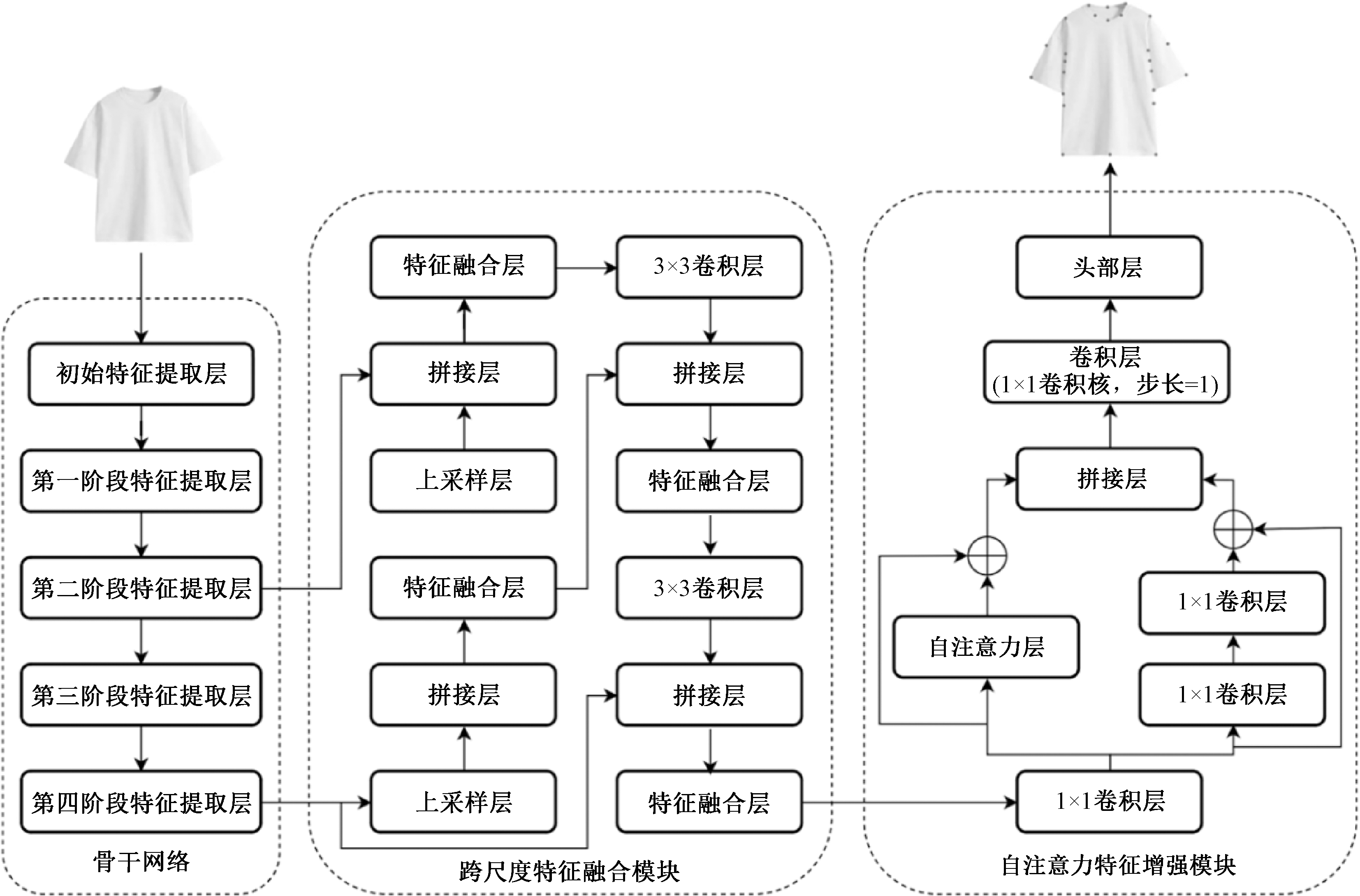
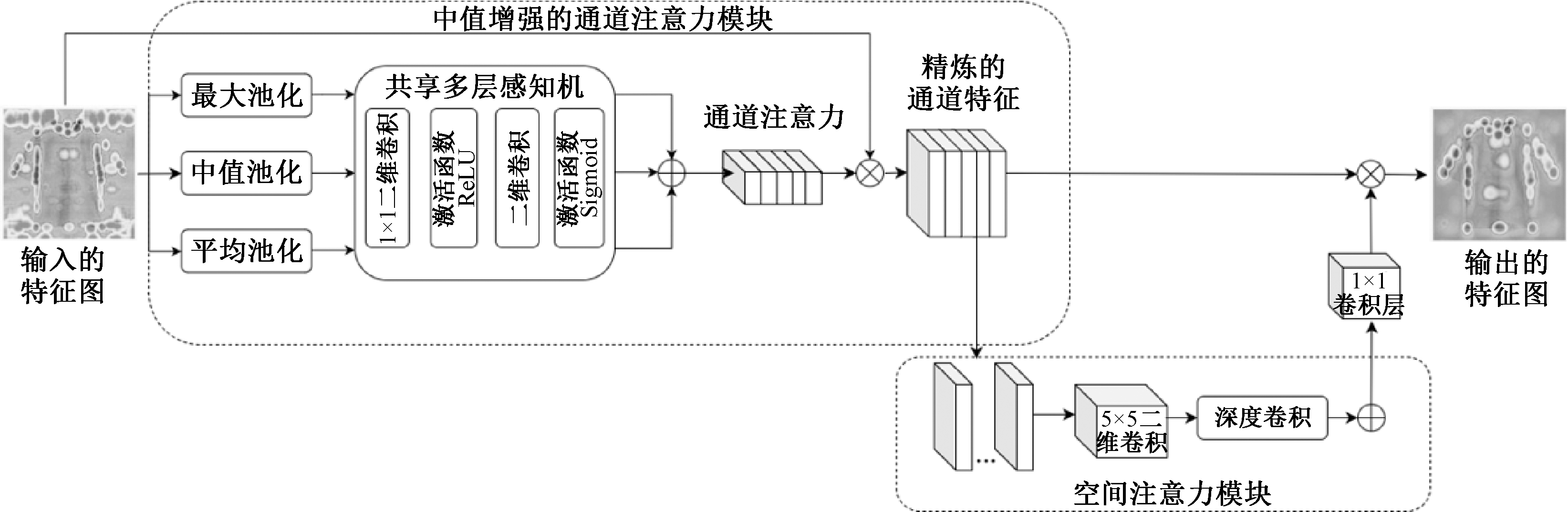
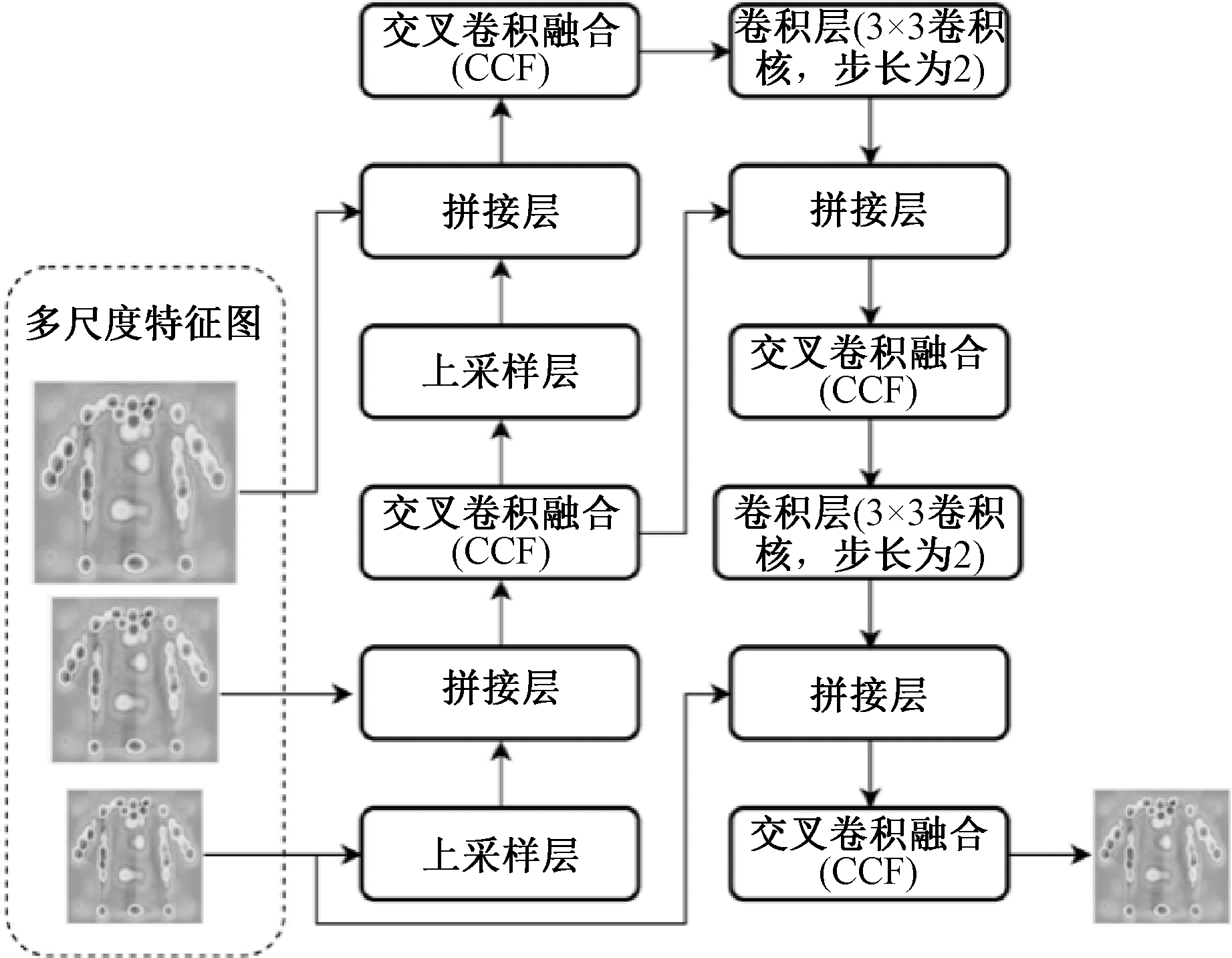
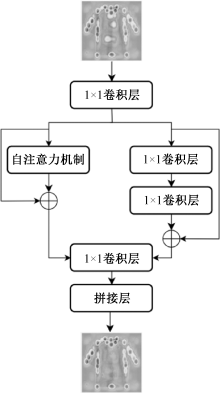
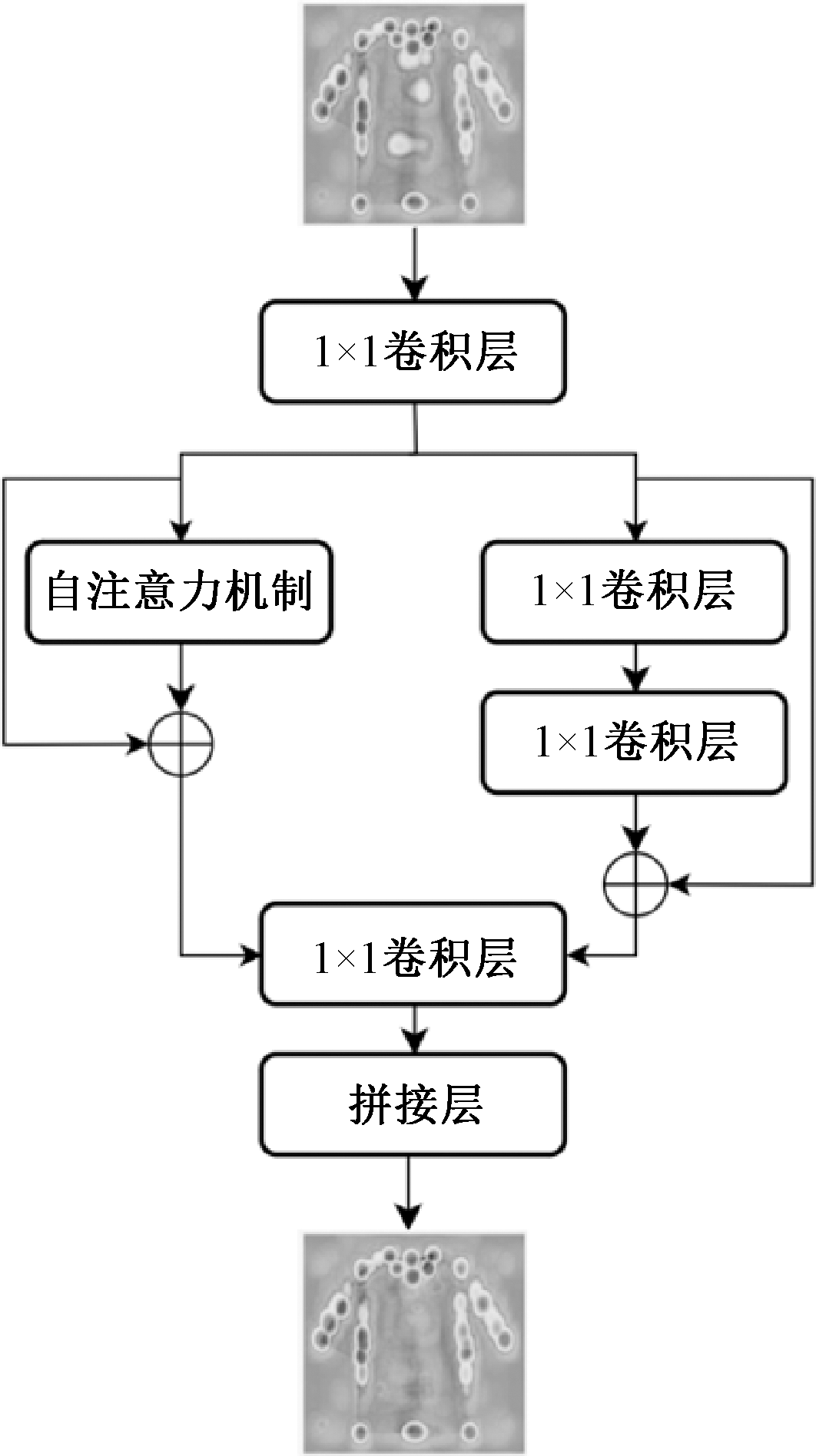
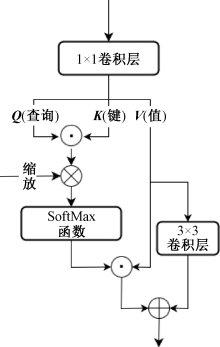
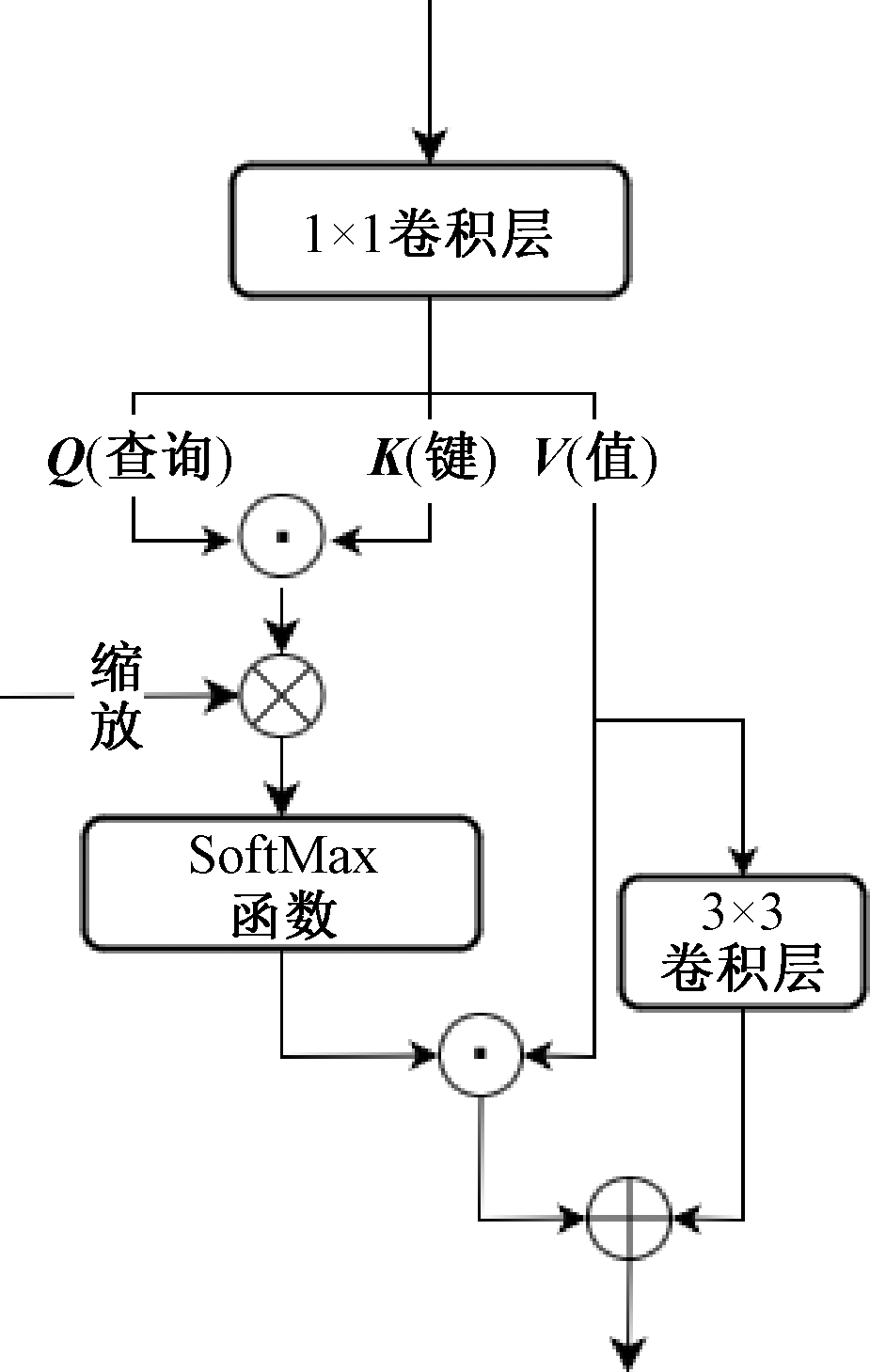
针对复杂场景下服装关键点检测模型的准确性与实时性难以兼得的问题,以提高检测准确性并保持实时性能为目的,提出了一种基于深度学习的服装关键点实时检测模型。该模型以实时多人姿态估计架构为基础,首先构建中值增强的通道与空间注意力模块,通过并行执行全局平均池化、最大池化与中值池化,融合生成注意力权重,增强服装关键部位的特征表示;其次设计跨尺度特征融合模块,将骨干网络中不同层级的特征图进行上采样、拼接与交叉卷积融合,构建兼具细节信息与语义特征的金字塔结构;进一步建立自注意力特征增强模块,通过计算特征点间相似性动态生成注意力图,自适应调整各区域特征权重;最终实施分类别微调策略,针对6类典型服装分别建立专用模型以优化整体性能。结果表明:该方法在DeepFashion2和DeepFashion数据集上分别达到了65.1%与68.0%的检测准确度,同时保持140.0帧/s和142.3帧/s的实时处理速度。该模型提升了复杂场景下服装关键点检测的综合性能,未来可应用于服装智能制造和虚拟试衣等领域。
中图分类号:
| [1] | LI Z, WEI P F, YIN X, et al. Virtual try-on with pose-garment keypoints guided inpainting[C]// 2023 IEEE/CVF International Conference on Computer Vision (ICCV). New York: IEEE, 2024: 22731-22740. |
| [2] |
陈嫒嫒, 李来, 刘光灿, 等. 基于关键点的服装检索[J]. 计算机应用, 2017, 37(11): 3249-3255.
doi: 10.11772/j.issn.1001-9081.2017.11.3249 |
|
CHEN Aiai, LI Lai, LIU Guangcan, et al. Clothing retrieval based on landmarks[J]. Journal of Computer Applications, 2017, 37(11): 3249-3255.
doi: 10.11772/j.issn.1001-9081.2017.11.3249 |
|
| [3] | 史英杰, 杨珂, 王建欣, 等. 基于机器学习的时尚穿搭推荐研究综述[J]. 计算机应用研究, 2022, 39(4): 978-985. |
| SHI Yingjie, YANG Ke, WANG Jianxin, et al. Survey on fashion outfit recommendation research based on machine learning[J]. Application Research of Computers, 2022, 39(4): 978-985. | |
| [4] | 李鹏飞, 郑明智, 景军锋. 图像处理在衣服尺寸在线测量中的应用[J]. 电子测量与仪器学报, 2016, 30(8): 1214-1219. |
| LI Pengfei, ZHENG Mingzhi, JING Junfeng. Application of image processing in on-line clothes size measurement[J]. Journal of Electronic Measurement and Instrumentation, 2016, 30(8): 1214-1219. | |
| [5] | 王生伟. 基于图像处理的服装织物质量检测系统[D]. 南京: 东南大学, 2019. 15-49. |
| WANG Shengwei. Garment and fabric quality inspection system based on image processing[D]. Nanjing: Southeast University, 2019. 15-49. | |
| [6] | GE Y Y, ZHANG R M, WANG X G, et al. DeepFashion2: a versatile benchmark for detection, pose estimation, segmentation and re-identification of clothing images[C]// 2019 IEEE/CVF Conference on Computer Vision and Pattern Recognition (CVPR). New York: IEEE, 2020: 5332-5340. |
| [7] | LIN T H. Aggregation and finetuning for clothes landmark detection[EB/OL]. [2025-05-04]. https://arxiv.org/abs/2005.00419. |
| [8] | 谢志峰, 周志鹏, 王兆胜, 等. 多尺度空间特征引导的服装关键点检测方法[J]. 计算机辅助设计与图形学学报, 2022, 34(11): 1763-1771. |
| XIE Zhifeng, ZHOU Zhipeng, WANG Zhaosheng, et al. Multi-scale spatial feature-guided cloth landmark estimation[J]. Journal of Computer-Aided Design & Computer Graphics, 2022, 34(11): 1763-1771. | |
| [9] | SIDNEV A, TRUSHKOV A, KAZAKOV M, et al. DeepMark:one-shot clothing detection[C]// 2019 IEEE/CVF International Conference on Computer Vision Workshop (ICCVW). New York: IEEE, 2020: 3201-3204. |
| [10] | SIDNEV A, KRAPIVIN A, TRUSHKOV A, et al. DeepMark++:real-time clothing detection at the edge[C]// 2021 IEEE Winter Conference on Applications of Computer Vision (WACV). New York: IEEE, 2021: 2979-2987. |
| [11] |
KIM H J, LEE D H, NIAZ A, et al. Multiple-clothing detection and fashion landmark estimation using a single-stage detector[J]. IEEE Access, 2021, 9: 11694-11704.
doi: 10.1109/Access.6287639 |
| [12] | LYU C Q, ZHANG W W, HUANG H A, et al. RTMDet: an empirical study of designing real-time object detectors[EB/OL]. [2025-05-04]. https://arxiv.org/abs/2212.07784. |
| [13] |
孙方伟, 李承阳, 谢永强, 等. 深度学习应用于遮挡目标检测算法综述[J]. 计算机科学与探索, 2022, 16(6): 1243-1259.
doi: 10.3778/j.issn.1673-9418.2112035 |
| SUN Fangwei, LI Chengyang, XIE Yongqiang, et al. Review of deep learning applied to occluded object detection[J]. Journal of Frontiers of Computer Science and Technology, 2022, 16(6): 1243-1259. | |
| [14] | 安天一, 李宁, 王超. 深度强化学习模型轻量化算法研究[J]. 计算机科学与应用, 2023(4): 779-788. |
| AN Tianyi, LI Ning, WANG Chao. Research on lightweight algorithms for deep reinforcement learning[J]. Computer Science and Application, 2023(4): 779-788. | |
| [15] | JIANG T, LU P, ZHANG L, et al. RTMPose: real-time multi-person pose estimation based on MMPose[EB/OL].[2025-05-04]. https://arxiv.org/abs/2303.07399. |
| [16] | LIU Z W, LUO P, QIU S, et al. DeepFashion:powering robust clothes recognition and retrieval with rich annotations[C]// 2016 IEEE Conference on Computer Vision and Pattern Recognition (CVPR). New York: IEEE, 2016: 1096-1104. |
| [17] | CHEN M, QIN Y J, QI L Z, et al. Improving fashion landmark detection by dual attention feature enhancement[C]// 2019 IEEE/CVF International Conference on Computer Vision Workshop (ICCVW). New York: IEEE, 2019: 3101-3104. |
| [18] | MAJI D, NAGORI S, MATHEW M, et al. YOLO-pose:enhancing YOLO for multi person pose estimation using object keypoint similarity loss[C]// 2022 IEEE/CVF Conference on Computer Vision and Pattern Recognition Workshops (CVPRW). New York: IEEE, 2022: 2636-2645. |
| [19] | 陈润林, 史英杰, 杜方. YOLO-T-Shirt: 一种基于级联架构和融合几何信息的T恤关键点检测方法[J]. 北京服装学院学报(自然科学版), 2024, 44(2): 88-96. |
| CHEN Runlin, SHI Yingjie, DU Fang. YOLO-T-shirt: a T-shirt landmark detection method based on cascade architecture and fusion geometry information[J]. Journal of Beijing Institute of Clothing Technology, 2024, 44(2): 88-96. | |
| [20] | LIU Z W, YAN S J, LUO P, et al. Fashion landmark detection in the wild[C]// Computer Vision-ECCV 2016. Cham: Springer, 2016: 229-245. |
| [21] | YAN S J, LIU Z W, LUO P, et al. Unconstrained fashion landmark detection via hierarchical recurrent transformer networks[C]// Proceedings of the 25th ACM International Conference on Multimedia. New York: ACM, 2017: 172-180. |
| [22] | 李维乾, 张紫云, 王海, 等. 级联层叠金字塔网络模型的服装关键点检测[J]. 计算机系统应用, 2020, 29(4): 254-259. |
| LI Weiqian, ZHANG Ziyun, WANG Hai, et al. Cascaded stacked pyramid network model for key point detection of clothing[J]. Computer Systems & Applications, 2020, 29(4): 254-259. | |
| [23] |
YING N, ZHANG X W, HU M, et al. Self-supervised keypoint detection based on affine transformation[J]. Journal of the Franklin Institute, 2025, 362(8): 107648.
doi: 10.1016/j.jfranklin.2025.107648 |
| [24] |
WU T, WANG K, TANG C M, et al. Diffusion-based network for unsupervised landmark detection[J]. Knowledge-Based Systems, 2024, 292: 111627.
doi: 10.1016/j.knosys.2024.111627 |
| [25] | HEDLIN E, SHARMA G, MAHAJAN S, et al. Unsupervised keypoints from pretrained diffusion models[C]// 2024 IEEE/CVF Conference on Computer Vision and Pattern Recognition (CVPR). New York: IEEE, 2024: 22820-22830. |
| [1] | 庹武, 刘琼洋, 李庆响, 陈谦, 范睿鸽, 李佩. 基于机器视觉与YOLO11n的女西裤尺寸自动测量[J]. 纺织学报, 2025, 46(12): 208-215. |
| [2] | 周青青, 常硕, 毛志平, 吴伟. 人工智能在纺织印染行业中的应用研究进展[J]. 纺织学报, 2025, 46(12): 260-269. |
| [3] | 余志才, 余晓娜, 丁笑君, 顾冰菲. 基于PointNet分类模型的织物三维悬垂模型匹配[J]. 纺织学报, 2025, 46(11): 111-117. |
| [4] | 朱耀麟, 李政, 张强, 陈鑫, 陈锦妮, 张洪松. 基于近红外光谱和多特征网络的羊毛和羊绒定量检测[J]. 纺织学报, 2025, 46(09): 104-111. |
| [5] | 王青, 姜越夫, 赵恬恬, 赵世航, 刘甲怡. 基于深度学习的纱管位姿估计方法及抓取实验[J]. 纺织学报, 2025, 46(07): 217-226. |
| [6] | 顾孟尚, 张宁, 潘如如, 高卫东. 结合频域卷积模块的机织物图像疵点目标检测[J]. 纺织学报, 2025, 46(05): 159-168. |
| [7] | 白雨薇, 徐健, 朱耀麟, 丁展博, 刘晨雨. 基于改进YOLOv8的梳棉机棉网上棉结检测方法[J]. 纺织学报, 2025, 46(03): 56-63. |
| [8] | 黄小源, 侯珏, 杨阳, 刘正. 基于改进深度学习模型的高精度服装样板自动生成[J]. 纺织学报, 2025, 46(02): 236-243. |
| [9] | 蔡丽玲, 王梅, 邵一兵, 陈炜, 曹华卿, 季晓芬. 基于改进堆叠生成对抗网络的传统汉服智能定制推荐[J]. 纺织学报, 2024, 45(12): 180-188. |
| [10] | 刘燕萍, 郭佩瑶, 吴莹. 面向织物疵点检测的深度学习技术应用研究进展[J]. 纺织学报, 2024, 45(12): 234-242. |
| [11] | 李杨, 张永超, 彭来湖, 胡旭东, 袁嫣红. 基于改进甲壳虫全域搜索算法的机织物疵点检测[J]. 纺织学报, 2024, 45(10): 89-94. |
| [12] | 陆寅雯, 侯珏, 杨阳, 顾冰菲, 张宏伟, 刘正. 基于姿态嵌入机制和多尺度注意力的单张着装图像视频合成[J]. 纺织学报, 2024, 45(07): 165-172. |
| [13] | 文嘉琪, 李新荣, 冯文倩, 李瀚森. 印花面料的边缘轮廓快速提取方法[J]. 纺织学报, 2024, 45(05): 165-173. |
| [14] | 池盼盼, 梅琛楠, 王焰, 肖红, 钟跃崎. 基于边缘填充的单兵迷彩伪装小目标检测[J]. 纺织学报, 2024, 45(01): 112-119. |
| [15] | 陆伟健, 屠佳佳, 王俊茹, 韩思捷, 史伟民. 基于改进残差网络的空纱筒识别模型[J]. 纺织学报, 2024, 45(01): 194-202. |
|
||
 京公网安备11010502044800号