纺织学报 ›› 2026, Vol. 47 ›› Issue (02): 126-134.doi: 10.13475/j.fzxb.20251002301
李凯, 王雨萌, 张逸龙, 杨湙雯, 董浩珍, 吴晶( )
)
LI Kai, WANG Yumeng, ZHANG Yilong, YANG Yiwen, DONG Haozhen, WU Jing()
摘要:
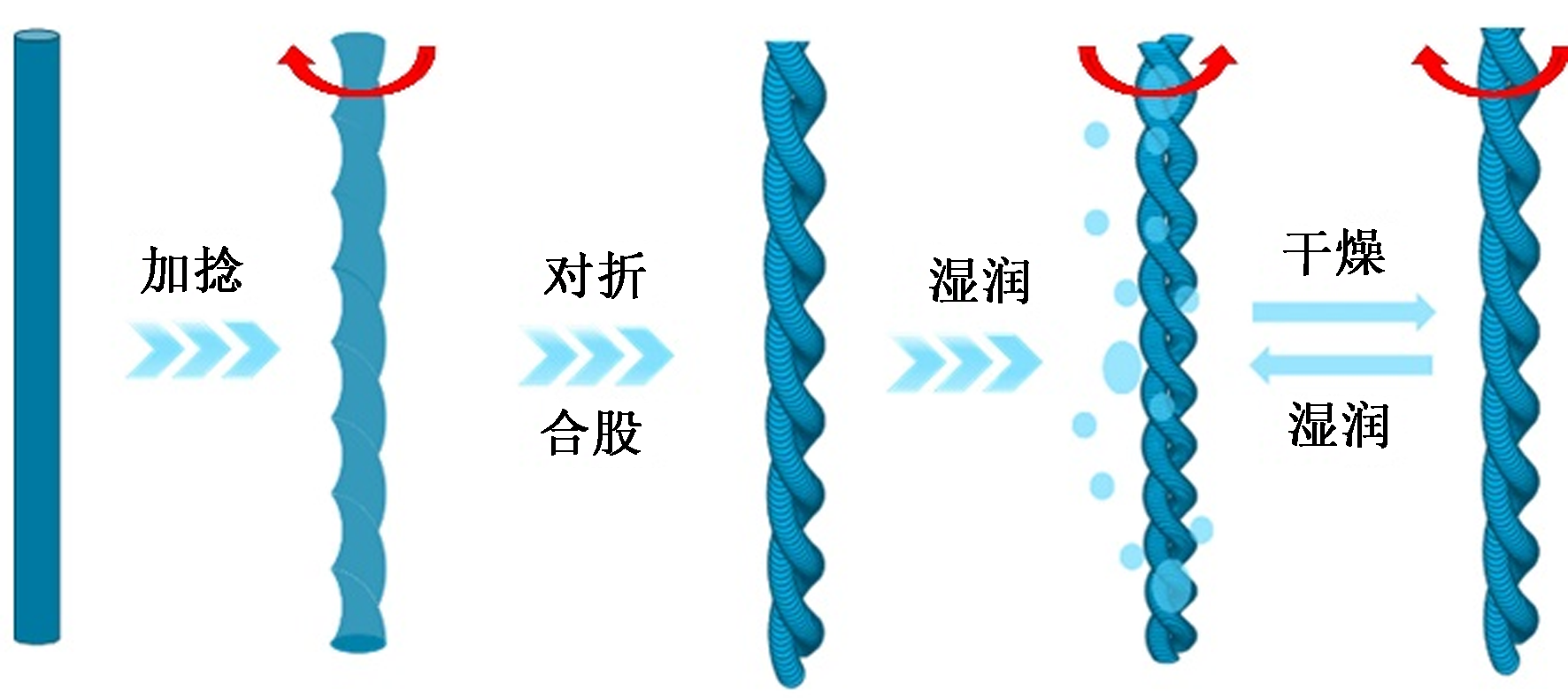
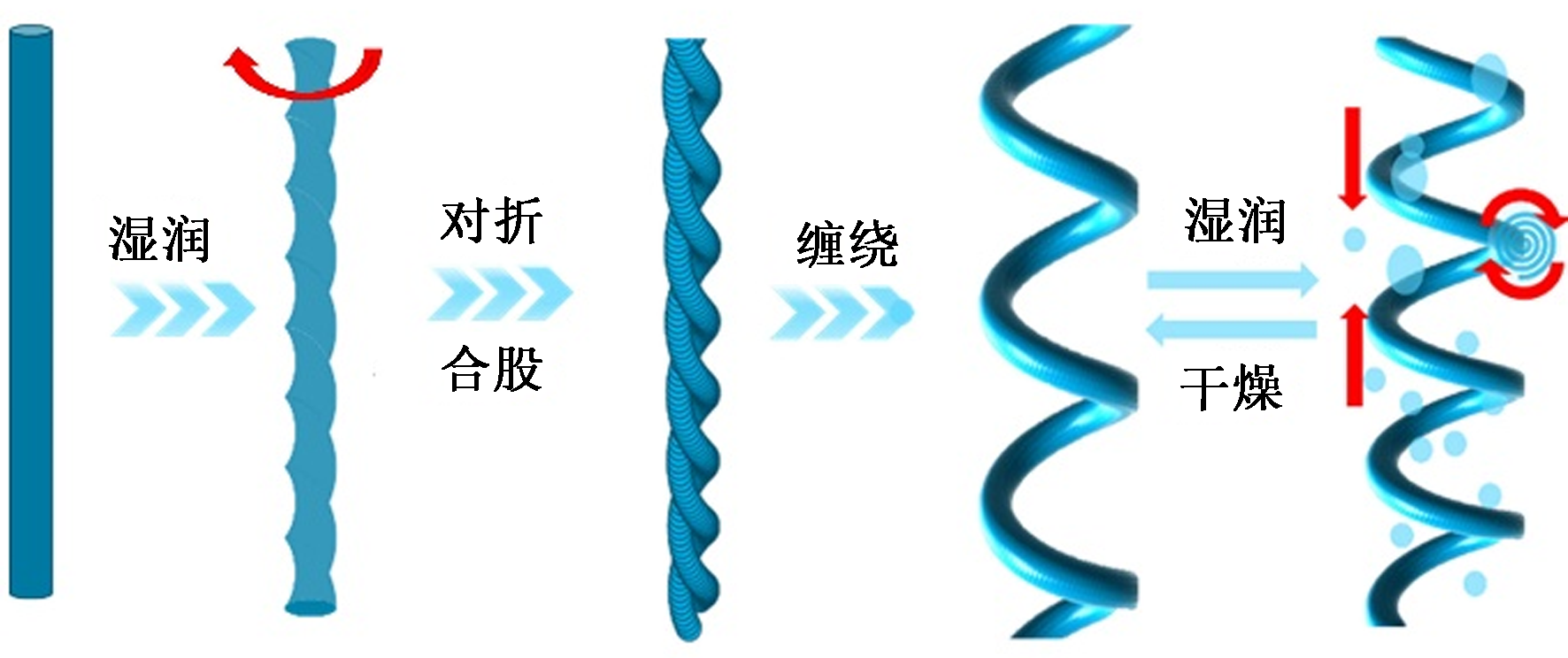
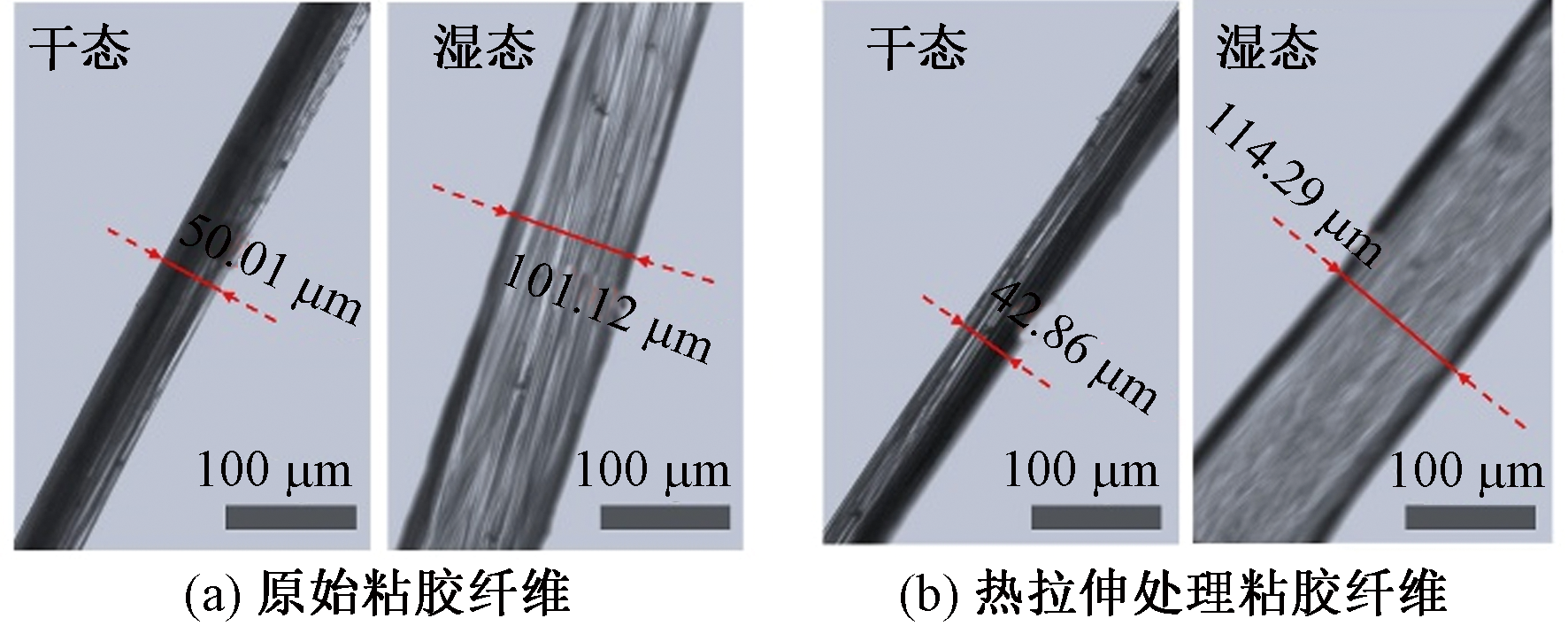
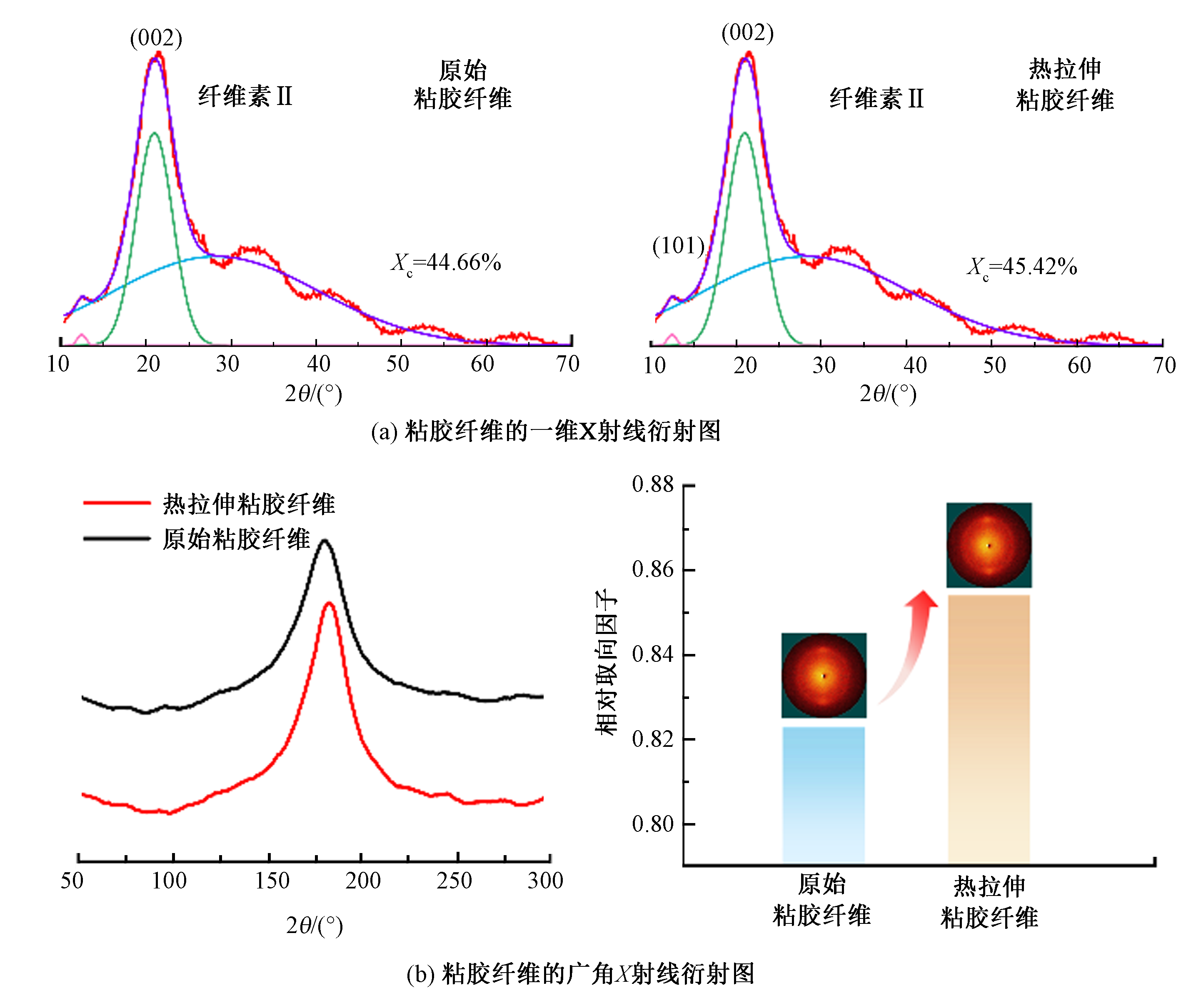
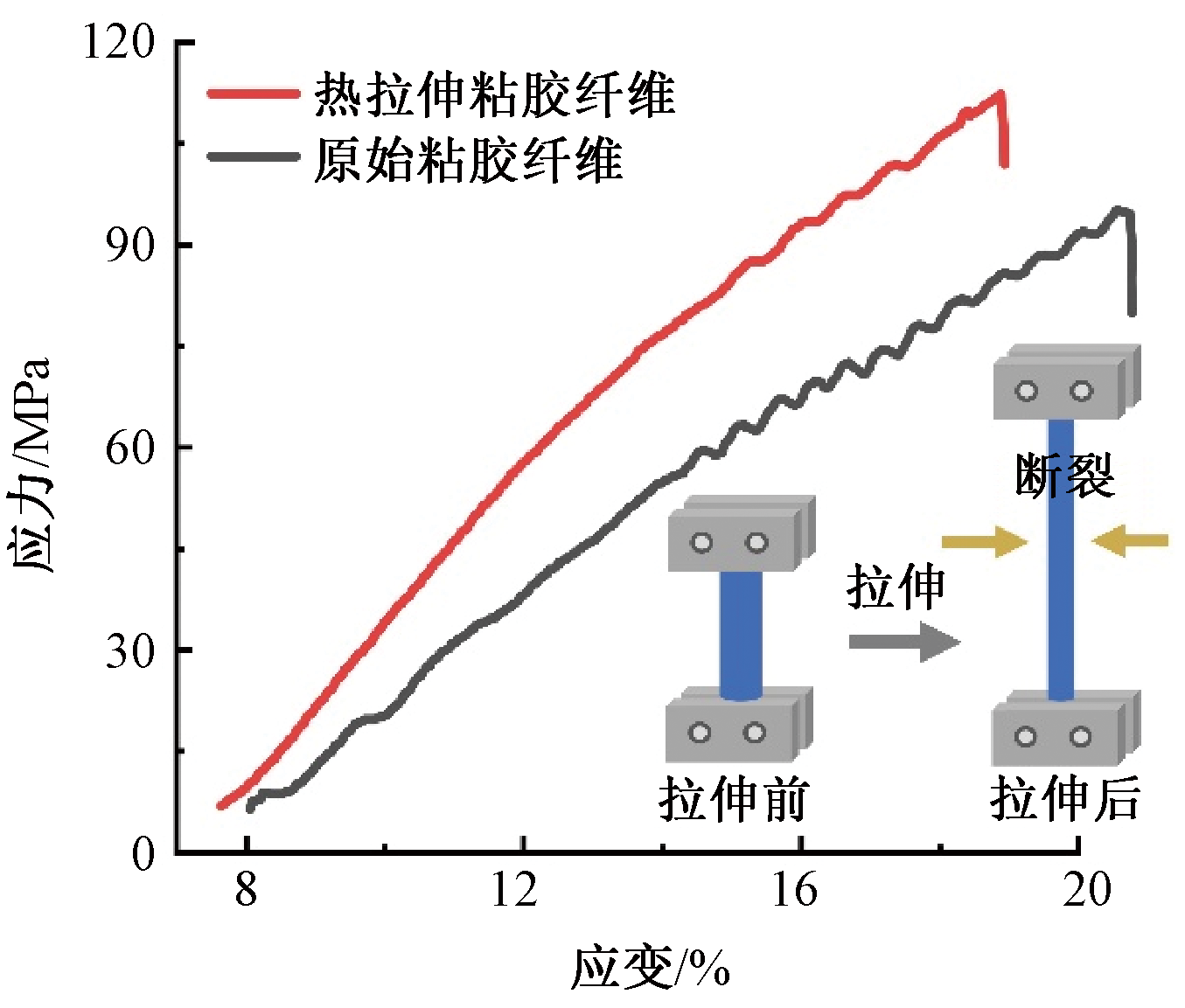
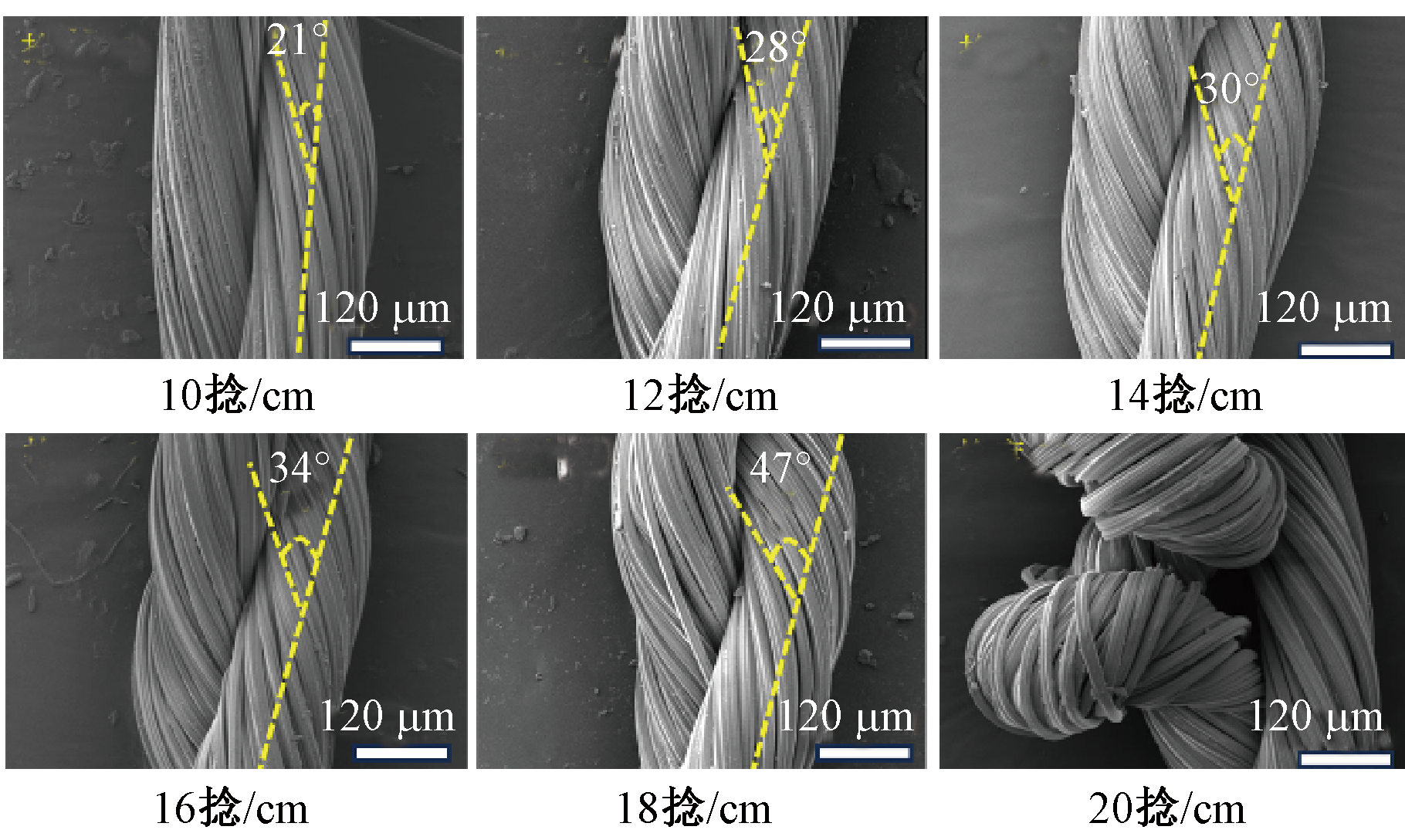
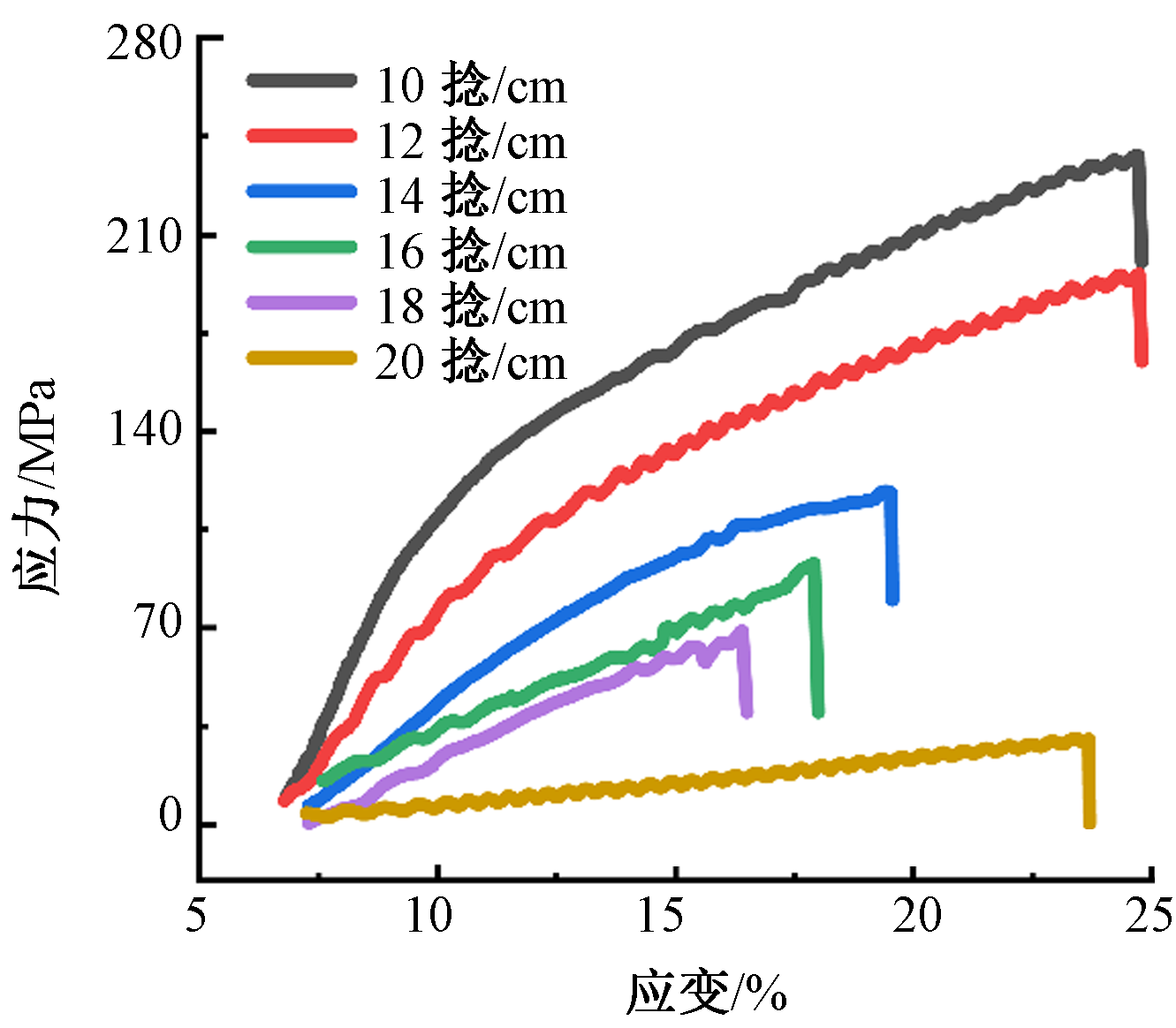
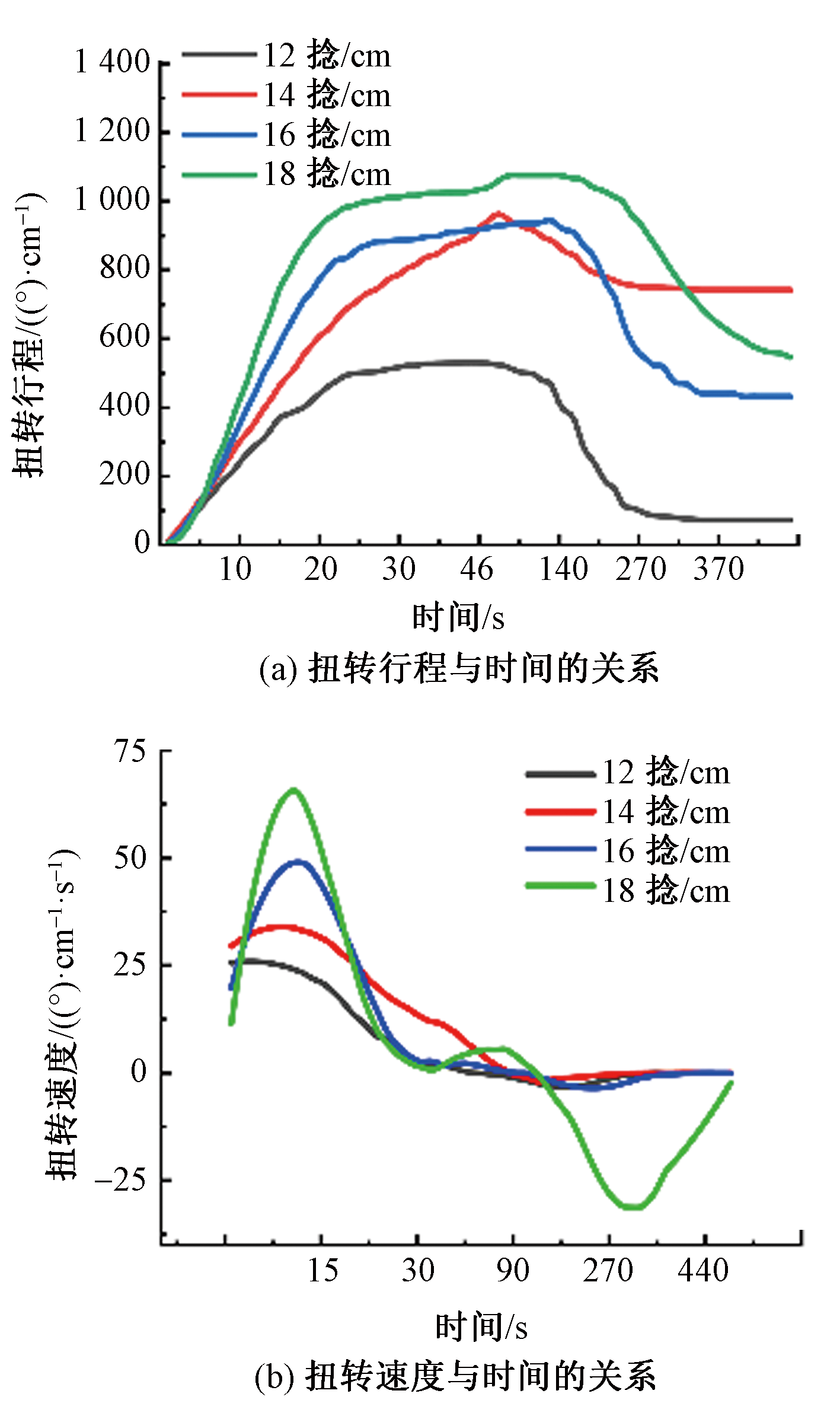
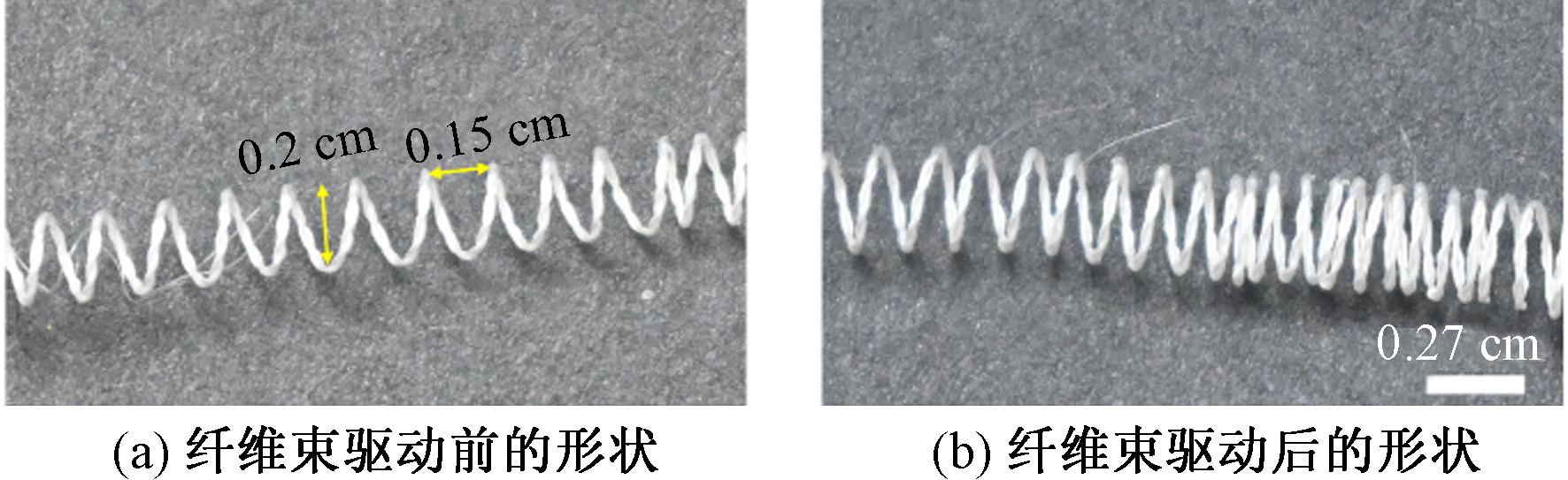
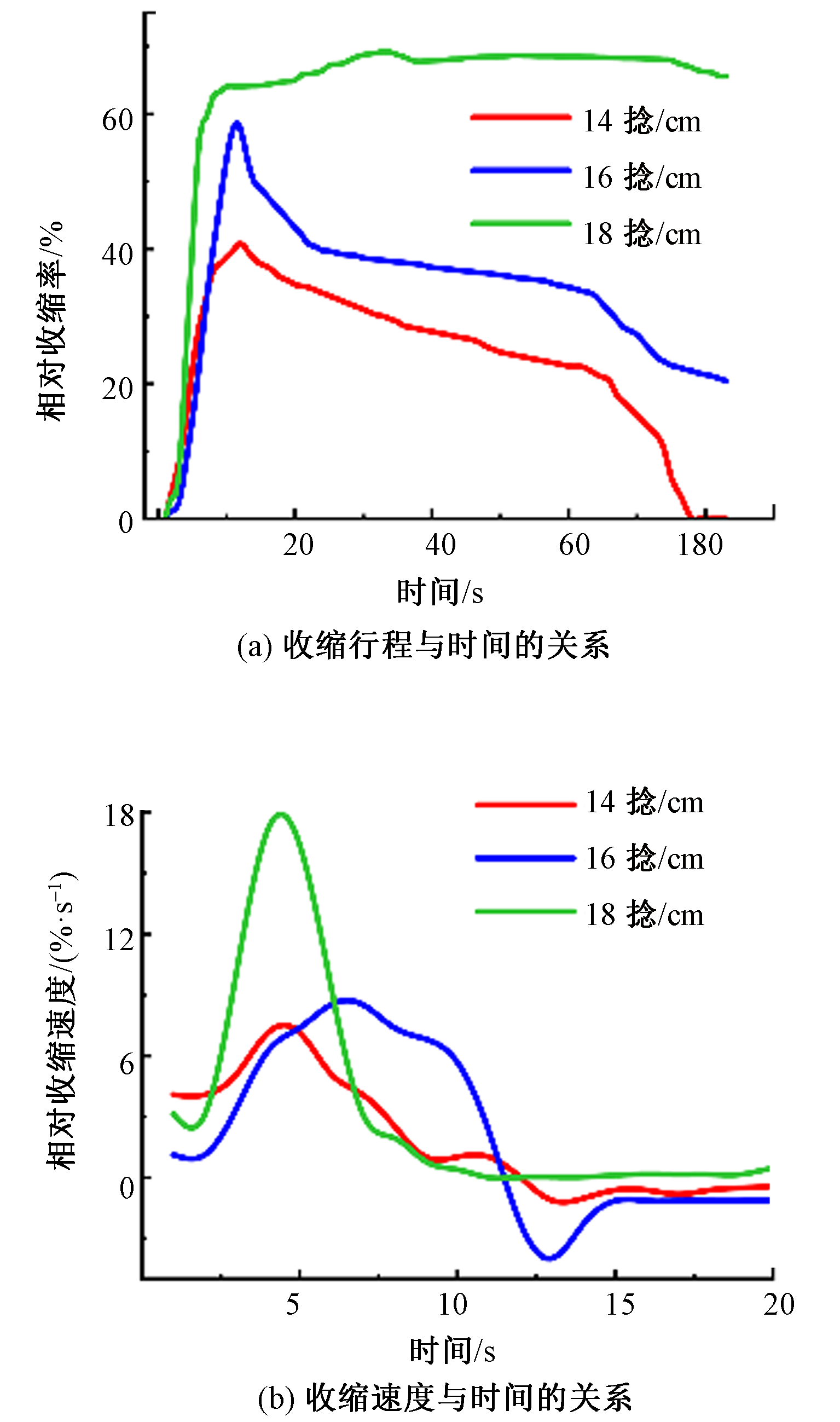
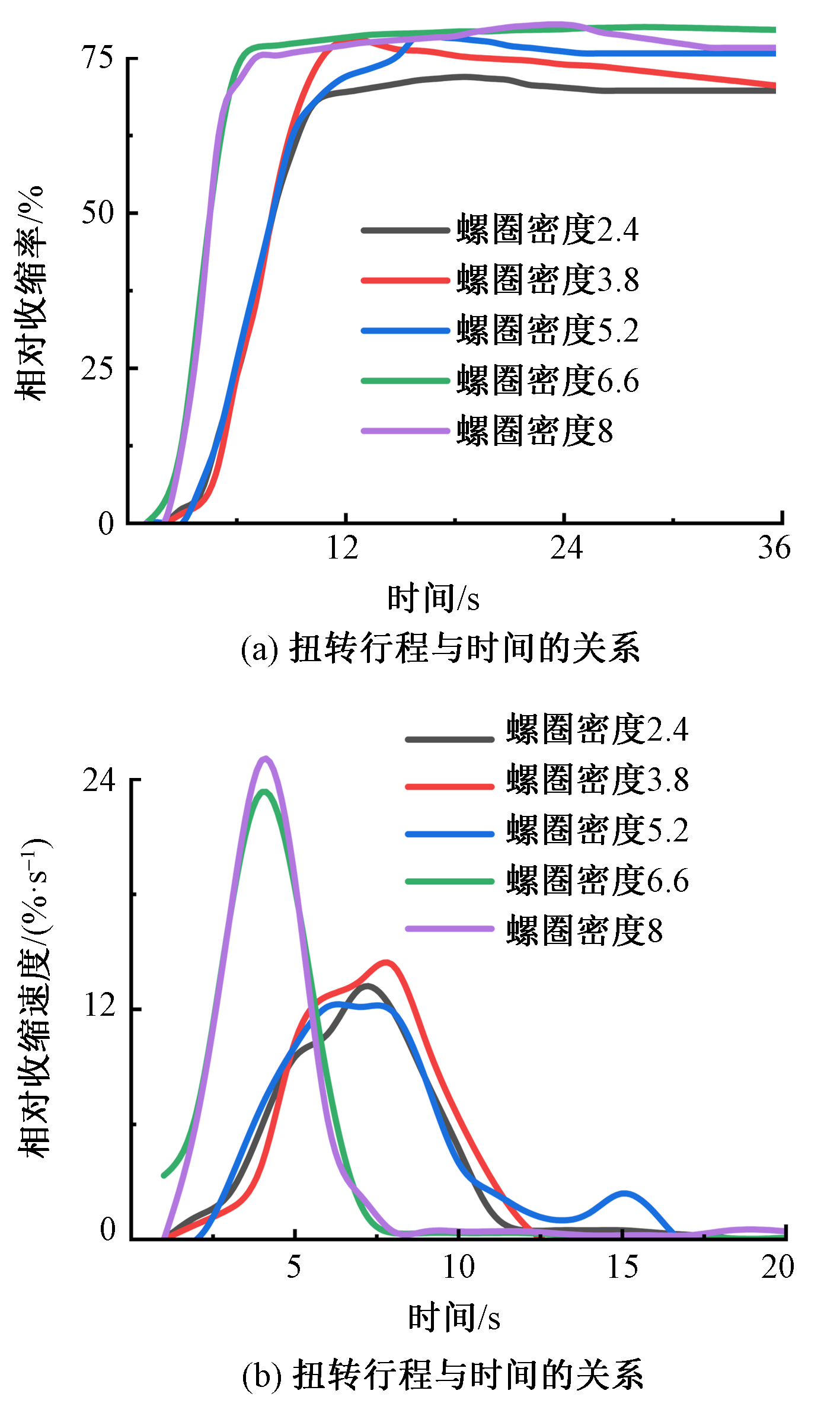
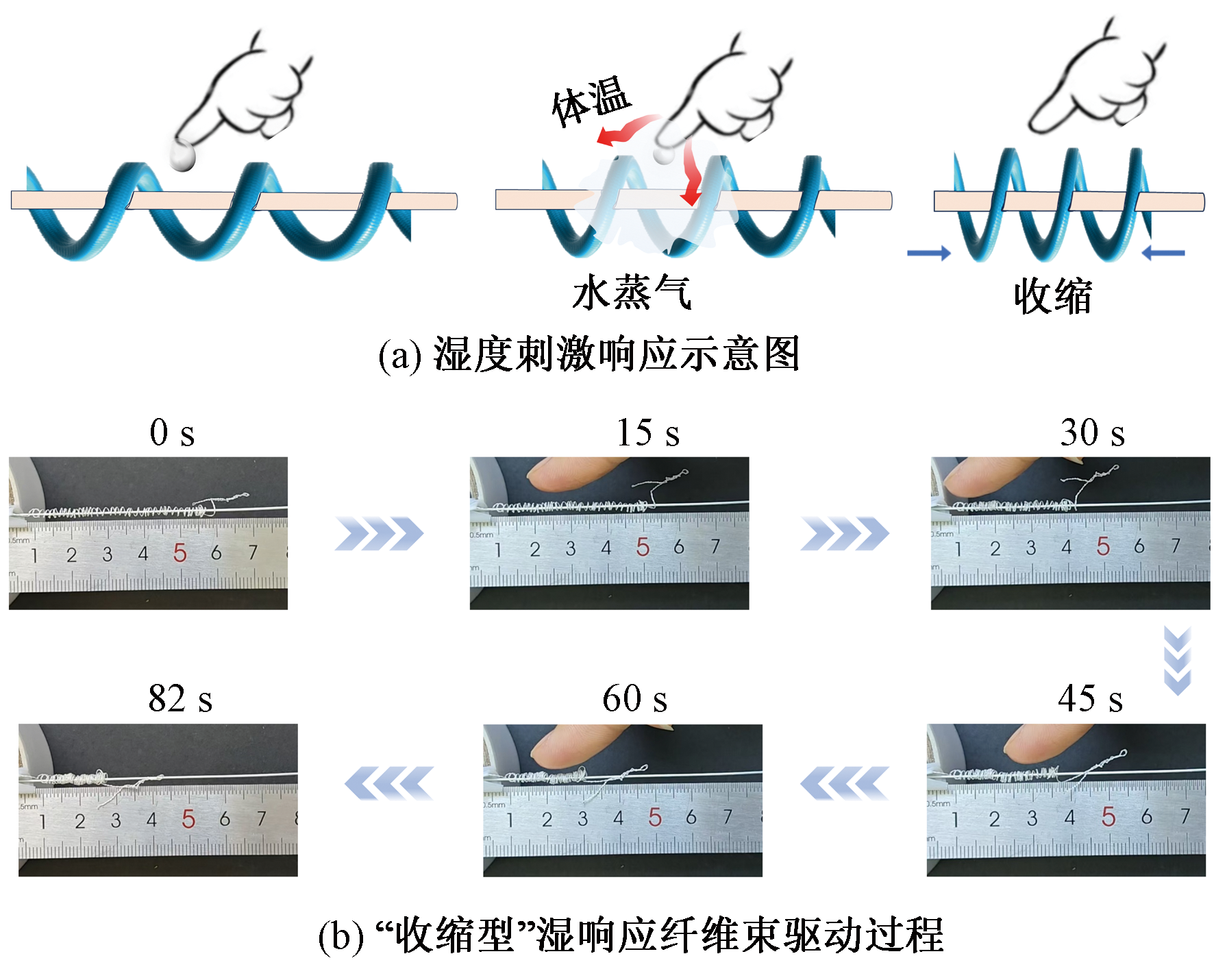
为解决传统驱动系统能耗高、环境负荷重等问题,以成本低、易降解且吸湿性能优异的粘胶纤维为原料,开发了“旋转型”和“收缩型”2种利用环境水汽驱动的智能湿度响应纤维束。“旋转型”湿响应纤维束通过吸湿膨胀引发解捻,实现旋转驱动;“收缩型”湿响应纤维束则在湿度刺激下实现长度方向上的收缩。借助光学显微镜、X射线衍射仪、拉力试验机、水雾测试等对粘胶以及湿响应纤维束进行表征分析。结果表明:经热拉伸处理的粘胶纤维吸湿膨胀率提升64.47%绝对增幅,断裂应力提高12.53%。当纤维束捻度为18 捻/cm时,“旋转型”湿响应纤维束最大扭转行程可达1 075.5(°)/cm、最大扭转速率为65.1(°)/(cm·s);“收缩型”湿响应纤维束在捻度为18 捻/cm、节距为0.15 cm时,展现出最佳驱动性能,最大收缩率为76.7%,最大收缩速率为23.3%/s。此外,“收缩型”湿响应纤维束表现出极佳的湿度响应灵敏性,可在体温蒸发水滴产生的水雾驱动下实现62.22%的收缩。该研究为基于湿响应驱动的智能纺织器件及全纤维驱动器的设计提供了新思路与新策略。
中图分类号:
| [1] |
FANG Y S, ZHAO X, CHEN G R, et al. Smart polyethylene textiles for radiative and evaporative cooling[J]. Joule, 2021, 5(4): 752-754.
doi: 10.1016/j.joule.2021.03.019 |
| [2] |
CAO Y F, LIANG S L, CHEN X N, et al. Enhanced wintertime greenhouse effect reinforcing Arctic amplification and initial sea-ice melting[J]. Scientific Reports, 2017, 7: 8462.
doi: 10.1038/s41598-017-08545-2 pmid: 28814806 |
| [3] |
FU X P, XU S H, GAO Y Y, et al. Breeze-wind-energy-powered autonomous wireless anemometer based on rolling contact-electrification[J]. ACS Energy Letters, 2021, 6(6): 2343-2350.
doi: 10.1021/acsenergylett.1c00704 |
| [4] |
ZHAO K W, LIU Y F. Theoretical study on multi-effect solar distillation system driven by tidal energy[J]. Desalination, 2009, 249(2): 566-570.
doi: 10.1016/j.desal.2009.01.024 |
| [5] |
CHEN X Y, CHEN Y, FU L, et al. Photovoltaic-driven liquid air energy storage system for combined cooling, heating and power towards zero-energy buildings[J]. Energy Conversion and Management, 2024, 300: 117959.
doi: 10.1016/j.enconman.2023.117959 |
| [6] |
NI Q C, LOU Q, SHEN C L, et al. Sensitive humidity sensor based on moisture-driven energy generation[J]. Nano Research, 2024, 17(6): 5578-5586.
doi: 10.1007/s12274-024-6499-3 |
| [7] |
IRAVANI S, VARMA R S. MXenes for bioinspired soft actuators: advancements in angle-independent structural colors and beyond[J]. Nano-Micro Letters, 2024, 16(1): 142.
doi: 10.1007/s40820-024-01367-8 pmid: 38436795 |
| [8] |
LE X X, LU W, ZHANG J W, et al. Recent progress in biomimetic anisotropic hydrogel actuators[J]. Advanced Science, 2019, 6(5): 1801584.
doi: 10.1002/advs.v6.5 |
| [9] |
REZAEI S, BUITINK J, HAY F R. Seed responses to change in ambient humidity and the consequences for storability[J]. Journal of Stored Products Research, 2024, 109: 102477.
doi: 10.1016/j.jspr.2024.102477 |
| [10] |
TANG G Q, ZHAO X, LIU S L, et al. Moisture-driven actuators[J]. Advanced Functional Materials, 2025, 35(2): 2412254.
doi: 10.1002/adfm.v35.2 |
| [11] |
JENKINS D. Textile history: 40 years[J]. Textile History, 2008, 39(1): 4-15.
doi: 10.1179/174329508x290433 |
| [12] |
JIA T J, WANG Y, DOU Y Y, et al. Moisture sensitive smart yarns and textiles from self-balanced silk fiber muscles[J]. Advanced Functional Materials, 2019, 29(18): 1808241.
doi: 10.1002/adfm.v29.18 |
| [13] |
CHENG M R, BAI H Y, WANG X S, et al. Engineering hygroscopic MOF-based silk via bioinspired interfacial assembly for fast moisture manipulation[J]. Advanced Materials, 2024, 36(48): 2411680.
doi: 10.1002/adma.v36.48 |
| [14] |
JIANG X Y, BAI Y Y, CHEN X F, et al. A review on raw materials, commercial production and properties of lyocell fiber[J]. Journal of Bioresources and Bioproducts, 2020, 5(1): 16-25.
doi: 10.1016/j.jobab.2020.03.002 |
| [15] |
GANSER C, KREIML P, MORAK R, et al. The effects of water uptake on mechanical properties of viscose fibers[J]. Cellulose, 2015, 22(4): 2777-2786.
doi: 10.1007/s10570-015-0666-3 |
| [16] |
SIXTA H, HARMS H, DAPIA S, et al. Evaluation of new organosolv dissolving pulps. Part I: Preparation, analytical characterization and viscose processability[J]. Cellulose, 2004, 11(1): 73-83.
doi: 10.1023/B:CELL.0000014767.47330.90 |
| [17] |
HAINES C S, LIMA M D, LI N, et al. Artificial muscles from fishing line and sewing thread[J]. Science, 2014, 343(6173): 868-872.
doi: 10.1126/science.1246906 pmid: 24558156 |
| [18] |
FOROUGHI J, SPINKS G M, WALLACE G G, et al. Torsional carbon nanotube artificial muscles[J]. Science, 2011, 334(6055): 494-497.
doi: 10.1126/science.1211220 pmid: 21998253 |
| [19] |
PANAITESCU A, GRASON G M, KUDROLLI A. Measuring geometric frustration in twisted inextensible filament bundles[J]. Physical Review E, 2017, 95(5): 052503.
doi: 10.1103/PhysRevE.95.052503 |
| [1] | 王彬, 侯泽明, 徐英俊, 王玉忠. 高阻燃性再生纤维素纤维的制备及其性能[J]. 纺织学报, 2026, 47(02): 47-55. |
| [2] | 陈克林, 李卓, 王晓歌, 李成晋, 胡建臣, 张克勤. 微流控湿法纺丝制备基于聚羟基脂肪酸酯的光致变色纤维及其性能[J]. 纺织学报, 2026, 47(01): 46-53. |
| [3] | 付佳琦, 吉陈湘, 杨瑞华. 喷气涡流纺成纱气流场及纤维运动模拟分析和实验[J]. 纺织学报, 2026, 47(01): 89-97. |
| [4] | 徐浩文, 敖利民. 芯纱实时反捻法无扭结包覆纱的技术原理与实验[J]. 纺织学报, 2026, 47(01): 98-105. |
| [5] | 林思伶, 刘赋瑶, 张成, 侯琳, 徐炎炎, 付冉迁, 樊威. 双向调温阻燃防静电纺织品的制备及其性能[J]. 纺织学报, 2025, 46(06): 38-44. |
| [6] | 章红豆, 陈芳, 楚祥婷, 陆惠文, 刘新金, 苏旭中. 基于示踪纤维法测试的化纤条内纤维弯钩[J]. 纺织学报, 2024, 45(12): 74-79. |
| [7] | 鲁颖科, 金炳奇, 徐涛, 高一蕾, 邓炳耀, 李昊轩. 基于粘胶纤维非织造材料的太阳能水电联产装置设计及其性能[J]. 纺织学报, 2024, 45(07): 78-85. |
| [8] | 史玉磊, 曲连艺, 刘江龙, 徐英俊. 氧化锌/儿茶酚甲醛树脂微球抗菌粘胶纤维的制备及其性能[J]. 纺织学报, 2024, 45(02): 21-27. |
| [9] | 娄辉清, 上媛媛, 曹先仲, 徐蓓蕾. 碳氮化钛/粘胶纤维束集合体太阳能界面水蒸发器的制备及其性能[J]. 纺织学报, 2023, 44(10): 9-15. |
| [10] | 刘帅, 郭晨宇, 陈鹤文, 杨瑞华. 赛络菲尔包缠纱结构建模分析与性能优化[J]. 纺织学报, 2023, 44(04): 63-69. |
| [11] | 彭阳阳, 盛楠, 孙丰鑫. 纤维基湿敏柔性驱动器的跨尺度构建及其性能[J]. 纺织学报, 2023, 44(02): 90-95. |
| [12] | 吴靖, 韩晨晨, 高卫东. 基于类骨骼肌结构的纱线基驱动器性能及应用[J]. 纺织学报, 2023, 44(02): 128-134. |
| [13] | 张晶, 黄治恒, 牛广亮, 梁生, 杨旅云, 魏磊, 周时凤, 侯冲, 陶光明. 热拉式多材料纤维光电子技术研究进展与展望[J]. 纺织学报, 2023, 44(01): 11-20. |
| [14] | 敖利民, 苏娟, 唐雯. 空心锭包覆纺纱包缠捻度及其分布的影响因素分析[J]. 纺织学报, 2022, 43(12): 54-61. |
| [15] | 吕晓双, 刘丽萍, 俞建勇, 丁彬, 李召岭. 纤维基自供能电子皮肤的构建及其应用性能研究进展[J]. 纺织学报, 2022, 43(10): 183-191. |
|
||
 京公网安备11010502044800号