纺织学报 ›› 2026, Vol. 47 ›› Issue (02): 119-125.doi: 10.13475/j.fzxb.20251100701
贺浩1, 吴雨欣1, 陈佩1, 李婷婷1,2( )
)
HE Hao1, WU Yuxin1, CHEN Pei1, LI Tingting1,2()
摘要:
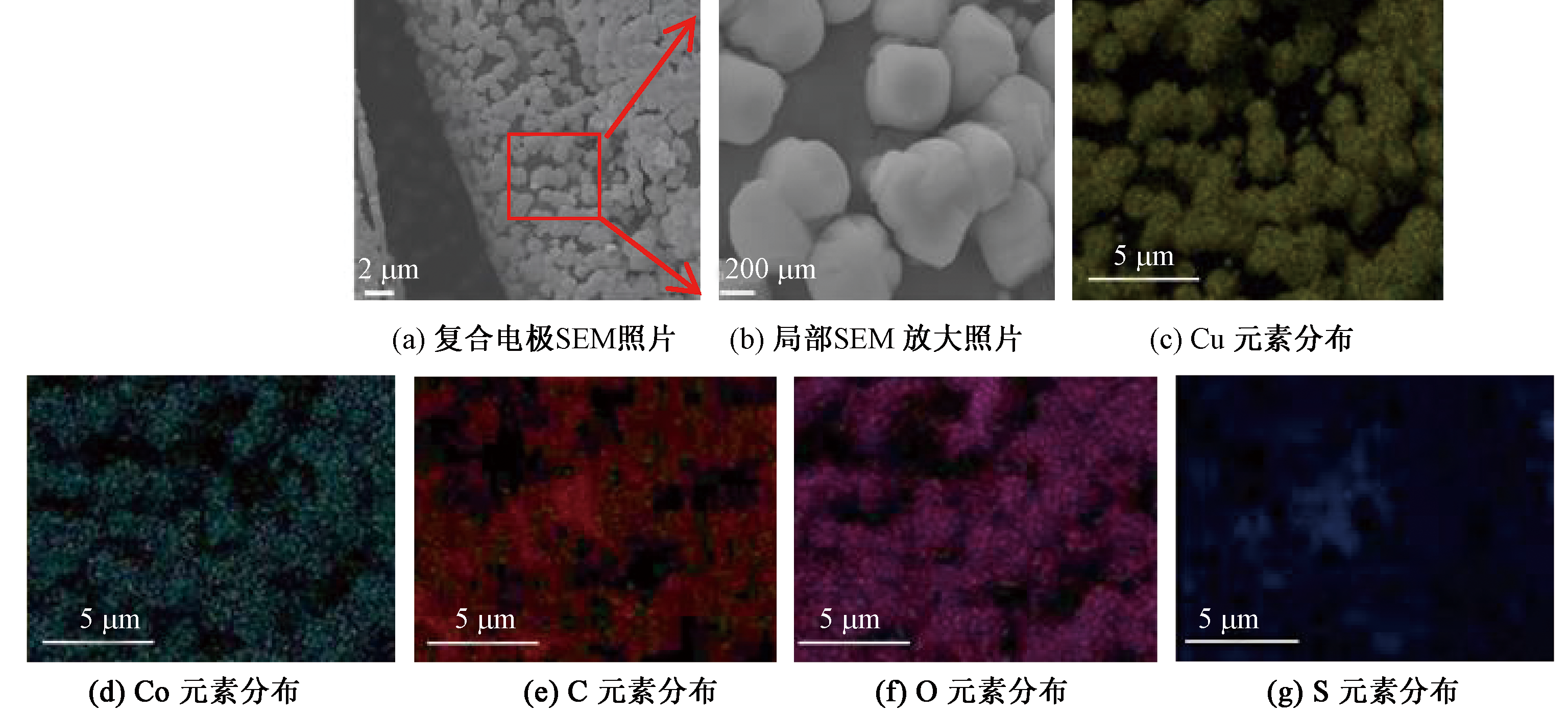
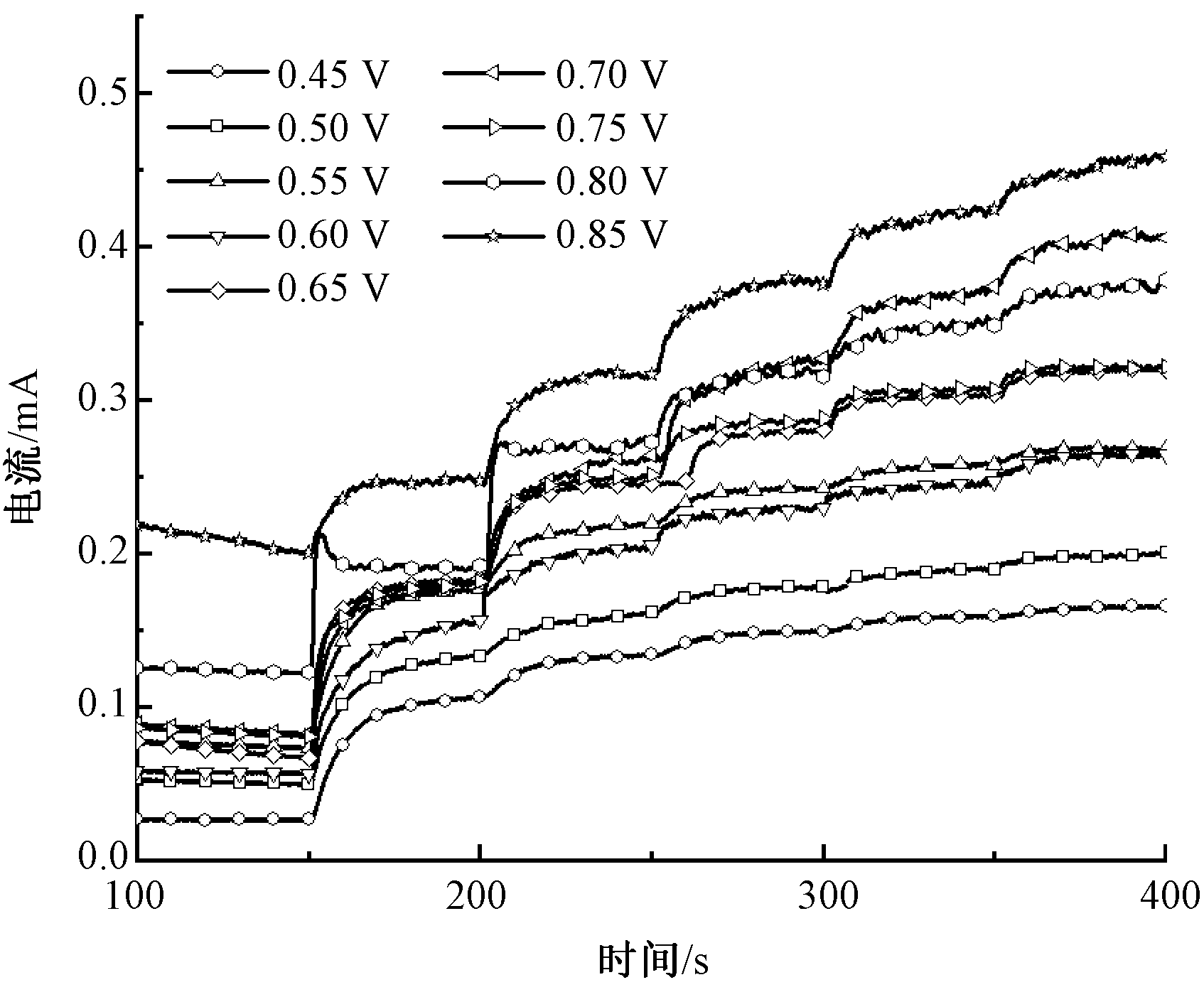
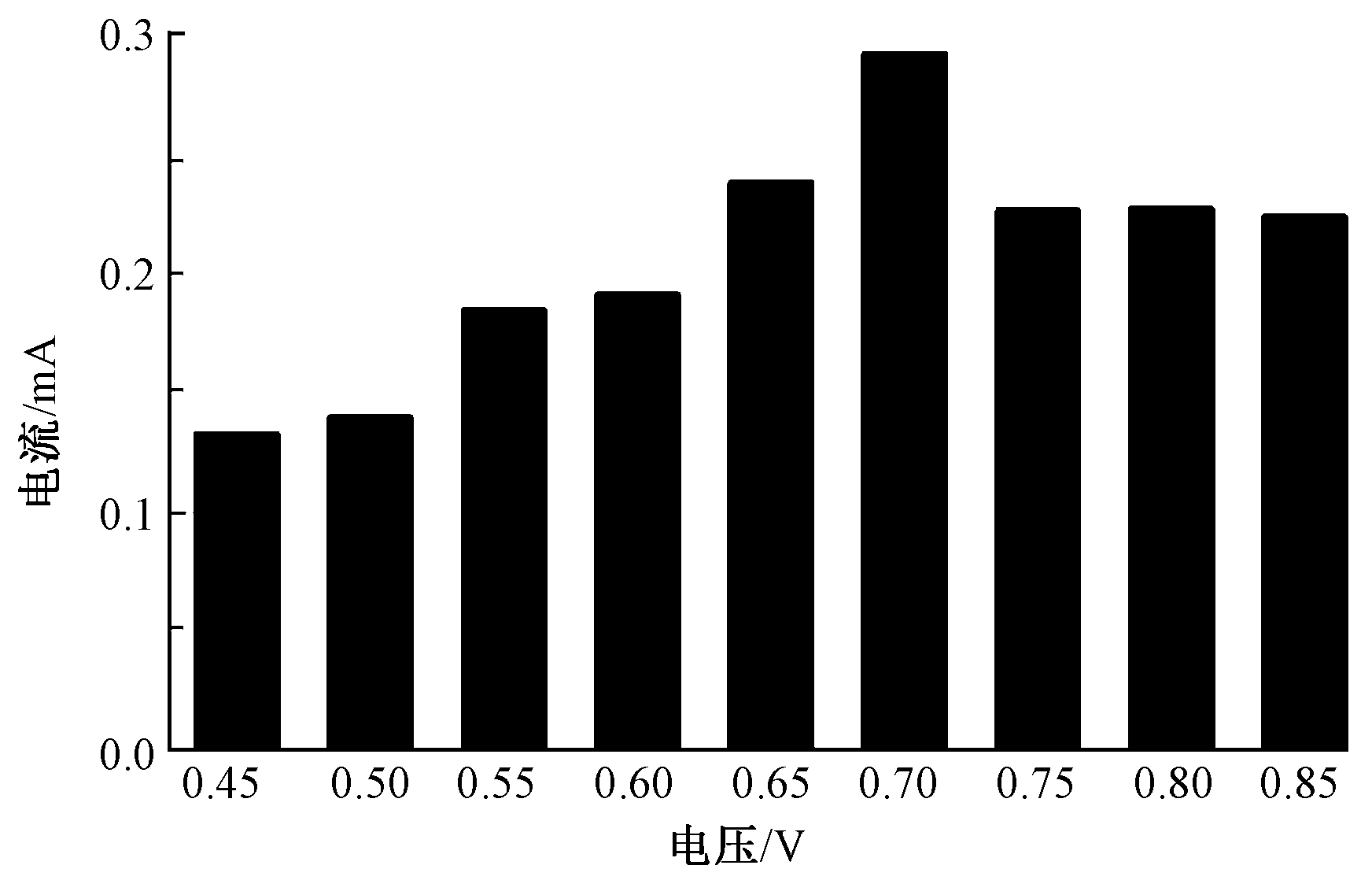
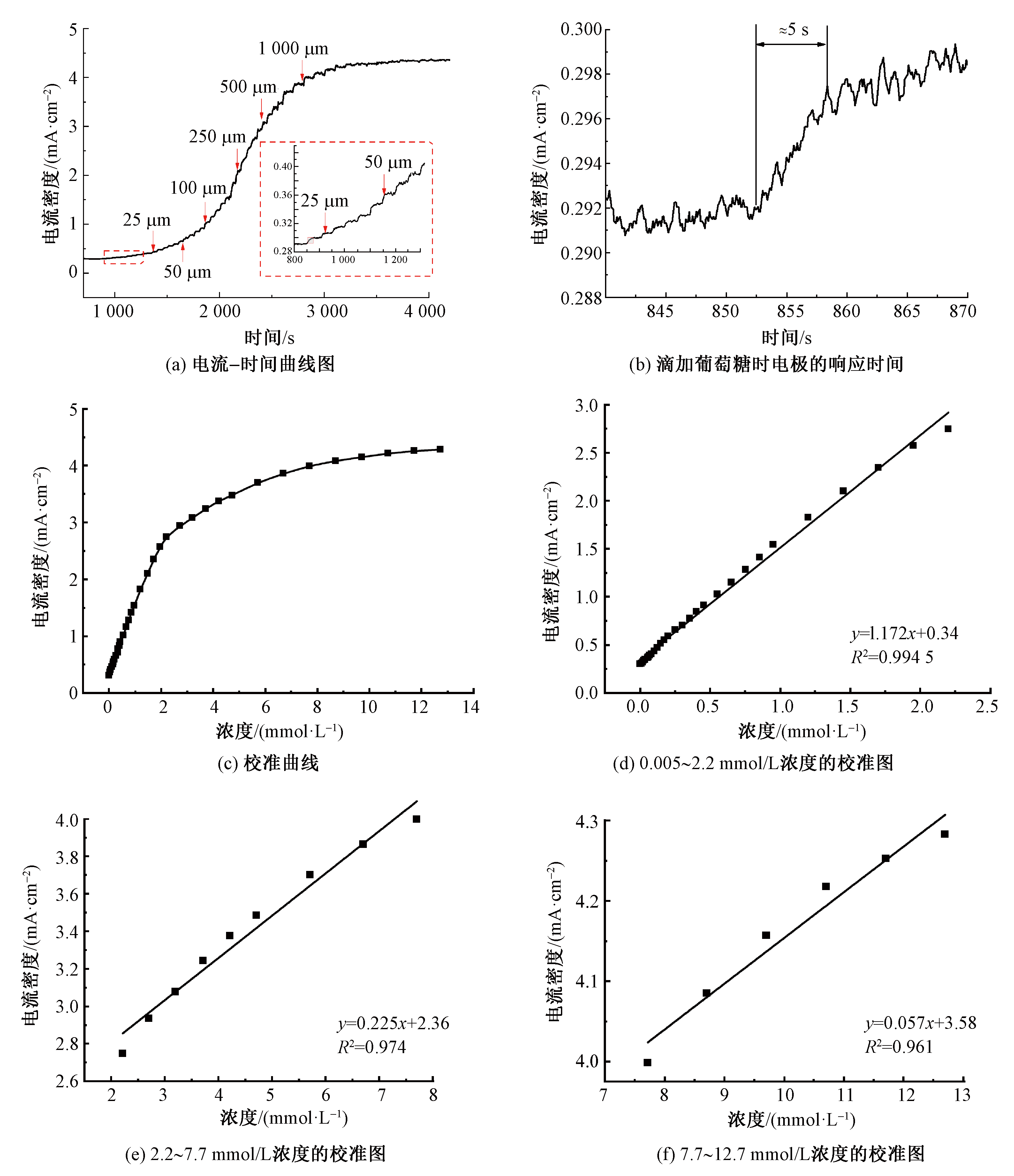
为解决传统酶基葡萄糖传感器存在的成本高、稳定性不足以及固酶工艺复杂等问题,满足可穿戴健康监测对柔性、高灵敏度汗液葡萄糖检测的需求,提出一种基于棉纱线柔性基底的非酶葡萄糖传感器制备策略。通过低温聚合-电化学沉积协同工艺,在棉纱线表面依次构建聚 3,4-乙烯二氧噻吩(PEDOT)导电聚合物层,并原位生长Cu2CoO3纳米阵列,成功制备出Cu2CoO3/PEDOT复合棉纱线电极,并对其微观形貌、电学性能及电化学性能进行表征。结果表明:Cu2CoO3纳米颗粒均匀负载于PEDOT修饰的棉纤维表面,形成立方-球状复合结构;在0.70 V的最优工作电位下,该传感器对葡萄糖的线性响应范围为0.005~12.7 mmol/L;在0.005~2.2 mmol/L的低浓度区间内,灵敏度达1.173 mA/(mmol·cm2),检测限低至1 μmol/L,且可在5 s内达到稳态电流的95%,表现出良好的响应能力。该传感器具备制备成本低、工艺条件温和等优势,在柔性可穿戴式汗液葡萄糖实时监测领域展现出良好的应用潜力。
中图分类号:
| [1] |
SUN H, SAEEDI P, KARURANGA S, et al. IDF Diabetes Atlas: global, regional and country-level diabetes prevalence estimates for 2021 and projections for 2045[J]. Diabetes Research and Clinical Practice, 2022, 183: 109119.
doi: 10.1016/j.diabres.2021.109119 |
| [2] |
NYEIN H Y Y, BARIYA M, KIVIMÄKI L, et al. Regional and correlative sweat analysis using high-throughput microfluidic sensing patches toward decoding sweat[J]. Science Advances, 2019, 5(8): eaaw9906.
doi: 10.1126/sciadv.aaw9906 |
| [3] |
WANG G, LI L, HAN X, et al. Nickel foam-decorated hollow-Co3O4/GO nanocomposites: a highly sensitive non-enzymatic electrochemical sensor for glucose detection[J]. Microchemical Journal, 2024, 206: 111398.
doi: 10.1016/j.microc.2024.111398 |
| [4] |
YIN J W, ZHANG H T, WANG Y, et al. Noninvasive detection of glucose using electrodeposited NiCo nanoparticles on a silk derived carbon[J]. Journal of Alloys and Compounds, 2025, 1014: 178716.
doi: 10.1016/j.jallcom.2025.178716 |
| [5] | 潘长玉. 2型糖尿病血糖控制的意义及实践[J]. 国外医学(内分泌学分册), 2003, 23(4): 228-230. |
| PAN Changyu. Significance and practice of blood sugar control in type 2 diabetes mellitus[J]. Foreign Medical Sciences Section of Endocrine, 2003, 23(4): 228-230. | |
| [6] | 马亮. 以碳纸为基体构建自支撑镍、钴基无酶葡萄糖传感器[D]. 银川: 宁夏大学, 2021: 1-41. |
| MA Liang. Self-supporting nickel and cobalt-based enzyme-free glucose sensor based on carbon paper was constructed[D]. Yinchuan: Ningxia University, 2021: 1-41. | |
| [7] |
ALSHABOUNA F, LEE H S, BARANDUN G, et al. PEDOT: PSS-modified cotton conductive thread for mass manufacturing of textile-based electrical wearable sensors by computerized embroidery[J]. Materials Today, 2022, 59: 56-67.
doi: 10.1016/j.mattod.2022.07.015 |
| [8] |
BAHAR J, LGHAZI Y, YOUBI B, et al. Effect of applied potential on the optical and electrical properties of Cu2CoO3[J]. Environmental Science and Pollution Research, 2024, 31(53): 62022-62031.
doi: 10.1007/s11356-023-27103-0 |
| [9] |
KULANDAIVEL S, CHEN H T, LIN C H, et al. Exploring the potential of iron-based metal-organic frameworks as peroxidase nanozymes for glucose detection with various secondary building units[J]. Journal of Materials Chemistry B, 2023, 11(43): 10362-10368.
doi: 10.1039/d3tb00981e pmid: 37465898 |
| [10] |
DAI Y F, MOLAZEMHOSSEINI A, ABBASI K, et al. A cuprous oxide thin film non-enzymatic glucose sensor using differential pulse voltammetry and other voltammetry methods and a comparison to different thin film electrodes on the detection of glucose in an alkaline solution[J]. Biosensors, 2018, 8(1): 4.
doi: 10.3390/bios8010004 |
| [11] |
ZHANG X F, LI T T, JIANG Q, et al. Worm-Like PEDOT: tos coated polypropylene fabrics via low-temperature interfacial polymerization for high-efficiency thermoelectric textile[J]. Progress in Organic Coatings, 2020, 149: 105919.
doi: 10.1016/j.porgcoat.2020.105919 |
| [12] |
LU F, MAO Q Q, WU R, et al. A siphonage flow and thread-based low-cost platform enables quantitative and sensitive assays[J]. Lab on a Chip, 2015, 15(2): 495-503.
doi: 10.1039/c4lc01248h pmid: 25406338 |
| [13] |
PAN Y X, YU R H, JIANG Y L, et al. Heterogeneous CuxO nano-skeletons from waste electronics for enhanced glucose detection[J]. Nano-Micro Letters, 2024, 16(1): 249.
doi: 10.1007/s40820-024-01467-5 |
| [14] |
YASHLY Y K, SREESHMA S P, THARINIDEVI S K, et al. Tailoring spinel cobalt-oxide geometry for ultrahigh sensitive nonenzymatic electrocatalytic oxidation and sensing of glucose in batch injection analysis[J]. Chemical Engineering Journal, 2025, 507: 160611.
doi: 10.1016/j.cej.2025.160611 |
| [15] |
CUI Y Y, ZHANG H K, ZHU J, et al. Correlations of salivary and blood glucose levels among six saliva collection methods[J]. International Journal of Environmental Research and Public Health, 2022, 19(7): 4122.
doi: 10.3390/ijerph19074122 |
| [16] |
LU D X, LI H T, XIAO N, et al. Salivary glucose detection based on platinum metal hydrogel prepared mouthguard electrochemical sensor[J]. Talanta, 2025, 283: 127197.
doi: 10.1016/j.talanta.2024.127197 |
| [17] |
HOU Z H, GAO T, LIU X Y, et al. Dual detection of human motion and glucose in sweat with polydopamine and glucose oxidase doped self-healing nanocomposite hydrogels[J]. International Journal of Biological Macromolecules, 2023, 252: 126473.
doi: 10.1016/j.ijbiomac.2023.126473 |
| [18] |
TANG C L, ZHOU K, WANG R J, et al. Wearable biosensors for human sweat glucose detection based on carbon black nanoparticles[J]. Analytical and Bioanalytical Chemistry, 2024, 416(6): 1407-1415.
doi: 10.1007/s00216-024-05135-w |
| [19] |
LIANG X S, ZHANG S, MENG S, et al. A non-enzymatic flexible and wearable sensor based on thermal transfer printing technology for continuous glucose detection in sweat[J]. Microchemical Journal, 2024, 207: 111690.
doi: 10.1016/j.microc.2024.111690 |
| [1] | 华克润, 李久刚, 乔浩然, 何加浩, 李文斌, 徐卫林. 玄武岩纤维/棉交织织物基蒸发器的结构调控及其光热蒸发性能[J]. 纺织学报, 2025, 46(12): 110-115. |
| [2] | 范书乐, 王朝晖, 刘欢欢, 叶勤文. 老年人跌倒伤害防护智能服装的研究现状与发展方向[J]. 纺织学报, 2025, 46(11): 255-263. |
| [3] | 郭梦瑶, 吴佳庆, 王迎. 全包覆结构聚氨酯膜条带/棉复合纱制备及其力学性能[J]. 纺织学报, 2025, 46(11): 69-76. |
| [4] | 郑小虎, 杜思淇, 刘永青, 王健, 陈峰. 基于一维卷积神经网络的棉纱线质量预测[J]. 纺织学报, 2025, 46(09): 120-127. |
| [5] | 史蜜, 王文聪, 范雪荣, 高卫东. 聚乙烯醇聚合度和醇解度对棉浆纱性能的影响[J]. 纺织学报, 2025, 46(09): 181-187. |
| [6] | 李沐芳, 魏琬茹, 李倩倩, 宋引男, 王栋, 罗梦颖. 碳纤维表面有机/无机纳米花的构筑及其对过氧化氢的检测[J]. 纺织学报, 2025, 46(06): 17-22. |
| [7] | 张嘉诚, 于影, 左雨欣, 顾志清, 汤腾飞, 陈洪立, 吕勇. 聚丙烯腈/二硫化钼纤维薄膜的挠曲电效应与扭转传感特性[J]. 纺织学报, 2025, 46(06): 80-87. |
| [8] | 李露红, 罗天, 丛洪莲. 针织一体成形电容传感器设计及其性能[J]. 纺织学报, 2024, 45(10): 80-88. |
| [9] | 徐志豪, 徐丹瑶, 李彦, 王璐. 基于表面增强拉曼光谱的纳米纤维基生物传感器的研究进展[J]. 纺织学报, 2023, 44(11): 216-224. |
| [10] | 张露杨, 宋海波, 孟晶, 殷兰君, 卢业虎. 棉纱布被保暖性能的影响因素[J]. 纺织学报, 2023, 44(07): 79-85. |
| [11] | 王雅倩, 万爱兰, 曾登. 棉/形状记忆氨纶纬编免烫衬衫面料制备及其性能评价[J]. 纺织学报, 2023, 44(05): 125-131. |
| [12] | 杨芸, 孙通, 梁振宇, 彭广, 鲍劲松. 基于异构集成学习的棉纱纱疵定量分析方法[J]. 纺织学报, 2023, 44(05): 93-101. |
| [13] | 张青青, 倪远, 汪军, 张玉泽, 江慧. 转轮集聚纺纱装置与工艺设计[J]. 纺织学报, 2023, 44(02): 83-89. |
| [14] | 姚明远, 刘宁娟, 王嘉宁, 许福军, 刘玮. 功能化碳纳米管复合薄膜及其膜卷纱的电热性能[J]. 纺织学报, 2022, 43(05): 86-91. |
| [15] | 左亚君, 蔡赟, 王蕾, 高卫东. 纯棉纱线合股数对织物性能的影响[J]. 纺织学报, 2021, 42(04): 74-79. |
|
||
 京公网安备11010502044800号