纺织学报 ›› 2026, Vol. 47 ›› Issue (07): 209-218.doi: 10.13475/j.fzxb.20250906001
王永强1, 刘淑萍1,2, 李亮1,2, 郭芯冉1, 刘让同1,2( )
)
WANG Yongqiang1, LIU Shuping1,2, LI Liang1,2, GUO Xinran1, LIU Rangtong1,2()
摘要:
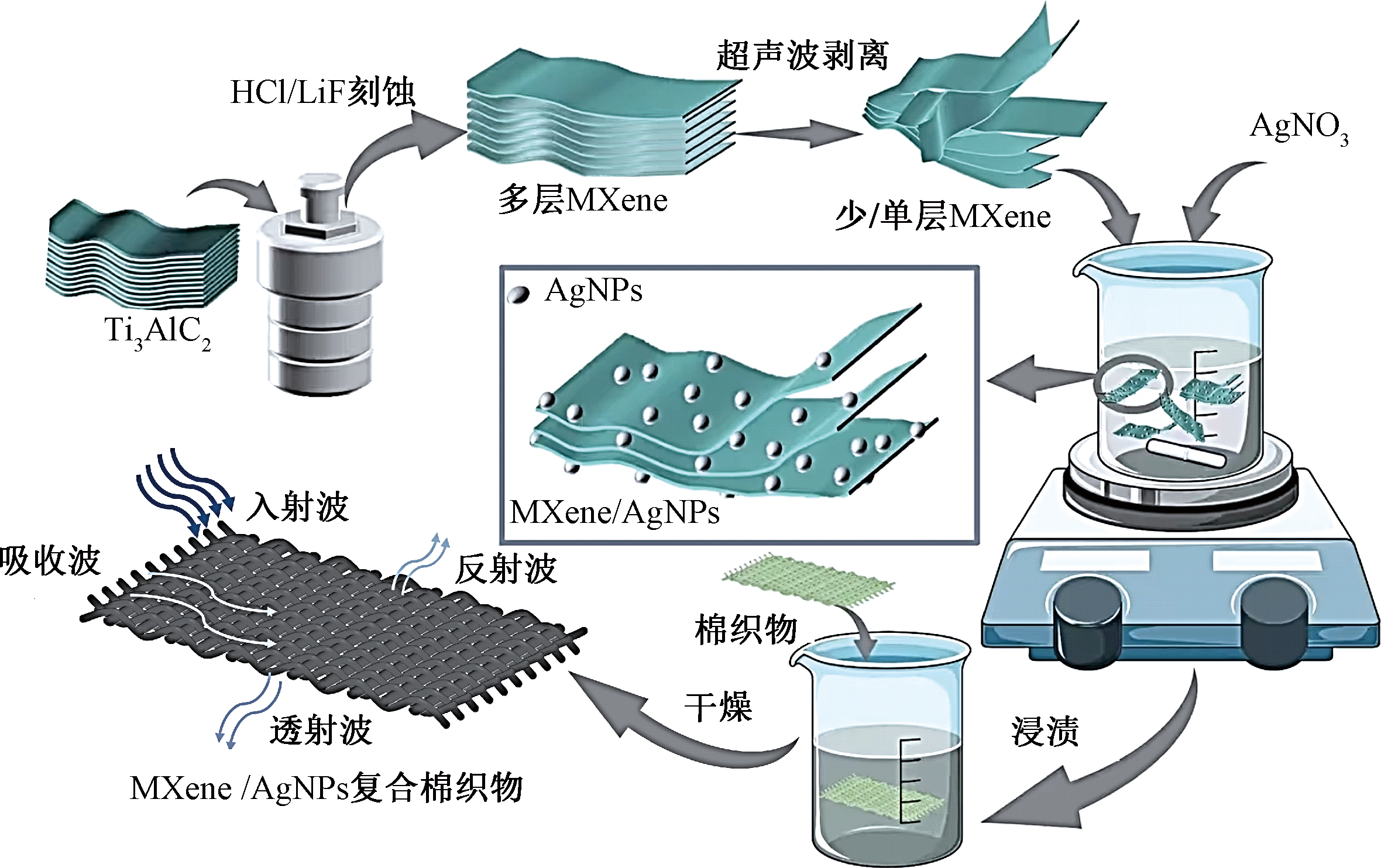
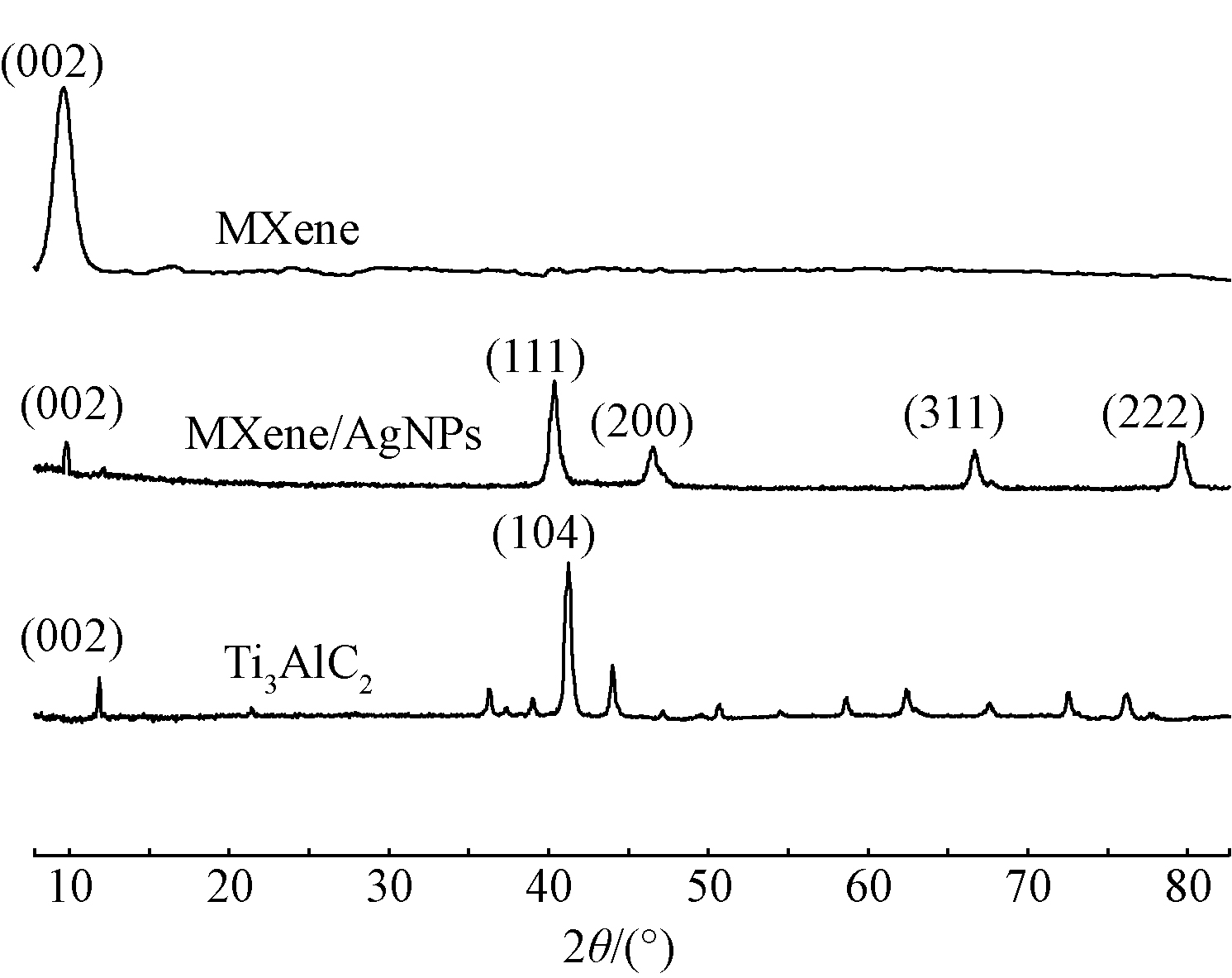
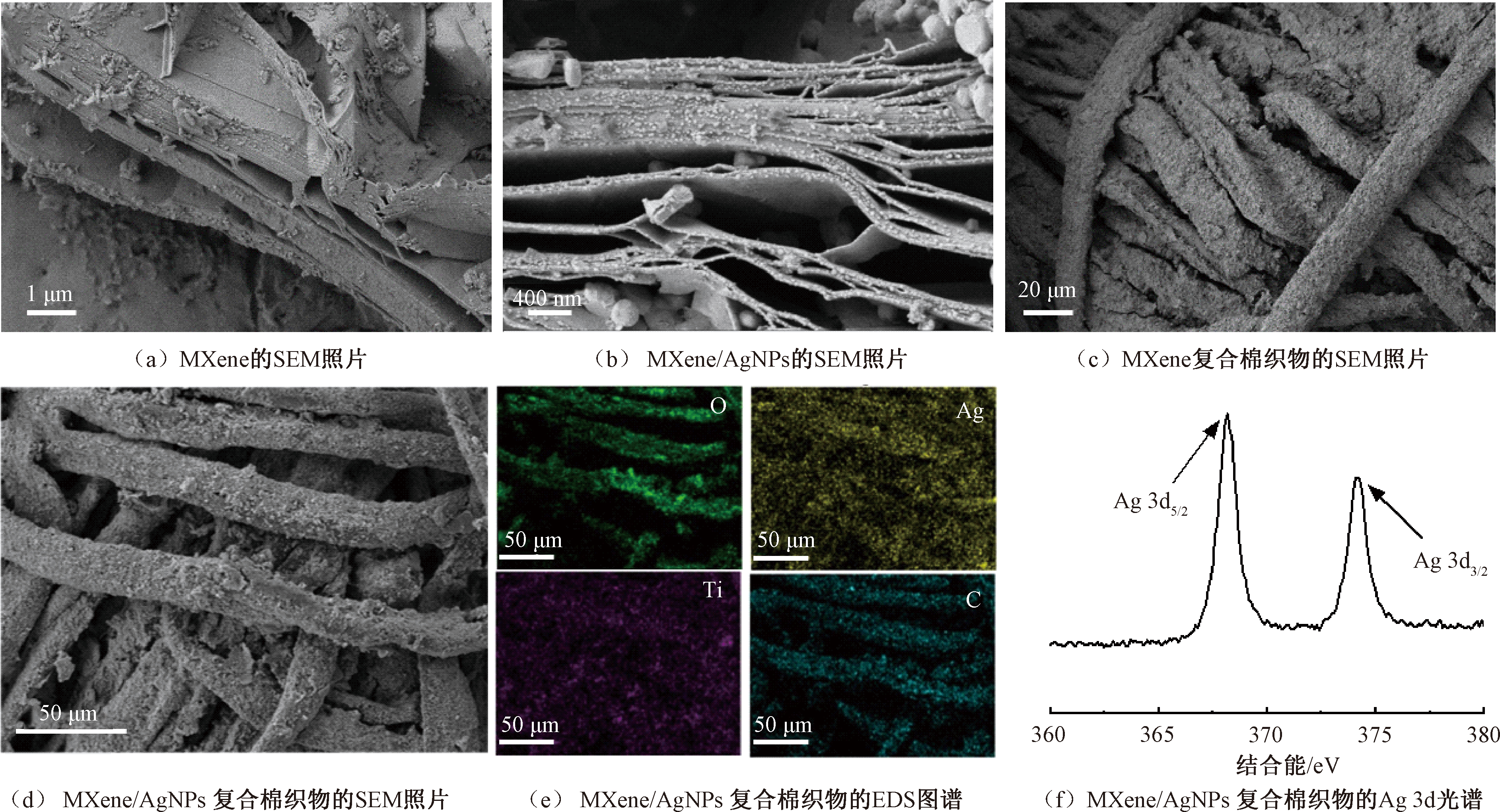
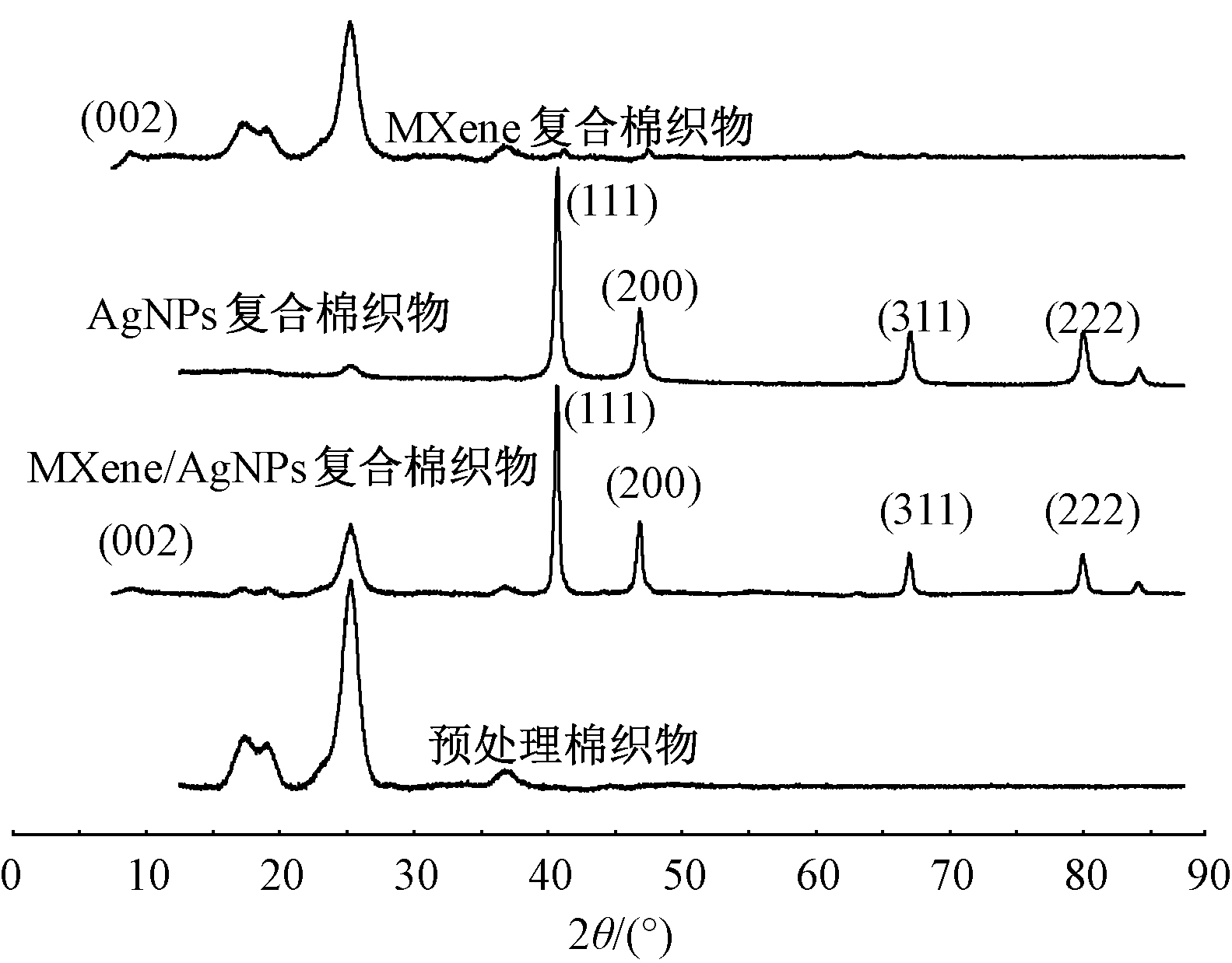
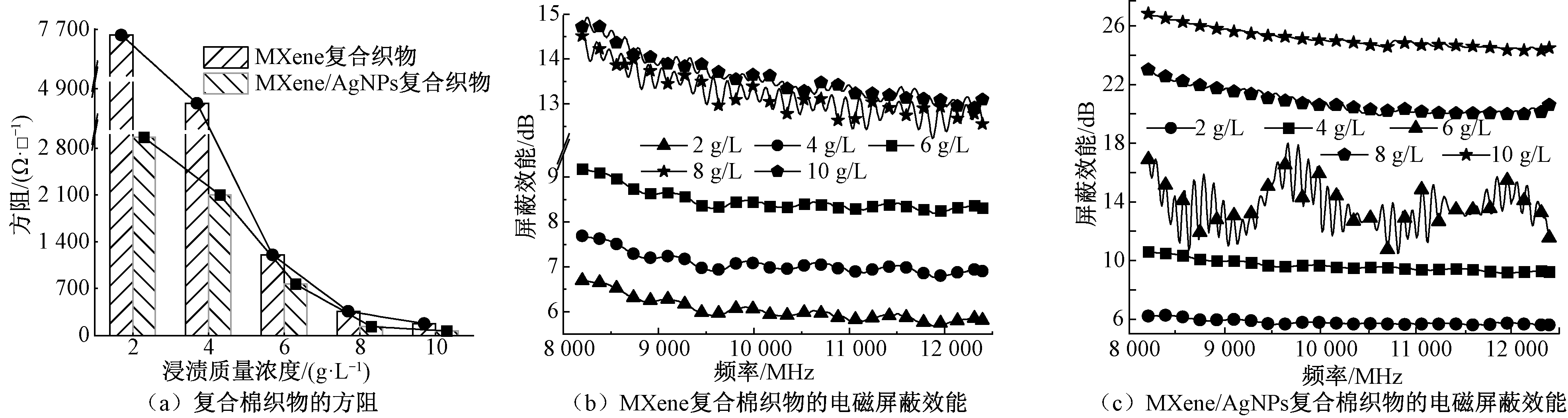
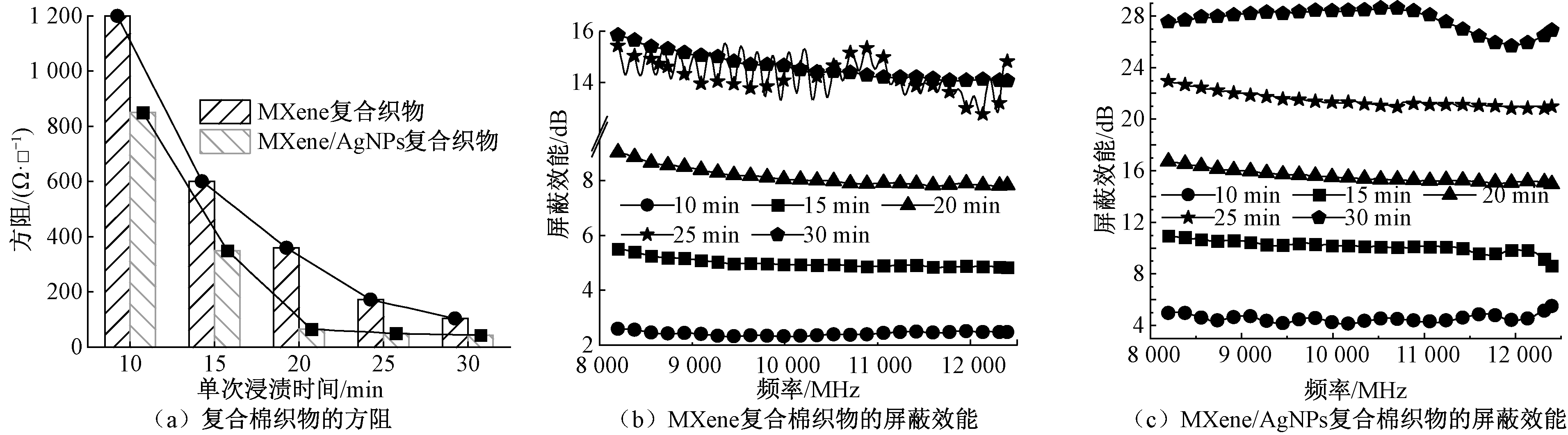
为开发高性能柔性电磁屏蔽织物,采用原位氢氟酸选择性刻蚀法制备二维过渡金属碳/氮化物(MXene),然后通过原位还原反应在MXene表面及层间生成银纳米粒子(AgNPs),最后采用浸渍法将其与棉织物复合,构筑MXene/AgNPs复合导电棉织物。通过改变浸渍工艺参数以改变导电材料负载量,系统分析了浸渍工艺参数对织物导电性能及电磁屏蔽效能的影响。通过X 射线衍射、扫描电子显微镜、能谱分析对复合织物的结构和形貌进行表征,通过电阻测试仪和矢量网络分析仪测试其方块电阻和电磁屏蔽效能。结果表明:AgNPs 的引入有效降低了MXene 片层间的界面接触电阻,显著提升了复合棉织物的导电性能,增强了对电磁波的反射,使复合棉织物的总电磁屏蔽效能显著提高,达27.6 dB,方块电阻低至41.3 Ω/□;在3个浸渍工艺参数中,浸渍质量浓度对导电性能影响最大,浸渍次数次之,浸渍时间最小,而对于电磁屏蔽效能,浸渍时间影响最大,浸渍次数次之,浸渍质量浓度最小。
中图分类号:
| [1] |
ZHANG H T, LIN S D. Research progress with membrane shielding materials for electromagnetic/radiation contamination[J]. Membranes, 2023, 13(3): 315.
doi: 10.3390/membranes13030315 |
| [2] |
GAO Q, LAUSTER T, KOPERA B A F, et al. Breathable and flexible dual-sided nonwovens with adjustable infrared optical performances for smart textile[J]. Advanced Functional Materials, 2022, 32(5): 2108808.
doi: 10.1002/adfm.v32.5 |
| [3] |
XIE H H, LU Y, ZHAO X L, et al. Ultrahigh strength poly(lactic acid) composites with superior EMI shielding performance enabled by synergistic effect of short carbon fibers and carbon nanotubes[J]. Composites Science and Technology, 2025, 261: 111045.
doi: 10.1016/j.compscitech.2025.111045 |
| [4] |
张梦欣, 刘让同, 李亮, 等. 聚氨酯掺杂铜粉涂层的电磁特征及其涂层织物的吸波性能[J]. 中国塑料, 2022, 36(9): 46-52.
doi: 10.19491/j.issn.1001-9278.2022.09.007 |
| ZHANG Mengxin, LIU Rangtong, LI Liang, et al. Electromagnetic characteristics of copper-powder-doped polyurethane coating and absorbing properties of its coated fabric[J]. China Plastics, 2022, 36(9): 46-52. | |
| [5] | 高苏微, 葛贝贝, 朱书月, 等. MXene/导电聚合物复合介质对电磁吸收的研究进展[J]. 化工新型材料, 2024, 52(S2): 1-6. |
| GAO Suwei, GE Beibei, ZHU Shuyue, et al. Research progress in electromagnetic absorption by MXene/conductive polymers composites[J]. New Chemical Materials, 2024, 52(S2): 1-6. | |
| [6] |
GAN Y, XIONG Y Z. Review of MXene synthesis and applications in electromagnetic shielding[J]. RSC Advances, 2025, 15(12): 9555-9568.
doi: 10.1039/D4RA08030K |
| [7] |
ZHANG H Y, XIAO H, LONG J J. Preparation, structure, property and application of MXene in fabricating functional and intelligent textiles: a comprehensive review[J]. Composites Part B: Engineering, 2025, 301: 112461.
doi: 10.1016/j.compositesb.2025.112461 |
| [8] | PARK J H, PARK J, TANG F, et al. Electromagnetic interference shielding and joule heating properties of flexible, lightweight, and hydrophobic MXene/nickel-coated polyester fabrics manufactured by dip-dry coating and electroless plating[J]. ACS Applied Materials & Interfaces, 2024, 16(29): 38490-38500. |
| [9] |
WANG Y T, ZHANG X F, LIN J H, et al. Lightweight and hydrophobic MXene-decorated PP composite fabric inspired by rock for highly efficient electromagnetic interference shielding[J]. Journal of Materials Science, 2023, 58(28): 11666-11679.
doi: 10.1007/s10853-023-08743-6 |
| [10] |
LU W, ZHOU Y C, XU H. Dual-gradient MXene/AgNWs/Hollow-Fe3O4/CNF composite films for thermal management and electromagnetic shielding applications[J]. Composites Communications, 2024, 51: 102077.
doi: 10.1016/j.coco.2024.102077 |
| [11] | 葛贝贝, 李亮, 高苏微, 等. 导电粒子掺杂纳米纤维复合膜的电磁特性及吸波预测[J]. 工程塑料应用, 2024, 52(9): 133-142. |
| GE Beibei, LI Liang, GAO Suwei, et al. Electromagnetic characteristics and wave absorption performance prediction of nanofiber composite films doped by conductive particles[J]. Engineering Plastics Application, 2024, 52(9): 133-142. | |
| [12] | 张恒宇, 张宪胜, 肖红, 等. 二维碳化物在柔性电磁吸波领域的研究进展[J]. 纺织学报, 2020, 41(3): 182-187. |
|
ZHANG Hengyu, ZHANG Xiansheng, XIAO Hong, et al. Research progress of two-dimensional carbide in field of flexible electromagnetic absorbing[J]. Journal of Textile Research, 2020, 41(3): 182-187.
doi: 10.1177/004051757104100216 |
|
| [13] |
ZHAI N X, WANG Z H, CHENG Z Z, et al. Simultaneous manipulation of multidimensional heterojunctions and dielectric gene engineering for broadband microwave absorption[J]. Advanced Functional Materials, 2025, 35(33): 2502480.
doi: 10.1002/adfm.v35.33 |
| [14] |
HEGAZY M A, BORHAM E. Preparation and characterization of silver nanoparticles homogenous thin films[J]. NRIAG Journal of Astronomy and Geophysics, 2018, 7(1): 27-30.
doi: 10.1016/j.nrjag.2018.04.002 |
| [15] |
郑贤宏, 唐金好, 李长龙, 等. 中空磁性Fe3O4纳米球/MXene复合棉织物的制备及其电磁屏蔽性能[J]. 纺织学报, 2023, 44(11): 142-150.
doi: 10.13475/j.fzxb.20220804501 |
|
ZHENG Xianhong, TANG Jinhao, LI Changlong, et al. Preparation and electromagnetic shielding performance of hollow magnetic Fe3O4 nanosphere/MXene composite cotton fabrics[J]. Journal of Textile Research, 2023, 44(11): 142-150.
doi: 10.13475/j.fzxb.20220804501 |
|
| [16] | 李一, 张恒宇, 郭雯卓, 等. 阻抗阶跃渐变层结构纤维素/Ti3C2Tx气凝胶材料的制备及其吸波性能[J]. 纺织学报, 2025, 46(3): 17-26. |
|
LI Yi, ZHANG Hengyu, GUO Wenzhuo, et al. Preparation of cellulose/Ti3C2Tx aerogel absorbing materials with impedance step gradient layer structure and their absorption properties[J]. Journal of Textile Research, 2025, 46(3): 17-26.
doi: 10.1177/004051757604600103 |
|
| [17] | 廖喜林, 曾媛, 刘淑萍, 等. 磷/氮/硅复配协效阻燃棉织物制备及其性能[J]. 纺织学报, 2025, 46(3): 151-157. |
| LIAO Xilin, ZENG Yuan, LIU Shuping, et al. Preparation of P/N/Si composite synergistic flame retardant cotton fabric and its performance[J]. Journal of Textile Research, 2025, 46(3): 151-157. | |
| [18] |
YANG L H, QIN Y X, ZHAO X Y, et al. Portable intelligent sensor based on chemically induced silver nanoparticles colorimetric response for visual monitoring nitride/sulfide gases[J]. Chemical Engineering Journal, 2025, 516: 163811.
doi: 10.1016/j.cej.2025.163811 |
| [19] |
NIU Y J, WANG Z Q, LI Y, et al. Ultrathin MXene/Ag-Ag nanocomposite films for 3D-conformal electromagnetic shielding via aerosol jet printing[J]. Chemical Engineering Journal, 2025, 506: 160122.
doi: 10.1016/j.cej.2025.160122 |
| [1] | 曹祥玺, 李博, 孙艳丽, 姚倩, 刘哲, 陆少峰. MXene改性对正十八烷-海藻酸钠相变微胶囊非等温结晶动力学的影响[J]. 纺织学报, 2026, 47(05): 72-80. |
| [2] | 赵美宁, 李博, 孙艳丽, 武海良, 田诗溢. 具备光热转化性再生羊毛角蛋白基复合纤维的开发[J]. 纺织学报, 2026, 47(04): 17-25. |
| [3] | 陈思琦, 金煜涵, 陈琳, 王芳, 王玉忠. 基于阳离子-π相互作用构建的耐磨阻燃涂层棉织物[J]. 纺织学报, 2026, 47(03): 192-200. |
| [4] | 刘济民, 任亚杰, 王志强, 陈贺, 王怀芳. 蒸汽洗对棉织物手感的影响及其作用机制[J]. 纺织学报, 2026, 47(02): 230-238. |
| [5] | 张苗, 曹高涛, 俞丹, 王玉. 阻抗不对称型三维间隔织物的制备及其电磁屏蔽性能[J]. 纺织学报, 2026, 47(02): 239-246. |
| [6] | 任萧, 潘林洁, 姜海霞, 葛凤燕, 高洪国. 生物质多酚-亚铁离子多色系染料制备及其在棉织物上的应用[J]. 纺织学报, 2026, 47(01): 132-141. |
| [7] | 冯品淇, 张丽宁, 王娜娜, 吕仲, 周存. 低温高效精练剂的制备及其应用性能[J]. 纺织学报, 2026, 47(01): 159-167. |
| [8] | 宋佳怡, 王政驿, 程献伟, 关晋平, 朱亚伟. 液态靛蓝染料的制备及其对棉织物的染色性能[J]. 纺织学报, 2025, 46(12): 133-141. |
| [9] | 候志文, 任泽苹, 王晓宁, 张天骄. 棉织物的壳聚糖/海藻酸盐抗菌阻燃整理及其性能[J]. 纺织学报, 2025, 46(12): 171-180. |
| [10] | 王梁宇, 高晓红, 于彩娇, 张雪婷, 杨旭礼. 还原氧化石墨烯/铜纳米颗粒导电棉织物的制备及其传感性能[J]. 纺织学报, 2025, 46(12): 181-187. |
| [11] | 张慧杰, 李登宇, 周轩, 李秀艳, 汪滨, 徐泉. 磺化聚醚醚酮基铁铬液流电池隔膜的制备及其性能[J]. 纺织学报, 2025, 46(12): 83-91. |
| [12] | 龙红霞, 吴伟, 刘娅岚, 徐红, 毛志平. 纤维素纤维孔道吸湿溶胀行为的分子动力学模拟[J]. 纺织学报, 2025, 46(11): 155-163. |
| [13] | 叶慧, 丛洪莲, 贺海军. 基于二元脂肪酸的中空涤纶相变纤维制备及其性能[J]. 纺织学报, 2025, 46(11): 188-195. |
| [14] | 张帆, 蔡再生, 刘慧景, 陆少锋, 黄旭明. 高牢固光致变色棉织物的点击化学法制备及其性能[J]. 纺织学报, 2025, 46(11): 196-202. |
| [15] | 唐曾华, 李宏杰, 毕思伊, 邵光伟, 蒋金华, 陈南梁, 邵慧奇. 增强结构对碳纤维/热塑性聚氨酯柔性复合材料电磁屏蔽性能的影响[J]. 纺织学报, 2025, 46(10): 111-119. |
|
||
 京公网安备11010502044800号