纺织学报 ›› 2026, Vol. 47 ›› Issue (04): 17-25.doi: 10.13475/j.fzxb.20250705101
赵美宁1,2, 李博1,2( ), 孙艳丽1,2, 武海良1,2, 田诗溢1,2
ZHAO Meining1,2, LI Bo1,2(), SUN Yanli1,2, WU Hailiang1,2, TIAN Shiyi1,2
摘要:
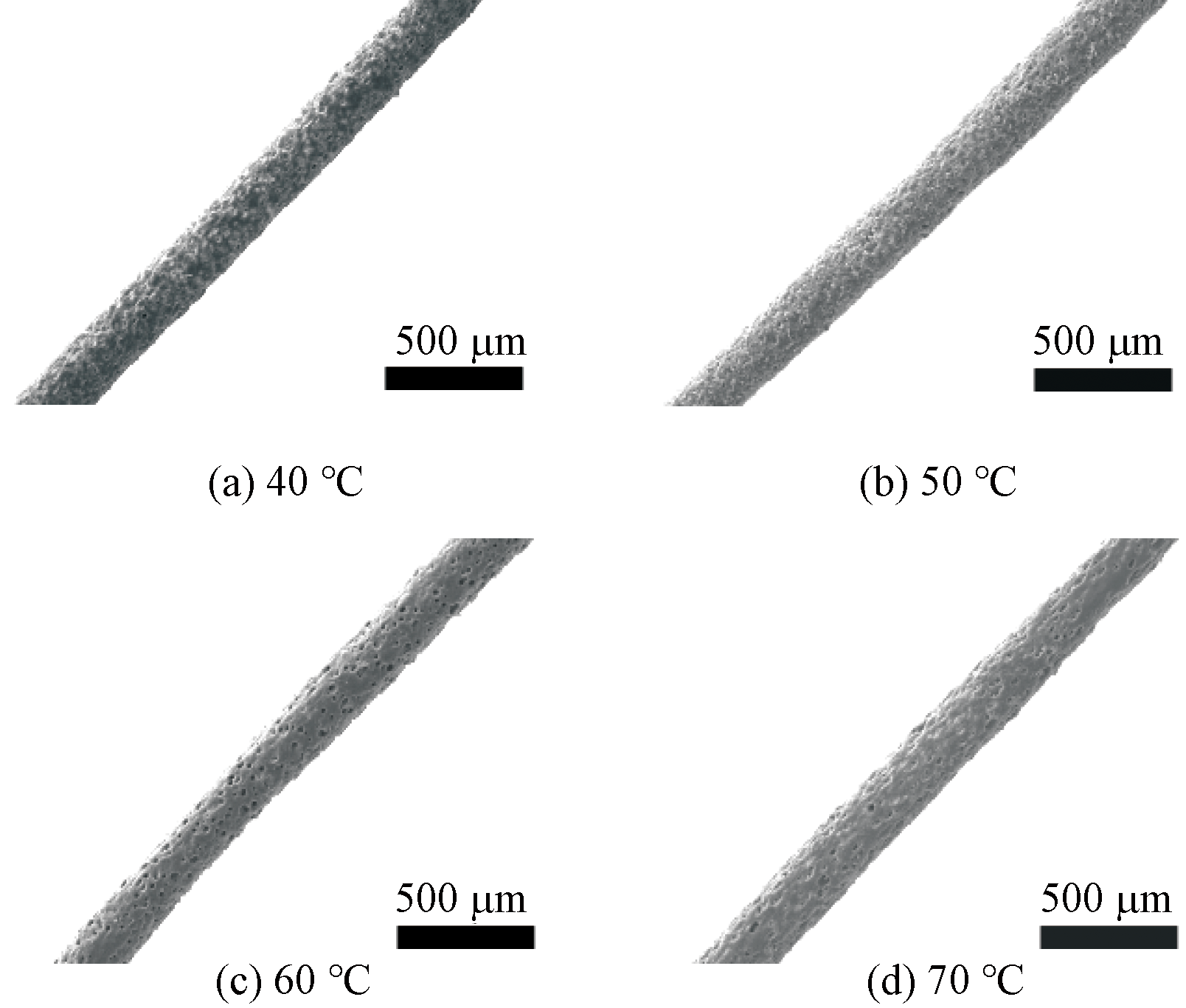
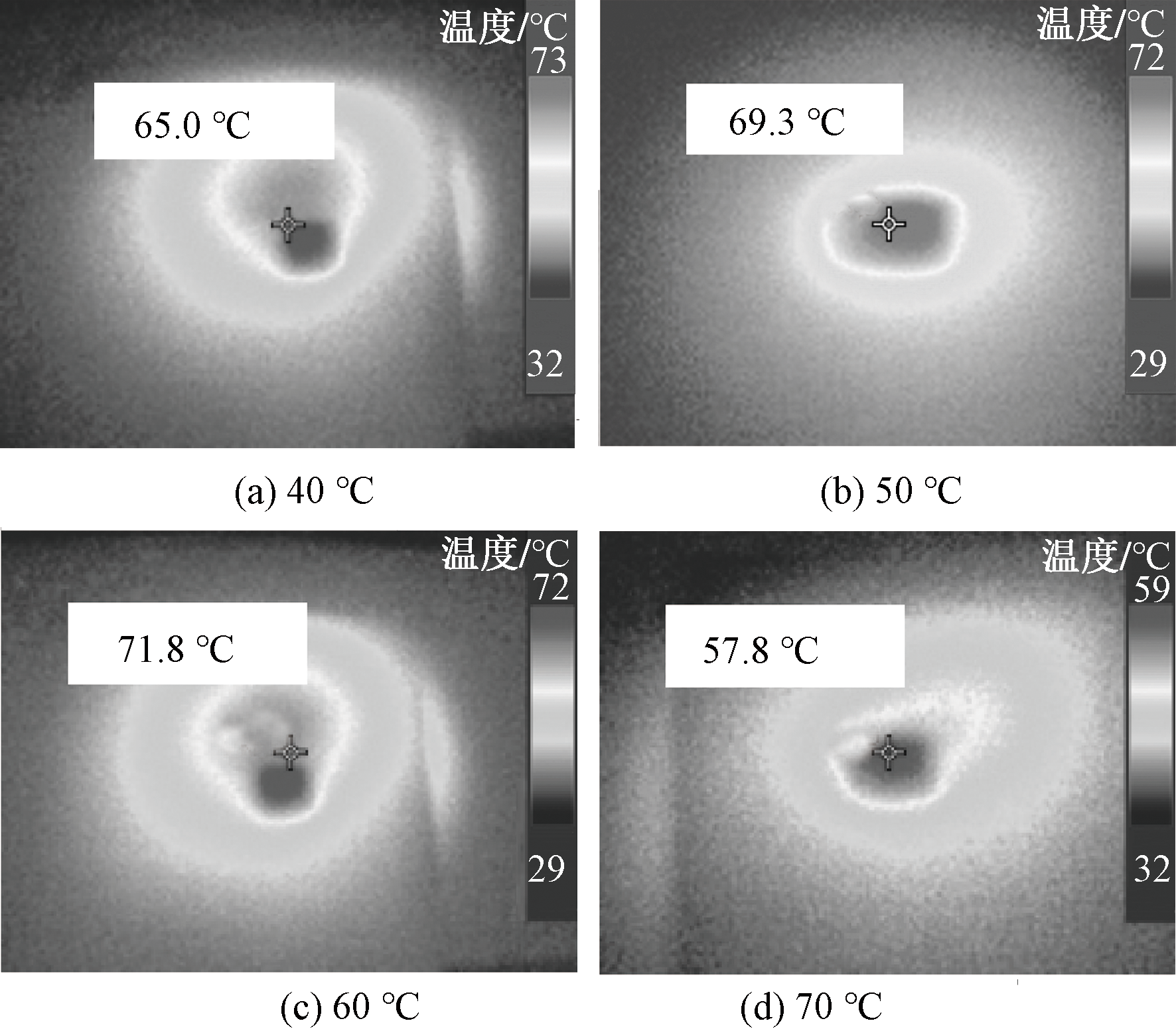
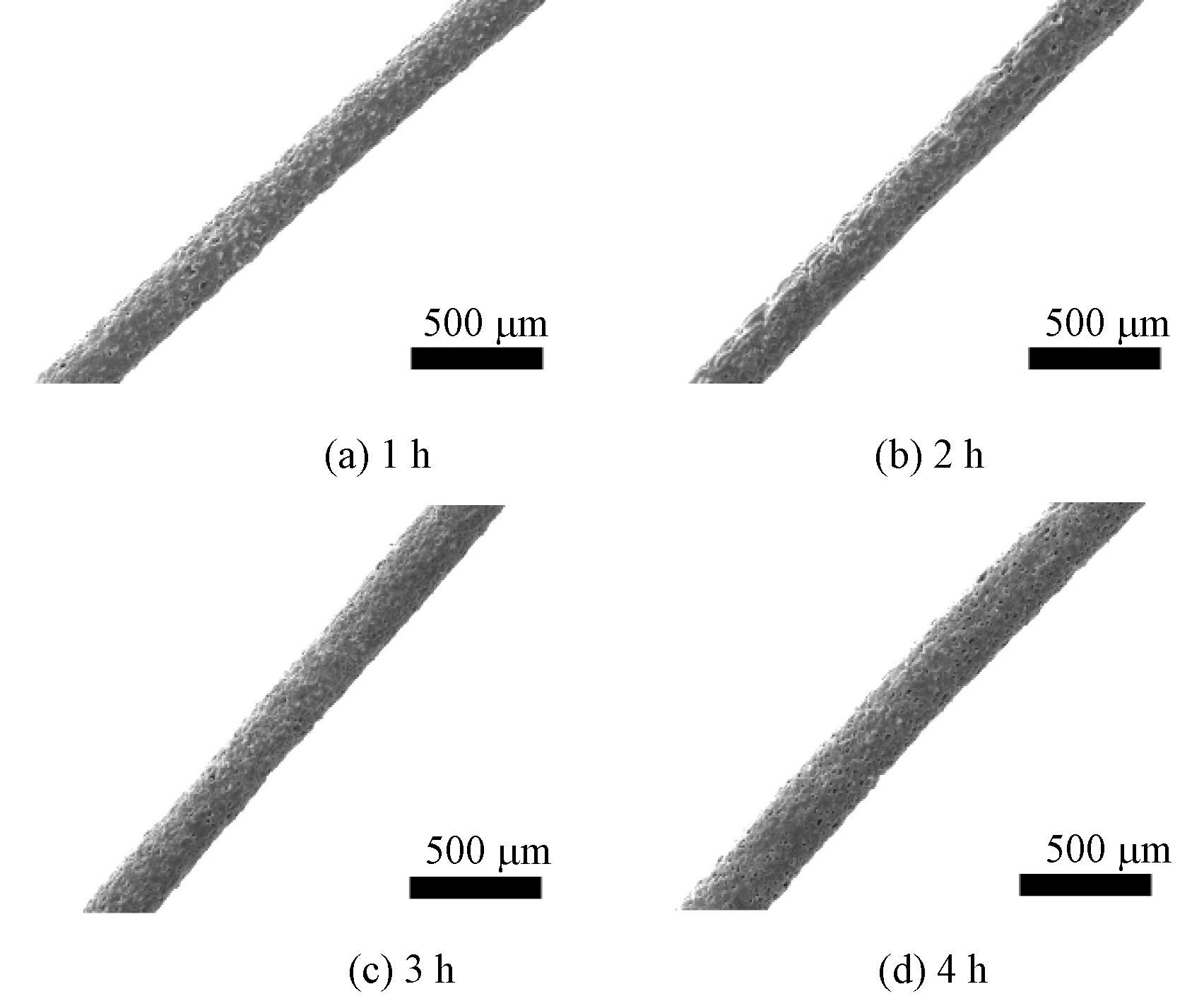
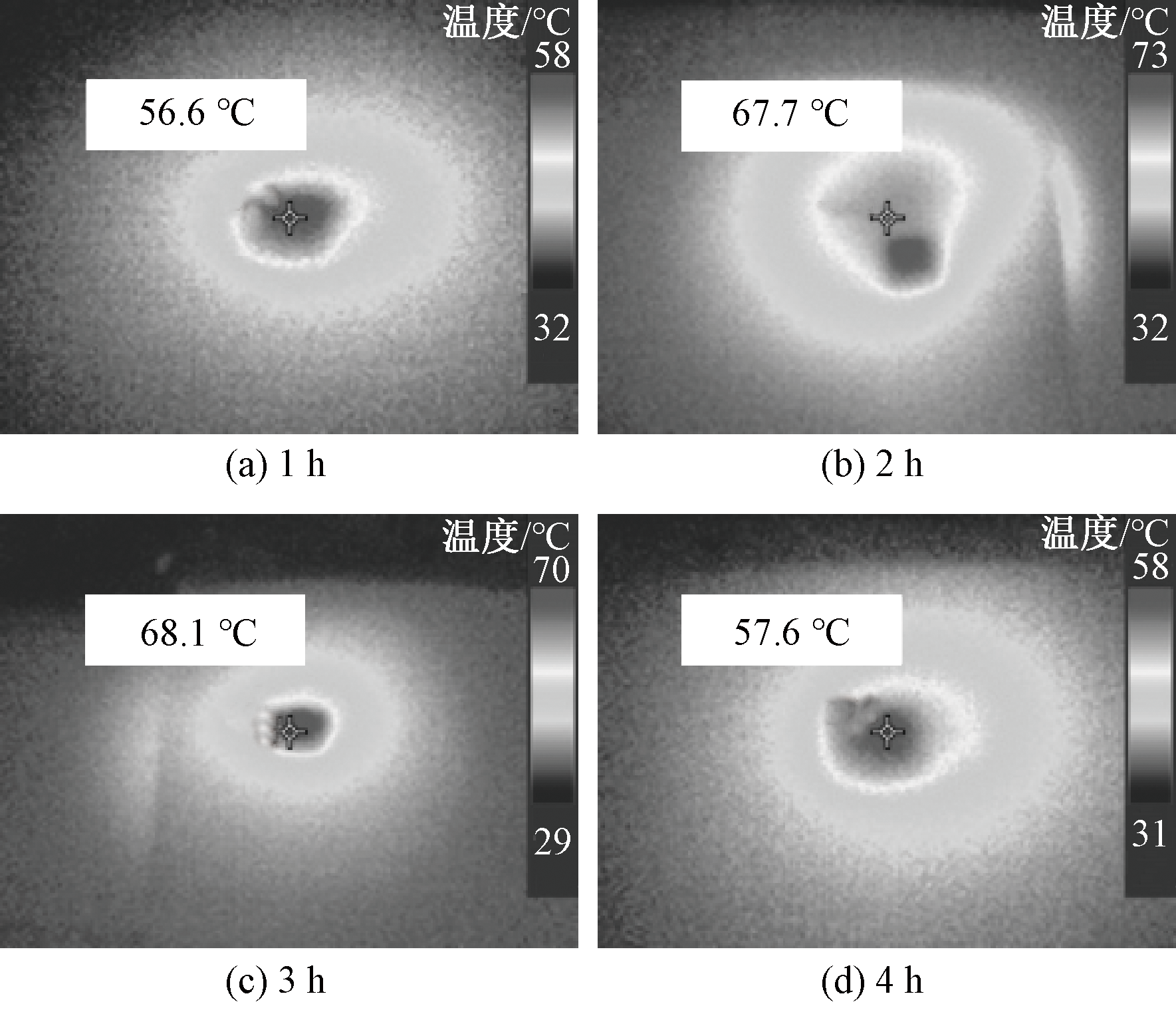
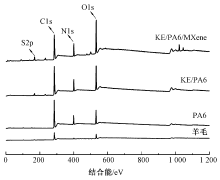
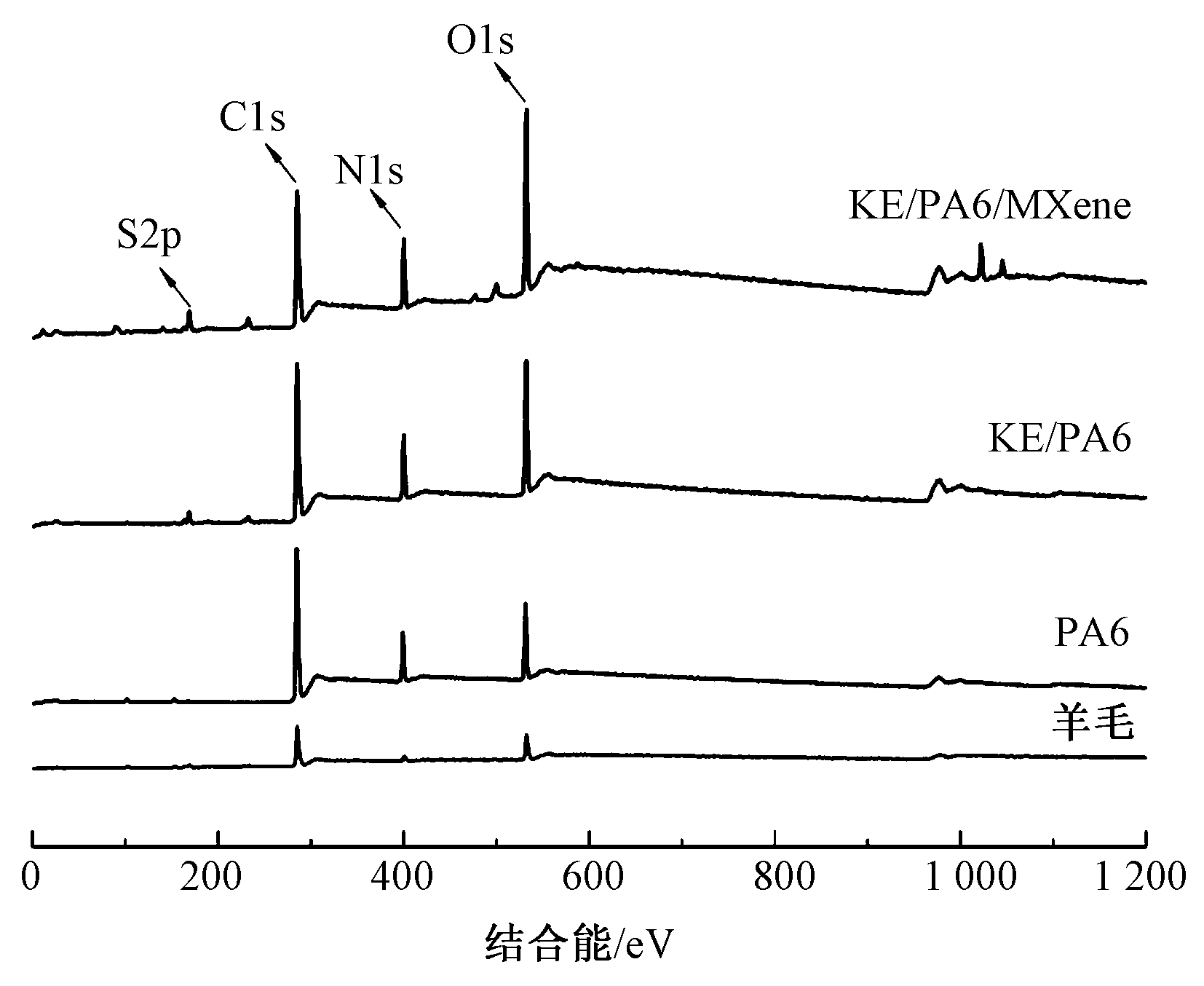
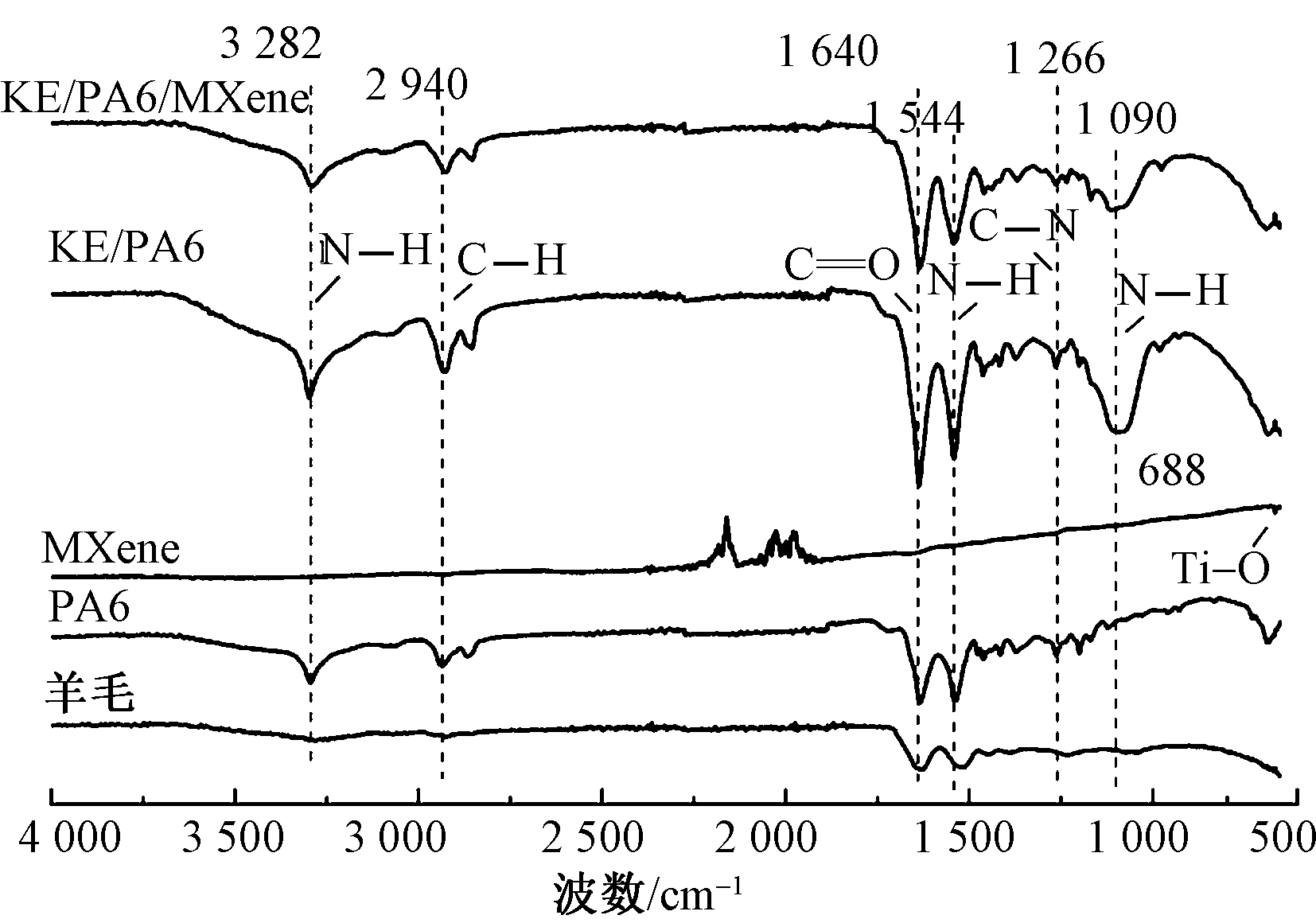
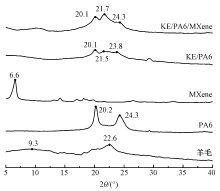
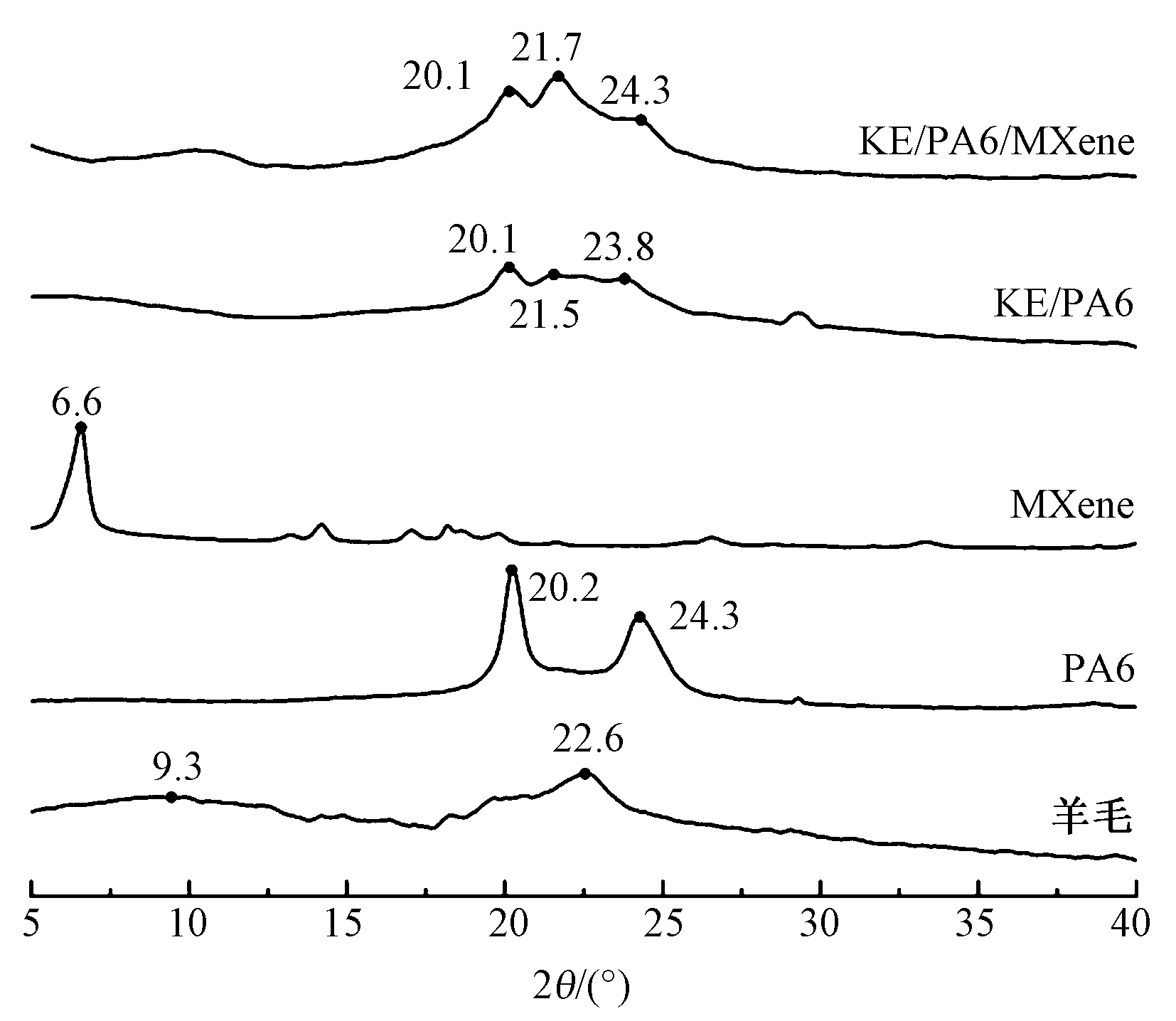
羊毛等蛋白质纤维中富含角蛋白,若能合理利用将会成为重要的天然生物质资源,但现有研究中再生角蛋白材料普遍存在利用率较低、结构及力学性能缺陷明显、功能单一等不足,严重限制其应用和推广。针对上述问题,将自制的二维过渡金属氮化物(MXene)材料引入角蛋白/聚酰胺6(PA6)共混体系制备复合纤维,在赋予角蛋白基再生纤维光热转化性能的同时,探究其对纤维结构和性能的影响,以期开发出性能优良的功能性再生角蛋白材料。首先分析了MXene材料与角蛋白/PA6共混纺丝的复合工艺条件,随后研究了复合后角蛋白基纤维的物理结构、化学特性以及光热转化性能的变化规律。得到优化的复合工艺条件:MXene质量分数为0.6%,复合温度为60 ℃,复合时间为3 h。在该条件下制得的复合纤维其光热转化性能显著提升,同时物理结构和力学性能也得到改善,复合纤维断裂强力和断裂伸长率分别达到40.44 cN和12.65%。结构分析表明,MXene与角蛋白/PA6属于物理复合,其对角蛋白基再生纤维的化学结构和结晶结构影响不显著。
中图分类号:
| [1] | 叶晋浦, 叶戬春, 丁文胜. 我国废旧纺织品循环利用发展现状与趋势[J]. 棉纺织技术, 2025, 53(11): 27-31. |
| YE Jinpu, YE Jianchun, DING Wensheng. Development status and trend of waste textiles recycling and utilization in China[J]. Cotton Textile Technology, 2025, 53(11): 27-31. | |
| [2] | 董亚琳, 王黎明, 覃小红. 废弃羊毛角蛋白再生工艺及其高值化应用的研究进展[J]. 纺织学报, 2024, 45(7): 213-222. |
| DONG Yalin, WANG Liming, QIN Xiaohong. Research progress in regeneration process and high-value applications of waste wool keratin[J]. Journal of Textile Research, 2024, 45(7): 213-222. | |
| [3] | 杨美慧, 李博, 沈艳琴, 等. 再生角蛋白凝胶对纺织退浆废水中浆料分子的吸附性能[J]. 纺织学报, 2024, 45(2): 142-152. |
| YANG Meihui, LI Bo, SHEN Yanqin, et al. Sorption properties of regenerated keratin gels to size macromolecules in textile desizing wastewater[J]. Journal of Textile Research, 2024, 45(2): 142-152. | |
| [4] | DENG L L, YUE W, ZHANG L H, et al. Biobased protic ionic liquids as sustainable solvents for wool keratin/cellulose simultaneous dissolution: solution properties and composited membrane preparation[J]. ACS Sustainable Chemistry & Engineering, 2022, 10(6): 2158-2168. |
| [5] |
BAYANMUNKH O, BAATAR B, TSERENDULAM N, et al. Fabrication of wet-spun wool keratin/poly(vinyl alcohol) hybrid fibers: effects of keratin concentration and flow rate[J]. ACS Omega, 2023, 8(13): 12327-12333.
doi: 10.1021/acsomega.3c00028 pmid: 37033852 |
| [6] |
ZHU J, MA N, LI S, et al. Reinforced wool keratin fibers via dithiol chain re-bonding[J]. Advanced Functional Materials, 2023, 33(14): 2213644.
doi: 10.1002/adfm.v33.14 |
| [7] | 宋佳薇, 洪雨婷, 李威, 等. 废弃羽毛再生角蛋白纤维的制备及其性能研究[J]. 闽江学院学报, 2024, 45(2): 101-109. |
| SONG Jiawei, HONG Yuting, LI Wei, et al. Preparation and properties of regenerated keratin fibers from waste feathers[J]. Journal of Minjiang University, 2024, 45(2): 101-109. | |
| [8] |
周苏秦, 贾潞, 石传晋, 等. 基于MXene的功能纺织复合材料[J]. 化学进展, 2024, 36(8): 1157-1173.
doi: 10.7536/PC240102 |
|
ZHOU Suqin, JIA Lu, SHI Chuanjin, et al. MXene-based functional textile composites[J]. Progress in Chemistry, 2024, 36(8): 1157-1173.
doi: 10.7536/PC240102 |
|
| [9] | 田博阳, 王向泽, 杨湙雯, 等. 非对称结构纤维膜的制备及其热调控性能[J]. 纺织学报, 2024, 45(2): 11-20. |
| TIAN Boyang, WANG Xiangze, YANG Yiwen, et al. Preparation and thermal management properties of asymmetric structured fibrous membranes[J]. Journal of Textile Research, 2024, 45(2): 11-20. | |
| [10] |
DAI H H, CHANG J, YANG J, et al. Bio-inspired interfacial engineering of MXene fibers toward synergistic improvement in mechanical strength and electrochemical performance[J]. Advanced Functional Materials, 2024, 34(11): 2312654.
doi: 10.1002/adfm.v34.11 |
| [11] | 修慧娟, 张天聪, 王芝, 等. MXene/CNF/SA双层光热转化材料的制备及其应用性能研究[J]. 陕西科技大学学报, 2023, 41(1): 14-20. |
| XIU Huijuan, ZHANG Tiancong, WANG Zhi, et al. Study on preparation and application properties of MXene/CNF/SA bilayer photothermal conversion materials[J]. Journal of Shaanxi University of Science & Technology, 2023, 41(1): 14-20. | |
| [12] | 李博, 姚金波, 牛家嵘, 等. 采用还原剂-甲酸法溶解制备羊毛角蛋白质溶液[J]. 纺织学报, 2019, 40(3): 1-7. |
|
LI Bo, YAO Jinbo, NIU Jiarong, et al. Preparation of wool keratin solution by reducing agent-formic acid process[J]. Journal of Textile Research, 2019, 40(3): 1-7.
doi: 10.1177/004051757004000101 |
|
| [13] |
LI B, SUN Y L, YAO J B, et al. Characterization of the keratin/polyamide 6 composite fiber's structure and performance prepared by the optimized spinning process based on the rheological analysis[J]. International Journal of Biological Macromolecules, 2022, 222: 938-949.
doi: 10.1016/j.ijbiomac.2022.09.229 pmid: 36183757 |
| [14] | 崔杰, 廖若涵, 张成栋, 等. 具有光热效应复合水凝胶的制备及抗菌性能[J]. 中国组织工程研究, 2026, 30(20): 5229-5242. |
| CUI Jie, LIAO Ruohan, ZHANG Chengdong, et al. Preparation and antibacterial properties of composite hydrogels with photothermal effects[J]. Chinese Journal of Tissue Engineering Research, 2026, 30(20): 5229-5242. | |
| [15] |
HAN T C, YIN Y J. Synergistic integration of MXene photothermal conversion and TiO2 radiative cooling in bifunctional PLA fabrics for adaptive personal thermal management[J]. Solids, 2025, 6(3): 37.
doi: 10.3390/solids6030037 |
| [16] | 庄群, 陈政, 陈崇城. 废弃羊毛角蛋白改性聚丙烯腈电纺纤维膜的热湿性能研究[J]. 西部皮革, 2024, 46(21): 47-50, 76. |
| ZHUANG Qun, CHEN Zheng, CHEN Chongcheng. Thermal and hygroscopic properties of polyacrylonitrile electrospun fiber membranes modified with keratin extracted from waste wool[J]. West Leather, 2024, 46(21): 47-50, 76. | |
| [17] | 杨洋, 张智淇, 曹洲, 等. 磷化MXene/聚吡咯水凝胶制备及其在微生物燃料电池中的应用[J]. 环境工程技术学报, 2025, 15(3): 1055-1064. |
| YANG Yang, ZHANG Zhiqi, CAO Zhou, et al. Preparation of phosphorized MXene/polypyrrole hydrogel and its application in microbial fuel cells[J]. Journal of Environmental Engineering Technology, 2025, 15(3): 1055-1064. | |
| [18] |
SHAVANDI A, CARNE A, BEKHIT A A, et al. An improved method for solubilisation of wool keratin using peracetic acid[J]. Journal of Environmental Chemical Engineering, 2017, 5(2): 1977-1984.
doi: 10.1016/j.jece.2017.03.043 |
| [19] |
WANG L J, NIE Y, ZHANG X P, et al. Synergistic effects of cosolvents on the dissolution of wool keratin using ionic liquids[J]. Chemical Engineering & Technology, 2016, 39(5): 979-986.
doi: 10.1002/ceat.v39.5 |
| [1] | 孟思雨, 韩宇进, 谭文丽, 马博谋, 袁久刚. 无醛交联剂改性羊毛角蛋白/海藻酸钠气凝胶复合材料的制备及其性能[J]. 纺织学报, 2026, 47(03): 18-25. |
| [2] | 薛宝霞, 冯佳昕, 邵子洋, 路佳鑫, 刘晶, 牛梅, 张利. 预交联铜离子对羧甲基纤维素抗菌气凝胶纤维结构与性能的影响[J]. 纺织学报, 2026, 47(03): 52-59. |
| [3] | 贺浩, 吴雨欣, 陈佩, 李婷婷. 用于汗液葡萄糖检测的纤维电极的制备及其性能[J]. 纺织学报, 2026, 47(02): 119-125. |
| [4] | 张苒, 祝仕玲, 王栋, 刘琼珍, 陆莹. 硫化铋/碳纳米管/聚偏二氟乙烯复合温度传感纤维的制备与性能[J]. 纺织学报, 2026, 47(02): 18-25. |
| [5] | 魏建斐, 魏艳颖, 马超慧, 胡晓鹏, 邴琳涵, 樊瑜, 林彬泽, 董振峰, 朱志国, 王锐. 碳点的宏量制备及其对聚酰胺66阻燃与力学性能协同增强机制[J]. 纺织学报, 2026, 47(02): 37-46. |
| [6] | 王彬, 侯泽明, 徐英俊, 王玉忠. 高阻燃性再生纤维素纤维的制备及其性能[J]. 纺织学报, 2026, 47(02): 47-55. |
| [7] | 刘一鸣, 李琳, 杜鲜晶, 刘攀, 殷霞, 田明伟. 内螺旋结构弹性导电纱线的制备及其应变不敏感性能的调控[J]. 纺织学报, 2026, 47(01): 115-122. |
| [8] | 陈克林, 李卓, 王晓歌, 李成晋, 胡建臣, 张克勤. 微流控湿法纺丝制备基于聚羟基脂肪酸酯的光致变色纤维及其性能[J]. 纺织学报, 2026, 47(01): 46-53. |
| [9] | 邓晶, 王蕊宁, 孙润军, 张亚娟, 郭海冰, 雷轲. 用于脉搏监测的海藻酸钠改性水性聚氨酯/液态金属导电传感纤维[J]. 纺织学报, 2025, 46(12): 74-82. |
| [10] | 张慧杰, 李登宇, 周轩, 李秀艳, 汪滨, 徐泉. 磺化聚醚醚酮基铁铬液流电池隔膜的制备及其性能[J]. 纺织学报, 2025, 46(12): 83-91. |
| [11] | 王瀚文, 李万鑫, 李晨, 喻麟洁, 王文庆, 董振峰, 魏建斐, 朱志国, 王锐. 金属氯化物对聚酰胺66氢键调控及力学性能的影响[J]. 纺织学报, 2025, 46(11): 9-18. |
| [12] | 陈世昌, 娄顺月, 陈文兴. 面向熔体直纺的聚酰胺6降膜脱挥增黏反应过程模拟[J]. 纺织学报, 2025, 46(10): 1-10. |
| [13] | 李雨洁, 王承勤, 王伟, 袁如超, 俞建勇, 李发学. 聚酰胺6基弹性体及其并列弹性纤维的制备及其性能[J]. 纺织学报, 2025, 46(09): 46-56. |
| [14] | 梁锋, 方沿, 张伟华, 唐余玲, 李双洋, 周建飞, 石碧. 基于金属-多酚网络的胶原蛋白基纤维制备及其力学性能[J]. 纺织学报, 2025, 46(08): 10-17. |
| [15] | 王清清, 廖师琴, 魏取福. 光电双响应纱线应变传感器的制备及其性能[J]. 纺织学报, 2025, 46(08): 71-79. |
|
||
 京公网安备11010502044800号