Journal of Textile Research ›› 2025, Vol. 46 ›› Issue (01): 52-61.doi: 10.13475/j.fzxb.20230806601

• Textile Engineering • Previous Articles     Next Articles

Composite structures and properties of quadratically-fed covered yarns

AO Limin1,2(), PAN Liufei3, TANG Wen4, FANG Ruifeng1   

  1. 1. College of Materials and Textile Engineering, Jiaxing University, Jiaxing, Zhejiang 314001, China
    2. Key Laboratory of Yarn Material Forming and Composite Processing Technology, Jiaxing, Zhejiang 314001, China
    3. College of Textile Science and Engineering (International Institute of Silk), Zhejiang Sci-Tech University, Hangzhou, Zhejiang 310018, China
    4. College of Business, Jiaxing University, Jiaxing, Zhejiang 314001, China
  • Received:2023-08-30 Revised:2024-06-29 Online:2025-01-15 Published:2025-01-15

Abstract:

Objective This research investigates the combination patterns and corresponding composite multi-yarns that can be produced using hollow spindle wrapping technology. It explores the techniques for achieving diverse combination patterns, as well as the influence of these composite structures on the appearance, tensile properties, and structural stability of the resulting composite yarn.

Method Beginning with the mechanism exploration of the hollow spindle system for preparing wrapping composites, the study analyzes feeding requirements and methods. It also examines the twist direction when utilizing multiple sets of hollow spindles, aiming to diversify the composite structures through varied feeding methods and twist direction adjustments. By taking four yarns as an example, the research analyzes the combination patterns and structures produced under various configurations of hollow spindle numbers, yarn feeding methods, and wrapping twist directions. Four different colored polyester textured yarns served as raw materials to create covered yarns with distinct composite structures, which were subsequently tested and compared concerning their appearance, tensile properties, and structural stability.

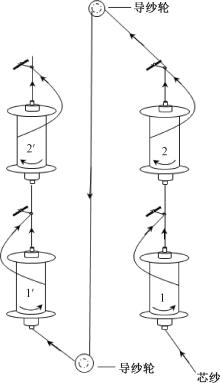
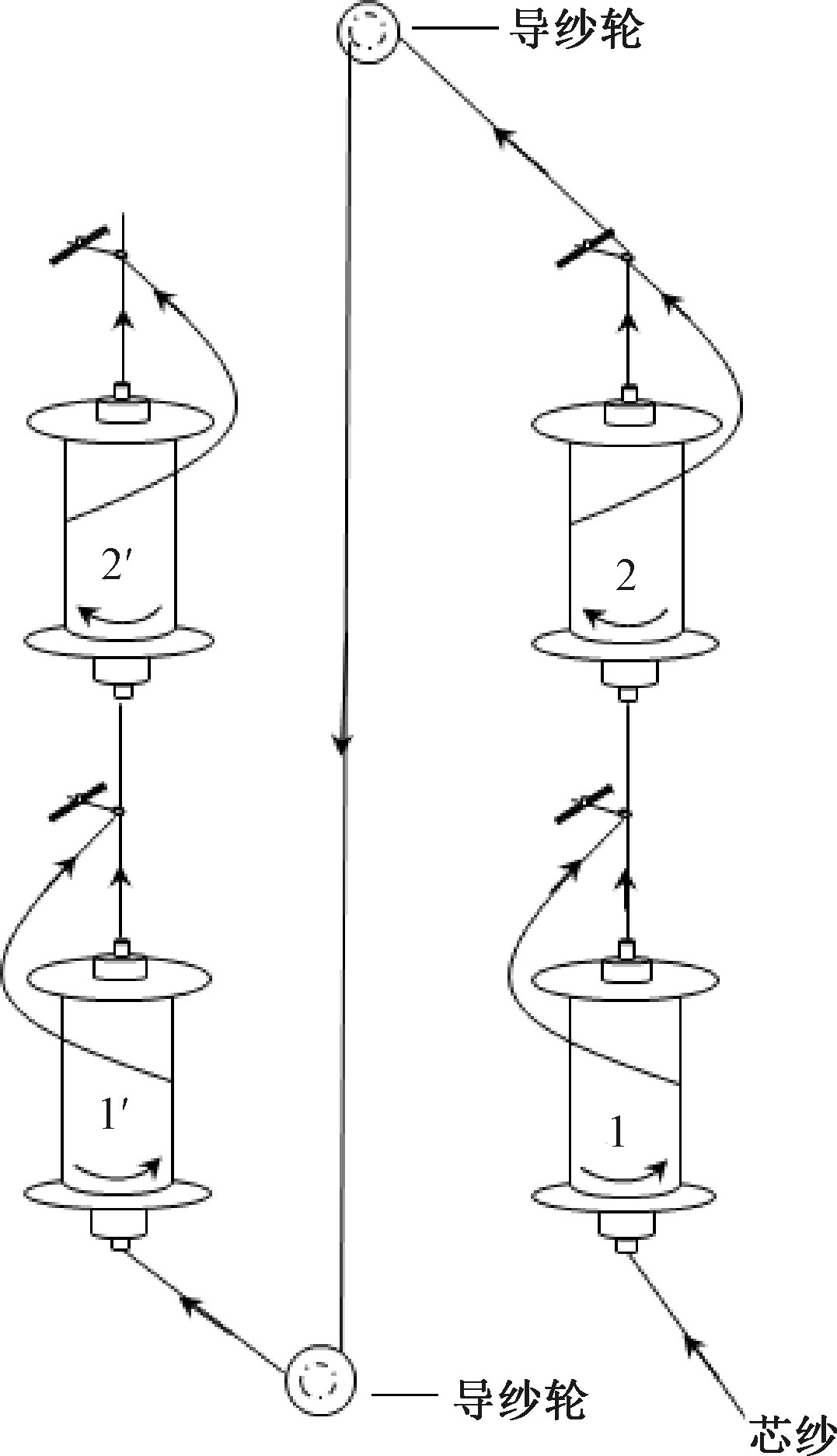
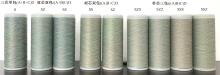
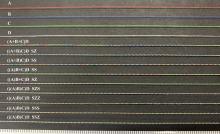
Results The analysis of the feeding and output characteristics of the hollow spindle system revealed performance requirements for both the core and outer wrapping of a cover yarn, and two basic rules regarding yarn feeding were derived: 1) the feeding of the core yarn was not limited to a single strand; 2) additional core yarn could be introduced after the first set of hollow spindles. The study presented methods for expressing combination patterns and structures based on varying wrapping times, feeding methods, and twist directions. Four combination patterns and nine distinct composite structures were identified, including ″three-core single-wrapping″, ″two-core twice-wrapping″, ″additional-core twice-wrapping″, and ″single-core triple-wrapping″. These structures were produced by employing different yarn feeding techniques and configurations of wrapping twist direction when utilizing one, two, or three sets of hollow spindles. Additionally, methodologies for feeding additional core yarns and guiding the yarn for achieving triple wraps were provided using existing hollow spindle covering machines, enabling the production of nine specified composite yarn structures. A comparative analysis of appearance and color mixing characteristics, along with covering effects, was conducted based on photographs of the yarn bobbins and the nine composite yarns. The tensile performance results and snarl indexes of both the four types of raw yarns and the nine kinds of composite yarns were presented and analyzed.

Conclusion The hollow spindle covering technology allows for wrapping multiple yarns in a single processing. By varying the number of hollow spindles, yarn feeding methods, and twist direction configurations, a range of composite methods and structures have been achieved, resulting in composite yarns with distinct appearances (covering effects) and properties. The first set of hollow spindles can accommodate one or multiple core yarns, while the subsequent spindles may also introduce ″additional core yarns″, thus facilitating greater structural diversity. Owing to the differences in composite structures, significant variations exist in the appearance, tensile performance, and structural stability of the composite yarns. Feeding more than one core yarn and additional core yarn can produce a segmented color effect, although wrapped twice may diminish this characteristic. Additionally, the strength utilization rate of composite yarns with the ″single-core triple-wrapping″ is lower than that of other structural configurations, while those with the last two wraps twisting in opposing directions demonstrate stable structures and low snarl indexes. By carefully selecting combination patterns and optimizing wrapping twists, it is possible to achieve composite structures and performance that meet diverse requirements.

Key words: covered yarn, combination pattern, combination structure, quadratically-fed, tensile property, structural stability

CLC Number: 

  • TS104.1

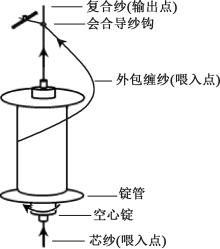
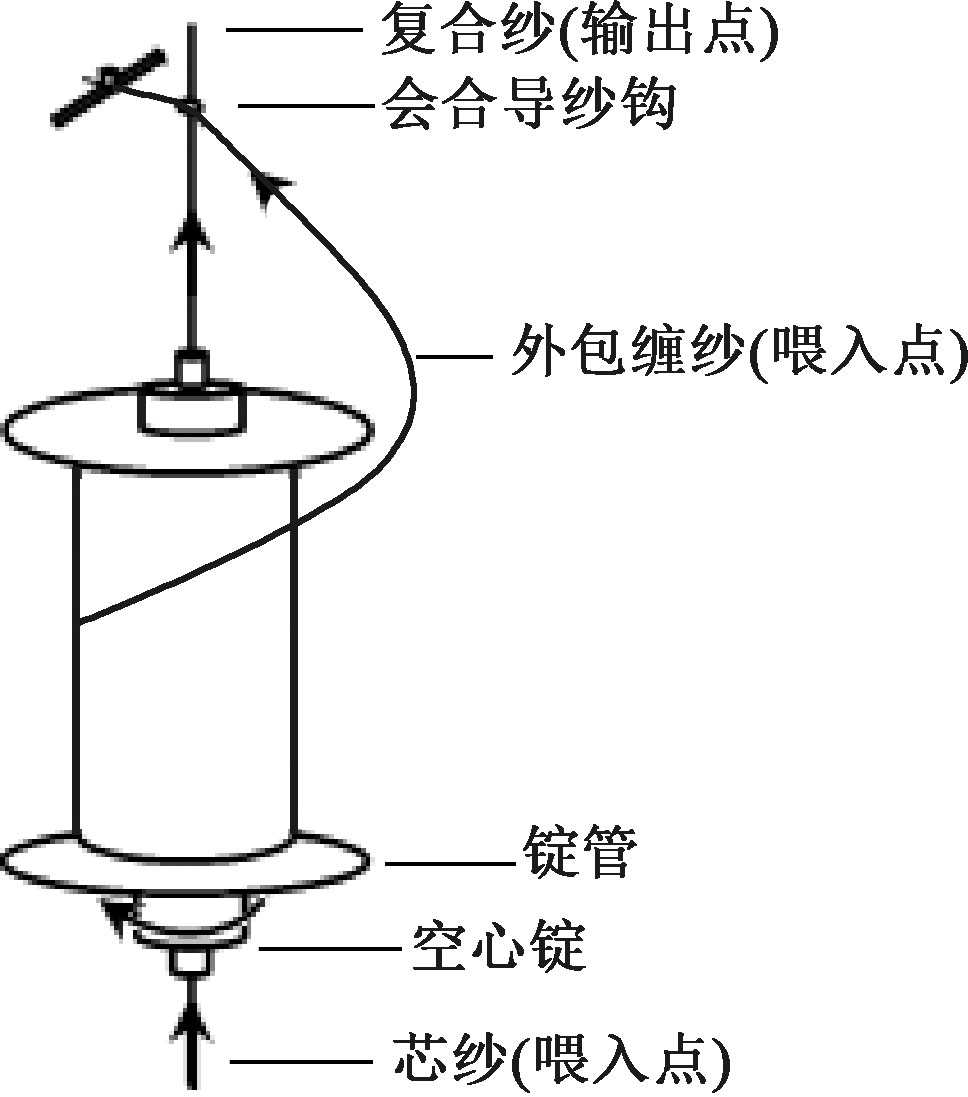
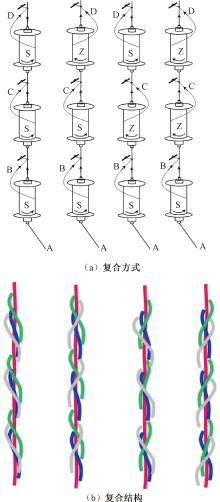
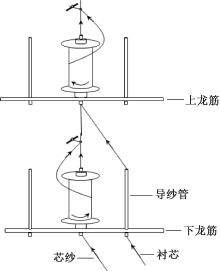
Fig.1

Hollow spindle wrapping combination system"

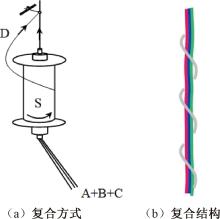
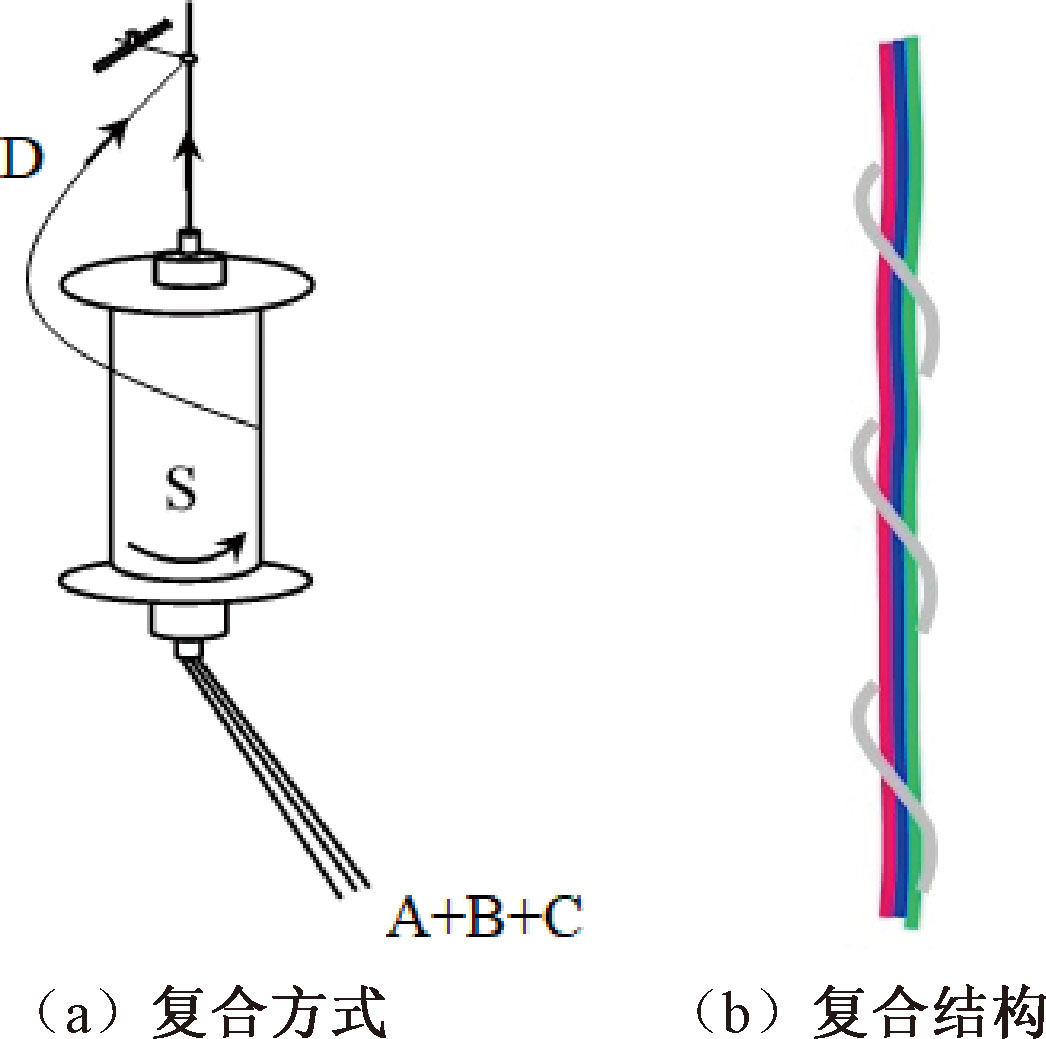
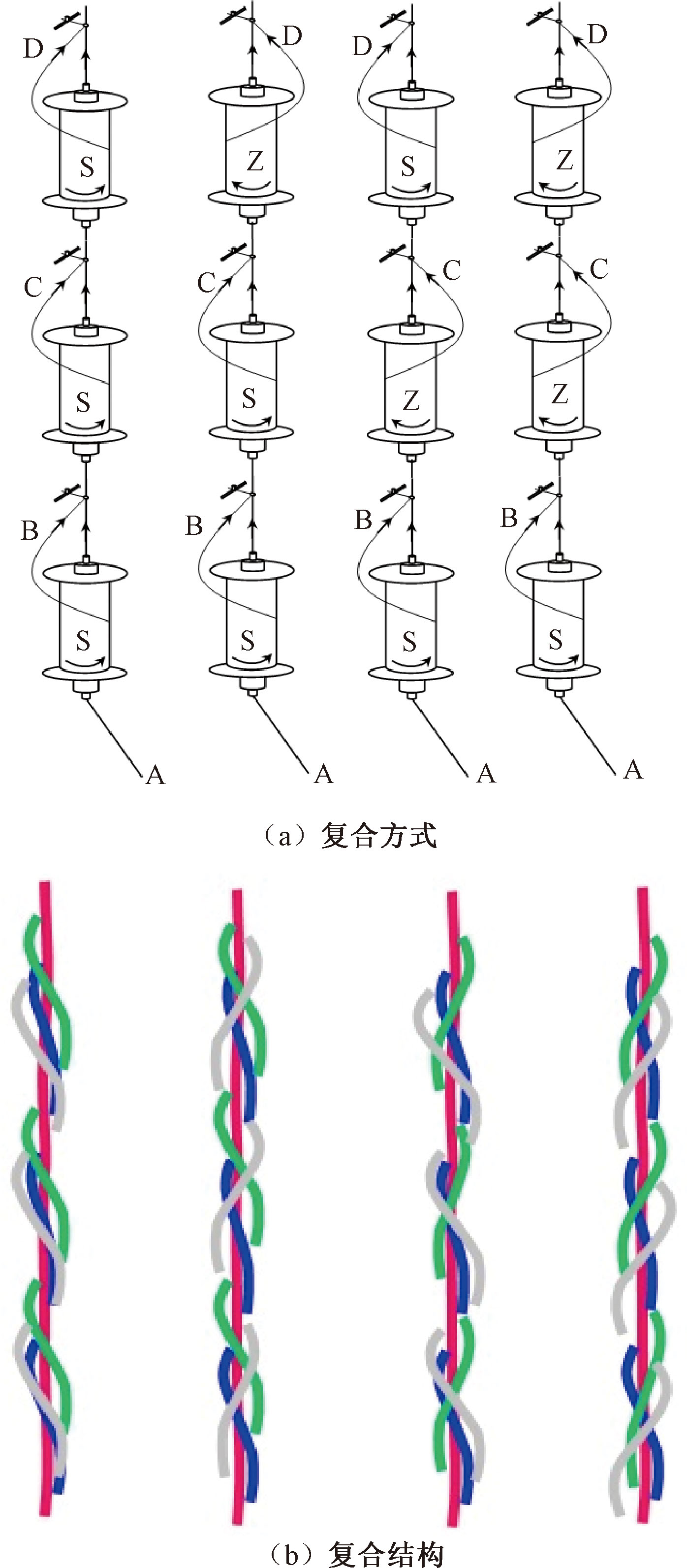
Fig.2

Combination pattern (a) and structure (b) of three-core single-wrapping"

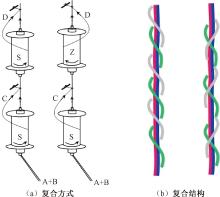
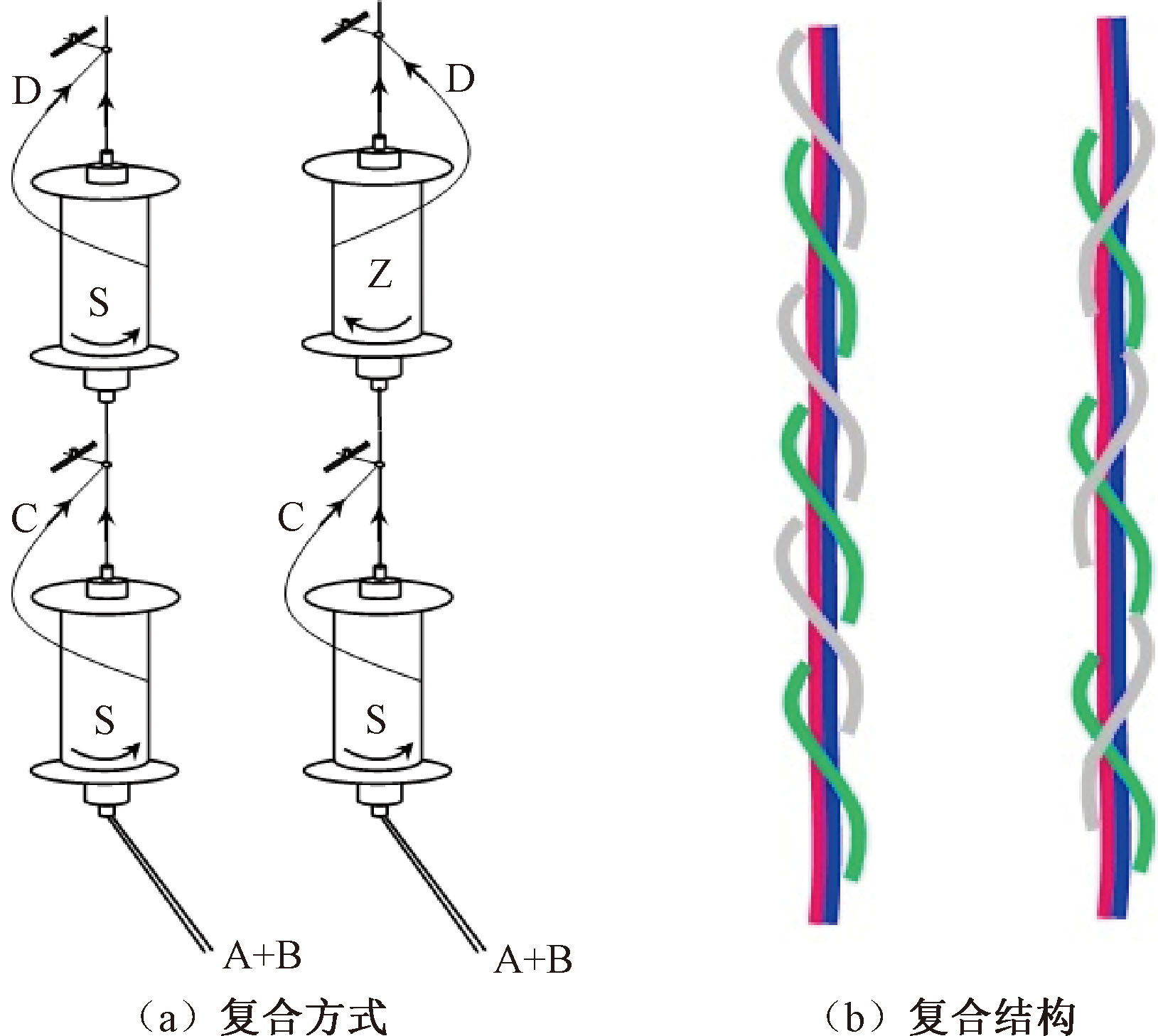
Fig.3

Combination pattern (a) and structure (b) of two-core twice-wrapping"

Fig.4

Composite pattern (a) and structure (b) of additional-core twice-wrapping"

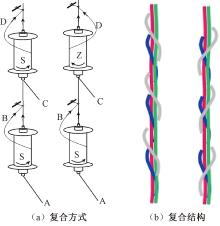
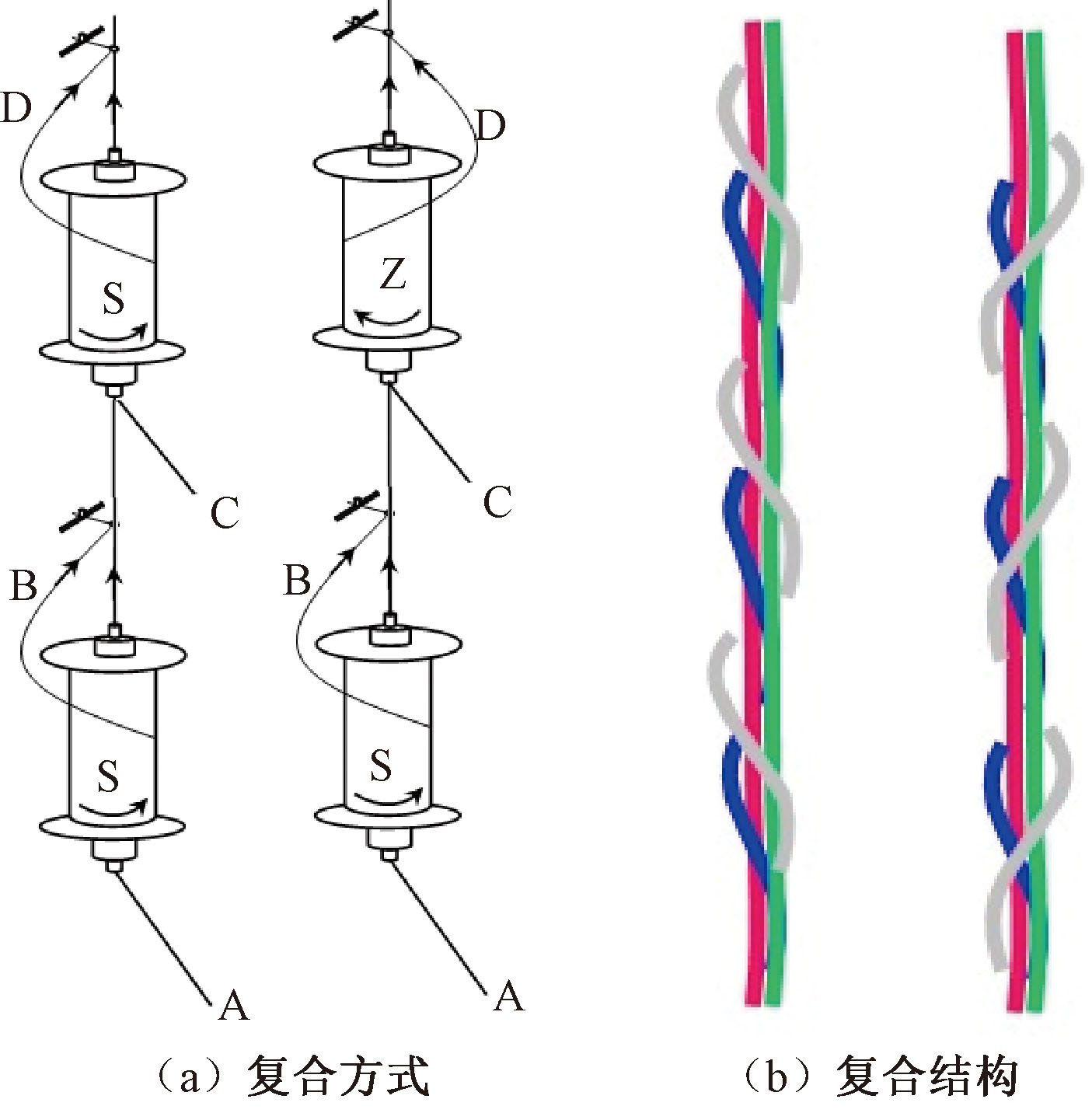
Fig.5

Composite pattern (a) and structure (b) of single-core triple-wrapping"

Tab.1

Number of yarns"

纱线编号 复合方式/结构 捻向配置
1# 三芯单包(A+B+C)D S
2# 双芯双包((A+B)C)D SZ
3# SS
4# 衬芯双包((A)B+C)D SS
5# SZ
6# 单芯三包(((A)B)C)D SZS
7# SZZ
8# SSS
9# SSZ

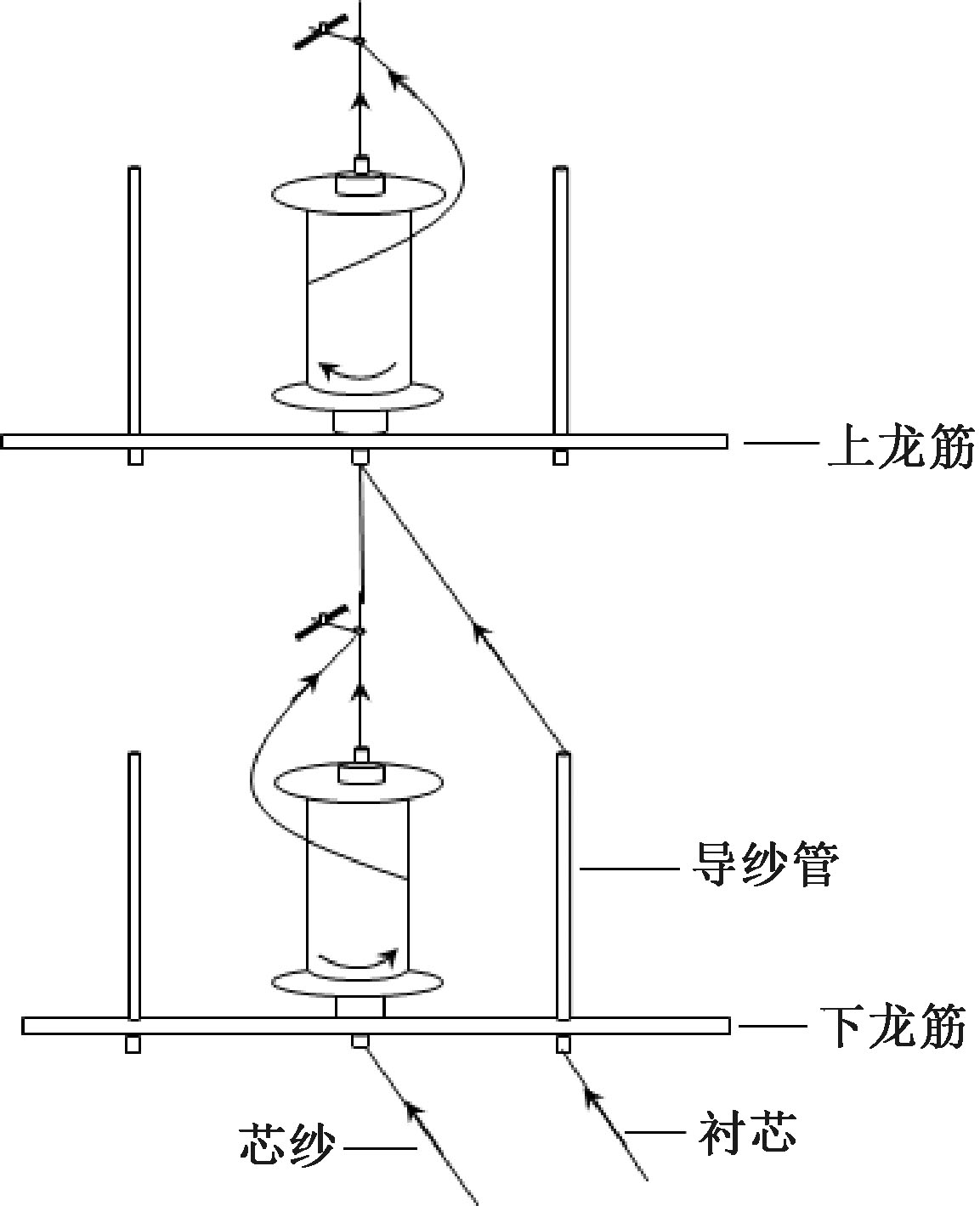
Fig.6

Feeding method of additional core yarn"

Fig.7

Yarn drawing method of triple-wrapping"

Fig.8

Photos of composite bobbin yarns"

Fig.9

Photo of raw yarns and composite yarns"

Tab.2

Test results of tensile mechanical performance of composite yarns"

纱线
编号
断裂
强力/cN
断裂强力
CV值/%
强力
利用率
断裂
伸长率/%
断裂伸长
率CV值/%
A 381 3.16 22.88 5.96
B 367 3.49 23.35 5.86
C 516 2.50 21.54 4.99
D 398 3.65 21.18 6.86
1# 1 736 2.59 1.04 27.84 6.51
2# 1 640 4.76 0.99 26.52 10.88
3# 1 729 4.41 1.04 28.96 9.93
4# 1 758 2.26 1.06 29.00 6.47
5# 1 683 4.21 1.01 26.65 10.58
6# 1 507 5.16 0.91 25.32 13.17
7# 1 517 2.72 0.91 25.57 11.90
8# 1 569 4.09 0.94 27.99 11.12
9# 1 554 4.28 0.93 28.35 10.25

Tab.3

Test results of snarl indexes of composite yarns"

纱线
编号
扭结指数均值/
(捻·(250 mm)-1)
CV值/% 扭结捻向
1# 20.7 1.9 Z
2# 0.2 0.4 S
3# 38.8 3.8 Z
4# 31.5 1.1 Z
5# 11.5 0.9 S
6# 1.9 0.4 Z
7# 23.6 2.2 S
8# 37.2 3.9 Z
9# 4.0 0.6 Z
[1] 于伟东. 纺织材料学[M]. 2版. 北京: 中国纺织出版社,2018:210-212.
YU Weidong. Textile material[M]. 2nd ed. Beijing: China Textile & Apparel Press, 2018: 210-212.
[2] 郁崇文. 纺纱学[M]. 3版. 北京: 中国纺织出版社,2019:211.
YU Chongwen. Spinning[M]. 3rd ed. Beijing: China Textile & Apparel Press, 2019: 211.
[3] 敖利民, 唐雯, 姜银玲. 亚麻长麻/涤纶长丝复合纱的纺制及其性能比较[J]. 纺织学报, 2019, 40(11):38-44.
AO Limin, TANG Wen, JIANG Yinling. Spinning and performance comparison of line flax/polyester multifilament composite yarns[J]. Journal of Textile Research, 2019, 40(11): 38-44.
[4] 敖利民, 唐雯. 空心锭包覆纺纱的顺向包缠作用特征[J]. 纺织学报, 2021, 42(11):39-45.
AO Limin, TANG Wen. Characteristics of forward wrapping of hollow spindle covered spinning[J]. Journal of Textile Research, 2021, 42(11): 39-45.
[5] 敖利民, 楼焕, 唐雯. 空心锭包覆纺纱的芯纱残留捻回及其应用[J]. 纺织学报, 2022, 43(7):41-46.
AO Limin, LOU Huan, TANG Wen. Residual twist of core yarn and its application in hollow spindle cover spinning[J]. Journal of Textile Research, 2022, 43(7): 41-46.
[6] 敖利民, 唐雯. 捻度和捻向配置对双包包覆纱性能的影响[J]. 纺织学报, 2023, 44(7):50-56.
AO Limin, TANG Wen. Effects of twist and twist direction arrangement on properties of double covered yarns[J]. Journal of Textile Research, 2023, 44(7): 50-56.
[7] 盛翠红, 张一心, 潘峰, 等. 一种纱线捻度稳定性测试装置及方法研究[J]. 棉纺织技术, 2014, 42(2):59-62.
SHENG Cuihong, ZHANG Yixin, PAN Feng, et al. One yarn twist stability test instrument and method research[J]. Cotton Textile Technology, 2014, 42(2): 59-62.
[8] 王增喜. 短纤维纱线捻度稳定性的评价及其影响因素的研究[J]. 化纤与纺织技术, 2014, 43(4):22-27.
WANG Zengxi. Study on evaluation and influencing factors of yarn twist stability of staple fiber[J]. Chemical Fiber & Textile Technology, 2014, 43 (4):22-27.
[9] 敖利民, 唐雯.一种包缠复合混色段彩长丝纱的加工方法及长丝纱及装置:201810728810.7[P]. 2019-09-20.
AO Limin, TANG Wen.A processing method and filament yarn and device for wrapping composite mixed color segment colored filament yarn: 201810728810.7[P]. 2019-09-20.
[10] 黄伟, 汪军. 复合纱线结构对单纱强力利用率的影响与分析[J]. 纺织学报, 2017, 38(2):99-105.
HUANG Wei, WANG Jun. Influence of composite yarn's structures on yarn strength efficiency[J]. Journal of Textile Research, 2017, 38 (2): 99-105.
[1] ZHANG Qi, TU Jiani, ZHANG Yanting, DING Ningyu, HAO Jiashu, PENG Shiyu. Influence of jacquard layer structure of warp knitted jacquard spacer shoe-upper materials on tensile properties [J]. Journal of Textile Research, 2024, 45(08): 150-157.
[2] JIA Bingfan, AO Limin, TANG Wen, ZHENG Yuansheng, SHANG Shanshan. Processing of wool yarn/polyamide filament covered yarns and their properties and applications [J]. Journal of Textile Research, 2023, 44(12): 58-66.
[3] WANG Yaqian, WAN Ailan, ZENG Deng, WU Guangjun, QI Qian. Preparation of shape memory polyurethane/polyamide covered yarn and properties of compression socks [J]. Journal of Textile Research, 2023, 44(10): 53-59.
[4] LI Jiugang, JIN Xinpeng, DENG Wentao, QIN Xue, ZHANG He, HUANG Cong, LIU Keshuai. Influence of number and twist of alumina yarn on its tenacity [J]. Journal of Textile Research, 2023, 44(10): 48-52.
[5] ZHANG Hua, LIU Shuai, YANG Ruihua. Tensile property modelling of composite core/sheath yarn with double filaments [J]. Journal of Textile Research, 2023, 44(08): 57-62.
[6] AO Limin, TANG Wen. Influences of twist and twist direction arrangement on properties of double covered yarns [J]. Journal of Textile Research, 2023, 44(07): 50-56.
[7] ZHOU Mengmeng, JIANG Gaoming. Preparation and tensile properties of glass fiber weft-knitted biaxial tubular fabrics [J]. Journal of Textile Research, 2023, 44(07): 132-140.
[8] CHENG Yue, ZUO Han, AN Qi, LI Dawei, ZHANG Wei, FU Yijun. Holding force of non-absorbable barbed sutures and its influencing factors [J]. Journal of Textile Research, 2023, 44(06): 66-71.
[9] CHEN Xiaoming, REN Zhipeng, ZHENG Hongwei, WU Kaijie, SU Xingzhao, CHEN Li. A method for improving mechanical properties of needled fabrics based on synergy of pre-needling and main needling [J]. Journal of Textile Research, 2023, 44(04): 100-107.
[10] SUN Xiaolun, CHEN Li, ZHANG Yifan, LI Mohan. Tensile properties of 3-D woven composites with holes [J]. Journal of Textile Research, 2022, 43(08): 74-79.
[11] WANG Xiaohui, LIU Guojin, SHAO Jianzhong. Biomimetic structural coloration of textiles [J]. Journal of Textile Research, 2021, 42(12): 1-14.
[12] WANG Xiaohui, LI Yichen, LIU Guojin, TANG Zuping, ZHOU Lan, SHAO Jianzhong. Preparation and optical properties of flexible photonic crystal film for structural colors [J]. Journal of Textile Research, 2021, 42(02): 12-20.
[13] XIONG Xiangzhang, PEI Zeguang, CHEN Ge. Study on actuating force of knit actuator based on covered yarn with shape memory alloy wire as core [J]. Journal of Textile Research, 2020, 41(05): 50-57.
[14] LIU Junling, SUN Ying, CHEN Li. Axial tensile properties of three-dimensional woven composites with variant structure [J]. Journal of Textile Research, 2019, 40(12): 162-168.
[15] WANG Xinmiao, CHEN Li, ZHANG Diantang, CHEN Dong. Micro-structure and properties of multilayer multiaxial woven composites [J]. Journal of Textile Research, 2019, 40(02): 45-52.
Viewed
Full text


Abstract

Cited

  Shared   
  Discussed   
No Suggested Reading articles found!