Journal of Textile Research ›› 2025, Vol. 46 ›› Issue (04): 215-225.doi: 10.13475/j.fzxb.20240801601

• Machinery & Equipment • Previous Articles     Next Articles

Modeling of driving force for pressure plate sewing robot based on flexural deformation

LI Shun1,2, JIA Yanjun1,2(), LI Xinrong1,2, FENG Wenqian1,2, WEN Jiaqi1,2   

  1. 1. School of Mechanical Engineering, Tiangong University, Tianjin 300387, China
    2. Shaoxing Keqiao Institute of Tiangong University, Shaoxing, Zhejiang 312030, China
  • Received:2024-08-12 Revised:2024-12-02 Online:2025-04-15 Published:2025-06-11
  • Contact: JIA Yanjun E-mail:jiayanjun@tiangong.edu.cn

Abstract:

Objective To address the issues of crooked deformation and shear deformation in cut pieces caused by inadequate driving force and platen size, as well as the frequent need to replace the platen during the sewing process where the platen presses against the cut pieces, this study investigates the linear movement of the platen during this sewing process. The aim is to establish relationships between cut piece parameters, driving force size, and platen size, and to subsequently enhance the quality of cut piece sewing.

Method The study employed the energy conservation method to analyze the buckling deformation process of the cut piece, and established models for the minimum driving force and the critical buckling size of the cut piece, based on the nonlinear bending characteristics during buckling. The shear deformation of the cut piece on both sides of the platen was examined and a model was developed to calculate the maximum driving force under critical conditions on both sides. The models were validated through finite-element simulation analysis and experiments.

Results The minimum driving force model presented in this paper provides the minimum force required for the platen to press the cut piece during straight-line sewing without causing bending deformation. The factors influencing this minimum driving force included the initial sharp angle of the sewing needle α, the thickness of the cut piece Z, the proportionality coefficient K, the friction coefficient between the cut piece and the sewing table μ, and the weight of the cut piece m1, all of which were found positively correlated with the minimum driving force. The maximum driving force model offers the maximum driving force value to prevent shear deformation during sewing. It was found that the maximum driving force of the platen was mainly positively correlated with parameters such as the coefficient of friction between yarns μ2, bending stiffness of the cut piece Ez, width of the yarns w, and the weight of the cut piece m1. The maximum driving force was negatively correlated with parameters including the length of the yarns PY between two intersections of warp and weft yarns, the width of the single-cell model S, and the angle θ between the shear force Fs and the upward closing force Fl. The critical buckling size model provides a basis for selecting the appropriate platen size. The critical buckling size was mainly positively related to parameters such as the initial sharp angle of the sewing needle α, bending stiffness of the cut piece B, thickness of the cut piece Z, and the angle γ between the moving direction of the platen and the direction of the cut piece's buckling. The critical buckling size was proved to be negatively correlated with the forcing torque M0, the total mass of the cut piece m1, and the friction coefficient between the cut piece and the sewing table μ. Finally, by comparing the theoretical data with the data obtained from simulation and experimentation, the correctness of the theoretical data was confirmed, further validating the driving force model and the critical buckling model.

Conclusion The establishment of the driving force model provides a range of driving force values for the platen to press the cut piece during the sewing process, ensuring that the cut piece does not undergo bending deformation or shear deformation. This avoids the deformation issues that arise from inadequate driving force during sewing. The critical buckling size model offers a basis for selecting the appropriate platen size, mitigating problems such as bending deformation and frequent platen replacement due to improper platen size during the sewing process. Compared to traditional empirical methods for selecting driving force and platen size, the development of these models addresses issues related to cropping deformation, wrinkles, and platen size selection in mobile sewing, significantly improving the sewing quality and efficiency of cut pieces.

Key words: sewing robot, garment processing, cut piece for garment, driving force model, buckling deformation, sewing quality

CLC Number: 

  • TS941.61

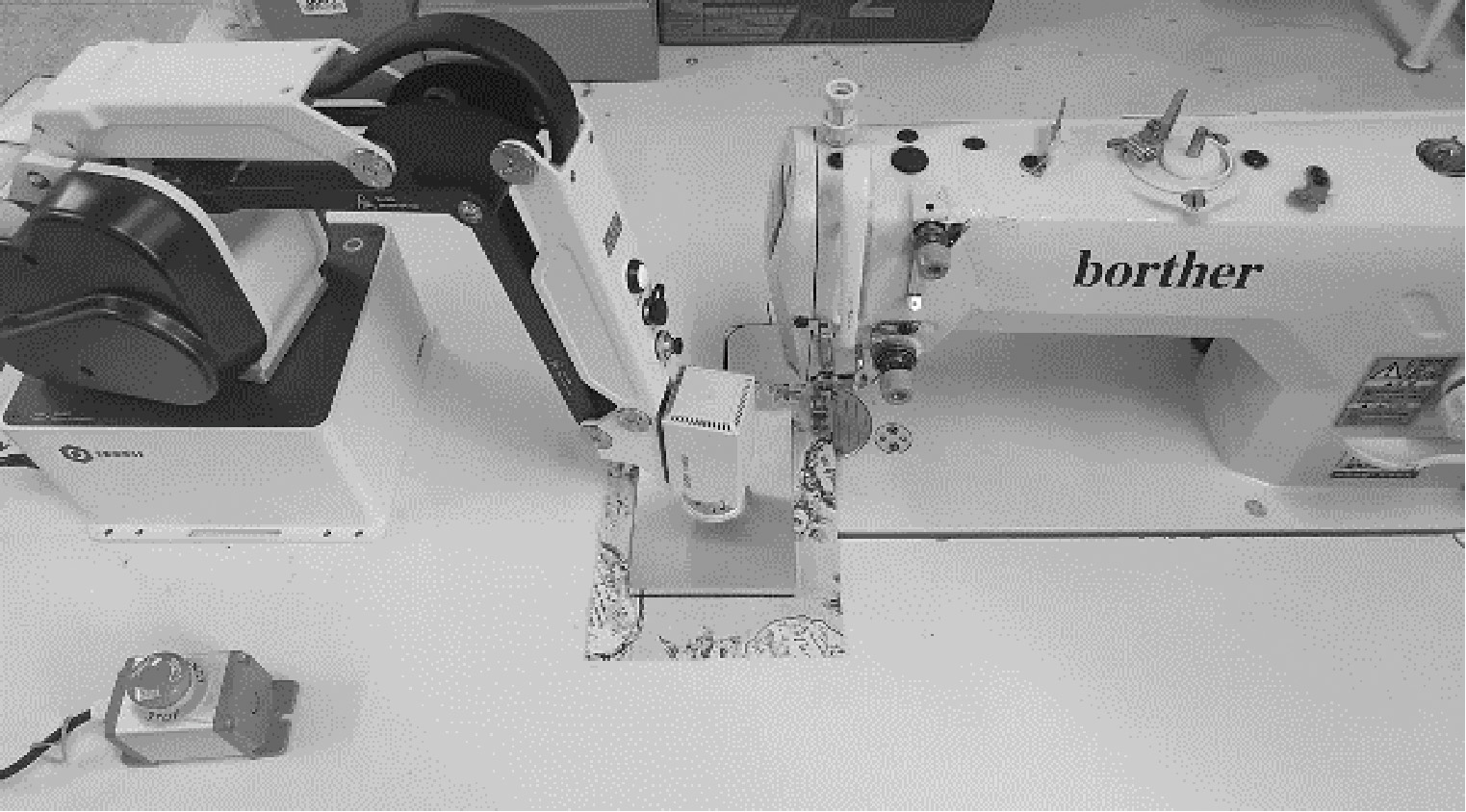
Fig.1

Presser plate to press cut pieces together"

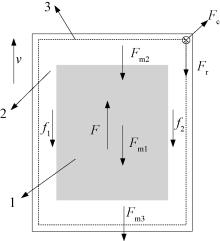
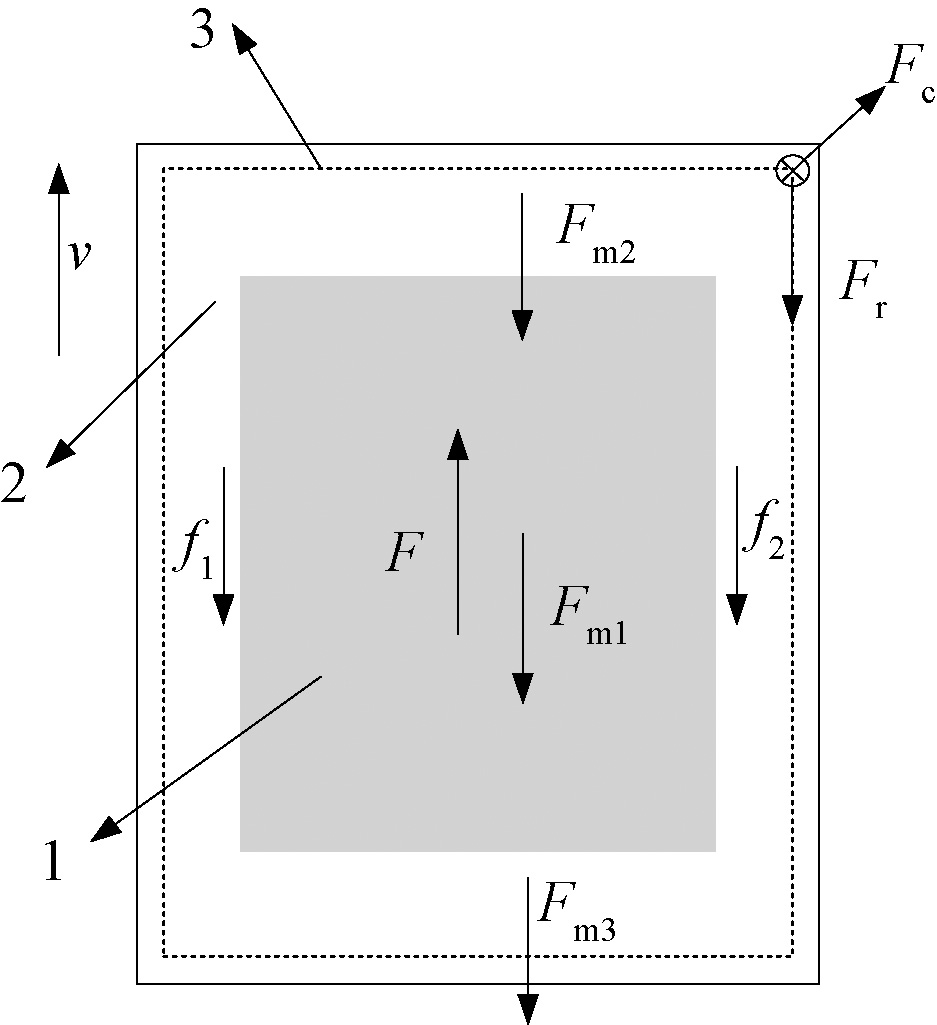
Fig.2

Force analysis of cut piece"

Fig.3

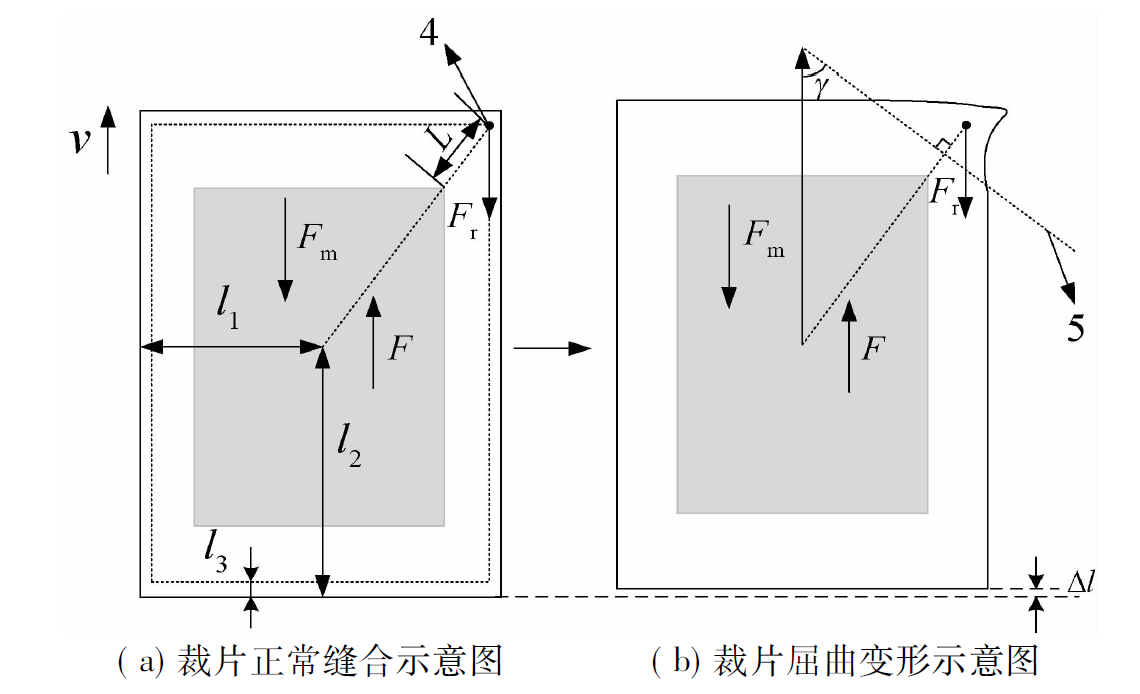
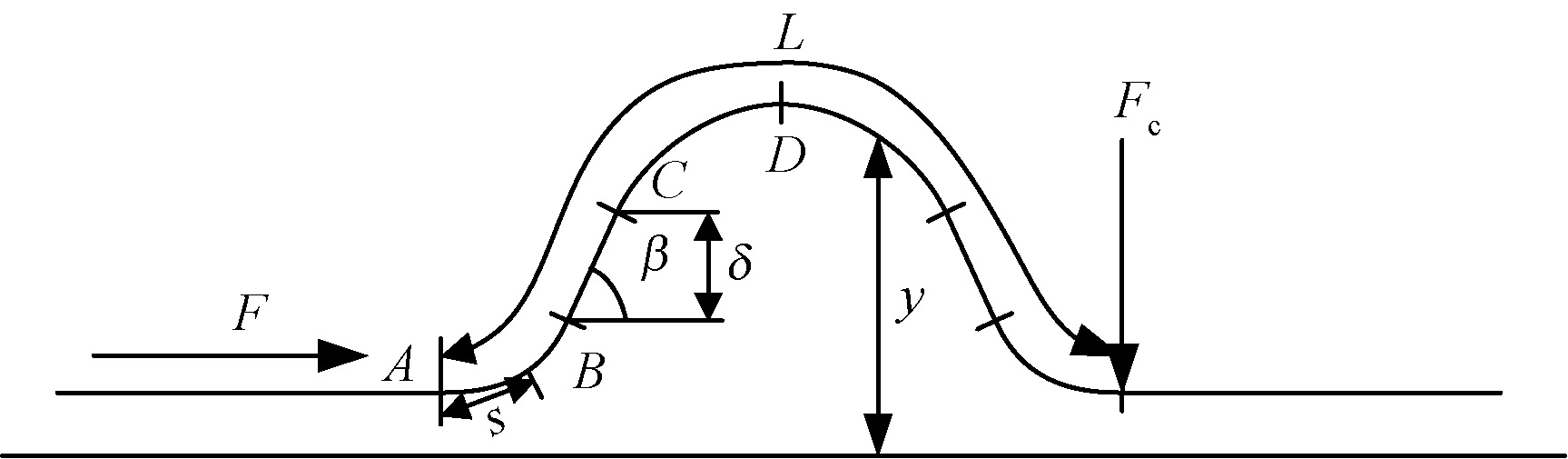
Buckling deformation during sewing of cut-piece. (a) Schematic diagram of normal sewing of cut piece; (b) Schematic diagram of bending and deformation of cut piece"

Fig.4

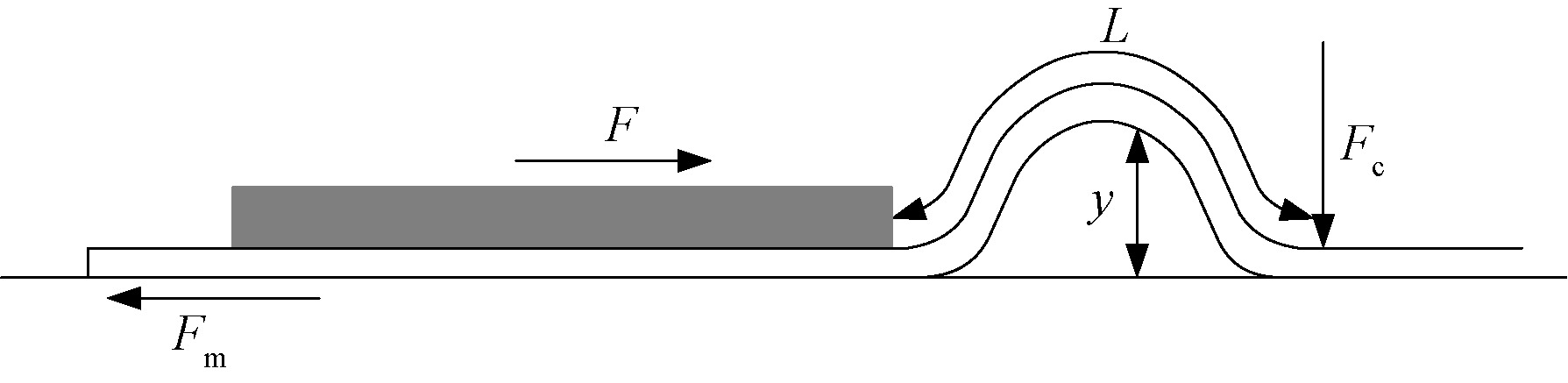
Schematic diagram of crop flexing"

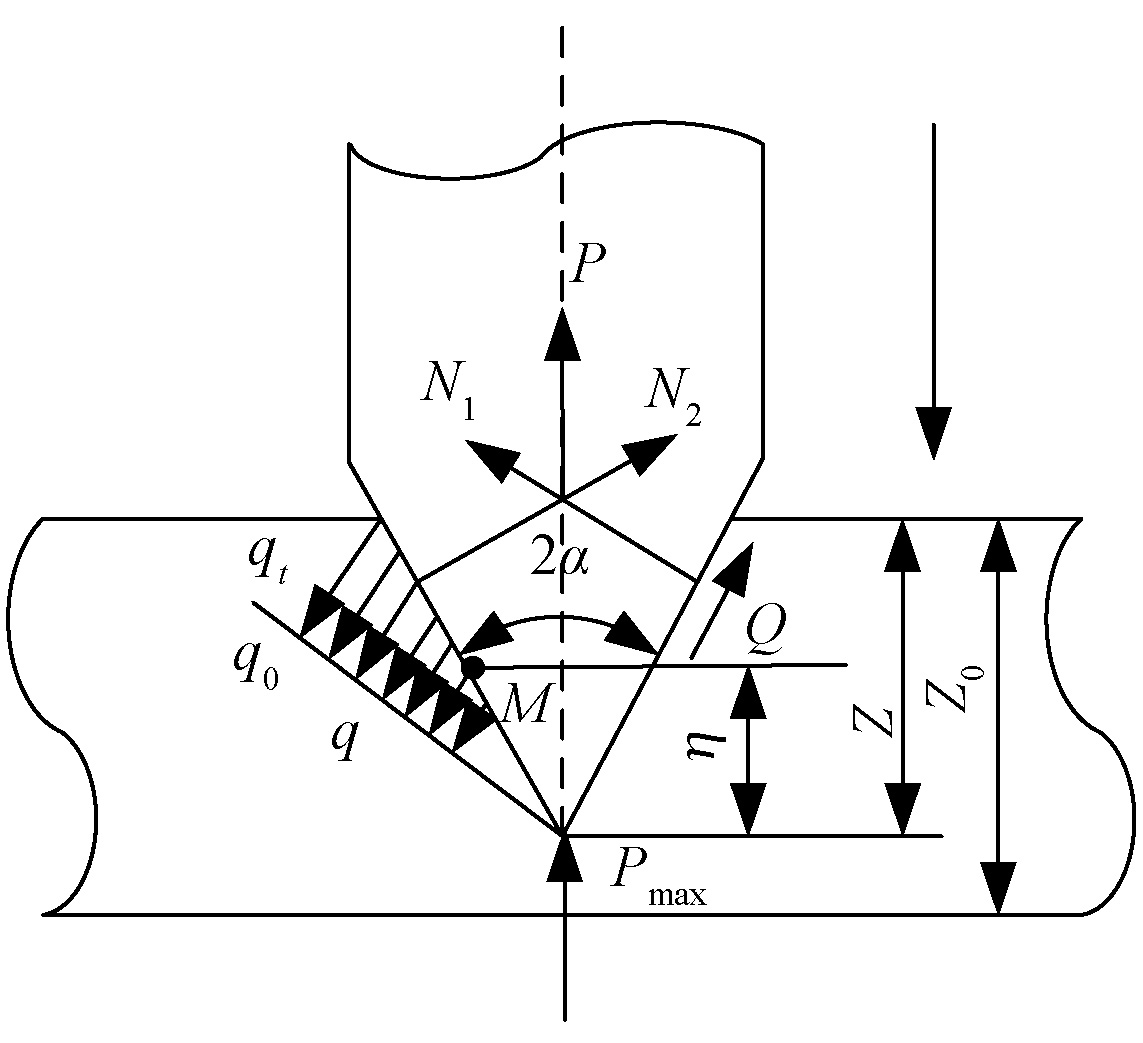
Fig.5

Analysis of resistance when sewing needle piercing cut piece"

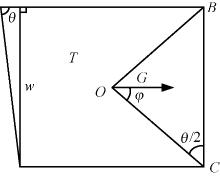
Fig.6

Buckling model of cut piece"

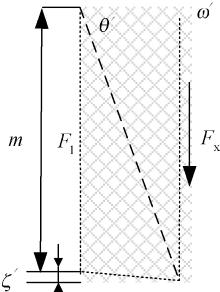
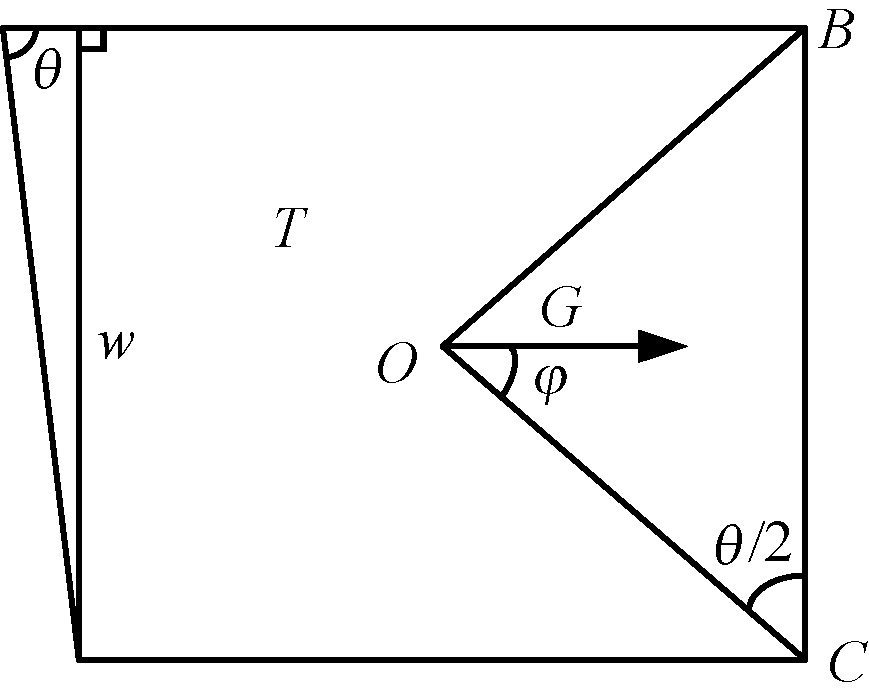
Fig.7

Schematic diagram of shear deformation of cut piece"

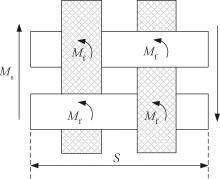
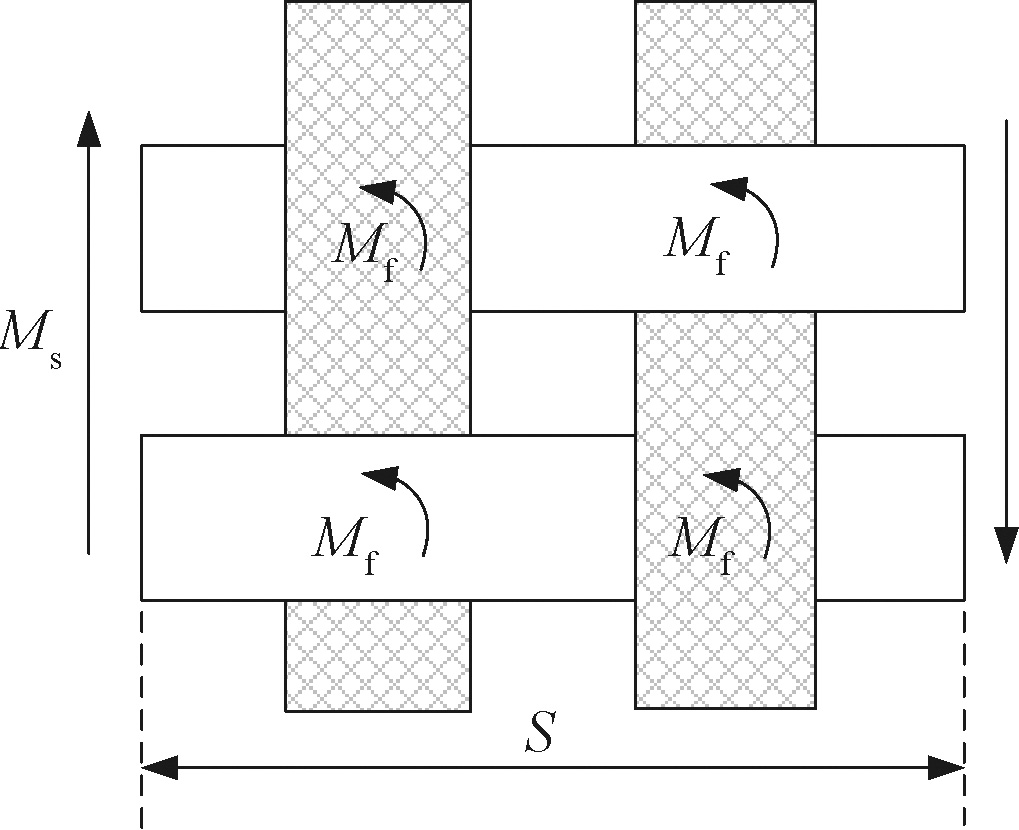
Fig.8

Single cell model of plain weave cut piece"

Fig.9

Interwoven areas of warp and weft yarns"

Tab.1

Attributes of experimental artifact"

材料 面密度/(kg·m-2) 弹性模量/GPa 泊松比
缝纫针 7 850 200 0.3
压板 270 270 0.33
橡胶 95 000 1 500 0.47

Tab.2

Platen parameters"

试样编号 材料 尺寸/mm 厚度/mm 质量/g
1 铝合金 132×97 6 207.42
2 铝合金 136×100 6 220.32
3 铝合金 140×103 6 233.60
4 铝合金 144×106 6 247.28

Fig.10

Grid division results"

Fig.11

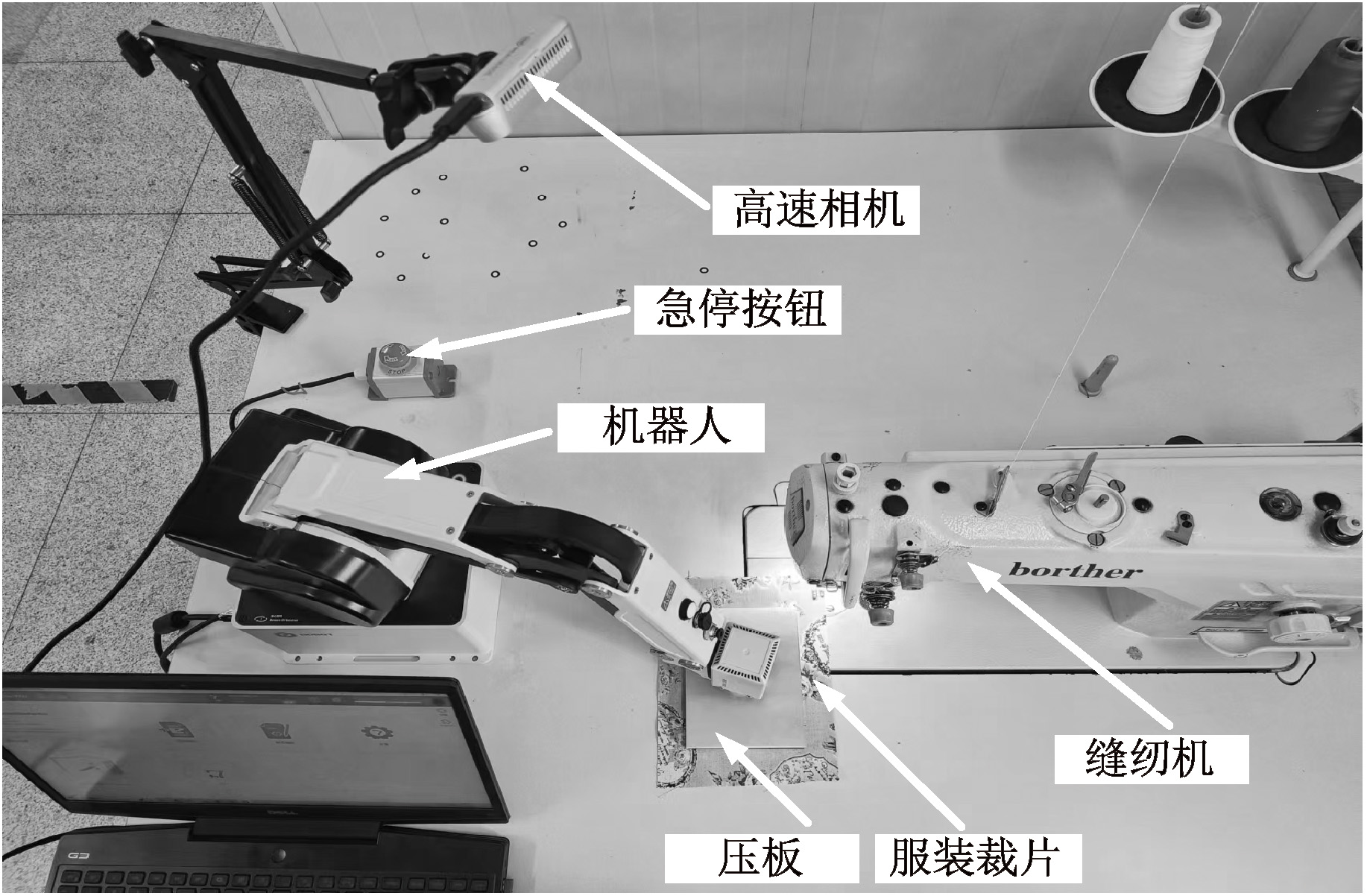
Experimental platform for moving sewing by pressing cutting piece with presser"

Tab.3

Parameters of plain cut sheet"

试样
编号
密度/(根·(10 cm)-1) 面密度/
(g·m-2)
弯曲刚度/
(cN·mm2·mm-1)
质量/
g
厚度/
mm
纱线间摩
擦因数
橡胶与裁片
间摩擦因数
纬向断裂
强力/N
经向断裂
强力/N
经密 纬密
1# 602 295 105.8 0.660 3 194.56 0.196 0.293 0.628 440 580
2# 560 322 108.0 0.828 0 208.35 0.199 0.272 0.654 450 610
3# 595 301 112.9 0.984 8 262.23 0.287 0.238 0.617 460 620
4# 640 302 114.6 1.018 0 226.67 0.212 0.244 0.624 470 660

Tab.4

Theoretical values for mathematical modeling of driving force and critical buckling dimensions"

试样编号 L/mm L1/mm L2/mm Fmin/cN Fmax/cN
1# 30.03 105.96 143.96 46.53 282.36
2# 32.64 102.80 139.78 51.69 285.49
3# 32.79 102.66 139.54 52.47 285.97
4# 34.83 100.20 136.28 57.18 289.58

Fig.12

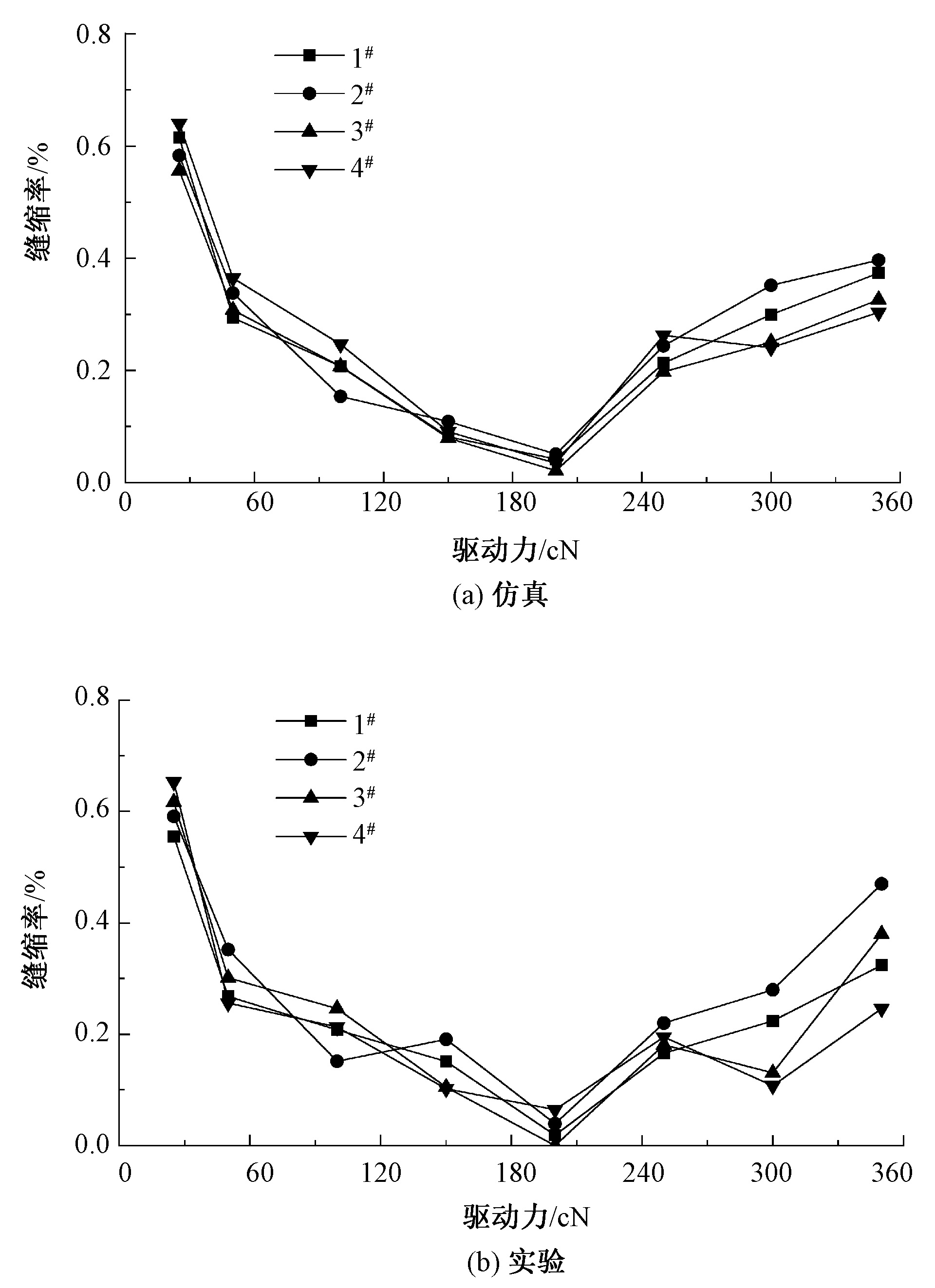
Relationship between driving force on cut piece and seam shrinkage. (a) Simulation plot; (b) Experimental plot"

Fig.13

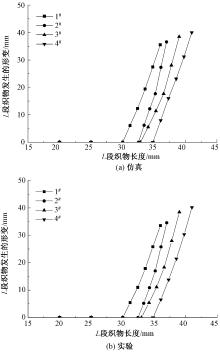
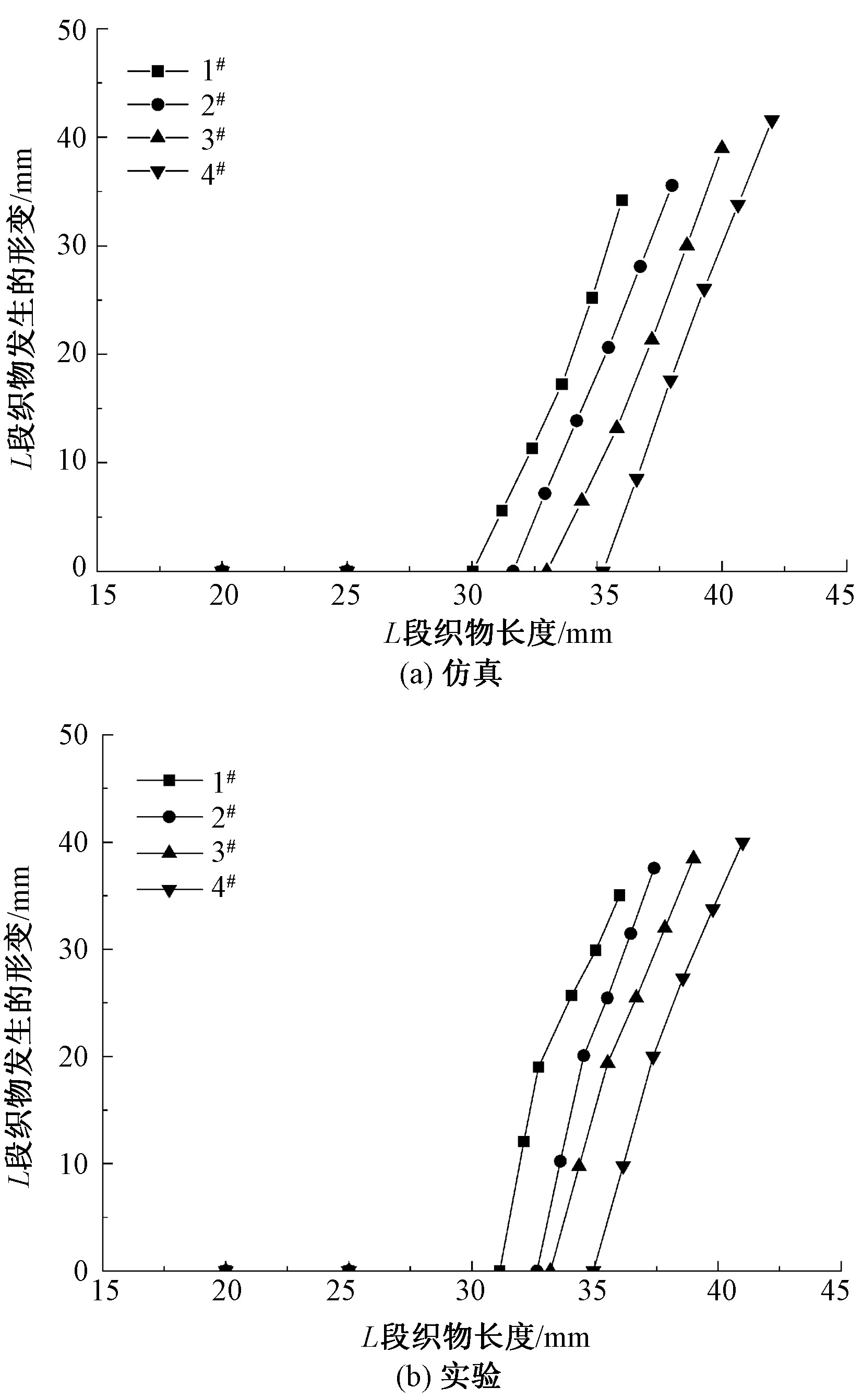
Relationship between length of L-section cut piece and its deformation at 150 cN. (a)Simulation plot; (b)Experimental plot"

Fig.14

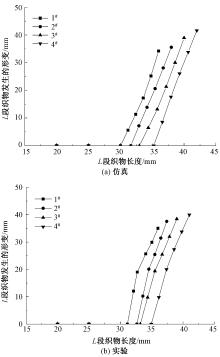
Relationship between length of L-section cut piece and its deformation at 200 cN. (a)Simulation plot;(b)Experimental plot"

[1] 吴柳波, 李新荣, 杜金丽. 基于轮廓提取的缝合机器人运动轨迹规划研究进展[J]. 纺织学报, 2021, 42(4): 191-200.
WU Liubo, LI Xinrong, DU Jinli. Research progress of motion trajectory planning of sewing robot based on contour extraction[J]. Journal of Textile Research, 2021, 42(4): 191-200.
[2] PHAN P T, HOANG T T, THAI M T, et al. Twisting and braiding fluid-driven soft artificial muscle fibers for robotic applications[J]. Soft Robotics, 2022, 9(4): 820-836.
[3] LI J, ZHOU C, LONG J, et al. Computational design of shape-changing robotic mannequin based on 3D human models[J]. Textile Research Journal, 2021, 91(9/10): 1065-1082.
[4] HOU Y C, SAHARI K S M, HOW D N T. A review on modeling of flexible deformable object for dexterous robotic manipulation[J]. International Journal of Advanced Robotic Systems, 2019, 16(3): 18-26.
[5] El Messiry M, EL-TARFAWY S. Mechanical properties and buckling analysis of woven fabric[J]. Textile Research Journal, 2019, 89(14): 2900-2918.
doi: 10.1177/0040517518803777
[6] MOUSAZADEGAN F, LATIFI M. Investigating the relation of fabric's buckling behaviour and tension seam pucker formation[J]. The Journal of The Textile Institute, 2019, 110(4): 562-574.
[7] WANG Y, ZHANG W, REN H, et al. An analytical model for the tension-shear coupling of woven fabrics with different weave patterns under large shear deformation[J]. Applied Sciences, 2020, 10(4): 1551-1566.
[8] AHMAD B, FANG X. Modeling shear behavior of woven fabric thermoplastic composites for crash simulations[J]. Applied Composite Materials, 2020, 27(6): 739-765.
[9] 王晓华, 王育合, 张蕾, 等. 缝纫机器人对织物张力与位置的模糊阻抗控制J]. 纺织学报, 2021, 42(11): 173-178.
doi: 10.13475/j.fzxb.20200605706
WANG Xiaohua, WANG Yuhe, ZHANG Lei, et al. Force and position fuzzy impedance control of a sewing robot[J]. Journal of Textile Research, 2021, 42 (11): 173-178.
doi: 10.13475/j.fzxb.20200605706
[10] PENG L, LI Y, ZHENG Q, et al. Measurement of axial motion yarn tension based on transverse vibration frequency[J]. Textile Research Journal, 2023, 93(5/6): 1019-1029.
[11] 付天宇, 李凤鸣, 崔涛, 等. 基于视觉/力觉的机器人协同缝制系统[J]. 机器人, 2022, 44(3): 352-360.
doi: 10.13973/j.cnki.robot.210414
FU Tianyu, LI Fengming, CUI Tao, et al. A robotic collaborative sewing system based on visual and force perception[J]. Robot, 2022, 44 (3): 352-360.
doi: 10.13973/j.cnki.robot.210414
[12] 文嘉琪, 李新荣, 李兴兴, 等. 面向服装面料自动缝合的缝纫工艺参数建模[J]. 纺织学报, 2023, 44(3): 158-167.
WEN Jiaqi, LI Xinrong, LI Xingxing, et al. Parametrical modeling of sewing process for automatic stitching of garment fabrics[J]. Journal of Textile Research, 2023, 44(3): 158-167.
[13] SUN Y, TIAN Y, ZHENG D, et al. Theoretical modeling and characterization of bending properties of fabrics with friction and extensibility effect[J]. The Journal of the Textile Institute, 2022, 113(5): 748-760.
[14] LIMENEH D Y, AYELE M, TESFAYE T, et al. Effect of weave structure on comfort property of fabric[J]. Journal of Natural Fibers, 2022, 19(11): 4148-4155.
[15] BAI R, MA Y, LEI Z, et al. Shear deformation and energy absorption analysis of flexible fabric in yarn pullout test[J]. Composites Part A(Applied Science and Manufacturing), 2020. DOI: 10.1016/j.compositesa.2019.105678.
[16] CHEN H, LI S, WANG J, et al. A focused review on the thermo-stamping process and simulation progresses of continuous fibre reinforced thermoplastic com-posites[J]. Composites Part B(Engineering), 2020. DOI: 10.1016/j.compositesb.2021.109196.
[17] 侯耀晟树, 郭纬愉, 杜永龙, 等. 平纹SiC纤维织物剪切性能[J]. 硅酸盐通报, 2023, 42 (3): 1063-1073.
HOU Yaoshengshu, GUO Weiyu, DU Yonglong, et al. Shear properties of plain weave sic fiber fabrics[J]. Bulletin of the Chinese Ceramic Society, 2023, 42 (3): 1063-1073.
[18] CUBRIC I S, SKENDERI Z, HAVENITH G. Impact of raw material, yarn and fabric parameters, and finishing on water vapor resistance[J]. Textile Research Journal, 2013, 83(12): 1215-1228.
[1] WEN Jiaqi, LI Xinrong, FENG Wenqian, LI Hansen. Rapid extraction of edge contours of printed fabrics [J]. Journal of Textile Research, 2024, 45(05): 165-173.
[2] WANG Xiaohua, WANG Yuhe, ZHANG Lei, WANG Wenjie. Force and position fuzzy impedance control of a sewing robot [J]. Journal of Textile Research, 2021, 42(11): 173-178.
[3] LIU Lidong, LI Xinrong, LIU Hanbang, LI Dandan. Electrostatic adsorption model based on characteristics of weft knitted fabrics [J]. Journal of Textile Research, 2021, 42(03): 161-168.
[4] SHEN Yue;CHEN Yan. Grey statistics evaluation of factors influencing sewing quality [J]. JOURNAL OF TEXTILE RESEARCH, 2008, 29(8): 93-95.
Viewed
Full text


Abstract

Cited

  Shared   
  Discussed   
No Suggested Reading articles found!