纺织学报 ›› 2026, Vol. 47 ›› Issue (02): 247-254.doi: 10.13475/j.fzxb.20251003001
张涛1, 张富丽1( ), 郭红2, 李钊2,3, 李丹1, 王涯舟2, 林沩2
ZHANG Tao1, ZHANG Fuli1(), GUO Hong2, LI Zhao2,3, LI Dan1, WANG Yazhou2, LIN Wei2
摘要:
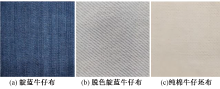
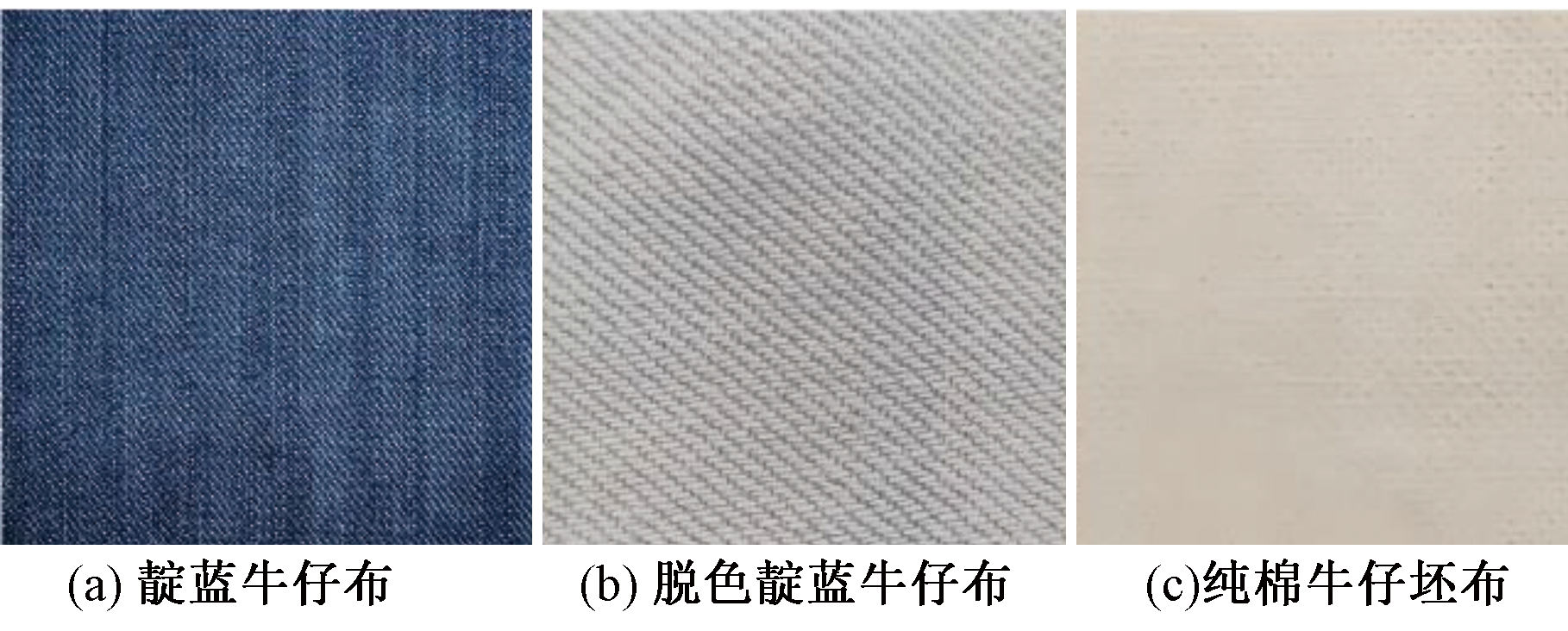
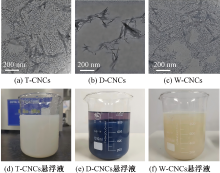
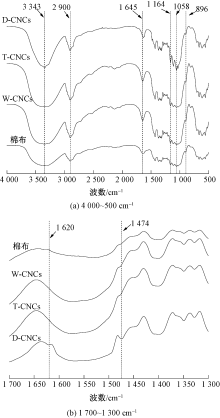
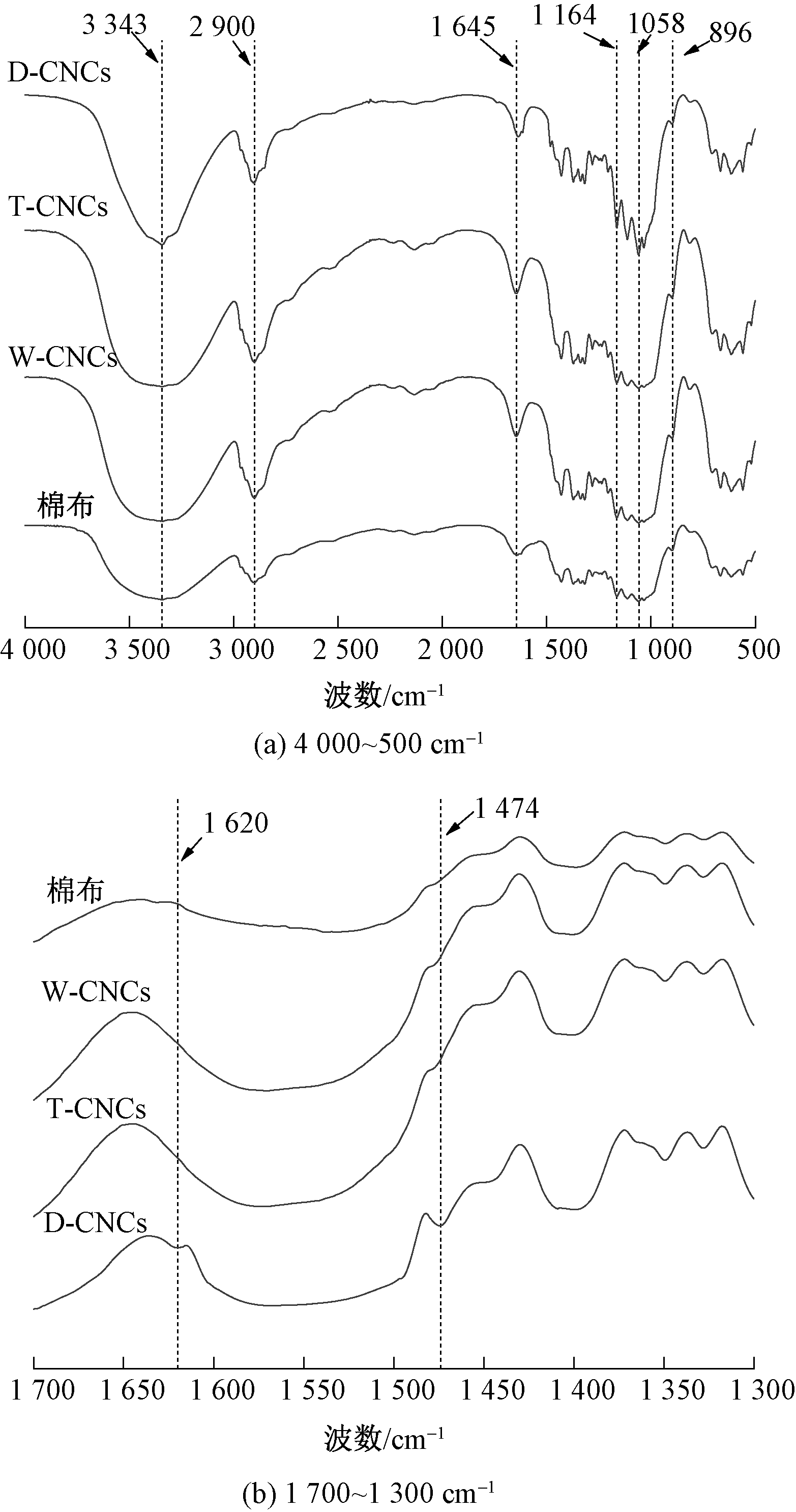
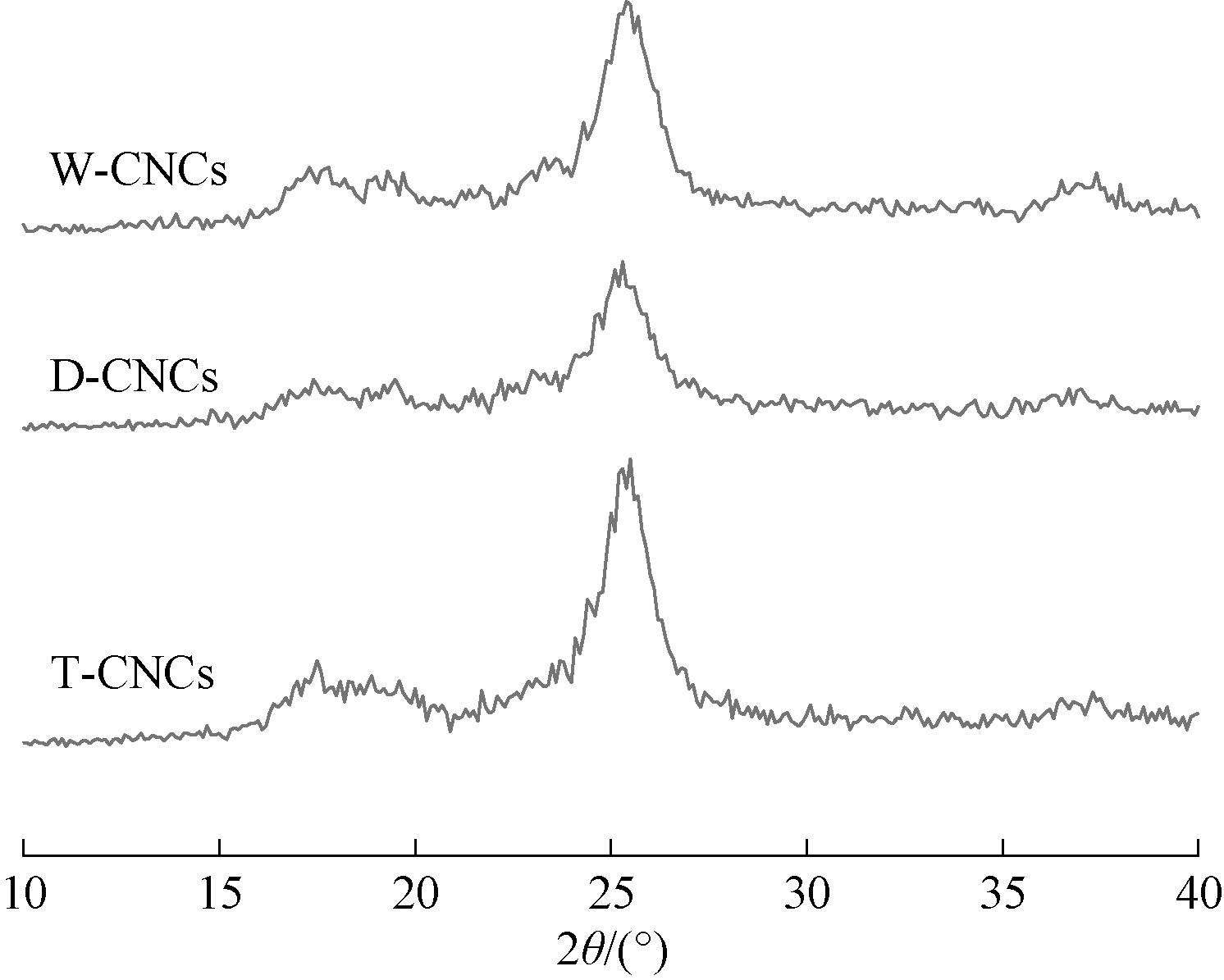
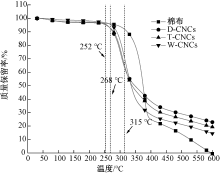
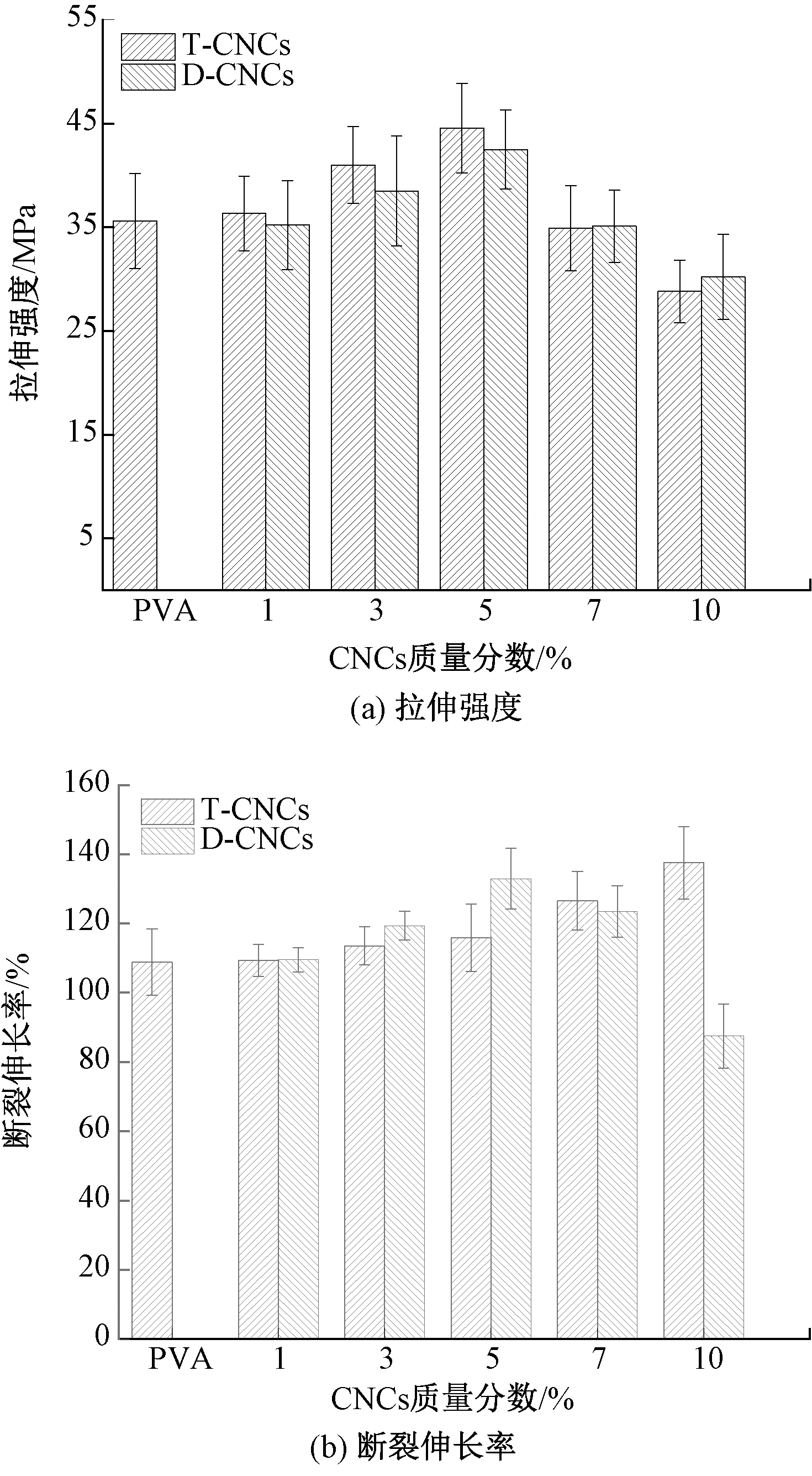
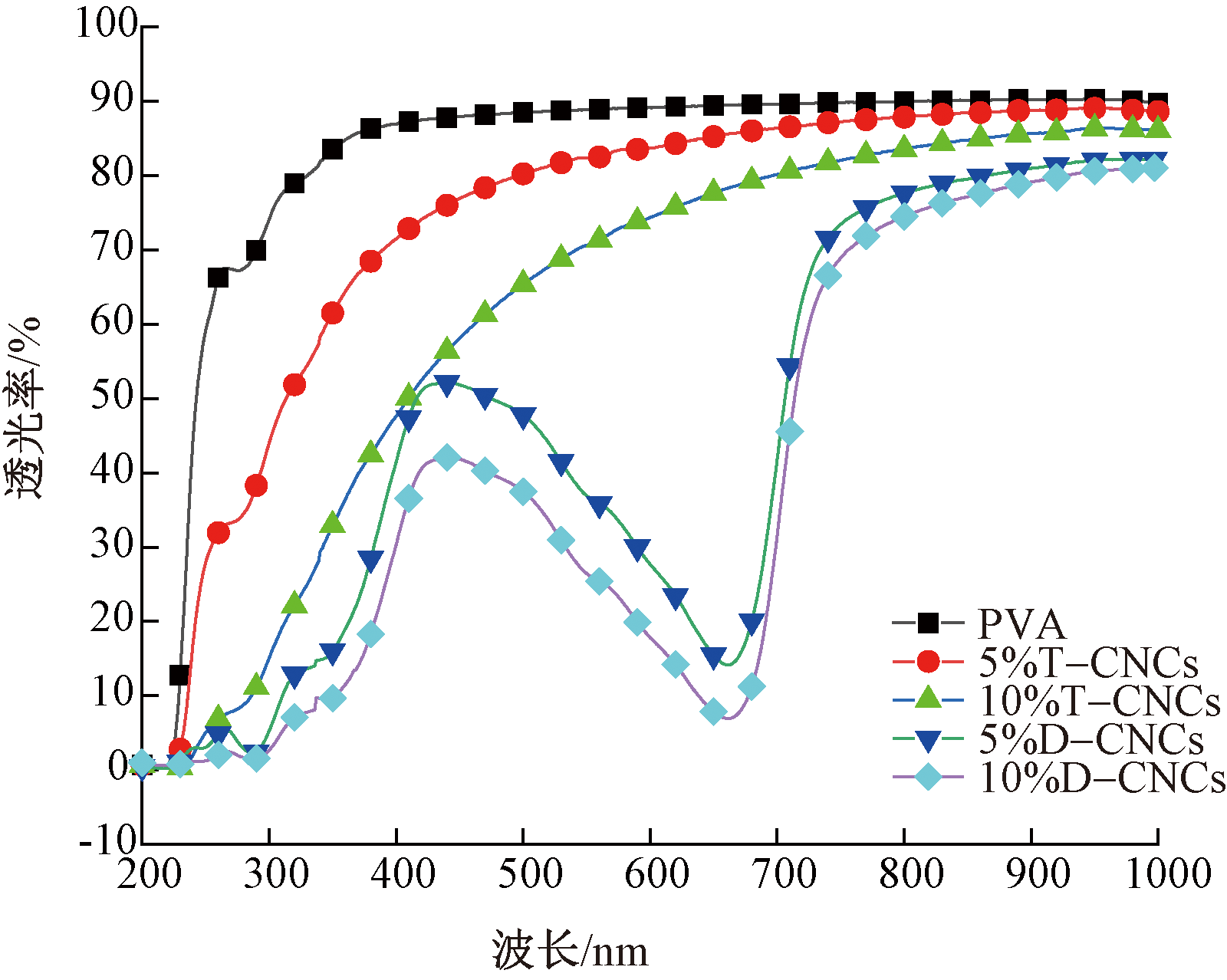
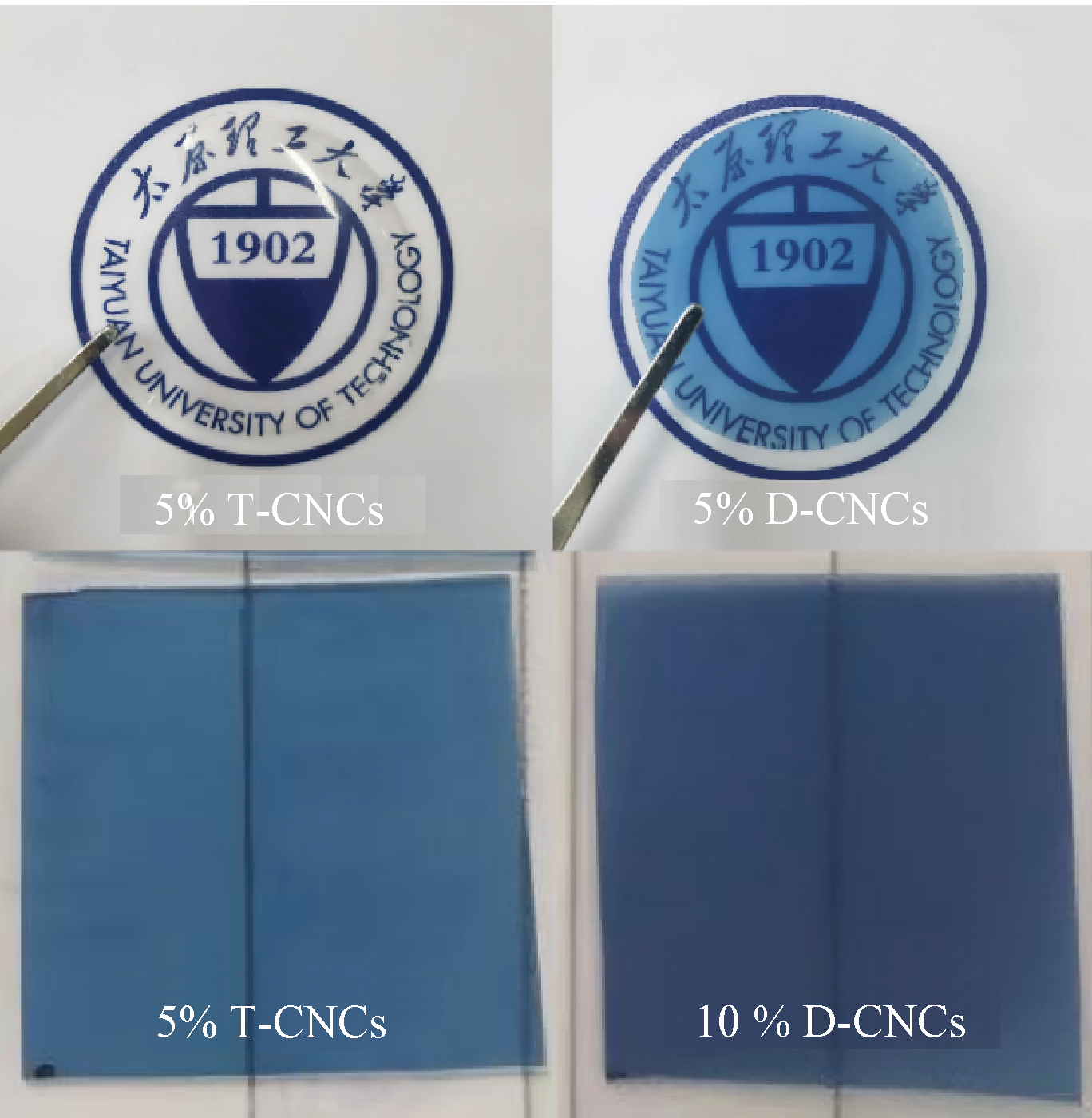
为实现废旧靛蓝牛仔布的高值化回收及功能材料制备,以无色牛仔布、废旧靛蓝牛仔布及经N,N-二甲基甲酰胺(DMF)脱色处理的废旧靛蓝牛仔布为原料,采用酸解法制备3种纤维素纳米晶(CNCs),表征其微观结构与理化性能;并将3种CNCs分别与聚乙烯醇(PVA)复合制备薄膜,测试复合膜的力学性能、热稳定性及抗紫外线性能。结果表明:宏观层面,无色牛仔布CNCs(W-CNCs)与脱色牛仔布CNCs(T-CNCs)悬浊液呈乳白色,靛蓝牛仔布CNCs(D-CNCs)悬浊液因染料存在呈特征蓝色;3种CNCs尺寸无显著差异,晶体结构均保持纤维素I型;相较于原料棉纤维,3种CNCs的热稳定性均明显降低;红外光谱分析证实D-CNCs中保留靛蓝染料特征官能团;D-CNCs添加量为5%时,PVA复合膜的拉伸强度提升20.4%,添加量增至10%时,复合膜的起始热分解温度提高;且随其添加量增加,复合膜在200~400 nm紫外波段透射率明显下降,抗紫外线性能逐步增强。靛蓝染料残留赋予了CNCs独特的颜色属性,且在强化PVA复合材料力学性能、提升热稳定性及赋予抗紫外线功能方面优势突出。
中图分类号:
| [1] |
ALWALA W, PERJU A, SCHWARZ M, et al. The compostability of denim fabrics dyed with various indigos[J]. BioResources, 2024, 19(2): 2685-2700.
doi: 10.15376/biores |
| [2] |
MANIAN A P, MUELLER S, BECHTOLD T, et al. Quantification of indigo on denim textiles as basis for jeans recycling[J]. Dyes and Pigments, 2023, 216: 111327.
doi: 10.1016/j.dyepig.2023.111327 |
| [3] |
ZHAO M Y, ZHOU Y, MENG J, et al. Virtual carbon and water flows embodied in global fashion trade - a case study of denim products[J]. Journal of Cleaner Production, 2021, 303: 127080.
doi: 10.1016/j.jclepro.2021.127080 |
| [4] |
BUSCIO V, CRESPI M, GUTIÉRREZ-BOUZÁN C. A critical comparison of methods for the analysis of indigo in dyeing liquors and effluents[J]. Materials, 2014, 7(9): 6184-6193.
doi: 10.3390/ma7096184 pmid: 28788185 |
| [5] |
WANG T, LIU B, XUE Y J, et al. Effect of textile waste on incineration behavior of dyeing sludge: combustion characteristics, gas emissions, kinetics[J]. Journal of Cleaner Production, 2024, 435: 140619.
doi: 10.1016/j.jclepro.2024.140619 |
| [6] |
ABAGNATO S, RIGAMONTI L, GROSSO M. Life cycle assessment applications to reuse, recycling and circular practices for textiles: a review[J]. Waste Management, 2024, 182: 74-90.
doi: 10.1016/j.wasman.2024.04.016 pmid: 38643525 |
| [7] |
RENDÓN-CASTRILLÓN L, RAMÍREZ-CARMONA M, OCAMPO-LÓPEZ C, et al. Efficient bioremediation of indigo-dye contaminated textile wastewater using native microorganisms and combined bioaugmentation-biostimulation techniques[J]. Chemosphere, 2024, 353: 141538.
doi: 10.1016/j.chemosphere.2024.141538 |
| [8] | SCOTT C A, SABER D A, NEIVANDT D J. Engineering a compostable isolation gown to reduce hospital-derived synthetic waste accumulation in landfill[J]. Environmental Technology & Innovation, 2024, 35: 103663. |
| [9] |
FAN W, WANG Q, RONG K, et al. MXene enhanced 3D needled waste denim felt for high-performance flexible supercapacitors[J]. Nano-Micro Letters, 2023, 16(1): 36.
doi: 10.1007/s40820-023-01226-y pmid: 38019340 |
| [10] |
PINHO-LOPES M. Sand reinforced with recycled cotton textiles from waste blue-jeans: stress-strain response[J]. International Journal of Geosynthetics and Ground Engineering, 2022, 8(5): 59.
doi: 10.1007/s40891-022-00404-z |
| [11] | KRAMENS J, VĪGANTS E, KANUKUNTLA S P, et al. Study of the application of pellets from textile material waste and biomass mixture in industrial and residental heating systems[J]. ENVIRONMENT TECHNOLOGIES RESOURCES Proceedings of the International Scientific and Practical Conference, 2023, 1: 86-92. |
| [12] |
TRACHE D, HUSSIN M H, HUI CHUIN C T, et al. Microcrystalline cellulose: isolation, characterization and bio-composites application: a review[J]. International Journal of Biological Macromolecules, 2016, 93: 789-804.
doi: 10.1016/j.ijbiomac.2016.09.056 |
| [13] |
WANG S J, ZHANG T, ZHANG X L, et al. Development of 3D needled composite from denim waste and polypropylene fibers for structural applications[J]. Construction and Building Materials, 2022, 314: 125583.
doi: 10.1016/j.conbuildmat.2021.125583 |
| [14] |
AKHLAGHI BAGHERJERI M, HAQUE A N M A, MONHEMI H, et al. Dissolution of denim waste in N-methyl morpholine-N-oxide monohydrate for fabrication of regenerated cellulosic film: experimental and simulation study[J]. Carbohydrate Polymers, 2024, 346: 122655.
doi: 10.1016/j.carbpol.2024.122655 |
| [15] |
MO Y, HUANG X Y, YUE M, et al. Preparation of nanocellulose and application of nanocellulose polyurethane composites[J]. RSC Advances, 2024, 14(26): 18247-18257.
doi: 10.1039/d4ra01412j pmid: 38854830 |
| [16] |
LI Z, ZHANG M L, LI F, et al. Recycling of waste denim: a stepwise utilisation strategy for clean decolourisation, opening and degradation[J]. Waste Management, 2025, 198: 12-20.
doi: 10.1016/j.wasman.2025.02.037 pmid: 40014882 |
| [1] | 任萧, 潘林洁, 姜海霞, 葛凤燕, 高洪国. 生物质多酚-亚铁离子多色系染料制备及其在棉织物上的应用[J]. 纺织学报, 2026, 47(01): 132-141. |
| [2] | 宋佳怡, 王政驿, 程献伟, 关晋平, 朱亚伟. 液态靛蓝染料的制备及其对棉织物的染色性能[J]. 纺织学报, 2025, 46(12): 133-141. |
| [3] | 王泓力, 张辉, 刘建宇, 尉海泽, 张雅宁, 王丽丽, 许学潮. 棉基生物炭-ZIF-L(Zn)-壳聚糖/聚丙烯复合膜的制备及其吸附-光催化性能[J]. 纺织学报, 2025, 46(09): 84-93. |
| [4] | 李晗, 钱建华, 翁可欣, 王澳, 戴宏祥, 单江音. 聚氯乙烯纤维机织物的制备及其复合膜结构和性能[J]. 纺织学报, 2025, 46(08): 80-88. |
| [5] | 韦选香, 冯杨, 樊翔宇, 吴明华, 余德游. 牦牛绒均相高级氧化脱色技术及机制[J]. 纺织学报, 2025, 46(06): 151-159. |
| [6] | 项文龙, 杨静冉, 肖晓珍. 铁钴双金属有机框架/稻谷壳复合材料的制备及其染料脱色性能[J]. 纺织学报, 2025, 46(06): 178-186. |
| [7] | 赵登, 张燚, 郑梦杰, 毕曙光, 冉建华. 基于液相剥离石墨烯的可见-近红外光隐身锦纶织物[J]. 纺织学报, 2025, 46(02): 153-160. |
| [8] | 连丹丹, 王镭, 杨雅茹, 尹立新, 葛超, 卢建军. 服用聚苯硫醚纤维的制备及其性能[J]. 纺织学报, 2023, 44(08): 1-8. |
| [9] | 韩博, 王玉霖, 舒大武, 王涛, 安芳芳, 单巨川. 活性染料染色废水的循环染色[J]. 纺织学报, 2023, 44(08): 151-157. |
| [10] | 王伟, 吴嘉欣, 张晓云, 张传杰, 宫兆庆. 制浆用废旧棉织物的脱色性能及其机制[J]. 纺织学报, 2023, 44(07): 175-183. |
| [11] | 柳敦雷, 陆佳颖, 薛甜甜, 樊玮, 刘天西. 超疏水隔热聚酯纳米纤维/二氧化硅气凝胶复合膜的制备及其性能[J]. 纺织学报, 2023, 44(07): 18-25. |
| [12] | 贾艳梅, 于学智. 柞叶染料对柞蚕丝织物的染色及其吸附动力学研究[J]. 纺织学报, 2023, 44(03): 119-125. |
| [13] | 王静, 娄娅娅, 王春梅. 铁基金属–有机框架材料/活性碳纤维复合材料的制备及其对染料的脱色[J]. 纺织学报, 2022, 43(08): 126-131. |
| [14] | 杨文博, 张傲洁, 刘幽燕, 李青云. 聚氨酯泡沫固定化生物体系对活性蓝4的吸附脱色[J]. 纺织学报, 2022, 43(08): 132-139. |
| [15] | 高陆玺, 吕雪川, 张弛, 宋翰林, 高肖汉. 用于印染废水处理的改性絮凝剂合成及其脱色性能[J]. 纺织学报, 2022, 43(07): 121-128. |
|
||
 京公网安备11010502044800号