纺织学报 ›› 2025, Vol. 46 ›› Issue (05): 202-213.doi: 10.13475/j.fzxb.20240601801
张金芹1,2, 李晶1,2, 肖明1,2, 毕曙光1,2( ), 冉建华1,2
ZHANG Jinqin1,2, LI Jing1,2, XIAO Ming1,2, BI Shuguang1,2(), RAN Jianhua1,2
摘要:
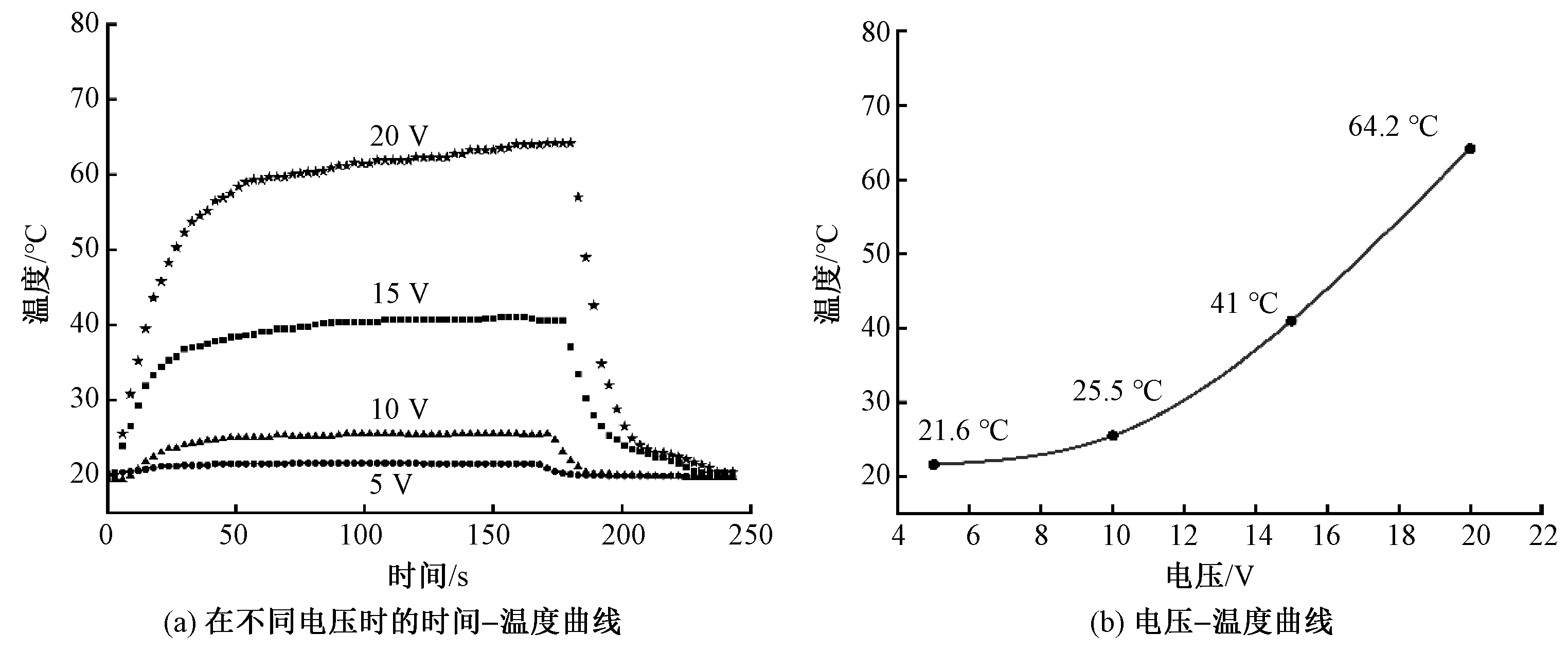
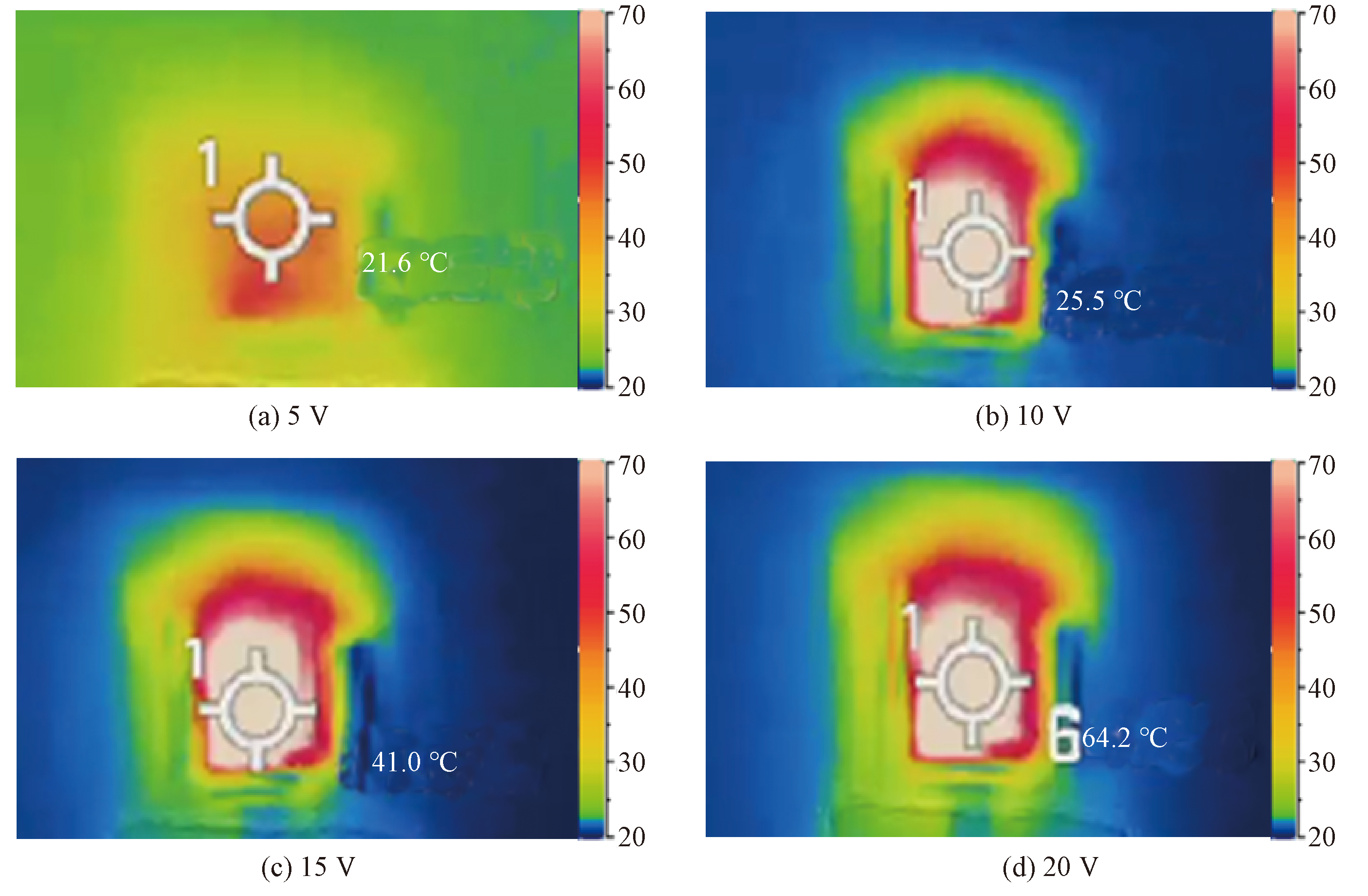
织物作为柔性传感器的基底因其可穿戴性和舒适性好而备受关注,但其存在灵敏度低、应变范围窄的问题。针对这个问题,采用层层静电自组装法,利用阳离子改性剂对聚苯乙烯(PS)微球进行表面改性,负载带负电荷的氧化石墨烯(GO),制备了聚苯乙烯/还原氧化石墨烯(PS/rGO)微球复合织物。通过优化PS微球和rGO纳米片的二元结构,显著提高复合织物的应变传感和电热性能。采用线性伏安循环曲线和热成像技术对复合织物的电学性能和电热性能进行测试,同时借助数码精密万用表评估其传感性能。结果表明:该PS/rGO微球复合织物在0%~90%应变范围内的灵敏度高达10.44,且在不同应变、拉伸速度和百次循环测试中相对电阻变化率稳定,展现优异的传感循环稳定性;此外,该织物在20 V电压下87 s内能从19 ℃升温至64.2 ℃,显示出优异的电热性能,这些特性使得该复合织物在人体运动监测、热敷治疗和人机交互等领域具有广泛的应用潜力。
中图分类号:
| [1] | ZHANG H, HE R, NIU Y, et al. Graphene-enabled wearable sensors for healthcare monitoring[J]. Biosensors and Bioelectronics, 2022. DOI: 10.1016/j.bios.113777. |
| [2] | CHEN S, QI J, FAN S, et al. Flexible wearable sensors for cardiovascular health monitoring[J]. Advanced Healthcare Materials, 2021. DOI: 10.1002/adhm.00116. |
| [3] | CHEN D, CAI Y, CHENG L, et al. Structure and function design of carbon nanotube-based flexible strain sensors and their application[J]. Measurment, 2024. DOI: 10.1016/j.measurement.113992. |
| [4] |
LUO D, SUN H, LI Q, et al. Flexible sweat sensors: from films to textiles[J]. ACS Sensors, 2023, 8: 465-481.
doi: 10.1021/acssensors.2c02642 pmid: 36763075 |
| [5] | YU A, ZHU M, CHEN C, et al. Implantable flexible sensors for health monitoring[J]. Advanced Hralthcare Materials, 2024. DOI: 10.1002/adhm.02460. |
| [6] | XING T, HE A, HUANG Z, et al. Silk-based flexible electronics and smart wearable textiles: progress and beyond[J]. Chemical Engineering Journal, 2023. DOI: 10.1016/j.cej.145534. |
| [7] | DCOSTA J V, OCHOA D, SANAUR S. Recent progress in flexible and wearable all organic photoplethysmography sensors for SpO2 monitoring[J]. Advanced Science, 2023. DOI: 10.1002/advs.02752. |
| [8] | ZHANG Z, LIU G, LI Z, et al. Flexible tactile sensors with biomimetic microstructures: mechanisms, fabrication, and applications[J]. Advances in Collold and Interface Science, 2023. DOI: 10.1016/j.cis.102988. |
| [9] | CHAO M, DI P, YUAN Y, et al. Flexible breathable photothermal-therapy epidermic sensor with MXene for ultrasensitive wearable human-machine interaction[J]. Nano Energy, 2023. DOI: 10.1016/j.nanoen.108201. |
| [10] |
LUO Y, ABIDIAN M R, AHN J H, et al. Technology roadmap for flexible sensors[J]. ACS Nano, 2023, 17(6): 5211-5295.
doi: 10.1021/acsnano.2c12606 pmid: 36892156 |
| [11] | HUANG X, BU T, ZHENG Q, et al. Flexible sensors with zero Poisson ratio[J]. National Science Review, 2024. DOI: 10.1093/nsr/nwae027. |
| [12] | LEE J H, CHO K, KIM J K. Age of flexible electronics: emerging trends in soft multifunctional sensors[J]. Advanced Materials, 2024. DOI: 10.1002/adma.10505. |
| [13] | XIAOQI Z, HUANYU C. Flexible and stretchable metal oxide gas sensors for healthcare[J]. Science China-Technological Sciences, 2019, 62(2): 209-223. |
| [14] | YAN Z, ZHANG S, GAO M, et al. Ultrasensitive and wide-range-detectable flexible breath sensor based on silver vanadate nanowires[J]. ACS Applied Electronic Materials, 2023, 5(1): 520-525. |
| [15] | PATHAK P, HWANG J H, LI R T, et al. Flexible copper-biopolymer nanocomposite sensors for trace level lead detection in water[J]. Sensors and Actuaors B-Chemical, 2021. DOI: 10.1016/j.snb.130263. |
| [16] | LEE J, LE Q T, LEE D, et al. Micropyramidal flexible ion gel sensor for multianalyte discrimination and strain compensation[J]. ACS Applied Materials & Interfaces, 2023, 15(21): 26138-26147. |
| [17] | CHEN D, CAI Y, CHENG L, et al. Structure and function design of carbon nanotube-based flexible strain sensors and their application[J]. Measurement, 2024. DOI: 10.1016/j.measurement.113992. |
| [18] | XU C, CHEN J, ZHU Z, et al. Flexible pressure sensors in human-machine interface applications[J]. Small, 2023. DOI: 10.1002/smll.06655. |
| [19] | GALVAGNO E, TARTAGLIA E, STRATIGAKI M, et al. Present status and perspectives of graphene and graphene-related materials in cultural heritage[J]. Advanced Functional Materials, 2024. DOI: 10.1002/adfm.13043. |
| [20] | SUN P Z, XIONG W Q, BERA A, et al. Unexpected catalytic activity of nanorippled graphene[J]. Proceedings of The National Academy of Sciences, 2023. DOI: 10.1073/pnas.00481120. |
| [21] | CHUN S, SON W, KIM D W, et al. Water-resistant and skin-adhesive wearable electronics using graphene fabric sensor with octopus-inspired microsuckers[J]. ACS Applied Materials & Interfaces, 2019, 11(18): 16951-16957. |
| [22] | ZHAO Z, YAN C, LI D, et al. Fabrication of rGO/Cu NPs on knitted fabrics for action sensing and electrothermal applications[J]. Surfaces and Interfaces, 2023. DOI: 10.1016/j.surfin.102600. |
| [23] | WANG X, LI Q, TAO X. Sensing mechanism of a carbon nanocomposite-printed fabric as a strain sensor[J]. Composites Part A: Applied Science and Manufacturing, 2021. DOI: 10.1016/j.compositesa.106350. |
| [24] | 肖明, 黄亮, 罗龙永, 等. 羧基化聚苯乙烯荧光微球的合成及其在织物防伪中的应用[J]. 纺织学报, 2023, 44(2): 184-190. |
| XIAO Ming, HUANG Liang, LUO Longyong, et al. Synthesis of carboxylated polystyrene fluorescent microspheres and its application in fabric anti-counterfeiting[J]. Journal of Textile Research, 2023, 44(2): 184-190. | |
| [25] | ZHENG Y, JIN Q, CHEN W, et al. High sensitivity and wide sensing range of stretchable sensors with conductive microsphere array structures[J]. Journal of Materials Chemistry C, 2019, 7(27): 8423-8431. |
| [26] | LI Y, SHI L, CHENG Y, et al. Development of conductive materials and conductive networks for flexible force sensors[J]. Chemical Engineering Journal, 2023. DOI: 0.1016/j.cej.140763. |
| [27] | WANG C, LI X, GAO E, et al. Carbonized silk fabric for ultrastretchable, highly sensitive, and wearable strain sensors[J]. Advanced Materials, 2016. DOI: 10.1002/adma.01572. |
| [28] | CHEN H, ZHUO F, ZHOU J, et al. Advances in graphene-based flexible and wearable strain sensors[J]. Chemical Engineering Journal, 2023. DOI: 10.1016/j.cej.142576. |
| [29] | AMJADI M, PICHITPAJONGKIT A, LEE S, et al. Highly stretchable and sensitive strain sensor based on silver nanowire: elastomer nanocomposite[J]. ACS Nano, 2014, 8(5): 5154-5163. |
| [30] | DESAI A V, HAQUE M A. Mechanics of the interface for carbon nanotube: polymer composites[J]. Thin-Walled Structures, 2005, 43(11): 1787-1803. |
| [31] |
ALAMUSI, HU N, FUKUNAGA H, et al. Piezoresistive strain sensors made from carbon nanotubes based polymer nanocomposites[J]. Sensors, 2011, 11(11): 10691-10723.
doi: 10.3390/s111110691 pmid: 22346667 |
| [32] | LIN L, LIU S, ZHANG Q, et al. Towards tunable sensitivity of electrical property to strain for conductive polymer composites based on thermoplastic elasto-mer[J]. ACS Applied Materials & Interfaces, 2013, 5(12): 5815-5824. |
| [33] | ZHANG J, GAO K, WENG S, et al. Graphene nanoplatelets/polydimethylsiloxane flexible strain sensor with improved sandwich structure[J]. Sensors, 2024. DOI: 10.3390/s092856. |
| [34] | ZHANG X, KE L, ZHANG X, et al. Breathable and wearable strain sensors based on synergistic conductive carbon nanotubes/cotton fabrics for multi-directional motion detection[J]. ACS Applied Materials & Interfaces, 2022, 14(22): 25753-25762. |
| [35] | LUAN J, WANG Q, ZHENG X, et al. Flexible metal/polymer composite films embedded with silver nanowires as a stretchable and conductive strain sensor for human motion monitoring[J]. Micromachines, 2019. DOI: 10.3390/mi10060372. |
| [36] | SOE H M, ABD MANAF A, MATSUDA A, et al. Performance of a silver nanoparticles-based polydimethylsiloxane composite strain sensor produced using different fabrication methods[J]. Sensors and Actuators A: Physical, 2021. DOI: 10.1016/j.sna.112793. |
| [37] | AFROJ S, TAN S, ABDELKADER A M, et al. Highly conductive, scalable, and machine washable graphene-based e-textiles for multifunctional wearable electronic applications[J]. Advanced Functional Materials, 2020. DOI: 10.1002/adfm.00293. |
| [38] | DING H, LUO Z, KONG N, et al. Constructing conductive titanium carbide nanosheet (MXene) network on natural rubber foam framework for flexible strain sensor[J]. Journal of Materials Science-Materials in Electronics, 2022, 33(19): 15563-15573. |
| [1] | 佘叶美, 彭阳阳, 王法猛, 潘如如. 基于经编间隔织物的柔性压力传感器制备及其性能[J]. 纺织学报, 2025, 46(03): 158-166. |
| [2] | 范梦晶, 岳欣琰, 邵剑波, 陈雨, 洪剑寒, 韩潇. 基于静电纺纤维包芯纱的电容式扭转传感器构建及其传感性能[J]. 纺织学报, 2025, 46(02): 106-112. |
| [3] | 左红梅, 高敏, 阮芳涛, 邹梨花, 徐珍珍. MXene-氧化石墨烯改性碳纤维/聚乳酸复合材料制备及其力学性能[J]. 纺织学报, 2025, 46(01): 9-15. |
| [4] | 刘延波, 高鑫羽, 郝铭, 胡晓东, 杨波. 基于光热改性的复合纤维毡及其在高黏度油吸附中的应用[J]. 纺织学报, 2024, 45(11): 55-64. |
| [5] | 史雅楠, 马颜雪, 樊平, 薛文良, 李毓陵. 织边结构弹性传感机织带的制备及其传感性能影响因素[J]. 纺织学报, 2024, 45(11): 114-120. |
| [6] | 张蕊, 应迪, 陈冰冰, 田欣, 郑莹莹, 王建, 邹专勇. 碳纳米管修饰三维纤维网非织造布传感器的制备及其性能[J]. 纺织学报, 2024, 45(11): 46-54. |
| [7] | 李露红, 罗天, 丛洪莲. 针织一体成形电容传感器设计及其性能[J]. 纺织学报, 2024, 45(10): 80-88. |
| [8] | 卢道坤, 王仕飞, 董倩, 史纳蔓, 李思琦, 干露露, 周爽, 沙莎, 张如全, 罗磊. 基于MXene的导电织物构筑及其多功能应用[J]. 纺织学报, 2024, 45(09): 137-145. |
| [9] | 刘懿德, 李凯, 姚久勇, 成芳芳, 夏延致. 纤维素水凝胶纤维的制备及其阻燃传感性能[J]. 纺织学报, 2024, 45(04): 1-7. |
| [10] | 冯亚, 孙颖, 崔艳超, 刘梁森, 张宏亮, 胡俊军, 居傲, 陈利. 含镍铬合金丝纬编电加热层复合材料的层间剪切性能[J]. 纺织学报, 2024, 45(04): 89-95. |
| [11] | 陈锟, 许晶莹, 郑怡倩, 李加林, 洪兴华. 丝网印刷还原氧化石墨烯改性蚕丝织物的导电与电热性能[J]. 纺织学报, 2024, 45(03): 122-128. |
| [12] | 居傲, 向卫宏, 崔艳超, 孙颖, 陈利. 基于定制纤维铺放工艺的电加热织物制备及其半球成型性能[J]. 纺织学报, 2024, 45(02): 67-76. |
| [13] | 闫鹏翔, 陈富星, 刘红, 田明伟. 柔性力感知电子织物的制备及其人体运动监测系统构建[J]. 纺织学报, 2024, 45(02): 59-66. |
| [14] | 何崟, 邓凌, 林美霞, 李倩倩, 肖爽, 刘皓, 刘莉. 冬季运动智能柔性人台关键技术开发[J]. 纺织学报, 2024, 45(02): 221-230. |
| [15] | 谷金峻, 魏春艳, 郭紫阳, 吕丽华, 白晋, 赵航慧妍. 棉秆皮微晶纤维素/改性氧化石墨烯阻燃纤维的制备及其性能[J]. 纺织学报, 2024, 45(01): 39-47. |
|
||
 京公网安备11010502044800号