纺织学报 ›› 2025, Vol. 46 ›› Issue (08): 217-225.doi: 10.13475/j.fzxb.20250100101

• 机械与设备 • 上一篇    下一篇

多尖端锯齿状静电纺丝喷头的设计及优化

刘健1,2(), 潘山山1, 刘泳汝2, 尹兆松1, 任康佳1, 赵庆浩1   

  1. 1.天津工业大学 机械工程学院, 天津 300387
    2.天津工业大学 工程教学实习训练中心, 天津 300387
  • 收稿日期:2025-01-02 修回日期:2025-05-26 出版日期:2025-08-15 发布日期:2025-08-15
  • 作者简介:刘健(1985—),男,高级实验师,博士。主要研究方向为新型纺织机械设计及自动化、机电一体化技术。E-mail:liujian3286@tiangong.edu.cn
  • 基金资助:
    天津市技术创新引导专项基金企业科技特派员项目(23YDTPJC00280);天津市自然科学基金面上项目(22JCYBJC01470)

Design and optimization of multi-tip serrated electrospinning nozzle

LIU Jian1,2(), PAN Shanshan1, LIU Yongru2, YIN Zhaosong1, REN Kangjia1, ZHAO Qinghao1   

  1. 1. School of Mechanical Engineering, Tiangong University, Tianjin 300387, China
    2. Center of Engineering Practice Training, Tiangong University, Tianjin 300387, China
  • Received:2025-01-02 Revised:2025-05-26 Published:2025-08-15 Online:2025-08-15

摘要:

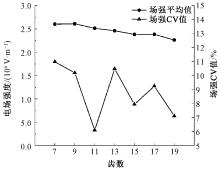
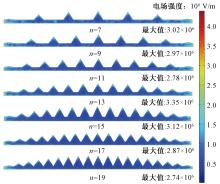
为解决传统针头式静电纺丝易堵塞、无针头式静电纺丝泰勒锥形成位置不稳定等问题,设计一种锯齿状静电纺丝喷头,其锯齿尖端能够精准激发泰勒锥,解决了泰勒锥形成位置不稳定的问题,通过增加尖端数量激发产生更多的纺丝射流从而提高纺丝效率。利用COMSOL软件对锯齿状静电纺丝系统进行电场仿真发现,直线式排列的锯齿尖端场强值存在两边高、中间低的现象,即边缘效应问题。通过对锯齿尖端按圆弧排列优化各个尖端的高度,其场强变异系数(CV值)比直线排列锯齿的普遍低2%~4%。为得到最优的锯齿圆弧排列方式,设计不同参数的多尖端锯齿模型并进行电场仿真,得出在弧高为13 mm、齿数为11、齿宽为15 mm时,场强CV值最小,为6.09%,此时的场强分布较均匀,边缘效应问题得到改善。最后搭建实验台进行纺丝实验对比,该喷头射流形成数量较多且形态均匀稳定,纺丝效率为1.18 g/h,验证了新型锯齿状静电纺丝喷头在提高纺丝效率的同时能够保证纳米纤维质量,为静电纺丝规模化生产提供技术参考。

关键词: 静电纺丝, 锯齿状喷嘴, 边缘效应, 尖端圆弧排列, 电场仿真, 规模化生产

Abstract:

Objective A serrated electrostatic spinning jet exciter has been developed to overcome the problems of easy clogging in conventional electrostatic spinning tips and unstable position of the Taylor cone formation. By increasing the number of tips to excite more spinning jets, this research aims to increase the electrospinning rate to industrial production levels. The sawtooth shape is to be optimized to improve the uniformity of the electric field to ensure stability of the spinning process and uniformity of fiber quality.

Method The study is based on the theory of jets originating from wave crests and the theory of tip-collected charge, combined with the existing spinning methods. The serrated jet exciter is designed and 3-D models were established using SolidWorks software and electric field simulation using COMSOL software. The effect on the uniformity of the electric field was analyzed by changing the shape and size of the sawtooth. Laser cutting was used to fabricate the serrated nozzle and the spinning solution was formulated using polyacrylonitrile (PAN) powder and N,N-dimethylformamide (DMF) solvent for spinning experiments to verify the spinning.

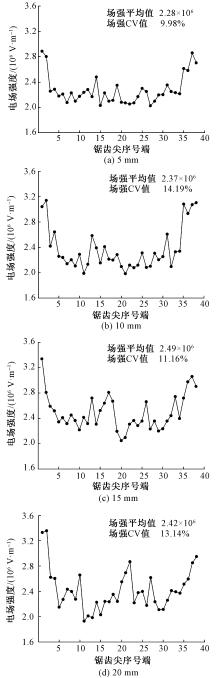
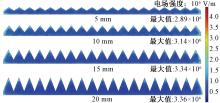
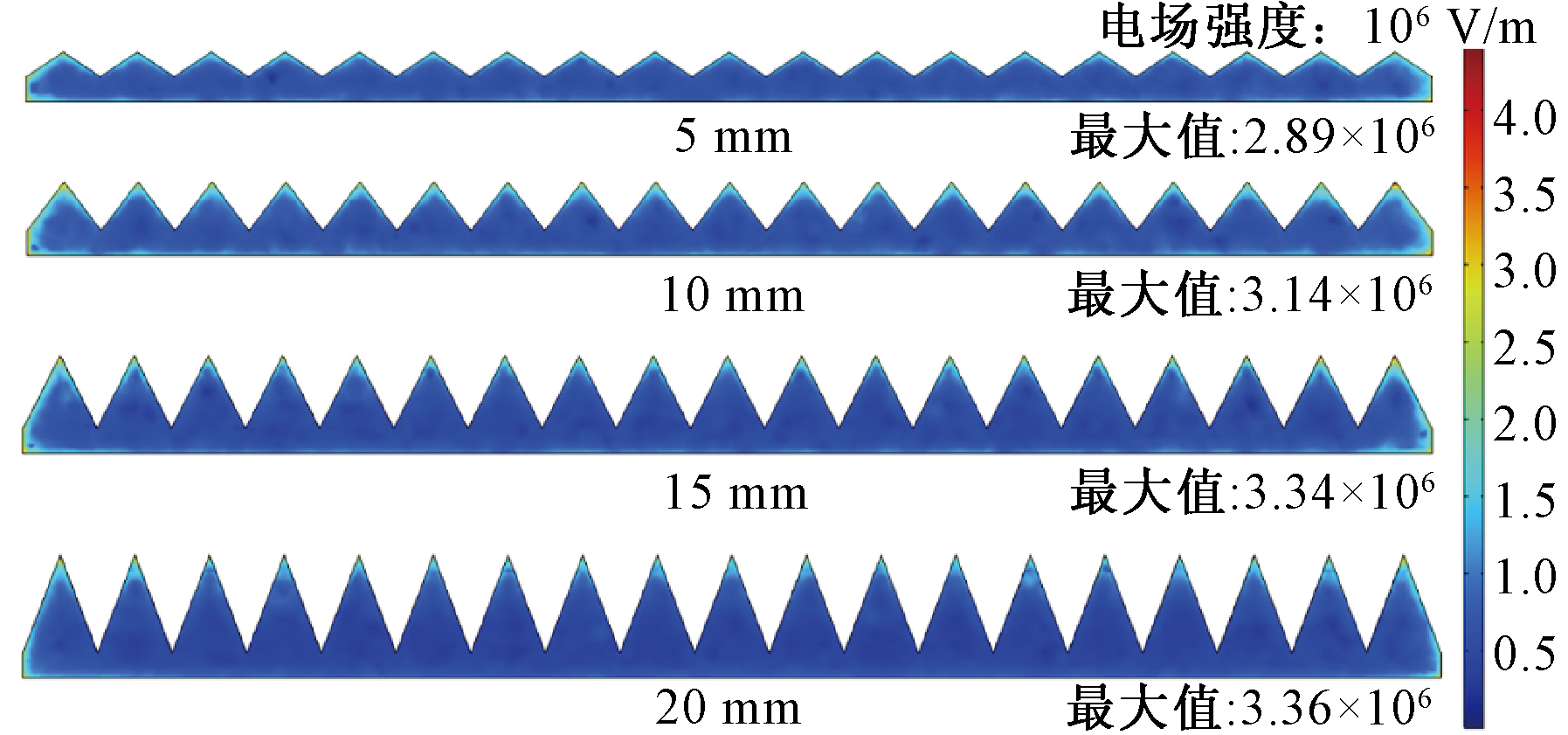
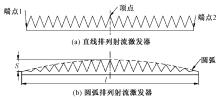
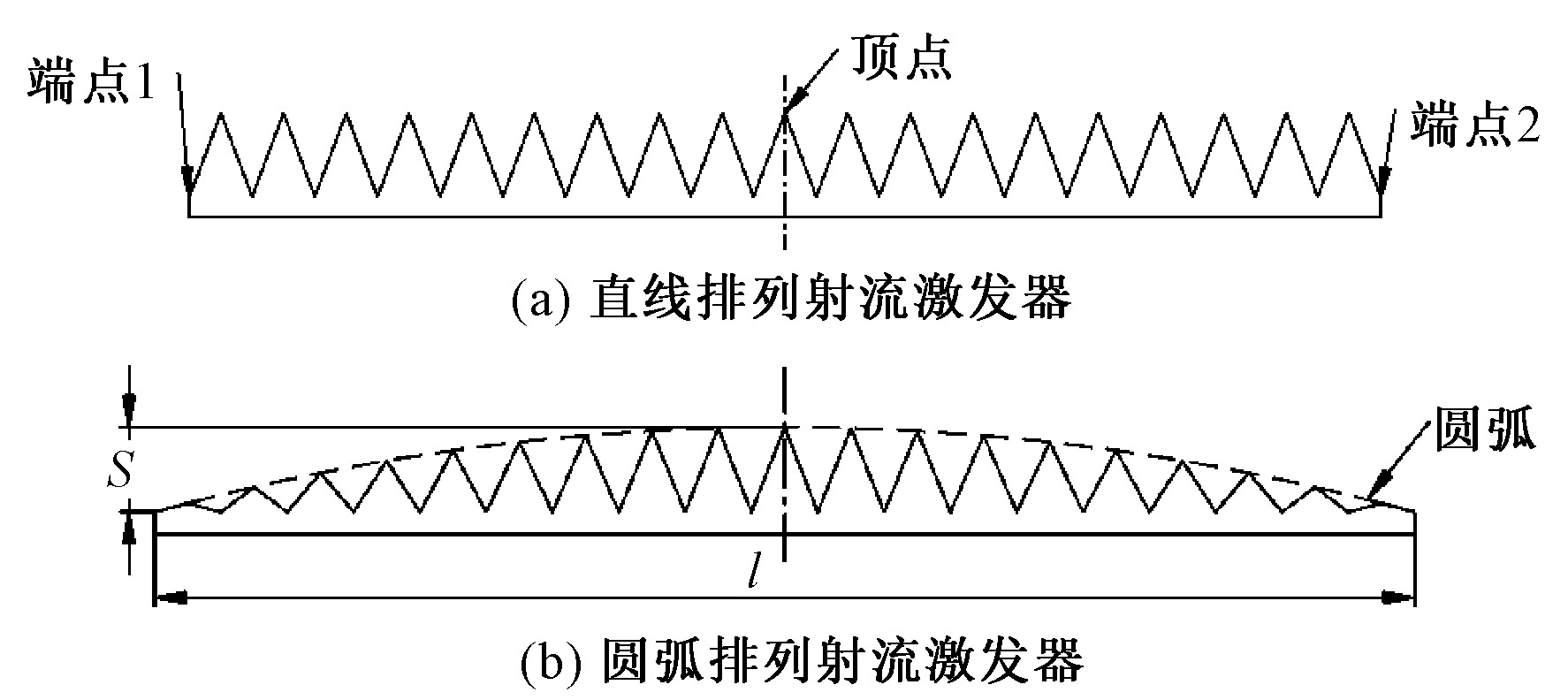
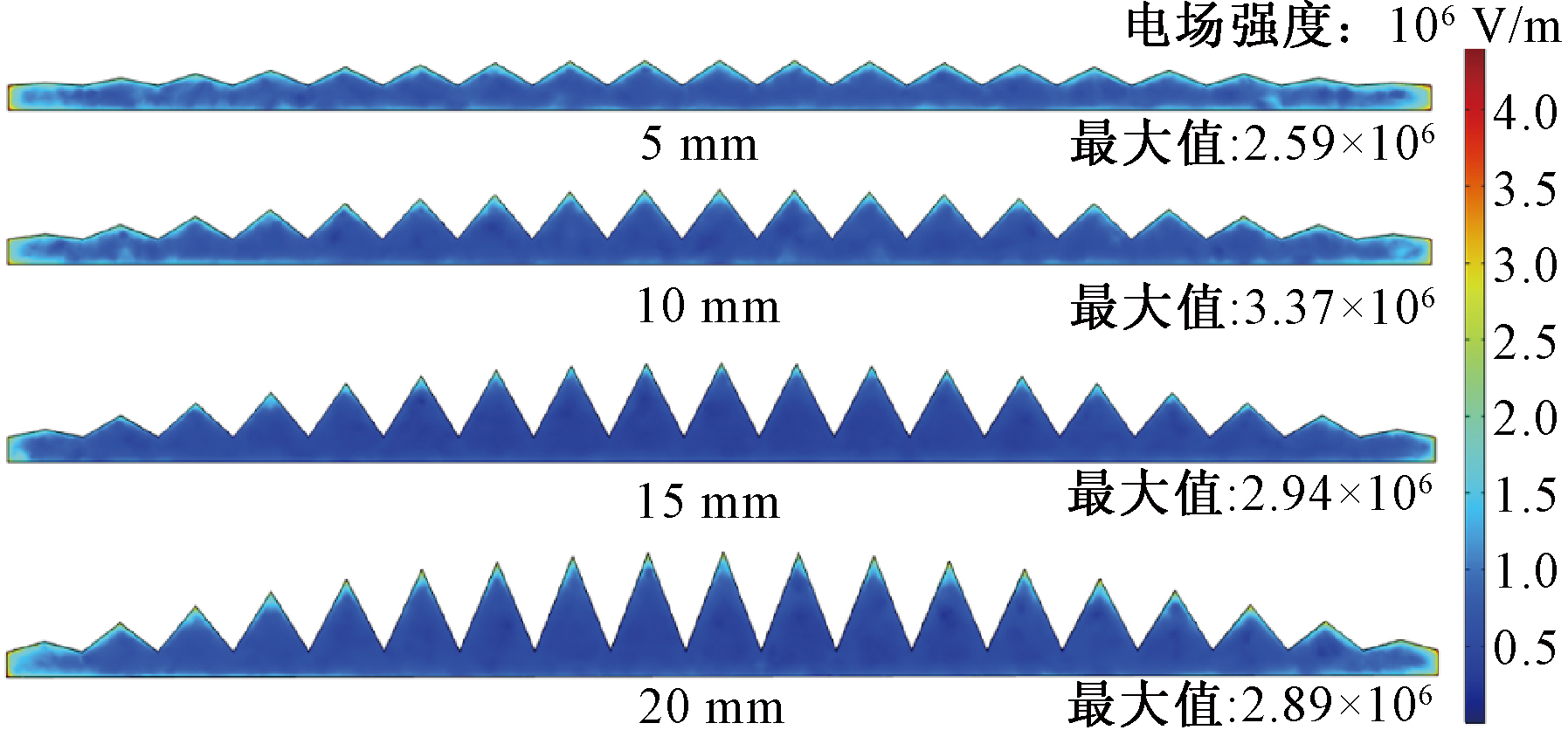
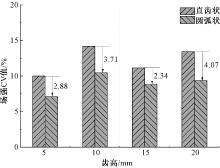
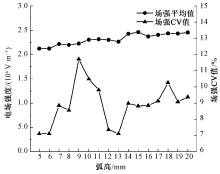
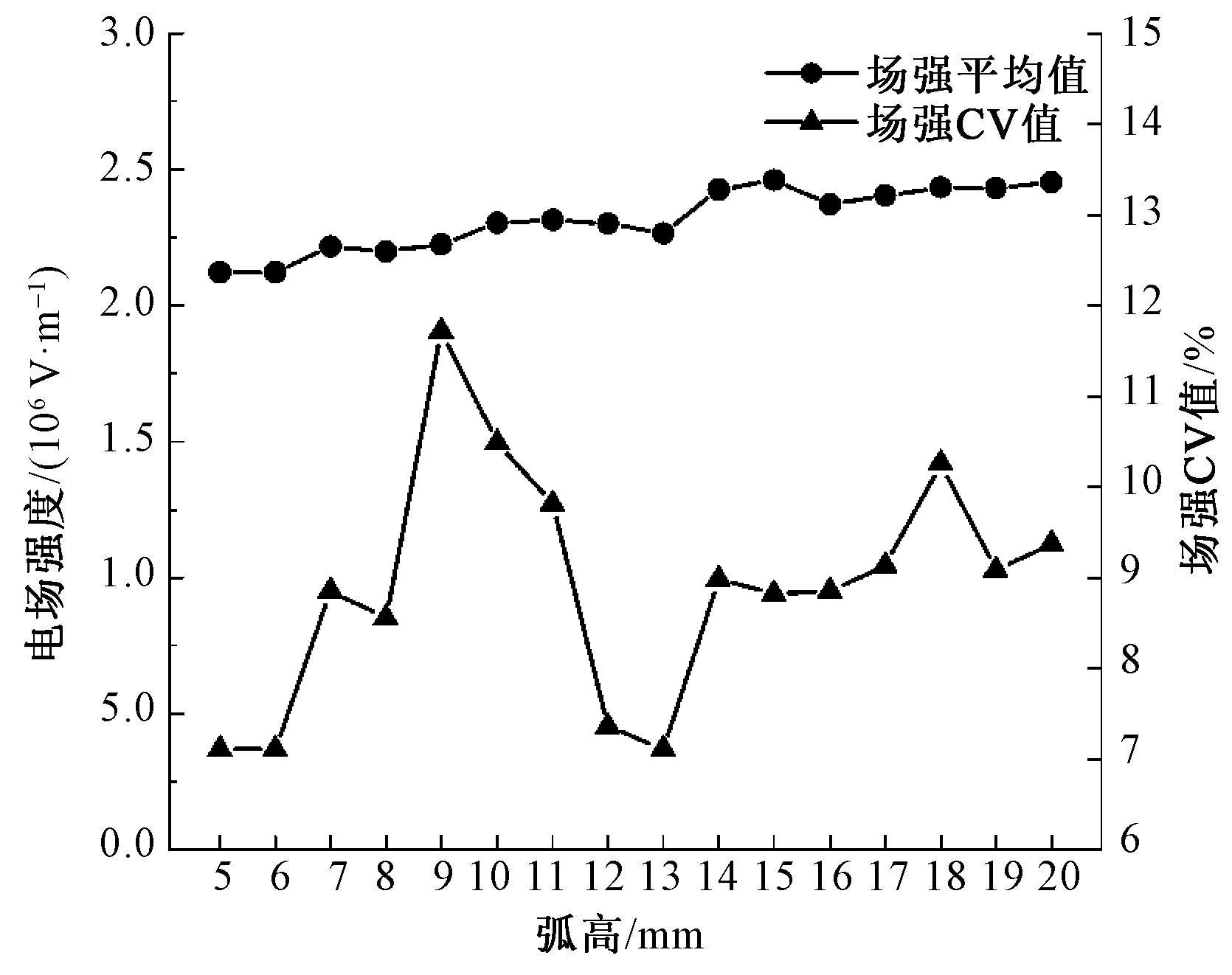
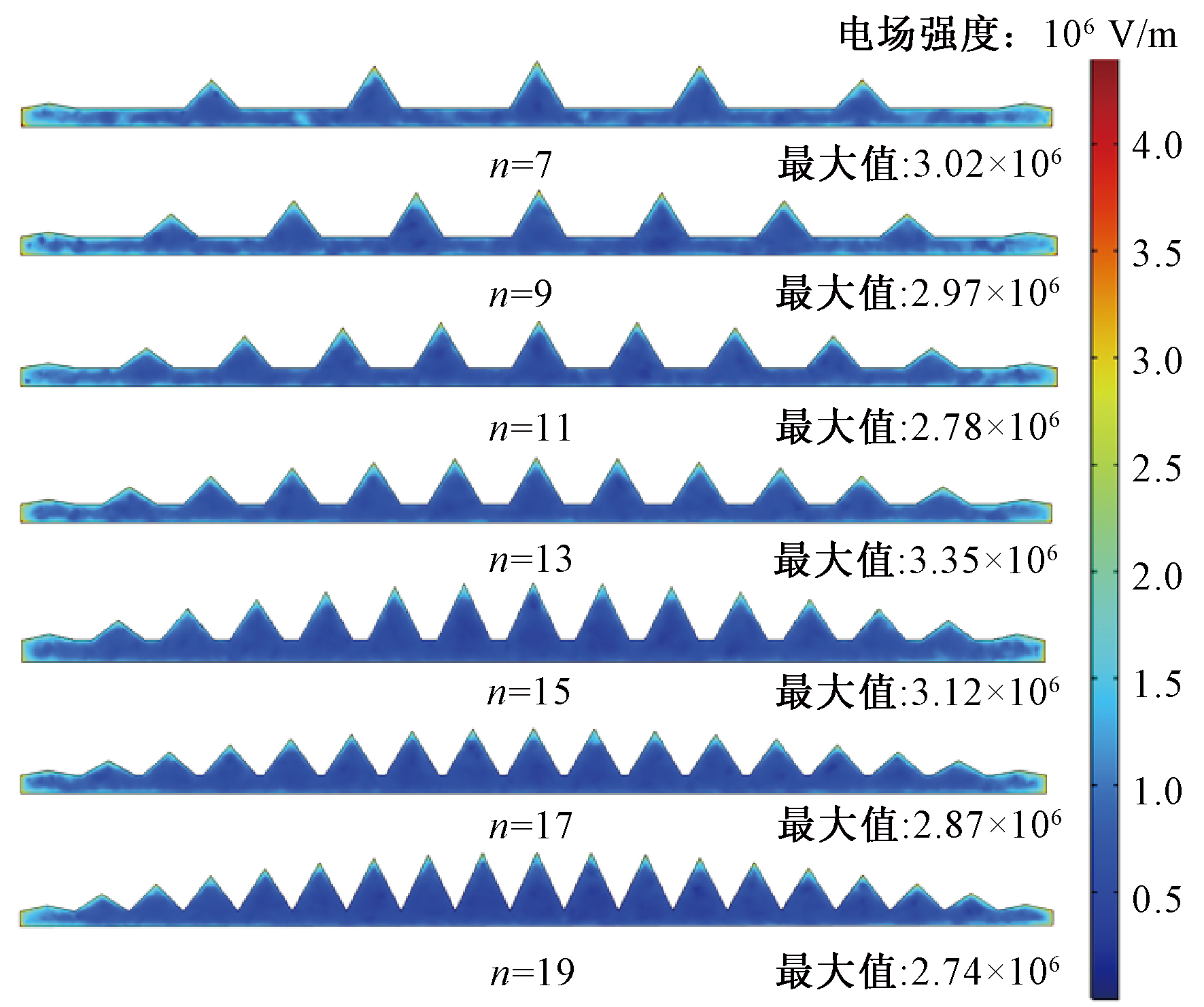
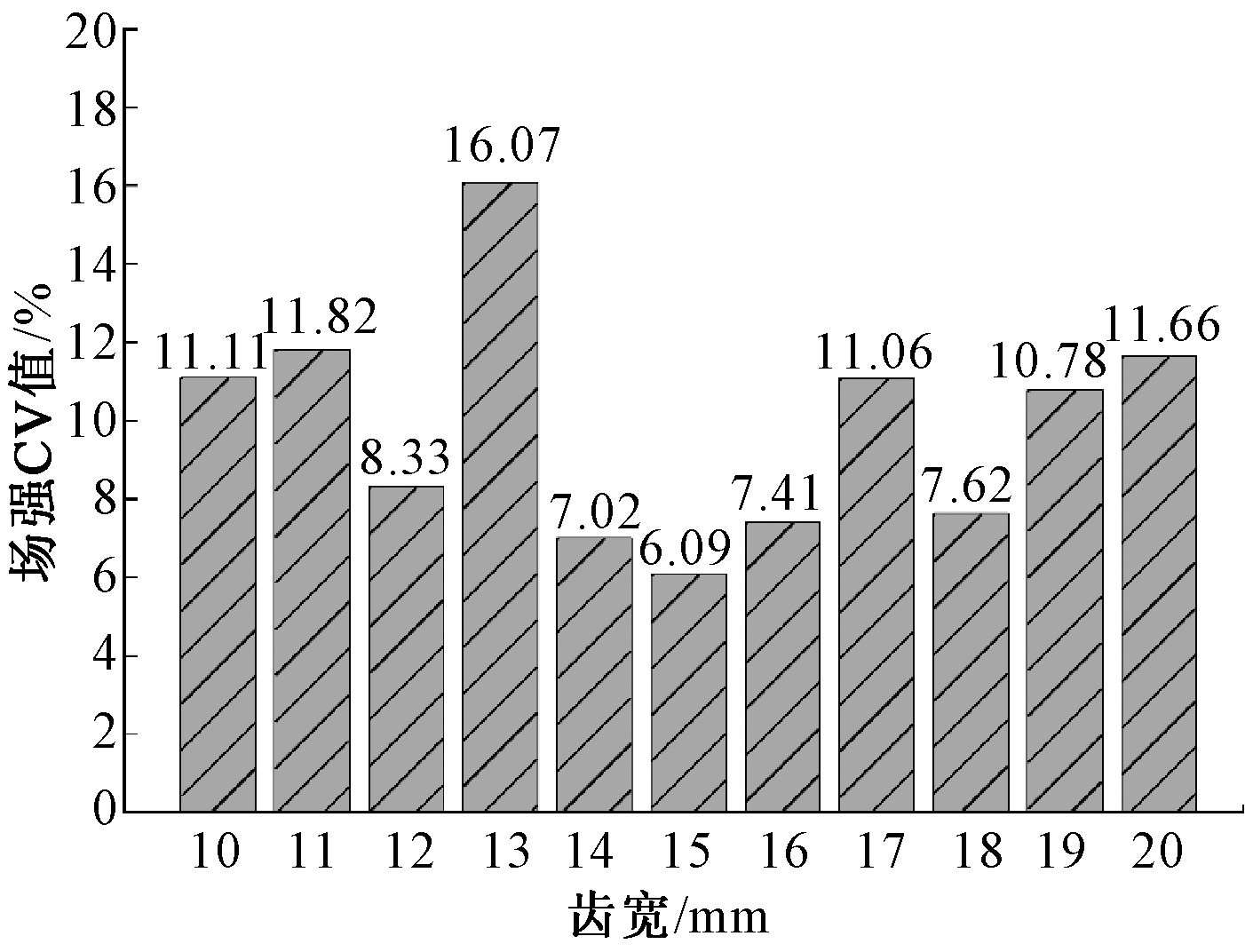
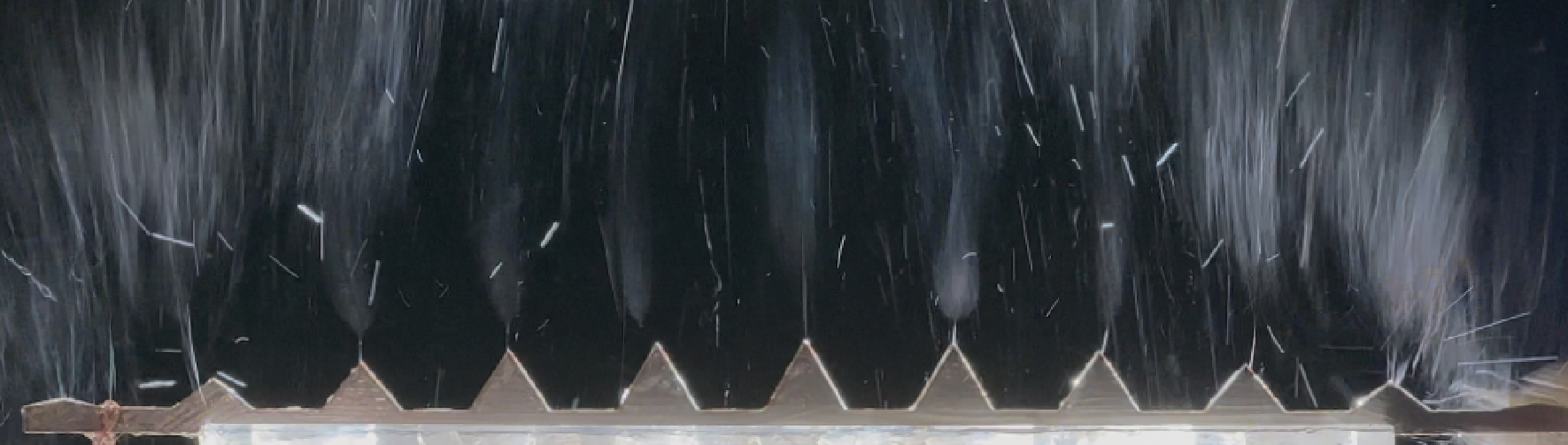
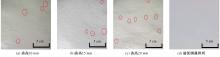
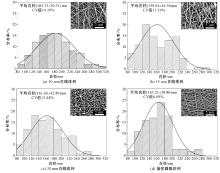
Results The electric field simulation results showed that there is a significant ‘End-effect’ in the distribution of electric field intensity in the straight-toothed saw nozzle. Specifically, the electric field intensity was higher at the tips of both sides of the saw and relatively lower in the middle region, and this uneven electric field distribution can lead to resulted in instability in the spinning process and variability in fiber quality. The initial electric field distribution of the nozzle shows a trend of being high at both ends and low in the middle. To make the electric field uniform, the height of the middle sawtooth was increased while reducing the height of the sawtooth at both ends. By using the principle of a circle formation using three points, an arc was drawn through the outer endpoints of the sawtooth at both ends and the tip vertex of the middle sawtooth. The field strength at the tips was reduced by optimizing the design of the circular arc serrated nozzle. The optimized circular-arc serrated nozzles showed generally 2% to 4% lower CV value than that of straight serrated nozzles. Simulation was carried out for different parameters to find the arc model with the best CV value performance, i.e. when the arc height S=13 mm, the number of teeth n=11 and the tooth width c=15 mm, the CV value of the electric field was 6.09% and the electric field intensity was more uniform. Experimental comparison made by observing the jet morphology verified that the number of straight teeth sawtooth for 5 mm jet was less. However, with the ‘end-effect’ fiber whipping entanglement, the phenomenon of flying silk was obvious. The optimized nozzle jet morphology was better and the edge effect problem was greatly improved, evidenced by no flying silk phenomenon and high fiber quality. The Phenom Pure Plus desktop scanning electron microscope was used to observe the appearance of the fibers, and it was found that the fibers were distributed relatively uniformly. Image processing software was used to randomly select fibers for diameter analysis, which showed that the average diameter of the spun fibers was 163 nm with smooth fiber surface, and the diameter of the distribution area is more concentrated. The experimental and simulation results agree to each other, and the simulation data and experimental phenomena have high accuracy and consistency.

Conclusion In this study, a multi-tip serrated electrostatic spinning nozzle was successfully designed and optimized to improve spinning efficiency and fiber quality by improving electric field uniformity. The optimized circular-arc serrated nozzle has better electric field uniformity compared to the straight-arc serrated nozzle, solves the problem of easy clogging in conventional needles, the jet position is fixed and the shape is more uniform, which provides strong support for large-scale production of electrostatic spinning.

Key words: electrospinning, serrated nozzle, edge-effect, circularly arranged tip, electric field simulation, large-scale production

中图分类号: 

  • TS174.8

图1

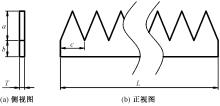
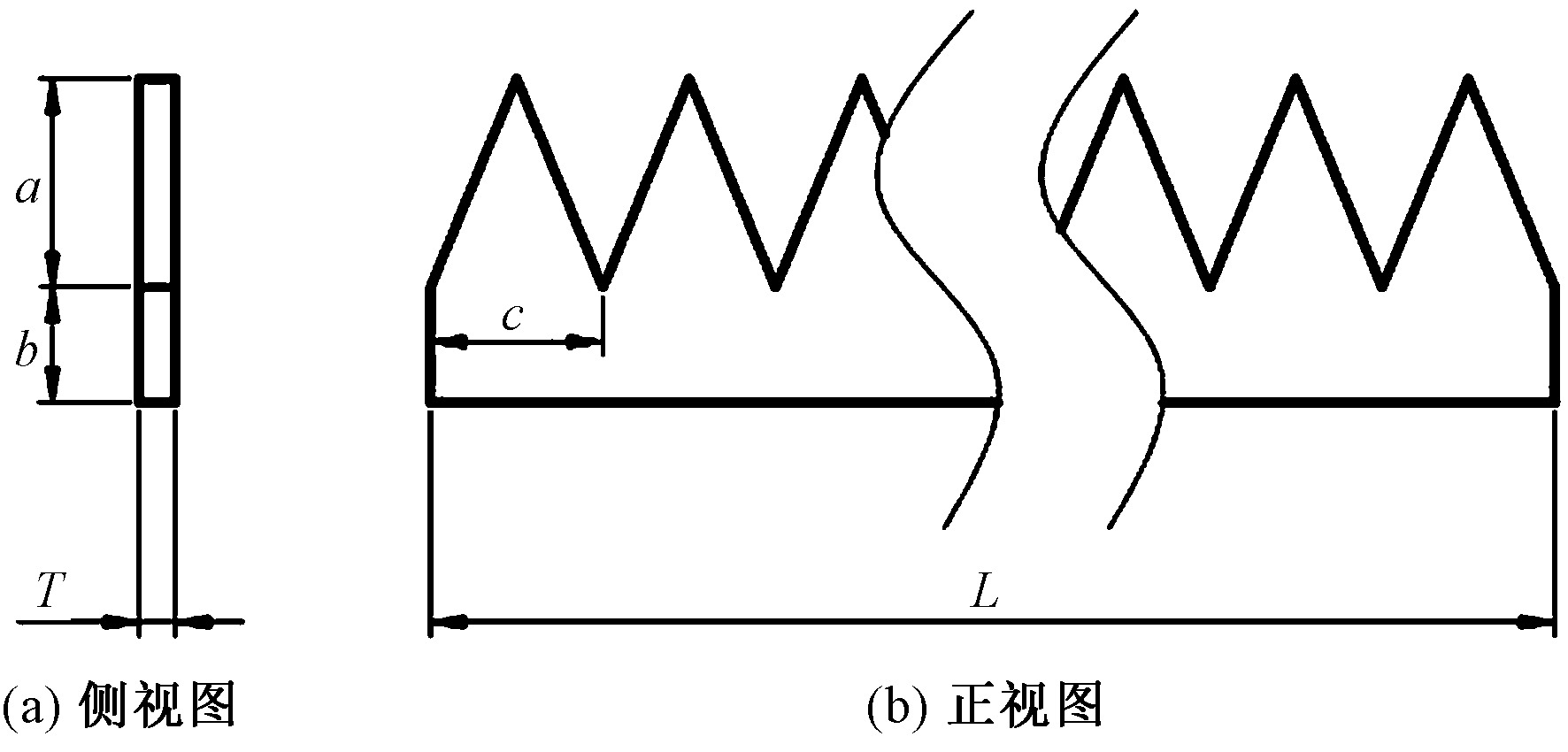
锯齿模型示意图 注:L为踞齿总长,mm。"

图2

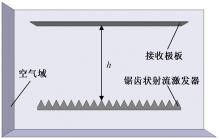
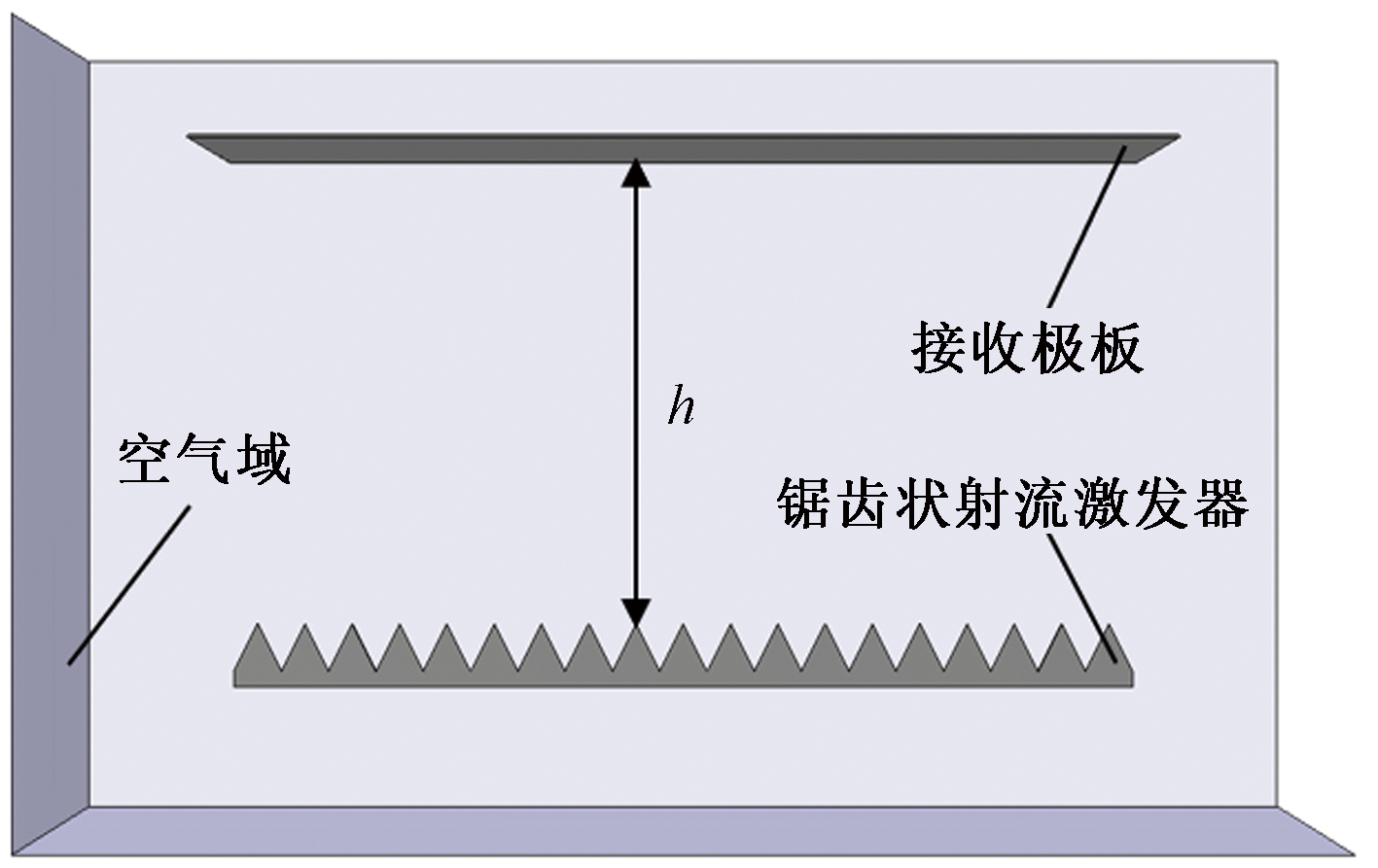
COMSOL仿真模型"

图3

不同齿高的场强变化"

图4

直线排列射流激发器电场云图"

图5

直线排列与圆弧排列射流激发器的变化"

图6

圆弧排列射流激发器电场云图"

表1

圆弧排列射流激发器电场强度表"

编号
i
电场强度/(106 V·m-1) 编号
i
电场强度/(106 V·m-1) 编号
i
电场强度/(106 V·m-1)
5 mm 10 mm 15 mm 20 mm 5 mm 10 mm 15 mm 20 mm 5 mm 10 mm 15 mm 20 mm
1 前
2.14
2.12
2.28
2.27
2.32
2.21
2.18
2.01
8 前
2.13
2.08
2.27
2.48
2.90
2.84
2.63
2.68
15 前
1.95
1.74
2.17
2.37
2.43
2.39
2.63
2.82
2 前
1.88
2.04
2.16
2.11
2.42
2.73
2.16
2.45
9 前
2.01
2.23
2.65
2.44
2.94
2.58
2.39
2.38
16 前
2.09
1.99
2.35
2.19
2.59
2.70
2.60
2.72
3 前
2.07
2.07
2.23
2.20
2.08
2.33
2.45
2.16
10 前
2.23
2.06
2.27
2.23
2.37
2.55
2.57
2.35
17 前
2.00
1.81
2.12
2.03
2.31
2.54
2.13
2.29
4 前
2.17
2.01
3.37
2.41
2.54
2.27
2.23
2.52
11 前
2.29
2.25
2.52
2.66
2.66
2.58
2.89
2.84
18 前
2.09
2.04
2.12
2.02
2.32
2.77
2.28
2.32
5 前
2.33
2.09
2.17
2.31
2.30
2.72
2.51
2.58
12 前
2.59
2.13
3.62
3.42
2.56
2.29
2.47
2.76
19 前
2.11
2.13
2.19
2.01
2.06
2.03
2.09
2.03
6 前
2.20
2.21
2.28
2.16
2.39
2.34
2.54
2.26
13 前
2.28
2.06
2.21
2.08
2.54
2.33
2.47
2.52
平均值
标准差
2.12
1.50
2.30
2.42
2.46
2.17
2.45
2.29
7 前
2.26
2.29
2.43
2.38
2.44
2.42
2.70
2.71
14 前
2.20
2.25
2.19
2.13
2.39
2.38
2.50
2.35

图7

直线排列与圆弧排列场强CV值对比"

图8

圆弧锯齿电场强度与CV值折线图"

图9

齿数对电场强度的影响"

图10

不同齿数电场云图"

图11

齿宽对电场强度的影响"

图12

不同齿宽电场云图"

图13

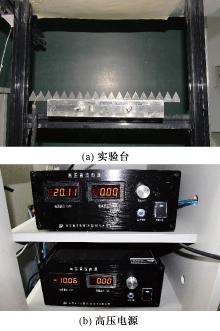
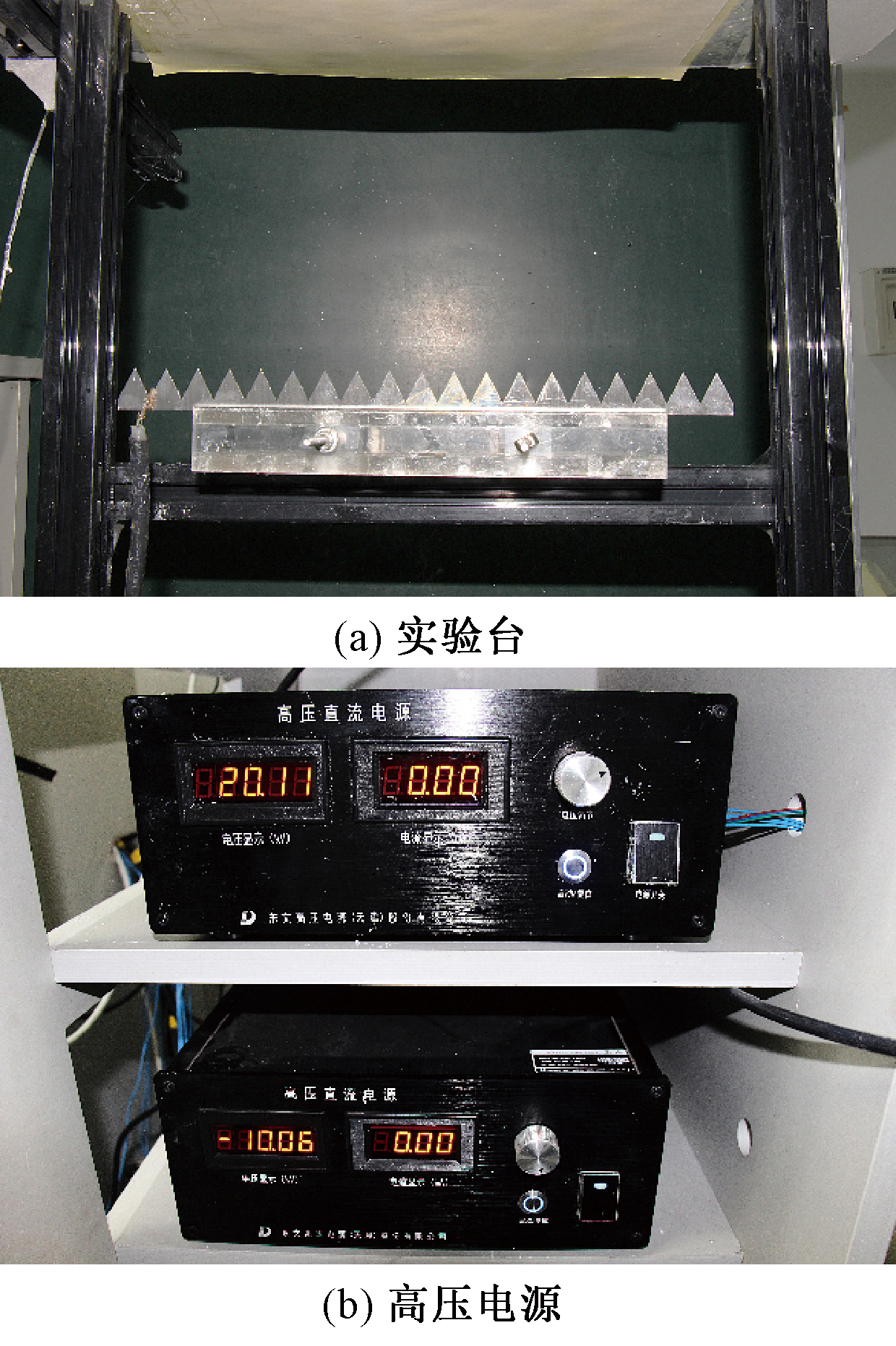
实验设备"

图14

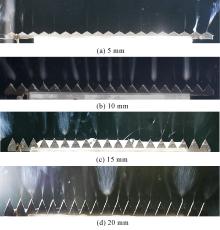
直线形锯齿射流形态"

图15

最优圆弧锯齿射流形态"

图16

纤维膜成品图"

图17

纤维直径分析"

[1] KEIROUZ Antonios, WANG Zhe, et al.REDDY Vundrala Sumedha, The history of electrospinning: past, present, and future developments[J]. Advanced Materials Technologies, 2023, 8(11): 2201723.
[2] LEE Jaeyu, MOON Seongjun, LAHANN Joerg, et al. Recent progress in preparing nonwoven nanofibers via needleless electrospinning[J]. Macroolecular Materials and Engineering, 2023, 308(9): 2300057.
[3] HAO Ming, ZHANG Tianyi, HU Xiaodong, et al. Simulation and experimental study of nanofiber yarns prepared by disc electrospinning[J]. Textile Research Journal, 2024: 1945-1958.
[4] 刘健, 董守骏, 王程皓, 等. 花瓣状多尖端静电纺丝喷头的电场模拟及优化[J]. 纺织学报, 2024, 45(10):191-199.
doi: 10.13475/j.fzxb.20230803201
LIU Jian, DONG Shoujun, WANG Chenghao, et al. Electric field simulation and optimization on petal shaped electrospinning nozzle with multiple tips[J]. Journal of Textile Research, 2024, 45(10):191-199.
doi: 10.13475/j.fzxb.20230803201
[5] 张佃平, 王昊, 林文峰, 等. 多喷头纺丝装置的仿真与设计[J]. 纺织学报, 2024, 45(10):200-207.
doi: 10.13475/j.fzxb.20230707101
ZHANG Dianping, WANG Hao, LIN Wenfeng, et al. Simulation and design of multi-nozzle spinning device[J]. Journal of Textile Research, 2024, 45(10):200-207.
doi: 10.13475/j.fzxb.20230707101
[6] 王晗, 李文望, 陈安, 等. 针对纳米纤维制备的静电纺丝技术研究进展[J]. 广东工业大学学报, 2012, 29(1): 78-82.
WANG Han, LI Wenwang, CHEN An, et al. Advances in electrospinning technology for preparing nano-fibers[J]. Journal of Guangdong University of Technology, 2012, 29(1): 78-82.
[7] JIANG Jiaxin, ZHENG Gaofeng, WANG Xiang, et al. Arced multi-nozzle electrospinning spinneret for high-throughput production of nanofibers[J]. Micromachines, 2019, 11(1): 27.
[8] 刘延波, 罗鑫, 郝铭, 等. 螺线式无针头静电纺丝过程中场强的分布与改善[J]. 天津工业大学学报, 2021, 40(4): 38-44.
LIU Yanbo, LUO Xin, HAO Ming, et al. Distribution and improvement of field strength in spiral coil needleless electrospinning process[J]. Journal of Tiangong University, 2021, 40(4): 38-44.
[9] 唐海洲, 洪洁, 曾佳琪, 等. 批量化制备纳米纤维静电纺丝设备研究进展[J]. 合成纤维工业, 2021, 44(5): 71-76,82.
TANG Haizhou, HONG Jie, ZENG Jiaqi, et al. Research progress of electrospinning device for batch preparation of nanofibers[J]. China Synthetic Fiber Industry, 2021, 44(5): 71-76,82.
[10] LIU Jian, LIU Yanbo, YANG Wenxiu, et al. Lithium ion battery separator with high performance and high safety enabled by tri-layered SiO2@PI/m-PE/SiO2@PI nanofiber composite membrane[J]. Journal of Power Sources, 2018, 396: 265-275.
[11] 陈威亚, 杨眉. 静电纺丝喷丝装置专利分析[J]. 科技与创新, 2021(3): 49-50,52.
CHEN Weiya, YANG Mei. Patent analysis of the electrospinning jetting device[J]. Science and Technology & Innovation, 2021(3): 49-50,52.
[12] YARIN A L, ZUSSMAN E. Upward needleless electrospinning of multiple nanofibers[J]. Polymer, 2004, 45(9): 2977-2980.
[13] 魏保平. 连续无针电纺纳米纤维制造装备及技术[J]. 化纤与纺织技术, 2018, 47(2): 44-47.
WEI Baoping. The manufacturing equipment and technology of continuous needle-free electrospinning nanofiber[J]. Chemical Fiber & Textile Technology, 2018, 47(2): 44-47.
[14] WAQAS Muhammad, KEIROUZ Antonios, PUTRI Maria Kana Sanira, et al. Design and development of a nozzle-free electrospinning device for the high-throughput production of biomaterial nanofibers[J]. Medical Engineering & Physics, 2021, 92: 80-87.
[15] LUKAS David, SARKAR Arindam, POKORNY Pavel. Self-organization of jets in electrospinning from free liquid surface: a generalized approach[J]. Journal of Applied Physics, 2008, 103(8):084309.
[1] 马晓远, 包伟. 防水透湿纳米纤维复合织物研究现状及发展趋势[J]. 纺织学报, 2025, 46(08): 254-262.
[2] 时虎, 王赫, 王洪杰, 潘显苗. 多孔交联纳米纤维基超级电容器隔膜的设计[J]. 纺织学报, 2025, 46(08): 45-52.
[3] 徐丽亚, 汪瑱, 杨鸿杰, 汪蔚. 氧化锌-银/生物基聚酰胺56纳米纤维膜的制备及其抗菌性能[J]. 纺织学报, 2025, 46(07): 37-45.
[4] 贾陈诺瓦, 张勇, 朱威岩, 刘赛, 唐宁. 芯纱种类对聚丙烯腈纳米纤维导电包芯纱性能的影响[J]. 纺织学报, 2025, 46(07): 87-95.
[5] 陈亚娟, 郭瀚宇, 张陈恬, 李欣欣, 张雪萍. 聚乙烯醇/海藻酸钠/锦纶66复合水凝胶包芯纱的制备及其吸湿性能[J]. 纺织学报, 2025, 46(06): 103-110.
[6] 王春翔, 李姣, 解开放, 薛宏坤, 徐广标. 天麻多糖/聚乙烯醇静电纺抗菌保鲜膜的制备与性能[J]. 纺织学报, 2025, 46(06): 73-79.
[7] 张嘉诚, 于影, 左雨欣, 顾志清, 汤腾飞, 陈洪立, 吕勇. 聚丙烯腈/二硫化钼纤维薄膜的挠曲电效应与扭转传感特性[J]. 纺织学报, 2025, 46(06): 80-87.
[8] 邱月, 杨询, 李昊, 李海东, 吴国忠, 张彩丹. 聚琥珀酰亚胺纳米纤维膜改性及其染料吸附性能[J]. 纺织学报, 2025, 46(06): 88-95.
[9] 时晓聪, 陈莉, 杜迅. 茜素-聚乳酸/胶原蛋白纳米纤维膜的制备及其氨气检测性能[J]. 纺织学报, 2025, 46(05): 143-150.
[10] 闫静, 王亚倩, 刘晶晶, 李好义, 杨卫民, 康卫民, 庄旭品, 程博闻. 熔融静电纺长丝纱的制备及其在摩擦纳米发电机中的应用[J]. 纺织学报, 2025, 46(05): 23-29.
[11] 张惠琴, 吴改红, 刘霞, 刘淑强, 赵恒, 刘涛. 生物可降解聚乳酸防护口罩的开发及性能评估[J]. 纺织学报, 2025, 46(03): 116-122.
[12] 陆宁, 陈碧泠, 宋功吉, 罗忆心, 王建南, 许建梅. 纳米纤维在人工神经导管中的应用与研究进展[J]. 纺织学报, 2025, 46(03): 236-244.
[13] 赵超, 金欣, 王闻宇, 朱正涛. 自充电超级电容器用聚丙烯腈纳米纤维隔膜的制备及其性能[J]. 纺织学报, 2025, 46(02): 20-25.
[14] 詹克静, 杨鑫, 张应龙, 张昕, 潘志娟. 自凝聚丝素蛋白微纳米纤维膜的制备及其力学增强[J]. 纺织学报, 2025, 46(02): 10-19.
[15] 范梦晶, 岳欣琰, 邵剑波, 陈雨, 洪剑寒, 韩潇. 基于静电纺纤维包芯纱的电容式扭转传感器构建及其传感性能[J]. 纺织学报, 2025, 46(02): 106-112.
Viewed
Full text


Abstract

Cited

  Shared   
  Discussed   
No Suggested Reading articles found!