纺织学报 ›› 2025, Vol. 46 ›› Issue (11): 170-177.doi: 10.13475/j.fzxb.20241206901
冯娅桐, 姜玥瑶, 王萍( ), 张岩
), 张岩
FENG Yatong, JIANG Yueyao, WANG Ping(), ZHANG Yan
摘要:
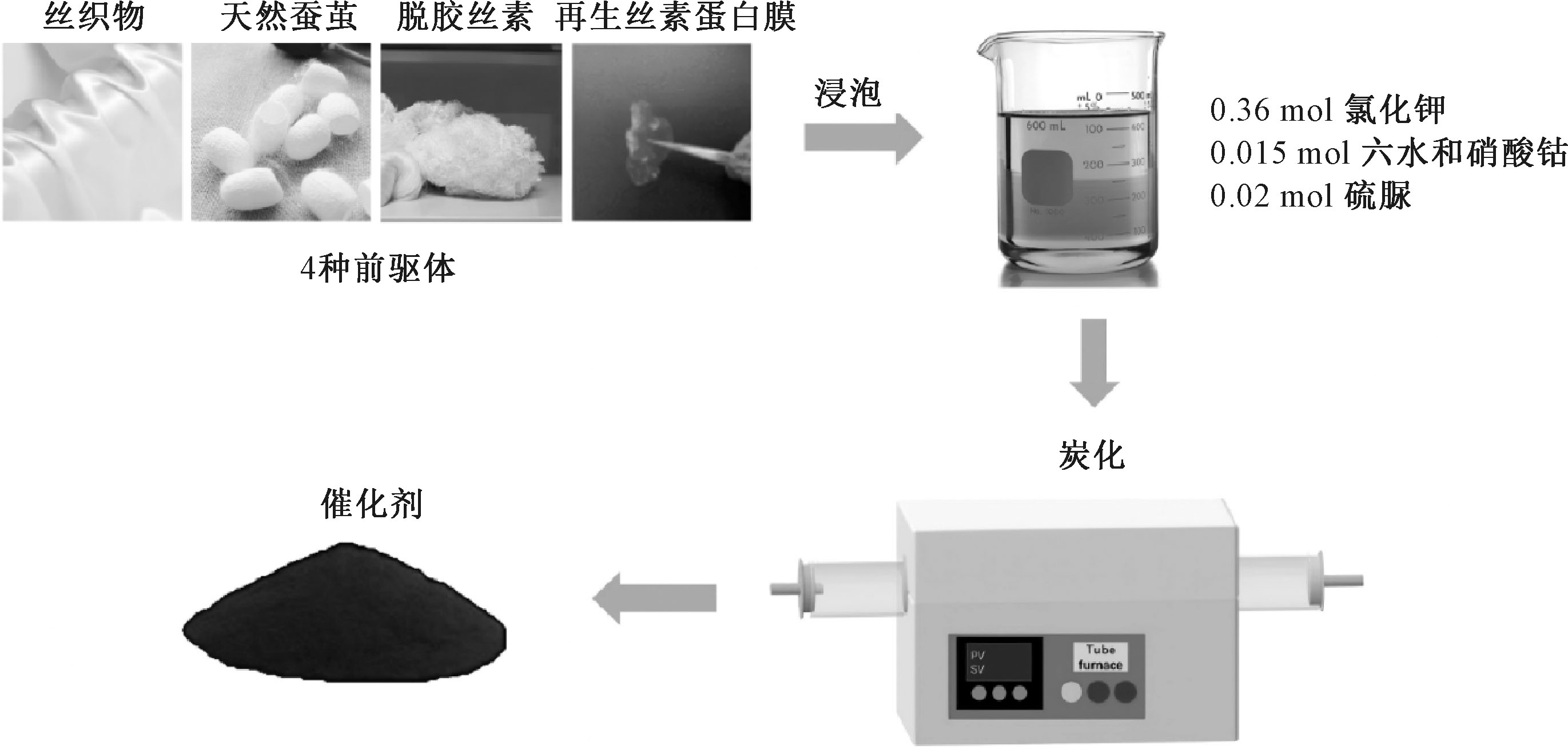
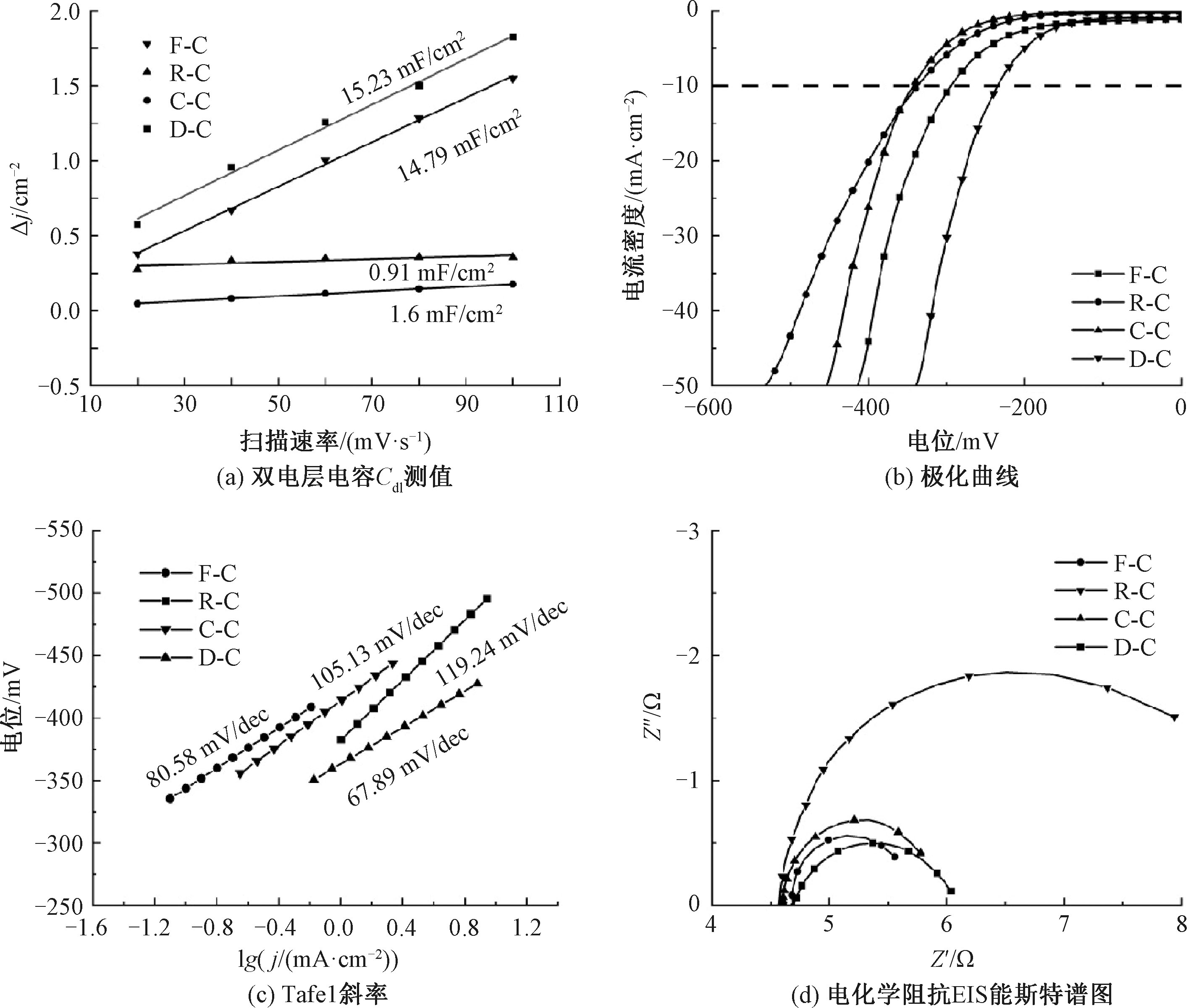
针对现有商用析氢催化剂成本高、原料稀缺的问题,选用天然蚕丝基原材料(丝织物、天然蚕茧、脱胶丝素以及再生丝素蛋白膜)为丝素基碳材料前驱体,选用六水合硝酸钴和硫脲作为金属前驱体,采用化学活化法、浸渍法和高温炭化法制备丝素基碳材料析氢电催化剂,研究了前驱体形式对材料形貌结构以及电催化性能的影响。结果表明:浸渍负载金属后表面都形成了Co3S4尖晶石硫化物作为主要活性成分,其中采用脱胶丝素作为碳前驱体制备的催化剂具有最大的电化学活性面积、最高的石墨化程度以及最佳的电催化性能,其过电位和塔菲尔斜率分别低至235 mV和67.89 mV/dec。
中图分类号:
| [1] |
CHUNG D E, KIM H H, KIM M K, et al. Effects of different Bombyx Mori silkworm varieties on the structural characteristics and properties of silk[J]. International Journal of Biological Macromolecules, 2015, 79: 943-951.
doi: 10.1016/j.ijbiomac.2015.06.012 |
| [2] |
DAMAK C, LEDUCQ D, HOANG H M, et al. Liquid air energy storage (LAES) as a large-scale storage technology for renewable energy integration: a review of investigation studies and near perspectives of LAES[J]. International Journal of Refrigeration, 2020, 110: 208-218.
doi: 10.1016/j.ijrefrig.2019.11.009 |
| [3] |
FU P, ZHOU L H, SUN L H, et al. Nitrogen-doped porous activated carbon derived from cocoon silk as a highly efficient metal-free electrocatalyst for the oxygen reduction reaction[J]. RSC Advances, 2017, 7(22): 13383-13389.
doi: 10.1039/C7RA00433H |
| [4] |
LIU J T, WEI L L, WANG H Q, et al. Silk gel-based N self-doped porous activated carbon as an efficient electrocatalyst in neutral, alkaline and acidic medium[J]. Fuel, 2021, 287: 119485.
doi: 10.1016/j.fuel.2020.119485 |
| [5] |
XIAO W J, LI Y Y, ZHANG Y, et al. Silk derived electrospun carbon nanofibers loaded with CoS nanoparticles as efficient hydrogen evolution reaction catalysts in acidic and alkaline media[J]. Fuel, 2024, 369: 131797.
doi: 10.1016/j.fuel.2024.131797 |
| [6] |
ZHANG W Q, XI R F, LI Y Y, et al. Waste silk fabric derived N-doped carbon as a self-supported electrocatalyst for hydrogen evolution reaction[J]. Colloids and Surfaces A: Physicochemical and Engineering Aspects, 2023, 658: 130704.
doi: 10.1016/j.colsurfa.2022.130704 |
| [7] |
ZHU J, HU L S, ZHAO P X, et al. Recent advances in electrocatalytic hydrogen evolution using nano-particles[J]. Chemical Reviews, 2020, 120(2): 851-918.
doi: 10.1021/acs.chemrev.9b00248 |
| [8] | 杜英侠, 刘瑞, 鲁望婷, 等. 生物质衍生碳材料电催化裂解水研究进展[J]. 武汉大学学报(理学版), 2022, 68(2): 123-130. |
| DU Yingxia, LIU Rui, LU Wangting, et al. Research progress of biomass-derived carbon materials as catalysts for electrochemical water splitting[J]. Journal of Wuhan University (Natural Science Edition), 2022, 68(2): 123-130. | |
| [9] | 高志浩, 宁新, 明津法. 生物质基碳气凝胶及其在储能器件中应用研究进展[J]. 纺织学报, 2024, 45(6): 210-218. |
| GAO Zhihao, NING Xin, MING Jinfa. Research progress in biomass-based carbon aerogels in energy storage device[J]. Journal of Textile Research, 2024, 45(6): 210-218. | |
| [10] | 李思媛. 生物质基碳材料的制备及其电催化性能研究[D]. 北京: 北京化工大学, 2020: 16-19. |
| LI Siyuan. Preparation and electrocatalytic performance of Biomass-derived carbon materials[D]. Beijing: Beijing University of Chemical Technology, 2020: 16-19. | |
| [11] | 乌婧, 江振林, 吉鹏, 等. 纺织品前瞻性制备技术及应用研究现状与发展趋势[J]. 纺织学报, 2023, 44(1): 1-10. |
|
WU Jing, JIANG Zhenlin, JI Peng, et al. Research status and development trend of perspective preparation technologies and applications for textiles[J]. Journal of Textile Research, 2023, 44(1): 1-10.
doi: 10.1177/004051757404400101 |
|
| [12] | 于海洋, 王昉, 刘其春, 等. 新型丝素蛋白膜的结构和热分解动力学机理[J]. 物理化学学报, 2017, 33(2): 344-355. |
|
YU Haiyang, WANG Fang, LIU Qichun, et al. Structure and kinetics of thermal decomposition mechanism of novel silk fibroin films[J]. Acta Physico-Chimica Sinica, 2017, 33(2): 344-355.
doi: 10.3866/PKU.WHXB201611023 |
|
| [13] | 张文都. 基于农林废弃物的多尺度孔碳材料构建及氧电催化性能研究[D]. 徐州: 中国矿业大学, 2022: 1-25. |
| ZHANG Wendu. Study on construction of hierarchically porouscarbon materials derived from agricultural andforest wastes and oxygen electrocatalytic perform-ance[D]. Xuzhou: China University of Mining and Technology, 2022: 1-25. |
| [1] | 马颖媛, 李建芳, 胡毅. 活性红195在异构烷烃体系中对蚕丝织物的少水染色性能[J]. 纺织学报, 2025, 46(11): 178-187. |
| [2] | 梁睿, 李众, 童维红, 叶长怀. 聚乙烯衍生炭化织物及其电磁屏蔽性能[J]. 纺织学报, 2025, 46(09): 27-35. |
| [3] | 曾姚, 吕金凤, 王介平, 刘荣鹏, 周婵. 三维蚕丝蛋白支架的应用研究进展[J]. 纺织学报, 2025, 46(09): 258-267. |
| [4] | 张逸飞, 万玥, 暨若云, 付少举, 王璐, 关国平. 蚕丝/氨纶医用压力臂套服用性能评价[J]. 纺织学报, 2025, 46(07): 111-118. |
| [5] | 徐桐, 徐瑞东, 王奕文, 田明伟. 纺织基触摸电子织物的制备及其触摸性能[J]. 纺织学报, 2025, 46(06): 31-37. |
| [6] | 张蕙, 杨海伟, 金鲜花, 杨超, 王宗乾. 氯化胆碱低共熔溶剂在蚕丝绵片脱胶和辅助漂白中的应用[J]. 纺织学报, 2025, 46(04): 103-108. |
| [7] | 王浙峰, 蔡王丹, 李诗雅, 徐青艺, 张红霞, 祝成炎, 金肖克. 抗菌除臭复合功能机织物的服用性能[J]. 纺织学报, 2025, 46(03): 90-99. |
| [8] | 杨鑫, 张昕, 潘志娟. 丝素纳米原纤增强再生丝素蛋白/聚乙烯醇纤维的结构与性能[J]. 纺织学报, 2024, 45(11): 1-9. |
| [9] | 王勃翔, 徐航丹, 李佳, 林杰, 程德红, 路艳华. 柞蚕丝素纳米纤维温敏复合膜制备及其生物相容性[J]. 纺织学报, 2024, 45(09): 18-25. |
| [10] | 刘术, 侯腾, 周乐乐, 李祥龙, 杨斌. 桑蚕的强制牵伸抽丝及其纤维性能[J]. 纺织学报, 2024, 45(06): 11-15. |
| [11] | 黄晴, 苏振岳, 周一帆, 刘青松, 李懿, 赵萍, 王鑫. 饲料与桑叶饲喂的家蚕蚕丝品质分析[J]. 纺织学报, 2024, 45(05): 1-9. |
| [12] | 陈锟, 许晶莹, 郑怡倩, 李加林, 洪兴华. 丝网印刷还原氧化石墨烯改性蚕丝织物的导电与电热性能[J]. 纺织学报, 2024, 45(03): 122-128. |
| [13] | 谭婷, 李哲阳, 马明波, 周文龙. 天然绿色蚕丝抗氧化组分向皮肤迁移的特性研究[J]. 纺织学报, 2023, 44(10): 75-80. |
| [14] | 梁志结, 罗正智, 程海兵, 贾维妮, 毛庆辉. 多钒酸盐催化氧化咖啡酸及其对羊毛织物的原位染色性能[J]. 纺织学报, 2023, 44(10): 98-103. |
| [15] | 何铠君, 沈加加, 刘国金. 石墨烯改性蚕丝的制备方法及其应用研究进展[J]. 纺织学报, 2023, 44(09): 223-231. |
|
||
 京公网安备11010502044800号