纺织学报 ›› 2026, Vol. 47 ›› Issue (03): 35-43.doi: 10.13475/j.fzxb.20251205401
张宝华1, 夏杰1, 项复玉1, 汪瑱1, 吴韶华2, 张彩丹1( )
)
ZHANG Baohua1, XIA Jie1, XIANG Fuyu1, WANG Zhen1, WU Shaohua2, ZHANG Caidan1()
摘要:
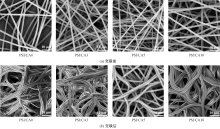
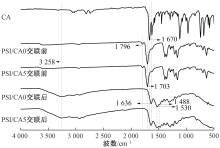
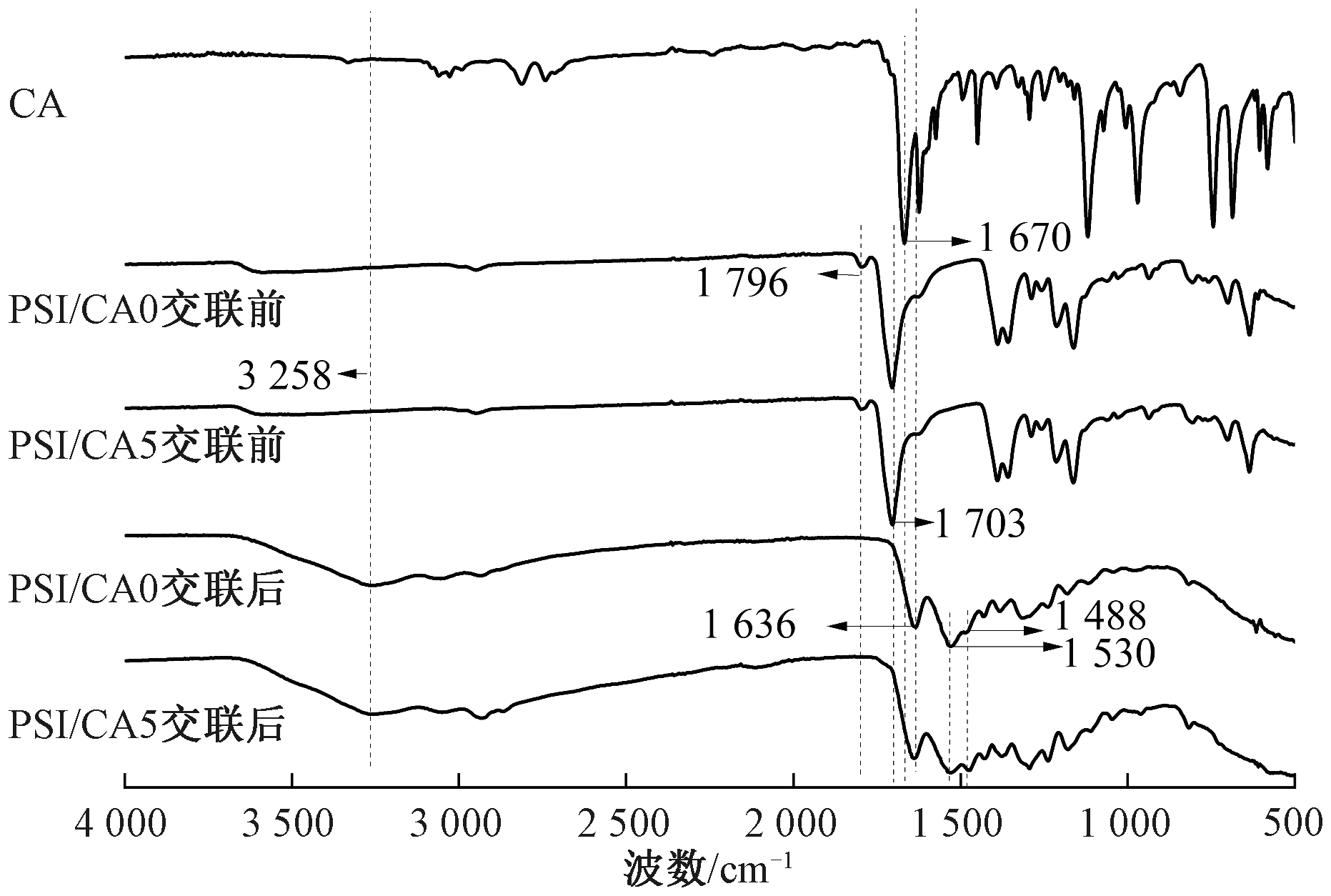
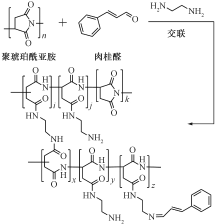
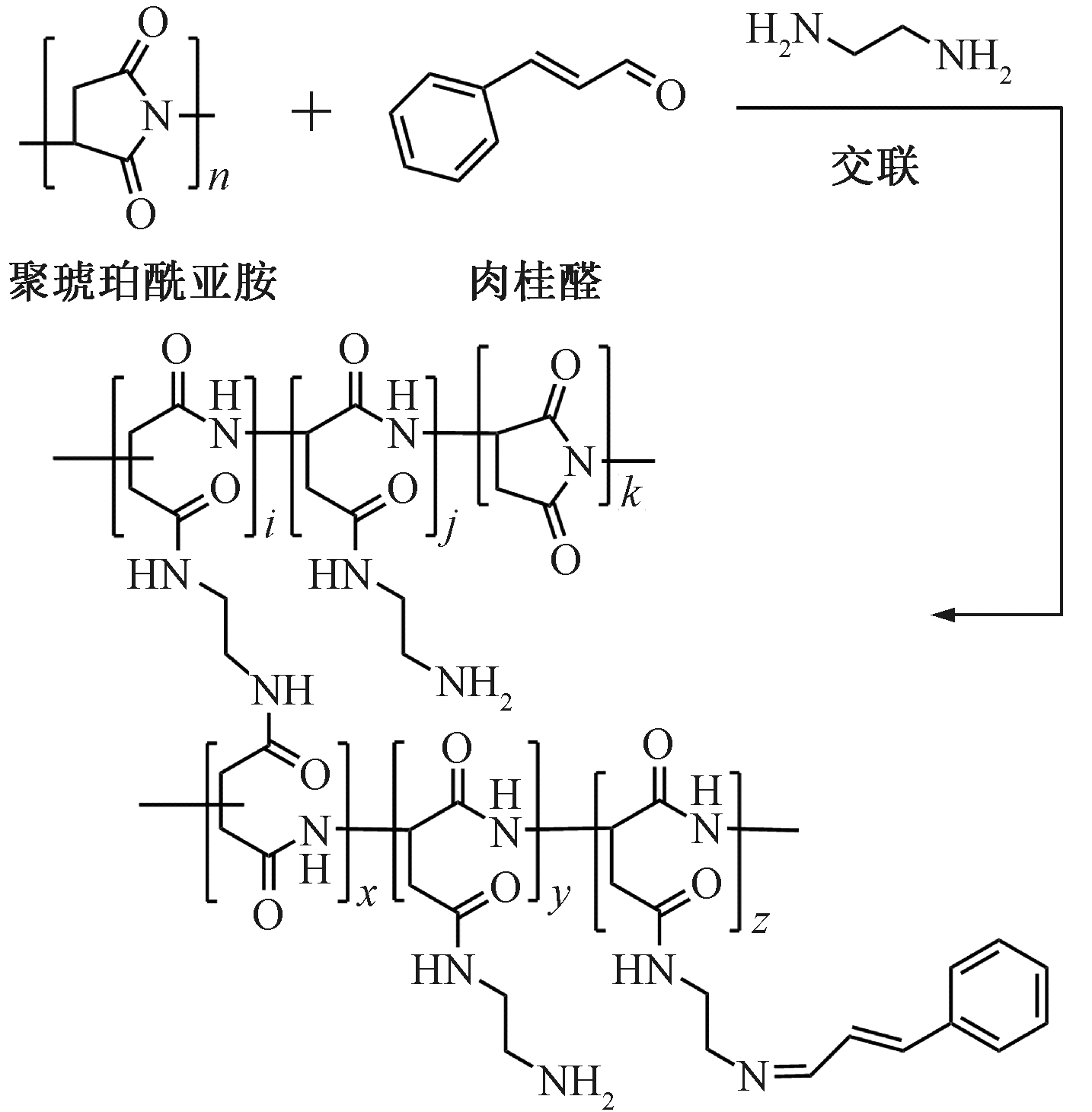
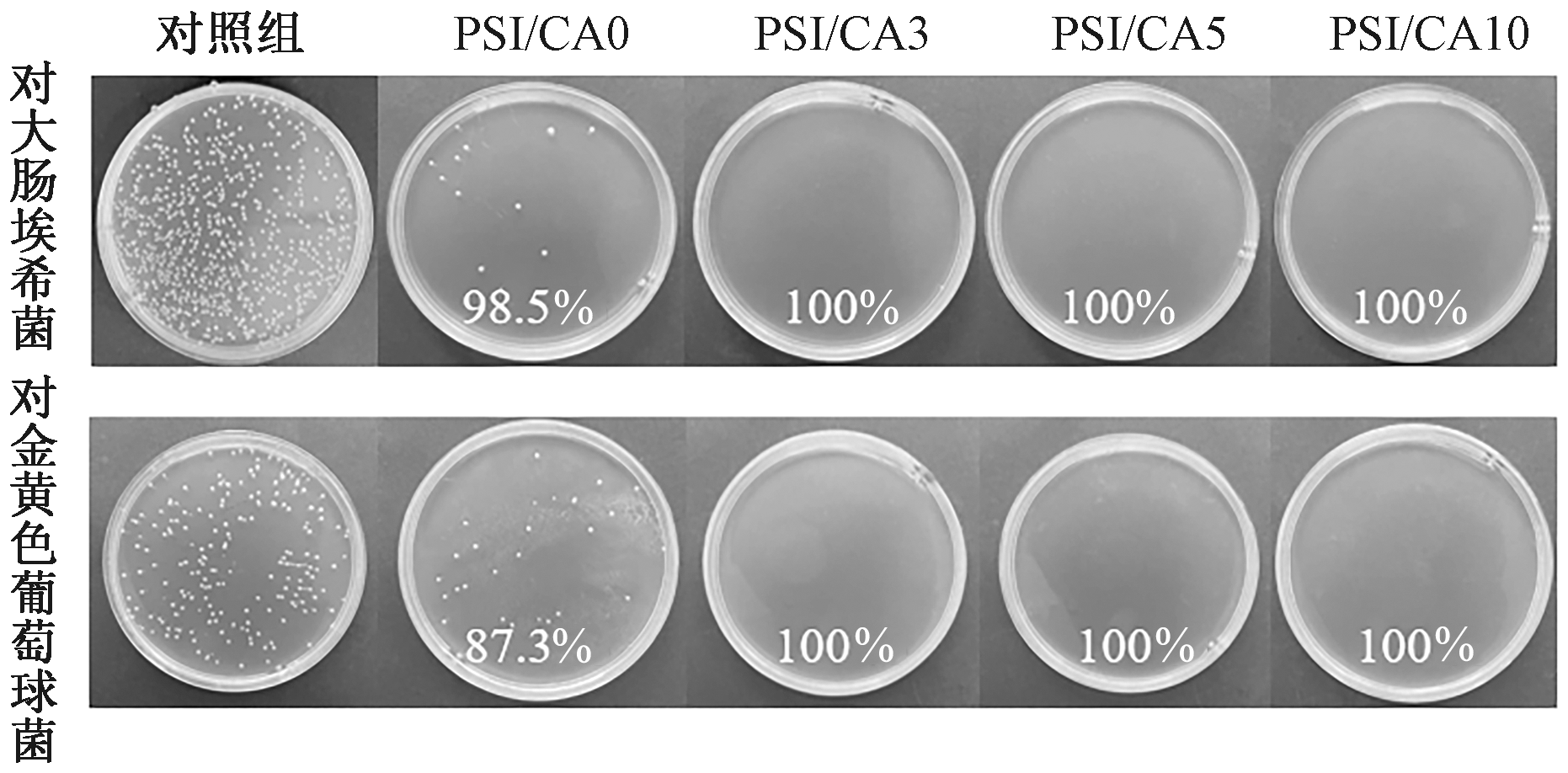
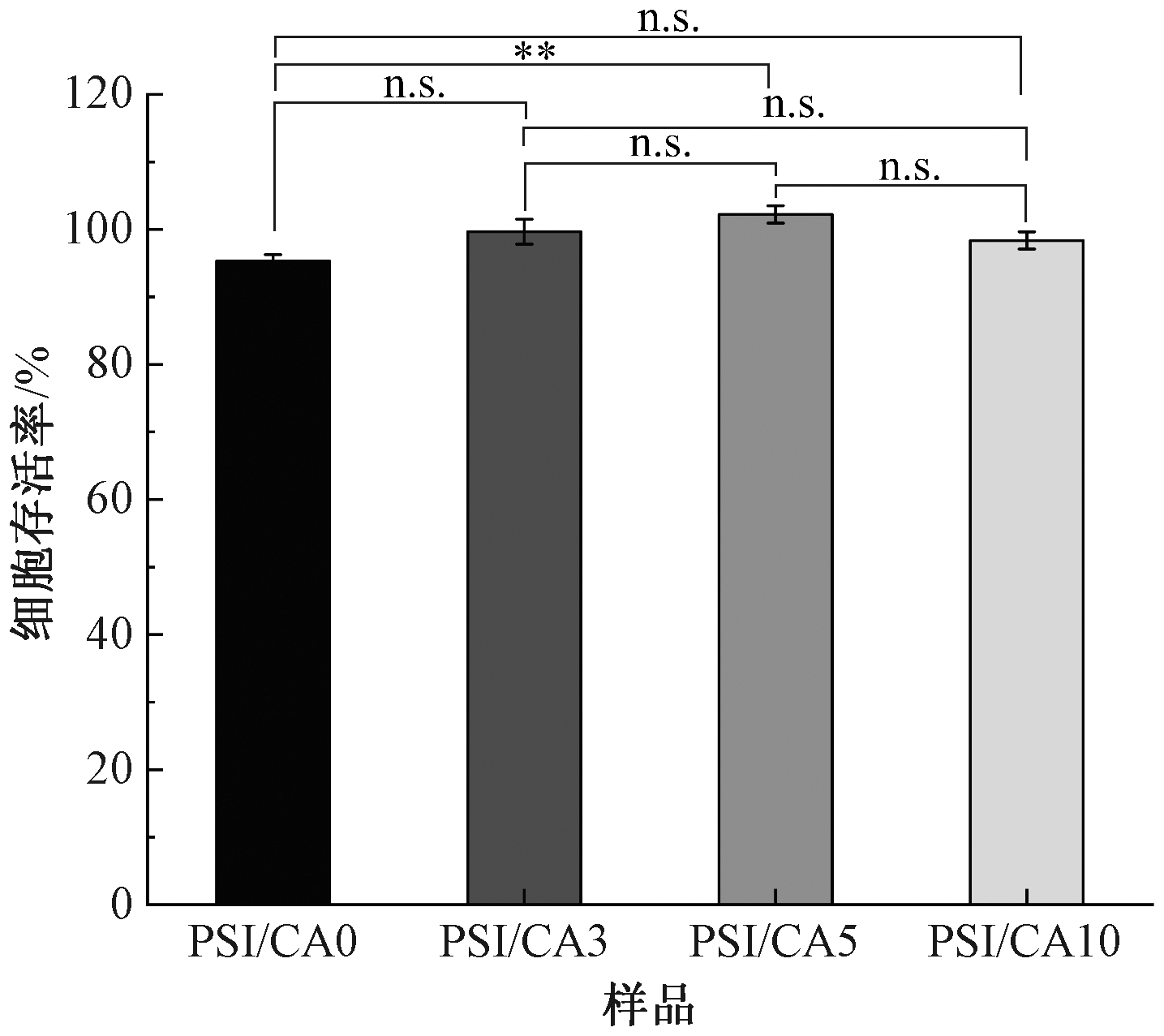
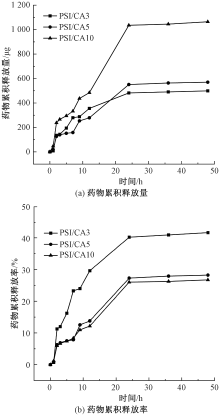
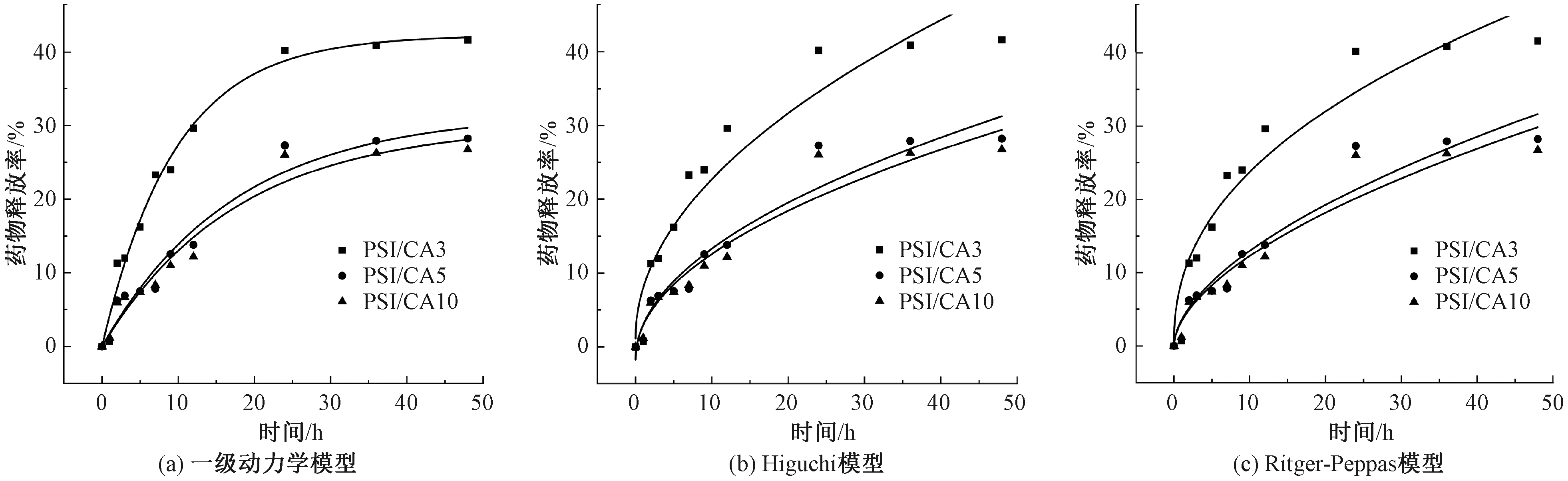
静电纺纤维膜凭借其独特结构被视为理想伤口敷料,为此,选用易改性生物材料聚琥珀酰亚胺(PSI)为原料,肉桂醛(CA)为功能性添加剂,采用静电纺丝方法制备PSI/CA静电纺纤维膜,在此基础上对其进行交联改性,获得抗菌纤维敷料。借助扫描电镜、红外光谱仪、拉伸测试仪和吸水倍率测试,对比了PSI/CA静电纺纤维膜交联前后的结构与性能变化,并对交联后PSI/CA静电纺纤维膜的抗菌性能、细胞相容性和释药性能进行分析。结果表明:PSI/CA静电纺纤维膜交联前后均能保持良好的纤维形貌;交联改性后的PSI/CA静电纺纤维膜中琥珀酰亚胺环打开,形成交联结构,静电纺纤维膜强度明显提升;交联改性后的PSI/CA静电纺纤维膜具备良好的抗菌性能,CA添加量为3%、5%和10%的纤维膜对大肠埃希菌和金黄色葡萄球菌的抑菌率均可达100%;不同CA添加量的PSI/CA静电纺纤维交联膜均有良好的细胞相容性;通过药物缓释模型分析,CA释放行为符合一级动力学模型,释药机制以Fickian扩散为主,伴随少量的载体溶蚀。交联改性后的PSI/CA静电纺纤维膜具有良好的力学性能、抗菌性、细胞相容性以及持续释药能力,在医用敷料领域有一定的应用潜力。
中图分类号:
| [1] | 吴乐然, 吴霓欢, 李林耿, 等. 负载厚朴酚的抗菌纳米纤维膜的制备及其性能[J]. 纺织学报, 2025, 46(10): 30-38. |
|
WU Leran, WU Nihuan, LI Lingeng, et al. Preparation and performance of antibacterial nanofiber membrane loaded with magnolol[J]. Journal of Textile Research, 2025, 46(10): 30-38.
doi: 10.1177/004051757604600105 |
|
| [2] | 文美玲, 高翔, 刘阳, 等. 静电纺纳米纤维表面形貌的制备及其生物医学应用[J]. 复合材料学报, 2024, 41(5): 2236-2248. |
| WEN Meiling, GAO Xiang, LIU Yang, et al. Preparation of surface morphology of electrospun nanofibers and their biomedical applications[J]. Acta Materiae Compositae Sinica, 2024, 41(5): 2236-2248. | |
| [3] | 樊廷俊, 田梦, 赵君. 细胞外基质对细胞行为调控作用的研究进展[J]. 生命科学, 2021, 33(7): 844-852. |
| FAN Tingjun, TIAN Meng, ZHAO Jun. Progress in the regulation of extracellular matrix on cell behavior[J]. Chinese Bulletin of Life Sciences, 2021, 33(7): 844-852. | |
| [4] | 师晓凤, 马应霞, 李鑫, 等. 静电纺聚丙烯腈基纳米纤维对重金属离子吸附性能的研究进展[J]. 材料导报, 2022, 36(18): 211-219. |
| SHI Xiaofeng, MA Yingxia, LI Xin, et al. Research progress on adsorption performance of electrospun polyacrylonitrile-based nanofibers for heavy-metal ions[J]. Materials Review, 2022, 36(18): 211-219. | |
| [5] | 杨冬, 贾彤彤, 雷蕾, 等. 静电纺丝技术制备医用敷料的研究进展[J]. 高分子通报, 2022, 35(9): 1-7. |
|
YANG Dong, JIA Tongtong, LEI Lei, et al. The development of electrospinning technology in medical dressings[J]. Polymer Bulletin, 2022, 35(9): 1-7.
doi: 10.1007/BF00312887 |
|
| [6] | TÓTH K, S NAGY K, GÜLER Z, et al. Characterization of electrospun polysuccinimide-dopamine conjugates and effect on cell viability and uptake[J]. Macromolecular Bioscience, 2023, 23(3): e2200397. |
| [7] |
李亮, 裴斐斐, 刘淑萍, 等. 聚乳酸纳米纤维基载药敷料的制备与表征[J]. 纺织学报, 2022, 43(11): 1-8.
doi: 10.13475/j.fzxb.20210908508 |
|
LI Liang, PEI Feifei, LIU Shuping, et al. Preparation and characterization of polylactic acid nanofiber drug loaded medical dressings[J]. Journal of Textile Research, 2022, 43(11): 1-8.
doi: 10.13475/j.fzxb.20210908508 |
|
| [8] |
PÁZMÁNY R, NAGY K S, ZSEMBERY Á, et al. Ultrasound induced, easy-to-store porous poly(amino acid) based electrospun scaffolds[J]. Journal of Molecular Liquids, 2022, 359: 119243.
doi: 10.1016/j.molliq.2022.119243 |
| [9] | 李思捷, 张彩丹. 聚天冬氨酸基纤维水凝胶的制备及其释药性能[J]. 纺织学报, 2020, 41(2): 20-25, 32. |
| LI Sijie, ZHANG Caidan. Preparation of poly(aspartic acid) based fiber hydrogel and its drug release behavior[J]. Journal of Textile Research, 2020, 41(2): 20-25, 32. | |
| [10] | 邱月, 杨询, 李昊, 等. 聚琥珀酰亚胺纳米纤维膜改性及其染料吸附性能[J]. 纺织学报, 2025, 46(6): 88-95. |
| QIU Yue, YANG Xun, LI Hao, et al. Modification of polysuccinimide nano fibrous membrane and its dye adsorption properties[J]. Journal of Textile Research, 2025, 46(6): 88-95. | |
| [11] | 邱月, 郑乐怡, 张宝华, 等. 负载姜黄素的聚琥珀酰亚胺纳米纤维敷料制备及性能研究[J]. 棉纺织技术, 2025, 53(5): 74-79. |
| QIU Yue, ZHENG Leyi, ZHANG Baohua, et al. Preparation and property research of polysuccinimide nanofibrous dressing loaded with curcumin[J]. Cotton Textile Technology, 2025, 53(5): 74-79. | |
| [12] |
BARTOŠOVÁ L, JANALÍKOVÁ M, SEDLARÍKOVÁ J, et al. Antibacterial and biodegradable PLA-based nanofibers loaded with natural phenolic monoterpenes for sustainable biomedical or food application[J]. New Biotechnology, 2025, 87: 1-11.
doi: 10.1016/j.nbt.2025.02.005 pmid: 39978460 |
| [13] | 付泳盛, 李美婵, 吴旺, 等. 新型醛基功能化果胶-酪蛋白可注射药物缓释系统的制备及性能研究[J]. 化学研究, 2025, 36(6): 597-605. |
|
FU Yongsheng, LI Meichan, WU Wang, et al. Preparation and properties of a novel injectable drug sustained-release system from aldehyde-functionalized pectin and casein[J]. Chemical Research, 2025, 36(6): 597-605.
doi: 10.1021/ar0202870 |
|
| [14] |
MOLNAR K, VONIATIS C, FEHER D, et al. Poly(amino acid) based fibrous membranes with tuneable in vivo biodegradation[J]. PLOS One, 2021, 16(8): e0254843.
doi: 10.1371/journal.pone.0254843 |
| [15] | 侯恩凤, 田秀枝, 蒋学. 壳聚糖/聚己内酰胺复合纳米纤维膜的制备及染料吸附性能[J/OL]. 高分子材料科学与工程, 2025.DOI:10.16865/j.cnki.1000-7555.2025.0213. |
| HOU Enfeng, TIAN Xiuzhi, JIANG Xue. Preparation and dye adsorption properties of chitosan/polycaprolactam composite nanofiber membranes[J/OL]. Polymer Materials Science & Engineering, 2025.DOI:10.16865/j.cnki.1000-7555.2025.0213. | |
| [16] | 王凯, 念琪循, 王春民, 等. 功能化聚丙烯腈纳米纤维膜高通量检测水源水中多种类抗生素[J]. 四川大学学报(医学版), 2025, 56(5): 1197-1207. |
| WANG Kai, NIAN Qixun, WANG Chunmin, et al. High-throughput detection of multiple classes of antibiotics in source water using a functionalized polyacrylonitrile nanofiber membrane[J]. Journal of Sichuan University (Medical Sciences), 2025, 56(5): 1197-1207. | |
| [17] |
YU X C, KAN J H, HAN J, et al. Synthesis, scale and corrosion inhibition evaluation and mechanism of 2-aminobenzimidazole modified polyaspartic acid[J]. Journal of Environmental Chemical Engineering, 2024, 12(3): 112950.
doi: 10.1016/j.jece.2024.112950 |
| [18] |
YAN X, XU B, XIA C M, et al. Dual drug-loaded core-shell nanofibers membranes via emulsion electrospinning and their controllable sustained release property[J]. Journal of Drug Delivery Science and Technology, 2023, 88: 104909.
doi: 10.1016/j.jddst.2023.104909 |
| [19] |
MAI H F, LIANG X Q, ZHANG B Y, et al. One-step preparation of emulsion gels stabilized by carboxymethyl chitosan and cinnamaldehyde[J]. Food Hydrocolloids, 2025, 168: 111547.
doi: 10.1016/j.foodhyd.2025.111547 |
| [20] |
TIAN H H, ZOU D C, LOU Y, et al. Preparation of smart antibacterial sodium alginate hydrogel based on cinnamaldehyde Pickering emulsion[J]. International Journal of Biological Macromolecules, 2025, 328: 147680.
doi: 10.1016/j.ijbiomac.2025.147680 |
| [21] | 蒋飞. 细菌纤维素/聚丙烯酸/姜黄素pH响应型智能医用敷料的制备及性能研究[D]. 西安: 陕西科技大学, 2022:10-15. |
| JIANG Fei. Preparation and properties of pH responsive intelligent medical dressing based on bacterial cellulose/polyacrylic acid/curcumin[D]. Xi'an: Shaanxi University of Science & Technology, 2022:10-15. |
| [1] | 孟思雨, 韩宇进, 谭文丽, 马博谋, 袁久刚. 无醛交联剂改性羊毛角蛋白/海藻酸钠气凝胶复合材料的制备及其性能[J]. 纺织学报, 2026, 47(03): 18-25. |
| [2] | 林晓静, 毛迎, 陈文兴, 吕汪洋. 载姜黄素静电纺丝纤维膜的制备及其抗菌与抗氧化性能[J]. 纺织学报, 2026, 47(03): 217-224. |
| [3] | 邵英海, 朴洪伟, 曹继鹏, 张月, 许兰杰, 于学智, 张明光. 天然彩棉/柞蚕短纤维混纺纱的制备及其抗菌性能[J]. 纺织学报, 2026, 47(03): 240-246. |
| [4] | 易珊, 王丽芳, 陈黎, 邱虹, 唐一卡, 张国清, 王美英, 高艳春, 葛秀敏, 刘丽芳. 纳米纤维素基pH响应型抗菌抗氧化伤口敷料的制备及其性能[J]. 纺织学报, 2026, 47(03): 26-34. |
| [5] | 刘鹏碧, 任经岗, 张宽祥, 曹东阳, 刘熙, 郭昌盛. 植酸/苯扎氯铵一步共沉积涂层聚丙烯补片的制备及其抗菌性能[J]. 纺织学报, 2026, 47(03): 77-86. |
| [6] | 王世杰, 孙辉, 于斌. 聚乙烯醇/牡丹皮提取物复合纳米静电纺丝膜的制备及其抗菌性能[J]. 纺织学报, 2026, 47(02): 56-64. |
| [7] | 余秋雨, 吴江, 谭艳君, 单文汐, 邓云涛, 李宗权. 海藻酸钙三维多孔冻干材料的制备及其性能[J]. 纺织学报, 2026, 47(01): 11-19. |
| [8] | 顾家玉, 张炜栋, 董永春, 孙璇, 徐良军. 银杏叶黄酮对羊毛和蚕丝织物的抗菌整理[J]. 纺织学报, 2026, 47(01): 142-150. |
| [9] | 宋佳怡, 王政驿, 程献伟, 关晋平, 朱亚伟. 液态靛蓝染料的制备及其对棉织物的染色性能[J]. 纺织学报, 2025, 46(12): 133-141. |
| [10] | 候志文, 任泽苹, 王晓宁, 张天骄. 棉织物的壳聚糖/海藻酸盐抗菌阻燃整理及其性能[J]. 纺织学报, 2025, 46(12): 171-180. |
| [11] | 徐丽亚, 汪瑱, 杨鸿杰, 汪蔚. 氧化锌-银/生物基聚酰胺56纳米纤维膜的制备及其抗菌性能[J]. 纺织学报, 2025, 46(07): 37-45. |
| [12] | 王惠婷, 陈宇鉴, 刘诗仪, 张显涛, 陆斌, 邹专勇, 王建, 张寅江. 海藻酸盐基非织造医用敷料的研究进展[J]. 纺织学报, 2025, 46(06): 240-249. |
| [13] | 王春翔, 李姣, 解开放, 薛宏坤, 徐广标. 天麻多糖/聚乙烯醇静电纺抗菌保鲜膜的制备与性能[J]. 纺织学报, 2025, 46(06): 73-79. |
| [14] | 邱月, 杨询, 李昊, 李海东, 吴国忠, 张彩丹. 聚琥珀酰亚胺纳米纤维膜改性及其染料吸附性能[J]. 纺织学报, 2025, 46(06): 88-95. |
| [15] | 刘婷, 闫涛, 潘志娟. 香蕉茎秆纤维/抗菌纤维混纺纱的制备及其性能[J]. 纺织学报, 2024, 45(10): 48-54. |
|
||
 京公网安备11010502044800号