纺织学报 ›› 2026, Vol. 47 ›› Issue (04): 26-33.doi: 10.13475/j.fzxb.20250905601

• 纤维材料 • 上一篇    下一篇

季铵化改性纳米纤维素/聚乙烯醇气凝胶敷料的制备及其性能

陈黎1,2,3, 邱虹1,2,3, 王丽芳1,2,3, 易珊1,2,3, 唐一卡1,2,3, 高洪国4, 王美英4, 刘丽芳1,2,3()   

  1. 1 东华大学 纺织学院, 上海 201620
    2 东华大学 纺织面料技术教育部重点实验室, 上海 201620
    3 东华大学 上海市现代纺织前沿科学研究基地, 上海 201620
    4 愉悦家纺有限公司, 山东 滨州 256623
  • 收稿日期:2025-03-15 修回日期:2026-01-12 出版日期:2026-04-15 发布日期:2026-04-15
  • 通讯作者: 刘丽芳(1974—),女,教授,博士。主要研究方向为纳米纤维素生物医用敷料。E-mail:lifangliu@dhu.edu.cn
  • 作者简介:陈黎(2001—),女,硕士生。主要研究方向为纳米纤维素基气凝胶伤口敷料。
  • 基金资助:
    上海市自然科学基金项目(25ZR1401009);山东省泰山产业创新领军人才项目(TSCX202306163);上海市东方英才计划拔尖项目(BJKJ2025025)

Preparation and properties of quaternized modified nanocellulose/poly(vinyl alcohol) aerogel dressings

CHEN Li1,2,3, QIU Hong1,2,3, WANG Lifang1,2,3, YI Shan1,2,3, TANG Yika1,2,3, GAO Hongguo4, WANG Meiying4, LIU Lifang1,2,3()   

  1. 1 College of Textiles, Donghua University, Shanghai 201620, China
    2 Key Laboratory of Textile Science & Technology, Ministry of Education, Donghua University, Shanghai 201620, China
    3 Shanghai Frontiers Science Center of Advanced Textiles, Donghua University, Shanghai 201620, China
    4 Yuyue Home Textile Co., Ltd., Binzhou, Shandong 256623, China
  • Received:2025-03-15 Revised:2026-01-12 Published:2026-04-15 Online:2026-04-15

摘要:

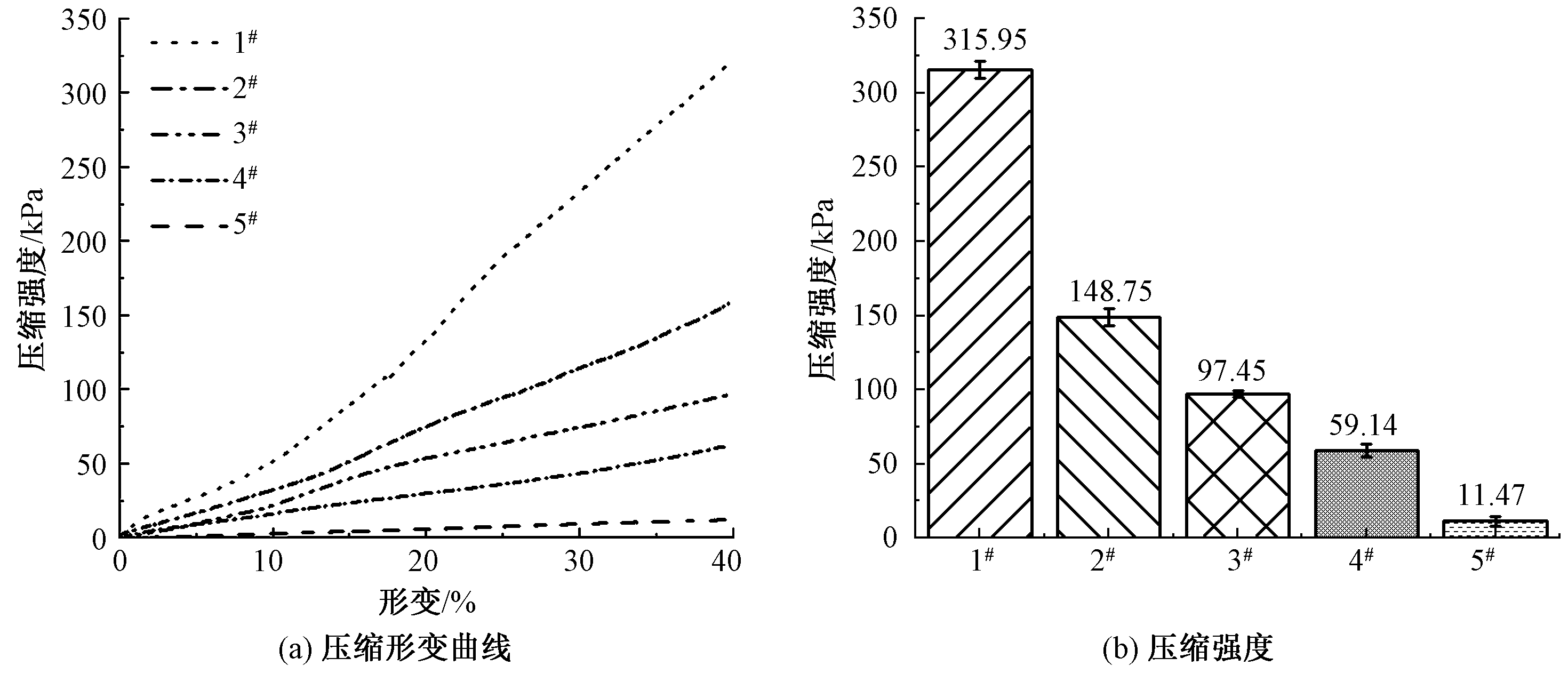
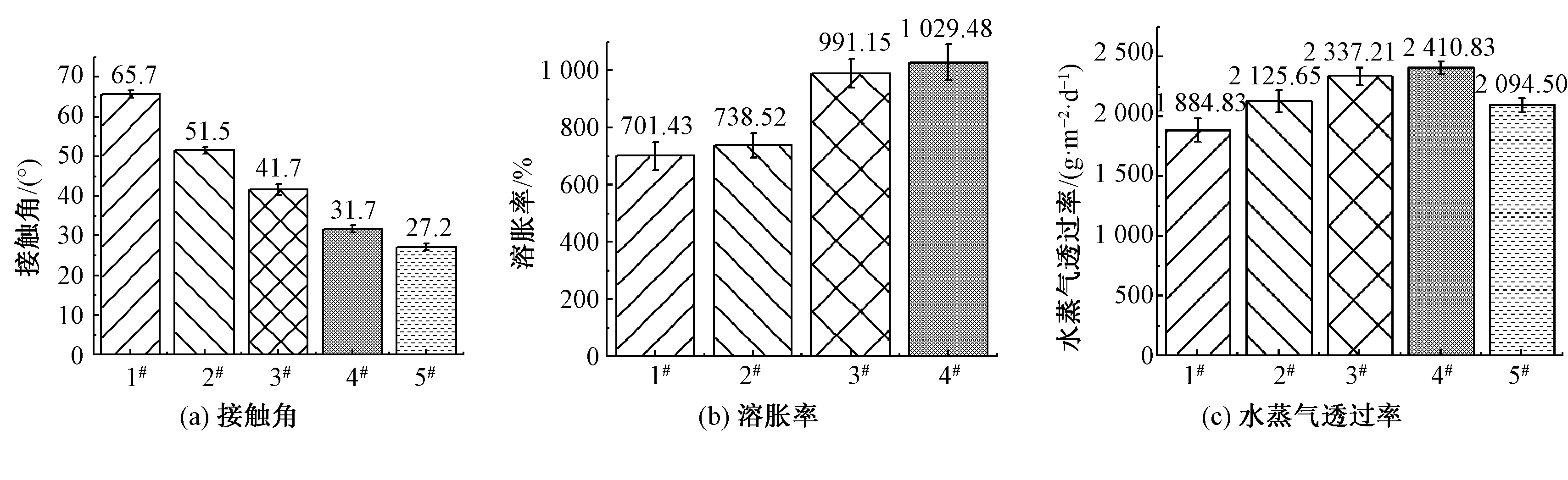
为制备高效抗菌、高吸液、生物相容且环境友好的新型多功能伤口敷料,以2,3-环氧丙基三甲基氯化铵(EPTMAC)对纳米纤维素(CNF)进行季铵化改性,成功制备出季铵化改性纳米纤维素(EP-CNF)。在此基础上,将其与聚乙烯醇(PVA)通过溶液共混法结合,并采用液氮定向冷冻干燥技术,构建了一系列不同体积配比的EP-CNF/PVA气凝胶材料,所得气凝胶具有高度互通的三维多孔网络结构,有利于气体透过及伤口渗出物的吸收。结果表明:当EP-CNF与PVA体积比为5∶5时,材料综合性能最优,其孔隙率达到90.17%,吸水率可达自身质量的991.15%,同时具备良好的透气性能(水蒸气透过率2 337.21g/(m2·d)和压缩强度(97.45 kPa),能够满足伤口敷料对力学支撑与水分管理的要求。该复合气凝胶对金黄色葡萄球菌和大肠埃希菌均表现出显著抑制作用,对金黄色葡萄球菌的抑菌率为99.53%,对大肠埃希菌的抑菌率为88.54%。EP-CNF/PVA复合气凝胶整合了多孔性、高吸液率、良好透气性、机械强度及抗菌性,显示出作为新型伤口敷料的巨大应用潜力。

关键词: 纳米纤维素, 季铵化改性, 聚乙烯醇, 气凝胶, 伤口敷料

Abstract:

Objective The primary objective of this research was to conceptualize, design, and fabricate a novel antibacterial wound dressing engineered to integrate multiple critical functionalities essential for modern wound management. These include superior exudate absorption, adequate air and moisture vapor permeability (breathability), significant mechanical durability under stress, and sustained, broad-spectrum antimicrobial efficacy. Driven by the escalating challenges of wound infections and the limitations of conventional passive dressings, this work addresses the pressing clinical demand for intelligent, multifunctional biomaterials that can actively combat microbial colonization while concurrently fostering a moist, protective, and pro-healing environment. To achieve this, the study specifically investigates the development and characterization of a lightweight, elastic composite aerogel. This advanced material is synthesized through the synergistic combination of cationically modified nanofibrillated cellulose (EP-CNF), which provides inherent antimicrobial activity and structural reinforcement, with poly(vinyl alcohol) (PVA), contributing to enhanced flexibility and gel-forming properties. The innovative fabrication process yields a three-dimensional network structure characterized by ultra-high porosity, interconnecting pores, and remarkable flexibility. This unique architecture is fundamentally designed to not only manage wound fluids effectively and allow gaseous exchange but also to serve as a protective barrier and a potential carrier for therapeutic agents. Consequently, the developed EP-CNF/PVA composite aerogel demonstrates exceptional potential as a high-performance, multifunctional platform for next-generation advanced wound care applications.

Method In this study, nanofibrillated cellulose (CNF) was first subjected to cationic modification using 2,3-epoxypropyltrimethylammonium chloride (EPTMAC) to graft quaternary ammonium groups onto its polymeric chains, yielding cationically functionalized CNF (designated as EP-CNF). Subsequently, EP-CNF was blended with poly(vinyl alcohol) (PVA) at systematically varied volume ratios through a solution-based mixing process to achieve homogeneous dispersion and interfacial integration between the two components. The resulting mixtures were then processed using a unidirectional freezing technique, followed by freeze-drying, to fabricate lightweight and hierarchical porous EP-CNF/PVA composite aerogels. The three-dimensional network structure, formed under controlled freezing conditions, endowed the aerogels with aligned porosity and structural integrity. The aerogels were comprehensively characterized in terms of their microstructure, physical properties, liquid absorption capacity, air permeability, mechanical performance under compressive stress, and antibacterial activity against common wound pathogens. Special emphasis was placed on understanding how the volume ratio of EP-CNF to PVA influenced the material's functional performance, thereby evaluating their suitability as advanced wound dressing materials with tunable properties.

Results The composite aerogels exhibited an interconnected three-dimensional porous network structure. The sample with an EP-CNF to PVA mass ratio of 5∶5 showed optimal comprehensive performance, with a porosity of 90.17%, water absorption capacity of 991.15% of its own weight, water vapor transmission rate of 2 337.21 g/(m2·d), and compressive stiffness of 97.45 kPa. These properties indicate excellent liquid uptake, moisture permeability, and mechanical resilience suitable for wound dressing applications. Moreover, the material demonstrated significant antibacterial activity against both Staphylococcus aureus and Escherichia coli, with inhibition rates of 99.53% and 88.54%, respectively.

Conclusion The EP-CNF/PVA composite aerogel developed in this study successfully integrates several critical wound-dressing properties—including high porosity, outstanding liquid absorption capacity, favorable breathability, mechanical robustness, and efficient antibacterial performance—into a single, lightweight material system. Structural and functional analyses confirm that the cationic modification of cellulose via quaternary ammonium groups plays a decisive role in imparting strong and sustained antimicrobial activity against both Gram-positive and Gram-negative bacteria. Concurrently, the directional freezing process effectively creates an aligned, hierarchical pore structure, which not only enhances mechanical resilience under compression but also facilitates rapid fluid uptake and uniform vapor transmission, thereby maintaining a moist yet breathable wound microenvironment. The synergistic combination of these engineered features positions this aerogel as a highly promising candidate for advanced wound care applications. To translate this potential into clinically viable solutions, further comprehensive investigations are essential. Future work should systematically evaluate in vivo biocompatibility, biodegradation behavior, and the material's direct influence on wound healing dynamics, such as epithelial regeneration and inflammatory response.

Key words: nanocellulose, quaternization modification, poly(vinyl alcohol), aerogel, wound dressing

中图分类号: 

  • TS102

图1

傅里叶变换红外光谱图"

图2

X射线衍射谱图"

图3

不同比例EP-CNF/PVA微观形貌"

图4

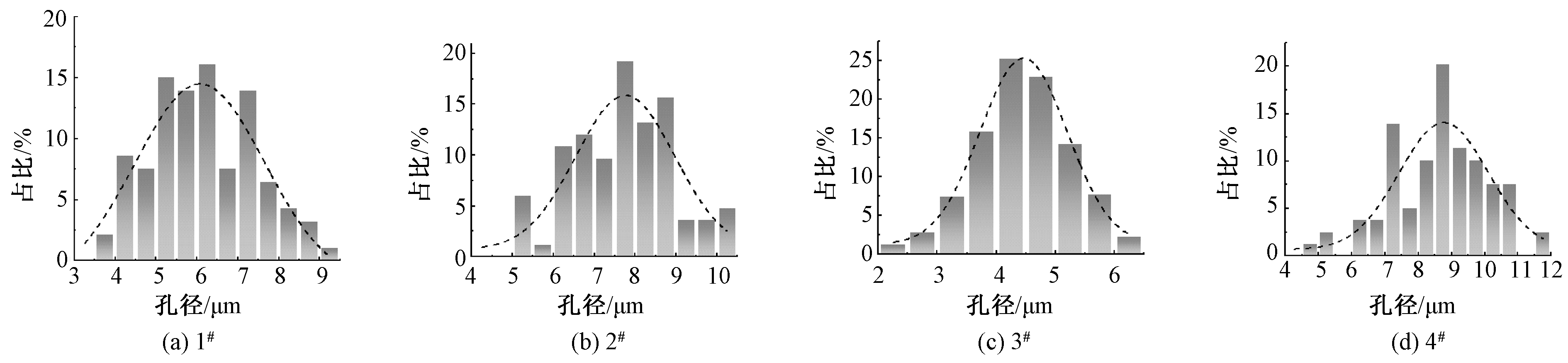
不同比例EP-CNF/PVA孔径分布"

图5

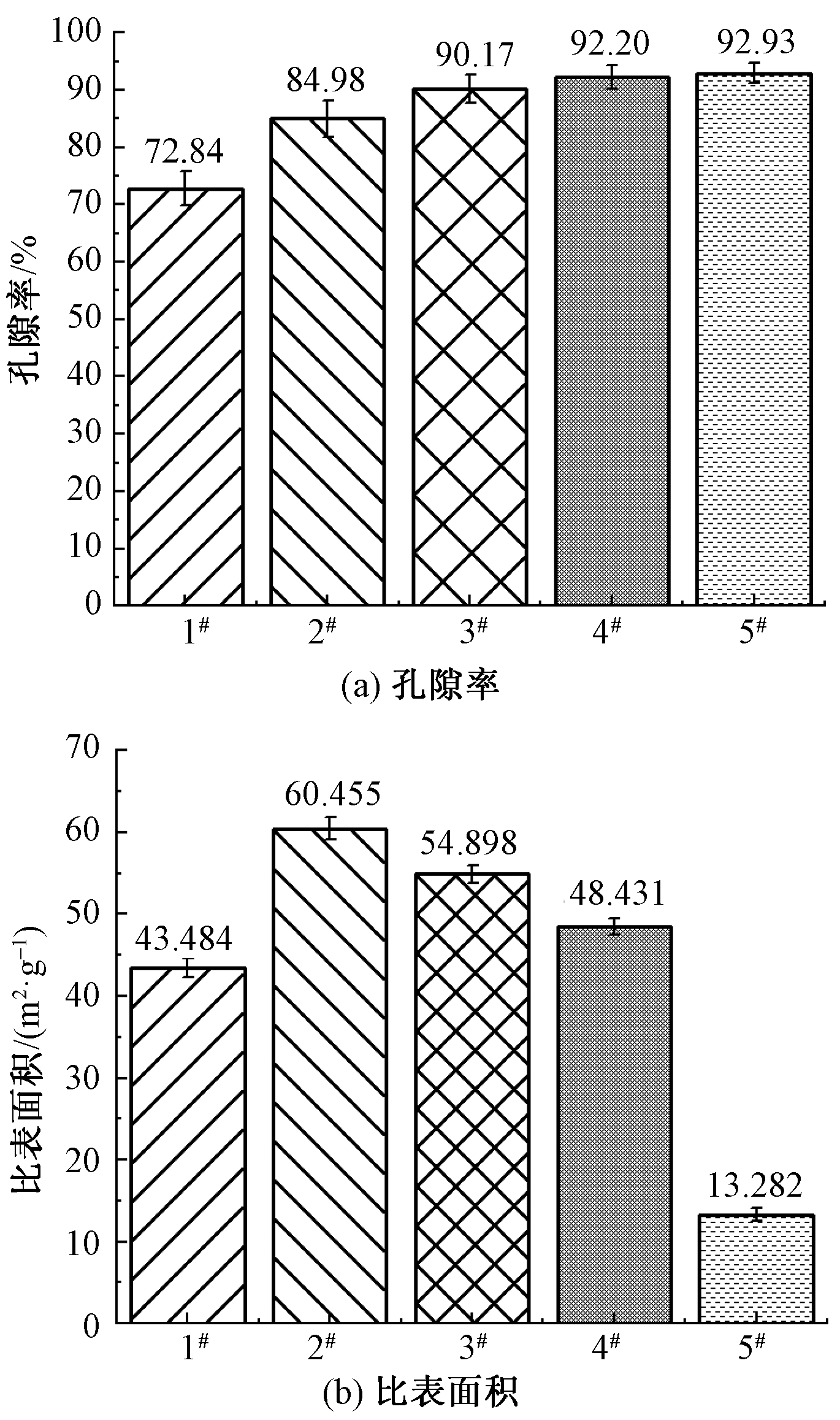
不同比例EP-CNF/PVA孔隙率及比表面积"

图6

不同比例EP-CNF/PVA的压缩性能"

图7

不同比例EP-CNF/PVA的吸湿透湿性能"

图8

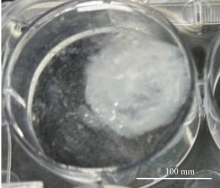
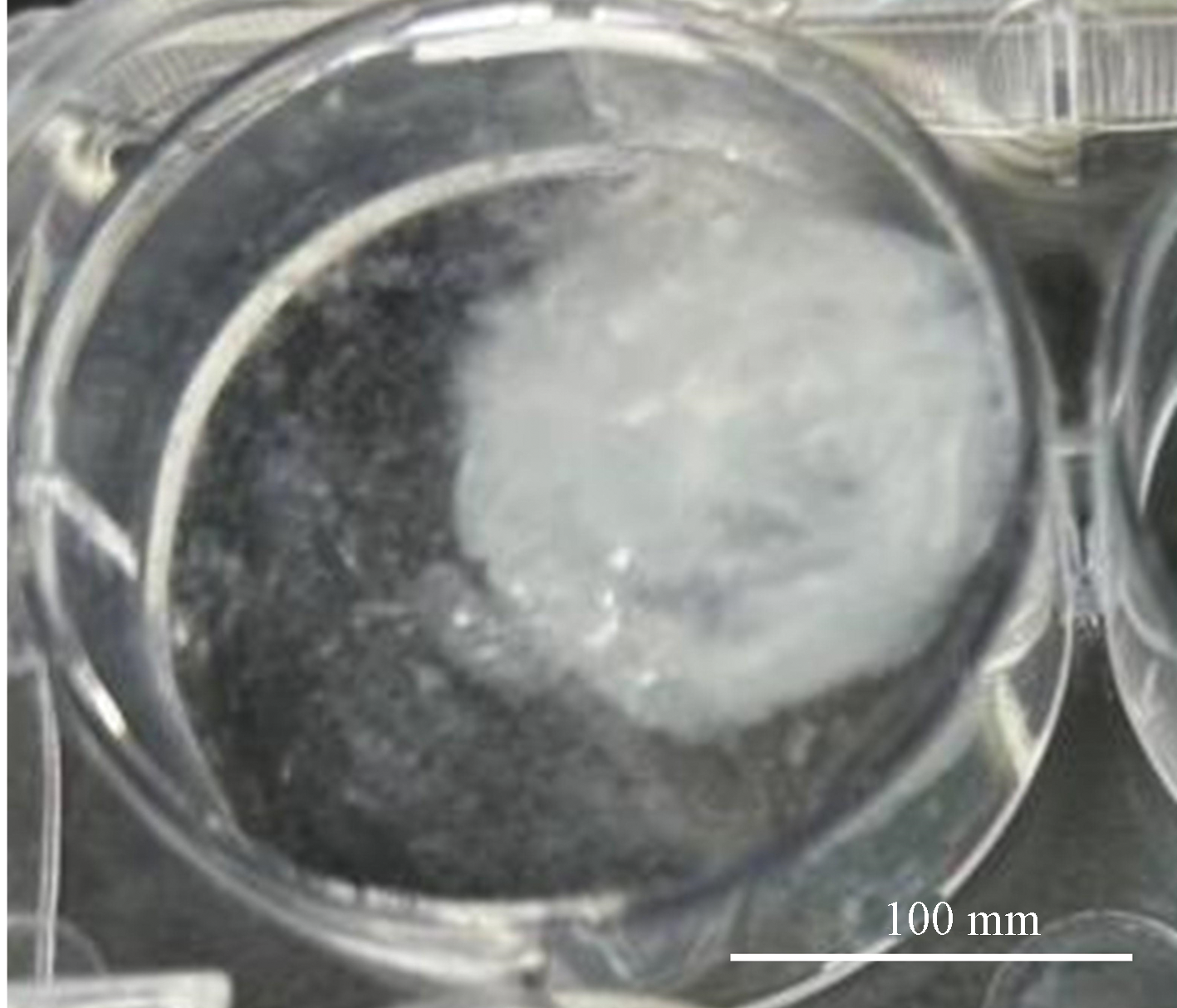
5#溶胀测试(结构易塌陷)"

图9

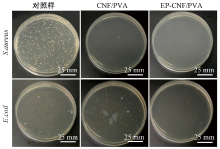
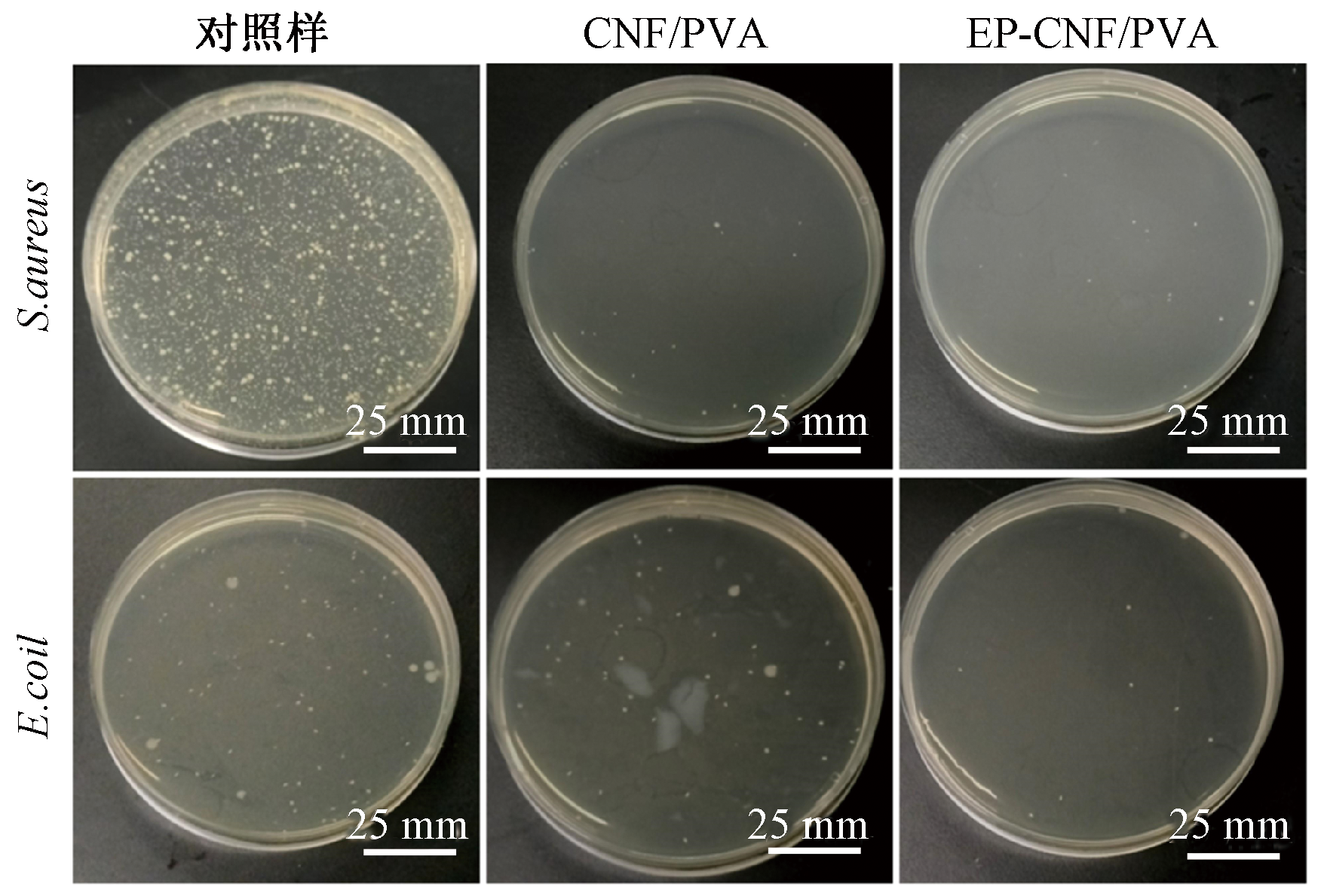
CNF/PVA和EP-CNF/PVA的琼脂平板图"

表1

CNF/PVA和EP-CNF/PVA的抑菌率"

样品编号 抑菌率/%
对金黄色葡萄球菌 对大肠埃希菌
CNF/PVA 97.39±0.87 26.04±1.25
EP-CNF/PVA 99.53±1.17 88.54±1.06
[1] 李亮, 裴斐斐, 刘淑萍, 等. 聚乳酸纳米纤维基载药敷料的制备与表征[J]. 纺织学报, 2022, 43(11): 1-8.
doi: 10.13475/j.fzxb.20210908508
LI Liang, PEI Feifei, LIU Shuping, et al. Preparation and characterization of polylactic acid nanofiber drug loaded medical dressings[J]. Journal of Textile Research, 2022, 43(11): 1-8.
doi: 10.13475/j.fzxb.20210908508
[2] ISOGAI A, ZHOU Y X. Diverse nanocelluloses prepared from TEMPO-oxidized wood cellulose fibers: nanonetworks, nanofibers, and nanocrystals[J]. Current Opinion in Solid State and Materials Science, 2019, 23(2): 101-106.
doi: 10.1016/j.cossms.2019.01.001
[3] 王丽芳, 张学澎, 王美英, 等. 基于废棉纤维的纳米纤维素制备方法对比[J]. 毛纺科技, 2025, 53(7): 8-13.
WANG Lifang, ZHANG Xuepeng, WANG Meiying, et al. Comparison of nanocellulose preparation methods based on waste cotton fibers[J]. Wool Textile Journal, 2025, 53(7): 8-13.
[4] KONO H, SOGAME Y, PUREVDORJ U E, et al. Bacterial cellulose nanofibers modified with quaternary ammonium salts for antimicrobial applications[J]. ACS Applied Nano Materials, 2023, 6(6): 4854-4863.
doi: 10.1021/acsanm.3c00616
[5] 邓雪勇. 抗菌纳米纤维素纤维的制备及其在功能化伤口敷料中应用研究[D]. 成都: 四川大学, 2021.
DENG Xueyong. Preparation of antibacterial nanocellulose fiber and its Application in Functional Wound Dressings[D]. Chengdu: Sichuan University, 2021.
[6] 杨惠元, 庞益, 邓平阳, 等. 不同碳链长度季铵盐抗菌化合物抗菌活性研究[J]. 广州化工, 2025, 53(1): 30-33.
YANG Huiyuan, PANG Yi, DENG Pingyang, et al. Antibacterial activity of quaternary ammonium antibacterial compounds with different chain lengths[J]. Guangzhou Chemical Industry, 2025, 53(1): 30-33.
[7] 姜如意. 基于高分子季铵盐的抗菌聚氨酯医用导管及其性能研究[D]. 北京: 北京化工大学, 2025.
JIANG Ruyi. Study on antibacterial polyurethane medical catheter based on polymer quaternary ammonium salt and its properties[D]. Beijing: Beijing University of Chemical Technology, 2025.
[8] CHEN Y, YE X Y, WANG D W, et al. Stepwise modification with 2, 3-epoxypropyltrimethylammonium chloride cationization and rosin acid impregnation to improve water repellency and mold-proof property of bamboo[J]. Industrial Crops and Products, 2023, 193: 116248.
doi: 10.1016/j.indcrop.2023.116248
[9] 梁淦博. 季铵盐改性纳米纤维素增强聚乳酸复合膜的制备及性能研究[D]. 长沙: 中南林业科技大学, 2024.
LIANG Ganbo. Preparation and properties of poly(lactic acid) composite Films reinforced by quaternary ammonium salt modified nanocellulose[D]. Changsha: Central South University of Forestry & Technology, 2024.
[10] BAKHSHI H, YEGANEH H, MEHDIPOUR-ATAEI S, et al. Synthesis and characterization of antibacterial polyurethane coatings from quaternary ammonium salts functionalized soybean oil based polyols[J]. Materials Science and Engineering: C, 2013, 33(1): 153-164.
doi: 10.1016/j.msec.2012.08.023
[11] 王世贤, 降帅, 李萌萌, 等. 硅烷偶联剂改性纳米纤维素气凝胶的制备及其表征[J]. 纺织学报, 2020, 41(3): 33-38.
WANG Shixian, JIANG Shuai, LI Mengmeng, et al. Preparation and characterization of nanocellulose aerogel modified by silane coupling agent[J]. Journal of Textile Research, 2020, 41(3): 33-38.
[12] 符芬, 王钰涵, 丁凯, 等. 纤维素基止血材料的研究进展[J]. 纺织学报, 2025, 46(4): 226-234.
FU Fen, WANG Yuhan, DING Kai, et al. Research progress in cellulose-based hemostatic materials[J]. Journal of Textile Research, 2025, 46(4): 226-234.
[13] 王岩. 改性氧化石墨烯复合止血抗菌气凝胶敷料的制备与性能研究[D]. 长春: 长春工业大学, 2024.
WANG Yan. Preparation and properties of modified graphene oxide composite Hemostatic and antibacterial aerogel dressing[D]. Changchun: Changchun University of Technology, 2024.
[14] 金芳羽. 海藻酸钠基双层复合创伤敷料的结构构建及其性能研究[D]. 无锡: 江南大学, 2023.
JIN Fangyu. Structural construction and performance study of double-layer composite wound dressing based on sodium alginate[D]. Wuxi: Jiangnan University, 2023.
[1] 霍雨辰, 张帆, 翟云云, 刘海清. 纳米纤维素/聚丙烯腈复合隔膜制备及其锂枝晶抑制[J]. 纺织学报, 2026, 47(04): 61-70.
[2] 孟思雨, 韩宇进, 谭文丽, 马博谋, 袁久刚. 无醛交联剂改性羊毛角蛋白/海藻酸钠气凝胶复合材料的制备及其性能[J]. 纺织学报, 2026, 47(03): 18-25.
[3] 林晓静, 毛迎, 陈文兴, 吕汪洋. 载姜黄素静电纺丝纤维膜的制备及其抗菌与抗氧化性能[J]. 纺织学报, 2026, 47(03): 217-224.
[4] 易珊, 王丽芳, 陈黎, 邱虹, 唐一卡, 张国清, 王美英, 高艳春, 葛秀敏, 刘丽芳. 纳米纤维素基pH响应型抗菌抗氧化伤口敷料的制备及其性能[J]. 纺织学报, 2026, 47(03): 26-34.
[5] 薛宝霞, 冯佳昕, 邵子洋, 路佳鑫, 刘晶, 牛梅, 张利. 预交联铜离子对羧甲基纤维素抗菌气凝胶纤维结构与性能的影响[J]. 纺织学报, 2026, 47(03): 52-59.
[6] 王世杰, 孙辉, 于斌. 聚乙烯醇/牡丹皮提取物复合纳米静电纺丝膜的制备及其抗菌性能[J]. 纺织学报, 2026, 47(02): 56-64.
[7] 舒祖菊, 袁自钰, 周斐, 黄秀文, 王权, 房显龙, 曹美雪. 载姜黄素核壳结构纳米纤维膜的制备及其缓释性能[J]. 纺织学报, 2025, 46(11): 26-33.
[8] 王文淑, 王建刚, 李瀚宇, 王春红, 谭晓璇, 王慧泉. 烷基壳聚糖/聚乙烯醇纳米纤维膜的制备及其止血性能[J]. 纺织学报, 2025, 46(11): 52-60.
[9] 吴乐然, 吴霓欢, 李林耿, 钟意, 陈鸿鹏, 汤南. 负载厚朴酚的抗菌纳米纤维膜的制备及其性能[J]. 纺织学报, 2025, 46(10): 30-38.
[10] 史蜜, 王文聪, 范雪荣, 高卫东. 聚乙烯醇聚合度和醇解度对棉浆纱性能的影响[J]. 纺织学报, 2025, 46(09): 181-187.
[11] 梁锋, 方沿, 张伟华, 唐余玲, 李双洋, 周建飞, 石碧. 基于金属-多酚网络的胶原蛋白基纤维制备及其力学性能[J]. 纺织学报, 2025, 46(08): 10-17.
[12] 沈忱思, 王欣悦, 李方. 退浆废水预氧化-絮凝一体化处理及资源化技术[J]. 纺织学报, 2025, 46(08): 173-182.
[13] 张莎莎, 蔡牧航, 吕晓静, 胡丹, 刘娟, 吉星照, 曹根阳, 王浩娜. 静电场协同构象羽绒/二氧化硅气凝胶保暖材料[J]. 纺织学报, 2025, 46(07): 10-18.
[14] 陈亚娟, 郭瀚宇, 张陈恬, 李欣欣, 张雪萍. 聚乙烯醇/海藻酸钠/锦纶66复合水凝胶包芯纱的制备及其吸湿性能[J]. 纺织学报, 2025, 46(06): 103-110.
[15] 余厚咏, 黄程玲, 陈毅, 高智英. 天然纤维素的多维结构演变及其功能材料研究进展[J]. 纺织学报, 2025, 46(06): 45-55.
Viewed
Full text


Abstract

Cited

  Shared   
  Discussed   
No Suggested Reading articles found!