纺织学报 ›› 2026, Vol. 47 ›› Issue (04): 34-42.doi: 10.13475/j.fzxb.20250705501

• 纤维材料 • 上一篇    下一篇

多功能非对称结构纳米纤维膜的制备及其抗菌抗氧化性能

张哲, 陈卓明(), 李帆, 宋文雅, 覃思宇, 侯锦东, 余仡杰   

  1. 上海工程技术大学 纺织服装学院, 上海 201620
  • 收稿日期:2025-07-21 修回日期:2025-12-06 出版日期:2026-04-15 发布日期:2026-06-24
  • 通讯作者: 陈卓明(1986—),女,副教授,博士。主要研究方向为纤维表面功能化处理、柔性可穿戴纺织品。E-mail: chenzm@sues.edu.cn
  • 作者简介:张哲(2005—),女,本科生。主要研究方向为功能纺织纤维材料。
  • 基金资助:
    上海工程技术大学大学生创新训练计划资助项目(cs2509002)

Preparation of multifunctional asymmetric structural nanofiber membranes and its antibacterial and antioxidant properties

ZHANG Zhe, CHEN Zhuoming(), LI Fan, SONG Wenya, QIN Siyu, HOU Jindong, YU Yijie   

  1. School of Textiles and Fashion, Shanghai University of Engineering Science, Shanghai 201620, China
  • Received:2025-07-21 Revised:2025-12-06 Published:2026-04-15 Online:2026-06-24

摘要:

开发能够处理伤口渗出液、提供抗菌消炎功能并保持轻薄透气的抗菌敷料是当今的研究重点;然而,制备兼具上述多功能的敷料仍然是一个难题。基于静电纺丝技术,通过调控纺丝设备的电压、流速等工艺参数,构建出了亲水层聚丙烯腈/聚乙烯吡咯烷酮/百里酚和疏水层聚乳酸/氧化锌,并利用层间润湿梯度差异实现多功能非对称结构纳米纤维膜的可控制备,通过扫描电子显微镜、傅里叶变换红外光谱仪表征纳米纤维膜的微观结构,同时研究其抗氧化、抗菌及单向导湿性能。研究表明,植物精油百里酚与氧化锌通过“膜损伤-离子渗透-氧化应激”协同作用,使复合膜的抗氧化活性高达86.5%,对大肠埃希菌和金黄色葡萄球菌的抑制率均达99.99%以上,并且能在10 s内将模拟渗出液排出,具有良好的单向导湿性能。制备的非对称结构纳米纤维膜在多功能伤口敷料领域具有良好的应用潜力。

关键词: 功能性纤维, 医用敷料, 静电纺丝, 非对称结构纳米纤维膜, 抗氧化性能, 协同抗菌, 单向导湿

Abstract:

Objective The effective management of wound exudate, provision of sustained antibacterial and anti-inflammatory effects, and maintenance of lightweight breathability and moisture balance remain critical challenges in the development of advanced wound dressings. Existing multifunctional dressings often suffer from limitations such as inefficient unidirectional moisture transport, inadequate antibacterial durability, or complex preparation processes. This study aims to fabricate a Janus-structured nanofiber membrane that integrates superior unidirectional moisture-wicking capability, broad-spectrum antibacterial activity, and high antioxidant performance, addressing the aforementioned drawbacks for potential applications in wound care.

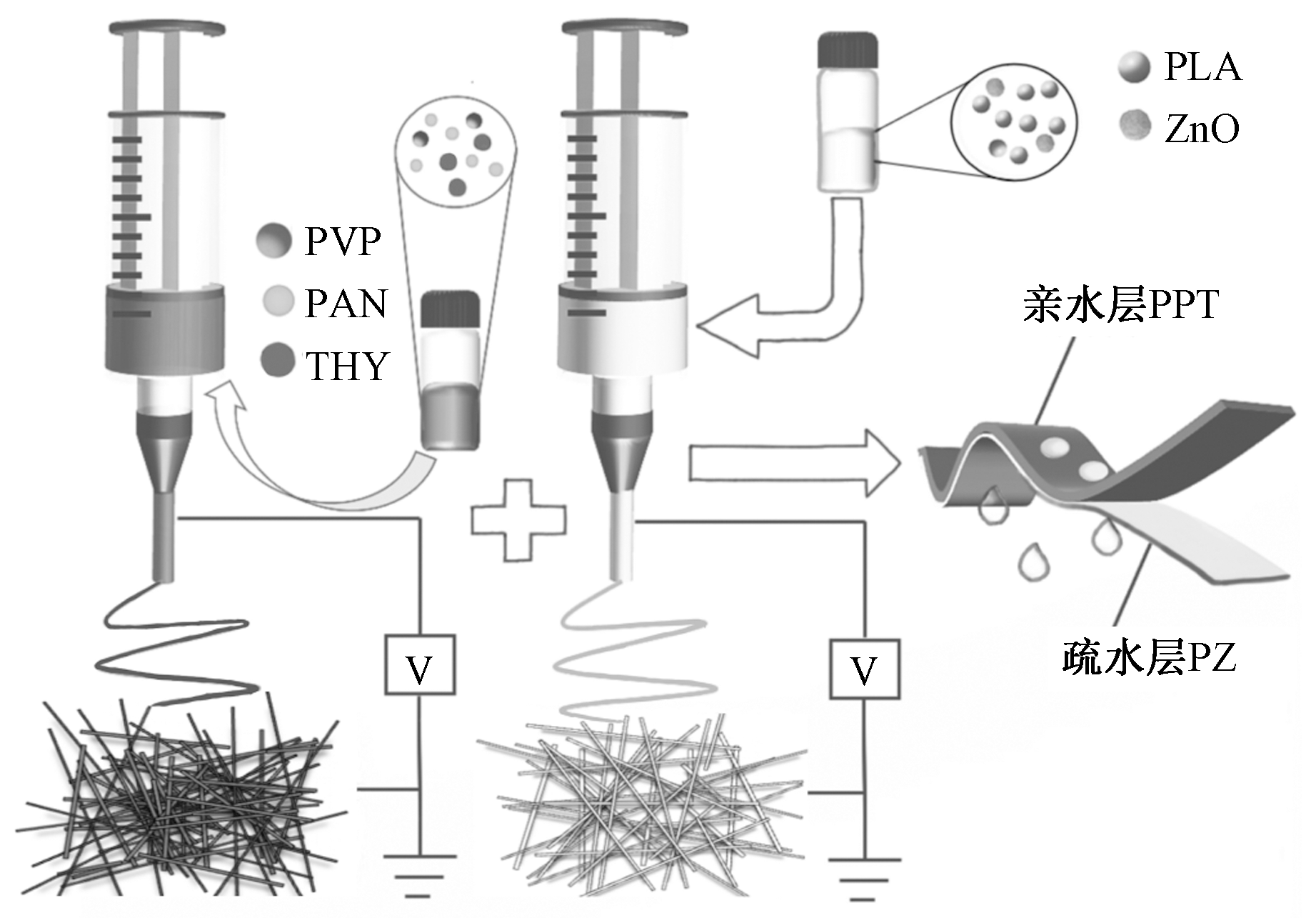
Method The PPT-PZ Janus membrane was fabricated via two-step electrospinning. First, a hydrophilic PAN/PVP/THY (PPT) layer was prepared from a DMF solution (1.2 g PAN, 0.5 g PVP, 1.0 g THY) at 20 kV, 20 cm distance, 0.003 5 mm/s feeding rate, 100 r/min drum speed, for 2 h. Then, a hydrophobic PLA/ZnO (PZ) layer was electrospun onto PPT from an HFIP solution (1.4 g PLA, 0.3 g ZnO) at 16 kV for 25 min (other parameters matched PPT). Single-layer PPT and PZ membranes served as controls. Evaluations included SEM, FTIR, contact angle, water absorption, DPPH, and antibacterial tests against E. coli (ATCC 25922) and S. aureus (ATCC 6538).

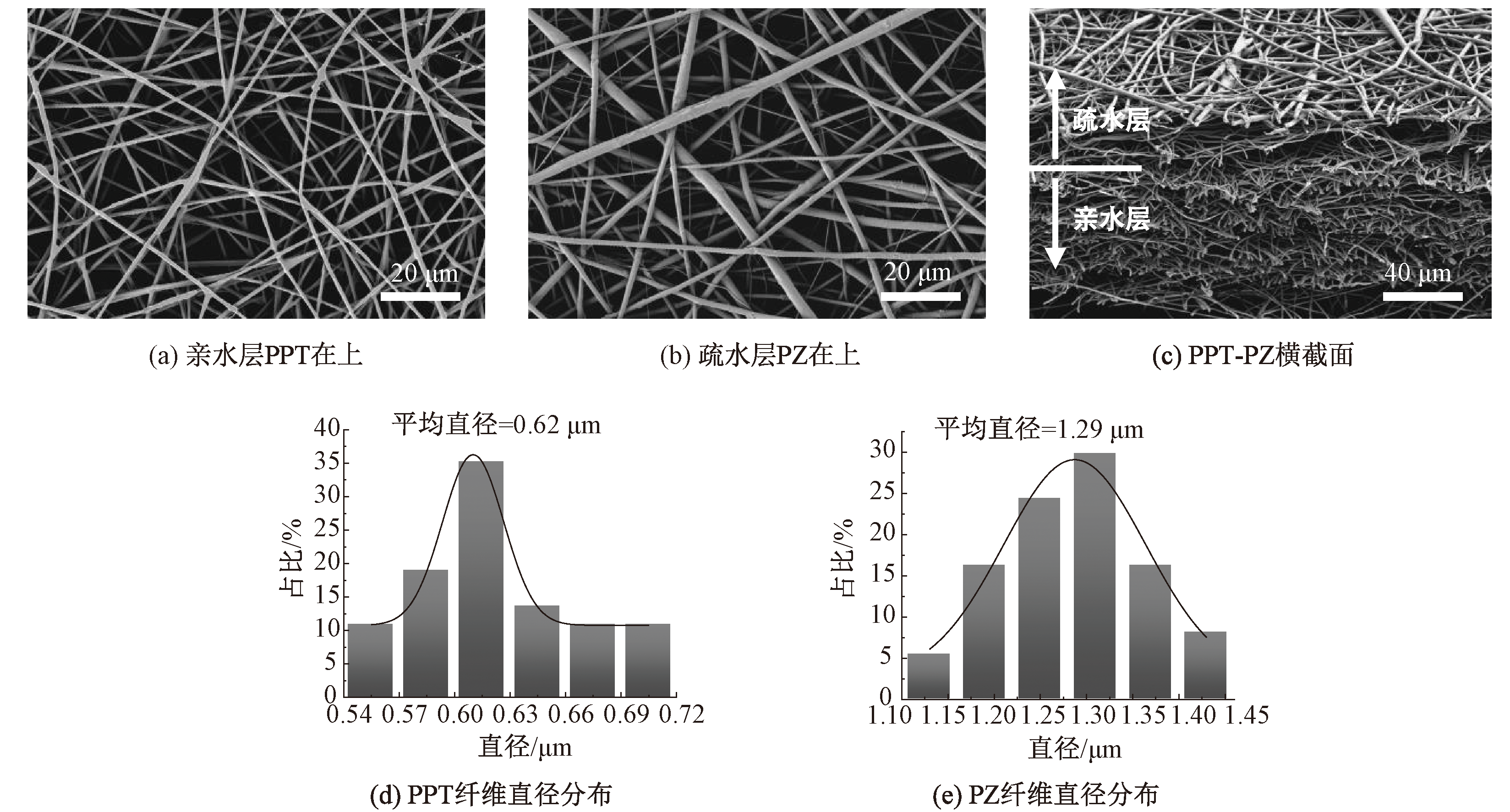
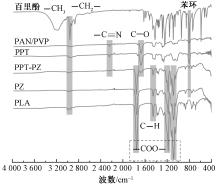
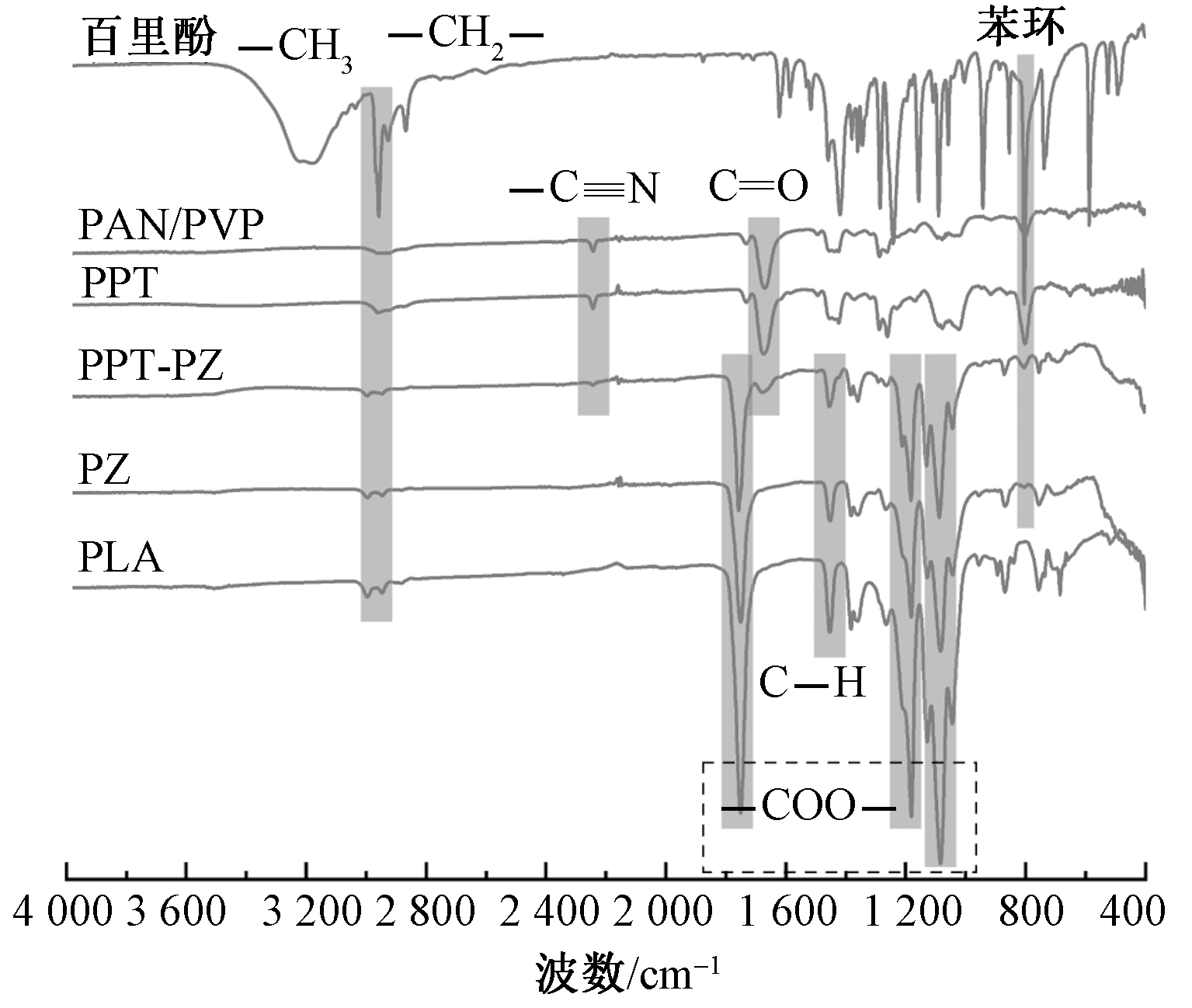
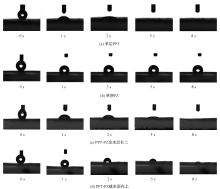
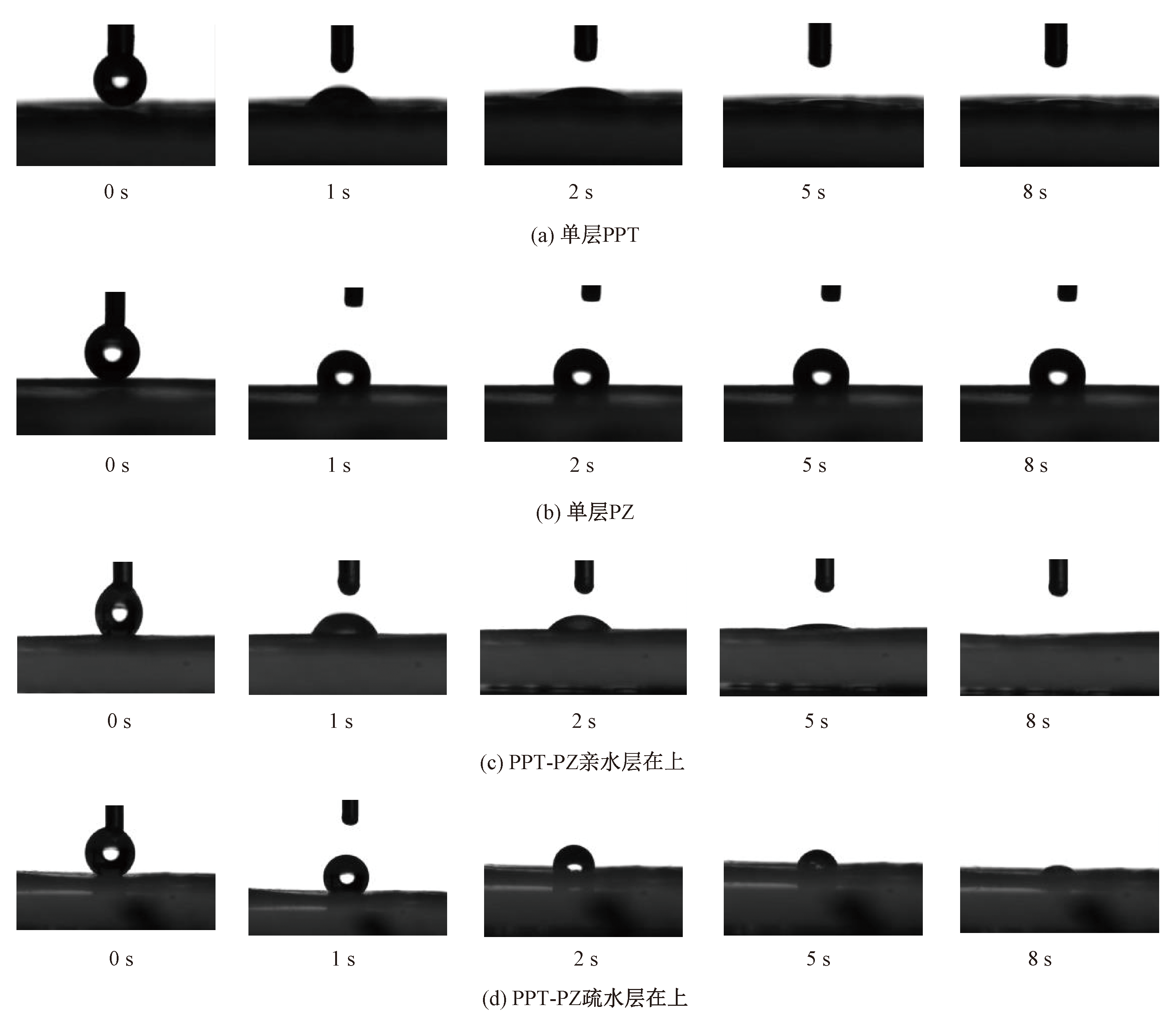
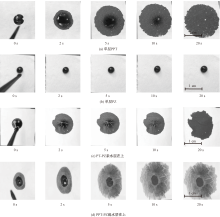
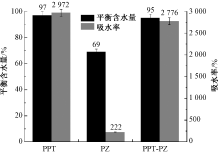
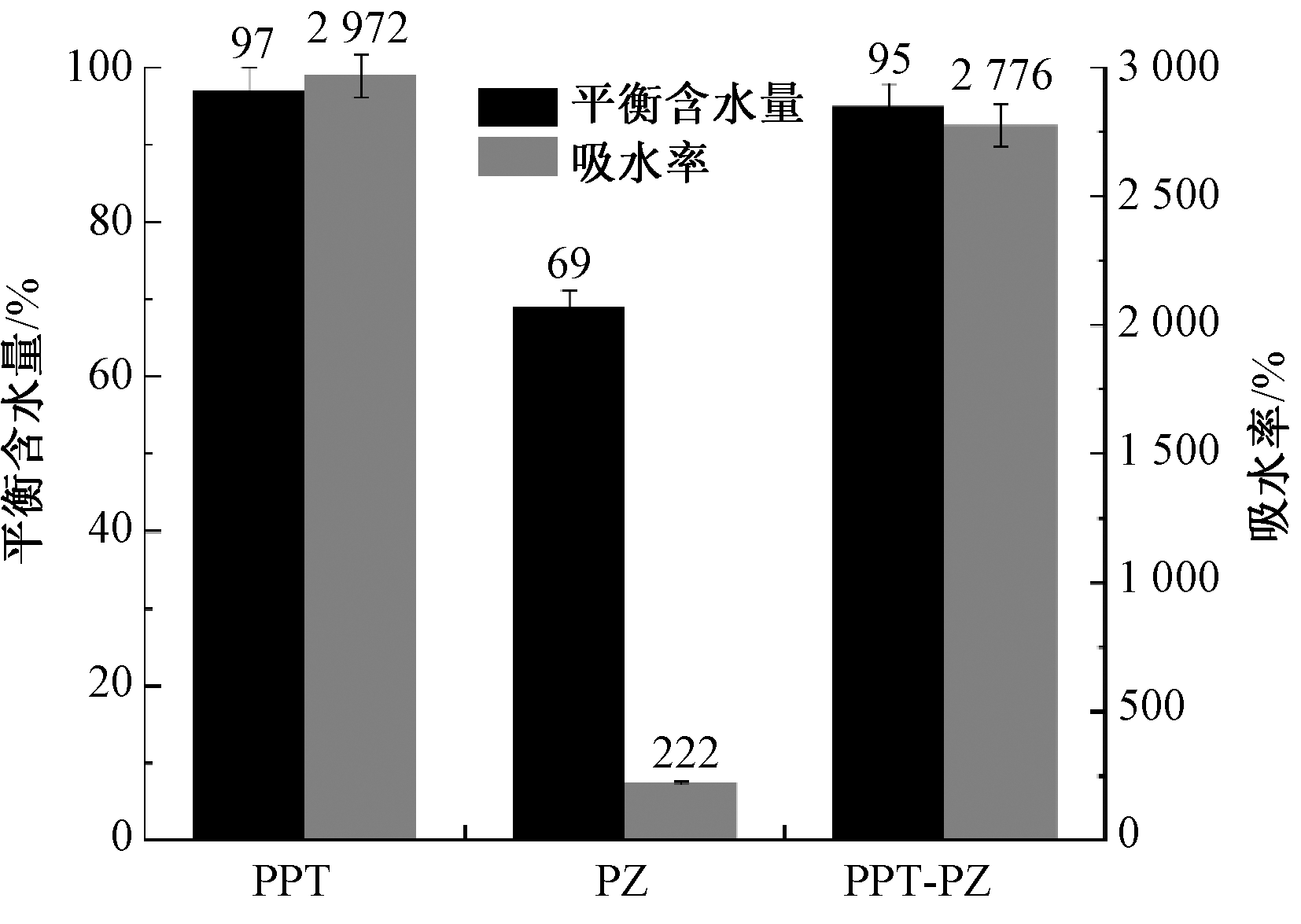
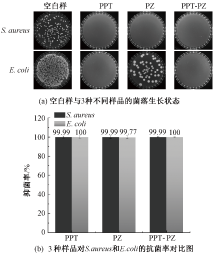
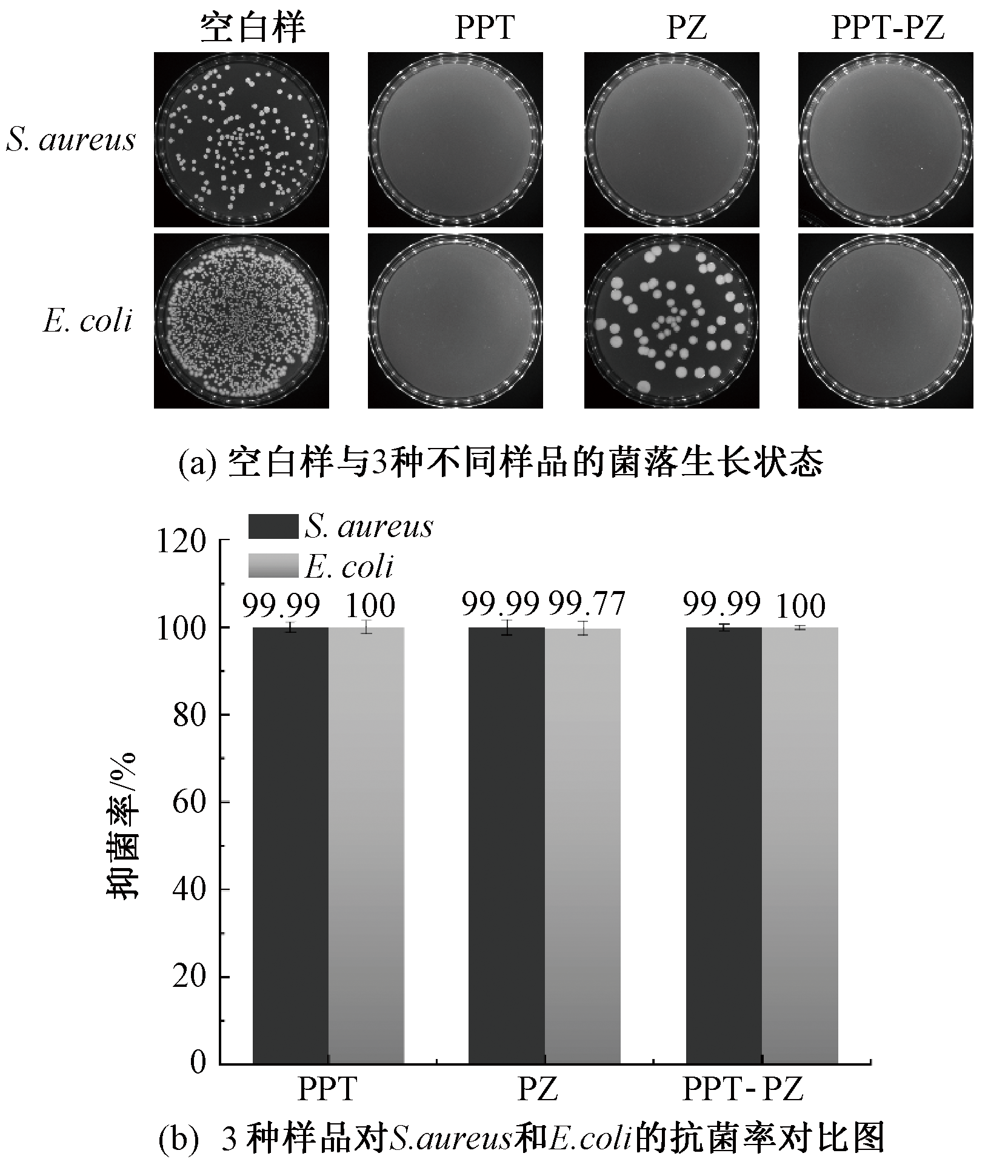
Results SEM observations revealed distinct morphological differences between the two layers of the PPT-PZ membrane. The hydrophilic PPT layer exhibited finer fibers with an average diameter of 0.62 μm, while the hydrophobic PZ layer showed coarser fibers with an average diameter of 1.29 μm, forming a gradient pore structure across the membrane thickness that enhances directional liquid transport. Cross-sectional images confirmed a clear layered interface between the PPT and PZ layers, ensuring structural integrity without interlayer detachment. FTIR analysis verified the successful incorporation of THY (a natural antioxidant with phenolic groups) into the PPT layer (via characteristic peaks at 806 cm-1 and 2 959 cm-1, corresponding to benzene ring vibrations and alkyl chain stretches) and the effective combination of ZnO with PLA in the PZ layer (via attenuated peaks at 1 750 cm-1 and 1 181 cm-1, indicating interactions between PLA's ester groups and ZnO nanoparticles). Dynamic contact angle tests demonstrated excellent unidirectional moisture transport: when the hydrophilic layer faced upward, water droplets were completely absorbed within 8 s. When the hydrophobic layer faced upward, initial hydrophobic behavior (similar to the single-layer PZ membrane) transitioned to full absorption within 8 s, confirming controlled directional water movement. The PPT-PZ membrane achieved a high water absorption rate of 2 776% and an equilibrium water content of 95%, indicating its ability to manage large volumes of wound exudate effectively while maintaining a moist microenvironment conducive to healing. Antioxidant tests showed that the PPT-PZ membrane exhibited a DPPH radical scavenging rate of 86.5%, significantly higher than that of the single-layer PZ membrane (40.0%), attributed to the synergistic effect between THY and ZnO nanoparticles (which enhance radical capture via surface defects). Antibacterial assays demonstrated that the PPT-PZ membrane exerted a 99.99% inhibition rate against both E. coli and S. aureus, outperforming the single-layer PPT (99.99% against S. aureus and 100% against E. coli) and PZ (99.77% against E. coli) membranes. This enhanced antibacterial activity was attributed to the "membrane damage-ion penetration-oxidative stress" mechanism, where THY disrupted bacterial cell membranes, facilitating ZnO-derived Znion penetration and reactive oxygen species (ROS) generation to induce oxidative stress, collectively inhibiting bacterial growth.

Conclusion The Janus-structured PPT-PZ nanofiber membrane, fabricated via a simple two-step electrospinning process, successfully integrated multiple key functions required for advanced wound dressings. Its gradient fiber structure enabled efficient unidirectional moisture transport, preventing exudate reflux while maintaining wound moistness. The synergistic interaction between THY and ZnO endowed the membrane with both high antioxidant activity (86.5% DPPH scavenging) and broad-spectrum antibacterial efficacy (99.99% inhibition against common pathogens). These properties, combined with its favorable breathability (26.70 mm/s) and simple preparation process, made it a promising candidate for multifunctional wound care applications, addressing critical limitations of existing dressings.

Key words: functional fiber, medical dressing, electrospinning, asymmetric structural nanofiber membrane, antioxidation property, synergistic antibacterial, unidirectional moisture transport

中图分类号: 

  • TQ340.64

图1

非对称结构结构PPT-PZ纳米纤维膜的制备流程图"

图2

PPT-PZ纳米纤维膜的SEM照片及纤维直径分布图"

图3

不同材料和纳米纤维膜的红外光谱图"

图4

PPT-PZ纳米纤维膜的动态水接触角"

图5

PPT-PZ纳米纤维膜的墨滴扩散过程"

图6

PPT-PZ纳米纤维膜的吸水率及平衡含水量"

图7

纳米纤维膜的抗菌性能和抑菌率"

[1] RODRIGUES M, KOSARIC N, BONHAM C A, et al. Wound healing: a cellular perspective[J]. Physiological Reviews, 2019, 99(1): 665-706.
doi: 10.1152/physrev.00067.2017 pmid: 30475656
[2] LI T T, ZHONG Y Q, PENG H K, et al. Multiscale composite nanofiber membranes with asymmetric wetability: preparation, characterization, and applications in wound dressings[J]. Journal of Materials Science, 2021, 56(6): 4407-4419.
doi: 10.1007/s10853-020-05531-4
[3] LI T T, SUN L, ZHANG Y, et al. Chitosan-based antibacterial microspheres loaded multifunctional Janus composite membranes with unidirectional biofluid transport, antioxidant and pH-responsive monitoring[J]. Chemical Engineering Journal, 2023, 472: 144820.
doi: 10.1016/j.cej.2023.144820
[4] ZHOU L B, LIU F, YOU J Y, et al. A novel self-pumping Janus dressing for promoting wound immunomodulation and diabetic wound healing[J]. Advanced Healthcare Materials, 2024, 13(10): 2303460.
doi: 10.1002/adhm.v13.10
[5] ZHANG X M, LV R J, CHEN L X, et al. A multifunctional Janus electrospun nanofiber dressing with biofluid draining, monitoring, and antibacterial properties for wound healing[J]. ACS Applied Materials & Interfaces, 2022, 14(11): 12984-13000.
[6] GUO J K, YAN S Z, NEWTON M A A, et al. Preparation and characterization of pH-responsive Janus composite membranes with unidirectional moisture drainage and antioxidant resistance[J]. Colloids and Surfaces A: Physicochemical and Engineering Aspects, 2024, 701: 134916.
doi: 10.1016/j.colsurfa.2024.134916
[7] 徐丽亚, 汪瑱, 杨鸿杰, 等. 氧化锌-银/生物基聚酰胺56纳米纤维膜的制备及其抗菌性能[J]. 纺织学报, 2025, 46(7): 37-45.
XU Liya, WANG Tian, YANG Hongjie, et al. Preparation and antibacterial property of zinc oxide-silver/bio-based polyamide 56 composite nanofiber membranes[J]. Journal of Textile Research, 2025, 46(7): 37-45.
[8] 欧康康, 祁琳雅, 侯怡君, 等. 纳米纤维基单向导湿抗菌敷料的制备及其性能[J]. 纺织学报, 2022, 43(6): 49-56.
OU Kangkang, QI Linya, HOU Yijun, et al. Preparation and properties of nanofiber? based unidirectional water? transport antibacterial wound dressings[J]. Journal of Textile Research, 2022, 43(6): 49-56.
[9] 李雪梅, 崔红圆, 郭勤, 等. MoS2@SiO2纳米纤维的制备及抗菌性能研究[J]. 膜科学与技术, 2025, 45(2): 65-74.
LI Xuemei, CUI Hongyuan, GUO Qin, et al. Preparation and antibacterial properties of MoS2@SiO2 nanofibers[J]. Membrane Science and Technology, 2025, 45(2): 65-74.
[10] 高莹, 曹丽明, 杨益琴, 等. 醋酸纤维素/纳米二氧化钛抗菌复合薄膜的制备及其表征[J]. 纤维素科学与技术, 2019, 27(4): 33-39.
GAO Ying, CAO Liming, YANG Yiqin, et al. Preparation and characterization of cellulose acetate/nano-titanium dioxide antibacterial composite films[J]. Journal of Cellulose Science and Technology, 2019, 27(4): 33-39.
[11] 李燕君, 孔维军, 李梦华, 等. 植物精油抑制真菌及真菌毒素的研究进展[J]. 中草药, 2016, 47(11): 2011-2018.
LI Yanjun, KONG Weijun, LI Menghua, et al. Advance in study on plant essential oils for their inhibitory effects on fungal growth and mycotoxin synthesis[J]. Chinese Traditional and Herbal Drugs, 2016, 47(11): 2011-2018.
[12] XIE K, TASHKIN D P, LUO M Z, et al. Pharmacokinetic study of thymol after intravenous injection and high-dose inhalation in mouse model[J]. Pharmacology Research & Perspectives, 2019, 7(5): e00515.
[1] 杨鸿杰, 徐丽亚, 汪蔚. 含一氧化氮供体的生物基聚酰胺56纳米纤维膜制备及其性能[J]. 纺织学报, 2026, 47(04): 43-51.
[2] 郭一铭, 喻爽, 赵帆, 王富军. 血管监测用纤维基压电传感器的构建及性能评价[J]. 纺织学报, 2026, 47(03): 118-128.
[3] 李瑞瑞, 文鹏, 张勇, 陈学军. 新型抗菌纤维的制备及其性能[J]. 纺织学报, 2026, 47(03): 233-239.
[4] 张宝华, 夏杰, 项复玉, 汪瑱, 吴韶华, 张彩丹. 负载肉桂醛的聚琥珀酰亚胺静电纺纤维膜抗菌敷料制备及其性能[J]. 纺织学报, 2026, 47(03): 35-43.
[5] 杨潇, 章语墨, 李彦, 王璐, 王富军. 糖触抗菌与渗液管理一体化的短纤维重构复合敷料及其性能[J]. 纺织学报, 2026, 47(03): 44-51.
[6] 陈泳良, 杨潇, 王朝荣, 黄俊鸿, 李彦, 王璐. 静电纺丝-恒应力退火协同构建的湿态稳定型聚乳酸/I型胶原肩袖补片[J]. 纺织学报, 2026, 47(03): 60-69.
[7] 李好义, 田鑫哲, 张毅, 牟文英, 张超, 赵千龙, 杨卫民. 导电各向异性复合心脏补片的熔体静电纺丝/直写构建及体外评价[J]. 纺织学报, 2026, 47(03): 70-76.
[8] 刘金枝, 赵回汇, 吴焕友, 张建明, 高晶. 壳聚糖/聚己内酯取向纳米纤维膜的结构调控与物理引导作用[J]. 纺织学报, 2026, 47(03): 9-17.
[9] 张曼琦, 孙艳丽, 张晓茹, 李博, 刘哲. 共轭静电纺双模态调温织物的制备及其性能[J]. 纺织学报, 2026, 47(02): 153-161.
[10] 孔珂欣, 张怡帆, 卢哲, 王哲. 载钴钌原子无机微纳米纤维的制备及其电催化水分解性能[J]. 纺织学报, 2026, 47(02): 26-36.
[11] 王世杰, 孙辉, 于斌. 聚乙烯醇/牡丹皮提取物复合纳米静电纺丝膜的制备及其抗菌性能[J]. 纺织学报, 2026, 47(02): 56-64.
[12] 孔艳辉, 张琳萍, 毛志平, 徐红. 甲基丙烯酰化明胶纤维膜的制备及其止血性能[J]. 纺织学报, 2026, 47(01): 1-10.
[13] 余秋雨, 吴江, 谭艳君, 单文汐, 邓云涛, 李宗权. 海藻酸钙三维多孔冻干材料的制备及其性能[J]. 纺织学报, 2026, 47(01): 11-19.
[14] 赵婧雯, 袁香楠, 高晶, 王璐. 聚丙烯腈-普鲁士蓝/月桂酸/环丙沙星光热响应性抗菌敷料的制备及其性能[J]. 纺织学报, 2026, 47(01): 20-28.
[15] 王世豪, 徐晓禹, 郑挺, 王金星, 姚德刚, 王俊, 叶翔宇, 田慧, 李婷, 朱斐超. 碳纤维非织造材料的研究应用及展望[J]. 纺织学报, 2026, 47(01): 240-249.
Viewed
Full text


Abstract

Cited

  Shared   
  Discussed   
No Suggested Reading articles found!