纺织学报 ›› 2026, Vol. 47 ›› Issue (06): 131-139.doi: 10.13475/j.fzxb.20251103901
李箐湲1,2, 庞熙维1, 段文杰1, 寇丽栋1,3, 王静1( ), 张忠良2
LI Qingyuan1,2, PANG Xiwei1, DUAN Wenjie1, KOU Lidong1,3, WANG Jing1(), ZHANG Zhongliang2
摘要:
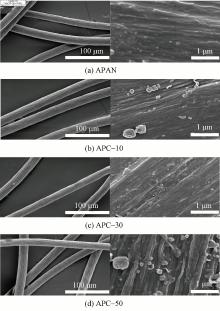
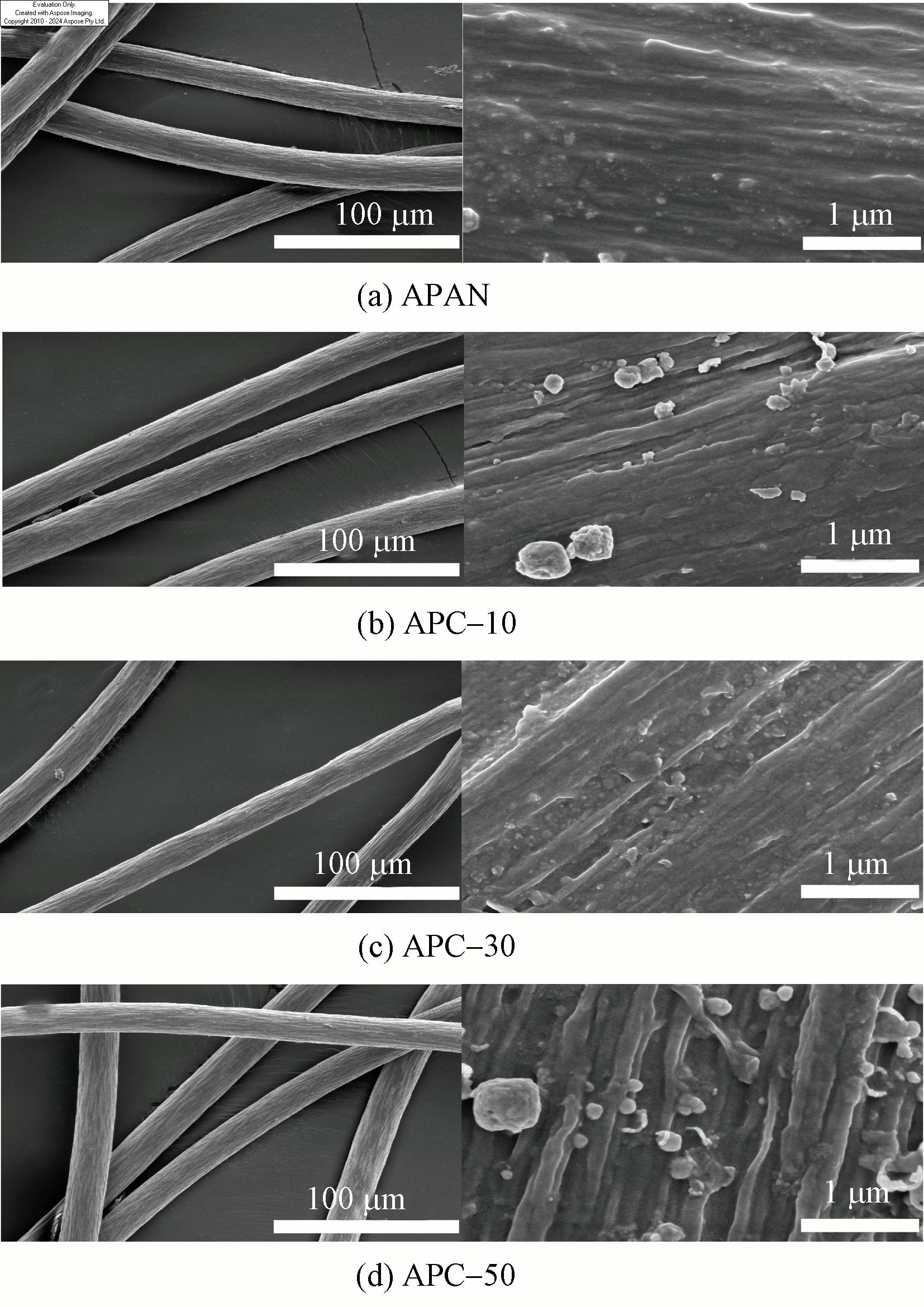
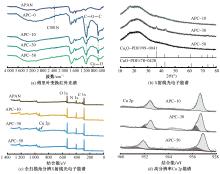
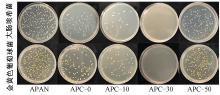
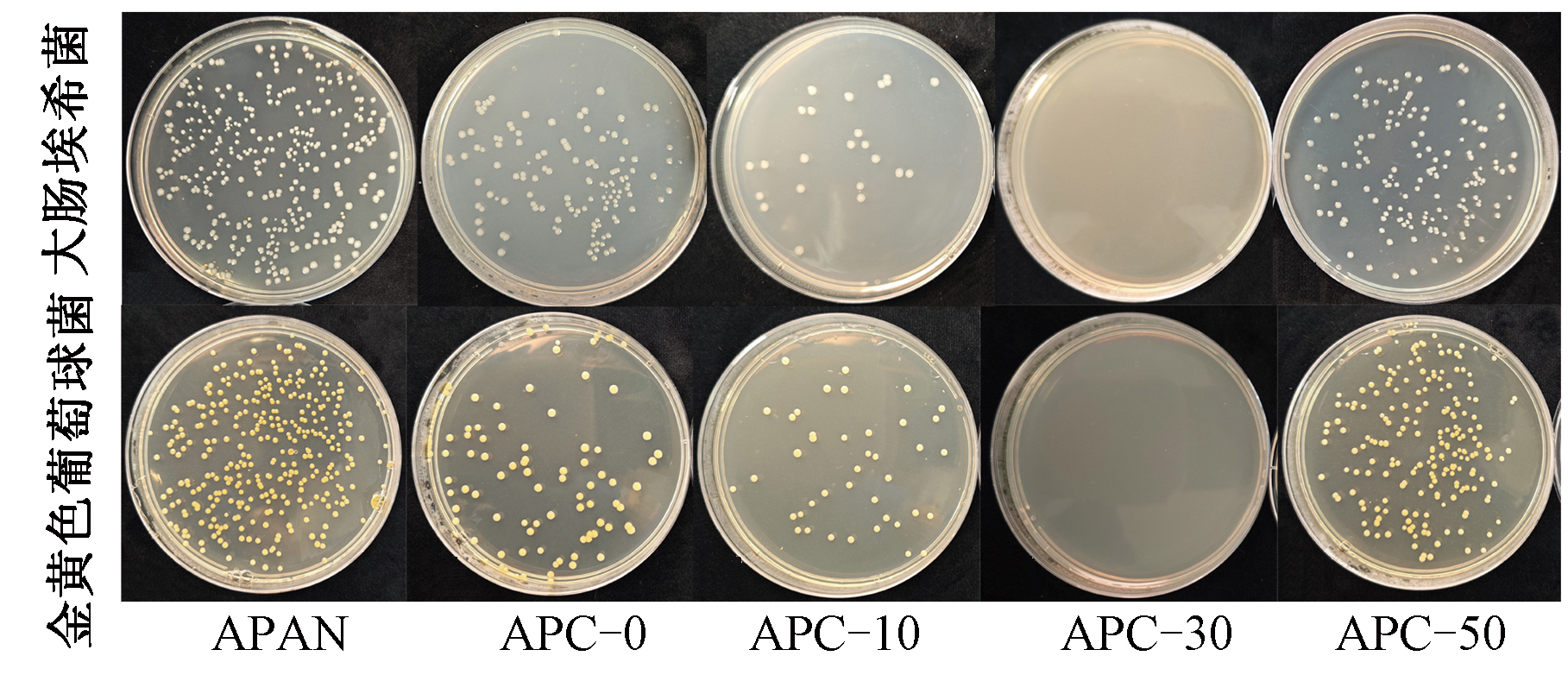
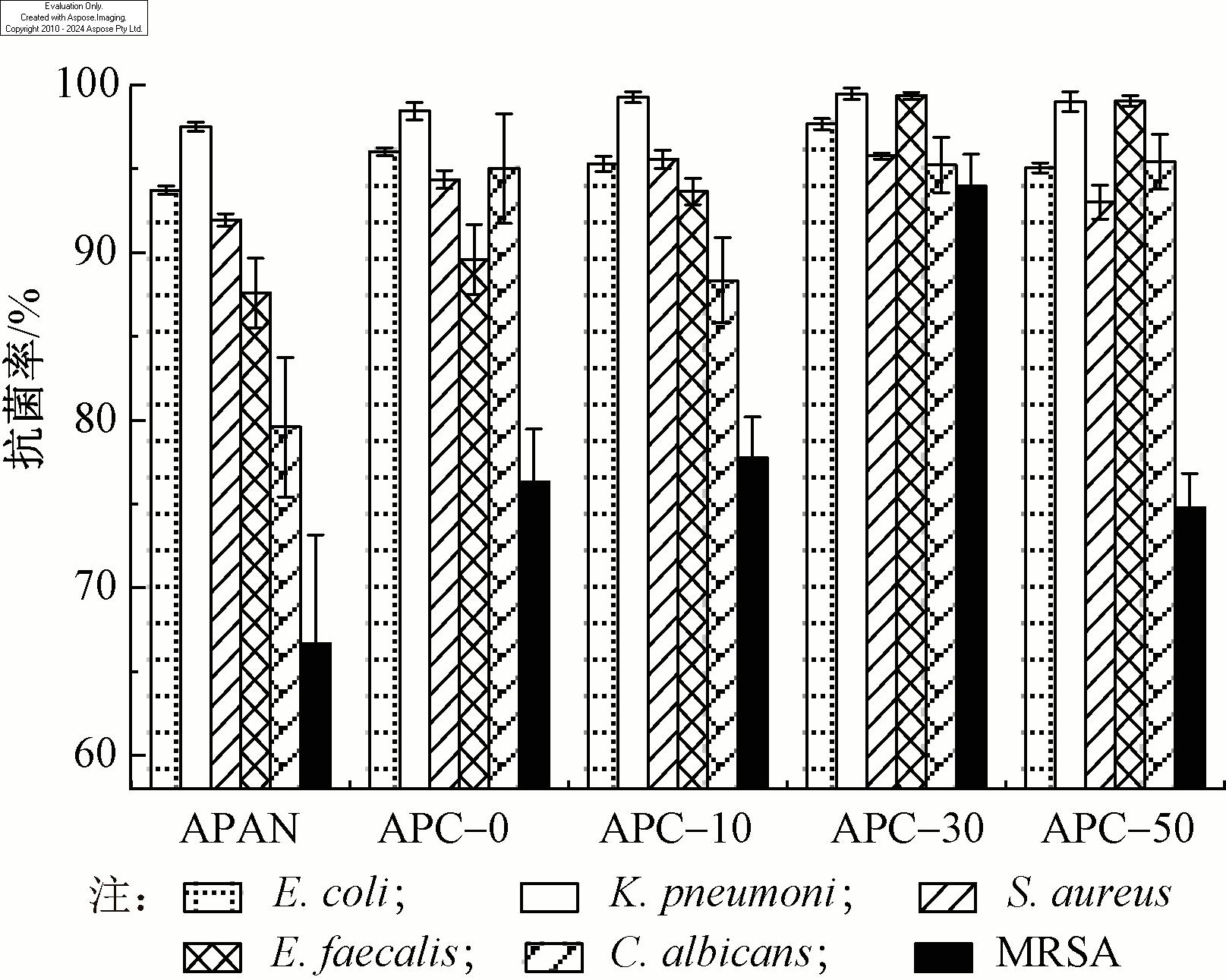
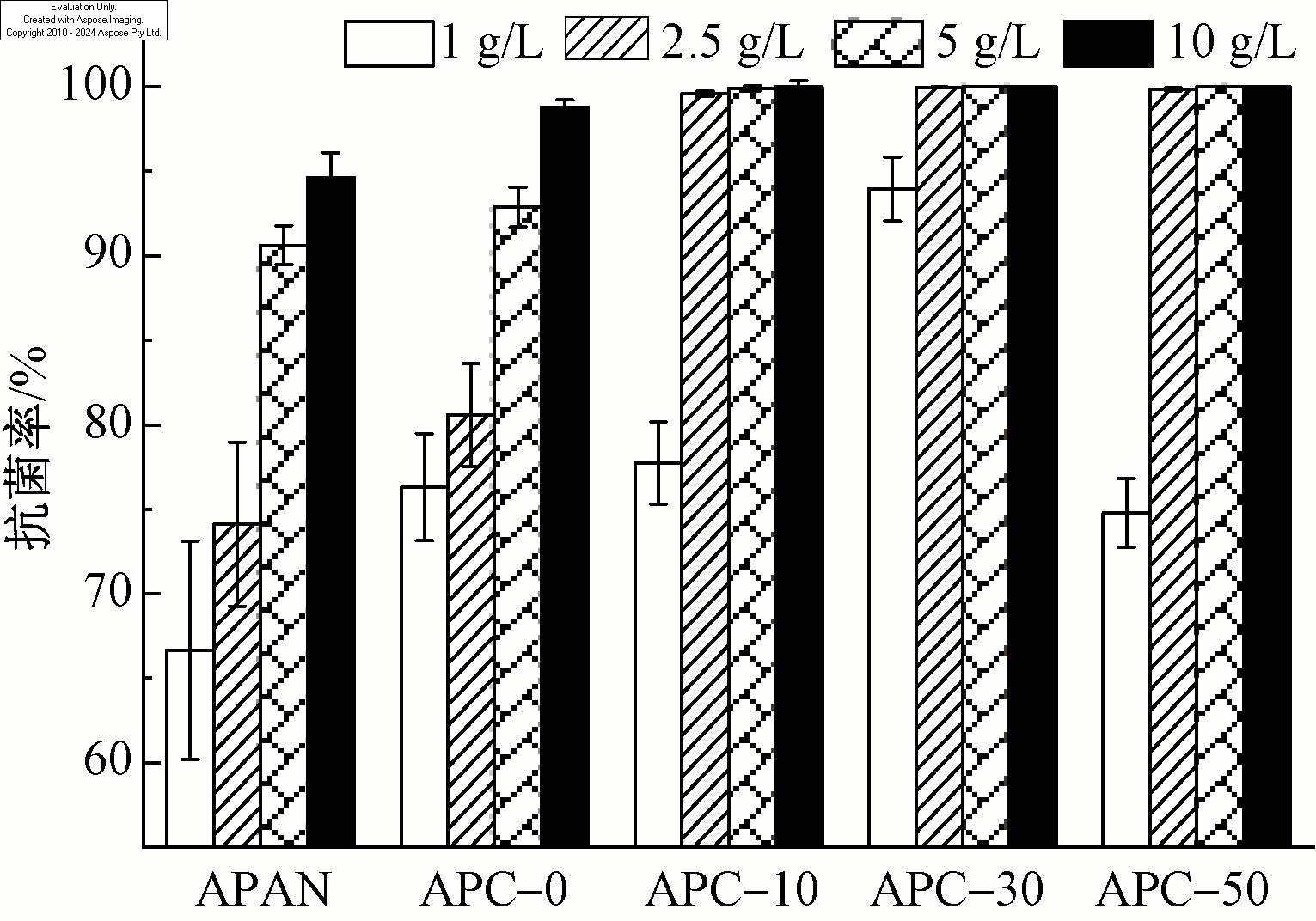
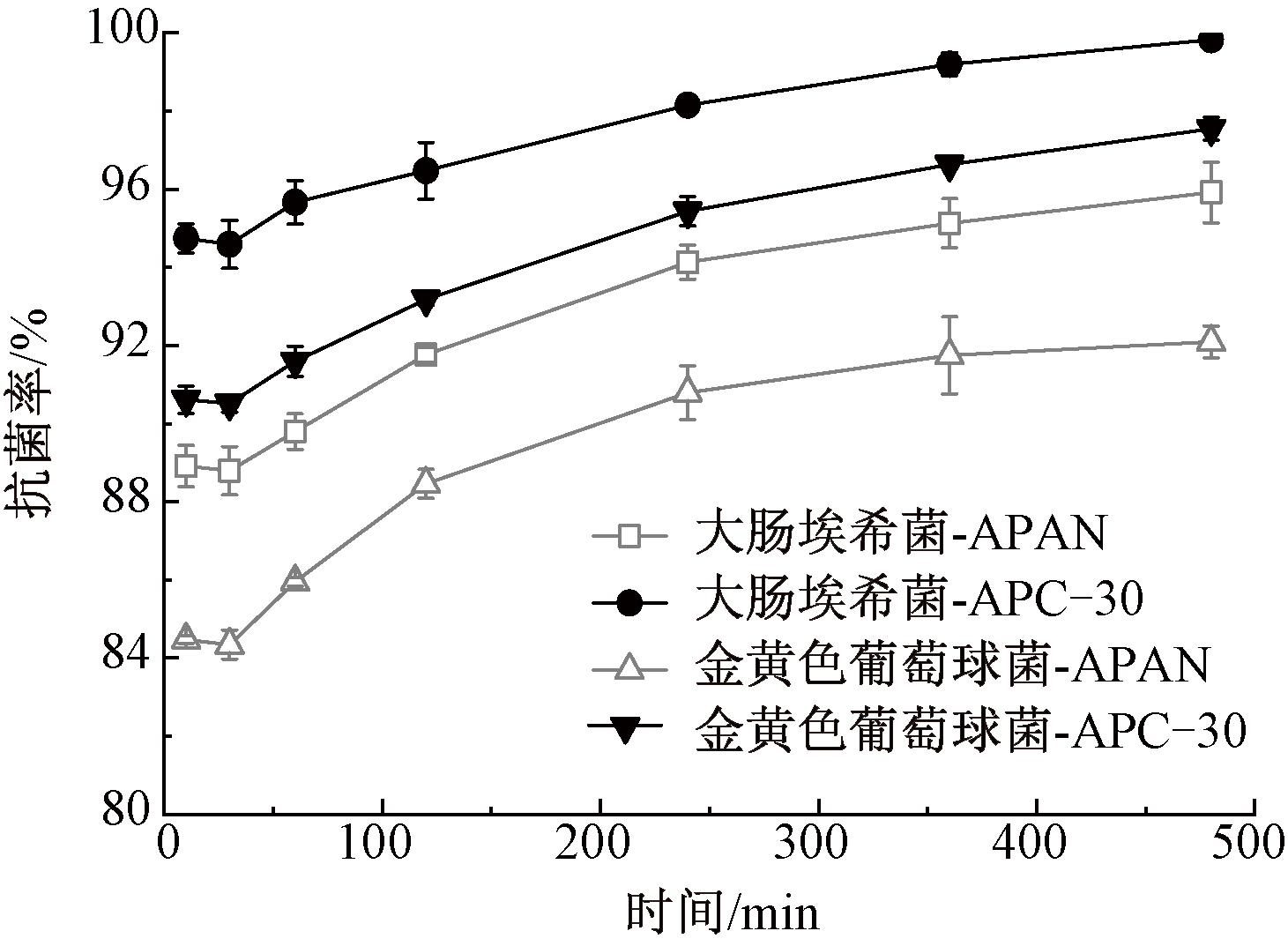
为获得具有高抗菌活性、抗菌稳定性及广谱性的纤维材料,通过接枝改性制得胺基化聚丙烯腈纤维(APAN),并在其表面稳定负载氧化亚铜(Cu2O)纳米颗粒。借助扫描电子显微镜、傅里叶变换红外光谱仪、X射线衍射仪等表征手段及抗菌性能测试,研究了合成纤维的表观形貌、化学结构、抗菌性能以及抗菌机制。结果表明:获得的Cu2O负载纤维,对大肠埃希菌、肺炎克雷伯菌和金黄色葡萄球菌、粪肠球菌表现出区别于其它长效测试周期的纤维,2 h内即可得到优异的广谱抗菌性能,所获得最佳抗菌效果的纤维可在2 h内对白色念珠菌的抗菌率高达95.2%,对耐甲氧西林金黄色葡萄球菌(MRSA)的抗菌率达93.9%,且最低有效剂量为2.5 g/L,远低于先前报道材料;经过30次洗涤,该纤维对大肠埃希菌和金黄色葡萄球菌仍保有较高的抗菌性能,抗菌率分别为91%和88%;该纤维的抗菌机制推测为纤维表面溢出铜离子与细菌细胞膜的直接作用和纤维与细菌间静电的协同作用。
中图分类号:
| [1] | SANCHEZ E, DORON S. Bacterial infections: overview[M]//International encyclopedia of public health. Amsterdam: Elsevier, 2025: 223-235. |
| [2] | CHEN X Y, DING F, HOU X L, et al. Halloysite-based inorganic-organic hybrid coatings for durable flame retardant, hydrophobic and antibacterial properties of cotton fabrics[J]. International Journal of Biological Macromolecules, 2024, 277: 134357. |
| [3] | CHOKESAWATANAKIT N, JUTAKRIDSADA P, BOONLUE S, et al. Ag-doped Cobweb-like structure of TiO2 nanotubes for antibacterial activity against Methicillin-resistant Staphylococcus aureus (MRSA)[J]. Journal of Environmental Chemical Engineering, 2021, 9(5): 105843. |
| [4] | 王光耀. 聚丙烯腈基抗菌纤维膜的制备及其空气过滤性能研究[D]. 大连: 大连理工大学, 2024:1-10. |
| WANG Guangyao. Preparation and air filtration performance of polyacrylonitrile-based antibacterial fibrous membranes[D]. Dalian: Dalian University of Technology, 2024::1-10. | |
| [5] | LI Q Y, PANG X W, XING X, et al. Facile synthesis of copper sulfide nanoflower decorated amine-grafted polyacrylonitrile fibers for rapid and long-lasting antimicrobial performance mediated by photothermal and photocatalytic effects[J]. Materials Today Communications, 2025, 44: 112201. |
| [6] | 翟丽莎, 王宗垒, 周敬伊, 等. 纺织用抗菌材料及其应用研究进展[J]. 纺织学报, 2021, 42(9): 170-179. |
| ZHAI Lisha, WANG Zonglei, ZHOU Jingyi, et al. Research progress of antibacterial materials for textiles and their applications[J]. Journal of Textile Research, 2021, 42(9): 170-179. | |
| [7] | 王雅萍. 氧化亚铜基微纳杂化材料构筑及其抗菌纤维应用[D]. 上海: 东华大学, 2021:1-10. |
| WANG Yaping. Construction of cuprous oxide-based micro-nano hybrid materials and application of antibacterial fibers[D]. Shanghai: Donghua University, 2021:1-10. | |
| [8] | 胡定军, 刘朝军, 章浩荣. 聚丙烯单原子铜抗菌纤维的制备及其性能[J]. 工程塑料应用, 2023, 51(5): 51-55. |
| HU Dingjun, LIU Chaojun, ZHANG Haorong. Preparation and properties of polypropylene/single copper atoms antibacterial fiber[J]. Engineering Plastics Application, 2023, 51(5): 51-55. | |
| [9] | KUMAR A, SHARMA A, CHEN Y, et al. Copper@ZIF-8 core-shell nanowires for reusable antimicrobial face masks[J]. Advanced Functional Materials, 2021, 31(10): 2008054. |
| [10] | DENG S S, WANG F, WANG M H, et al. Integrating multifunctional highly efficient flame-retardant coatings with superhydrophobicity, antibacterial property on cotton fabric[J]. International Journal of Biological Macromolecules, 2023, 253: 127022. |
| [11] | ZHOU J L, ZHAI M, WANG R X, et al. High metal-loaded Cu2O@TM hybrids for melt-spun antibacterial fibers engineered towards medical protective fabrics[J]. Composites Part A: Applied Science and Manufacturing, 2022, 161: 107080. |
| [12] | 秦益民. Cupron铜基抗菌纤维的性能和应用[J]. 纺织学报, 2009, 30(12): 134-136. |
| QIN Yimin. Properties and applications of Cupron copper containing antimicrobial fibers[J]. Journal of Textile Research, 2009, 30(12): 134-136. | |
| [13] | ZHANG G Y, XIAO Y, YIN Q T, et al. In situ synthesis of silver nanoparticles on amino-grafted polyacrylonitrile fiber and its antibacterial activity[J]. Nanoscale Research Letters, 2021, 16(1): 36. |
| [14] | CASCHERA D, TORO R G, FEDERICI F, et al. Green approach for the fabrication of silver-oxidized cellulose nanocomposite with antibacterial properties[J]. Cellulose, 2020, 27(14): 8059-8073. |
| [15] | WANG J, LV X H, ZHAO L, et al. Preparation and characterization of a novel strong-base anion exchange fiber[J]. Journal of Applied Polymer Science, 2013, 128(2): 934-940. |
| [16] | ZHU N, ZHOU S J, GONG J Y, et al. In situ synthesis of cuprous oxide on cotton fiber for developing functional textile with broad-spectrum antibacterial activity[J]. Industrial Crops and Products, 2022, 187: 115442. |
| [17] | YANG Y, HAN J, NING X H, et al. Controllable morphology and conductivity of electrodeposited Cu2O thin film: effect of surfactants[J]. ACS Applied Materials & Interfaces, 2014, 6(24): 22534-22543. |
| [18] | PARK E, SELVARAJ R, KIM Y. High-efficiency photothermal sterilization on PDMS film with Au@CuS yolk-shell nanoparticles[J]. Journal of Industrial and Engineering Chemistry, 2022, 113: 522-529. |
| [19] | WANG Y, WANG W, LIU B J, et al. Preparation of durable antibacterial and electrically conductive polyacrylonitrile fibers by copper sulfide coating[J]. Journal of Applied Polymer Science, 2017, 134(44): 45496. |
| [20] | ZHU X F, CHEN J J, WU B H, et al. Polyvalent copper oxide nanozymes: co-delivery of ROS and NO for inducing cuproptosis-like bacterial death against MRSA infections[J]. Chemical Engineering Journal, 2024, 499: 156507. |
| [21] | HUANG Y L, WAN X F, SU Q, et al. Ultrasound-activated piezo-hot carriers trigger tandem catalysis coordinating cuproptosis-like bacterial death against implant infections[J]. Nature Communications, 2024, 15: 1643. |
| [22] | LIU T, MA M M, ALI A, et al. Self-assembled copper tannic acid nanoparticles: a powerful nano-bactericide by valence shift of copper[J]. Nano Today, 2024, 54: 102071. |
| [23] | WOŹNIAK-BUDYCH M, ZGÓRZYŃSKA U, PRZYSIECKA Ł, et al. Copper oxide(I) nanoparticle-modified cellulose acetate membranes with enhanced antibacterial and antifouling properties[J]. Environmental Research, 2024, 252: 119068. |
| [24] | WOŃNIAK-BUDYCH M J, PRZYSIECKA Ł, LANGER K, et al. Green synthesis of rifampicin-loaded copper nanoparticles with enhanced antimicrobial activity[J]. Journal of Materials Science: Materials in Medicine, 2017, 28(3): 42. |
| [25] | 孙鹤情, 赵聪颖, 吴冰雪, 等. 长效型抗菌聚酰胺66纤维的制备及其性能[J]. 纺织学报, 2025, 46(9): 66-73. |
| SUN Heqing, ZHAO Congying, WU Bingxue, et al. Preparation and properties of long-lasting antimicrobial polyamide 66 fibers[J]. Journal of Textile Research, 2025, 46(9): 66-73. | |
| [26] | WANG Y P, WANG Q Q, WU G Y, et al. Ultra-fast bacterial inactivation of Cu2O@halloysite nanotubes hybrids with charge adsorption and physical piercing ability for medical protective fabrics[J]. Journal of Materials Science & Technology, 2022, 122: 1-9. |
| [27] | MARAKHOVA I I, YURINSKAYA V E, DOMNINA A P. The role of intracellular potassium in cell quiescence, proliferation, and death[J]. International Journal of Molecular Sciences, 2024, 25(2): 884. |
| [28] | WANG L, MA X M, CAI K T, et al. Morphological effect of copper sulfide nanoparticles on their near infrared laser activated photothermal and photodynamic performance[J]. Materials Research Express, 2019, 6(10): 105406. |
| [1] | 高佳鹏, 杨雷, 吴宇通, 陈宏鑫, 马昌, 韩娜. 聚丙烯腈基隔热纤维的绿色制备及其性能[J]. 纺织学报, 2026, 47(07): 44-53. |
| [2] | 邱虹, 陈黎, 王丽芳, 易珊, 唐一卡, 王玉平, 高洪国, 张雯欣, 王克毅, 刘丽芳. 纳米纤维素基温度响应型水凝胶的制备及其性能[J]. 纺织学报, 2026, 47(05): 1-8. |
| [3] | 张旭, 许云凯, 刘云. 植酸改性茶多酚阻燃涤纶织物的制备及其性能[J]. 纺织学报, 2026, 47(05): 182-189. |
| [4] | 梁均明, 徐贤培, 费鹏飞, 狄友波, 李甫. 聚丙烯腈预氧化纳米纤维的构效关系及其应用研究进展[J]. 纺织学报, 2026, 47(05): 244-253. |
| [5] | 杨鸿杰, 徐丽亚, 汪蔚. 含一氧化氮供体的生物基聚酰胺56纳米纤维膜制备及其性能[J]. 纺织学报, 2026, 47(04): 43-51. |
| [6] | 霍雨辰, 张帆, 翟云云, 刘海清. 纳米纤维素/聚丙烯腈复合隔膜制备及其锂枝晶抑制[J]. 纺织学报, 2026, 47(04): 61-70. |
| [7] | 吴雷蕾, 王强, 王平. 纤维表面无机纳米粒子负载及其抗菌机制研究进展[J]. 纺织学报, 2026, 47(04): 255-264. |
| [8] | 王琎祺, 翟倩, 俞森龙, 朱倩沁, 周哲, 相恒学, 朱美芳. 聚乙烯微细纤维医疗防护应用研究进展[J]. 纺织学报, 2026, 47(03): 156-165. |
| [9] | 邵英海, 朴洪伟, 曹继鹏, 张月, 许兰杰, 于学智, 张明光. 天然彩棉/柞蚕短纤维混纺纱的制备及其抗菌性能[J]. 纺织学报, 2026, 47(03): 240-246. |
| [10] | 刘鹏碧, 任经岗, 张宽祥, 曹东阳, 刘熙, 郭昌盛. 植酸/苯扎氯铵一步共沉积涂层聚丙烯补片的制备及其抗菌性能[J]. 纺织学报, 2026, 47(03): 77-86. |
| [11] | 魏建斐, 魏艳颖, 马超慧, 胡晓鹏, 邴琳涵, 樊瑜, 林彬泽, 董振峰, 朱志国, 王锐. 碳点的宏量制备及其对聚酰胺66阻燃与力学性能协同增强机制[J]. 纺织学报, 2026, 47(02): 37-46. |
| [12] | 王彬, 侯泽明, 徐英俊, 王玉忠. 高阻燃性再生纤维素纤维的制备及其性能[J]. 纺织学报, 2026, 47(02): 47-55. |
| [13] | 王世杰, 孙辉, 于斌. 聚乙烯醇/牡丹皮提取物复合纳米静电纺丝膜的制备及其抗菌性能[J]. 纺织学报, 2026, 47(02): 56-64. |
| [14] | 顾家玉, 张炜栋, 董永春, 孙璇, 徐良军. 银杏叶黄酮对羊毛和蚕丝织物的抗菌整理[J]. 纺织学报, 2026, 47(01): 142-150. |
| [15] | 凌磊, 陈凯, 高俊, 武丁胜, 汪邓兵, 张春, 凤权. 聚丙烯腈/共价有机框架复合纳米纤维膜的制备及其对Cr(Ⅵ)的吸附性能[J]. 纺织学报, 2026, 47(01): 54-62. |
|
||
 京公网安备11010502044800号