纺织学报 ›› 2025, Vol. 46 ›› Issue (07): 87-95.doi: 10.13475/j.fzxb.20240903701
贾陈诺瓦1, 张勇1,2, 朱威岩1, 刘赛1, 唐宁1,2( )
)
JIA Chennuowa1, ZHANG Yong1,2, ZHU Weiyan1, LIU Sai1, TANG Ning1,2()
摘要:
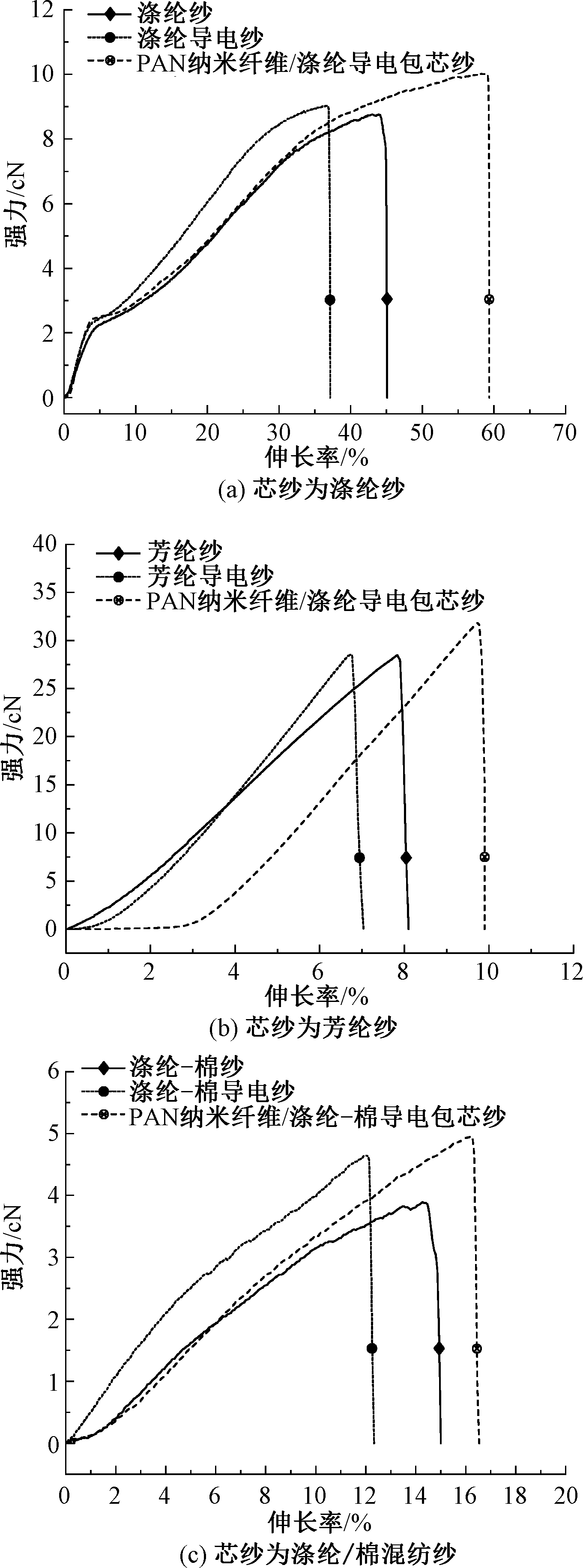
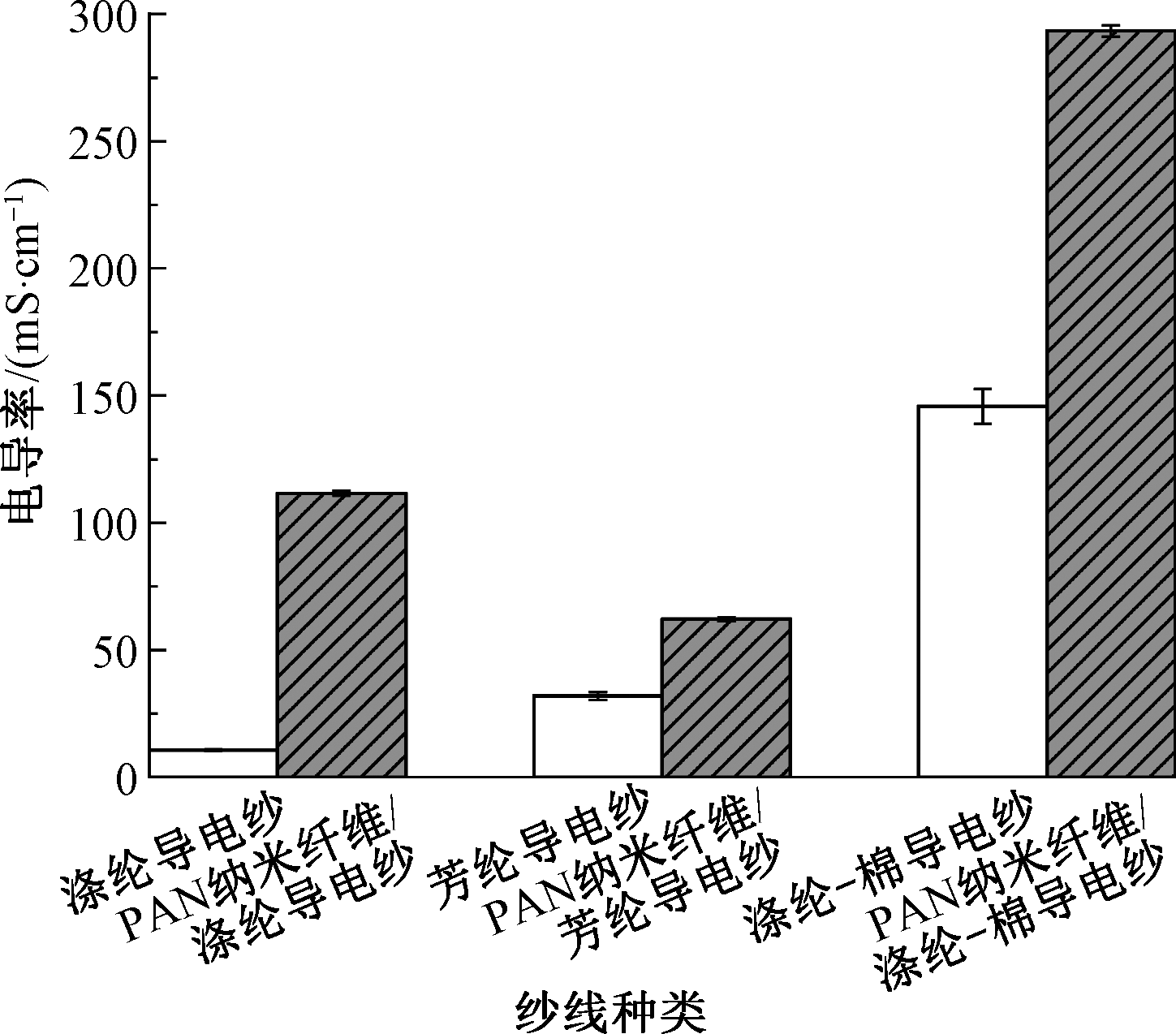
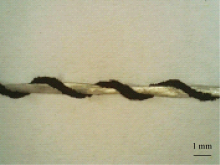
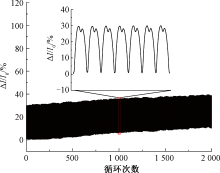
为制备具有良好服用性能的纳米纤维导电包芯纱,以静电纺聚丙烯腈(PAN)纳米纤维作为包覆纤维,分别以涤纶纱、芳纶纱、涤纶-棉混纺纱为芯纱,制备3种PAN纳米纤维包芯纱,并利用吡咯原位聚合得到表面负载聚吡咯(PPy)的PAN纳米纤维导电包芯纱,综合比较分析了3种导电包芯纱的形貌结构、力学性能和电学性能的差别。结果表明:芯纱本体结构对导电包芯纱形貌和增重率均有影响,芯纱表面毛羽影响包覆纤维的贴合性,芯纱表面毛羽越少、刚性越弱,纳米纤维包覆越贴合;芯纱毛羽有助于导电包芯纱增重率的增加,相比于PAN纳米纤维/涤纶导电包芯纱(增重率39.29%),PAN纳米纤维/芳纶导电包芯纱和PAN纳米纤维/涤纶-棉导电包芯纱的增重率分别为53.49%和52.63%;此外,纳米纤维导电包芯纱的纱线断裂强力、断裂伸长率和电导率较原纱均有不同程度的提高,其中PAN纳米纤维/涤纶-棉导电包芯纱具有最大的电导率(293.39 mS/cm);在10%形变下循环拉伸2 000次后PAN纳米纤维导电包芯纱电信号输出相对稳定,表现出良好的电力学性能和循环耐用性。
中图分类号:
| [1] | XIE Y, CHENG Y, MA Y, et al. 3D MXene-based flexible network for high-performance pressure sensor with a wide temperature range[J]. Advanced Science, 2023. DOI: 10.1002/advs.202205303. |
| [2] | 方进, 张广知, 徐珍珍. 点击化学在功能纺织品制备中的应用研究进展[J]. 纺织学报, 2024, 45(3): 227-235. |
| FANG Jin, ZHANG Guangzhi, XU Zhenzhen. Research progress in the application of click chemistry in the preparation of functional Textiles[J]. Journal of Textile Research, 2024, 45(3): 227-235. | |
| [3] | CHEN W, CAI M, WU J, et al. Highly conductive, durable, washable, and scalable composite yarn for multifunctional wearable electronic applications[J]. Composites Science and Technology, 2023. DOI: 10.1016/j.compscitech.2023.110115. |
| [4] | 李龙, 张弦, 吴磊. 导电纱线制备方法与应用的研究进展[J]. 纺织学报, 2023, 44(7): 214-221. |
| LI Long, ZHANG Xuan, WU Lei. Research progress on preparation methods and applications of conductive yarns[J]. Journal of Textile Research, 2023, 44(7): 214-221. | |
| [5] | AHN J, SASIKALA S P, JEONG Y, et al. High-energy-density fiber supercapacitors based on transition metal oxide nanoribbon yarns for comprehensive wearable electronics[J]. Advanced Fiber Materials, 2024. DOI: 10.1007/s42765-024-00462-0. |
| [6] | FAN W, LEI R, DOU H, et al. Sweat permeable and ultrahigh strength 3D PVDF piezoelectric nanoyarn fabric strain sensor[J]. Nat Commun, 2024. DOI: 10.1038/s41467-024-47810-7. |
| [7] | 陶丽珍, 周锁林, 廖兰兰. 金属长丝复合导电纱的纺制与性能[J]. 现代纺织技术, 2023, 31(2): 130-138. |
| TAO Lizhen, ZHOU Suolin, LIAO Lanlan. Spinning and properties of metal filament composite conductive yarn[J]. Advanced Textile Technology, 2023, 31(2): 130-138. | |
| [8] | WAN Y, QIN N, WANG Y, et al. Sugar-templated conductive polyurethane-polypyrrole sponges for wide-range force sensing[J]. Chemical Engineering Journal, 2020. DOI: 10.1016/j.cej.2019.123103. |
| [9] | HEBEISH A, FARAG S, SHARAF S, et al. Advancement in conductive cotton fabrics through in situ polymerization of polypyrrole-nanocellulose compo-sites[J]. Carbohydrate Polymers, 2016, 151: 96-102. |
| [10] |
缪璐璐, 董正梅, 朱繁强, 等. 芯丝种类与纺纱速度对喷气涡流纺包芯纱性能的影响[J]. 纺织学报, 2023, 44(12): 50-57.
doi: 10.13475/j |
|
MIAO Lulu, DONG Zhengmei, ZHU Fanqiang, et al. Effect of core yarn type and spinning speed on the performance of air-swirl spinning core-spun yarn[J]. Journal of Textile Research, 2023, 44(12): 50-57.
doi: 10.13475/j |
|
| [11] | 郑姿辰, 唐宁, 王金凤. 导电纱线及柔性传感器耐久性影响因素研究[J]. 丝绸, 2024, 61(1): 52-60. |
| ZHENG Zichen, TANG Ning, WANG Jinfeng. Study on influencing factors of durability of conductive yarn and flexible sensor[J]. Journal of Silk, 2024, 61(1): 52-60. | |
| [12] | ZHOU Y, LIAO H, QI Q, et al. Polypyrrole-coated graphene oxide-doped polyacrylonitrile nanofibers for stretchable strain sensors[J]. ACS Applied Nano Materials, 2022, 5(6): 8224-8231. |
| [13] | 刘志豪, 贾康昱, 钟卫兵, 等. 导电聚吡咯改性机织物及其压力传感性能[J]. 上海纺织科技, 2023, 51(1): 16-19. |
| LIU Zhihao, JIA Kangyu, ZHONG Weibing, et al. Conductive polypyrrole modified woven fabric and pressure sensing properties[J]. Shanghai Textile Science & Technology, 2023, 51(1): 16-19. | |
| [14] | ZHENG Y L, SUN H J, CHENG Y J, et al. A yarn-based sweat-activated battery constructed with conjugated electrospun nanofiber separators as a durable and high-capacity power source in textile electro-nics[J]. Chemical Engineering Journal, 2024. DOI: 10.1016/j.cej.2024.152414. |
| [15] | HE M, LI A, ZHENG M, et al. Shape-controllable nanofiber core-spun yarn for multifunctional applica-tions[J]. Advanced Fiber Materials, 2024, 6(4): 1138-1151. |
| [16] | 王秀昀, 聂浩宇, 阚丽丽, 等. 聚吡咯导电薄膜原位聚合工艺的研究[J]. 化工新型材料, 2014, 42(11): 184-185,189. |
| WANG Xiujun, NIE Haoyu, KAN Lili, et al. Study on in situ polymerization of polypyrrole conductive film[J]. New Chemical Materials, 2014, 42(11): 184-185,189. | |
| [17] | 刘沙柯, 张腾, 罗重阳, 等. 静电纺丝法对涤纶织物的单面亲水改性[J]. 纺织高校基础科学学报, 2019, 32(2): 147-154. |
| LIU Shake, ZHANG Teng, LUO Chongyang, et al. Hydrophilic modification of polyester fabric on one side by electrospinning[J]. Basic Sciences Journal of Textile Universities, 2019, 32(2): 147-154. | |
| [18] | 姜珊, 万爱兰, 缪旭红, 等. 等离子体处理对聚吡咯/涤纶复合导电纱线性能的影响[J]. 纺织学报, 2019, 40(8): 95-100. |
| JIANG Shan, WAN Ailan, MIAO Xuhong, et al. Effect of plasma treatment on the properties of polypyrrole/polyester composite conductive yarns[J]. Journal of Textile Research, 2019, 40(8): 95-100. |
| [1] | 林玉婷, 许仕林, 胡毅. 多色彩热塑性聚氨酯/聚丙烯腈纳米纤维纱线的制备及其性能[J]. 纺织学报, 2025, 46(07): 78-86. |
| [2] | 贾潞, 周苏秦, 郭龙灿, 刘淑强, 张瑜. 负载MXene的棉/氨纶导电包芯纱制备及其传感性能[J]. 纺织学报, 2025, 46(07): 96-102. |
| [3] | 张利平, 郭羽晴, 丁博, 孙洁. 芳纶纳米纤维/热塑性聚氨酯复合微孔膜与可呼吸覆膜织物制备及其性能[J]. 纺织学报, 2025, 46(07): 19-27. |
| [4] | 徐丽亚, 汪瑱, 杨鸿杰, 汪蔚. 氧化锌-银/生物基聚酰胺56纳米纤维膜的制备及其抗菌性能[J]. 纺织学报, 2025, 46(07): 37-45. |
| [5] | 陈亚娟, 郭瀚宇, 张陈恬, 李欣欣, 张雪萍. 聚乙烯醇/海藻酸钠/锦纶66复合水凝胶包芯纱的制备及其吸湿性能[J]. 纺织学报, 2025, 46(06): 103-110. |
| [6] | 丁圆, 赵云霞, 靳高岭, 杨涛, 徐静, 柯福佑, 陈烨. 阻燃聚丙烯腈长丝织物的层层自组装法制备及其性能[J]. 纺织学报, 2025, 46(06): 168-177. |
| [7] | 余厚咏, 黄程玲, 陈毅, 高智英. 天然纤维素的多维结构演变及其功能材料研究进展[J]. 纺织学报, 2025, 46(06): 45-55. |
| [8] | 丁振华, 袁开宇, 周敬, 叶冬冬. 面向渗透能收集的纤维素纳米流体系统研究进展[J]. 纺织学报, 2025, 46(06): 56-62. |
| [9] | 王春翔, 李姣, 解开放, 薛宏坤, 徐广标. 天麻多糖/聚乙烯醇静电纺抗菌保鲜膜的制备与性能[J]. 纺织学报, 2025, 46(06): 73-79. |
| [10] | 张嘉诚, 于影, 左雨欣, 顾志清, 汤腾飞, 陈洪立, 吕勇. 聚丙烯腈/二硫化钼纤维薄膜的挠曲电效应与扭转传感特性[J]. 纺织学报, 2025, 46(06): 80-87. |
| [11] | 邱月, 杨询, 李昊, 李海东, 吴国忠, 张彩丹. 聚琥珀酰亚胺纳米纤维膜改性及其染料吸附性能[J]. 纺织学报, 2025, 46(06): 88-95. |
| [12] | 孙洁, 郭羽晴, 屈芸, 张利平. 芳纶纳米纤维/MXene同轴纤维电极制备及其性能[J]. 纺织学报, 2025, 46(05): 125-134. |
| [13] | 王薇, 高建南, 裴笑涵, 陆鑫, 孙银银, 吴建兵. 纤维素/甲基三甲氧基硅烷气凝胶的制备及其油水分离效能[J]. 纺织学报, 2025, 46(05): 135-142. |
| [14] | 时晓聪, 陈莉, 杜迅. 茜素-聚乳酸/胶原蛋白纳米纤维膜的制备及其氨气检测性能[J]. 纺织学报, 2025, 46(05): 143-150. |
| [15] | 闫静, 王亚倩, 刘晶晶, 李好义, 杨卫民, 康卫民, 庄旭品, 程博闻. 熔融静电纺长丝纱的制备及其在摩擦纳米发电机中的应用[J]. 纺织学报, 2025, 46(05): 23-29. |
|
||
 京公网安备11010502044800号