纺织学报 ›› 2026, Vol. 47 ›› Issue (1): 159-167.doi: 10.13475/j.fzxb.20250704601

• 染整工程 • 上一篇    下一篇

低温高效精练剂的制备及其应用性能

冯品淇1, 张丽宁1, 王娜娜1, 吕仲1, 周存1,2()   

  1. 1.天津工业大学 纺织科学与工程学院, 天津 300387
    2.天津市纺织纤维界面处理技术工程中心, 天津 300270
  • 收稿日期:2025-07-16 修回日期:2025-11-17 出版日期:2026-01-15 发布日期:2026-01-15
  • 通讯作者: 周存(1972—),男,研究员。主要研究方向为高性能纤维、功能性纺织品、纤维界面修饰处理技术以及纺织助剂、化纤油剂等。E-mail:zhoucun@tiangong.edu.cn
  • 作者简介:冯品淇(2000—),男,硕士生。主要研究方向为表面活性剂及纺织助剂的性能研究。

Preparation and application of low-temperature high-efficiency scouring agent

FENG Pinqi1, ZHANG Lining1, WANG Nana1, LÜ Zhong1, ZHOU Cun1,2()   

  1. 1. School of Textile Science and Engineering, Tiangong University, Tianjin 300387, China
    2. Tianjin Engineering Center of Textile Fiber Interface Treatment Technology, Tianjin 300270, China
  • Received:2025-07-16 Revised:2025-11-17 Published:2026-01-15 Online:2026-01-15

摘要:

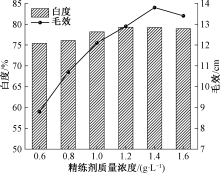
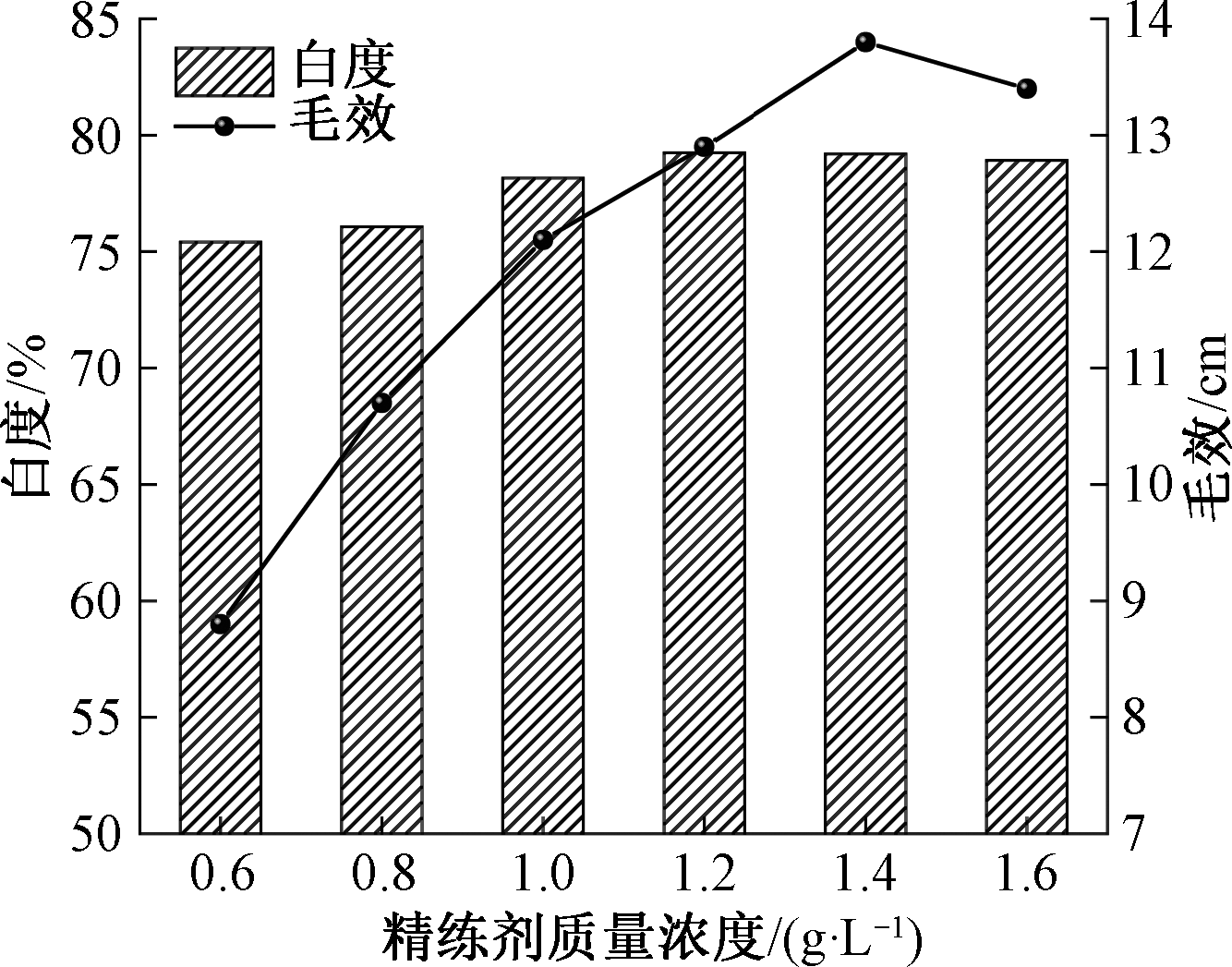
为解决传统棉织物前处理工艺高温强碱、用水量大、能耗高、纤维损伤严重等问题,设计并制备了一种由阴离子表面活性剂α-烯烃磺酸钠、非离子表面活性剂异构十三醇聚氧乙烯醚与两性表面活性剂十四烷基二甲基氧化胺按3∶7∶1比例复配的低温高效精练剂。采用单因素实验对低温低碱短流程工艺进行系统研究与优化,通过表面张力测试、润湿性能表征及各项稳定性分析,揭示了表面活性剂三元体系形成混合胶束产生协同增效作用,显著降低临界胶束含量并增强表面活性。结果表明:制备的低温高效精练剂具有优异的表面活性,临界胶束含量低至0.01%,临界胶束浓度处表面张力值达25.33 mN/m,沉降时间为4.43 s,其耐碱、抗氧化、高温稳定性能优良;一浴法低温练漂最优工艺参数为:精练剂 1.4 g/L(以有效含量计),NaOH 3.5 g/L,Na2SiO3 2 g/L,30% H2O2 6~14 g/L,精练温度85℃,精练时间55 min;经最优工艺处理后棉织物毛效可达14.0 cm、白度为81.23%、强力保留率为82.12%。

关键词: 棉织物, 低温, 前处理, 复配, 表面活性剂, 精练剂

Abstract:

Objective Conventional cotton fabric pre-treatment processes are plagued by high energy consumption, extensive water usage, and significant fiber damage due to their reliance on high temperatures and strong alkali. In order to address these critical limitations, this study aimed to develop a novel, low-temperature high-efficiency scouring agent. The primary objective was to design a synergistic surfactant composite that enables a short process under mild conditions, thereby reducing environmental impact while preserving fabric integrity. Establishing an optimized low-temperature bleaching process was also a key task to validate the agent's industrial applicability.

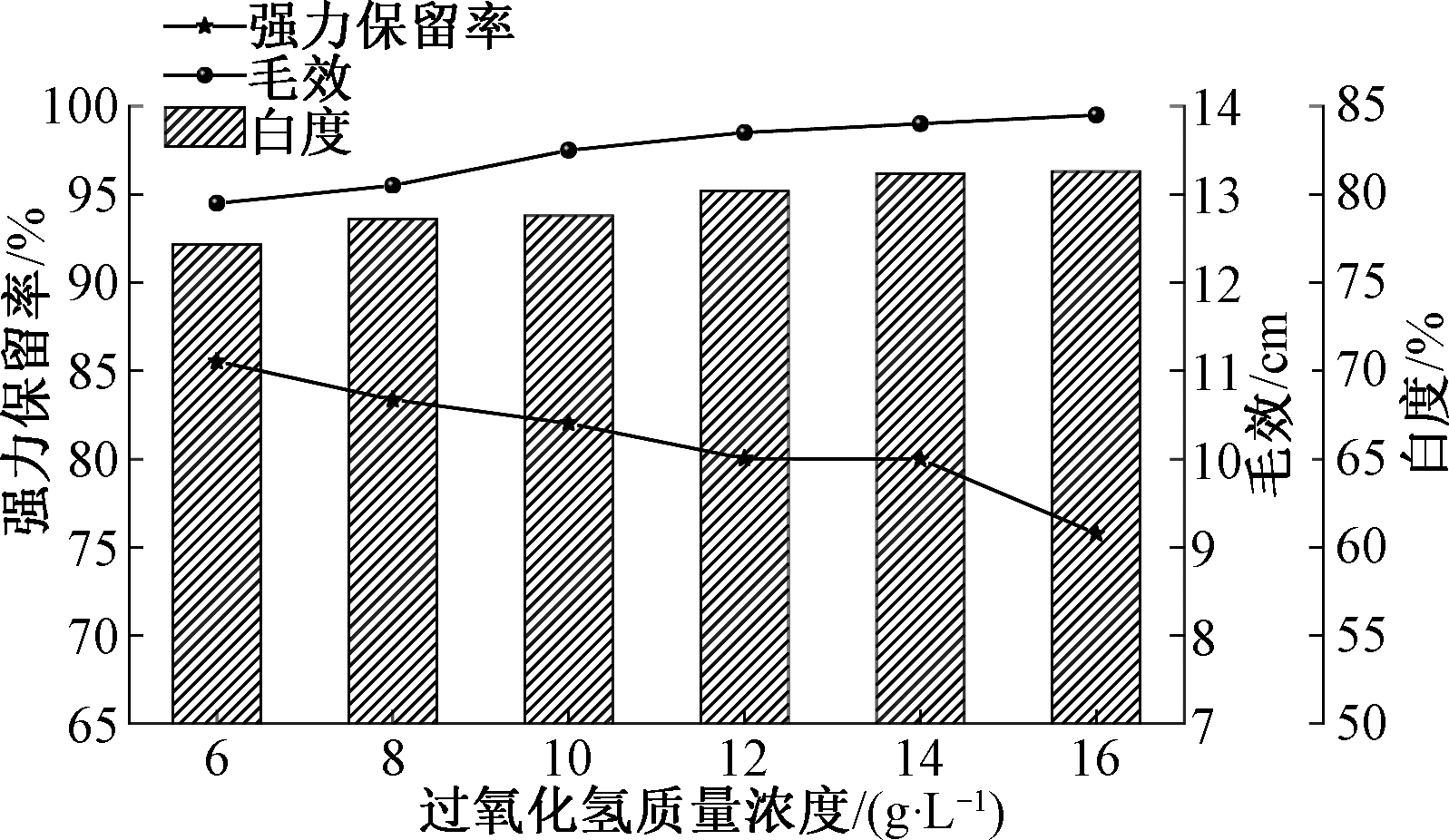
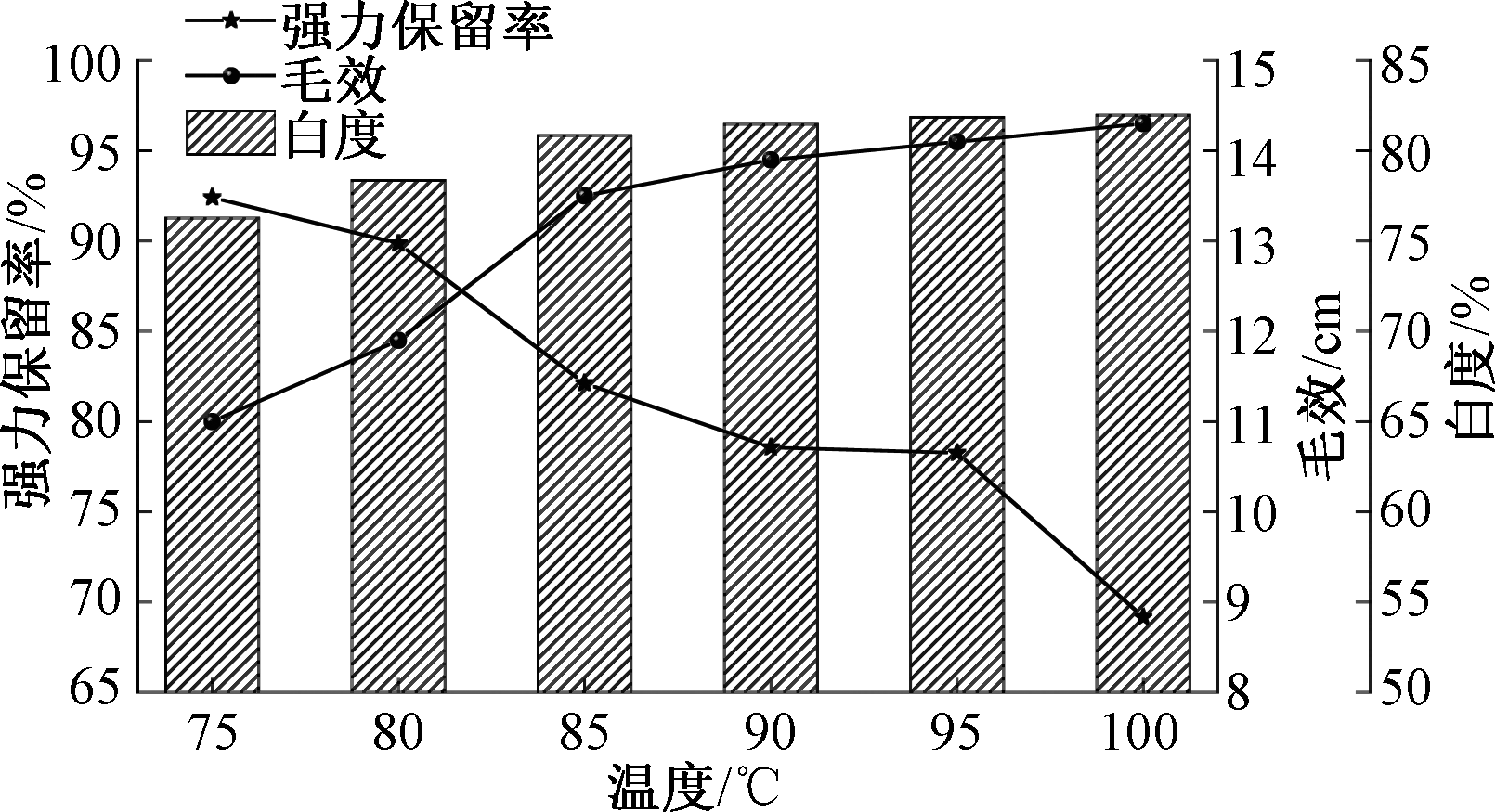
Method A low-temperature high-efficiency scouring agent was designed and prepared by compounding anionic surfactant sodium alpha-olefin sulfonate(AOS), nonionic surfactant isotridecanol ethoxylate, and amphoteric surfactant tetradecyl dimethylamine oxide (OA-14) at a weight ratio of 3∶7∶1. The short process utilizing low temperature and low alkali was systematically studied and optimized via single-factor experiments. The mechanism of action was investigated through surface tension measurements, wetting performance characterization, and comprehensive stability analysis. This approach revealed that the ternary system forms mixed micelles, leading to a synergistic effect that lowers the critical micelle concentration (CMC) and enhances surface activity. The optimal one-bath low-temperature scouring and bleaching process parameters were determined, where the scouring agent 1.4 g/L (based on active content), NaOH 3.5 g/L, Na2SiO3 2 g/L, 30% H2O2 6-14 g/L, process temperature of 85 ℃, and treatment time of 55 min.

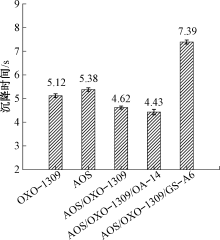
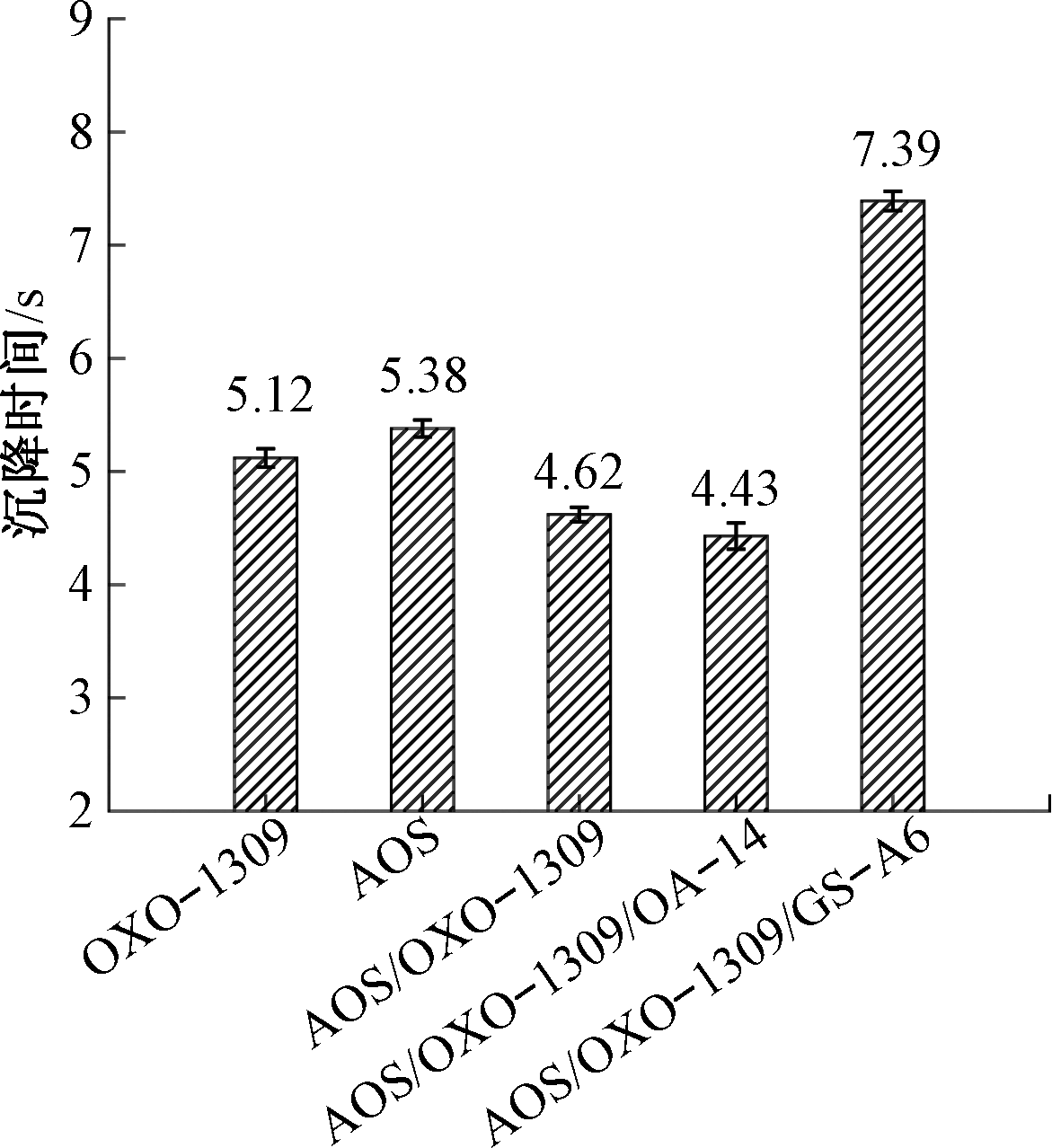
Results The prepared low-temperature high efficiency scouring agent demonstrated excellent performance. It exhibited superior surface activity, with a remarkably low CMC of 0.01% and a surface tension at CMC (γcmc) of 25.33 mN/m, indicating high efficiency at low usage levels. The wetting time was significantly short, measured at just 4.43 s, which is crucial for rapid and uniform treatment. Furthermore, the agent showed outstanding stability, including good alkali resistance, oxidation resistane, and high-temperature stability, ensuring its robustness under the intended application conditions.

When cotton fabrics were treated using the optimized one-bath low-temperature scouring and bleaching process established in this study, the results met key textile performance benchmarks. The capillary effect, which indicates wettability and absorbency, reached an excellent 14.0 cm, demonstrating effective removal of hydrophobic impurities like waxes. The whiteness of the fabric was measured at 81.23%, confirming successful bleaching and removal of natural pigments. Importantly, the fabric's mechanical strength was well-preserved despite the chemical treatment; and the breaking strength retention rate was 82.12%. This high retention value is a direct benefit of the milder low-temperature process compared to conventional harsh treatments, highlighting the agent's effectiveness in minimizing fiber damage. The synergistic effect within the ternary surfactant system was key to these results. The formation of mixed micelles enhanced the overall surface activity, allowing for effective contaminant removal and wetting at lower concentrations and temperatures than typically required.

Conclusion In conclusion, this study successfully developed a novel ternary composite scouring agent that is both low-temperature efficient and highly effective. The synergistic interaction between the anionic, nonionic, and amphoteric surfactants was identified as the core mechanism, leading to excellent surface activity, wetting power, and stability. The concurrently established optimized one-bath low-temperature scouring and bleaching process, operating at 85 ℃, demonstrates a viable and superior alternative to conventional energy-intensive and fiber-damaging methods. This new process significantly reduces alkali dosage, energy consumption, and water footprint while maintaining high fabric quality, as evidenced by the excellent capillary effect, good whiteness, and, most notably, high strength retention of over 82%. The findings strongly suggest that this approach has significant potential for industrial application, promoting a more sustainable and eco-friendlier pathway for cotton fabric pre-treatment without compromising on performance. Future work could focus on the long-term durability testing of treated fabrics and scaling up the process for industrial evaluation.

Key words: cotton fabric, low temperature, pretreatment, compounding, surfactant, scouring agent

中图分类号: 

  • TS192.2

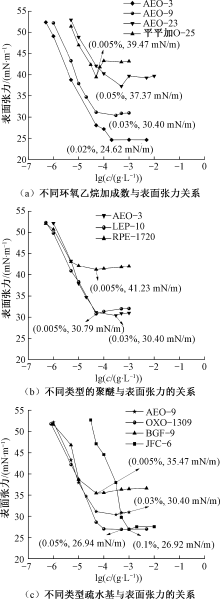
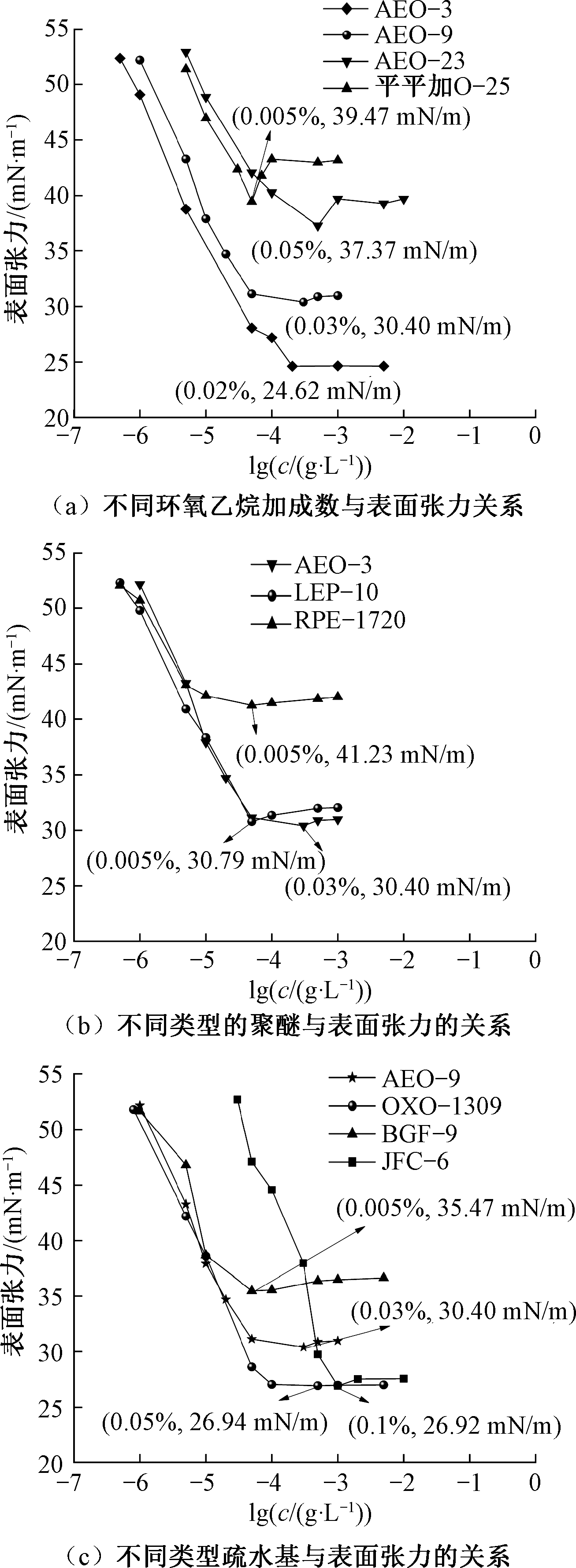
图1

20 ℃时各表面活性剂的表面张力随浓度的变化曲线"

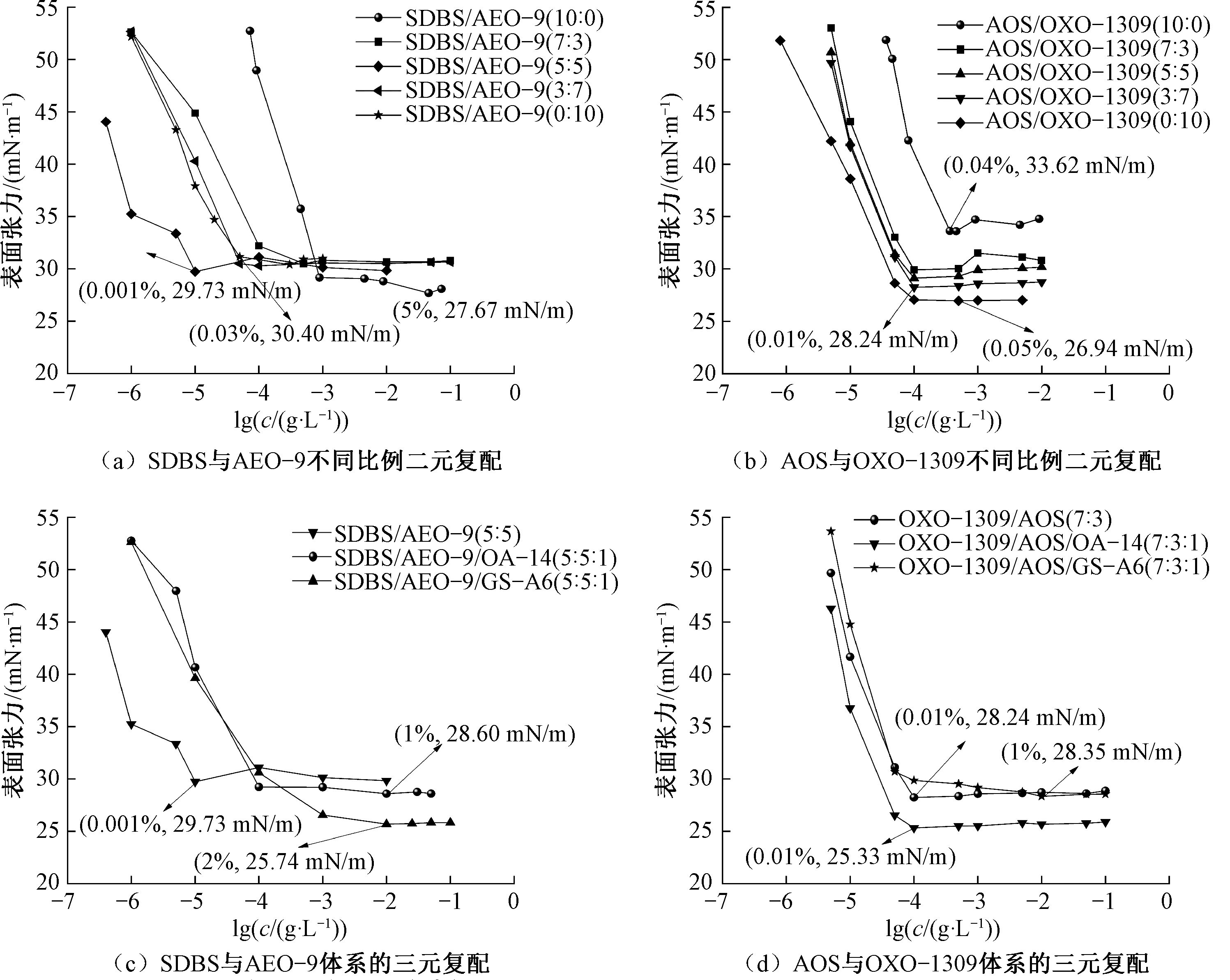
图2

20 ℃时复配精练剂的表面张力随浓度的变化曲线"

图3

不同复配体系对溶液润湿性能的影响"

表1

各表面活性剂及复配体系的耐酸、耐碱、抗氧化、耐高温、离心稳定性能"

表面活性剂组合 耐酸稳定性 耐碱稳定性 抗氧化性 耐高温稳定性 离心稳定性
AOS/OXO-1309(3∶7) 轻微浑浊 澄清,无沉淀 澄清,无沉淀 稳定 稳定,不分层
AOS/OXO-1309/GS-A6(3∶7∶1) 轻微浑浊 澄清,无沉淀 澄清,无沉淀 破乳 稳定,不分层
AOS/OXO-1309/OA-14(3∶7∶1) 浑浊 澄清,无沉淀 澄清,无沉淀 稳定 稳定,不分层
AOS 轻微浑浊 澄清,无沉淀 澄清,无沉淀 稳定 稳定,不分层
OXO-1309 澄清无沉淀 澄清,无沉淀 澄清,无沉淀 达到浊点后浑浊 稳定,不分层

图4

精练剂质量浓度对织物毛效和白度的影响"

图5

过氧化氢质量浓度对织物毛效、白度和强力的影响"

图6

精练温度对织物毛效、白度和强力的影响"

图7

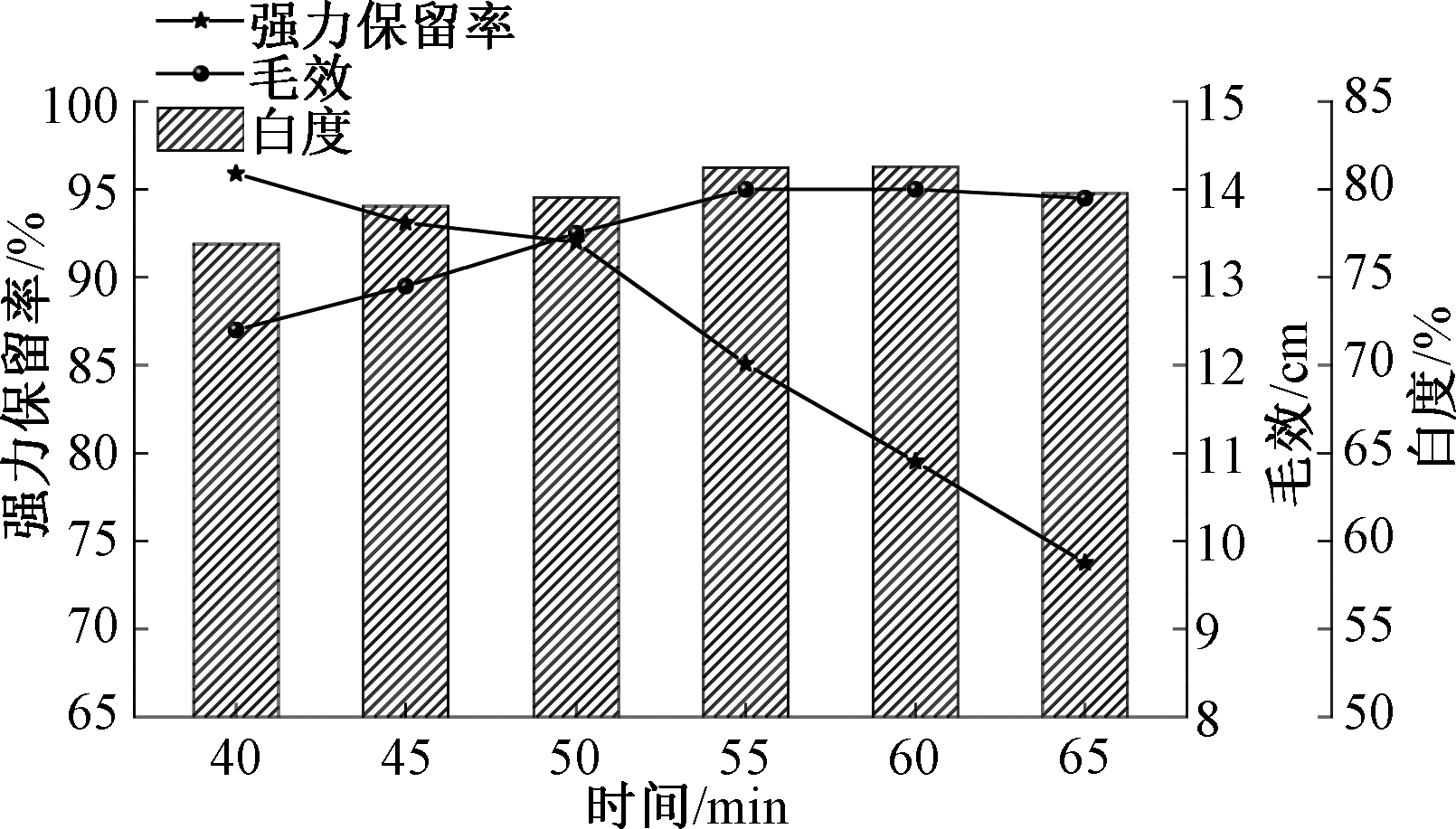
精练时间对织物毛效、白度和强力的影响"

表2

各工艺性能对比"

不同复配组合精练剂 工艺方法 毛效/cm 白度/% 强力保留率/%
精练剂TBX86 一浴法前处理工艺 14.0 81.23 82.12
AOS/OXO-1309/GS-A6(3∶7∶1) 13.5 81.27 79.05
AOS/OXO-1309(3∶7) 13.5 80.22 80.75
市售精练剂CF-4J 12.5 77.13 82.02
精练剂TBX86 常规前处理工艺 13.1 78.40 61.40
市售精练剂CF-4J 12.9 77.46 63.60
[1] 戴佳洋, 胡亿丰, 王雨静, 等. 丝织物精练阶段的碳足迹核算与评价[J]. 纺织学报, 2024, 45(8): 190-197.
DAI Jiayang, HU Yifeng, WANG Yujing, et al. Carbon footprint accounting and evaluation during silk refining stage[J]. Journal of Textile Research, 2024, 45(8): 190-197.
[2] 向中林, 韩雪梅, 刘增祥, 等. 棉织物低温酶氧一浴前处理工艺[J]. 纺织学报, 2017, 38(5): 80-85.
XIANG Zhonglin, HAN Xuemei, LIU Zengxiang, et al. Low-temperature pretreatment of cotton fabric by combining enzyme treating and peroxide bleaching in one bath[J]. Journal of Textile Research, 2017, 38(5): 80-85.
[3] ERDEM IŞMAL Ö. Insight into low-temperature one-step biopreparation and natural dyeing of cotton as an environmentally benign route[J]. Fibers and Polymers, 2024, 25(6): 2185-2202.
doi: 10.1007/s12221-024-00561-0
[4] LIU K, ZHANG X, YAN K L. Bleaching of cotton fabric with tetraacetylhydrazine as bleach activator for H2O2[J]. Carbohydrate Polymers, 2018, 188: 221-227.
doi: 10.1016/j.carbpol.2018.01.111
[5] 靳贺玲, 秦姝. 碱性果胶酶精练对棉纤维表面结构的影响[J]. 纺织学报, 2009, 30(3): 53-57.
JIN Heling, QIN Shu. Influence of alkaline pectinase scouring on surface morphological structure of cotton fibers[J]. Journal of Textile Research, 2009, 30(3): 53-57.
[6] 石路健, 宋亚伟, 谢汝义, 等. 莱赛尔机织物防原纤化前处理工艺优化[J]. 纺织学报, 2023, 44(12): 96-105.
doi: 10.13475/j.fzxb.20221002001
SHI Lujian, SONG Yawei, XIE Ruyi, et al. Anti-fibrillation pretreatment technology for Lyocell woven fabrics[J]. Journal of Textile Research, 2023, 44(12): 96-105.
doi: 10.13475/j.fzxb.20221002001
[7] KHAN O, WASIMA A, JAHAN N, et al. Effects of a multi scouring agent on the pretreatment and dyeing of different cellulosic knitted fabrics[J]. Fibres & Textiles in Eastern Europe, 2023, 31(3): 56-63.
[8] MAYTA S, HUAMANI-PALOMINO R G, CÓRDOVA B M, et al. Utilizing peracetic acid as an eco-friendly bleaching agent: investigating whiteness levels of cellulose microfibers from corn husk waste[J]. Biomass Conversion and Biorefinery, 2025, 15(17): 24571-24583.
doi: 10.1007/s13399-024-05373-z
[9] WALAWSKA A, OLAK-KUCHARCZYK M, KACZMAREK A, et al. Environmentally friendly bleaching process of the cellulose fibres materials using ozone and hydrogen peroxide in the gas phase[J]. Materials, 2024, 17(6): 1355.
doi: 10.3390/ma17061355
[10] 刘雪恋, 张必洋, 邹春梅, 等. 低泡精练剂的制备及评价[J]. 针织工业, 2025(2): 40-43.
LIU Xuelian, ZHANG Biyang, ZOU Chunmei, et al. Preparation and evaluation of low foam scouring agent[J]. Knitting Industries, 2025(2): 40-43.
[11] 彭梦圆, 李家明, 沙敏, 等. 季铵盐氟碳表面活性剂复配体系的性能研究[J]. 化工学报, 2025, 76(8):4177-4184.
PENG Mengyuan, LI Jiaming, SHA Min, et al. Study on performance of quaternary ammonium fluorocarbon surfactant compound system[J]. CIESC Journal, 2025, 76(8):4177-4184.
[12] 包利宁, 李健斌, 王晓虹, 等. 煤基烷基苯磺酸盐表面活性剂复配体系的性能[J]. 精细化工, 2025, 42(7): 1553-1563.
BAO Lining, LI Jianbin, WANG Xiaohong, et al. Properties of coal-based alkylbenzene sulfonate surfactants compound system[J]. Fine Chemicals, 2025, 42(7): 1553-1563.
[13] KITTITHAMMAVONG V, CHAROENSAENG A, KHAODHIAR S. Effect of ethylene oxide group in the anionic-nonionic mixed surfactant system on microemulsion phase behavior[J]. Journal of Surfactants and Detergents, 2021, 24(4): 631-648.
doi: 10.1002/jsde.v24.4
[14] MUSTAN F, POLITOVA-BRINKOVA N, VINAROV Z, et al. Interplay between bulk aggregates, surface properties and foam stability of nonionic surfactants[J]. Advances in Colloid and Interface Science, 2022, 302: 102618.
doi: 10.1016/j.cis.2022.102618
[15] 王俊宏, 孙永强, 周婧洁, 等. 表面活性剂AES/LAS复配体系的表面活性和盐增稠性能[J]. 应用化工, 2023, 52(12): 3325-3327.
WANG Junhong, SUN Yongqiang, ZHOU Jingjie, et al. Surface properties and salt thickening properties of surfactant AES/LAS mixed systems[J]. Applied Chemical Industry, 2023, 52(12): 3325-3327.
[1] 任萧, 潘林洁, 姜海霞, 葛凤燕, 高洪国. 生物质多酚-亚铁离子多色系染料制备及其在棉织物上的应用[J]. 纺织学报, 2026, 47(1): 132-141.
[2] 宋佳怡, 王政驿, 程献伟, 关晋平, 朱亚伟. 液态靛蓝染料的制备及其对棉织物的染色性能[J]. 纺织学报, 2025, 46(12): 133-141.
[3] 候志文, 任泽苹, 王晓宁, 张天骄. 棉织物的壳聚糖/海藻酸盐抗菌阻燃整理及其性能[J]. 纺织学报, 2025, 46(12): 171-180.
[4] 王梁宇, 高晓红, 于彩娇, 张雪婷, 杨旭礼. 还原氧化石墨烯/铜纳米颗粒导电棉织物的制备及其传感性能[J]. 纺织学报, 2025, 46(12): 181-187.
[5] 李树豪, 张星慧, 许静娴, 卢业虎. 基于手部冷敏感度的防护手套分区设计[J]. 纺织学报, 2025, 46(12): 188-197.
[6] 龙红霞, 吴伟, 刘娅岚, 徐红, 毛志平. 纤维素纤维孔道吸湿溶胀行为的分子动力学模拟[J]. 纺织学报, 2025, 46(11): 155-163.
[7] 张帆, 蔡再生, 刘慧景, 陆少锋, 黄旭明. 高牢固光致变色棉织物的点击化学法制备及其性能[J]. 纺织学报, 2025, 46(11): 196-202.
[8] 王子涵, 李勇, 陈晓川, 汪军, 梁凌杰. 废旧棉织物破碎加工过程的建模与仿真[J]. 纺织学报, 2025, 46(07): 136-143.
[9] 赵强强, 王韩星, 张奉轩, 何瑾馨, 周俊, 周兆昌, 董霞. 聚六亚甲基双胍盐酸盐改性对棉织物耐日晒色牢度的影响[J]. 纺织学报, 2025, 46(04): 109-118.
[10] 黄春月, 黄鑫, 杜海娟, 徐文杰, 杨雪梅, 万科研, 李旭, 高杰. 钼氧簇复合物整理剂制备及其整理棉织物的防紫外线性能[J]. 纺织学报, 2025, 46(04): 138-145.
[11] 廖喜林, 曾媛, 刘淑萍, 李亮, 李淑静, 刘让同. 磷/氮/硅复配协效阻燃棉织物制备及其性能[J]. 纺织学报, 2025, 46(03): 151-157.
[12] 罗巧玲, 付少海, 王冬, 王美慧, 郭亚飞, 郝新敏. 生物基锦纶56弱酸性染料仿绿色植被染色[J]. 纺织学报, 2025, 46(02): 130-137.
[13] 张洁, 郭鑫源, 关晋平, 程献伟, 陈国强. 磷/氮阻燃剂原位沉积对棉织物的耐久阻燃改性[J]. 纺织学报, 2025, 46(02): 180-187.
[14] 袁华彬, 王沂沨, 王家朋, 向永翾, 陈国强, 邢铁玲. 基于山嵛酸和ZIF-8改性的超疏水防结冰棉织物[J]. 纺织学报, 2025, 46(02): 197-206.
[15] 巢探宇, 叶韵, 李娜, 廖思含, 马琪凯, 崔莉. 基于脂肪酶固定化的棉织物易去油污整理及其应用[J]. 纺织学报, 2025, 46(01): 130-137.
Viewed
Full text


Abstract

Cited

  Shared   
  Discussed   
No Suggested Reading articles found!