纺织学报 ›› 2026, Vol. 47 ›› Issue (01): 168-175.doi: 10.13475/j.fzxb.20250601501
刘旭颖1,2, 银倩琳3, 王先成3, 樊高晴4, 戚栋明1, 陈智杰2( )
)
LIU Xuying1,2, YIN Qianlin3, WANG Xiancheng3, FAN Gaoqing4, QI Dongming1, CHEN Zhijie2()
摘要:
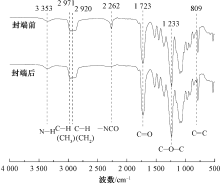
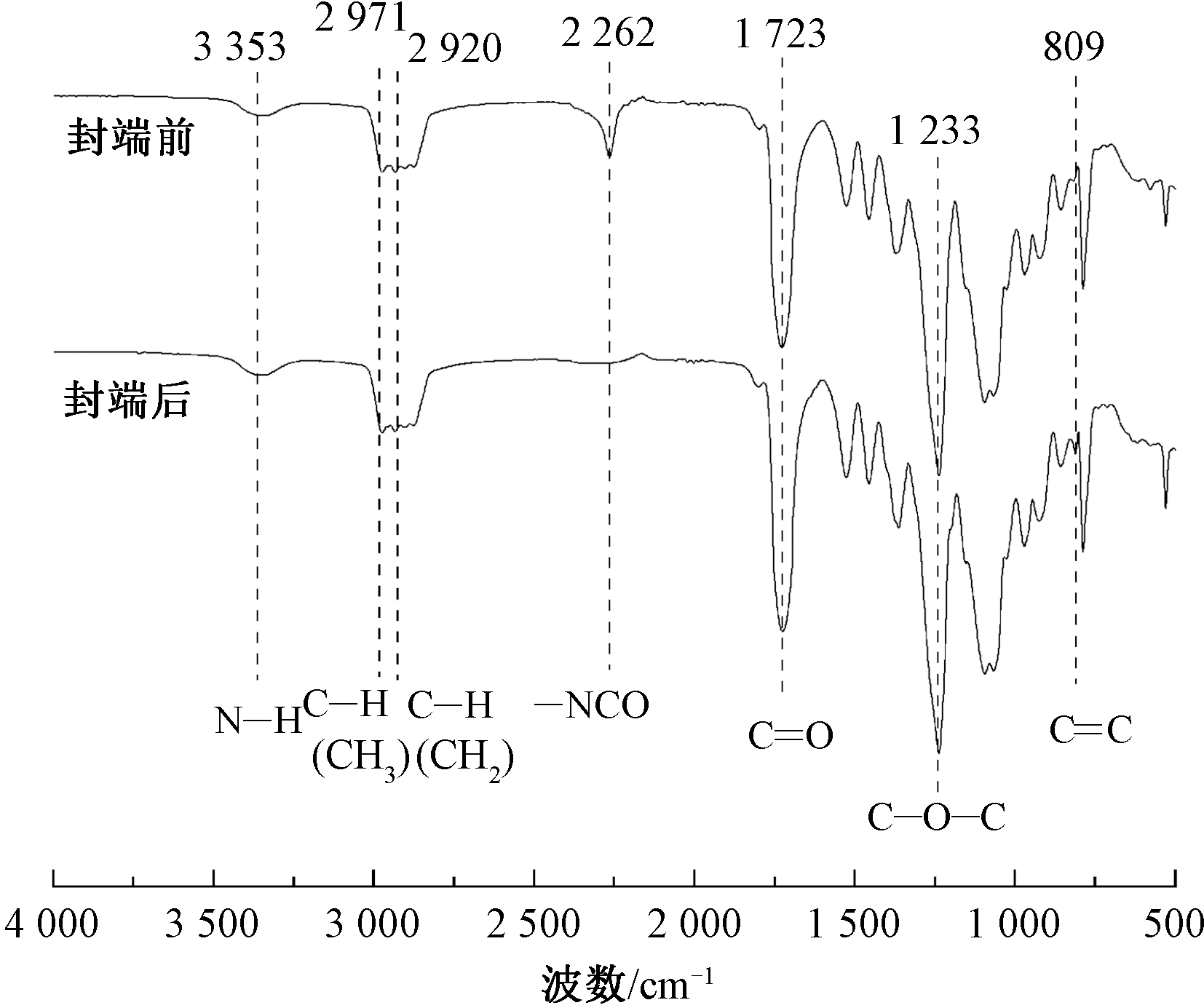
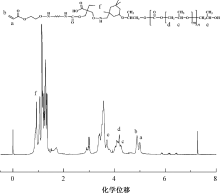
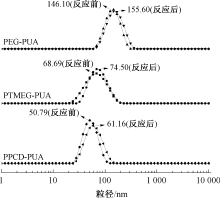
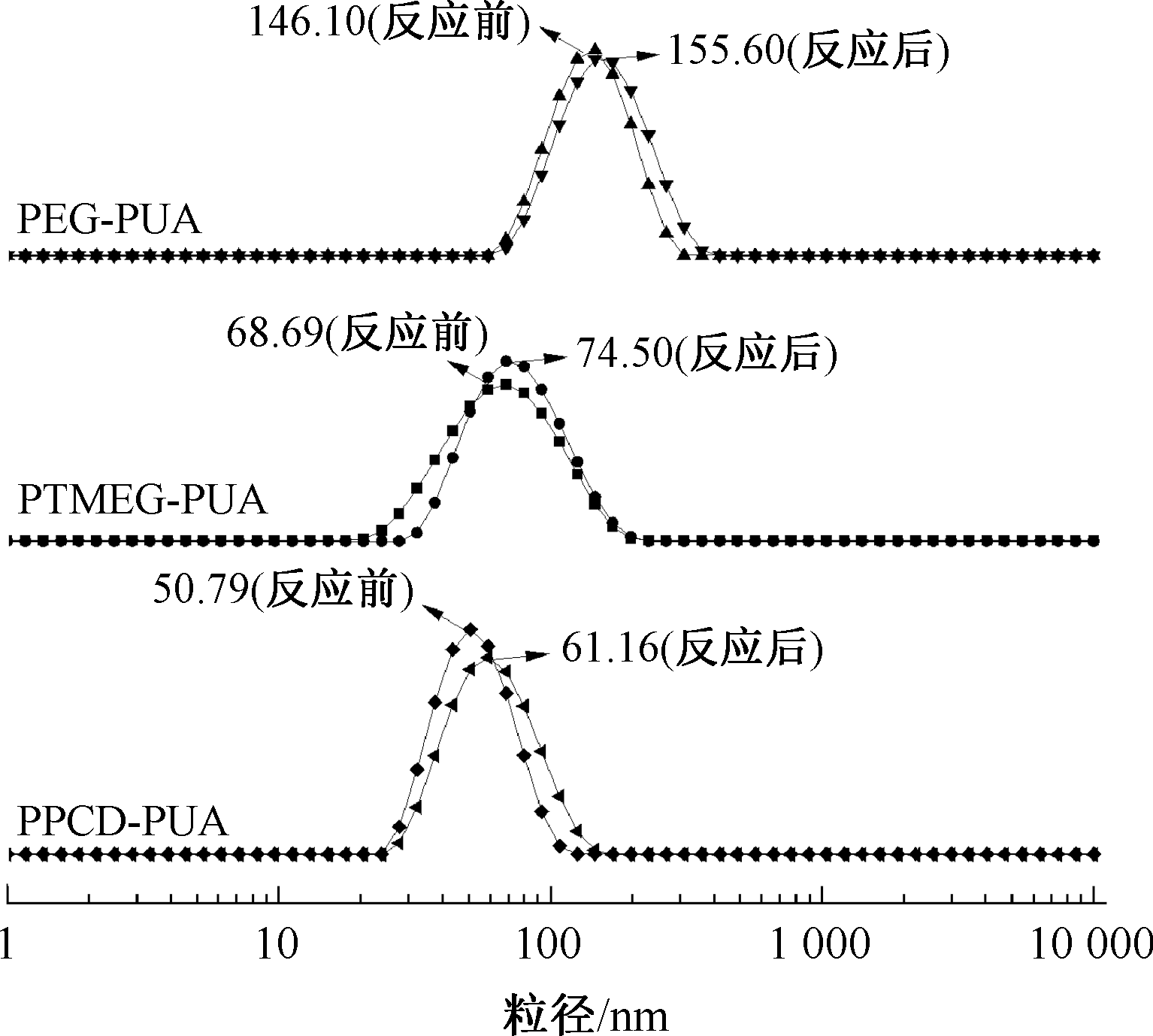
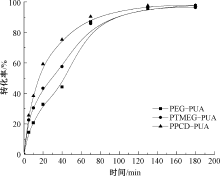
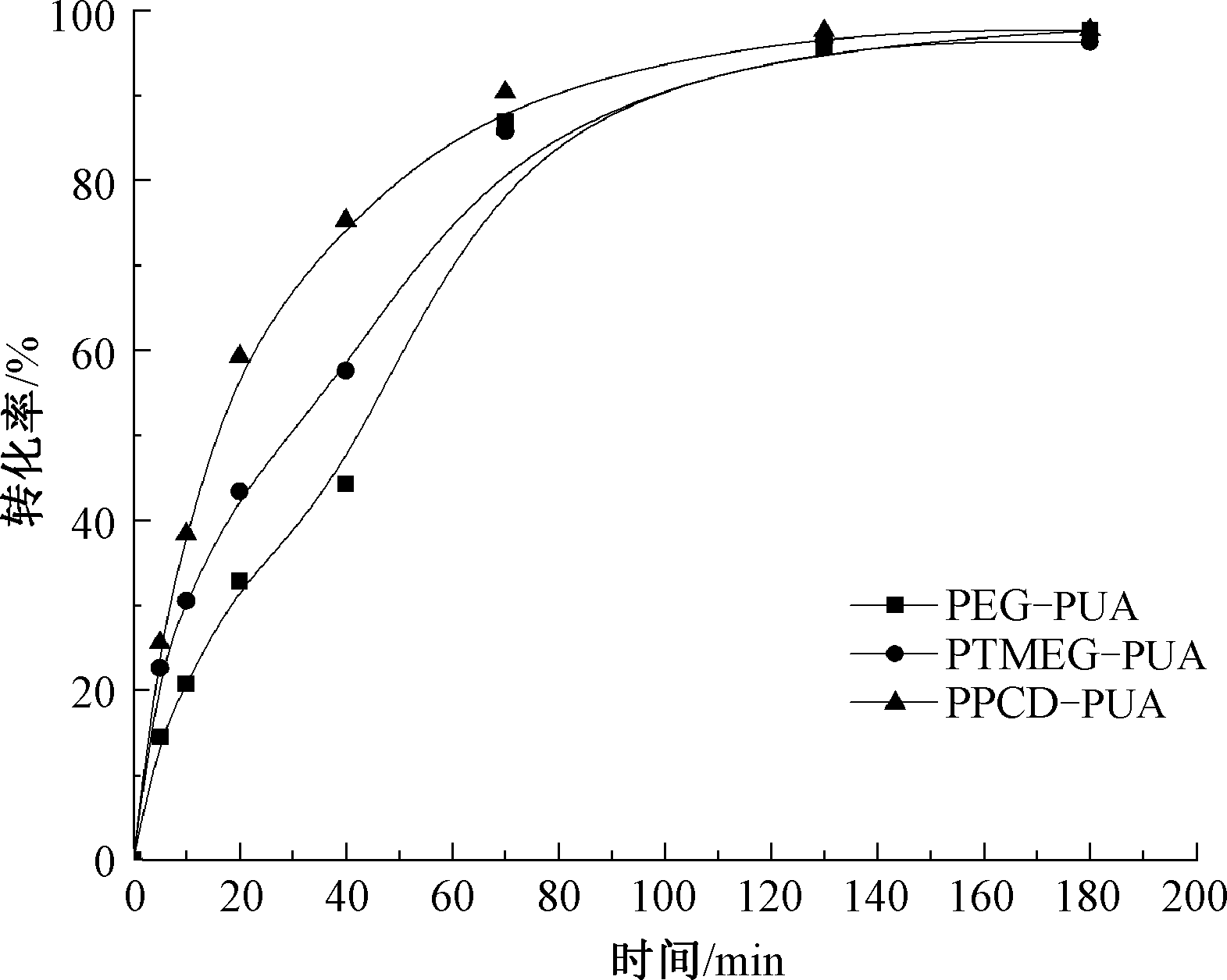
针对现有数码喷墨墨水黏合剂多以石化原料为主、可再生性差、难以兼顾牢度和柔性的问题,以二氧化碳基聚碳酸亚丙酯二醇(PPCD)为软段,异佛尔酮二异氰酸酯为硬段,丙烯酸羟丙酯为封端剂,丙烯酸丁酯和甲基丙烯酸甲酯为共聚单体,通过乳液聚合制备了具有高牢度、高柔韧性的改性聚氨酯丙烯酸酯(PUA)乳液,并将其用于数码喷墨涂料墨水的制备。通过傅里叶变换红外光谱、核磁共振氢谱技术表征二氧化碳基聚氨酯丙烯酸酯乳液的分子结构,对比分析PPCD与聚乙二醇(PEG)、聚四氢呋喃(PTMEG)为软段的PUA乳液反应转化率、反应前后粒径、胶膜力学性能、胶膜表面微相结构及相应涤纶平纹数码印花织物的服用性能等。结果显示:相较于PEG和PTMEG,因PPCD分子结构中同时含有醚键和酯键,故由其所制PUA胶膜展现出较高的断裂强度和延展性,其断裂强度达10.8 MPa,断裂伸长率达825%;相应的涤纶平纹印花织物具备4~5级的耐干湿摩擦牢度、较低的硬挺度和较好的透气性。
中图分类号:
| [1] |
THAKKER A M, SUN D M. Inks for digital printing of textiles[J]. The Journal of the Textile Institute, 2024, 115(12): 2377-2390.
doi: 10.1080/00405000.2023.2289975 |
| [2] |
MOHSIN M, SARDAR S, SHEHZAD K, et al. Performance enhancement of the digital printed cotton fabric through ecofriendly finishes[J]. Journal of Natural Fibers, 2022, 19(14): 7996-8005.
doi: 10.1080/15440478.2021.1958430 |
| [3] | 李敏, 赵影, 张丽平, 等. 涤纶针织物数码印花清晰度的影响因素[J]. 纺织学报, 2018, 39(5): 62-66. |
| LI Min, ZHAO Ying, ZHANG Liping, et al. Factors influencing printing accuracy of digital printing for knitted polyester fabric[J]. Journal of Textile Research, 2018, 39(5): 62-66. | |
| [4] |
LI X Y, POWELL N B, MICHIELSEN S. Print clarity on digitally printed textiles: a quantitative evalu-ation[J]. The Journal of the Textile Institute, 2020, 111(1): 108-121.
doi: 10.1080/00405000.2019.1622273 |
| [5] |
关玉, 张恒玮, 付政, 等. 纳米分散染料胶囊喷墨印花墨水的制备及其性能[J]. 纺织学报, 2024, 45(11): 136-144.
doi: 10.13475/j.fzxb.20240305401 |
|
GUAN Yu, ZHANG Hengwei, FU Zheng, et al. Preparation and properties of disperse dye nanocapsule inkjet printing ink[J]. Journal of Textile Research, 2024, 45(11): 136-144.
doi: 10.13475/j.fzxb.20240305401 |
|
| [6] |
ZHANG J Y, XU H P, HU L, et al. Novel waterborne UV-curable hyperbranched polyurethane acrylate/silica with good printability and rheological properties applicable to flexographic ink[J]. ACS Omega, 2017, 2(11): 7546-7558.
doi: 10.1021/acsomega.7b00939 pmid: 31457316 |
| [7] |
GOODARZI HOSSEINABADI H, BISWAS A, BHUSAL A, et al. 4D-printable photocrosslinkable polyurethane-based inks for tissue scaffold and actuator applic-ations[J]. Small, 2024, 20(6): 2306387.
doi: 10.1002/smll.v20.6 |
| [8] |
WANG L L, ZENG N S, YE J Q, et al. Silicone-modified waterborne polyurethane for wash-free digital inkjet dyeing of polyester fabric with high surface colour and fastness[J]. Colloids and Surfaces A: Physicochemical and Engineering Aspects, 2025, 719: 136908.
doi: 10.1016/j.colsurfa.2025.136908 |
| [9] | 张琼, 刘翰霖, 李平平, 等. 聚氨酯/二氧化硅复合超细纤维膜的制备及其防水透湿性能[J]. 纺织学报, 2019, 40(2): 1-7. |
|
ZHANG Qiong, LIU Hanlin, LI Pingping, et al. Preparation and waterproof and moisture-permeable properties of electrospun polyurethane/silica composite superfine fiber membrane[J]. Journal of Textile Research, 2019, 40(2): 1-7.
doi: 10.1177/004051757004000101 |
|
| [10] | 杨露, 孟家光, 陈雨青, 等. 基于废旧纺织品的湿度响应纤维素/聚氨酯复合材料的制备及其性能[J]. 纺织学报, 2025, 46(2): 26-34. |
|
YANG Lu, MENG Jiaguang, CHEN Yuqing, et al. Preparation and properties of humidity-responsive cellulose/polyurethane composites based on waste textiles[J]. Journal of Textile Research, 2025, 46(2): 26-34.
doi: 10.1177/004051757604600104 |
|
| [11] |
HONARKAR H. Waterborne polyurethanes: a review[J]. Journal of Dispersion Science and Technology, 2018, 39(4): 507-516.
doi: 10.1080/01932691.2017.1327818 |
| [12] |
PATTI A, ACIERNO D. Structure-property relationships of waterborne polyurethane (WPU) in aqueous formulations[J]. Journal of Vinyl and Additive Technology, 2023, 29(4): 589-606.
doi: 10.1002/vnl.v29.4 |
| [13] |
PAN J L, XU C R, ZENG F R, et al. Castor oil-based bioplastics via polyesterification: synthesis, characterization, and functionalization[J]. ACS Applied Polymer Materials, 2021, 3(4): 2054-2062.
doi: 10.1021/acsapm.1c00109 |
| [14] | 戚栋明, 樊高晴, 虞一浩, 等. 蓖麻油基紫外光固化水性涂料墨水制备及其印花性能[J]. 纺织学报, 2022, 43(5): 26-31. |
| QI Dongming, FAN Gaoqing, YU Yihao, et al. Preparation and printing properties of castor oil-based UV-curable water-based coating ink[J]. Journal of Textile Research, 2022, 43(5): 26-31. | |
| [15] |
XU Q, LIN J W, JIANG G C. Synthesis, characterization and properties of soybean oil-based polyurethane[J]. Polymers, 2022, 14(11): 2201.
doi: 10.3390/polym14112201 |
| [16] | 张世万, 田苏平, 王念贵. 氨基氟硅氧烷改性大豆油基水性聚氨酯的制备[J]. 胶体与聚合物, 2021, 39(4): 160-162. |
| ZHANG Shiwan, TIAN Suping, WANG Niangui. Preparation of aminofluorosiloxane modified soybean oil-based waterborne polyurethane[J]. Chinese Journal of Colloid & Polymer, 2021, 39(4): 160-162. | |
| [17] |
WENG F Q, DOU X Y, DENG Y H, et al. Structure and properties of tough starch modified with rubber-based polyurethane microparticles[J]. Journal of Thermoplastic Composite Materials, 2020, 33(6): 817-827.
doi: 10.1177/0892705718812558 |
| [18] | 汪秀丽, 张玉荣, 王玉忠. 淀粉基高分子材料的研究进展[J]. 高分子学报, 2011, 42(1): 24-37. |
| WANG Xiuli, ZHANG Yurong, WANG Yuzhong. Recent progress in starch-based polymeric materials[J]. Acta Polymerica Sinica, 2011, 42(1): 24-37. | |
| [19] | 岳昌海, 黄益平, 方正, 等. 植物油基多元醇研究进展[J]. 聚氨酯工业, 2024, 39(6): 6-9, 39. |
| YUE Changhai, HUANG Yiping, FANG Zheng, et al. Research progress of vegetable oil polyols[J]. Polyurethane Industry, 2024, 39(6): 6-9, 39. | |
| [20] | 田海英, 武春余, 姚克俭. 聚碳酸亚丙酯型聚氨酯胶黏剂的制备及粘结性能研究[J]. 安徽化工, 2021, 47(3): 66-68. |
| TIAN Haiying, WU Chunyu, YAO Kejian. Preparation of adhesive of poly(propylene carbonate) and research of the adhesive properties[J]. Anhui Chemical Industry, 2021, 47(3): 66-68. | |
| [21] | 王亮, 麻乐, 陈伟彬, 等. 聚碳酸亚丙酯型水性聚氨酯的合成与性能研究[J]. 天然气化工(C1化学与化工), 2016, 41(1): 41-45. |
| WANG Liang, MA Le, CHEN Weibin, et al. Synthesis and properties of poly(propylene carbonate) waterborne polyurethane[J]. Natural Gas Chemical Industry, 2016, 41(1): 41-45. | |
| [22] |
WANG C Z, LI H L, HUANG Z H, et al. Novel CO2-based low-molecular weight poly (propylene carbonate) diol (PPCD) for two-component polyurethane adhesive[J]. Chemical Papers, 2023, 77(6): 3347-3359.
doi: 10.1007/s11696-023-02708-4 |
| [23] |
ZHAO T T, CHEN S F, HUANG X, et al. Metal-free synthesis of biodegradable CO2-based oligo(carbonate-ester) diols as building blocks for thermoplastic polyurethanes[J]. ACS Applied Polymer Materials, 2024, 6(3): 1813-1822.
doi: 10.1021/acsapm.3c02652 |
| [24] | 陈广祥, 张铱淳, 黄光燕. 二氧化碳基水性聚氨酯的制备与性能[J]. 广东化工, 2024, 51(24): 22-24. |
| CHEN Guangxiang, ZHANG Yichun, HUANG Guangyan. Preparation and properties of carbon dioxide based waterborne polyurethane[J]. Guangdong Chemical Industry, 2024, 51(24): 22-24. | |
| [25] |
LOU K P, LI S L, CAO Y, et al. Preparation of high-solid, low-viscosity waterborne polyurethane: based on multiparticle size composite emulsification[J]. Journal of Coatings Technology and Research, 2024, 21(3): 907-923.
doi: 10.1007/s11998-023-00859-3 |
| [1] | 沈昕怡, 李家炜, 邵宇, 郭丁滔, 何贵平, 赵磊, 戚栋明, YOUSSEF Yehya Abel-Gawad, KAFAFY Hany Hassan Ahmed Mohamed. 高色牢度反应性聚合物包覆炭黑直喷墨水制备及其印花性能[J]. 纺织学报, 2025, 46(12): 152-162. |
| [2] | 周青青, 常硕, 毛志平, 吴伟. 人工智能在纺织印染行业中的应用研究进展[J]. 纺织学报, 2025, 46(12): 260-269. |
| [3] | 蔡丽云, 欧阳承辉, 黄泽洋, 王成成, 关玉, 付少海, 张丽平. 彩色乳胶粒的制备及其在涤纶/棉混纺织物印花中的应用[J]. 纺织学报, 2025, 46(10): 135-142. |
| [4] | 关玉, 张恒玮, 付政, 付少海. 纳米分散染料胶囊喷墨印花墨水的制备及其性能[J]. 纺织学报, 2024, 45(11): 136-144. |
| [5] | 陈家辉, 梁跃耀, 陈妮, 房宽峻. 棉织物喷墨印花打印方式的调控及其应用[J]. 纺织学报, 2023, 44(07): 159-166. |
| [6] | 苏婧, 关玉, 付少海. 单分散聚苯乙烯和聚(苯乙烯-co-苯乙烯磺酸钠)乳胶粒的制备及其喷墨流畅性[J]. 纺织学报, 2023, 44(05): 13-20. |
| [7] | 罗海林, 苏健, 金万慧, 傅雅琴. 新型缫丝成筒技术的工艺优化[J]. 纺织学报, 2023, 44(04): 46-54. |
| [8] | 赵智伟, 王子希, 杨世玉, 胡毅. 基于锦纶滤膜喷墨印花制备镓-铟合金液态金属电路[J]. 纺织学报, 2022, 43(12): 102-108. |
| [9] | 乔曦冉, 房宽峻, 刘秀明, 巩继贤, 张帅, 张敏. 羟乙基甲基纤维素改性对棉和锦纶织物表面性质的差异性影响[J]. 纺织学报, 2022, 43(11): 127-132. |
| [10] | 谢子文, 李家炜, 汪芬萍, 戚栋明, 严小飞, 朱晨凯, 赵磊, 何贵平. 有机硅改性水性聚氨酯丙烯酸酯杂化胶乳的制备及其在涂料印花中的应用[J]. 纺织学报, 2022, 43(08): 119-125. |
| [11] | 戚栋明, 樊高晴, 虞一浩, 符晔, 张艳, 陈智杰. 蓖麻油基紫外光固化水性涂料墨水制备及其印花性能[J]. 纺织学报, 2022, 43(05): 26-31. |
| [12] | 邵景峰, 石小敏. 基于非支配排序遗传算法的细纱工艺参数优化[J]. 纺织学报, 2022, 43(01): 80-88. |
| [13] | 李畅, 房宽峻, 刘秀明, 安芳芳, 梁迎超, 刘昊. 疏水体系中阳离子改性对棉/聚酰胺织物表面墨滴铺展的影响[J]. 纺织学报, 2021, 42(09): 112-119. |
| [14] | 王瑞丰, 李敏, 田安丽, 王春霞, 付少海. 分散黄6GSL晶型与其分散体热稳定性的关系[J]. 纺织学报, 2021, 42(05): 96-102. |
| [15] | 卢雪, 刘秀明, 房宽峻, 李瀚宇, 李翔, 高闯. 锦纶/棉混纺织物的耐久无氟拒水整理[J]. 纺织学报, 2021, 42(03): 14-20. |
|
||
 京公网安备11010502044800号