纺织学报 ›› 2026, Vol. 47 ›› Issue (05): 56-64.doi: 10.13475/j.fzxb.20250801901
桂振宇1, 兰平1( ), 杨晓达1, 陈昊2, 庄静2
GUI Zhenyu1, LAN Ping1(), YANG Xiaoda1, CHEN Hao2, ZHUANG Jing2
摘要:
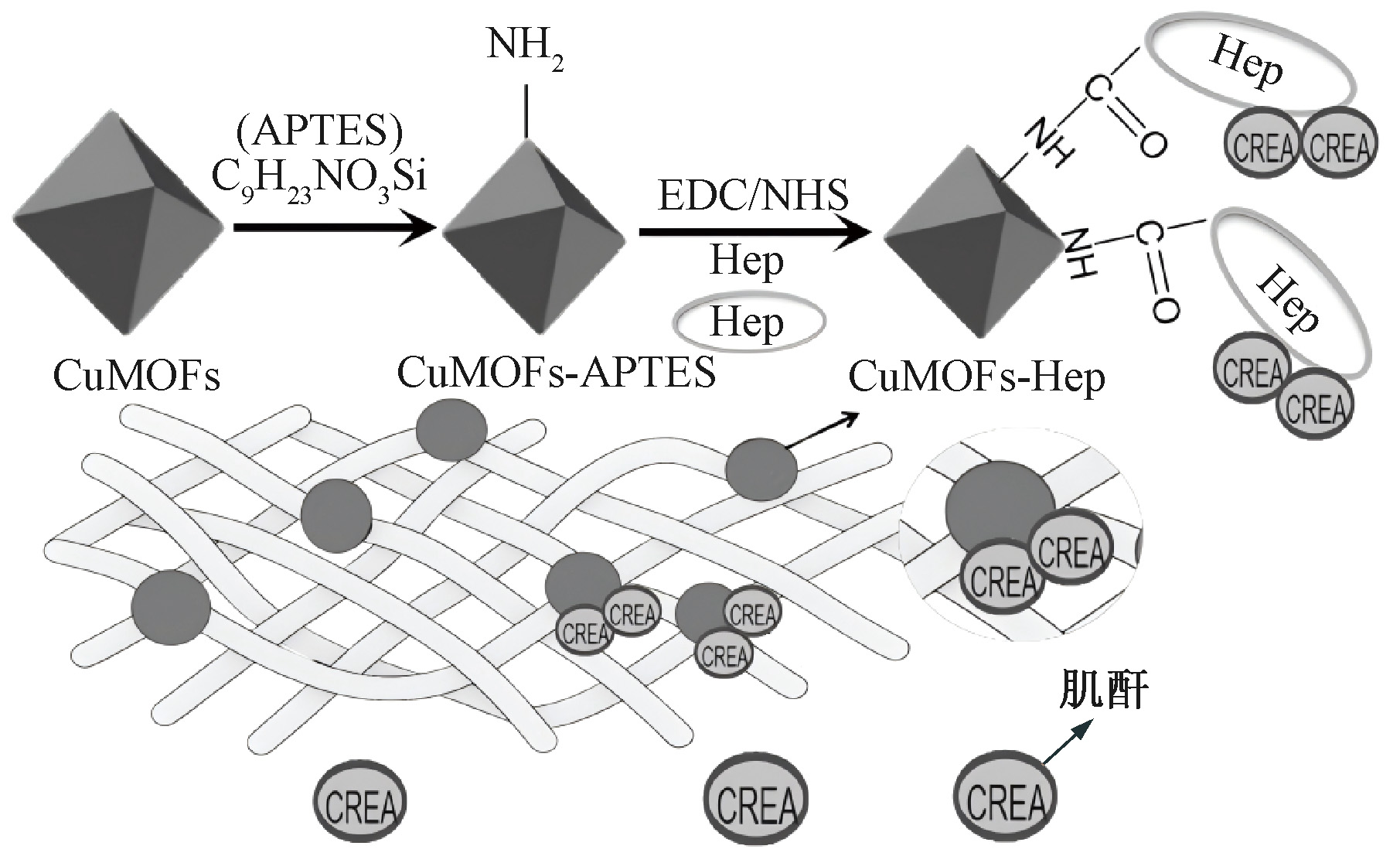
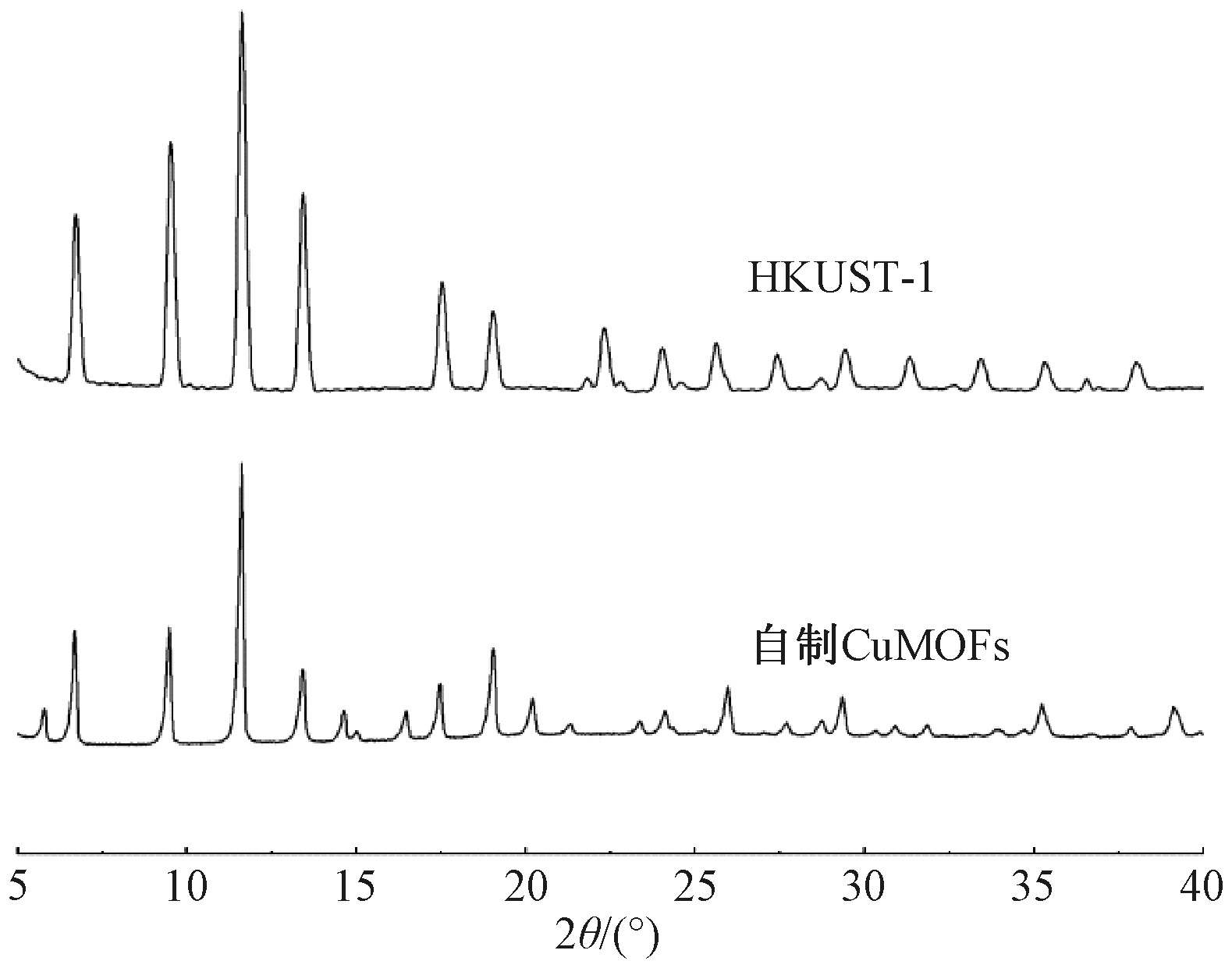
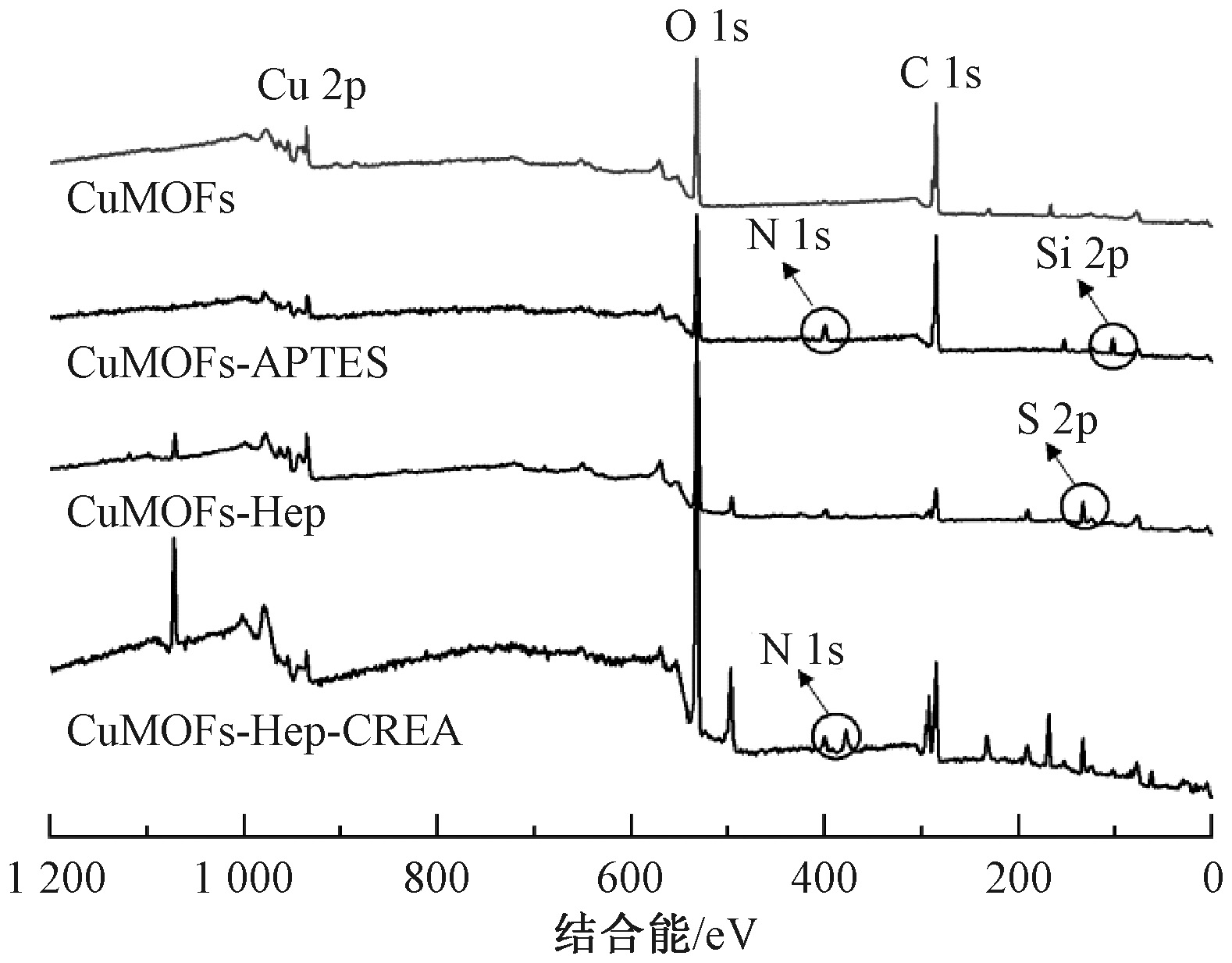
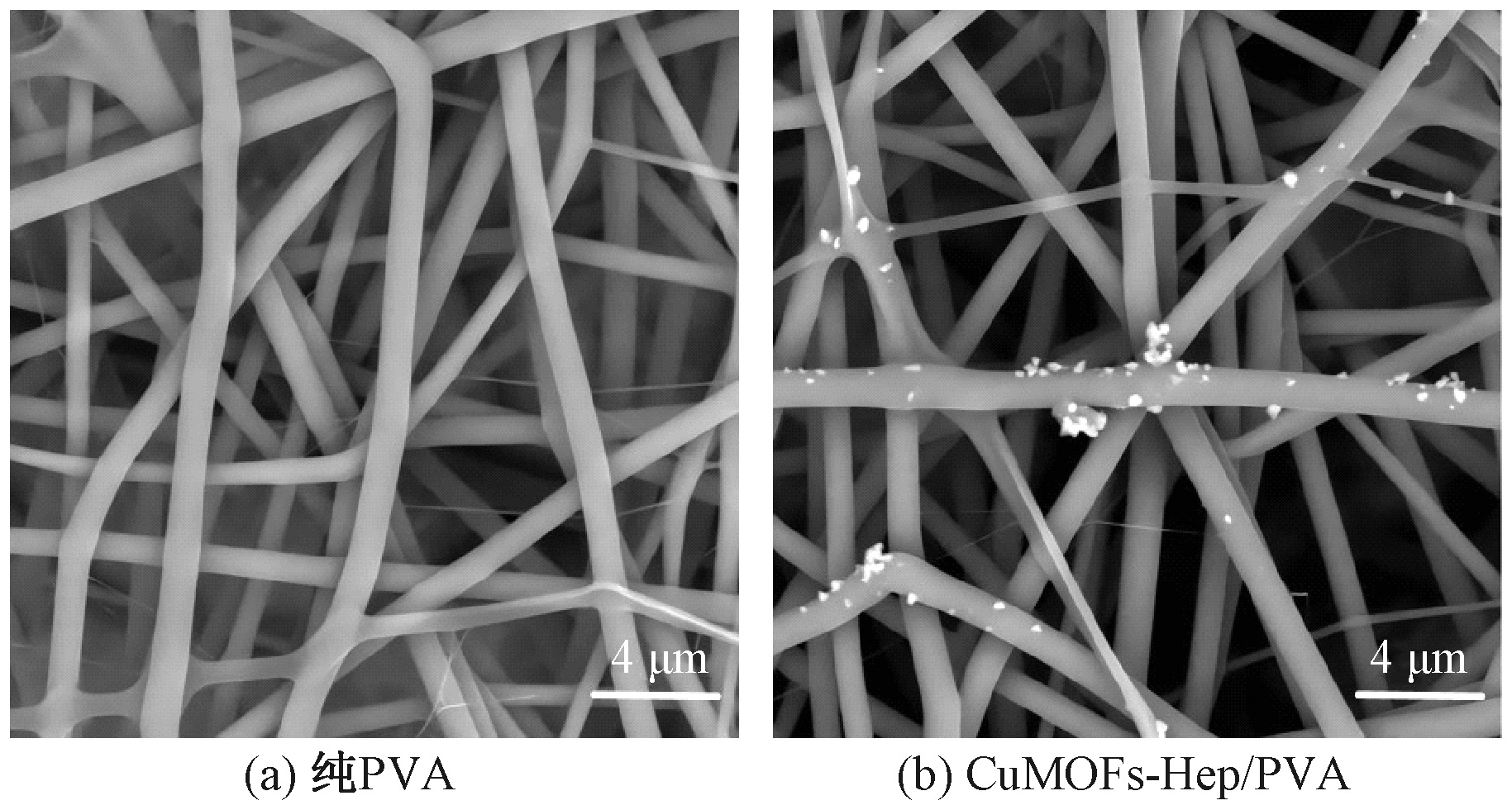
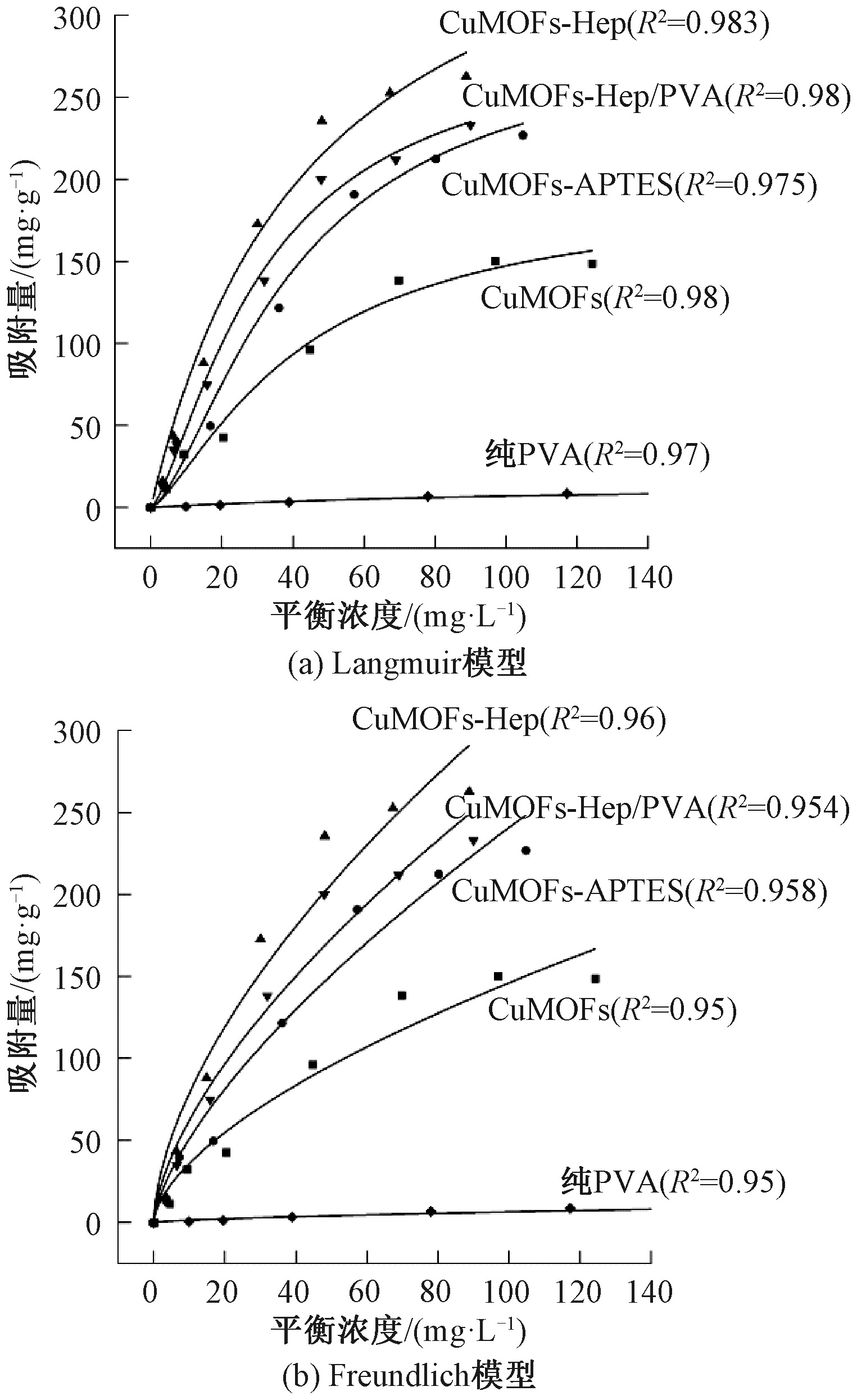
为开发高效、安全的血液净化材料以解决肌酐等尿毒症毒素清除的难题,采用3-氨基丙基三乙氧基硅烷(APTES)桥联与酰胺化反应,将肝素共价接枝于铜基金属有机框架材料(CuMOFs)表面,制得肝素化CuMOFs(CuMOFs-Hep);进而通过静电纺丝技术,将其与聚乙烯醇(PVA)复合,制备了CuMOFs-Hep/PVA复合纤维膜。系统表征证实材料成功合成与功能化,肝素功能化使材料表面Zeta电位降至-30.1 mV。吸附性能测试表明,CuMOFs-Hep对肌酐的最大理论吸附容量达267.8 mg/g,较原始CuMOFs(158.7 mg/g)提升68.7%;所得CuMOFs-Hep/PVA复合纤维膜保持了233.5 mg/g的高吸附容量,同时具备良好可加工性。吸附机制分析表明,高效吸附源于肝素化的强静电作用与氢键协同,且静电纺丝纳米纤维结构在有效传质与维持活性位点可及性之间取得了良好平衡。生物安全性分析表明,肝素化使Cu2+溶出浓度降低89.9%,并改善抗血小板黏附性能。通过材料功能化与静电纺丝相结合的策略,成功制备出一种兼具高吸附性、易加工性与良好生物安全性的复合纤维膜,为高性能血液净化材料的开发提供了新思路。
中图分类号:
| [1] |
ZHANG M, HUANG G, BAO X R, et al. Hyperuricemia prevalence and its risk factors in uremic patients undergoing maintenance hemodialysis[J]. BMC Nephrology, 2025, 26(1): 46.
doi: 10.1186/s12882-025-03978-8 pmid: 39885381 |
| [2] |
HUSSAIN N, SAIKIA U, PUZARI P. Creatinine-copper interaction: electrochemical and spectroscopic insight, and an innovative verification of a molecularly imprinted creatinine sensor design[J]. Journal of Applied Electrochemistry, 2025, 55(7): 1895-1910.
doi: 10.1007/s10800-025-02278-1 |
| [3] |
KELLUM J A, ROMAGNANI P, ASHUNTANTANG G, et al. Acute kidney injury[J]. Nature Reviews Disease Primers, 2021, 7: 52.
doi: 10.1038/s41572-021-00284-z pmid: 34267223 |
| [4] |
BELLO A K, OKPECHI I G, LEVIN A, et al. An update on the global disparities in kidney disease burden and care across world countries and regions[J]. The Lancet Global Health, 2024, 12(3): e382-e395.
doi: 10.1016/S2214-109X(23)00570-3 |
| [5] |
DUBIN R F, DEO R, REN Y, et al. Proteomics of CKD progression in the chronic renal insufficiency cohort[J]. Nature Communications, 2023, 14: 6340.
doi: 10.1038/s41467-023-41642-7 pmid: 37816758 |
| [6] |
BASHKIN A, ABU SALEH W, SHEHADEH M, et al. Subclinical hypothyroidism or isolated high TSH in hospitalized patients with chronic heart-failure and chronic renal-failure[J]. Scientific Reports, 2021, 11: 10976.
doi: 10.1038/s41598-021-90193-8 pmid: 34040018 |
| [7] |
LEE S M, SHIN W C, WOO S H, et al. Hip arthroplasty for patients with chronic renal failure on dialysis[J]. Scientific Reports, 2023, 13: 3311.
doi: 10.1038/s41598-023-30283-x |
| [8] |
ÁLVAREZ-MERINO M A, CARRASCO-MARÍN F, WARREN-VEGA W M, et al. Artificial intelligence application in adsorption of uremic toxins: towards the eco-friendly design of highly efficient with potential applications as hemodialysis membranes[J]. Environmental Research, 2024, 241: 117671.
doi: 10.1016/j.envres.2023.117671 |
| [9] |
ZHANG G X, FU J Q, NIU W M. Bioinformatics reveals TNFAIP6 as a candidate gene and suggests its potential crosstalk in the treatment of hemodialysis in chronic kidney disease[J]. Renal Failure, 2025, 47(1): 2528757.
doi: 10.1080/0886022X.2025.2528757 |
| [10] | KIDNEY DISEASE: IMPROVING GLOBAL OUTCOMES (KDIGO) CKD WORK GROUP. KDIGO 2024 clinical practice guideline for the evaluation and management of chronic kidney disease[J]. Kidney International, 2024, 105(S): 117-314. |
| [11] |
WIDIASTUTI N, RAHMAN R A, CIPTA DHARMA H N, et al. Carbon-modified zeolite derivates based filler in mixed matrix membrane adsorbers (MMMAs) for enhancing urea and creatinine removal from hemodialysis spent dialysate[J]. Journal of Industrial and Engineering Chemistry, 2025, 147: 584-597.
doi: 10.1016/j.jiec.2024.12.047 |
| [12] |
LEE G T, HONG Y K. Characterization of PES-based hemodialysis membranes with different tourmaline concentrations prepared using non-solvent-induced phase separation[J]. Fibers and Polymers, 2025, 26(8): 3349-3359.
doi: 10.1007/s12221-025-01038-4 |
| [13] |
WANG H Y, JIN H J, CHENG W D, et al. Cost-effectiveness analysis of hemodialysis plus hemoperfusion versus hemodialysis alone in adult patients with end-stage renal disease in China[J]. Annals of Translational Medicine, 2021, 9(14): 1133.
doi: 10.21037/atm-21-1100 pmid: 34430574 |
| [14] |
RONCO C, BELLOMO R. Hemoperfusion: technical aspects and state of the art[J]. Critical Care, 2022, 26(1): 135.
doi: 10.1186/s13054-022-04009-w pmid: 35549999 |
| [15] |
ZHOU S H, WANG R D, YANG Y, et al. Synergistic adsorption-catalysis system based on the advanced oxidation technology of single-atom MOFs: selective degradation and contribution to different ionization potential pollutants[J]. Chemical Engineering Journal, 2025, 513: 163031.
doi: 10.1016/j.cej.2025.163031 |
| [16] |
陈贝, 任李培, 肖杏芳. 铽-金属有机框架改性棉织物的制备及其pH值探测性能[J]. 纺织学报, 2023, 44(12): 123-129.
doi: 10.13475/j.fzxb.20220900801 |
|
CHEN Bei, REN Lipei, XIAO Xingfang. Preparation and pH-detection properties of Tb-metal-organic frameworks modified cotton fabric[J]. Journal of Textile Research, 2023, 44(12): 123-129.
doi: 10.13475/j.fzxb.20220900801 |
|
| [17] | 贾姣, 郑作保, 吴昊, 等. 静电纺聚合物复合金属有机框架功能纳米纤维膜的研究进展[J]. 纺织学报, 2023, 44(6): 215-224. |
| JIA Jiao, ZHENG Zuobao, WU Hao, et al. Research progress in electrospinning functional nanofibers with metal-organic framework[J]. Journal of Textile Research, 2023, 44(6): 215-224. | |
| [18] |
ZHANG W, LI B, DUAN W Y, et al. Confined in situ polymerization in a nanoscale porphyrinic metal-organic framework for fluorescence imaging-guided synergistic phototherapy[J]. Inorganic Chemistry Frontiers, 2022, 9(4): 670-677.
doi: 10.1039/D1QI01384J |
| [19] |
CUN J, FAN X, PAN Q Q, et al. Copper-based metal-organic frameworks for biomedical applications[J]. Advances in Colloid and Interface Science, 2022, 305: 102686.
doi: 10.1016/j.cis.2022.102686 |
| [20] | HAN C C, DONG L. Study on the market environment of heparin and development suggestions in China based on the PEST model[J]. Asian Journal of Social Pharmacy, 2025, 20(1): 38-46. |
| [21] |
ARYANTI P T P, NUGROHO F A, KUSMALA Y Y. Heparin and heparin-like modifications in hemodialysis membranes: current innovations and future directions[J]. Biotechnology Advances, 2025, 80: 108527.
doi: 10.1016/j.biotechadv.2025.108527 |
| [22] |
ROTELLA S, GESUALDO L, FIORENTINO M. Heparin-mediated extracorporeal low-density lipoprotein precipitation apheresis for treating peripheral arterial disease in patients with chronic kidney disease[J]. Journal of Clinical Medicine, 2024, 13(4): 1121.
doi: 10.3390/jcm13041121 |
| [23] | 徐丽亚, 汪瑱, 杨鸿杰, 等. 氧化锌-银/生物基聚酰胺56纳米纤维膜的制备及其抗菌性能[J]. 纺织学报, 2025, 46(7): 37-45. |
| XU Liya, WANG Tian, YANG Hongjie, et al. Preparation and antibacterial property of zinc oxide-silver/bio-based polyamide 56 composite nanofiber membranes[J]. Journal of Textile Research, 2025, 46(7): 37-45. | |
| [24] | 毛泽, 高俊, 凌磊, 等. 聚丙烯腈/聚吡咯纳米纤维膜的制备及其对铬离子的吸附性能[J]. 纺织学报, 2025, 46(9): 57-65. |
| MAO Ze, GAO Jun, LING Lei, et al. Preparation and Cr6+adsorption of polyacrylonitrile/polypyrrole nanofiber membrane[J]. Journal of Textile Research, 2025, 46(9): 57-65. | |
| [25] | 陈亚娟, 郭瀚宇, 张陈恬, 等. 聚乙烯醇/海藻酸钠/锦纶66复合水凝胶包芯纱的制备及其吸湿性能[J]. 纺织学报, 2025, 46(6): 103-110. |
| CHEN Yajuan, GUO Hanyu, ZHANG Chentian, et al. Preparation and hygroscopic properties of polyvinyl alcohol/sodium alginate/polyamide 66 composite hydrogel core-spun yarns[J]. Journal of Textile Research, 2025, 46(6): 103-110. | |
| [26] |
SHEN T Y, LIU T C, MO H Q, et al. Cu-based metal-organic framework HKUST-1 as effective catalyst for highly sensitive determination of ascorbic acid[J]. RSC Advances, 2020, 10(39): 22881-22890.
doi: 10.1039/d0ra01260b pmid: 35520331 |
| [1] | 王青, 赵世航, 刘甲怡, 吴加辉, 李西. 面向服装面料的非接触式气动吸盘设计[J]. 纺织学报, 2026, 47(05): 236-243. |
| [2] | 胡浙人, 俞乐, 金楠洋, 罗金明, 孔培振, 余德游. 全氟及多氟烷基物质吸附技术及其处理印染废水研究进展[J]. 纺织学报, 2026, 47(05): 273-282. |
| [3] | 王晓辉, 王宇航, 徐锦龙, 刘金星, 陈哲, 谭晶, 梅锋, 王华平. 熔融静电纺丝泰勒锥成形及纤维可纺性[J]. 纺织学报, 2026, 47(05): 28-36. |
| [4] | 张哲, 陈卓明, 李帆, 宋文雅, 覃思宇, 侯锦东, 余仡杰. 多功能非对称结构纳米纤维膜的制备及其抗菌抗氧化性能[J]. 纺织学报, 2026, 47(04): 34-42. |
| [5] | 杨鸿杰, 徐丽亚, 汪蔚. 含一氧化氮供体的生物基聚酰胺56纳米纤维膜制备及其性能[J]. 纺织学报, 2026, 47(04): 43-51. |
| [6] | 郭一铭, 喻爽, 赵帆, 王富军. 血管监测用纤维基压电传感器的构建及性能评价[J]. 纺织学报, 2026, 47(03): 118-128. |
| [7] | 陈泳良, 杨潇, 王朝荣, 黄俊鸿, 李彦, 王璐. 静电纺丝-恒应力退火协同构建的湿态稳定型聚乳酸/I型胶原肩袖补片[J]. 纺织学报, 2026, 47(03): 60-69. |
| [8] | 李好义, 田鑫哲, 张毅, 牟文英, 张超, 赵千龙, 杨卫民. 导电各向异性复合心脏补片的熔体静电纺丝/直写构建及体外评价[J]. 纺织学报, 2026, 47(03): 70-76. |
| [9] | 刘金枝, 赵回汇, 吴焕友, 张建明, 高晶. 壳聚糖/聚己内酯取向纳米纤维膜的结构调控与物理引导作用[J]. 纺织学报, 2026, 47(03): 9-17. |
| [10] | 张曼琦, 孙艳丽, 张晓茹, 李博, 刘哲. 共轭静电纺双模态调温织物的制备及其性能[J]. 纺织学报, 2026, 47(02): 153-161. |
| [11] | 岳献阳, 王少博, 黄鑫, 王艳芝, 李冲冲, 张晓晓. 黄麻织物基磁性含氮多孔碳对Cr(VI)的吸附性能[J]. 纺织学报, 2026, 47(02): 255-263. |
| [12] | 孔珂欣, 张怡帆, 卢哲, 王哲. 载钴钌原子无机微纳米纤维的制备及其电催化水分解性能[J]. 纺织学报, 2026, 47(02): 26-36. |
| [13] | 王世杰, 孙辉, 于斌. 聚乙烯醇/牡丹皮提取物复合纳米静电纺丝膜的制备及其抗菌性能[J]. 纺织学报, 2026, 47(02): 56-64. |
| [14] | 孔艳辉, 张琳萍, 毛志平, 徐红. 甲基丙烯酰化明胶纤维膜的制备及其止血性能[J]. 纺织学报, 2026, 47(01): 1-10. |
| [15] | 赵婧雯, 袁香楠, 高晶, 王璐. 聚丙烯腈-普鲁士蓝/月桂酸/环丙沙星光热响应性抗菌敷料的制备及其性能[J]. 纺织学报, 2026, 47(01): 20-28. |
|
||
 京公网安备11010502044800号