纺织学报 ›› 2026, Vol. 47 ›› Issue (06): 53-59.doi: 10.13475/j.fzxb.20251007801
钱丽莉, 李豪, 郁崇文, 曹巧丽( )
)
QIAN Lili, LI Hao, YU Chongwen, CAO Qiaoli()
摘要:
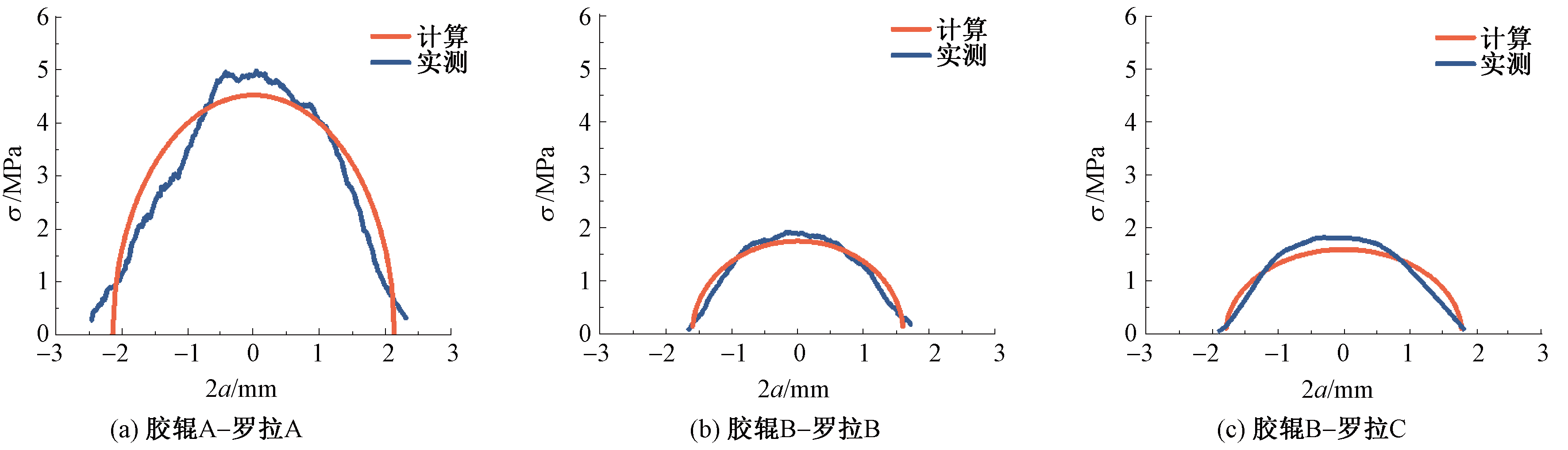
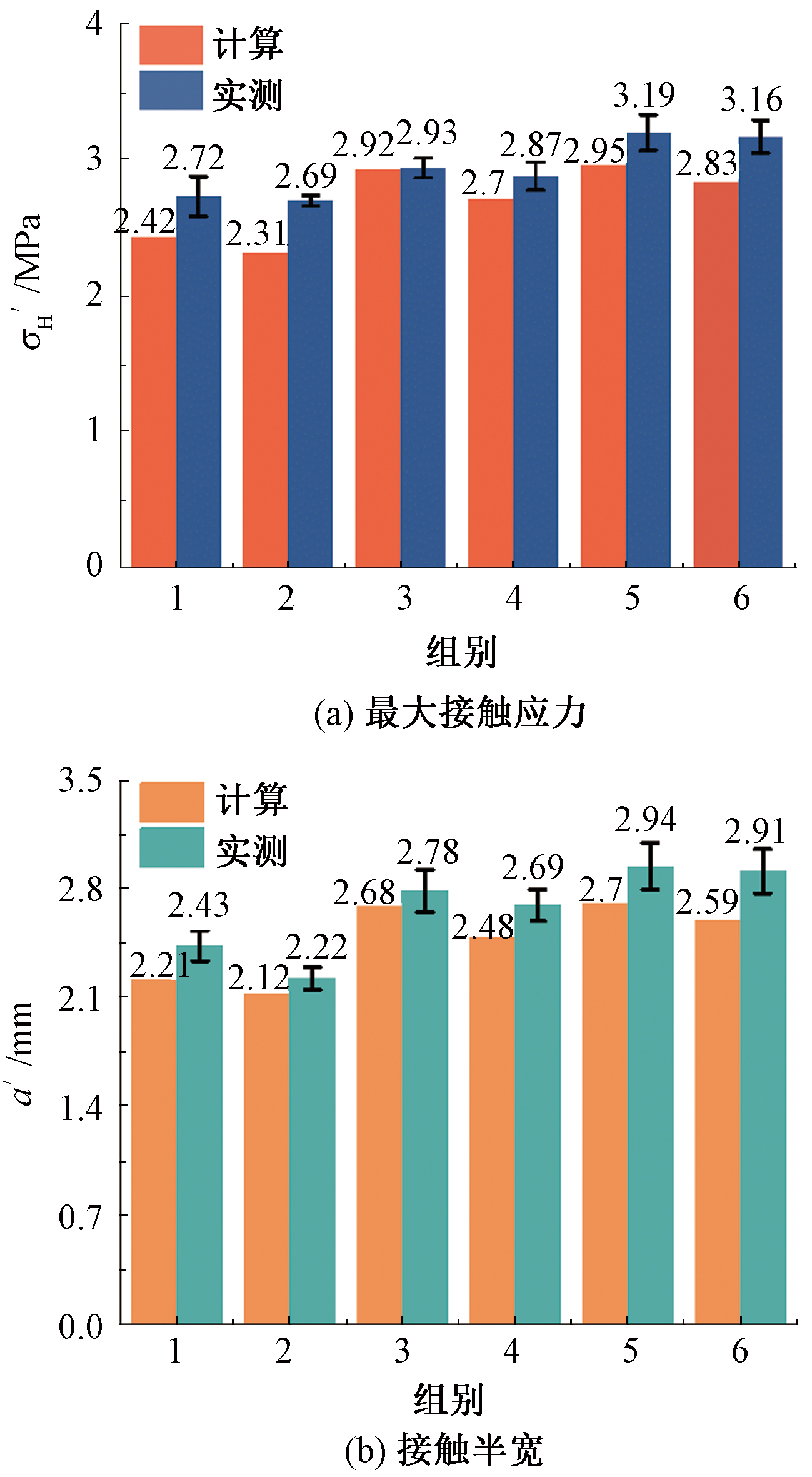
牵伸作为纺纱质量控制的核心环节,其罗拉钳口压力分布的精准调控是突破优质纱生产瓶颈的关键。针对现有研究对多参数协同作用下罗拉钳口压力分布系统性研究缺乏的问题,基于赫兹接触理论,引入纤维层等效弹性参数修正项,构建融合罗拉弹性参数、几何参数及纤维特性的多参数耦合压力分布模型。利用薄膜压力传感器,对棉、粘胶、涤纶等纤维在罗拉钳口处的实际压力分布进行测量。实验结果表明:罗拉钳口无纤维时,赫兹接触理论计算的压力分布与实测结果高度一致,接触应力与接触半宽的相对误差均小于5.00%;引入纤维层等效弹性参数后,改进模型对上述纤维的压力分布预测精度较高,接触应力偏差≤8.23%,接触半宽偏差≤7.35%,纤维加速点偏差≤8.33%,预测的牵伸状态与实测结果一致。本模型为纤维运动控制、牵伸状态预测及成纱均匀性优化提供了理论支撑,为智能化牵伸装备的研发奠定基础。同时,可拓展至非织造布、造纸等柔性-刚性接触场景。
中图分类号:
| [1] | 范居乐, 张玉泽, 汪军. 动态牵伸过程中浮游纤维变速点分布模拟[J]. 纺织学报, 2024, 45(3): 44-48. |
| FAN Jule, ZHANG Yuze, WANG Jun. Simulation of accelerating point distribution for floating fibers during dynamic drafting[J]. Journal of Textile Research, 2024, 45(3): 44-48. | |
| [2] | 贺雅勤, 毕雪蓉, 钱希茜, 等. 牵伸对纱条条干不匀影响的模拟研究[J]. 纺织学报, 2021, 42(6): 85-90. |
| HE Yaqin, BI Xuerong, QIAN Xixi, et al. Simulation study on effect of drafting on sliver unevenness[J]. Journal of Textile Research, 2021, 42(6): 85-90. | |
| [3] | 郭明华, 刘新金. 基于切断称重法的细纱机牵伸区内纤维变速点分布研究[J]. 纺织学报, 2021, 42(8): 71-75. |
| GUO Minghua, LIU Xinjin. Investigation on distribution of fiber accelerated points in drafting zone of ring spinner based on cut-weighing method[J]. Journal of Textile Research, 2021, 42(8): 71-75. | |
| [4] | 邢声远. 细纱牵伸装置中纤维变速点分布的实验研究[J]. 纺织学报, 1981, 2(3): 49-52, 81. |
| XING Shengyuan. A study on distribution of fiber velocity change points in the drafting system of spinning frame[J]. Journal of Textile Research, 1981, 2(3): 49-52, 81. | |
| [5] | 郭明华. 罗拉牵伸中纤维变速点分布研究[D]. 无锡: 江南大学, 2022. |
| GUO Minghua. Research on the distribution of fiber accelerated points in roller drafting[D]. Wuxi: Jiangnan University, 2022. | |
| [6] | KARTHIK T, MURUGAN R. Optimization of drafting zone variables in ring spinning for the production of cotton/milkweed blended yarns[J]. Indian Journal of Fibre & Textile Research, 2016, 41(2): 121-8. |
| [7] | 王贤琴. 并条机皮辊加压稳定性的探讨[J]. 棉纺织技术, 1982, 10(4): 19-23. |
| WANG Xianqin. Discussion on pressure stability of leather roller of drawing frame[J]. Cotton Textile Technology, 1982, 10(4): 19-23. | |
| [8] | 桂亚夫, 桂再夫. 影响胶辊握持面压力分布因素的分析[J]. 纺织器材, 1991, 18(1): 30-34. |
| GUI Yafu, GUI Zaifu. Factors influencing the distribution of pressures on the holding surface of rubber cot[J]. Textile Accessories, 1991, 18(1): 30-34. | |
| [9] | ALI M, SHAKOOR M, FLUGRAD D, et al. Contact stresses in conical rollers[J]. The Journal of Strain Analysis for Engineering Design, 2007, 42(8): 595-604. |
| [10] | LU S M, EVANS A, TURNER T. Analysis of roller compaction pressure distribution in automated dry fibre placement[J]. Composite Structures, 2023, 316: 117048. |
| [11] | CIULLI E, BETTI A, FORTE P. The applicability of the hertzian formulas to point contacts of spheres and spherical caps[J]. Lubricants, 2022, 10(10): 233. |
| [12] | HERTZ B H. On the contact of elastic solids[J]. Journal of Pure and Applied Mathematics, 1882, 92:156-171. |
| [13] | 冯静娟, 张钢, 杨凯. 高铁轴承的接触应力分布研究[J]. 计量与测试技术, 2019, 46(5): 53-58. |
| FENG Jingjuan, ZHANG Gang, YANG Kai. Study on contact stress distribution of high-speed railway bearing[J]. Metrology & Measurement Technique, 2019, 46(5): 53-58. | |
| [14] | 张巍, 高相胜, 张利新. 直线滚动导轨副滚动接触应力及变形分析与计算[J]. 内蒙古科技大学学报, 2018, 37(3): 233-238. |
| ZHANG Wei, GAO Xiangsheng, ZHANG Lixin. Analysis and calculation on rolling contact stress and deformation of linear rolling guide pairs[J]. Journal of Inner Mongolia University of Science and Technology, 2018, 37(3): 233-238. | |
| [15] | 关庆华, 赵鑫, 温泽峰, 等. 基于Hertz接触理论的法向接触刚度计算方法[J]. 西南交通大学学报, 2021, 56(4): 883-888. |
| GUAN Qinghua, ZHAO Xin, WEN Zefeng, et al. Calculation method of hertz normal contact stiffness[J]. Journal of Southwest Jiaotong University, 2021, 56(4): 883-888. | |
| [16] | BROWN G H, LY N G. Statistics for the number of fiber ends in a segment of a random assembly of aligned fibers[J]. Textile Research Journal, 1985, 55(4): 206-210. |
| [17] | TIAN J Y, SU H, WANG Z J, et al. Comparative analysis of angular contact bearing stiffness calculated by Hertz contact and thermo-elastohydrodynamic lubrication[J]. Tribology International, 2024, 192: 109251. |
| [18] | LIN Q, OXENHAM W, YU C W. A study of the drafting force in roller drafting and its influence on sliver irregularity[J]. The Journal of the Textile Institute, 2011, 102(11): 994-1001. |
| [19] | SHEN Y Y, NI J, YANG J P, et al. Study on the testing of the accelerated point of the floating fiber in the roller drafting process with an improved method[J]. Textile Research Journal, 2022, 92(1/2): 168-179. |
| [20] | FENG Y T, GAO W. On the strain energy distribution of two elastic solids under smooth contact[J]. Powder Technology, 2021, 389: 376-382. |
| [21] | WU L W, HUANG D. Energy dissipation study in impact: from elastic and elastoplastic analysis in peridynamics[J]. International Journal of Solids and Structures, 2022, 234/235: 111279. |
| [22] | DAS S K, GAUTAM S S. A comprehensive isogeometric analysis of frictional Hertz contact problem[J]. Tribology International, 2024, 200: 110078. |
| [23] | JIANG J X, HE Y X, KE Y L. Pressure distribution for automated fiber placement and design optimization of compaction rollers[J]. Journal of Reinforced Plastics and Composites, 2019, 38(18): 860-870. |
| [24] | QIAN L, YU C W. Pressure distribution in the drafting zone measured by film pressure sensors[J]. Textile Research Journal, 2023, 93(7/8): 1815-1823. |
| [25] | KHERADPISHEH M, HOJJATI M. A novel compaction roller with variable pressure distribution and contact time for automated fiber placement: experimental and numerical analysis[J]. Composites Part A: Applied Science and Manufacturing, 2025, 190: 108684. |
| [26] | TIMOSHENKO S P, GOODIER J N. Theory of Elasticity (Third Edition)[M]. Beijing, Tsinghua University publishing house co., ltd, 2004. |
| [27] | 于伟东. 纺织材料学[M]. 北京,中国纺织出版社, 2006: 113-114. |
| YU Weidong. Textile Materials Science[M]. Beijing, ChinaTextile&ApparelPress, 2006: 113-114. | |
| [28] | LAM K Y, LOY C T. Analysis of rotating laminated cylindrical shells by different thin shell theories[J]. Journal of Sound and Vibration, 1995, 186(1): 23-35. |
| [29] | GU F W, WANG H, CAO Z L, et al. Theoretical study on 3D elastic response and first layer failure strength of composite cylinders subjected to axisymmetric loadings[J]. International Journal of Pressure Vessels and Piping, 2024, 210: 105245. |
| [30] | HILL R. Elastic properties of reinforced solids: some theoretical principles[J]. Journal of the Mechanics and Physics of Solids, 1963, 11(5): 357-372. |
| [31] | NAKAMURA K, WADA M, KUGA S, et al. Poisson's ratio of cellulose Iβ and cellulose II[J]. Journal of Polymer Science Part B: Polymer Physics, 2004, 42(7): 1206-1211. |
| [32] | 龚积球. 橡胶件的工程设计及应用[M]. 上海: 上海交通大学出版社, 2003: 19-20. |
| GONG Jiqiu. Engineering design and application with rubber components[M]. Shanghai: Shanghai Jiaotong University Press, 2003: 19-20. | |
| [33] | 郁崇文. 纺纱学[M]. 4版. 北京: 中国纺织出版社, 2023: 128-134. |
| YU Chongwen. Spinning science[M]. 4th ed. Beijing: China Textile & Apparel Press, 2023: 128-134. | |
| [34] | 张晓娟. 环锭纺超大牵伸条件下牵伸力研究[D]. 无锡: 江南大学, 2017. |
| ZHANG Xiaojuan. Research on drafting force in super high draft ring spinning[D]. Wuxi: Jiangnan University, 2017. |
| [1] | 季永忠. 超高强高尺寸稳定性高模低缩涤纶工业丝的开发[J]. 纺织学报, 2026, 47(06): 26-34. |
| [2] | 王矿, 潘欣明, 郭明瑞, 王静安, 高卫东. 基于薄膜压力传感器的浆纱机压浆区压力分布检测[J]. 纺织学报, 2026, 47(06): 196-203. |
| [3] | 林启松, 戴钧明, 查全亮, 徐涛, 吕汪洋. 聚丁二酸丁二醇酯预取向丝与牵伸丝的制备及性能[J]. 纺织学报, 2026, 47(04): 9-16. |
| [4] | 王岳川, 曾安坚, 张梦菲, 陈信宇, 刘连梅, 谢胜. 熔喷模头气槽宽度对气流流动和纤维牵伸的影响[J]. 纺织学报, 2026, 47(04): 127-135. |
| [5] | 刘一鸣, 李琳, 杜鲜晶, 刘攀, 殷霞, 田明伟. 内螺旋结构弹性导电纱线的制备及其应变不敏感性能的调控[J]. 纺织学报, 2026, 47(01): 115-122. |
| [6] | 廖梦蝶, 肖汪洋, 李鸿鑫, 赵漫, 张须臻, 王秀华. 聚酰胺6/共聚酰胺偏心皮芯复合纤维的制备与性能[J]. 纺织学报, 2025, 46(07): 53-61. |
| [7] | 马文佳, 刘新金. 牵伸区内纤维变速点分布对半精梳棉条质量的影响[J]. 纺织学报, 2025, 46(04): 56-62. |
| [8] | 张帆, 程春祖, 郭翠彬, 张东, 程敏, 李婷, 徐纪刚. Lyocell纤维直接成网工艺优化与性能分析[J]. 纺织学报, 2025, 46(03): 34-40. |
| [9] | 赵珂, 张恒, 程文胜, 甄琪, 步青云, 崔景强. 类蒲叶结构聚乳酸熔喷非织造材料的制备及其性能[J]. 纺织学报, 2025, 46(02): 51-60. |
| [10] | 刘术, 侯腾, 周乐乐, 李祥龙, 杨斌. 桑蚕的强制牵伸抽丝及其纤维性能[J]. 纺织学报, 2024, 45(06): 11-15. |
| [11] | 吴佳庆, 郝新敏, 王美慧, 郭亚飞, 王迎. 粗纱物理特性对环锭纺细纱机后区牵伸效果影响[J]. 纺织学报, 2024, 45(04): 76-82. |
| [12] | 范居乐, 张玉泽, 汪军. 动态牵伸过程中浮游纤维变速点分布模拟[J]. 纺织学报, 2024, 45(03): 44-48. |
| [13] | 钱丽莉, 郁崇文. 压力棒牵伸区中的纤维数量分布模型[J]. 纺织学报, 2024, 45(02): 112-118. |
| [14] | 王青, 梁高翔, 殷俊清, 盛晓超, 吕绪山, 党帅. 新型气流牵伸通道结构模型的构建与性能分析[J]. 纺织学报, 2023, 44(11): 52-60. |
| [15] | 陈美玉, 李立凤, 董侠. 长碳链聚酰胺1012纤维在不同温度下的力学性能[J]. 纺织学报, 2023, 44(11): 9-18. |
|
||
 京公网安备11010502044800号