纺织学报 ›› 2025, Vol. 46 ›› Issue (08): 37-44.doi: 10.13475/j.fzxb.20240903301

• 纤维材料 • 上一篇    下一篇

共聚型聚酰亚胺纳米纤维膜的制备及其性能

贾琳1(), 杨奥杰1, 张芳铖2, 王西贤1, 张海霞1   

  1. 1.河南工程学院 纺织工程学院, 河南 郑州 450007
    2.郑州轻大产业技术研究院有限公司, 河南 郑州 450007
  • 收稿日期:2024-09-19 修回日期:2025-03-07 出版日期:2025-08-15 发布日期:2025-08-15
  • 作者简介:贾琳(1986—),女,副教授,博士。主要研究方向为功能性纳米纤维纺织品。E-mail:lynnjia0328@163.com
  • 基金资助:
    河南省科技厅科技攻关项目(252102320065);河南省科技厅科技攻关项目(242102320156)

Preparation and performance study of copolymerized polyimide nanofiber membrane

JIA Lin1(), YANG Aojie1, ZHANG Fangcheng2, WANG Xixian1, ZHANG Haixia1   

  1. 1. College of Textile Engineering, Henan University of Engineering, Zhengzhou, Henan 450007, China
    2. ZZULI Research Institute of Industrial Technology, Zhengzhou, Henan 450007, China
  • Received:2024-09-19 Revised:2025-03-07 Published:2025-08-15 Online:2025-08-15

摘要: 为制备性能优良的聚酰亚胺纳米纤维材料,引入刚性单体对苯二胺(PPDA),利用二步法和静电纺丝技术制备共聚型聚酰亚胺(PI)纳米纤维膜,通过改变PPDA的添加量,分析共聚型PI纳米纤维膜的结构性能。结果表明:引入PPDA有效地增加了聚酰胺酸(PAA)溶液的黏度,且使共聚型PI纳米纤维的直径增加;纤维膜的红外光谱图显示PI纳米纤维膜都具有芳香酰亚胺C═O的振动吸收峰,表明PAA纳米纤维膜经过亚胺化处理转化为PI纳米纤维膜;引入刚性单体PPDA后,共聚型PI纳米纤维膜的拉伸强度明显增加,在5.78 ~8.65 MPa之间 ;32 L/min流速下PI纳米纤维膜的过滤效率为98.56%~ 99.86%,阻力压降为143~185.6 Pa,流速为85 L/min时,阻力压降显著增加;当4,4'-二氨基二苯醚ODA与PPDA的量比为8∶2时,其纳米纤维膜的品质因子最高,过滤性能最好。

关键词: 对苯二胺, 共聚型, 聚酰亚胺, 拉伸性能, 过滤性能

Abstract:

Objective As the industrialization process continues, human activities such as transportation, industry, and power plants emit large amounts of air pollutants. Particulate matter pollution was the main air pollution problem. Direct filtration of particulate matter at the emission source is considered the most effective method. Polyimide (PI) is one type of polymer possessing imide ring structure, good thermal stability, high heat resistance, and its products are characterized by high strength and high modulus, radiation resistance, corrosion resistance. It is an ideal polymer appliled in high temperature air filtration. Copolymerized PI can be obtained by two-step method by using two dianhydrides or two diamines to react in polar solvent. It can change the molecular structure, intersegment force and crystallinity of PI, which is a modification method of PI. In this paper, copolymerized PI nanofibrous membranes with higher tensile property and filtration performance were prepared through electrospinning technology.

Method Rigid monomer p-phenylenediamine (PPDA) was introduced and dissolved into dimethylaceta-mide (DMAc) with 4,4'-diaminodiphenyl ether (ODA) and homophenyltetramethylanhydride (PMDA), to prepare polyamide acid (PAA) solution. The copolymerized PI nanofiber membranes with different molar ratio of PPDA were prepared by electrospinning and thermoimide treatment. The fiber morphologies, chemical group, tensile property, and filtration performance were characterised and analyzed through scanning electron microscope, Fourier infrared spectrometer, fiber tensile instrument and automatic filter detector.

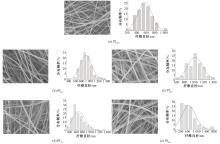
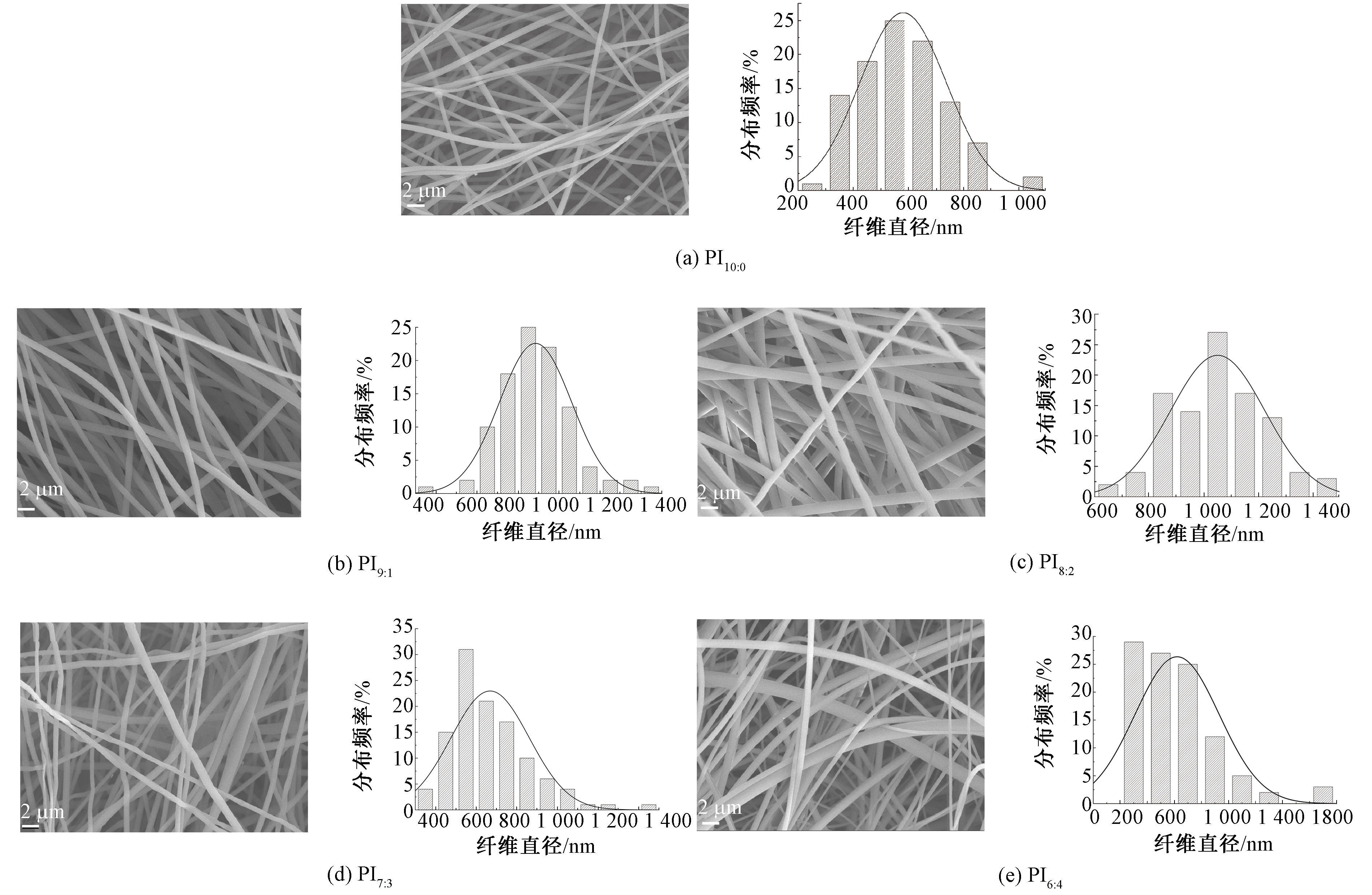
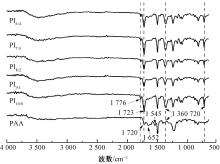
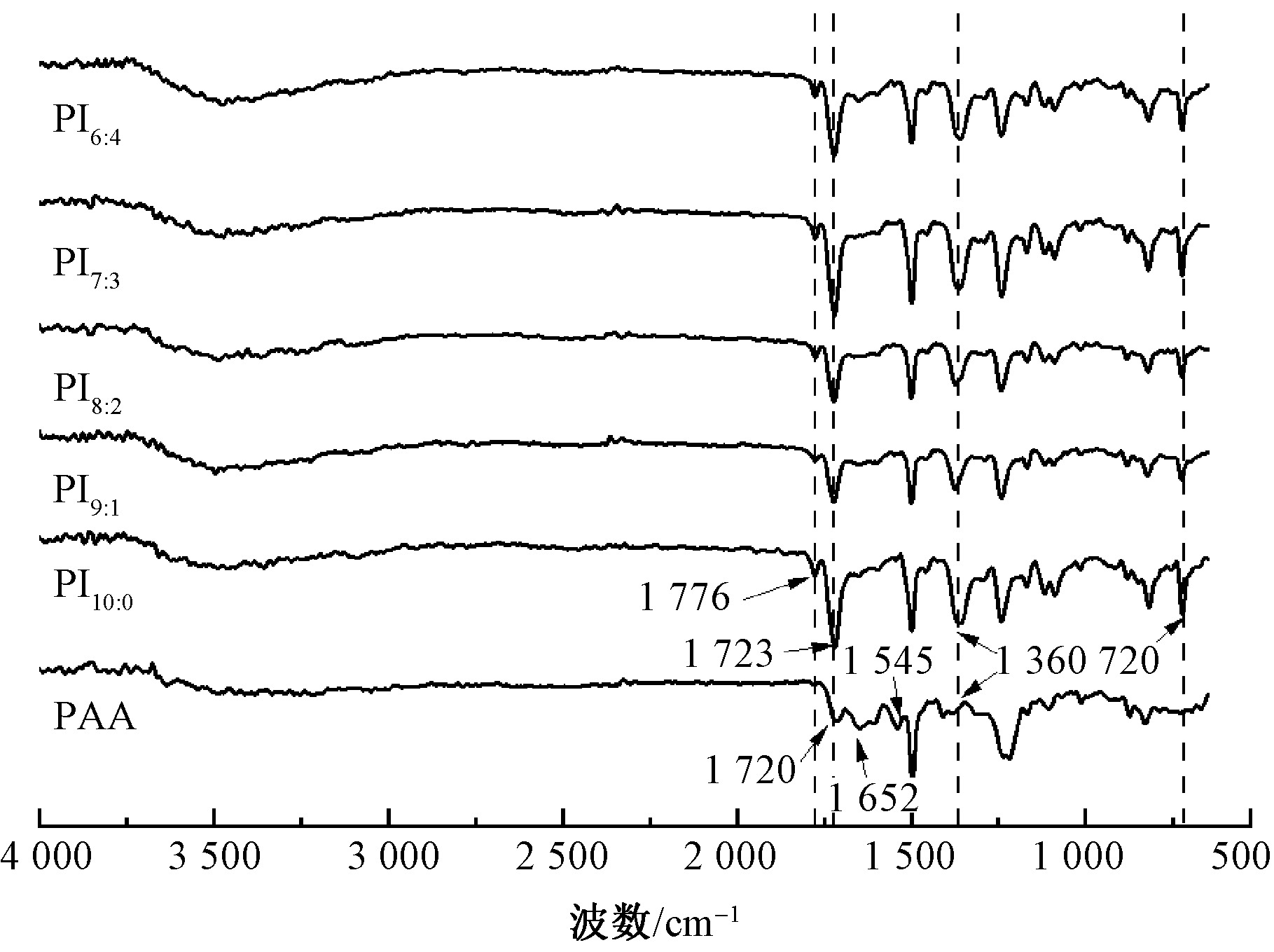
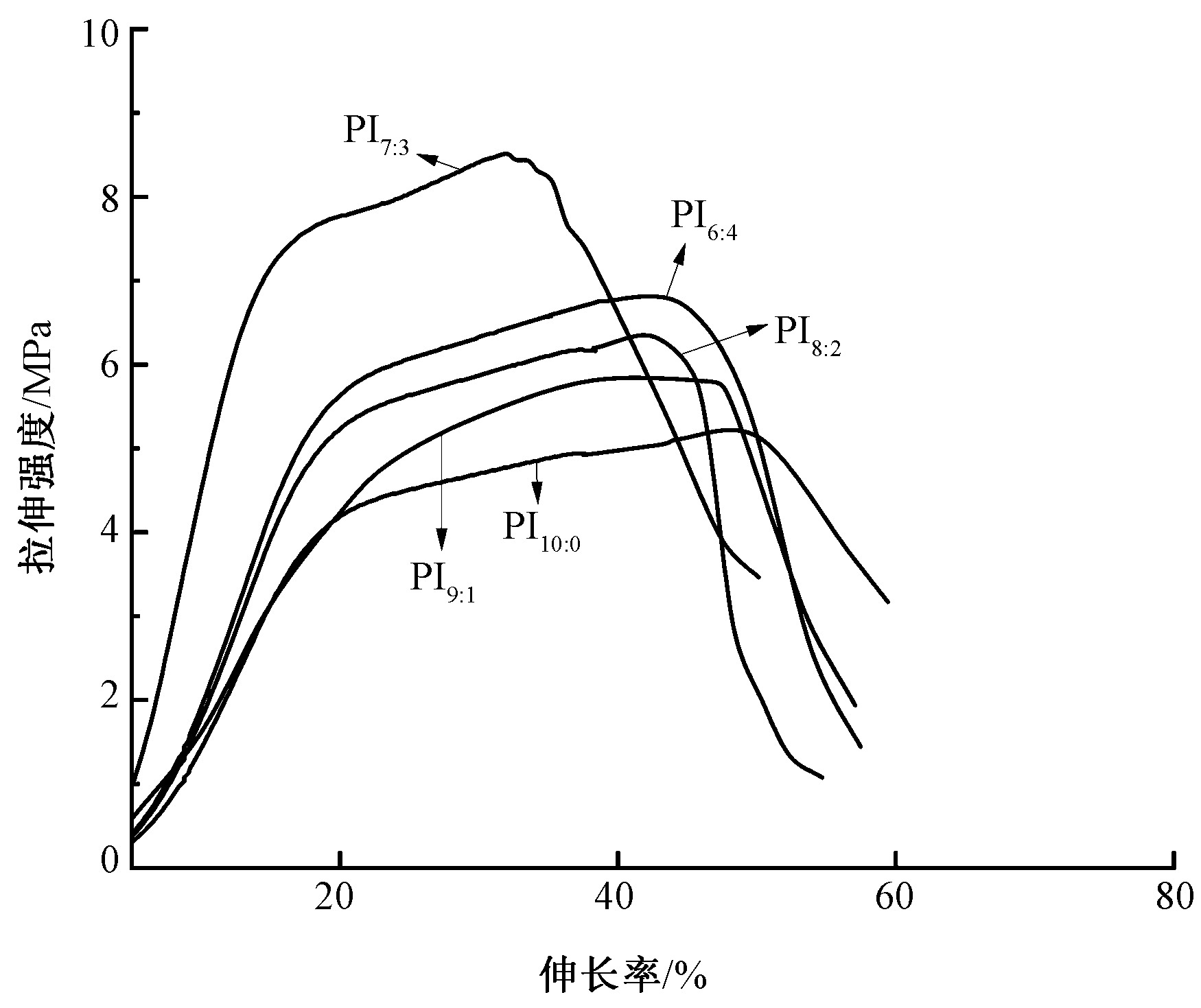
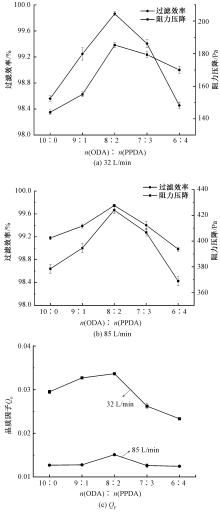
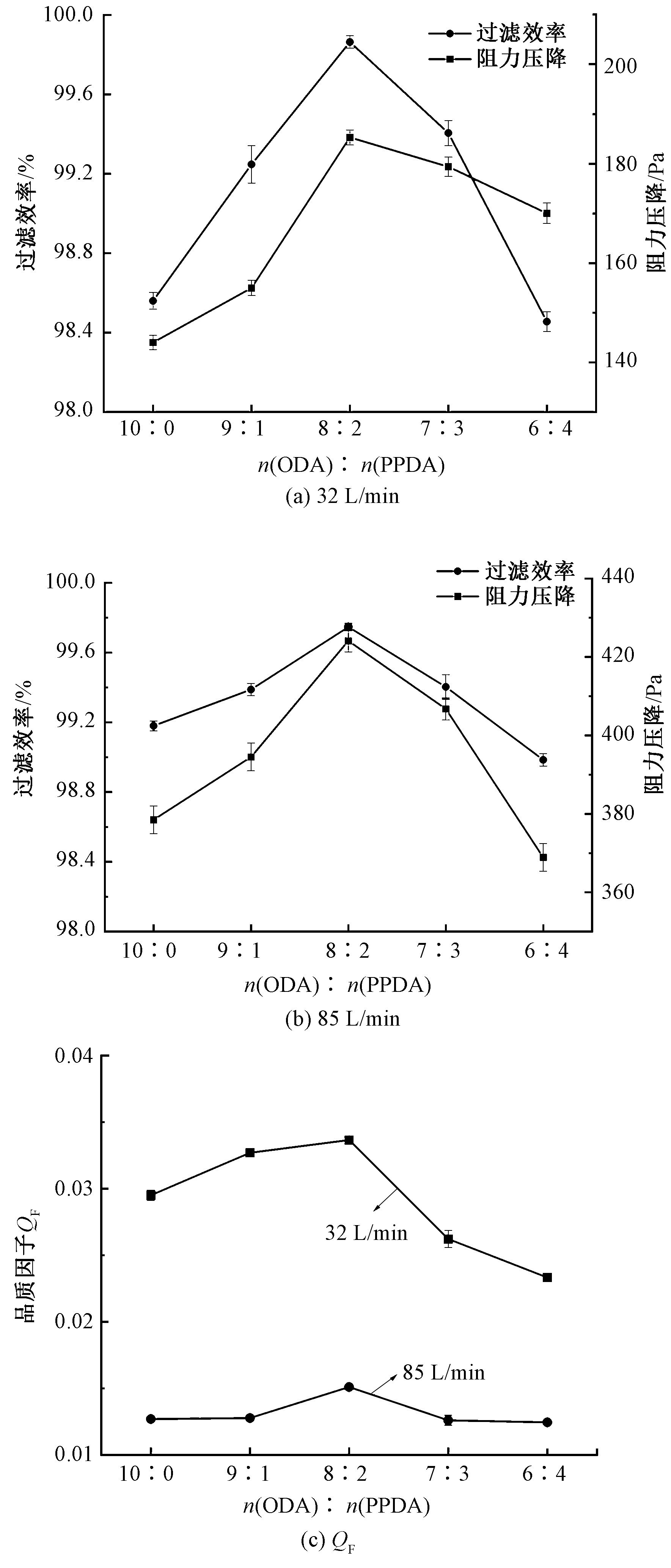
Results The diameter of PI10∶0 nanofibers without PPDA was smaller, with an average diameter of 579.65 nm, and the fiber diameter distribution was relatively uniform. The introduction of PPDA into ODA and PMDA promoted the rigidity of polyamide acid (PAA) molecular, and increased the viscosity of PAA solution. The diameter of copolymerized PI nanofibers with PPDA were relatively larger, with an diameter range of 645.38-1 050.31 nm. When the molar ratio of PPDA were larger, the fiber diameter distributions of PI7∶3 and PI6∶4 nanofibers became uneven, especially in the case of PI6∶4 nanofibers. the smallest fiber diameter was 207.35 nm, while the coarsest fiber diameter was 1 739.09 nm. This is mainly because that PAA molecular chain was relatively rigid when the molar ratio of PPDA were higher. The stretching force on the jet during electrospinning were not uniform, resulting in uneven distribution of fiber diameter. The FT-IR of PAA and PI nanofibers expressed that PAA nanofibers showed characteristic C—N stretching and vibration peak and C═O vibration absorption peak at 1 403 cm-1 and 1 625 cm-1.Compared to PAA nanofibers, PI nanofibers with different PPDA molar ration all expressed characteristic symmetric contraction vibration peak of aromatic imide C═O at 1 776 cm-1 and 1 723 cm-1, these results indicated that all PAA nanofiber were transformed into PI nanofiber films after thermal imide treatment. The stretching curves of all PI nanofiber films were consistent with the stretching of the fiber assembly, and the curves showed three stages. The first stage was the elongation of the fiber, the second stage was the elongation of the fiber macromolecular chain, and finally the fiber slipped-off and fractured, their stretching phenomenon were similar to that of other randomly arranged nanofiber membranes. Comparing the tensile curves of different PI nanofiber films, the PI10∶0 nanofiber membrane without rigid monomer PPDA had the smallest tensile strength (4.91 MPa) and the largest fracture elongation (60.5%). In contrast, the tensile strength of the copolymerized PI nanofibers increased significantly, while the fracture elongation decreased slightly, and the tensile strength of PI nanofibers increased with the increase of PPDA mole fraction. When the molar ratio of PPDA was 30%, the maximum tensile strength of PI7∶3 nanofiber membrane was 8.65 MPa, mainly because the addition of PPDA increased the rigidity of the PAA molecular chain, resulting in the improvement of the mechanical properties of copolymerized PI nanofibers. The filtration performance under the flow rate of 32 L/min and 85 L/min were tested. At the flow rate of 32 L/min, the filtration efficiencies of different PI nanofiber membranes ranged from 98.56% to 99.86%, and the resistance pressure drops ranged from 143 Pa to 185.6 Pa. When the mole ratio of ODA to PPDA was 8∶2, the filtration efficiency of PI8∶2 nanofiber film was the highest, reaching 99.86% and the resistance pressure drop reaching 185.3 Pa. Compared the filtration performance of PI nanofibers at different flow rates, it can be seen that the filtration efficiencies at different flow rates were very close, but the resistance pressure drops were quite different. The resistance pressure drops at the flow rate of 85 L/min were significantly higher than that at the flow rate of 32 L/min.This was mainly because the increase in flow rate can cause particles to collide with the nanofiber membrane quickly and fiercely. Blocking particles through the nanofiber membranes resulted in a significant increase in pressure drop.

Conclusion The copolymerized polyimide (PI) nanofiber membranes were prepared by introducing rigid monomer p-phenylenediamine (PPDA), using two-step method and electrospinning technology. The copolymerized PI nanofiber membranes possessed higher fiber diameter, increased tensile strength and filteration performance, had better application in the field of high temperature filtration materials.

Key words: p-phenylenediamine, copolymerization, polyimide, tensile property, filtration performance

中图分类号: 

  • TS102.6

表1

不同PAA溶液中ODA、PPDA与PMDA的质量"

n(ODA)∶n(PPDA) 各成分质量/g
PMDA ODA PPDA DMAc
10∶0 4.406 4.000 0 38.294
9∶1 4.406 3.600 0.216 37.246
8∶2 4.406 3.200 0.433 36.622
7∶3 4.406 2.800 0.649 35.784
6∶4 4.406 2.402 0.865 34.955

图1

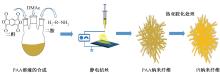
PI纳米纤维制备流程示意图"

图2

不同PPDA摩尔比的PI纳米纤维滤膜的SEM照片和直径分布图"

图3

PAA和PI纳米纤维膜的红外光谱图"

图4

PI纳米纤维膜的拉伸强度-伸长率曲线图"

表2

不同PI纳米纤维膜的面密度和比表面积"

样品名称 面密度/(g·m-2) 比表面积/(m2·g-1)
PI10∶0 5.668 15.837
PI9∶1 5.792 14.446
PI8∶2 6.182 15.212
PI7∶3 5.809 15.394
PI6∶4 5.813 14.921

图5

PI纳米纤维滤膜在不同流速下的过滤性能和品质因子"

[1] RAJAGOPALAN S, AL-KINDI S G, BROOK R D. Air pollution and cardiovascular disease:JACC state-of-the-art review[J]. Journal of the America College of Cardiology, 2018, 72(17):2054-2070.
[2] BIAN Y, NIU Z, WANG S, et al, Removal of size-dependent submicron particles using metal-organic framework-based nanofiber air filters[J]. ACS Applied Materials & Interfaces, 2022, 14(20):23570-23576.
[3] ZHANG T, LI X, WANG M, et al, Microbial aerosol chemistry characteristics in highly polluted air[J]. Science China Chemistry, 2019,62:1051-1063.
[4] SCHRAUFNAGEL D E, BALMES J R, COWL C T, et al, Air pollution and noncommunicable diseases[J]. Chest, 2019,155:417-426.
[5] LIN F, LI W, DU X J, et al. Structure, property and knittability of polyimide filaments with various strength and modulus[J]. Textile Research Journal, 2018, 89(5): 771-781.
[6] HUANG S, SUN L, HE M, et al. Preparation and properties of polyimide air-jet textured yarns and their woven fabrics[J]. Textile Research Journal, 2020, 90(13):1507-1516.
[7] 谭文军. 一步法制备可溶性聚酰亚胺及其性能研究[J]. 许昌学院学报, 2021, 40(2): 57-61.
TAN Wenjun. One-step synthesis and characterization of organo-soluble copolyimide[J]. Journal of Xuchang University, 2021, 40(2): 57-61.
[8] ZHI R L, YONG H, PENG C M, et al. Preparation and characterization of high temperature resistant polyimide films[C]// MATEC Web of Conferences, 2022, 358:01046.
[9] 李志国. 低温三步法成分调控对PI衬底CIGS薄膜材料及器件影响的研究[D]. 天津: 南开大学, 2013:4-5.
LI Zhiguo. Research on the influence of composition control on CIGS thin films and devices prepared by low-temperature three-stage process on polyimide substrate[D]. Tianjin: Nankai University, ,2013:4-5.
[10] 郑灼勇, 张永爱, 张志坚, 等. 气相沉积聚合法制备聚酰亚胺绝缘薄膜及其性能研究[J]. 真空科学与技术学报, 2012, 32(10): 937-942.
ZHENG Zhuoyong, ZHANG Yongai, ZHANG Zhijian, et al. Microstructures and property characterization of polyimide films coated by vapor deposition polymerization[J]. Chinese Journal of Vacuum Science and Technology, 2012, 32(10): 937-942.
[11] QIAO S Y, KANG S, ZHU J, et al. Facile strategy to prepare polyimide nanofiber assembled aerogel for effective airborne particles filtration[J]. Journal of Hazardous Materials, 2021, 415: 125739-125746.
[12] ZHANG R, LIU C, HSU P C, et al. Nanofiber air filters with high-temperature stability for efficient PM2.5 removal from the pollution sources[J]. Nano Letters, 2016, 16(6):3642-3649.
[13] WANG L, CUI L, LIU Y, et al. Electrospun polyimide nanofiber-coated polyimide nonwoven fabric for hot gas filtration[J]. Adsorption Science & Technology, 2018, 36(9/10): 1734-1743.
[14] 李学佳, 董震, 李大伟. 纺丝液配制对PI/TiO2活性碳纳米纤维膜吸附性能的影响[J]. 化工新型材料, 2024, 52(6):155-157.
doi: 10.19817/j.cnki.issn1006-3536.2024.06.016
LI Xuejia, DONG Zhen, LI Dawei. Effect of spinning solution formulation on adsorption performance of PI/TiO2 activated carbon nanofiber film[J]. New Chemical materials. 2024, 52(6):155-157.
doi: 10.19817/j.cnki.issn1006-3536.2024.06.016
[15] 黄荣辉. 对苯二胺/4,4'-二氨基二苯醚/均苯四酸二酐型聚酰亚胺纤维的研究[D]. 成都: 四川大学, 2007:12-13,53-54.
HUANG Ronghui. Study of 1,4-benzenediamine/4,4-diamino diphenyl/pyromellitic dianhydride polyimide fiber[D]. Chengdu: Sichuan University, 2007:12-13,53-54.
[16] 魏文慧. 电纺聚酰亚胺纳米纤维材料的制备及空气净化性能研究[D]. 济南: 齐鲁工业大学, 2024:21-22.
WEI Wenhui. Preparation and air purification properties of electrospun polyimide nanofiber materials[D]. Ji'nan: Qilu University of Technology, 2024:21-22.
[17] HOU X B, MAO Y Q, ZHANG R B, et al. Super-flexible polyimide nanofiber cross-linked polyimide aerogel membranes for high efficient flexible thermal protection[J]. Chemical Engineering Journal, 2021, 417(3): 1-8.
[18] 张芳铖. 高效低阻聚酰亚胺纳米纤维气凝胶的优化制备及性能研究[D]. 郑州: 中原工学院, 2024:17-18.
ZHANG Fangcheng, Optimized preparation and performance study of high efficiency and low resistance polyimide nanofiber aerogel[D]. Zhengzhou: Zhongyuan University of Technology, 2024:17-18.
[19] 王西贤, 郭天光, 王登科, 等. 聚丙烯腈/银复合纳米纤维高效滤膜的制备及其长效性能[J]. 纺织学报, 2023, 44(11): 27-35.
doi: 10.13475/j.fzxb.20220701601
WANG Xixian, GUO Tianguang, WANG Dengke, et al. Preparation and long-lasting performance of polyacrylonitrile/Ag composite nanofiber membrane for high efficiency filtration[J]. Journal of Textile Research, 2023, 44(11): 27-35.
doi: 10.13475/j.fzxb.20220701601
[20] 常淑真. 静电纺芳纶纳米纤维耐高温过滤材料的开发与应用[D]. 郑州: 中原工学院,2022:28-29.
CHANG Shuzhen. Development and application of electrospinning aramid nanofiber high temperature resistant filter material[D]. Zhengzhou: Zhongyuan University of Technology, 2022:28-29.
[1] 刘旭东, 宋政吉, 陈世昌, 陈文兴. 改性环氧树脂涂覆聚酰亚胺纤维的表面性能[J]. 纺织学报, 2025, 46(08): 18-27.
[2] 张一帆, 安柳絮, 闫英杰, 邹齐, 刘晓志, 郭俊华, 陈利. 三维机织复合材料T型接头的拉伸性能[J]. 纺织学报, 2025, 46(07): 128-135.
[3] 王彪, 李源, 董杰, 张清华. 热亚胺化中应力对聚酰亚胺纤维结构和性能的影响[J]. 纺织学报, 2025, 46(03): 1-8.
[4] 江文杰, 郭明瑞, 高卫东. 棉/涤纶短纤皮芯纱及其织物的力学性能[J]. 纺织学报, 2025, 46(03): 49-55.
[5] 敖利民, 潘柳菲, 唐雯, 方瑞峰. 四轴系喂入包覆纱的复合结构与性能[J]. 纺织学报, 2025, 46(01): 52-61.
[6] 李慧敏, 刘淑强, 杜琳琳, 张曼, 吴改红. 玄武岩/聚酰亚胺三维间隔机织物的参数化建模及高温环境传热数值模拟[J]. 纺织学报, 2025, 46(01): 87-94.
[7] 刘文龙, 李好义, 何东洋, 李长金, 张杨, 马秀清, 李满意, 杨卫民. 低密度聚乙烯熔喷工艺及其非织造布性能[J]. 纺织学报, 2024, 45(10): 31-38.
[8] 张琦, 屠佳妮, 张燕婷, 丁宁宇, 郝佳姝, 彭诗语. 经编贾卡间隔鞋面材料提花层结构对其拉伸性能的影响[J]. 纺织学报, 2024, 45(08): 150-157.
[9] 贾琳, 董晓, 王西贤, 张海霞, 覃小红. 聚己内酯/MgO复合纳米纤维膜的制备及其性能[J]. 纺织学报, 2024, 45(04): 59-66.
[10] 孙辉, 崔小港, 彭思伟, 丰江丽, 于斌. 聚乳酸/磁性金属有机框架材料复合熔喷布的制备及其空气过滤性能[J]. 纺织学报, 2023, 44(12): 26-34.
[11] 李久刚, 金鑫鹏, 邓文韬, 秦雪, 张贺, 黄丛, 刘可帅. 氧化铝纱线的合股数与捻度对其强度的影响[J]. 纺织学报, 2023, 44(10): 48-52.
[12] 张华, 刘帅, 杨瑞华. 长丝包覆复合包芯纱拉伸性能建模研究[J]. 纺织学报, 2023, 44(08): 57-62.
[13] 周濛濛, 蒋高明. 玻璃纤维衬经衬纬纬编管状织物的制备及其拉伸性能[J]. 纺织学报, 2023, 44(07): 132-140.
[14] 夏良君, 曹根阳, 刘欣, 徐卫林. 高性能纤维及其制品颜色构建的研究进展[J]. 纺织学报, 2023, 44(06): 1-9.
[15] 成悦, 左涵, 安琪, 李大伟, 张伟, 付译鋆. 非可吸收倒刺缝合线握持力及其影响因素[J]. 纺织学报, 2023, 44(06): 66-71.
Viewed
Full text


Abstract

Cited

  Shared   
  Discussed   
No Suggested Reading articles found!