纺织学报 ›› 2026, Vol. 47 ›› Issue (04): 189-197.doi: 10.13475/j.fzxb.20250905901

• 服装工程 • 上一篇    下一篇

女装结构平衡与服装压分布相关性研究

杜劲松1,2(), 聂家乐1   

  1. 1 东华大学 服装与艺术设计学院, 上海 200051
    2 新疆大学 纺织与服装学院, 新疆 乌鲁木齐 830046
  • 收稿日期:2025-09-16 修回日期:2026-03-11 出版日期:2026-04-15 发布日期:2026-04-15
  • 作者简介:杜劲松(1970—),男,副教授,博士。主要研究方向为服装先进制造。E-mail:ducccp@dhu.edu.cn
  • 基金资助:
    新疆自治区区域协同创新专项—上海合作组织科技伙伴计划及国际科技合作计划项目(2025E01012)

Correlation between structural balance and clothing pressure distribution of women's wear

DU Jinsong1,2(), NIE Jiale1   

  1. 1 College of Fashion and Design, Donghua University, Shanghai 200051, China
    2 School of Textiles and Apparel, Xinjiang University, Urumqi, Xinjiang 830046, China
  • Received:2025-09-16 Revised:2026-03-11 Published:2026-04-15 Online:2026-04-15

摘要:

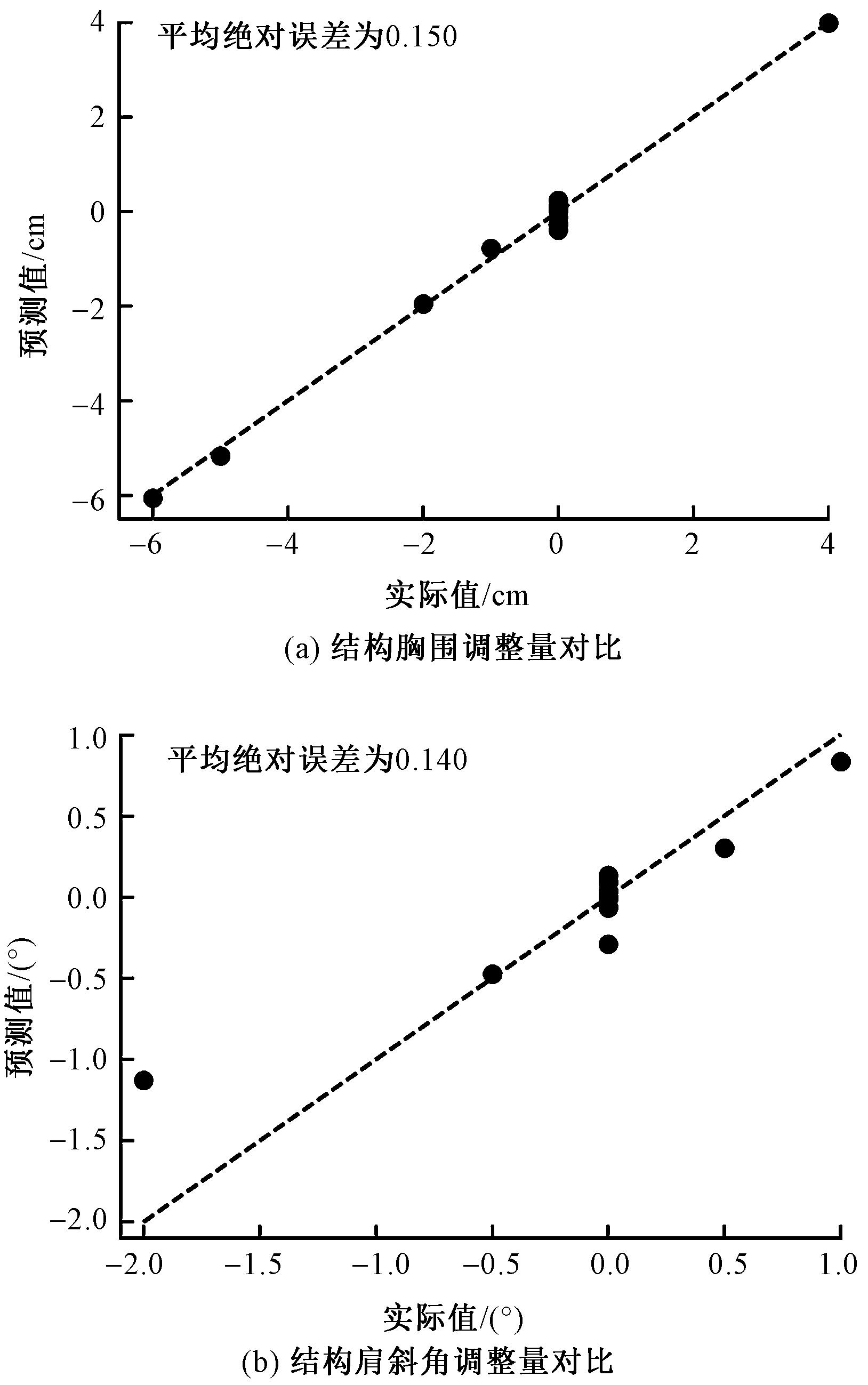
针对女装样衣生产过程中纸样结构调整主要依赖经验、缺乏客观量化依据的问题,构建基于服装压数据的纸样结构评价模型。采用虚拟试衣系统,在标准女性人台条件下,设置纸样胸围、肩斜角等结构参数以及人台胸围、肩斜角和颈根围等体型参数,设计对照、单一变量、协同变量和交叉变量实验,共获取171组数据。基于实验数据,分析纸样结构参数、体型参数与服装压分布之间的非线性关系,建立多层感知机神经网络模型,对纸样结构调整量进行预测。结果表明:纸样胸围增大时,各测量点服装压整体呈下降趋势,相关系数范围为-0.50~-0.21;在人台体型参数中,颈根围对纸样胸围调整量的影响贡献度最高为2.027,是纸样胸围结构调整的主导因素;纸样肩斜角与胸围调整量的平均绝对误差分别为0.14°和0.15 cm,说明模型能够实现对纸样结构调整量的高精度预测。经虚拟试衣与实物服装压测试验证,纸样结构修正后各测量点服装压均处于相应舒适阈值范围内,验证了服装结构评价模型能有效提高服装合体性。

关键词: 神经网络, 服装压分布, 服装纸样结构, 虚拟试衣, 服装合体性

Abstract:

Objective Pattern structure adjustment in women's garment development mainly relies on empirical judgment and lacks objective quantitative criteria. This study aims to address these issues by establishing a pattern structure evaluation method based on garment pressure data obtained from virtual fitting. The objective is to clarify the relationships among pattern parameters, body parameters, and garment pressure distribution, and to examine the feasibility of using pressure indicators to predict pattern adjustment quantities for objective pattern modification.

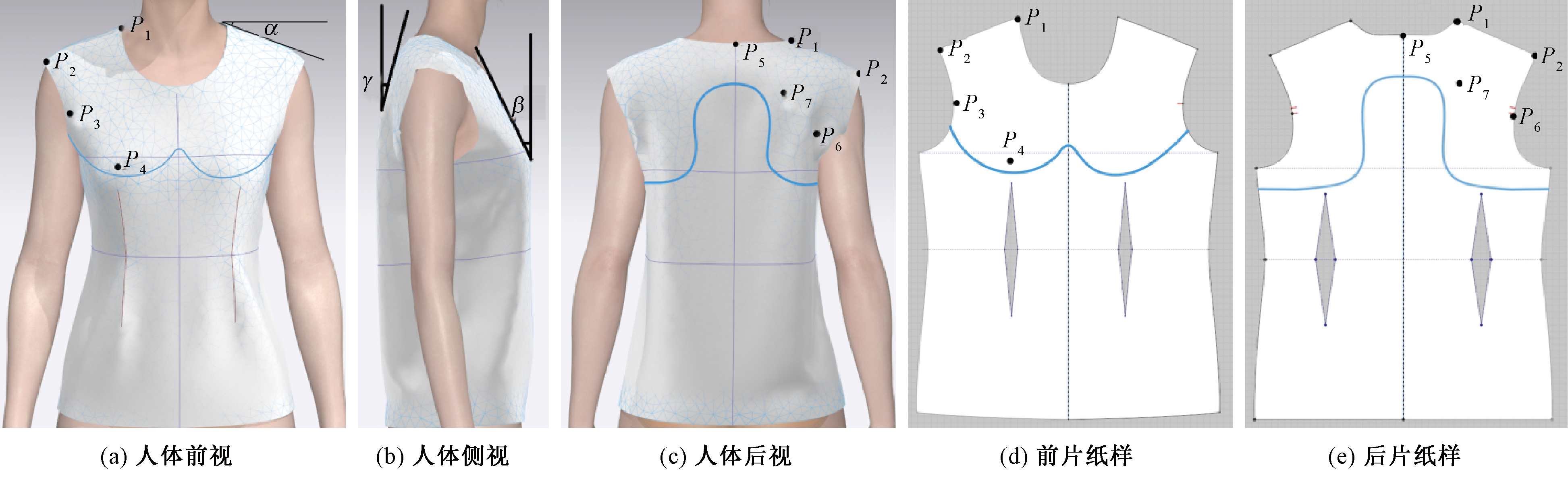
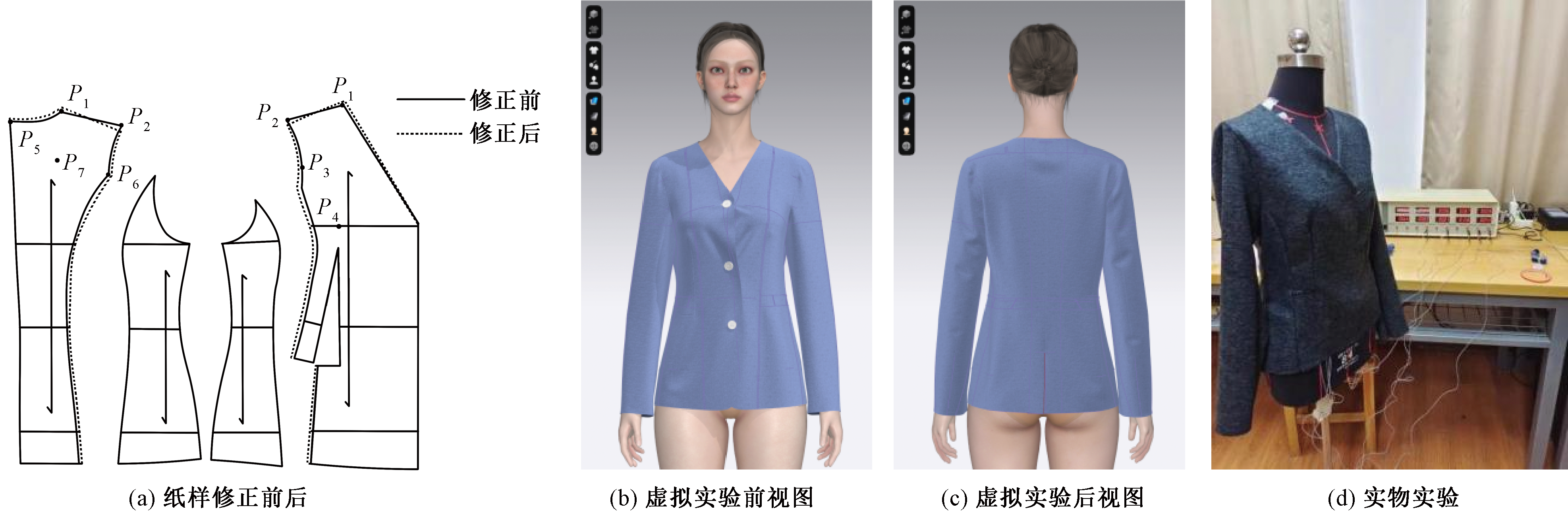
Method Virtual fitting experiments were conducted using the CLO3D system with a standard female mannequin. Pattern structural parameters, including bust circumference and shoulder slope angle, as well as mannequin body parameters such as bust girth, shoulder slope, and neck root girth, were systematically varied to investigate their effects on garment pressure distribution. A series of control, single-variable, coordinated, and cross-variable experiments were designed to analyze the individual and combined influences of structural and body parameters. Garment pressure data were collected at seven predefined pressure measurement points: neck side point (P1), shoulder endpoint (P2), front armpit point (P3), bust point (P4), back neck point (P5), back armpit point (P6), and scapular prominence point (P7). A total of 171 experimental datasets were obtained. Based on these data, a multilayer perceptron (MLP) was constructed to model the nonlinear relationships between pattern parameters, body measurements, and garment pressure. The trained model was further used to predict pattern adjustment quantities, and its performance was evaluated using error metrics.

Results The results showed that increasing pattern bust circumference led to a consistent decrease in garment pressure values across all seven measurement points. The correlation coefficients between pattern bust circumference and garment pressure were found to range from -0.50 to -0.21, indicating that bust adjustment produces directionally consistent pressure changes across multiple anatomical regions. Among the measurement points, pressure responses at the neck and shoulder-related locations showed higher sensitivity to bust variation than those at posterior torso regions. Feature importance analysis revealed that neck root girth had the strongest influence on the prediction of pattern bust adjustment, with the highest importance value (2.027). This result indicates that variations in neck root girth correspond more closely to required bust-related structural modification than other body parameters considered in this study. Shoulder slope mainly affected pressure redistribution in the upper torso and shoulder regions, while its influence on lower torso pressure distribution remained limited. The MLP model achieved stable predictive performance for pattern adjustment quantities. The mean absolute error for predicting pattern bust circumference adjustment was 0.15 cm, and the mean absolute error for shoulder slope angle adjustment was 0.14°. These error levels remained consistent across different experimental groups, including single-variable and coordinated adjustment experiments, indicating stable prediction performance under varying parameter combinations. Analysis of prediction residuals indicated no systematic bias related to pressure magnitude or measurement location. Further verification experiments were conducted to assess the reliability of the proposed approach. Subsequent physical garment pressure tests using an airbag-type contact pressure measurement system confirmed that, after structural modification, measured pressure values at all locations fell within corresponding comfort threshold ranges. The deviation between virtual and physical pressure measurements remained within an acceptable range.

Conclusion Results indicate that garment pressure data obtained through virtual fitting can quantitatively describe the relationship between women's garment pattern structure and pressure distribution. The research confirms that pattern structural parameters, particularly bust circumference and shoulder slope, are closely associated with pressure responses at key anatomical locations, while mannequin neck root girth plays an important role in determining required bust-related pattern adjustments. The MLP model provides stable predictions of pattern adjustment quantities within the experimental parameter range, and verification through physical pressure testing confirms consistency between virtual and real garment pressure distributions.

From a practical perspective, the proposed method offers an objective reference for pattern structure modification during virtual sample development, reducing reliance on empirical judgment. Future work may extend this approach to a wider range of garment types, body shapes, and dynamic postures, and further integrate pressure-based evaluation with digital pattern design systems, supporting data-driven garment development and structural optimization.

Key words: neural network, clothing pressure distribution, garment pattern structure, virtual fitting, garment fit

中图分类号: 

  • TS941.71

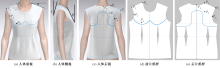
图1

服装压临界线分布"

表1

服装压测量点坐标"

测量点 横坐标 纵坐标
颈侧点P1 k-0.2 L+k/3+B/80
肩端点P2 0.13B+
17+2sin18°
mcos18°
前腋点P3 0.13B+5.8 L-(0.1h+8-B/80-
k/3-B/40-2)/2
胸点P4 0.1B+0.5 L+k/3+B/80-(0.1h+8)
后颈点P5 0 L
后腋点P6 0.13B+17 L-$\frac{0.1h+8-B/80-k/3}{5}$×2
肩胛突出点P7 0.13B+12 L-$\frac{0.1h+8-B/80-k/3}{5}$×2

表2

虚拟实验设计"

实验类型 实验序号 纸样结构 人台体型
对照实验 实验1 纸样胸部参数 纸样肩部参数 人台胸部参数 人台肩部参数 人台颈部参数
单一变量分析 实验2 纸样胸部参数
实验3 纸样肩部参数
实验4 人台胸部参数
实验5 人台肩部参数
实验6 人台颈部参数
协同变量分析 实验7 同步对应调整纸样与人台胸部参数
实验8 同步对应调整纸样与人台肩部参数
交叉变量分析 实验9 调整纸样胸围参数和纸样肩部参数
实验10 调整人台胸部参数和人台肩部参数

表3

测量点服装压阈值"

测量点 名称 相对阈值/kPa 备注
P1 颈侧点 0.60~0.66 变化影响小
P2 肩端点 0.65~0.71 对肩斜角变化敏感
P3 前腋点 0.09~0.13 极低压区
P4 胸点 0.63~0.72 对胸围变化敏感
P5 后颈点 0.63~0.68 稳定性强
P6 后腋点 0.18~0.25 对肩斜变化敏感
P7 肩胛突点 0.18~0.25 与肩斜变化反向

表4

实验变量与各测量点服装压相关系数"

参数 P1 P2 P3 P4 P5 P6 P7
结构胸围 -0.35 -0.21 -0.38 -0.50 -0.40 -0.45 -0.41
结构肩斜角 0.18 -0.33 0.10 -0.08 0.07 0.06 -0.07
体型颈根围 0.40 0.20 0.10 -0.01 0.26 0.20 0.27
体型胸围 -0.15 0.10 -0.29 -0.18 -0.22 -0.25 -0.26
体型肩斜 0.26 -0.19 0.24 -0.02 0.16 0.22 0.08

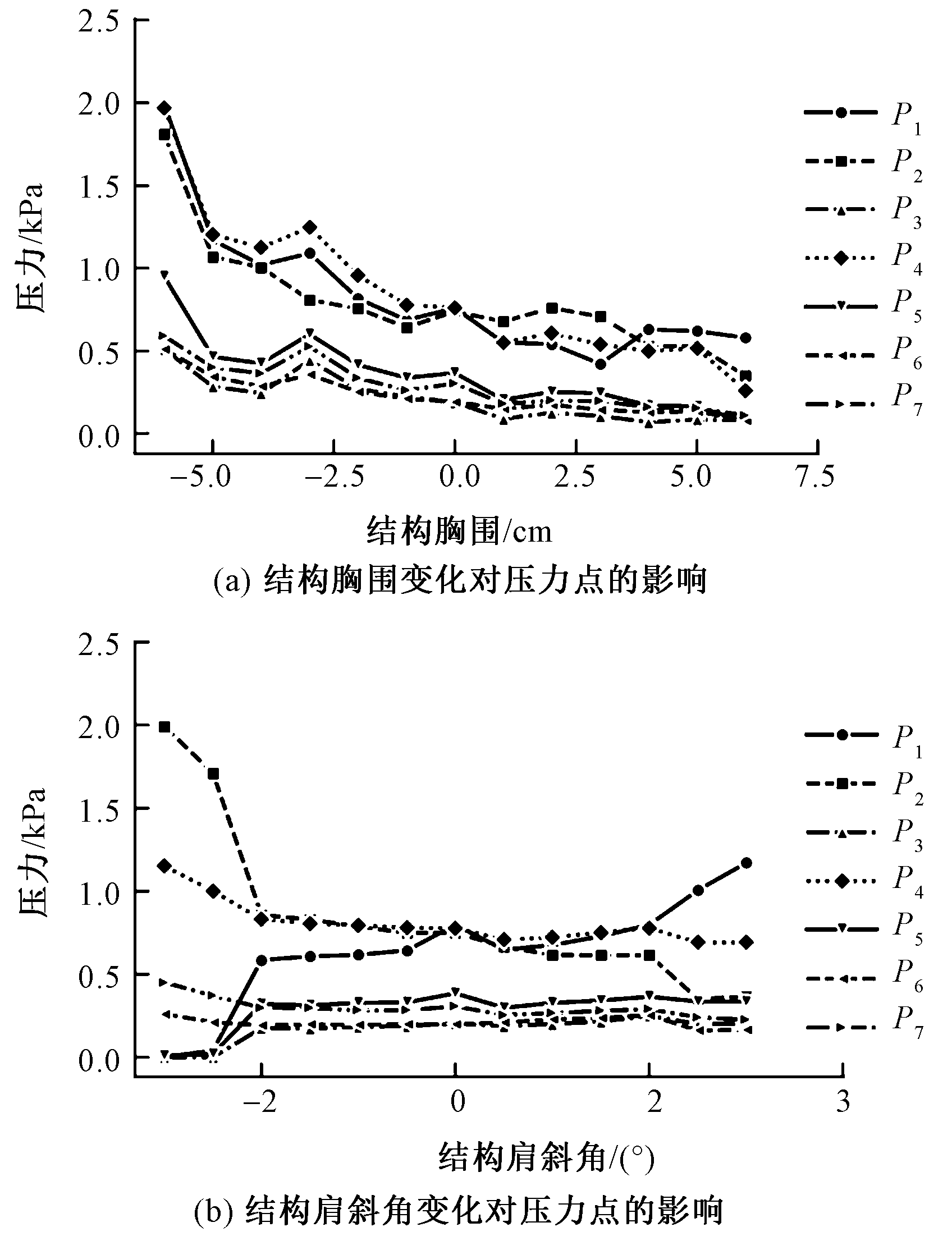
图2

纸样结构变量对服装压的影响"

图3

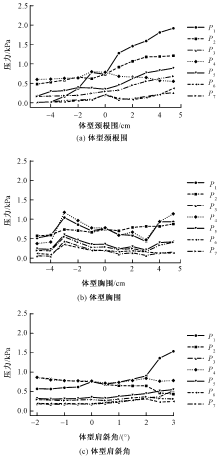
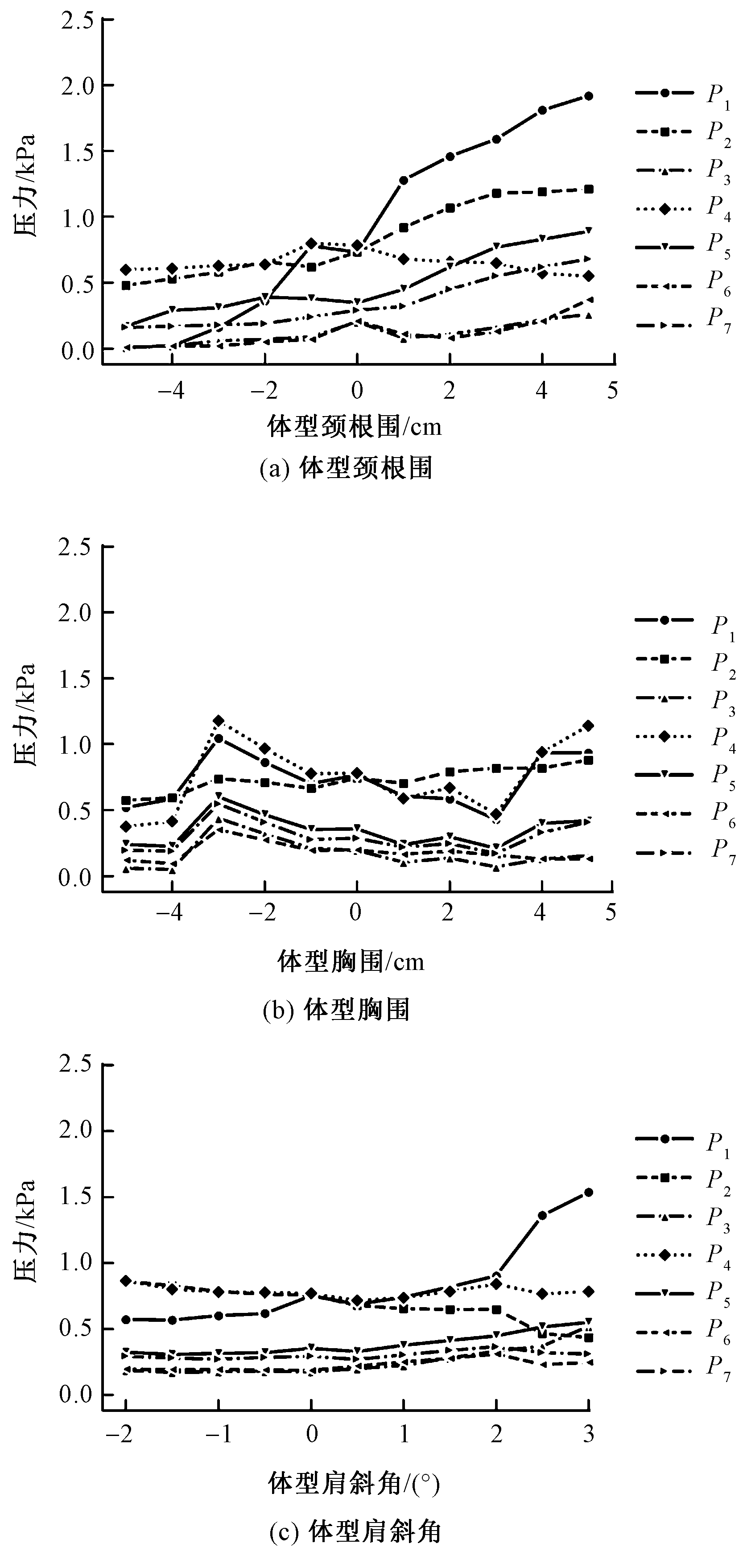
人台体型变量对服装压的影响"

图4

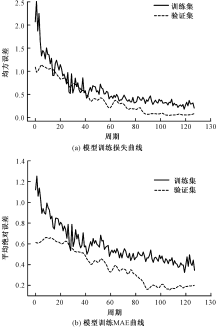
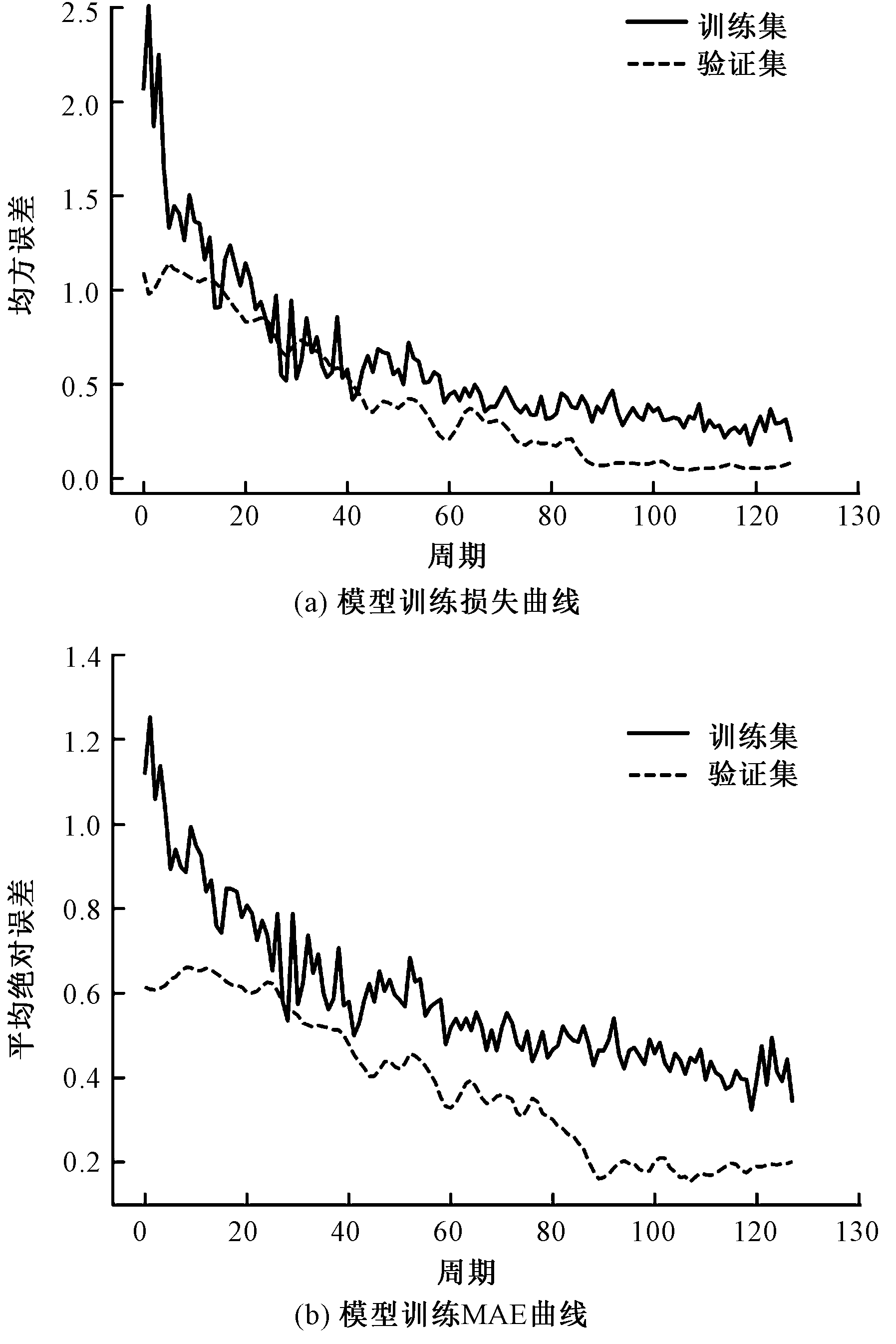
模型训练损失曲线与MAE曲线"

图5

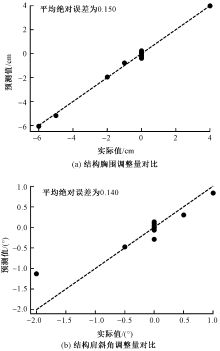
模型预测值与实际值对比"

图6

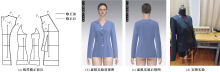
纸样与实虚拟样衣服装压测量"

表5

虚拟样衣压力预测误差"

测量
修正前
虚拟测
量值/
kPa
X调整
量/cm
Y调整
量/cm
修正后
实物测
量值/
kPa
修正后
虚拟测
量值/
kPa
舒适性
阈值/
kPa
P1 0.61 -0.03 +0.10 0.65 0.63 1.6
P2 0.75 +0.22 -0.10 0.67 0.65 1.6
P3 0.11 +0.18 -0.04 0.12 0.11 1.3
P4 0.98 +0.28 +0.22 0.69 0.66 2.1
P5 0.64 -0.02 -0.01 0.66 0.64 1.1
P6 0.21 +0.12 -0.08 0.19 0.24 1.3
P7 0.28 +0.15 -0.14 0.2 0.23 1.6
[1] 卢华山, 阎玉秀, 李梦园, 等. 跑步运动中服装压对女子下肢肌肉疲劳的影响[J]. 纺织学报, 2017, 38(7): 118-123.
LU Huashan, YAN Yuxiu, LI Mengyuan, et al. Influence of clothing pressure on female lower limb muscle fatigue during running sports[J]. Journal of Textile Research, 2017, 38(7): 118-123.
doi: 10.1177/004051756803800202
[2] 尹玲, 翁睿, 陆鑫, 等. 基于人体着装压和表面肌电信号的骑行裤功效分析[J]. 毛纺科技, 2025, 53(3): 22-30.
YIN Ling, WENG Rui, LU Xin, et al. Efficacy analysis of cycling pants based on clothing pressure and surface electromyography analysis[J]. Wool Textile Journal, 2025, 53(3): 22-30.
[3] 梅雪蕊, 郭瑞良. 基于短道速滑紧身服的CLO 3D虚拟服装压力评价研究[J]. 北京服装学院学报(自然科学版), 2023, 43(4): 29-36.
MEI Xuerui, GUO Ruiliang. Study on pressure evaluation of CLO 3D virtual clothing pressure based on short track speed skating bodysuit[J]. Journal of Beijing Institute of Fashion Technology (Natural Science Edition), 2023, 43(4): 29-36.
[4] JARIYAPUNYA N, MUSILOVA B, GERSAK J, et al. The influence of stretch fabric mechanical properties on clothing pressure[J]. Vlakna a Textil, 2017, 24(2):43-48.
[5] 何崟, 邓凌, 林美霞, 等. 冬季运动智能柔性人台关键技术开发[J]. 纺织学报, 2024, 45(2): 221-230.
HE Yin, DENG Ling, LIN Meixia, et al. Key technology development of intelligent and flexible mannequin for winter sports[J]. Journal of Textile Research, 2024, 45(2): 221-230.
[6] 谢红, 张林蔚, 沈云萍. 基于人体臂部的连续动态服装压力预测模型及准确性表征方法[J]. 纺织学报, 2024, 45(7): 150-158.
XIE Hong, ZHANG Linwei, SHEN Yunping. Continuous dynamic clothing pressure prediction model based on human armand accuracy characterization method[J]. Journal of Textile Research, 2024, 45(7): 150-158.
[7] 李玉芬, 朱卫华. 服装压对瑜伽运动中女子上身肌肉疲劳的影响[J]. 毛纺科技, 2021, 49(6): 52-57.
LI Yufen, ZHU Weihua. Influence of fitting yoga clothing pressure on the upper body comfort of women[J]. Wool Textile Journal, 2021, 49(6): 52-57.
[8] LIU K X, ZENG X Y, BRUNIAUX P, et al. Fit evaluation of virtual garment try-on by learning from digital pressure data[J]. Knowledge-Based Systems, 2017, 133: 174-182.
doi: 10.1016/j.knosys.2017.07.007
[9] WANG Z J, WANG J P, ZENG X Y, et al. Prediction of garment fit level in 3D virtual environment based on artificial neural networks[J]. Textile Research Journal, 2021, 91(15/16): 1713-1731.
doi: 10.1177/0040517520987520
[10] ZHAO X Q, FAN K, SHI X, et al. Virtual fit evaluation of pants using the Adaptive Network Fuzzy Inference System[J]. Textile Research Journal, 2021, 91(23/24): 2786-2794.
doi: 10.1177/00405175211020515
[11] 周捷, 马秋瑞. BP神经网络在塑身内衣压力预测中的应用[J]. 纺织学报, 2019, 40(4): 111-116, 121.
ZHOU Jie, MA Qiurui. Application of BP neural network in prediction of shapewear pressure[J]. Journal of Textile Research, 2019, 40(4): 111-116, 121.
[12] TAN X X, WANG C H, HE Y, et al. Intelligent assessment of pressure in women's loungewear based on machine learning algorithms[J]. Textile Research Journal, 2026, 96(1/2): 89-103.
doi: 10.1177/00405175251313521
[13] KIM H Y, OH K W. Cycling knee brace design analysis using 3D virtual clothing program to assess clothing pressure distribution and variance[J]. Fashion and Textiles, 2023, 10(1): 36.
doi: 10.1186/s40691-023-00354-8
[14] KIM J, CHAE Y. Analysis of clothing pressure based on material of virtually-fitted swimsuits and wearer body type and movement using 3D fashion design software[J]. PLoS One, 2025, 20(11): e0334782.
doi: 10.1371/journal.pone.0334782
[15] 王永荣, 罗胜利, 廖银琳, 等. 女性服装压力舒适阈限的测试与研究[J]. 纺织学报, 2018, 39(3): 132-136.
WANG Yongrong, LUO Shengli, LIAO Yinlin, et al. Test and study of pressure comfort threshold of female's garment[J]. Journal of Textile Research, 2018, 39(3): 132-136.
[1] 李宇彤, 于施佳, 韩曙光. 基于多视图的三维人体重建[J]. 纺织学报, 2026, 47(04): 215-224.
[2] 刘怡鑫, 万美怡, 张宁, 潘如如. 基于特征融合的复杂场景面料图像检索方法[J]. 纺织学报, 2026, 47(02): 188-194.
[3] 尹俏琳, 倪沈伊嘉, 郑琪, 何瑛. 基于体型特征的连衣裙综合评价模型的构建和应用[J]. 纺织学报, 2025, 46(12): 198-207.
[4] 邓云涛, 谭艳君, 张洪松, 燕雨, 余秋雨, 林风喜, 王一鑫, 安乐乐. 织物起毛起球等级评定系统[J]. 纺织学报, 2025, 46(11): 102-110.
[5] 陶晨, 洪兴华, 印梅芬. 仿真服装压力的虚拟皮肤建模[J]. 纺织学报, 2025, 46(10): 197-205.
[6] 朱耀麟, 李政, 张强, 陈鑫, 陈锦妮, 张洪松. 基于近红外光谱和多特征网络的羊毛和羊绒定量检测[J]. 纺织学报, 2025, 46(09): 104-111.
[7] 郑小虎, 杜思淇, 刘永青, 王健, 陈峰. 基于一维卷积神经网络的棉纱线质量预测[J]. 纺织学报, 2025, 46(09): 120-127.
[8] 张晓婷, 赵鹏宇, 潘如如, 高卫东. 基于深度特征融合的格子织物图像检索方法[J]. 纺织学报, 2025, 46(08): 89-95.
[9] 纪梦琪, 何瑛, 马咏倩. 基于三维试衣的凸肚体男西裤样板的优化[J]. 纺织学报, 2025, 46(06): 187-195.
[10] 罗瑞奇, 常大顺, 胡新荣, 梁金星, 彭涛, 陈佳, 李丽. 基于改进外观流网络的跨体态虚拟试衣[J]. 纺织学报, 2025, 46(06): 203-211.
[11] 顾孟尚, 张宁, 潘如如, 高卫东. 结合频域卷积模块的机织物图像疵点目标检测[J]. 纺织学报, 2025, 46(05): 159-168.
[12] 梁金星, 李东盛, 李壹帆, 周景, 罗航, 陈佳, 胡新荣. 基于照相测色的纺织品色牢度评级方法[J]. 纺织学报, 2025, 46(04): 119-128.
[13] 荆建伟, 胡裕鹏, 马王菲, 袁子舜, 顾冰菲, 徐望. 防弹衣间隙量与防护效果的有限元分析[J]. 纺织学报, 2025, 46(04): 187-196.
[14] 王罗俊, 彭来湖, 熊叙一, 李杨, 胡旭东. 基于超级基神经网络的自适应反演非奇异滑模纱线恒张力控制[J]. 纺织学报, 2025, 46(02): 92-99.
[15] 盛锡彬, 赵崧灵, 顾冰菲. 基于标准工时预测的衬衣部件模块生产编排优化[J]. 纺织学报, 2025, 46(01): 154-162.
Viewed
Full text


Abstract

Cited

  Shared   
  Discussed   
No Suggested Reading articles found!