纺织学报 ›› 2026, Vol. 47 ›› Issue (06): 115-121.doi: 10.13475/j.fzxb.20251007001
郭欣蕊1, 陈相丞1, 巫瑛2, 王峰3, 苏静1, 王鸿博1( )
)
GUO Xinrui1, CHEN Xiangcheng1, WU Ying2, WANG Feng3, SU Jing1, WANG Hongbo1()
摘要:
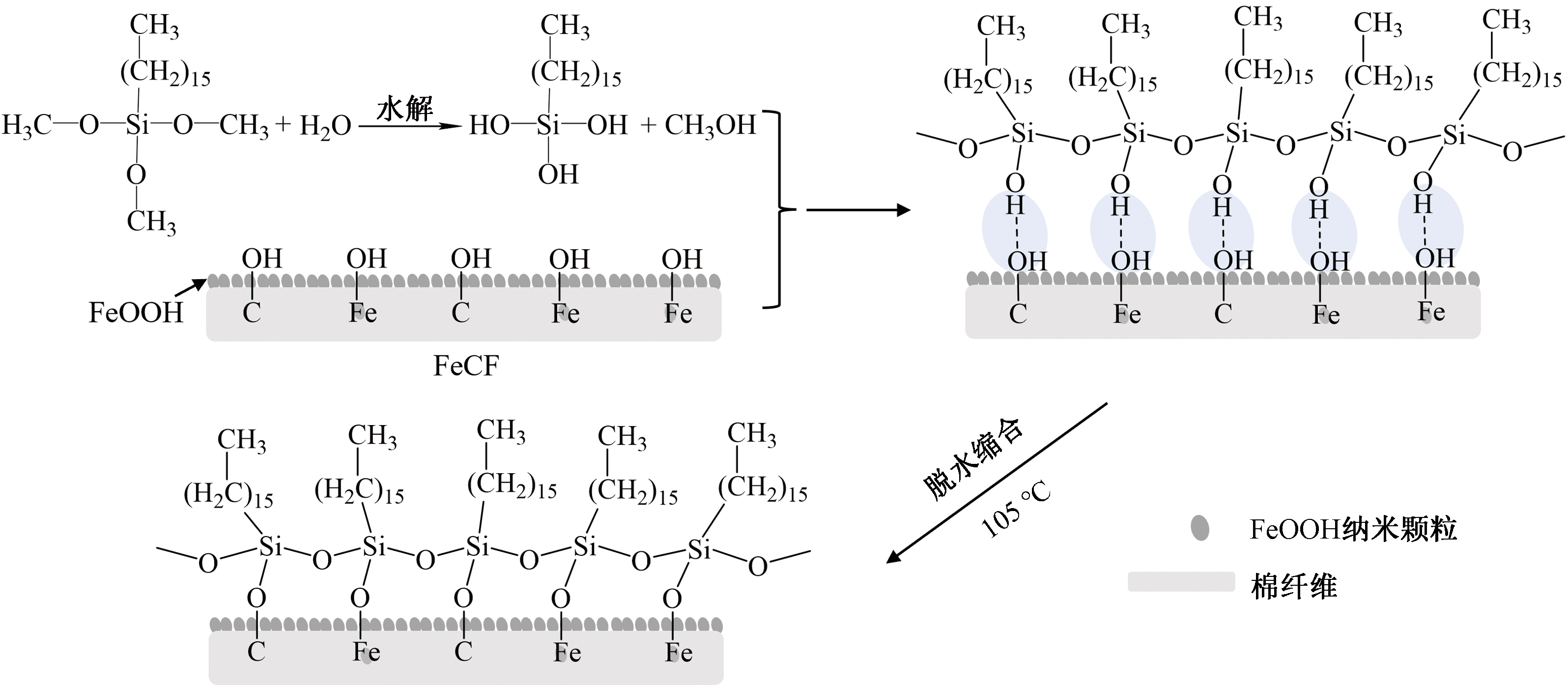
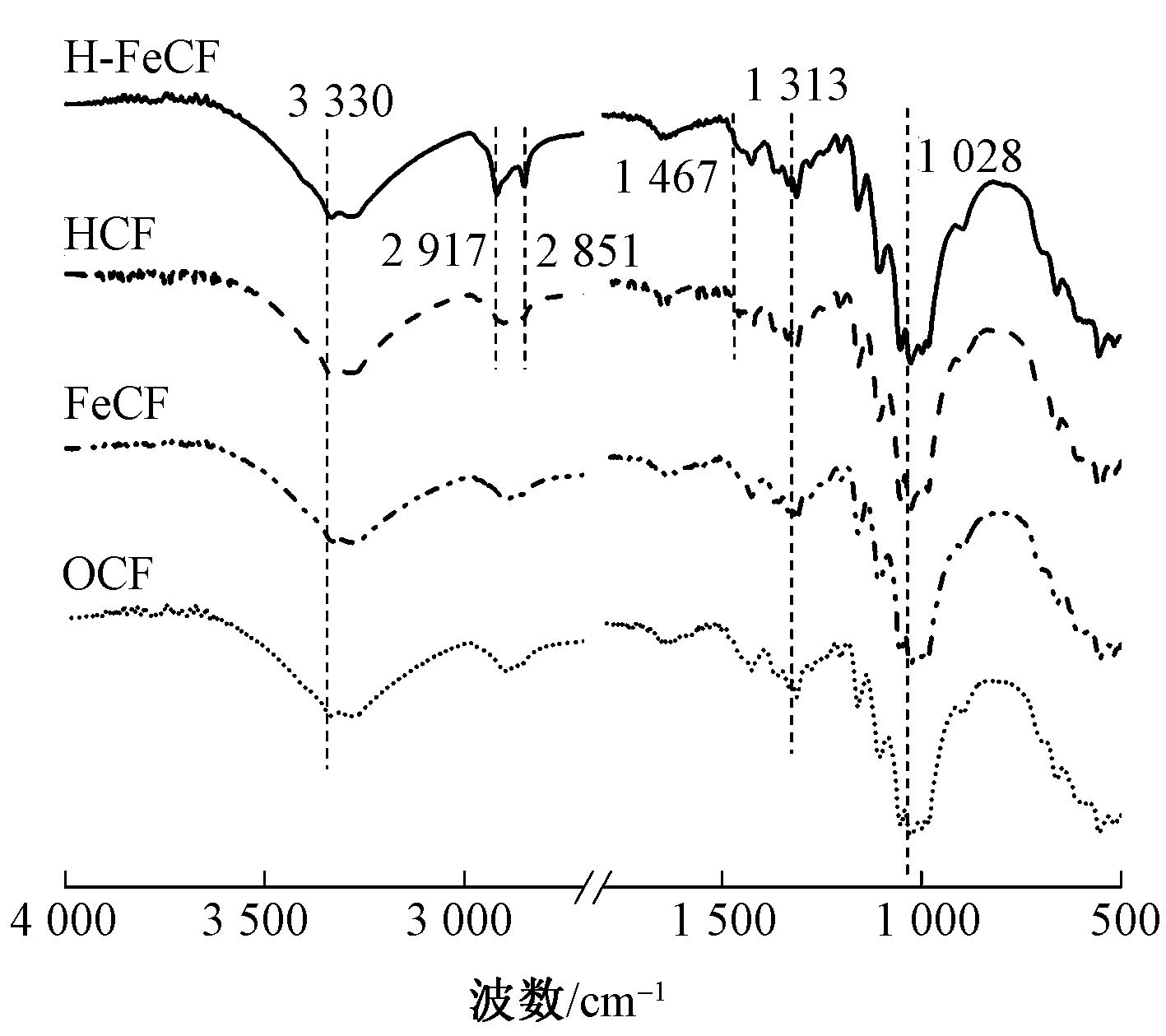
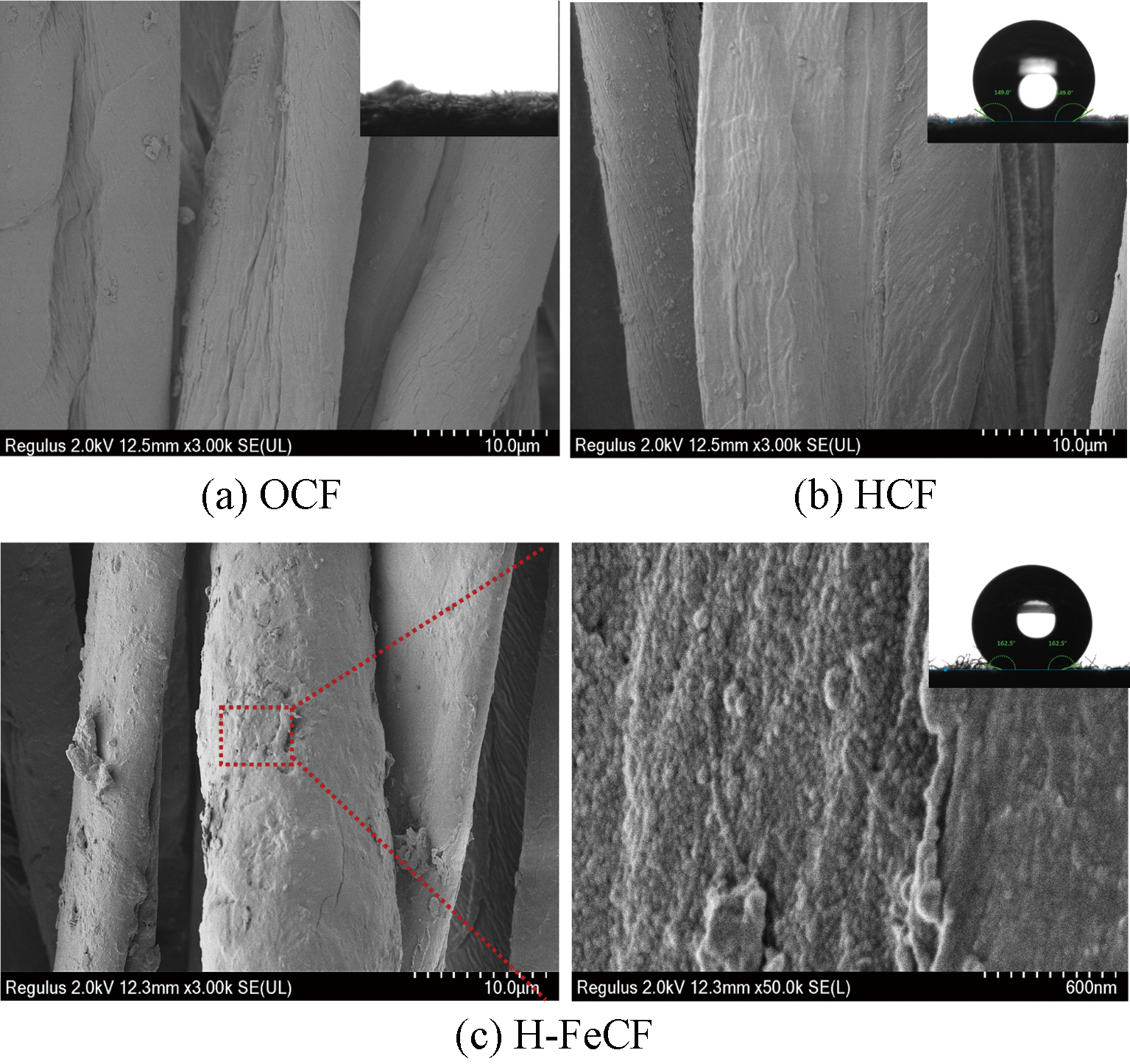
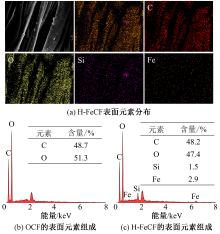
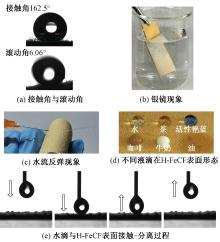
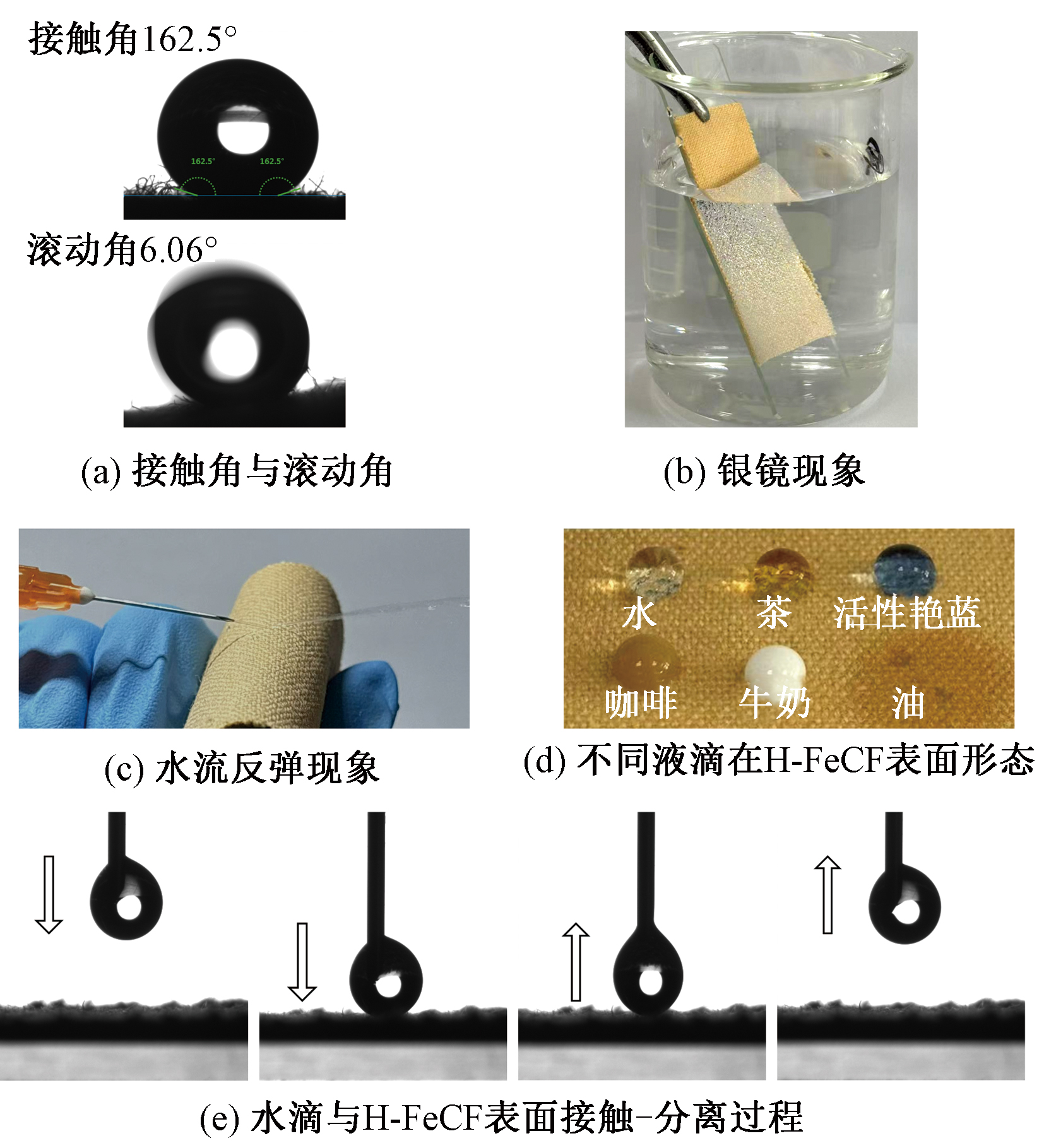
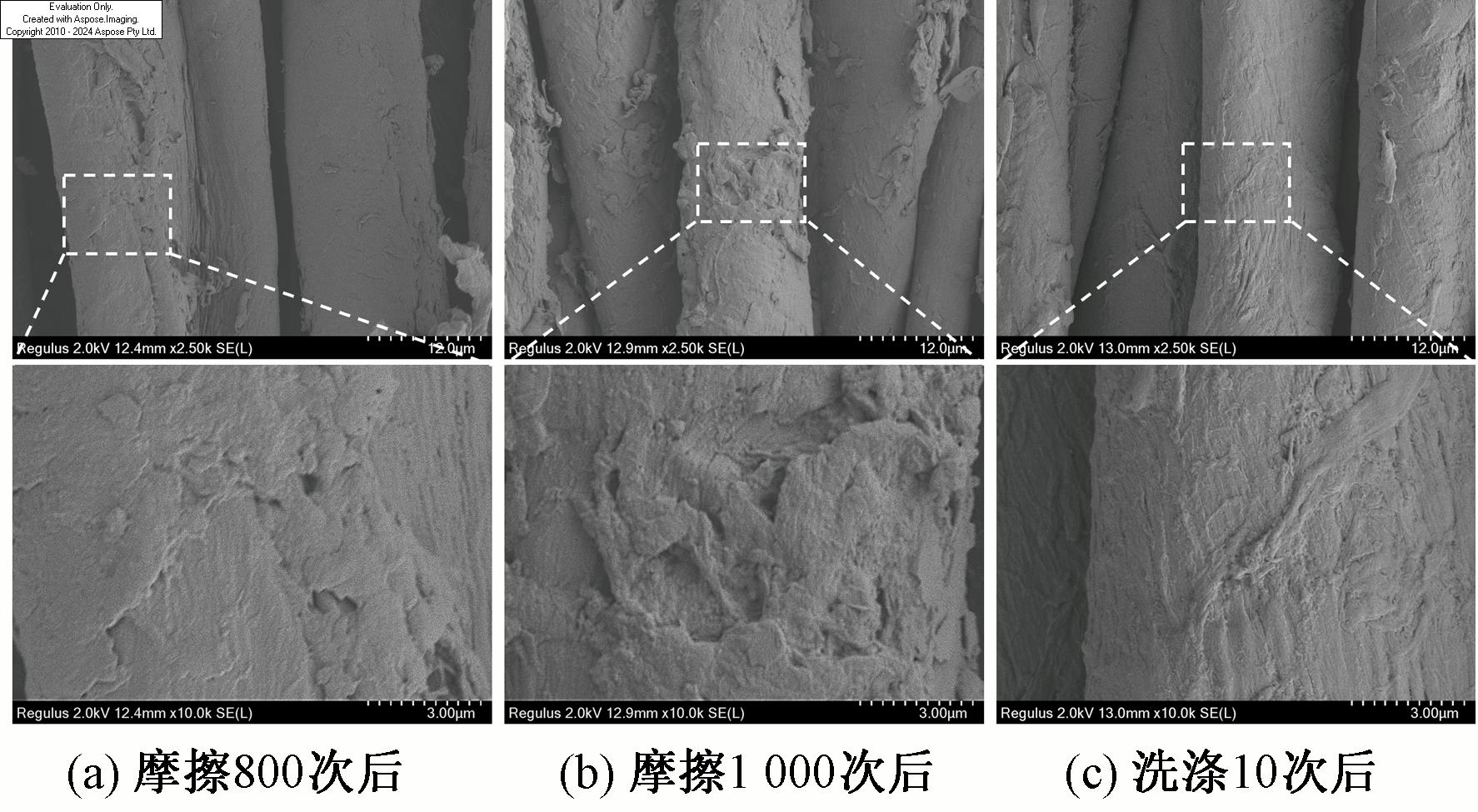
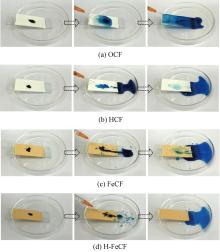
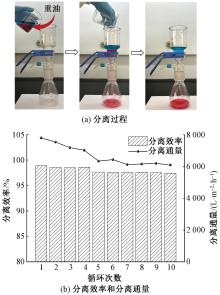
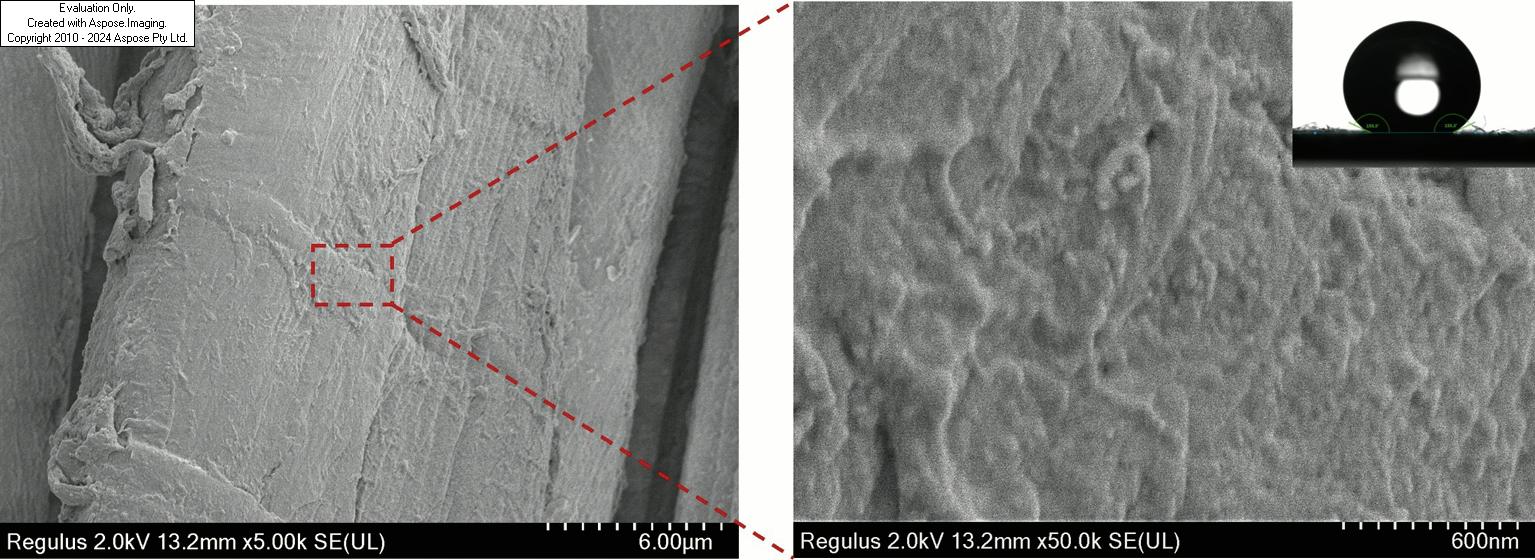
为克服现有超疏水改性方法中工艺复杂、设备要求高及环境相容性差等不足,采用六水合氯化铁(FeCl3·6H2O)与十六烷基三甲氧基硅烷(HDTMS)对棉织物进行整理,并对其化学结构、结晶结构、表面形貌及元素组成、超疏水性能及其耐久性、自清洁性能、油水分离性能进行表征。结果表明:棉织物表面成功负载FeOOH纳米颗粒及HDTMS薄膜;整理后棉织物静态水接触角高达162.5°,滚动角为6.06°,咖啡、茶、牛奶及染料溶液滴在织物表面均能保持球形,而油滴被迅速吸收,表现出良好的选择润湿性;经800次摩擦、10次洗涤循环,或在pH值为1.0~13.0的酸、碱及盐溶液中浸泡24 h后,该织物仍能保持超疏水性能;在油水分离过程中,初始分离效率达98.9%,经10次分离循环后仍保持在97%以上,具有优异的分离稳定性;同时,该织物还具备良好的自清洁性能。该超疏水棉织物制备过程简单,环境友好,为新型油水分离材料开发提供了潜在途径。
中图分类号:
| [1] | YU P G, XIA S S, YU Z X, et al. Bio-based cotton cellulose fabric: combining superhydrophobic-photocatalytic synergy for oil-water separation and dye degradation[J]. International Journal of Biological Macromolecules, 2025, 319: 145534. |
| [2] | LV X M, SONG Y, HAN Z S, et al. Bio-inspired, recycled and durable construction of superhydrophobic/oleophilic cotton fabrics with excellent oil/water separation ability based on dual carbon materials[J]. Process Safety and Environmental Protection, 2025, 201: 107504. |
| [3] | 张秩, 张莉, 刘慧. 环保型超疏水棉织物制备及油水分离应用研究[J]. 棉纺织技术, 2023, 51(2): 12-17. |
| ZHANG Zhi, ZHANG Li, LIU Hui. Preparation of environment-friendly superhydrophobic cotton fabric and its application in oil-water separation[J]. Cotton Textile Technology, 2023, 51(2): 12-17. | |
| [4] | 薛朝华, 贾顺田, 张静. 二氧化钛溶胶-凝胶法制备含氟超疏水棉织物[J]. 印染, 2009, 35(23): 1-4. |
| XUE Chaohua, JIA Shuntian, ZHANG Jing. Preparation of fluoro-containing superhydrophobic cotton fabric with TiO2 sol-gel method[J]. China Dyeing & Finishing, 2009, 35(23): 1-4. | |
| [5] | HAN J L, KISS L, MEI H B, et al. Chemical aspects of human and environmental overload with fluorine[J]. Chemical Reviews, 2021, 121(8): 4678-4742. |
| [6] | VAN GERWEN M, COLICINO E, GUAN H B, et al. Per- and polyfluoroalkyl substances (PFAS) exposure and thyroid cancer risk[J]. eBioMedicine, 2023, 97: 104831. |
| [7] | 丁小健, 曹从军, 侯成敏, 等. 用于油/水分离的环保无氟超疏水织物的制备与性能[J]. 应用化学, 2022, 39(9): 1391-1400. |
| DING Xiaojian, CAO Congjun, HOU Chengmin, et al. Preparation and performance of environmentally friendly fluorine-free superhydrophobic fabric for oil/water separation[J]. Chinese Journal of Applied Chemistry, 2022, 39(9): 1391-1400. | |
| [8] | 郭方舒, 张春明. 利用常压低温等离子体制备无氟超疏水棉织物[J]. 棉纺织技术, 2021, 49(8): 1-4. |
| GUO Fangshu, ZHANG Chunming. Fluorine-free super-hydrophobic cotton fabric prepared by low temperature plasma at atmospheric pressure[J]. Cotton Textile Technology, 2021, 49(8): 1-4. | |
| [9] | KUMARI R, RANA N. Particle size and shape analysis using imagej with customized tools for segmentation of particles[J]. International Journal of Engineering Research and, 2015, V 4(11): 247-250. |
| [10] | 谢爱玲, 乐昱含, 艾馨, 等. 茶多酚改性超疏水涤纶织物制备及其在油水分离中的应用[J]. 纺织学报, 2022, 43(2): 162-170. |
| XIE Ailing, LE Yuhan, AI Xin, et al. Preparation of superhydrophobic polyester fabric modified by tea polyphenols for oil-water separation[J]. Journal of Textile Research, 2022, 43(2): 162-170. | |
| [11] | SALON M B, GERBAUD G, ABDELMOULEH M, et al. Studies of interactions between silane coupling agents and cellulose fibers with liquid and solid-state NMR[J]. Magnetic Resonance in Chemistry, 2007, 45(6): 473-483. |
| [12] | STOROZHUK L, IUKHYMENKO N. Iron oxide nanoparticles modified with silanes for hyperthermia applications[J]. Applied Nanoscience, 2019, 9(5): 889-898. |
| [13] | DAS P, ROY M D, GHOSH S. Study on the hydrophobicity and antibacterial activity of silica sol-chitosan-HDTMS treated cotton fabric dipped in an aquas media[J]. Tekstilec, 2023, 66: 1-14. |
| [14] | 陈龙, 吴小平, 崔灿. α-FeOOH与Ag3PO4异质结复合材料的制备及光催化性能[J]. 浙江理工大学学报, 2023, 49(11): 691-700. |
| CHEN Long, WU Xiaoping, CUI Can. Fabrication of an α-FeOOH and Ag3PO4 heterojunction composite and its photocatalytic performance[J]. Journal of Zhejiang Institute of Science and Technology, 2023, 49(11): 691-700. | |
| [15] | 陈爽, 于萍, 李星华, 等. β-FeOOH/SiO2复合非均相Fenton催化剂制备及对甲基橙溶液的降解[J]. 中国石油大学学报(自然科学版), 2024, 48(3): 198-206. |
| CHEN Shuang, YU Ping, LI Xinghua, et al. Preparation of heterogeneous Fenton catalyst with β-FeOOH/SiO2 composite and degradation of methyl orange solution[J]. Journal of China University of Petroleum (Edition of Natural Science), 2024, 48(3): 198-206. |
| [1] | 王永强, 刘淑萍, 李亮, 郭芯冉, 刘让同. MXene/银纳米粒子功能织物制备及其导电与电磁屏蔽性能[J]. 纺织学报, 2026, 47(07): 209-218. |
| [2] | 郑晶晶, 曹源, 陈佳桦, 吕健元. 聚多巴胺/十八胺/氧化锌协同改性香云纱的超疏水与防紫外线性能[J]. 纺织学报, 2026, 47(05): 172-181. |
| [3] | 梁均明, 徐贤培, 费鹏飞, 狄友波, 李甫. 聚丙烯腈预氧化纳米纤维的构效关系及其应用研究进展[J]. 纺织学报, 2026, 47(05): 244-253. |
| [4] | 陈思琦, 金煜涵, 陈琳, 王芳, 王玉忠. 基于阳离子-π相互作用构建的耐磨阻燃涂层棉织物[J]. 纺织学报, 2026, 47(03): 192-200. |
| [5] | 刘济民, 任亚杰, 王志强, 陈贺, 王怀芳. 蒸汽洗对棉织物手感的影响及其作用机制[J]. 纺织学报, 2026, 47(02): 230-238. |
| [6] | 任萧, 潘林洁, 姜海霞, 葛凤燕, 高洪国. 生物质多酚-亚铁离子多色系染料制备及其在棉织物上的应用[J]. 纺织学报, 2026, 47(01): 132-141. |
| [7] | 冯品淇, 张丽宁, 王娜娜, 吕仲, 周存. 低温高效精练剂的制备及其应用性能[J]. 纺织学报, 2026, 47(01): 159-167. |
| [8] | 刘劲扬, 李成才, 朱海霖, 郭玉海, 姜学梁. 非对称结构聚四氟乙烯中空管式纤维膜的制备及油水分离性能[J]. 纺织学报, 2025, 46(12): 11-18. |
| [9] | 宋佳怡, 王政驿, 程献伟, 关晋平, 朱亚伟. 液态靛蓝染料的制备及其对棉织物的染色性能[J]. 纺织学报, 2025, 46(12): 133-141. |
| [10] | 候志文, 任泽苹, 王晓宁, 张天骄. 棉织物的壳聚糖/海藻酸盐抗菌阻燃整理及其性能[J]. 纺织学报, 2025, 46(12): 171-180. |
| [11] | 王梁宇, 高晓红, 于彩娇, 张雪婷, 杨旭礼. 还原氧化石墨烯/铜纳米颗粒导电棉织物的制备及其传感性能[J]. 纺织学报, 2025, 46(12): 181-187. |
| [12] | 刘青青, 毛晓卉, 姚焰, 孙颖, 陈鱼, 张霄喆, 朱丽萍, 王雪芬. 纤维基分离膜功能改性及应用研究进展[J]. 纺织学报, 2025, 46(12): 39-48. |
| [13] | 龙红霞, 吴伟, 刘娅岚, 徐红, 毛志平. 纤维素纤维孔道吸湿溶胀行为的分子动力学模拟[J]. 纺织学报, 2025, 46(11): 155-163. |
| [14] | 张帆, 蔡再生, 刘慧景, 陆少锋, 黄旭明. 高牢固光致变色棉织物的点击化学法制备及其性能[J]. 纺织学报, 2025, 46(11): 196-202. |
| [15] | 王子涵, 李勇, 陈晓川, 汪军, 梁凌杰. 废旧棉织物破碎加工过程的建模与仿真[J]. 纺织学报, 2025, 46(07): 136-143. |
|
||
 京公网安备11010502044800号