纺织学报 ›› 2025, Vol. 46 ›› Issue (12): 123-132.doi: 10.13475/j.fzxb.20250601001

• 纺织工程 • 上一篇    下一篇

针织结构温度传感器设计及其着装传感性能

张莹1, 郭明靖1, 王利君1,2,3()   

  1. 1.浙江理工大学 服装学院, 浙江 杭州 310018
    2.浙江理工大学 服装数字化技术浙江省工程实验室,浙江 杭州 310018
    3.浙江理工大学 丝绸文化传承与产品设计数字化技术文化和旅游部重点实验室, 浙江 杭州 310018
  • 收稿日期:2025-06-05 修回日期:2025-09-30 出版日期:2025-12-15 发布日期:2026-02-06
  • 通讯作者: 王利君(1971—),女,教授,博士。研究方向为舒适性与功能服装、数字化服装技术。E-mail:wanglijunhz@zstu.edu.cn
  • 作者简介:张莹(2000—),女,硕士生。主要研究方向为智能与功能服装。
  • 基金资助:
    国家自然科学基金项目(11471287);中国纺织工业联合会科技指导性计划项目一般项目(J201801);教育部产学合作协同育人项目(220602005245313);浙江理工大学科研启动基金项目(17072191-Y)

Design of knitted temperature sensors and their sensing performance under wearing conditions

ZHANG Ying1, GUO Mingjing1, WANG Lijun1,2,3()   

  1. 1. School of Fashion Design & Engineering, Zhejiang Sci-Tech University, Hangzhou, Zhejiang 310018, China
    2. Zhejiang Engineering Laboratory of Digital Clothing Technology, Zhejiang Sci-Tech University, Hangzhou,Zhejiang 310018, China
    3. Key Laboratory of Digital Technology of Silk Cultural Inheritance and Product Design,Ministry of Culture and Tourism, Zhejiang Sci-Tech University, Hangzhou, Zhejiang 310018, China
  • Received:2025-06-05 Revised:2025-09-30 Published:2025-12-15 Online:2026-02-06

摘要: 为优化针织结构柔性温度传感器设计,满足着装状态下监测人体皮肤温度的要求,选用镀银锦纶纱线和提花添纱工艺,通过正交试验分析纱线线密度、织物组织、添纱行数、添纱列数与针织结构温度传感器传感性能的关系,以及着装因素对传感器感温线性度和灵敏度的影响。结果表明:针织结构传感器的最佳制备工艺参数组合为155.56 dtex镀银锦纶纱线、1+2假罗纹组织、添纱24行、添纱24列,对应静态电阻2.813 Ω、线性度99.57%、灵敏度0.014 4 ℃、稳定性1.79%,其线性度和灵敏度最好;人体体表凸起程度、着装压力大小、增加外层织物层数均会提高传感器的线性度和灵敏度。研究结果可为针织结构柔性温度传感器的设计与应用提供参考。

关键词: 针织结构, 温度传感器, 温度信号监测, 镀银锦纶纱线, 传感性能, 着装因素, 柔性传感器, 智能服装

Abstract:

Objective The changes in human skin temperature can indirectly reflect the functional status of the circulatory system, nervous system, or local tissues. At present, sensors that can monitor human temperature signals are mainly divided into non-fabric type and fabric type. Non-fabric temperature sensors have problems such as poor comfort and fit, limited wearability, insufficient environmental adaptability, and high cost. Therefore, fabric based temperature sensors have become a hot research topic. This study aims to optimize the design of knitted flexible temperature sensors for monitoring human skin temperature during wearing. Additionally, the influence of wearing factors (e.g., body surface curvature, wearing pressure, and outer clothing layers) on the linearity and sensitivity of the sensors is investigated to enhance the understanding for their design and applications.

Method By using silver-plated polyamide yarn and jacquard plating technology, an orthogonal experimental design is employed to analyze the relationships between yarn linear density, fabric structure, plating rows/columns, and the sensing performance of knitted temperature sensors. Silver-plated polyamide yarn (with linear densities of 77.78, 111.11, and 155.56 dtex) and jacquard plating technology are used to fabricate 16 knitted sensor samples with 1+1, 1+2 and 2+2 rib structures, varying plating rows (6,12, 18, 24) and columns (24, 36, 48, 60). A orthogonal experiment is conducted to test static resistance, linearity, sensitivity and stability. Wearing simulations involve measuring sensors on curved surfaces (scapula convex and lumbar concave areas), applying pressures (1.175 1-3.1 751 kPa), and adding 1-3 outer clothing layers.

Results The static resistance is within 26.872 Ω, negatively correlating with fabric grammage and plating rows, but positively with thickness. Linearity improves with increased thickness (quadratic fit, R2=0.611) and plating rows (logarithmic fit, R2=0.412). Sensitivity is positively related to yarn linear density and plating rows, described by a multiple linear regression (R2=0.617). The optimal parameters are 155.56 dtex yarn, 1+2 rib structure, 24 plating rows/columns, with static resistance of 2.813 Ω, linearity of 99.57%, sensitivity of 0.014 4 ℃-1, and stability of 1.79%. Wearing experiments show that linearity and sensitivity decrease at the sunken lumbar region due to contact gaps, while increasing at the convex scapular region due to close contact. Increasing wearing pressure and outer fabric layers can improve sensor linearity and sensitivity.

Conclusion This study establishes quantitative relationships between process parameters and sensing performance, providing optimal design guidelines for knitted temperature sensors. Findings highlight multi-factor (synergy of yarn, structure, plating) significantly affects sensor performance, surpassing single-factor analyses in prior studies. Innovative consideration of wearing dynamics reveals body curvature, pressure, outer clothing layers are critical for practical use. These results enable development of wearable sensors with enhanced adaptability to human physiology and clothing environments, offering foundation for intelligent health-monitoring textiles. Future work is expected to explore dynamic motion effects and long-term durability under repeated wearing.

Key words: knitted structure, temperature sensor, temperature signal monitoring, silver-plated polyamide yarn, sensing performance, dressing factor, flexible sensor, smart clothing

中图分类号: 

  • TS181

表1

镀银锦纶纱线规格"

纱线线密
度/dtex
复丝
根数
捻度/
(捻·(10 cm)-1)
原料及含量
77.78 24 17.44 银17%、锦纶83%
111.11 36 17.33 银17%、锦纶83%
155.56 48 17.27 银17%、锦纶83%

图1

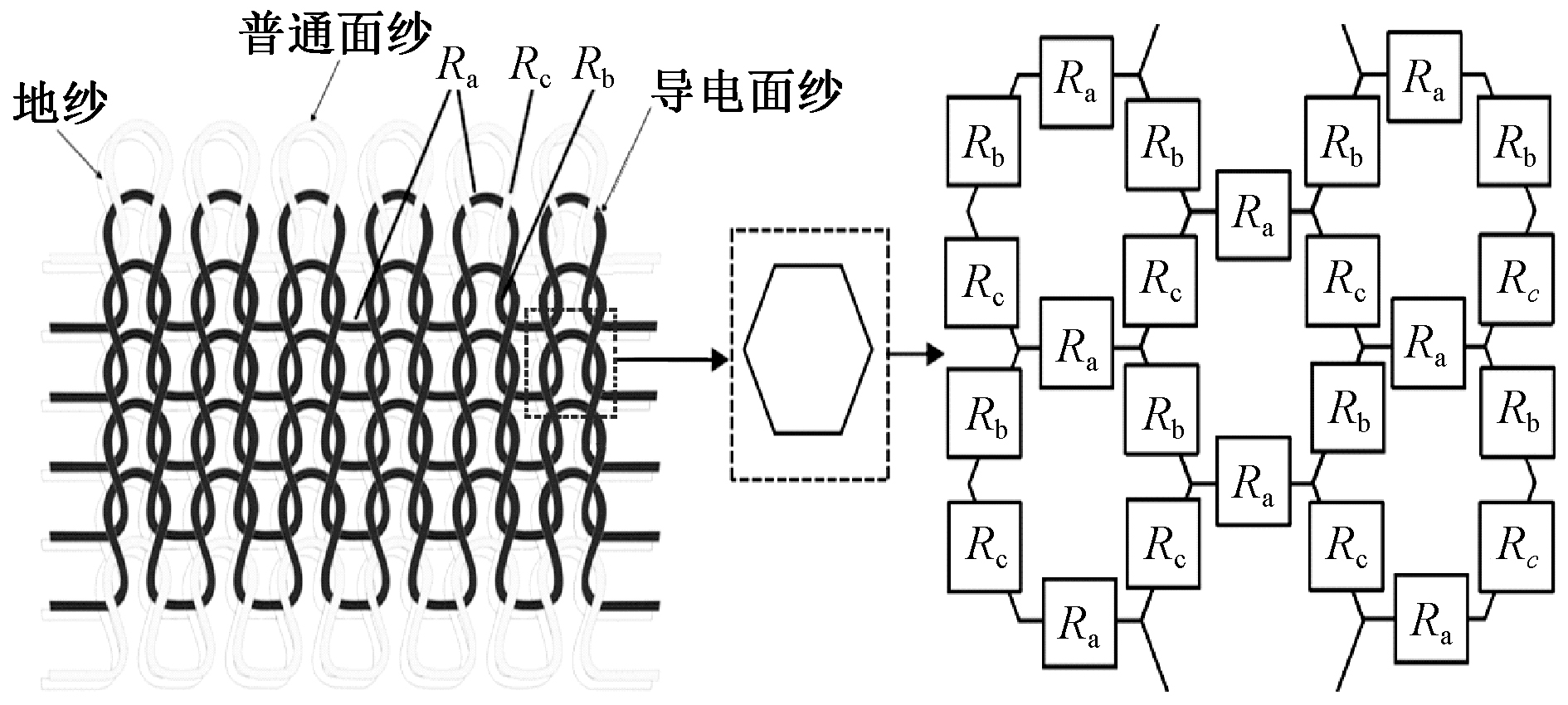
提花添纱结构及其电阻六角模型"

表2

正交试验方案"

试样
编号
A
纱线线
密度/dtex
B
组织结构
C
添纱行
D
添纱列
1# 77.78 1+1假罗纹 6 24
2# 155.56 2+1假罗纹 6 48
3# 77.78 1+1假罗纹 6 60
4# 111.11 1+2假罗纹 6 36
5# 111.11 1+1假罗纹 18 24
6# 77.78 2+1假罗纹 12 24
7# 155.56 1+2假罗纹 24 24
8# 77.78 1+1假罗纹 24 48
9# 77.78 1+1假罗纹 24 36
10# 77.78 2+1假罗纹 18 36
11# 111.11 2+1假罗纹 24 60
12# 111.11 1+1假罗纹 12 48
13# 155.56 1+1假罗纹 18 60
14# 155.56 1+1假罗纹 12 36
15# 77.78 1+2假罗纹 18 48
16# 77.78 1+2假罗纹 12 60

图2

提花添纱结构传感织物虚拟仿真图"

表3

主要纱线与纱嘴配置"

纱嘴编号 连接纱线种类 作用
1 弹性纱线 辅助编织的临时纱线,织出起底部分(为废纱)
3 镀银锦纶纱线 织造传感区域(为添纱)
5 涤纶/棉混纺纱 织造非传感区域(为主纱)
7 锦纶纱线 作为主纱与废纱的连接纱

图3

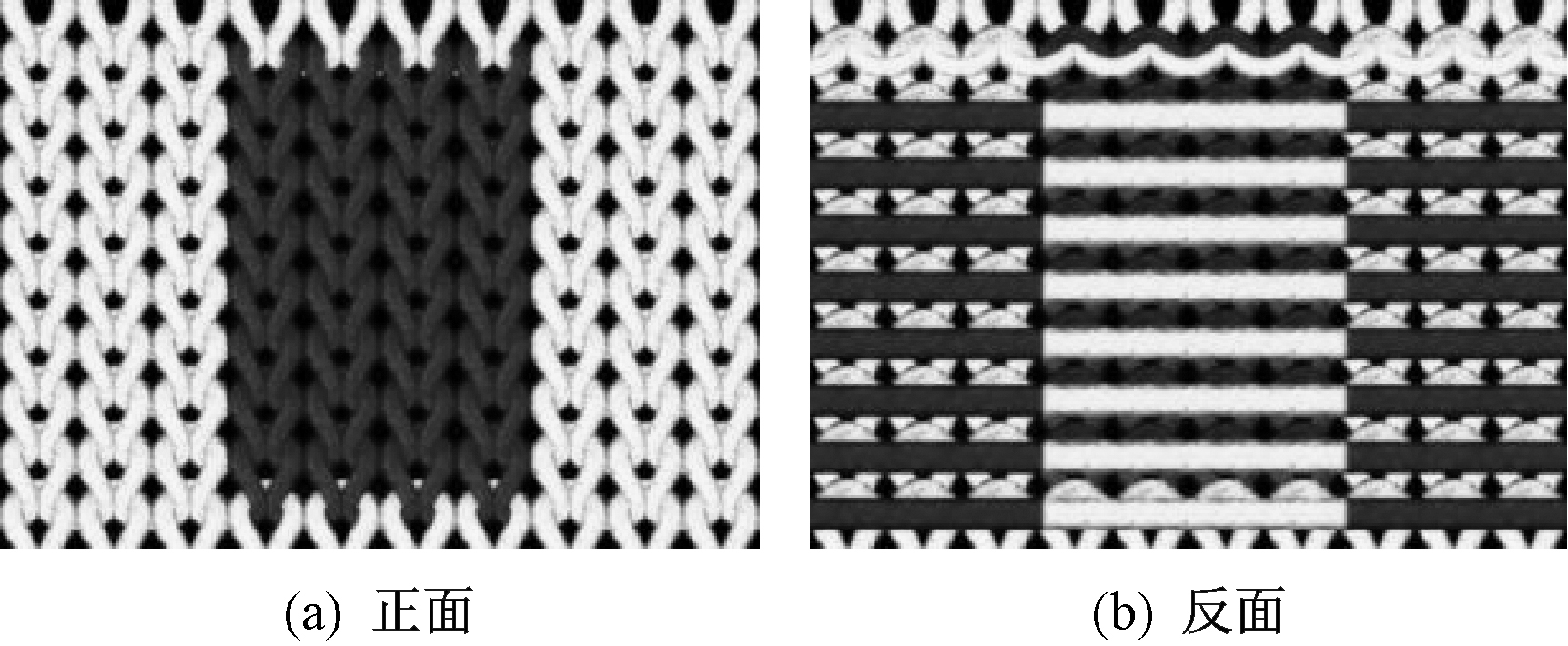
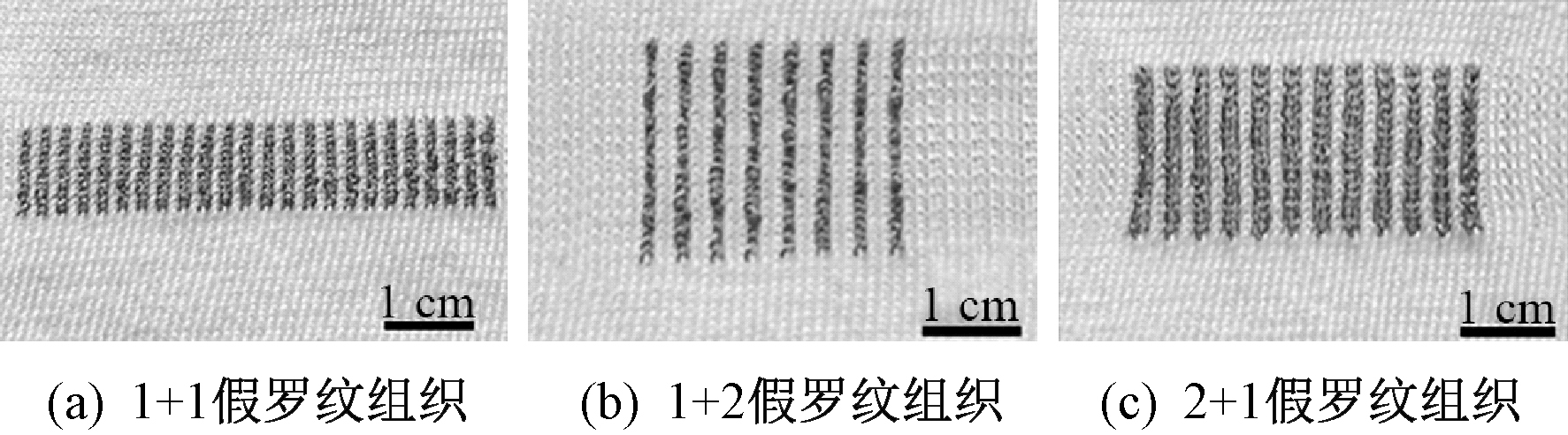
不同组织织物实物图"

图4

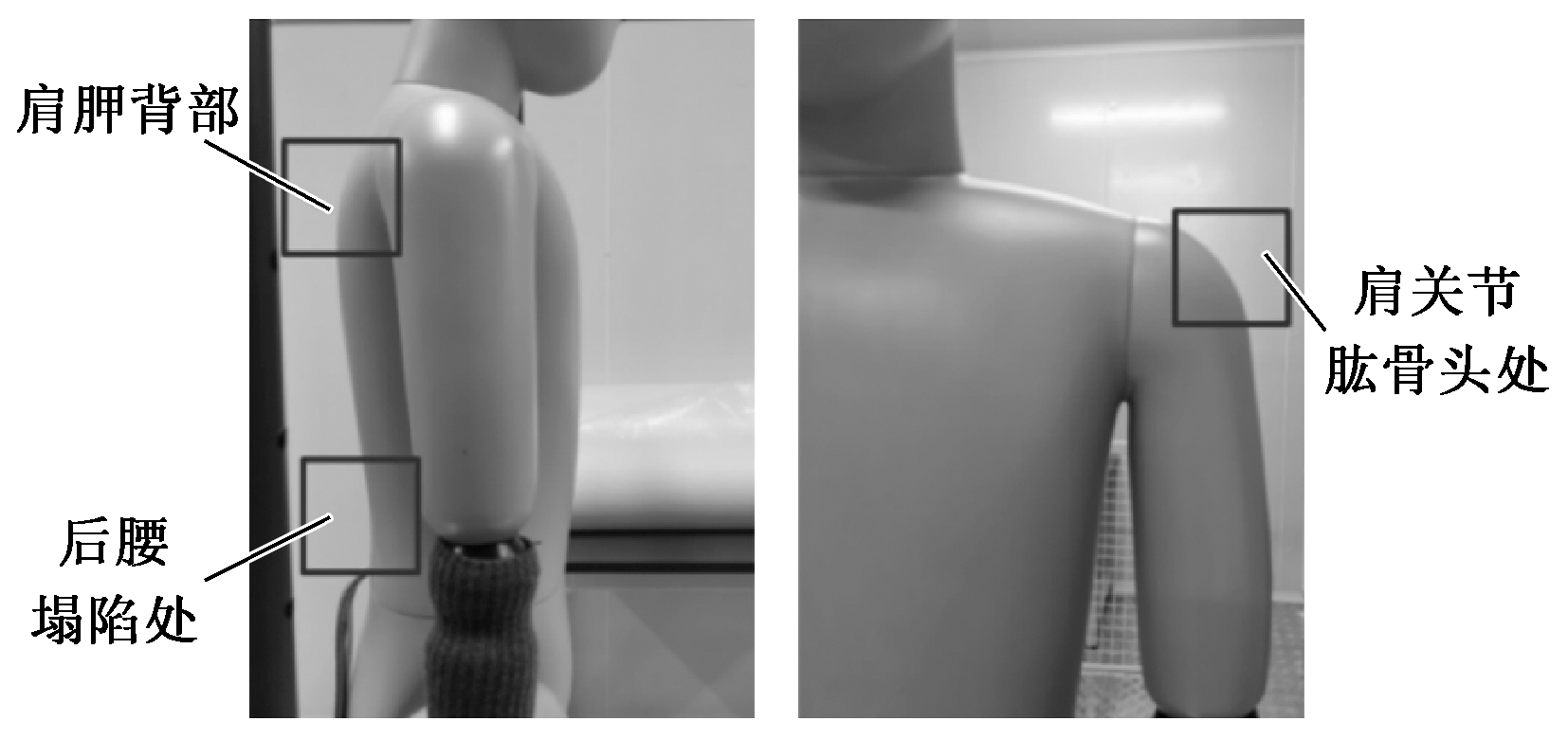
不同曲度部位选取"

表4

施加压力与外层结构的组合参数"

组合
编号
组合条件 质量/g 压力/
kPa
组合
层数
厚度/
mm
0 基础对照组 8.755 0.175 1 0 0
1 橡皮+50 g砝码 58.755 1.175 1 1 0.30
2 橡皮+100 g砝码 108.755 2.175 1 2 0.56
3 橡皮+150 g砝码 158.755 3.175 1 3 0.86

图5

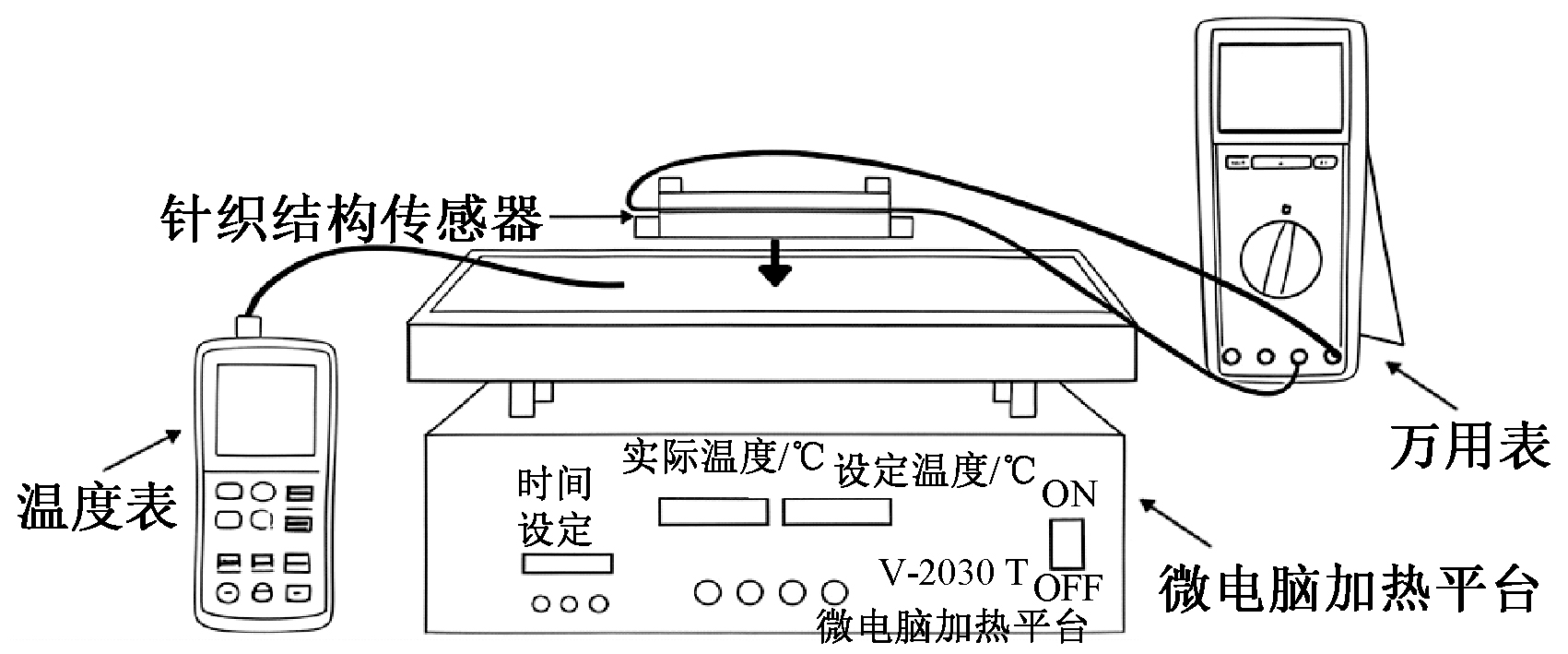
传感性能测试示意图"

图6

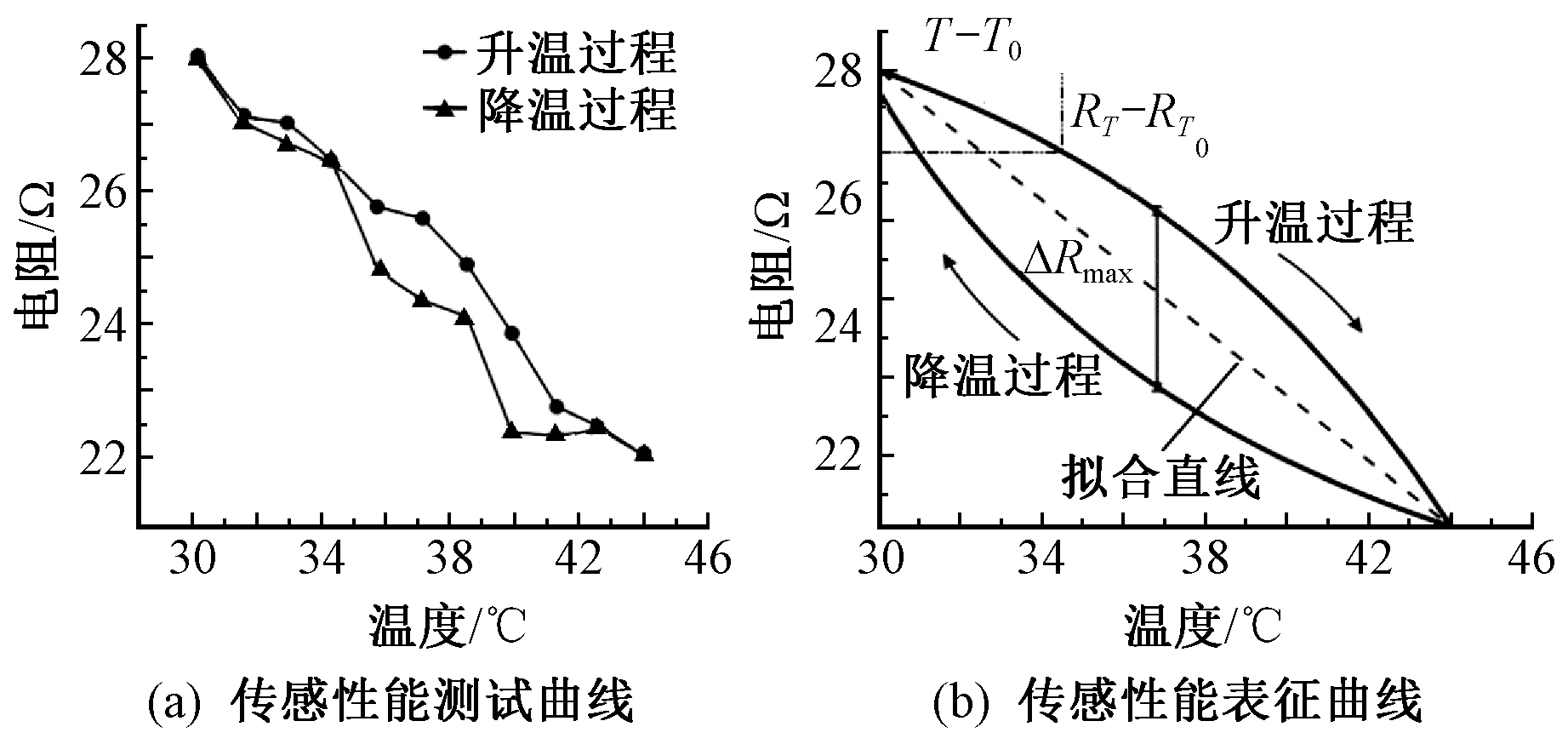
传感性能测试与表征曲线"

图7

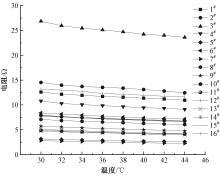
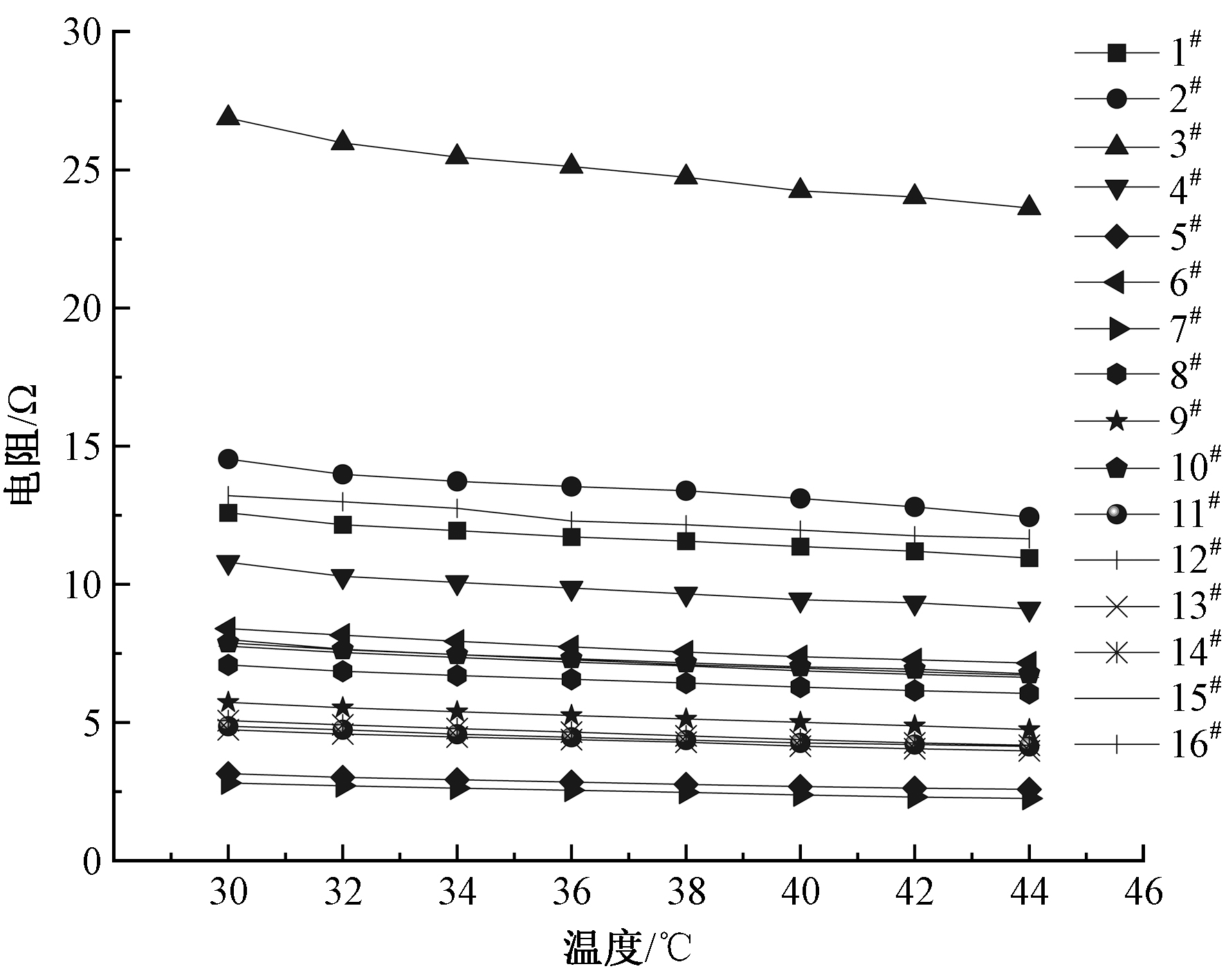
16种传感织物试样的电阻-温度曲线"

表5

结构参数与织物传感性能的相关分析"

因素 静态电阻 线性度 灵敏度
相关
系数
显著
相关
系数
显著
相关
系数
显著
面密度 -0.533* 0.034 0.185 0.494 0.753** 0.001
厚度 -0.629** 0.009 0.684** 0.003 0.426 0.100
横密 -0.261 0.329 0.464 0.070 -0.017 0.950
纵密 0.601* 0.014 -0.605* 0.013 -0.463 0.071
线圈长度 -0.257 0.337 -0.013 0.961 0.180 0.506
纱线线密度 -0.348 0.186 0.171 0.528 0.569* 0.021
组织结构 0.001 0.991 0.022 0.868 0.041 0.761
添纱行数 -0.702** 0.002 0.656** 0.006 0.584* 0.018
添纱列数 0.371 0.157 -0.229 0.393 -0.440 0.088

表6

各显著因素-传感性能模型拟合结果"

因变量 自变量 模型 调整后R2 F P 常数 b1 b2 b3
静态电阻 添纱行数/面密度 线性函数 0.593 11.908 0.000 102.174 -3.162 -0.382
厚度 二次函数 0.611 10.193 0.002 -5.339 11.583 -5.301
S函数 0.481 12.975 0.003 0.234 -0.271
线性度 线密度 二次函数 0.310 4.372 0.035 1.025 -0.059 0.016
三次函数 0.310 4.372 0.035 0.993 已排除 -0.016 0.005
添纱行数 次方函数 0.413 11.532 0.004 0.970 0.014
对数函数 0.412 11.501 0.004 0.970 0.014
灵敏度 添纱行数/线密度 线性函数 0.617 13.088 0.000 0.007 0.001 0.001 -

表7

织物结构参数与传感性能极差分析结果"

传感织物
编号
结构参数 传感性能
面密度/
(g·m-2)
厚度/
mm
横密/
(纵行·(5 cm)-1)
纵密/
(横列·(5 cm)-1)
线圈长
度/mm
静态电
Rs
线性度
L/%
灵敏度
α/℃-1
1# 215.84 1.03 52 93 4.24 12.588 97.62 0.008 6
2# 226.71 1.05 52 93 4.27 14.533 97.30 0.009 3
3# 215.05 1.03 52 93 4.26 26.872 96.81 0.008 1
4# 224.27 1.02 50 93 4.30 10.794 96.18 0.010 3
5# 228.57 1.08 52 91 4.26 3.150 97.73 0.012 8
6# 215.87 1.05 56 92 4.25 8.395 98.23 0.010 7
7# 234.92 1.09 52 90 4.31 2.813 99.57 0.014 4
8# 217.46 1.10 54 90 4.30 7.081 98.88 0.010 2
9# 219.78 1.11 54 90 4.25 5.732 99.41 0.011 9
10# 215.87 1.11 56 91 4.26 7.878 98.52 0.009 7
11# 225.40 1.12 54 90 4.34 4.862 97.50 0.010 8
12# 228.57 1.04 52 93 4.26 7.994 96.61 0.011 0
13# 228.83 1.11 58 91 4.28 4.736 99.36 0.011 5
14# 230.16 1.06 52 93 4.26 5.072 99.49 0.012 7
15# 220.88 1.09 53 91 4.29 7.757 99.01 0.010 3
16# 220.63 1.05 54 92 4.29 13.213 97.09 0.008 8
静态电阻Rs k1 11.189 5 9.153 1 16.196 8 6.736 5
k2 6.702 0 8.644 3 8.668 5 7.369 0
k3 6.788 5 8.917 0 5.880 3 9.341 3
k4 5.122 0 12.420 8
R 4.489 5 0.508 9 11.074 8 5.684 3
线性度L k1 0.982 0 0.982 4 0.969 8 0.982 9
k2 0.970 0 0.979 6 0.978 6 0.984 0
k3 0.989 3 0.978 9 0.986 5 0.979 5
k4 0.988 4 0.976 9
R 0.019 3 0.003 5 0.018 6 0.007 1
灵敏度α k1 0.009 8 0.010 8 0.009 1 0.011 6
k2 0.011 2 0.011 0 0.010 8 0.011 2
k3 0.011 9 0.010 1 0.011 1 0.010 2
k4 0.011 8 0.009 8
R 0.002 2 0.000 8 0.002 7 0.001 8

图8

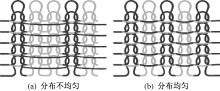
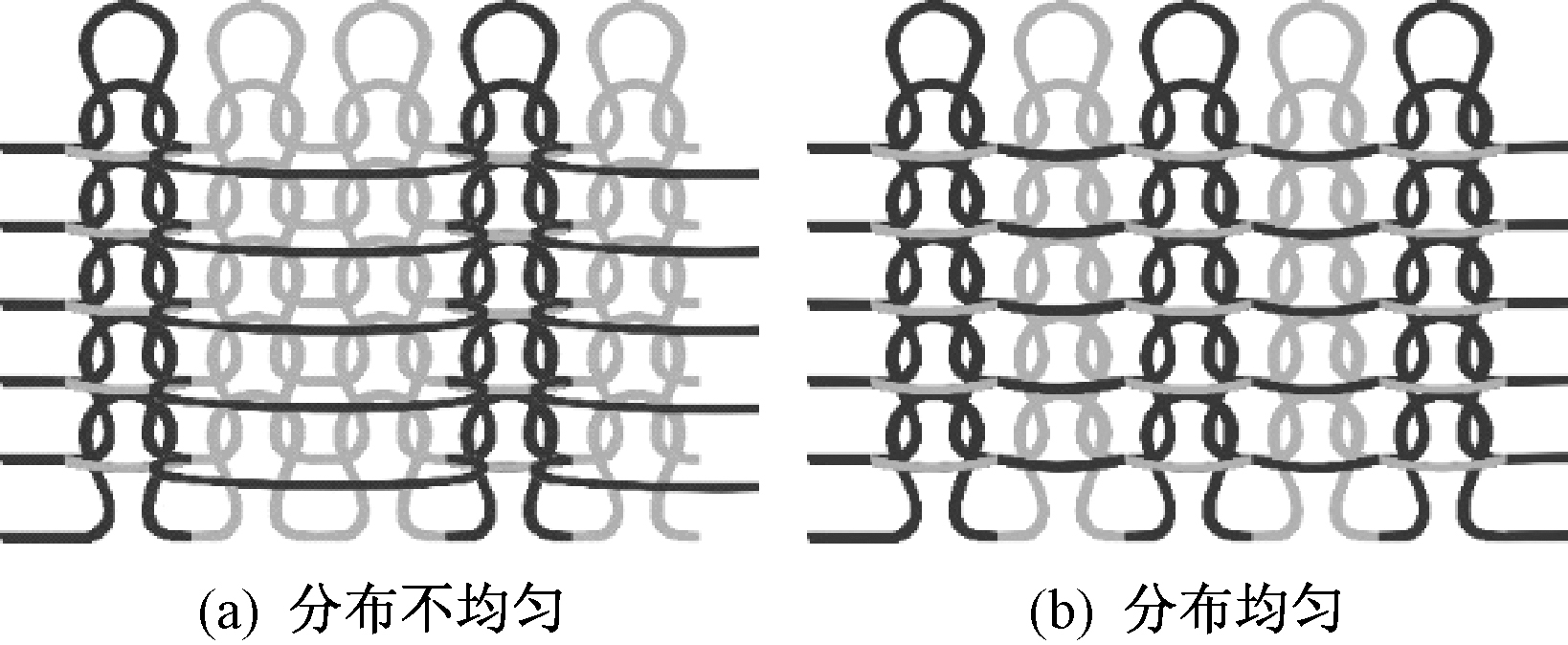
试样反面的浮长线分布示意图"

表8

不同着装因素下各试样的线性度、灵敏度变化"

着装
因素
试样
编号
传感
指标
组合编号
0 1 2 3
人体
体表
曲度
7# 线性度 0.995 7 0.993 9 0.996 7 0.995 9
灵敏度 0.014 4 0.013 7 0.014 9 0.014 5
10# 线性度 0.985 2 0.983 6 0.986 0 0.983 2
灵敏度 0.009 7 0.009 5 0.010 0 0.009 6
12# 线性度 0.966 1 0.964 7 0.966 9 0.963 7
灵敏度 0.011 0 0.010 9 0.011 2 0.010 8
压力 7# 线性度 0.995 6 0.996 1 0.996 5 0.996 6
灵敏度 0.015 0 0.015 2 0.015 4 0.015 5
10# 线性度 0.985 3 0.985 8 0.986 6 0.986 9
灵敏度 0.010 0 0.010 4 0.010 9 0.011 1
12# 线性度 0.966 1 0.966 5 0.966 6 0.966 8
灵敏度 0.011 1 0.011 4 0.011 7 0.011 8
外层
织物
层数
7# 线性度 0.995 7 0.995 8 0.996 1 0.996 2
灵敏度 0.014 4 0.014 6 0.014 8 0.015 0
10# 线性度 0.985 0 0.985 5 0.986 0 0.986 4
灵敏度 0.009 8 0.010 0 0.010 4 0.010 6
12# 线性度 0.966 1 0.966 4 0.966 6 0.966 7
灵敏度 0.011 0 0.011 2 0.011 5 0.011 7
[1] 王浣雨, 孟粉叶, 胡吉永, 等. 智能纺织品用温度传感纱研究进展[J]. 丝绸, 2022, 59(12): 54-63.
WANG Huanyu, MENG Fenye, HU Jiyong, et al. Review on temperature sensing yarns for smart tex-tiles[J]. Journal of Silk, 2022, 59(12): 54-63.
[2] LI Q, ZHANG L N, TAO X M, et al. Review of flexible temperature sensing networks for wearable physiological monitoring[J]. Advanced Healthcare Materials, 2017, 6(12): 1601371.
doi: 10.1002/adhm.v6.12
[3] ARMAN KUZUBASOGLU B, KURSUN BAHADIR S. Flexible temperature sensors: a review[J]. Sensors and Actuators A: Physical, 2020, 315: 112282.
doi: 10.1016/j.sna.2020.112282
[4] 翁明岑, 陈跃南, 汤振东, 等. 基于Ti3C2Tx的柔性温度传感器的制备与应用[J]. 福建工程学院学报, 2021, 19(1): 27-31.
WENG Mingcen, CHEN Yuenan, TANG Zhendong, et al. The fabrication and application of flexible temperature sensor based on Ti3C2Tx[J]. Journal of Fujian University of Technology, 2021, 19(1): 27-31.
[5] KANG L, SHI Y L, ZHANG J, et al. A flexible resistive temperature detector (RTD) based on in situ growth of patterned Ag film on polyimide without lithography[J]. Microelectronic Engineering, 2019, 216: 111052.
doi: 10.1016/j.mee.2019.111052
[6] 吴林辉, 叶双莉. PDMS基柔性温度传感器的温敏性能研究[J]. 现代化工, 2019, 39(5): 76-80.
doi: 10.16606/j.cnki.issn0253-4320.2019.05.017
WU Linhui, YE Shuangli. Temperature sensitivity performance of flexible PDMS-based temperature sen-sor[J]. Modern Chemical Industry, 2019, 39(5): 76-80.
doi: 10.16606/j.cnki.issn0253-4320.2019.05.017
[7] XIAO Y, JIANG S W, LI Y R, et al. Screen-printed flexible negative temperature coefficient temperature sensor based on polyvinyl chloride/carbon black composites[J]. Smart Material Structures, 2021, 30(2): 025035.
doi: 10.1088/1361-665X/abd83a
[8] YAN Z Y, LIU J Y, NIU J R. Research of a novel Ag temperature sensor based on fabric substrate fabricated by magnetron sputtering[J]. Materials, 2021, 14(20): 6014.
doi: 10.3390/ma14206014
[9] LI Q, CHEN H, RAN Z Y, et al. Full fabric sensing network with large deformation for continuous detection of skin temperature[J]. Smart Materials and Structures, 2018, 27(10): 105017.
doi: 10.1088/1361-665X/aac0b8
[10] TRUNG T Q, LE H S, DANG T M L, et al. Freestanding, fiber-based, wearable temperature sensor with tunable thermal index for healthcare monito-ring[J]. Advanced Healthcare Materials, 2018, 7(12): e1800074.
[11] 刘于维, 丛洪莲, 赵博宇. 针织结构智能产品的开发与应用[J]. 纺织科学与工程学报, 2021, 38(4): 72-76,82.
LIU Yuwei, CONG Honglian, ZHAO Boyu. Development and application of smart knitted structural products[J]. Journal of Textile Science & Engineering, 2021, 38(4): 72-76+82.
[12] LIANG A, STEWART R, BRYAN-KINNS N. Analysis of sensitivity, linearity, hysteresis, responsiveness, and fatigue of textile knit stretch sensors[J]. Sensors, 2019, 19(16): 3618.
doi: 10.3390/s19163618
[13] 刘畅, 沈为, 徐天华, 等. 手部功能评估用针织添纱组织传感器的传感性能探讨[J]. 产业用纺织品, 2020, 38(1): 35-38.
LIU Chang, SHEN Wei, XU Tianhua, et al. Discussion on the sensing properties of sensors with plating stitch for evaluating hand functions[J]. Technical Textiles, 2020, 38(1): 35-38.
[14] 韩晓雪, 缪旭红. 氨纶纬编导电针织物纵向电力学性能[J]. 纺织学报, 2019, 40(4): 60-65.
HAN Xiaoxue, MIAO Xuhong. Longitudinal electrical physical properties of spandex weft-knitted conductive fabric[J]. Journal of Textile Research, 2019, 40(4): 60-65.
doi: 10.1177/004051757004000109
[15] 张蕊, 叶苏娴, 王建, 等. 全织物型离电式柔性压力传感器的制备及其性能[J]. 纺织学报, 2025, 46(2):113-121.
ZHANG Rui, YE Suxian, WANG Jian, et al. Preparation and performance of all-fabric iontronic flexible pressure sensor[J]. Journal of Textile Research, 2025, 46(2): 113-121.
doi: 10.1177/004051757604600206
[16] 王金凤, 龙海如. 线圈转移对导电弹性针织柔性传感器的电-力学性能影响[J]. 纺织学报, 2013, 34(7):62-68.
WANG Jinfeng, LONG Hairu. Effect of loop transfer on electro-mechanical properties of conductive elastic wearable knitted sensors[J]. Journal of Textile Research, 2013, 34(7): 62-68.
[17] ZHANG Y J, LONG H R. Resistive network model of the weft-knitted strain sensor with the plating stitch: part 1: resistive network model under static relaxation[J]. Journal of Engineered Fibers and Fabrics, 2020, 15: 1558925020944563.
doi: 10.1177/1558925020944563
[18] 郭明靖, 王利君. 针织结构温度传感器用镀银纱线的性能[J]. 丝绸, 2024, 61(4):87-96.
GUO Mingjing, WANG Lijun. Performance of silver-plated yarns for knitted structure temperature sen-sors[J]. Journal of Silk, 2024, 61(4): 87-96.
[19] 张莹莹, 沈兰萍, 翟娅茹. 针织结构柔性传感元件的拉伸电学性能[J]. 纺织高校基础科学学报, 2020, 33(4): 39-44.
ZHANG Yingying, SHEN Lanping, ZHAI Yaru. Tensile electrical properties of flexible sensor with knitted structure[J]. Basic Sciences Journal of Textile Universities, 2020, 33(4): 39-44.
[20] 郭明靖, 李肖悦, 王利君. 针织结构温度传感器设计及其性能[J]. 纺织高校基础科学学报, 2024, 37(3):85-93.
GUO Mingjing, LI Xiaoyue, WANG Lijun. Design and performance of knitted structure temperature sensor[J]. Basic Sciences Journal of Textile Universities, 2024, 37(3): 85-93.
[21] 龙海如. 功能性针织运动面料产品开发[J]. 纺织导报, 2017(3): 31-32,34.
LONG Hairu. Development of functional knitted sportswear fabric[J]. China Textile Leader, 2017(3): 31-32,34.
[22] 刘育妍, 李云, 胡婕, 等. 高温直接打击法与逐步升温法建立经典型热射病多器官功能障碍综合征小鼠模型的对比及评价[J]. 解放军医学杂志, 2023, 48(8):893-902.
LIU Yuyan, LI Yun, HU Jie, et al. Comparison and evaluation of direct heat stroke method and stepwise heating method for establishing mouse model of multiple organ dysfunction in classic heat stroke[J]. Medical Journal of Chinese People's Liberation Army, 2023, 48(8): 893-902.
[23] WHITE M D, BOSIO C M, DUPLANTIS B N, et al. Human body temperature and new approaches to constructing temperature-sensitive bacterial vac-cines[J]. Cellular and Molecular Life Science, 2011, 68(18):3019-3031.
doi: 10.1007/s00018-011-0734-2
[1] 王梁宇, 高晓红, 于彩娇, 张雪婷, 杨旭礼. 还原氧化石墨烯/铜纳米颗粒导电棉织物的制备及其传感性能[J]. 纺织学报, 2025, 46(12): 181-187.
[2] 梁治, 姬康瑞, 黎张成, 何钰, 王灿, 侯冲. 热致变色纤维膜的制备及其温度传感性能[J]. 纺织学报, 2025, 46(11): 1-8.
[3] 杜雨杭, 侯东昱, 齐鹏飞. 基于摩擦纳米发电机原理的智能服装供能设计与优化[J]. 纺织学报, 2025, 46(11): 211-220.
[4] 范书乐, 王朝晖, 刘欢欢, 叶勤文. 老年人跌倒伤害防护智能服装的研究现状与发展方向[J]. 纺织学报, 2025, 46(11): 255-263.
[5] 刘飞, 刘璐, 郑智超, 刘俊宏, 吴德群, 蒋秋冉. 自黏型玉米醇溶蛋白基超细纤维膜的制备及其性能[J]. 纺织学报, 2025, 46(11): 34-42.
[6] 傅林, 钱建华, 单江音, 林灵, 卫梦蓉, 翁可欣, 吴晓睿. 银纳米线/聚氨酯纳米纤维膜柔性传感器制备及其性能[J]. 纺织学报, 2025, 46(09): 74-83.
[7] 吴雪杨, 徐启程, 单英浩, 林孝武, 刘晨铭. 集太阳能与电磁能量收集的人体可穿戴纳电网系统设计[J]. 纺织学报, 2025, 46(07): 202-208.
[8] 王旭, 李环宇, 付凡, 杨伟峰, 龚维. 镍掺杂液态金属复合纤维的连续制备及其应用[J]. 纺织学报, 2025, 46(06): 23-30.
[9] 张金芹, 李晶, 肖明, 毕曙光, 冉建华. 聚苯乙烯/还原氧化石墨烯微球传感电热织物的自组装法制备[J]. 纺织学报, 2025, 46(05): 202-213.
[10] 王军, 殷晓玉, 周晓琪, 王思远. 智能矫姿服装设计[J]. 纺织学报, 2025, 46(04): 179-186.
[11] 严艺, 朱达辉. 老年智能服装研究现状与发展趋势[J]. 纺织学报, 2025, 46(04): 244-254.
[12] 佘叶美, 彭阳阳, 王法猛, 潘如如. 基于经编间隔织物的柔性压力传感器制备及其性能[J]. 纺织学报, 2025, 46(03): 158-166.
[13] 范梦晶, 岳欣琰, 邵剑波, 陈雨, 洪剑寒, 韩潇. 基于静电纺纤维包芯纱的电容式扭转传感器构建及其传感性能[J]. 纺织学报, 2025, 46(02): 106-112.
[14] 史雅楠, 马颜雪, 樊平, 薛文良, 李毓陵. 织边结构弹性传感机织带的制备及其传感性能影响因素[J]. 纺织学报, 2024, 45(11): 114-120.
[15] 张蕊, 应迪, 陈冰冰, 田欣, 郑莹莹, 王建, 邹专勇. 碳纳米管修饰三维纤维网非织造布传感器的制备及其性能[J]. 纺织学报, 2024, 45(11): 46-54.
Viewed
Full text


Abstract

Cited

  Shared   
  Discussed   
No Suggested Reading articles found!