纺织学报 ›› 2026, Vol. 47 ›› Issue (03): 26-34.doi: 10.13475/j.fzxb.20250907501
易珊1,2,3, 王丽芳1,2,3, 陈黎1,2,3, 邱虹1,2,3, 唐一卡1,2,3, 张国清4, 王美英4, 高艳春4, 葛秀敏4, 刘丽芳1,2,3( )
)
YI Shan1,2,3, WANG Lifang1,2,3, CHEN Li1,2,3, QIU Hong1,2,3, TANG Yika1,2,3, ZHANG Guoqing4, WANG Meiying4, GAO Yanchun4, GE Xiumin4, LIU Lifang1,2,3()
摘要:
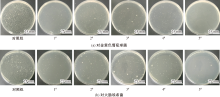
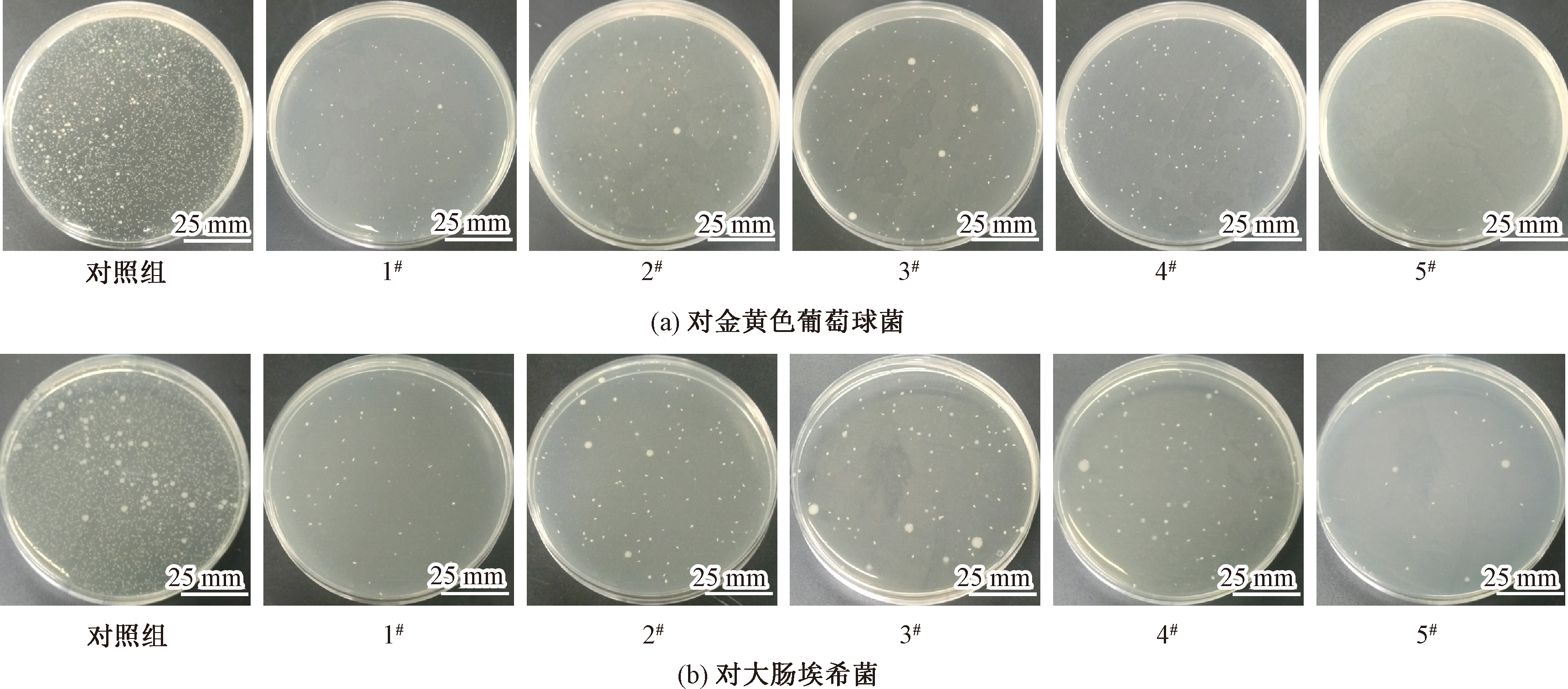
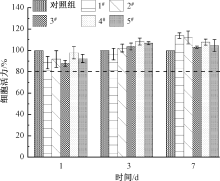
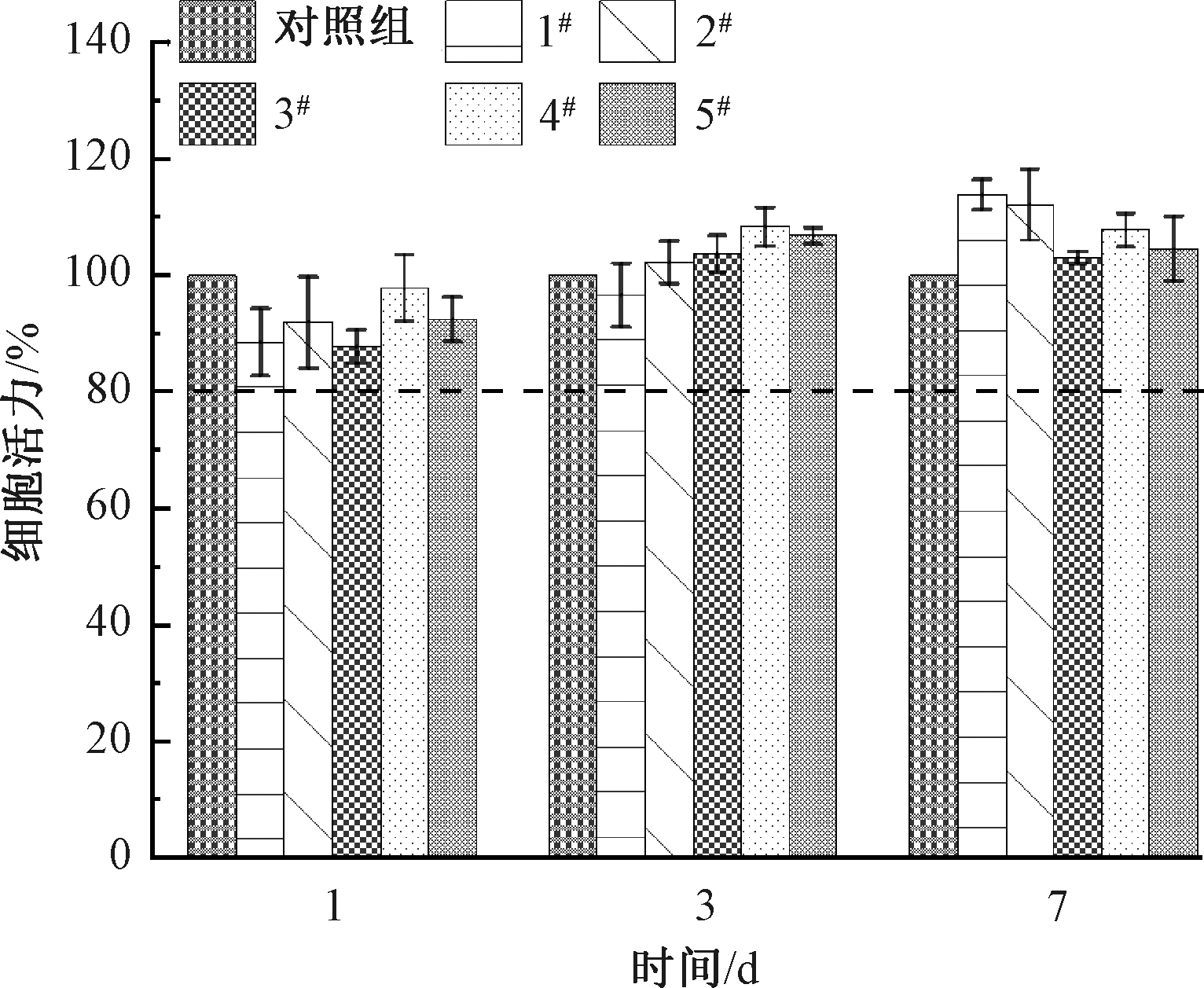
为解决传统敷料无法有效监测创面感染的难题,通过席夫碱反应,将双醛基纳米纤维素与羧甲基壳聚糖交联,并引入蓝莓花青素作为智能指示剂,构建了具有pH响应变色功能的水凝胶敷料。对水凝胶敷料结构、吸水性能、水蒸气透过性能、抗氧化性能、抗菌性能、pH变色响应性能及生物相容性进行测试与表征。结果表明:含0.125%蓝莓花青素的水凝胶对自由基的清除效率可达75.83%,明显抑制活性氧的生成;对金黄色葡萄球菌和大肠埃希菌表现出优异的抗菌活性,抑菌率分别为97.35%和97.21%;此外,该水凝胶在酸性环境下呈红色,而在中性环境下呈蓝紫色,具有显著肉眼可察的pH指示效果;细胞毒性测试结果显示,水凝胶浸提液培养1、3、7 d的细胞活力均超过80%,显示出水凝胶无细胞毒性。所制备的生物医用材料在创伤护理领域具有良好的应用潜力。
中图分类号:
| [1] |
LIANG Y P, HE J H, GUO B L. Functional hydrogels as wound dressing to enhance wound healing[J]. ACS Nano, 2021, 15(8): 12687-12722.
doi: 10.1021/acsnano.1c04206 pmid: 34374515 |
| [2] | EMING S A, MARTIN P, TOMIC-CANIC M. Wound repair and regeneration: mechanisms, signaling, and translation[J]. Science Translational Medicine, 2014.DOI:10.1126/scitranslmed.3009337. |
| [3] |
CHEN T, YAN Y R, ZHOU X S, et al. An antioxidant hydrogel dressing with wound pH indication function prepared based on silanized bacterial nanocellulose crosslinked with beet red pigment extract[J]. International Journal of Biological Macromolecules, 2024, 269: 131824.
doi: 10.1016/j.ijbiomac.2024.131824 |
| [4] |
ESKILSON O, ZATTARIN E, BERGLUND L, et al. Nanocellulose composite wound dressings for real-time pH wound monitoring[J]. Materials Today Bio, 2023, 19: 100574.
doi: 10.1016/j.mtbio.2023.100574 |
| [5] |
MARTIN P. Wound healing: aiming for perfect skin regeneration[J]. Science, 1997, 276(5309): 75-81.
doi: 10.1126/science.276.5309.75 |
| [6] |
ZHAO X, WU H, GUO B L, et al. Antibacterial anti-oxidant electroactive injectable hydrogel as self-healing wound dressing with hemostasis and adhesiveness for cutaneous wound healing[J]. Biomaterials, 2017, 122: 34-47.
doi: S0142-9612(17)30019-4 pmid: 28107663 |
| [7] |
JIN S S, MIA R, NEWTON M A A, et al. Nanofiber-reinforced self-healing polysaccharide-based hydrogel dressings for pH discoloration monitoring and treatment of infected wounds[J]. Carbohydrate Polymers, 2024, 339: 122209.
doi: 10.1016/j.carbpol.2024.122209 |
| [8] | 金晓强, 叶招明, 鲍晓炯, 等.一种通过变色效应指示伤口感染情况的纳米银/双改性壳聚糖抗菌水凝胶敷料及其制备方法: 113975458B[P]. 2022-07-26. |
| JIN Xiaoqiang, YE Zhaoming, BAO Xiaojiong, et al. A nano-silver/double-modified chitosan antibacterial gel dressing for indicating wound infection through color change effect and its preparation method, 11397545813[P].2022-07-26. | |
| [9] |
DING F Y, FU L, HUANG X W, et al. Self-healing carboxymethyl chitosan hydrogel with anthocyanin for monitoring the spoilage of flesh foods[J]. Food Hydrocolloids, 2025, 165: 111270.
doi: 10.1016/j.foodhyd.2025.111270 |
| [10] | 符芬, 王钰涵, 丁凯, 等. 纤维素基止血材料的研究进展[J]. 纺织学报, 2025, 46(4): 226-234. |
| FU Fen, WANG Yuhan, DING Kai, et al. Research progress in cellulose-based hemostatic materials[J]. Journal of Textile Research, 2025, 46(4): 226-234. | |
| [11] |
WAHID F, YIN J J, XUE D D, et al. Synthesis and characterization of antibacterial carboxymethyl Chitosan/ZnO nanocomposite hydrogels[J]. International Journal of Biological Macromolecules, 2016, 88: 273-279.
doi: 10.1016/j.ijbiomac.2016.03.044 pmid: 27017980 |
| [12] |
HUANG A S, CHEN Y H, WU C J, et al. Wound dressing double-crosslinked quick self-healing hydrogel based on carboxymethyl chitosan and modified nanocellulose[J]. Polymers, 2023, 15(16): 3389.
doi: 10.3390/polym15163389 |
| [13] |
CAO S H, WANG S, WANG Q Q, et al. Sodium alginate/chitosan-based intelligent bilayer film with antimicrobial activity for pork preservation and freshness monitoring[J]. Food Control, 2023, 148: 109615.
doi: 10.1016/j.foodcont.2023.109615 |
| [14] |
ABE Kentaro, YANO Hiroyuki. Cellulose nanofiber-based hydrogels with high mechanical strength[J]. Cellulose, 2012, 19(6): 1907-1912.
doi: 10.1007/s10570-012-9784-3 |
| [15] | 张学澎, 王丽芳, 徐秋玉, 等. 纳米纤维素基高吸水抗菌抗氧化双相凝胶的制备与性能[J]. 纺织科学与工程学报, 2025, 42(1): 48-53. |
| ZHANG Xuepeng, WANG Lifang, XU Qiuyu, et al. Preparation and properties of nanocellulose-based superabsorbent antibacterial and antioxidant biphasic gels[J]. Journal of Textile Science & Engineering, 2025, 42(1): 48-53. | |
| [16] |
PEREIRA V A, DE ARRUDA I N Q, STEFANI R. Active chitosan/PVA films with anthocyanins from Brassica Oleraceae (red cabbage) as time-temperature Indicators for application in intelligent food packaging[J]. Food Hydrocolloids, 2015, 43: 180-188.
doi: 10.1016/j.foodhyd.2014.05.014 |
| [17] |
蒋光阳, 侯晓艳, 任文, 等. 淀粉-羧甲基纤维素钠-花青素指示膜的制备及在鱼肉鲜度指示中的应用[J]. 食品科学, 2020, 41(12): 250-258.
doi: 10.7506/spkx1002-6630-20190715-202 |
|
JIANG Guangyang, HOU Xiaoyan, REN Wen, et al. Preparation of indicator films based on sodium carboxymethyl cellulose/starch and purple sweet potato anthocyanins for monitoring fish freshness[J]. Food Science, 2020, 41(12): 250-258.
doi: 10.7506/spkx1002-6630-20190715-202 |
|
| [18] |
LI Y, HU Z X, HUO R B, et al. Preparation of an indicator film based on pectin, sodium alginate, and xanthan gum containing blueberry anthocyanin extract and its application in blueberry freshness monitoring[J]. Heliyon, 2023, 9(3): e14421.
doi: 10.1016/j.heliyon.2023.e14421 |
| [19] |
BALAKRISHNAN B, MOHANTY M, UMASHANKAR P R, et al. Evaluation of an in situ forming hydrogel wound dressing based on oxidized alginate and gelatin[J]. Biomaterials, 2005, 26(32): 6335-6342.
doi: 10.1016/j.biomaterials.2005.04.012 pmid: 15919113 |
| [20] | 胡修元, 费丽坤, 邵诚, 等. 伤口渗出液对抗菌敷料效果影响的研究[J]. 上海纺织科技, 2025, 53(12): 33-37. |
| HU Xiuyuan, FEI Likun, SHAO Cheng, et al. Influence of wound exudate on the efficacy of antimicrobial dressings[J]. Shanghai Textile Science & Technology, 2025, 53(12): 33-37. | |
| [21] |
CHAE Y, MOON S. Color discrimination threshold of human vision for textiles under different illumination conditions[J]. Textile Research Journal, 2023, 93(13/14): 3158-3170.
doi: 10.1177/00405175221148257 |
| [1] | 孟思雨, 韩宇进, 谭文丽, 马博谋, 袁久刚. 无醛交联剂改性羊毛角蛋白/海藻酸钠气凝胶复合材料的制备及其性能[J]. 纺织学报, 2026, 47(03): 18-25. |
| [2] | 林晓静, 毛迎, 陈文兴, 吕汪洋. 载姜黄素静电纺丝纤维膜的制备及其抗菌与抗氧化性能[J]. 纺织学报, 2026, 47(03): 217-224. |
| [3] | 邵英海, 朴洪伟, 曹继鹏, 张月, 许兰杰, 于学智, 张明光. 天然彩棉/柞蚕短纤维混纺纱的制备及其抗菌性能[J]. 纺织学报, 2026, 47(03): 240-246. |
| [4] | 张宝华, 夏杰, 项复玉, 汪瑱, 吴韶华, 张彩丹. 负载肉桂醛的聚琥珀酰亚胺静电纺纤维膜抗菌敷料制备及其性能[J]. 纺织学报, 2026, 47(03): 35-43. |
| [5] | 刘鹏碧, 任经岗, 张宽祥, 曹东阳, 刘熙, 郭昌盛. 植酸/苯扎氯铵一步共沉积涂层聚丙烯补片的制备及其抗菌性能[J]. 纺织学报, 2026, 47(03): 77-86. |
| [6] | 王世杰, 孙辉, 于斌. 聚乙烯醇/牡丹皮提取物复合纳米静电纺丝膜的制备及其抗菌性能[J]. 纺织学报, 2026, 47(02): 56-64. |
| [7] | 顾家玉, 张炜栋, 董永春, 孙璇, 徐良军. 银杏叶黄酮对羊毛和蚕丝织物的抗菌整理[J]. 纺织学报, 2026, 47(01): 142-150. |
| [8] | 宋佳怡, 王政驿, 程献伟, 关晋平, 朱亚伟. 液态靛蓝染料的制备及其对棉织物的染色性能[J]. 纺织学报, 2025, 46(12): 133-141. |
| [9] | 候志文, 任泽苹, 王晓宁, 张天骄. 棉织物的壳聚糖/海藻酸盐抗菌阻燃整理及其性能[J]. 纺织学报, 2025, 46(12): 171-180. |
| [10] | 吴乐然, 吴霓欢, 李林耿, 钟意, 陈鸿鹏, 汤南. 负载厚朴酚的抗菌纳米纤维膜的制备及其性能[J]. 纺织学报, 2025, 46(10): 30-38. |
| [11] | 徐丽亚, 汪瑱, 杨鸿杰, 汪蔚. 氧化锌-银/生物基聚酰胺56纳米纤维膜的制备及其抗菌性能[J]. 纺织学报, 2025, 46(07): 37-45. |
| [12] | 陈亚娟, 郭瀚宇, 张陈恬, 李欣欣, 张雪萍. 聚乙烯醇/海藻酸钠/锦纶66复合水凝胶包芯纱的制备及其吸湿性能[J]. 纺织学报, 2025, 46(06): 103-110. |
| [13] | 余厚咏, 黄程玲, 陈毅, 高智英. 天然纤维素的多维结构演变及其功能材料研究进展[J]. 纺织学报, 2025, 46(06): 45-55. |
| [14] | 王春翔, 李姣, 解开放, 薛宏坤, 徐广标. 天麻多糖/聚乙烯醇静电纺抗菌保鲜膜的制备与性能[J]. 纺织学报, 2025, 46(06): 73-79. |
| [15] | 李亿鸿, 蔡君怡, 诸葛晓洁, 吴东芮, 滕德英, 俞建勇, 丁彬, 李召岭. 羧基化纳米纤维素增强的柔性透明导电弹性体[J]. 纺织学报, 2025, 46(04): 11-19. |
|
||
 京公网安备11010502044800号