纺织学报 ›› 2026, Vol. 47 ›› Issue (07): 152-159.doi: 10.13475/j.fzxb.20251002801

• 纺织工程 • 上一篇    下一篇

舒适阻燃针织内衣面料的开发及其性能

许微辉1, 林芳兵2, 金星3, 马丕波1, 万爱兰1()   

  1. 1 江南大学 针织技术教育部工程研究中心, 江苏 无锡 214122
    2 烟台泰和新材高分子新材料研究院有限公司, 山东 烟台 265500
    3 天津市消防安全技术重点实验室, 天津 300381
  • 收稿日期:2025-10-15 修回日期:2026-05-13 出版日期:2026-07-15 发布日期:2026-07-29
  • 通讯作者: 万爱兰(1976―),女,副教授,博士。主要研究方向为纺织材料与智能纺织品。E-mail:ailan.wan@jiangnan.edu.cn
  • 作者简介:许微辉(2003―),男,硕士生。主要研究方向为功能性针织产品开发。
  • 基金资助:
    中央高校基本科研业务费专项资金资助项目(JUSRP123005);江苏省科技计划重点研发项目(BE2022131)

Development and performance of flame-retardant comfortable knitted underwear fabrics

XU Weihui1, LIN Fangbing2, JIN Xing3, MA Pibo1, WAN Ailan1()   

  1. 1 Engineering Research Center for Knitting Technology, Ministry of Education, Jiangnan University, Wuxi, Jiangsu 214122, China
    2 Yantai Tayho Advanced Materials Research Institute Co., Ltd., Yantai, Shandong 265500, China
    3 Tianjin Key Laboratory of Fire Safety Technology, Tianjin 300381, China
  • Received:2025-10-15 Revised:2026-05-13 Published:2026-07-15 Online:2026-07-29

摘要:

为克服现有消防服救援时穿着舒适性差的问题,利用不同的针织结构将间位芳纶/阻燃粘胶混纺纱与氨纶进行织造,制备出舒适阻燃内衣面料,对针织物的阻燃性能、舒适性能以及力学性能进行测试,探究了氨纶含量对针织内衣面料阻燃性及舒适性能的影响。结果表明:以纱线成分为间位芳纶/阻燃粘胶/导电丝(60%/38%/2%)作为主要原料的罗纹1+1织物,当4.44 tex氨纶含量为6.9%时,针织物的综合性能最佳;在阻燃性能方面,该针织物纵横向损毁长度分别为22、27 mm,断裂伸长率分别为378%、1 386%,透气率和透湿率分别为929 mm/s、5 688 g/(m2·d);当氨纶含量小于8.8%时,对针织物阻燃性能起积极作用,反之对针织物阻燃性能起到消极作用。

关键词: 芳纶, 针织内衣面料, 阻燃性能, 透气性, 透湿性

Abstract:

Objective Firefighters fighting fire disasters and accidents are facing severe environmental and operational challenges, and the performance of firefighters' clothing is vital. In parallel to the high level performance against fire threat, the comfort of firefighters' clothing is also an important requirement. The purpose of this study is to develop knitted underwear fabrics with comfort for firefighters.

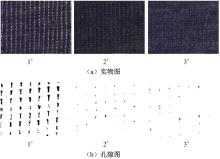
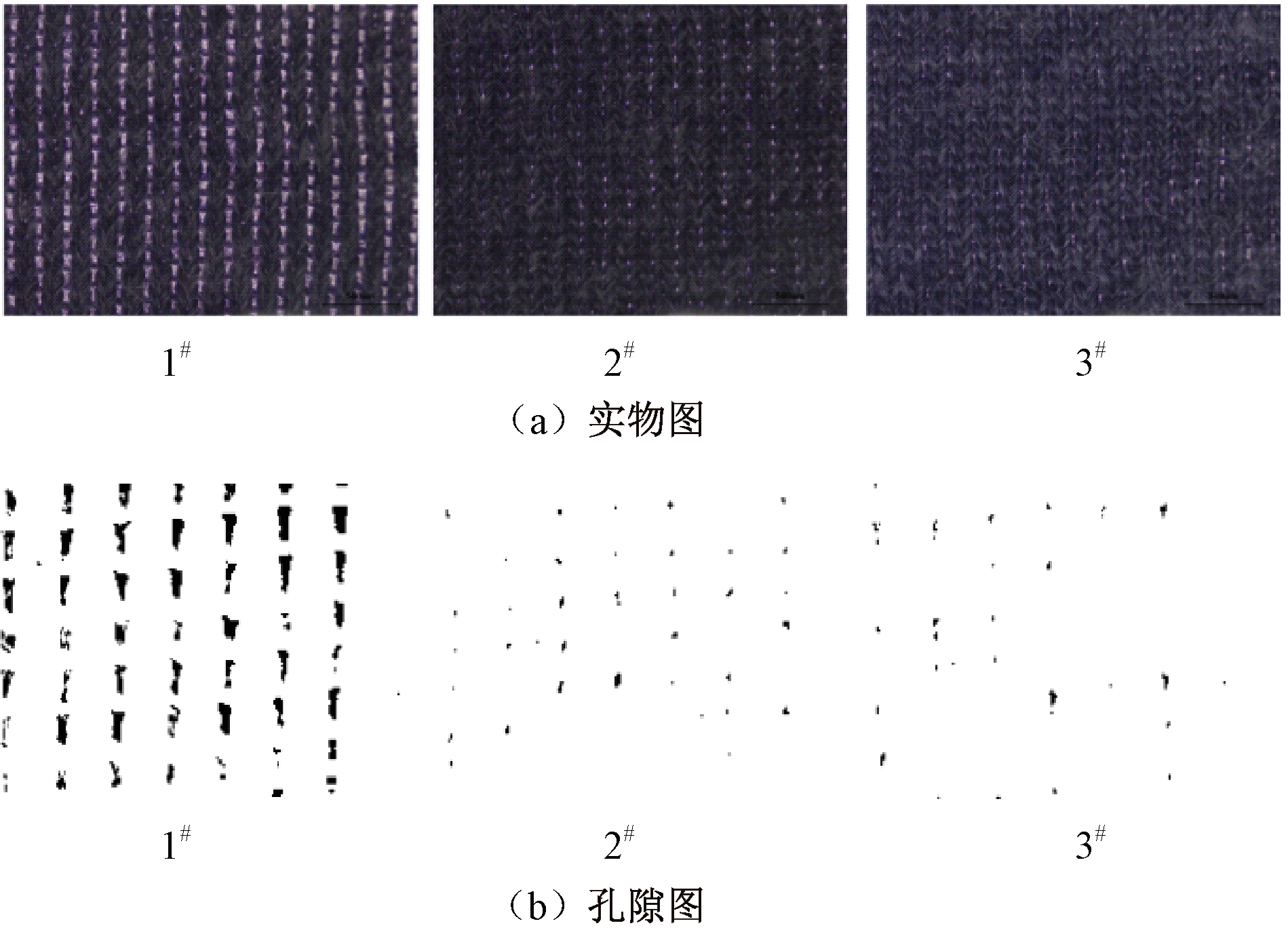
Method Four meta-aramid blended yarns with different components were used as raw materials. Firstly, the basic properties such as linear density, twist, hairiness, evenness and breaking strength of the yarn were tested. Subsequently, the afterburning performance of the yarns was evaluated and the scanning electron microscopy (SEM) images before and after the combustion were analyzed. The yarn was blended with spandex of different thicknesses to prepare nine aramid blended knitted fire-fighting underwear fabrics. The flame retardant performance was the first important index, and then the thickness, surface density, vertical and horizontal density, air permeability, moisture permeability, breaking strength and elongation at break of the nine fabrics were tested. Based on the test results, the influences of yarn composition and spandex content on the flame retardancy, comfort and mechanical properties of the fabric were discussed, and the influence of spandex content on the porosity of the fabric was analyzed.

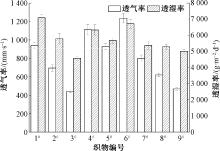
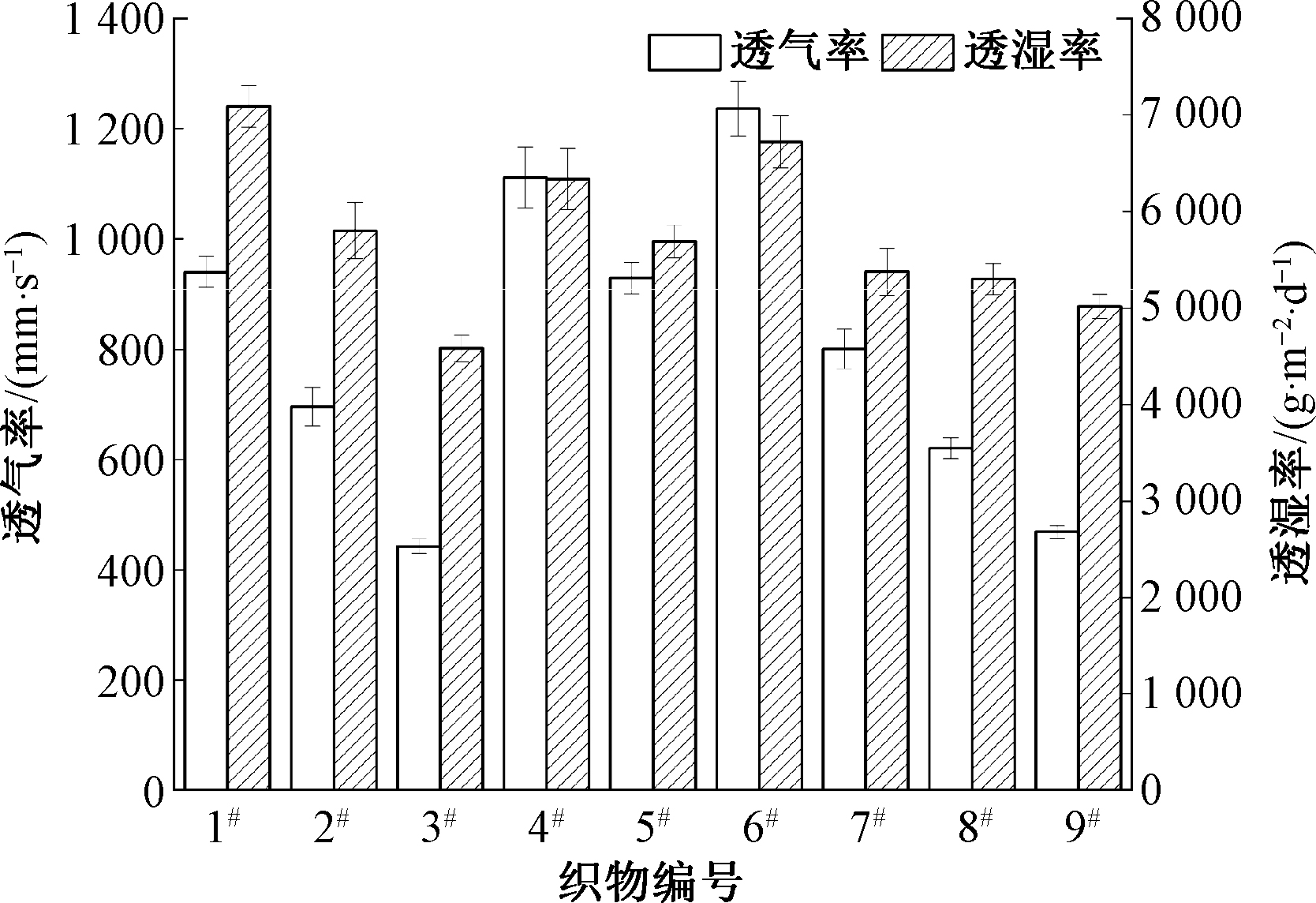
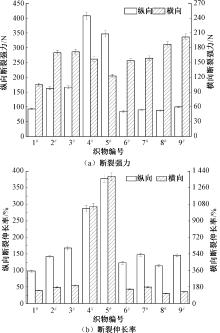
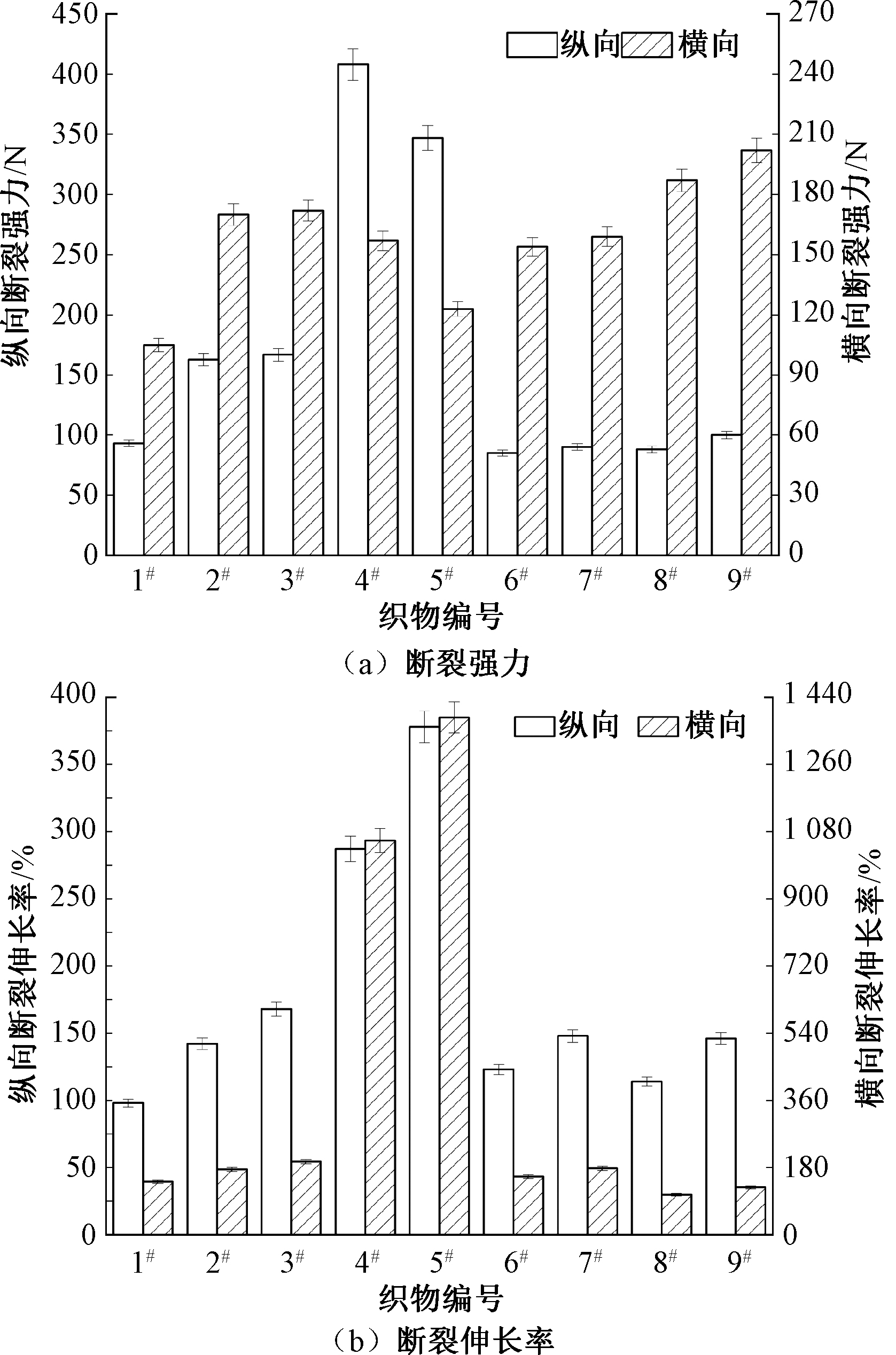
Results Z-twisted yarns were produced from blends of meta-aramid, flame-retardant (FR) viscose, FR modacrylic, and conductive fiber, yielding four yarn types with distinct blend ratios. Yarn A was 100% meta-aramid; yarn C was a 60%/38%/2% meta-aramid/FR viscose/conductive blend; yarn D was a 43%/30%/25%/2% meta-aramid/FR viscose/FR modacrylic/conductive blend. Among them, yarn D had the highest fineness (19.7 tex), while yarn C exhibited the highest twist (964 twists/m) and the lowest hairiness, indicating a compact yarn structure. Tensile tests revealed that specific tenacity and modulus increased with meta-aramid content, with yarn A achieving the highest values, consistent with the high strength of aramid fibers. However, absolute breaking force was governed primarily by yarn thickness, since thicker yarns contain more fibers to share the load; therefore, yarn D displayed the highest breaking force. Elongation at break showed no clear dependence on aramid content. As expected from its composition, yarn A demonstrated the best flame retardancy. These yarns were woven into nine fabrics using plain, rib 1+1, twill, and fish-scale loop weaves. Fabric 5# recorded the shortest warp and weft damage lengths (22 mm and 27 mm), indicating the best flame retardancy. Fabric 6# showed the highest air permeability (1 236 mm/s), and fabric 1# showed the highest moisture permeability (7 088 g/(m2·d); both advantages can be attributed to their lower spandex content, which likely created a more open pore network for air and moisture transport. Regarding mechanical properties, the highest warp breaking strength was found in fabric 4#, the highest weft breaking strength in fabric 9#, and the highest elongation at break in fabric 5#. Inorder to examine the influence of spandex, fabrics 1# (1.67 tex, 4.5% spandex), 2# (3.33 tex, 8.8%), and 3# (3.33 tex, 10%) were compared. Fabric 2# exhibited the best flame retardancy, suggesting an optimal combination of spandex fineness and content exists; both insufficient and excessive spandex contents compromised flame retardancy. These results highlight the importance of carefully tailoring spandex parameters to achieve a balance between flame retardancy and wear comfort in protective fabrics.

Conclusion Among the nine fabrics developed, the rib 1+1 knitted fabric (fabric 5#) produced from 60% meta-aramid / 38% flame-retardant viscose / 2% conductive fiber blended yarn (yarn C) with 6.9% 4.44 tex spandex exhibited the best-balanced overall performance. The warp- and weft-direction damage lengths were 22 mm and 27 mm, respectively. Air permeability reached 929 mm/s and moisture permeability 5 688 g/(m2·d). Mechanically, the warp and weft breaking strengths were 347 N and 123 N, with elongation at break of 378% (warp) and 1 386% (weft), respectively, satisfying the dual demands of thermal protection and body mobility for firefighter inner layers. Compared with conventional 50% meta-aramid/50% flame-retardant viscose inner fabrics, fabric 5# has a reduced viscose content, aligning better with green manufacturing. Analysis of plain plated knitted fabrics (fabrics 1#-3#) further indicated that spandex incorporation has an optimal range: spandex content below 8.8% enhanced flame retardancy by densifying the structure, whereas higher content diminished it, revealing a non-monotonic relationship between spandex ratio and combustion behavior.

Key words: aramid, knitted underwear fabric, flame retardant property, air permeability, moisture permeability

中图分类号: 

  • TS186.3

表1

纱线原料参数"

纱线编号 线密度/tex 成分 纺纱方式
A 9.8 间位芳纶(100%) 集聚纺
B 11.8 间位芳纶/阻燃粘胶
(50%/50%)
集聚纺
C 11.8 间位芳纶/阻燃粘胶/
导电丝(60%/38%/2%)
集聚纺
D 19.7 间位芳纶/阻燃粘胶/
阻燃腈氯纶/导电丝
(43%/30%/25%/2%)
集聚纺

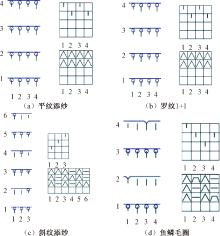
图1

不同组织结构针织物编织图与排针图及三角图"

表2

针织物规格参数"

织物编号 原料编号及
含量/%
组织 面密度/
(g·m-2)
厚度/
mm
纵密/
(横列·(5 cm)-1)
横密/
(纵行·(5 cm)-1)
1# C:95.5
E1:4.5
平纹添纱 117 0.60 143 100
2# C:91.2
E2:8.8
平纹添纱 147 0.63 158 112
3# C:90.0
E2:10.0
平纹添纱 154 0.61 169 116
4# C:94.5
E2:5.5
罗纹1+1 215 1.25 139 106
5# C:93.1
E3:6.9
罗纹1+1 243 1.34 152 119
6# A:31.1
B:65.7
E1:3.2
斜纹添纱 136 0.78 114 96
7# A:28.6
B:64.8
E2:6.6
斜纹添纱 170 0.84 132 108
8# C:56.5
D:37.5
E2:6.0
鱼鳞毛圈 208 0.91 124 94
9# C:56.1
D:37.0
E3:6.9
鱼鳞毛圈 232 0.99 144 98

表3

纱线线密度及捻度"

纱线编号 线密度/tex 捻度/(捻·m-1) 捻向
A 9.75 856 Z
B 11.81 914 Z
C 11.87 964 Z
D 20.04 803 Z

表4

纱线毛羽测试结果"

纱线
编号
不同长度的毛羽数/(根·m-1)
1 mm 2 mm 3 mm 4 mm 5 mm 6 mm 7 mm 8 mm 9 mm >3 mm
A 699.50 207.00 68.10 26.90 11.90 6.30 3.40 1.80 1.20 119.60
B 61.62 15.78 4.65 1.99 0.85 0.47 0.23 0.16 0.12 8.47
C 52.36 13.74 4.26 1.61 0.54 0.39 0.26 0.10 0.10 7.26
D 776.50 203.20 59.70 19.10 5.90 2.90 1.10 0.60 0.10 89.40

表5

纱线力学性能测试结果"

纱线
编号
断裂
强力/cN
断裂
伸长率/%
断裂强度/
(cN·dtex-1)
弹性模量/
(cN·dtex-1)
A 187.2 7.9 1.6 42.0
B 139.8 7.4 1.3 30.6
C 223.4 13.2 2.3 45.2
D 300.1 8.7 1.5 34.2

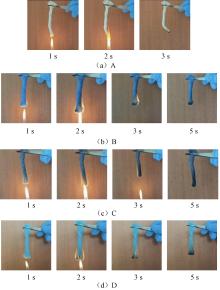
图2

纱线燃烧图片"

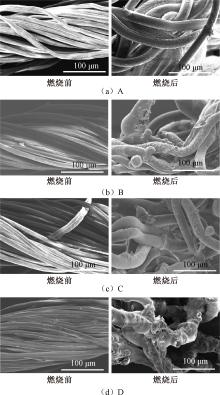
图3

纱线燃烧前后的SEM照片"

图4

针织物实物图及其孔隙图"

表6

针织物阻燃性能"

织物
编号
续燃时间/s 阴燃时间/s 损毁长度/mm
纵向 横向
1# 0 0 48 53
2# 0 0 46 50
3# 0 0 56 63
4# 0 0 30 40
5# 0 0 22 27
6# 0 0 54 67
7# 0 0 62 72
8# 0 0 56 60
9# 0 0 61 69

图5

针织物透气率与透湿率"

图6

针织物纵横向力学性能"

[1] 夏良君, 曹根阳, 刘欣, 等. 高性能纤维及其制品颜色构建的研究进展[J]. 纺织学报, 2023, 44(6): 1-9.
XIA Liangjun, CAO Genyang, LIU Xin, et al. Research progress in color construction of high-performance fibers and its products[J]. Journal of Textile Research, 2023, 44(6): 1-9.
doi: 10.1177/004051757404400101
[2] 宋婉萌, 王宝弘, 孙宇, 等. 兼具力学性能与高效阻燃性能粘胶织物的制备及其性能[J]. 纺织学报, 2025, 46(2): 188-196.
SONG Wanmeng, WANG Baohong, SUN Yu, et al. Preparation and performance of flame-retardant viscose fabrics with both mechanical and efficient flame-retardant properties[J]. Journal of Textile Research, 2025, 46(2): 188-196.
[3] 翟胜男, 陈太球, 蒋春燕, 等. 消防服外层织物热防护性与舒适性综合评价[J]. 纺织学报, 2018, 39(8): 100-104.
ZHAI Shengnan, CHEN Taiqiu, JIANG Chunyan, et al. Comprehensive evaluation on thermal protection and comfort of outer fabrics of firefighter protective clothing[J]. Journal of Textile Research, 2018, 39(8): 100-104.
[4] 苗勇, 李俊. 减少热蓄积的消防服开发及其性能评价[J]. 纺织学报, 2016, 37(1): 111-115.
MIAO Yong, LI Jun. Development and evaluation of firefighter's clothing capable of enhancing heat dissipation[J]. Journal of Textile Research, 2016, 37(1): 111-115.
[5] 漆政昆, 张和平, 黄冬梅, 等. 消防服用织物材料热湿舒适性综合评价[J]. 中国安全科学学报, 2012, 22(4): 132-138.
QI Zhengkun, ZHANG Heping, HUANG Dongmei, et al. Comprehensive evaluation of thermal and moisture comfortableness of fabric for firefighter protective clothing[J]. China Safety Science Journal, 2012, 22(4): 132-138.
[6] 刘烨, 王俊胜, 金星. 消防员个人防护装备用智能纺织品研究进展[J]. 纺织学报, 2025, 46(5): 105-115.
LIU Ye, WANG Junsheng, JIN Xing. Research progress in intelligent textiles for firefighter's personal protective equipment[J]. Journal of Textile Research, 2025, 46(5): 105-115.
[7] 韩烨, 田苗. 消防服衣下空气层结构对人体热防护的影响规律[J]. 纺织学报, 2025, 46(1): 148-153.
HAN Ye, TIAN Miao. Influence of air gap under firefighting clothing on human thermal protection[J]. Journal of Textile Research, 2025, 46(1): 148-153.
[8] 王诗潭, 江舒, 王云仪. 内穿服装对消防员热生理和心理反应的影响[J]. 纺织学报, 2023, 44(1): 164-170.
WANG Shitan, JIANG Shu, WANG Yunyi. Influence of base clothing on firefighters' physiological and perceptual responses[J]. Journal of Textile Research, 2023, 44(1): 164-170.
[9] 张文欢, 李俊. 低热辐射环境中消防服系统内热传递机制的研究进展[J]. 纺织学报, 2021, 42(10): 190-198.
doi: 10.13475/j.fzxb.20200808109
ZHANG Wenhuan, LI Jun. Research progress in heat transfer mechanism of firefighter protective clothing under low-level radiant heat exposures[J]. Journal of Textile Research, 2021, 42(10): 190-198.
doi: 10.13475/j.fzxb.20200808109
[10] FEHLING P C, HALLER J M, LEFFERTS W K, et al. Effect of exercise, heat stress and dehydration on myocardial performance[J]. Occupational Medicine, 2015, 65(4): 317-323.
doi: 10.1093/occmed/kqv015 pmid: 25868467
[11] MALAQUIAS A F, NEVES S F, CAMPOS J B L M. The impact of water on firefighter protective clothing thermal performance and steam burn occurrence in firefighters[J]. Fire Safety Journal, 2022, 127: 103506.
doi: 10.1016/j.firesaf.2021.103506
[12] 祝学薇, 师云龙, 张健, 等. 基于灰色系统理论的消防服舒适层面料热湿舒适性评价[J]. 消防科学与技术, 2024, 43(12): 1731-1736.
ZHU Xuewei, SHI Yunlong, ZHANG Jian, et al. Evaluation of thermal wet comfort performance of the lining of firefighter protective clothing based on grey system theory[J]. Fire Science and Technology, 2024, 43(12): 1731-1736.
[13] TROYNIKOV O, NAWAZ N, VU S. Evaluation of surface characteristics of inner layer fabrics suitable for structural firefighters' clothing[J]. Textile Research Journal, 2012, 82(10): 1014-1025.
doi: 10.1177/0040517511431312
[14] 方淑娟, 林惠婷. 多层消防灭火防护服的研究进展[J]. 纺织导报, 2023(1): 63-67.
FANG Shujuan, LIN Huiting. Research progress in multi-layer firefighting protective clothing[J]. China Textile Leader, 2023(1): 63-67.
[15] 姚波, 张文斌. 阻燃服用外层织物的热防护性能分析[J]. 天津工业大学学报, 2012, 31(4): 39-43.
YAO Bo, ZHANG Wenbin. Analysis of thermal protective performance of outer layer fabric for flame-retardant clothing[J]. Journal of Tianjin Polytechnic University, 2012, 31(4): 39-43.
[1] 张旭, 许云凯, 刘云. 植酸改性茶多酚阻燃涤纶织物的制备及其性能[J]. 纺织学报, 2026, 47(05): 182-189.
[2] 刘家杰, 孙启龙, 曹丽霞, 叶伟, 张杏, 谭伟. 基于废旧芳纶阻燃服回收纤维的纱线制备及其性能[J]. 纺织学报, 2026, 47(05): 99-106.
[3] 康青青, 尉霞, 罗璟娴. 接枝丝胶蛋白间位芳纶织物的制备及其性能[J]. 纺织学报, 2026, 47(04): 163-170.
[4] 齐梦园, 肖国威, 杜金梅, 许长海, 杨红英. 水性聚氨酯/纳米二氧化硅改性玄武岩纤维织物制备及其性能[J]. 纺织学报, 2026, 47(02): 172-180.
[5] 董振峰, 张安莹, 魏建斐, 朱志国, 王锐. 阻燃左旋聚乳酸/季戊四醇磷酸酯纤维及织物的制备与性能[J]. 纺织学报, 2026, 47(01): 63-71.
[6] 候志文, 任泽苹, 王晓宁, 张天骄. 棉织物的壳聚糖/海藻酸盐抗菌阻燃整理及其性能[J]. 纺织学报, 2025, 46(12): 171-180.
[7] 谢宜轩, 钟林, 徐柠浩, 黄晓梅, 曹海建. 三维深角联芳纶织物/环氧树脂复合材料的弯曲性能[J]. 纺织学报, 2025, 46(11): 118-125.
[8] 李欣田, 周玄, 王展翾, 杜忠华, 徐立志. 层数与铺层方式对多层芳纶平纹织物抗侵彻性能的影响[J]. 纺织学报, 2025, 46(11): 126-136.
[9] 袁颖, 滕凤冬, 曹煜彤, 于俊荣, 李娜, 胡祖明, 王彦. 高模量对位芳纶研究进展[J]. 纺织学报, 2025, 46(11): 238-246.
[10] 郭艳文, 夏蕊, 黄晓梅, 陈红霞, 曹海建. 经纬向紧度比对三维浅交弯联机织复合材料拉伸性能的影响[J]. 纺织学报, 2025, 46(10): 103-110.
[11] 高敏, 程春祖, 徐中凯, 赵庆波, 张东, 代欣欣. 含硅改性磷氮阻燃Lyocell纤维的制备及其性能[J]. 纺织学报, 2025, 46(10): 19-29.
[12] 许云凯, 宋婉萌, 张旭, 刘云. 单宁酸基高效阻燃Lyocell织物的制备及其性能[J]. 纺织学报, 2025, 46(08): 145-153.
[13] 马晓远, 包伟. 防水透湿纳米纤维复合织物研究现状及发展趋势[J]. 纺织学报, 2025, 46(08): 254-262.
[14] 张利平, 郭羽晴, 丁博, 孙洁. 芳纶纳米纤维/热塑性聚氨酯复合微孔膜与可呼吸覆膜织物制备及其性能[J]. 纺织学报, 2025, 46(07): 19-27.
[15] 孙洁, 郭羽晴, 屈芸, 张利平. 芳纶纳米纤维/MXene同轴纤维电极制备及其性能[J]. 纺织学报, 2025, 46(05): 125-134.
Viewed
Full text


Abstract

Cited

  Shared   
  Discussed   
No Suggested Reading articles found!