纺织学报 ›› 2026, Vol. 47 ›› Issue (07): 169-176.doi: 10.13475/j.fzxb.20250904201

• 纺织工程 • 上一篇    下一篇

基于CNN-MLP双分支模型的精纺呢绒抗纰裂性能预测

王春兰1,2, 邹俊浩1, 李炳贤1, 蒋高明1()   

  1. 1 江南大学 针织技术教育部工程研究中心, 江苏 无锡 214122
    2 山东如意毛纺服装集团股份有限公司, 山东 济宁 272073
  • 收稿日期:2025-09-11 修回日期:2026-05-08 出版日期:2026-07-15 发布日期:2026-07-29
  • 通讯作者: 蒋高明(1962—),男,教授,博士。主要研究方向为纺织数字化技术与纺织结构材料。E-mail:jgm@jiangnan.edu.cn
  • 作者简介:王春兰(1986—),女,高级工程师,博士生。主要研究方向为基于深度学习的精纺呢绒产品设计。
  • 基金资助:
    中央高校基本科研业务费专项资金资助项目(JUSRP123005)

Prediction of seam slippage resistance in worsted wool fabrics based on CNN-MLP dual-branch model

WANG Chunlan1,2, ZOU Junhao1, LI Bingxian1, JIANG Gaoming1()   

  1. 1 Engineering Research Center for Knitting Technology, Ministry of Education, Jiangnan University, Wuxi, Jiangsu 214122, China
    2 Shandong Ruyi Woolen Garment Group Co., Ltd., Jining, Shandong 272073, China
  • Received:2025-09-11 Revised:2026-05-08 Published:2026-07-15 Online:2026-07-29

摘要:

针对高档西服用精纺呢绒面料的纰裂问题,通过集成多维度织物参数分析与深度学习算法,构建科学有效的数学模型以预测并提升其抗纰裂性能。共收集932组精纺呢绒样本实验数据,涵盖织物组织、织物经纬密度、原料纱线粗细、织物紧度、纱线捻度、后整理工艺等关键参数,系统分析各因素对精纺呢绒抗纰裂性能的影响机制。最终选取与抗纰裂性能相关性最强的8个核心特征作为输入向量,通过构建CNN-MLP双分支神经网络模型,采用CNN分支处理织物组织结构图像特征,MLP分支处理其它工艺参数,最后融合两类特征进行预测,分别输出经向与纬向抗纰裂性能指标的预测值。结果表明,该模型具有较高的预测准确率,其中经向平均绝对百分比误差为7.8%,纬向平均绝对百分比误差为6.8%。该研究为精纺呢绒的产品开发与质量控制提供了新方法,有效减少了打样次数,提升了研发效率,并优化了产品性能与质量管控路径。

关键词: CNN-MLP双分支模型, 神经网络, 精纺呢绒, 抗纰裂, 性能预测

Abstract:

Objective This study aims to tackle the critical challenge of seam slippage in worsted wool fabrics used for high-end suiting by establishing a reliable predictive model integrating structural parameters and deep learning. The persistent issue of seam integrity undermines both product quality and durability, necessitating an accurate, efficient, and intelligent solution to replace conventional trial-and-error approaches. The objective of this research is to develop a CNN-based framework capable of predicting seam slippage resistance in both warp and weft directions to support fabric development and quality control with higher precision and lower cost.

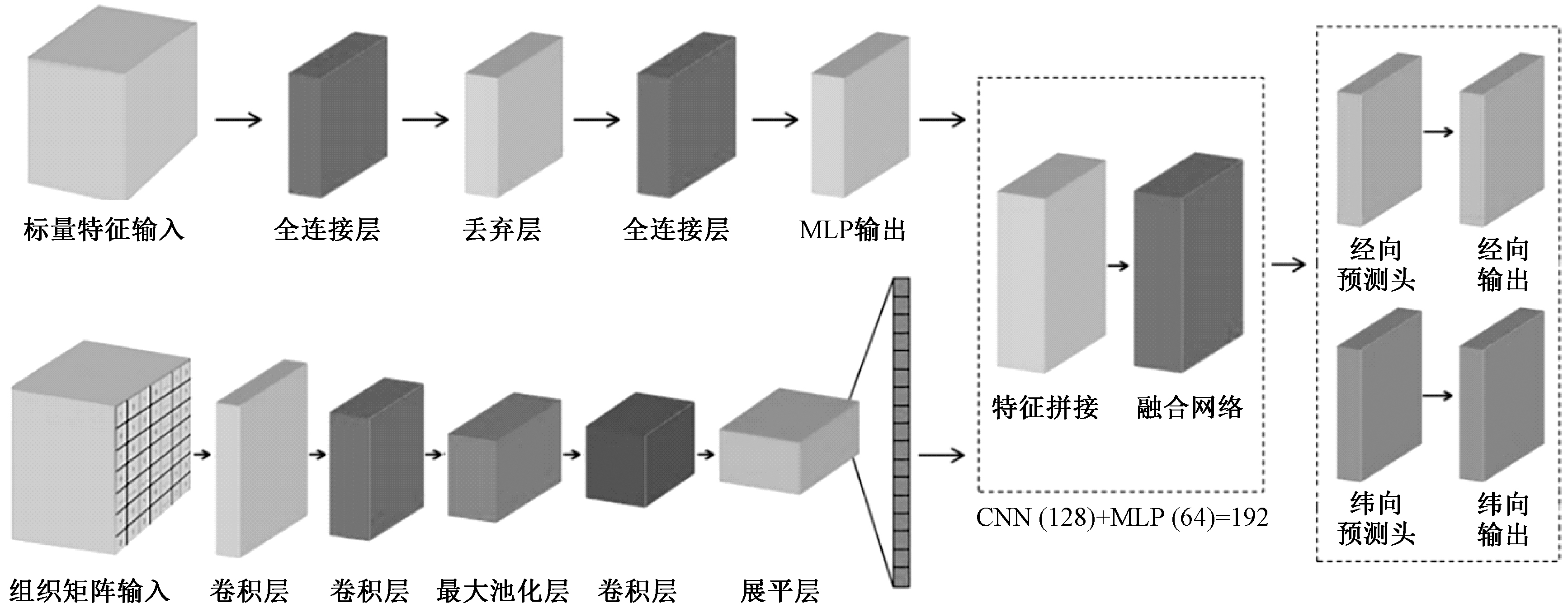
Method A total of 932 sets of experimental data were collected from worsted wool fabric samples, covering key parameters such as fabric structure, warp and weft densities, raw material, yarn fineness, fabric tightness, yarn twist, and finishing processes. Ultimately, eight core features most strongly correlated with seam slippage resistance were selected as input vectors. A CNN-MLP dual-branch neural network model was constructed, wherein the CNN branch processes image features of the fabric structure, and the MLP branch handles other process parameters. The two types of features were subsequently fused for prediction, generating predicted values for the warp and weft seam slippage resistance indicators, respectively.

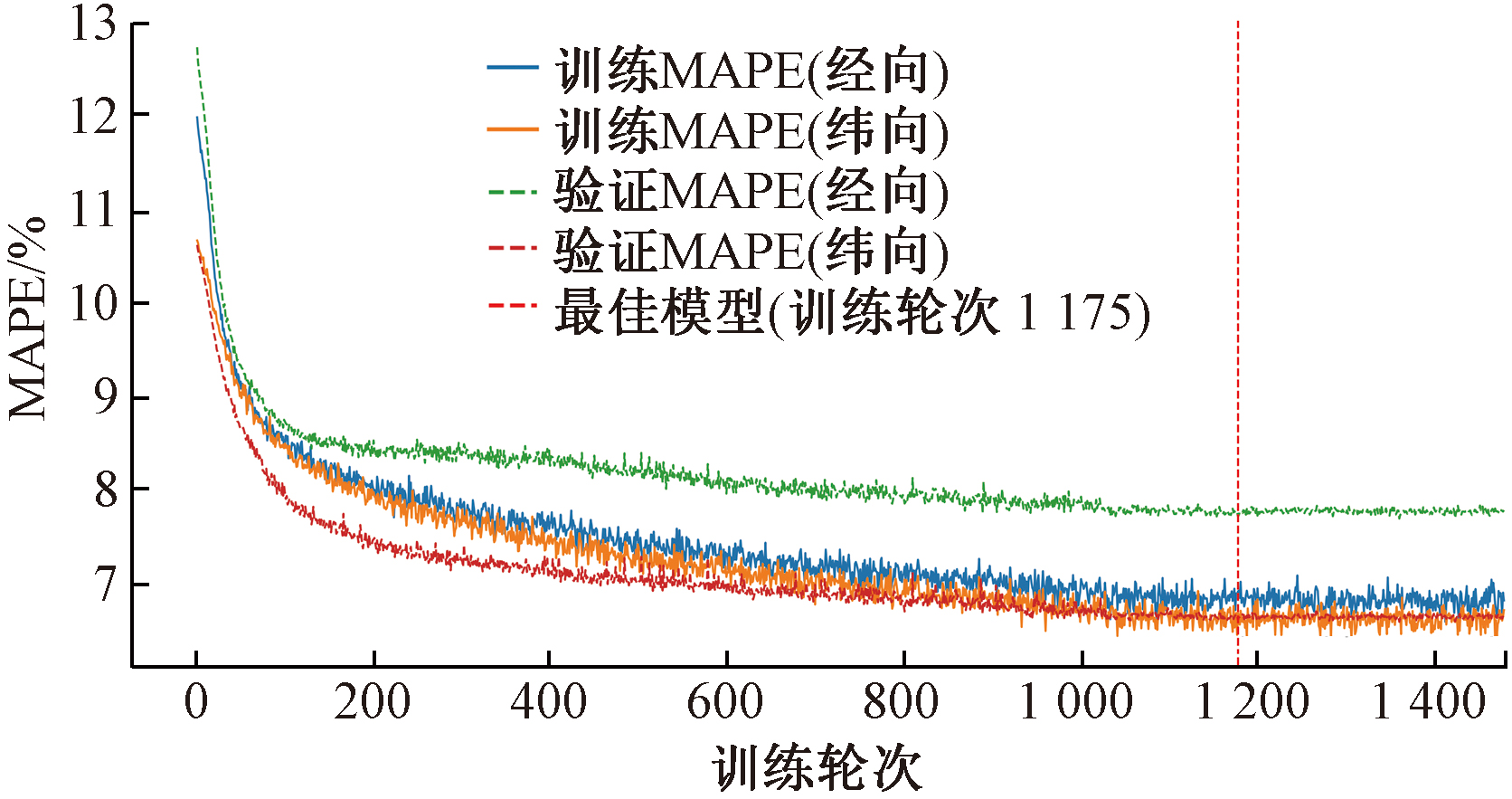
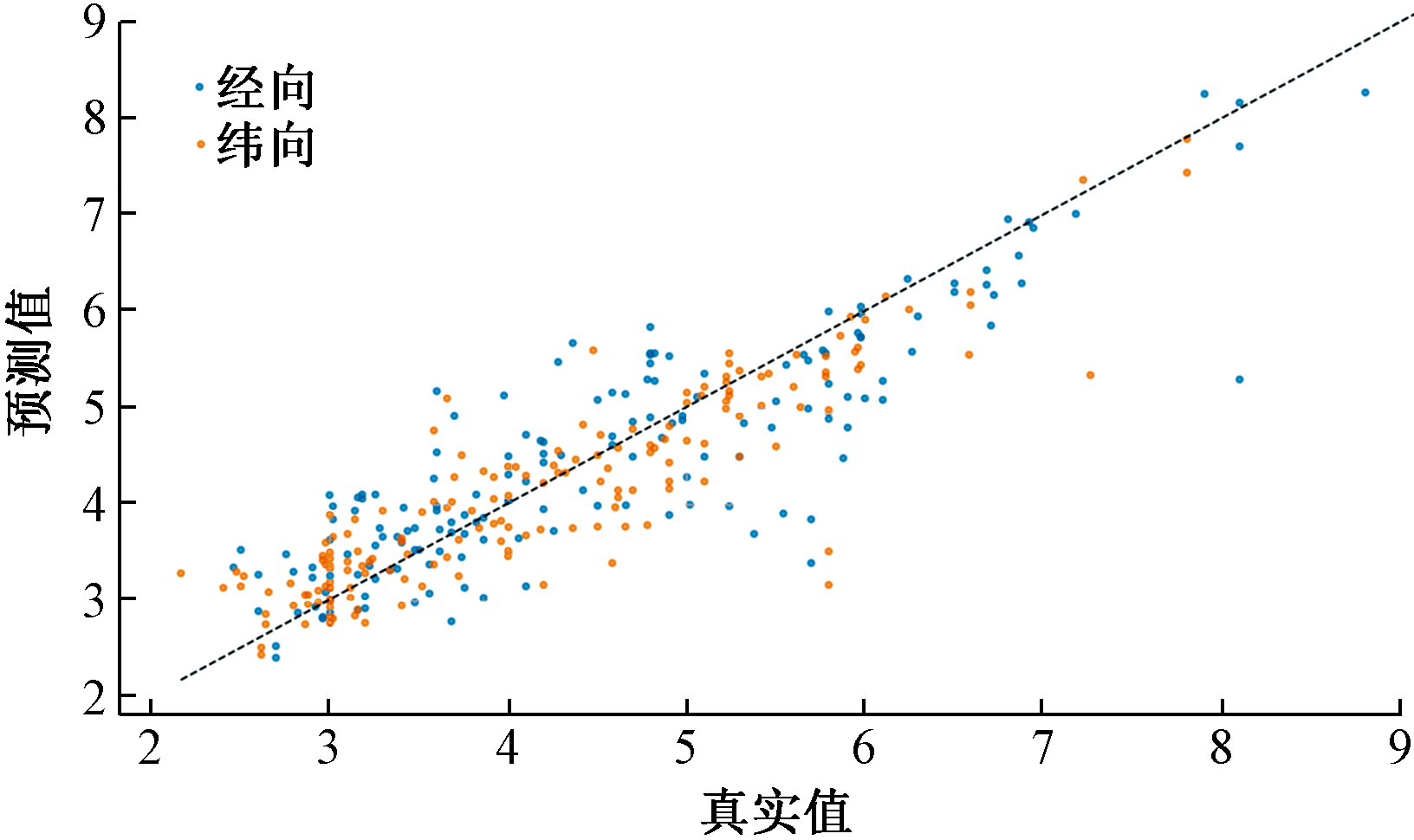
Results The mean absolute percentage error (MAPE) was adopted as the core evaluation metric. The model demonstrated outstanding predictive performance on an independent validation set. The MAPE for predicting warp seam slippage resistance was as low as 7.8%, while that for weft seam slippage resistance reached 6.8%. The prediction errors for both indicators remained at a low level, indicating strong practical value for guiding production.The MAPE curves for the training and validation sets converged and remained closely aligned, with no signs of overfitting, confirming the reliability of the predictions and strong generalization capability of the model. Feature importance analysis revealed that fabric total tightness and fabric structure were the most significant factors influencing seam slippage resistance, together accounting for over 50% of the impact. This aligns well with the mechanical principles of woven fabrics. As the fabric tightness increased, both warp and weft seam slippage resistance were improved significantly. When the tightness increased without a substantial change in the weft-to-warp ratio, both warp and weft densities increased. This resulted in more interlacing points per unit length between warp and weft yarns. Consequently, the seam slippage resistance increases, leading to improved seam slippage resistance in both warp and weft directions.The influence of fabric structure is primarily reflected in the number of interlacing points between warp and weft yarns. A higher number of interlacing points would increase the resistance during seam slippage, causing the fabric less prone to slipping. Additionally, the fulling process also considerably affects seam slippage resistance. Under identical other parameters, fulled fabrics exhibited greater seam slippage resistance compared to non-fulled fabrics by virtue of the felting effect between warp and weft yarns induced by fulling, which enhances inter-yarn friction and reduces seam slippage.

Conclusion This study proposes a novel method for predicting seam slippage resistance in worsted wool fabrics. The CNN branch captures structural features of the fabric weave, while the MLP branch learns the influences of process parameters. The dual prediction heads accurately reflect anisotropy, effectively addressing the challenge of performance prediction under multi-parameter coupling. This enables precise prediction of seam slippage resistance behavior in worsted wool fabrics, providing a reliable computational tool for fabric structure design and process optimization. The model demonstrates not only excellent prediction accuracy and robustness, but also the readiness for integrating into existing textile production management systems or CAD software. It offers real-time, data-driven decision support for process optimization and quality control, indicating high industrial applicability and broad promotion prospects.Future work will focus on collecting larger-scale datasets to further enhance model stability and exploring its transfer learning capabilities across different fabric types. Additionally, efforts will be made to improve the model's adaptability under dynamic working conditions and investigate its integration into full-process smart manufacturing systems.

Key words: CNN-MLP dual-branch model, neural network, worsted wool, seam slippage resistance, performance prediction

中图分类号: 

  • TS941.26

表1

样本织物组织分布"

织物组织类别 样本数量/个 占比/%
平纹 126 13.5
斜纹 437 46.9
缎纹 53 5.7
其它变化组织 316 33.9
合计 932 100.0

表2

织物规格参数"

序号 组织
类型
组织矩阵 经纬密/(根·(10 cm)-1) 线密度/dtex 紧度 织物
总紧度
纬经向
紧度比
抗纰裂指标/mm
经密 纬密 经纱 纬纱 经向 纬向 经密 纬密
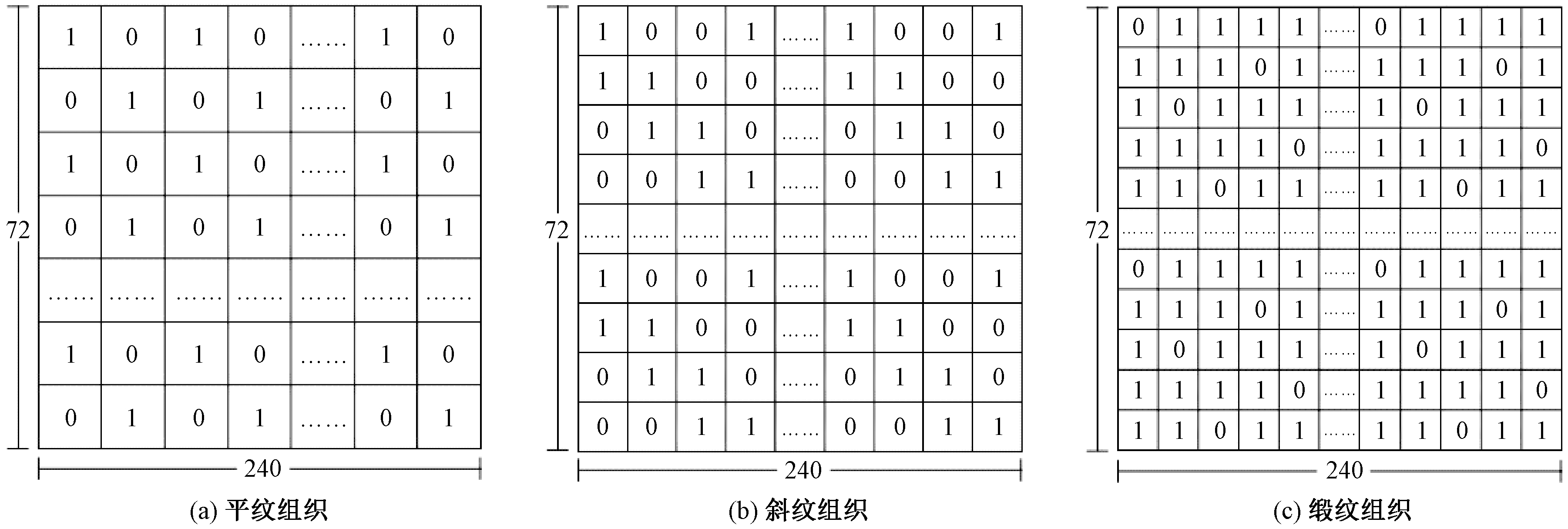
1 平纹 1010;0101;
1010;0101;
298 256 41 41 0.55 0.48 1.03 1.16 4.12 4.10
2 平纹 1010;0101;
1010;0101;
240 214 33 33 0.50 0.44 0.94 1.12 5.10 5.60
3 斜纹 10011001;11001100;
01100110;00110011;
10011001;11001100;
01100110;00110011;
420 348 44 52 0.75 0.57 1.32 1.31 4.00 3.42
4 斜纹 10011001;11001100;
01100110;00110011;
10011001;11001100;
01100110;00110011;
357 339 36 46 0.71 0.59 1.30 1.19 5.84 4.36
5 缎纹 100100;010010;
001001;010010;
100100;010010;
001001;010010;
340 324 36 46 0.67 0.57 1.24 1.19 4.50 4.90
6 缎纹 10001000;01000100;
00010001;00100010;
10001000;01000100;
00010001;00100010;
522 341 47 47 0.91 0.59 1.49 1.53 4.60 4.50
7 其它
变化
组织
10100101;11000011;
11000011;10100101;
01011010;00111100;
00111100;01011010;
253 241 41 41 0.47 0.45 0.92 1.05 6.18 6.10
8 其它
变化
组织
111000;010101;
101010;000111;
101010;010101;
368 348 41 52 0.68 0.57 1.25 1.19 5.72 5.10

图1

织物组织矩阵图"

图2

CNN-MLP双分支模型整体架构"

图3

训练与验证MAPE曲线"

图4

预测值与实际值对比"

表3

分类组织织物MAPE值"

织物组织类别 样本数/个 经向MAPE/% 纬向MAPE/%
平纹 126 9.70 10.92
斜纹 437 6.45 7.63
缎纹 53 7.73 7.71
其它变化组织 316 10.51 9.11

表4

预测偏差较大样本的关键特征汇总"

序号 织物组织类别 经纬密/(根·(10 cm)-1) 纬经向
紧度比
绝对百分比误差/%
经密 纬密 经向 纬向
1 其它变化组织 440 370 1.16 40.35 29.50
2 平纹 258 232 1.14 39.41 38.78
3 斜纹 388 337 1.15 31.47 38.06
4 其它变化组织 438 355 1.27 37.21 14.20
5 平纹 300 277 1.08 8.44 28.27
6 斜纹 364 316 1.22 24.71 6.71
7 其它变化组织 520 376 1.38 7.05 20.11
8 其它变化组织 388 368 1.19 19.86 10.83
9 其它变化组织 342 318 1.14 17.82 15.23
10 其它变化组织 364 360 1.14 11.99 16.32

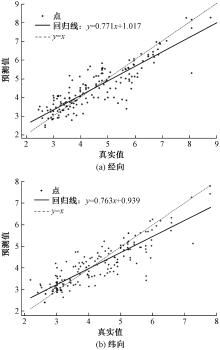
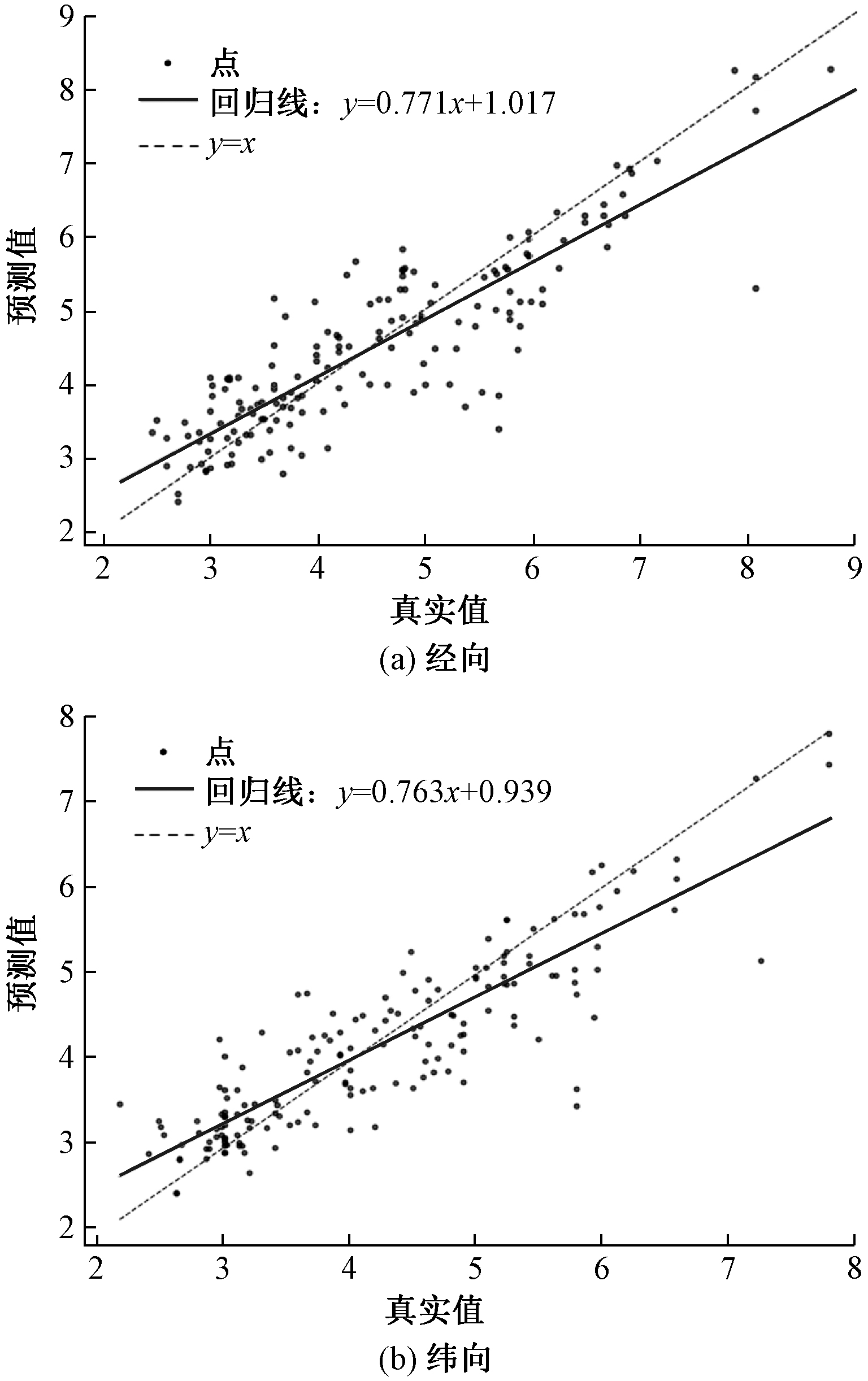
图5

经纬向抗纰裂指标回归线"

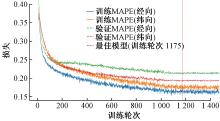
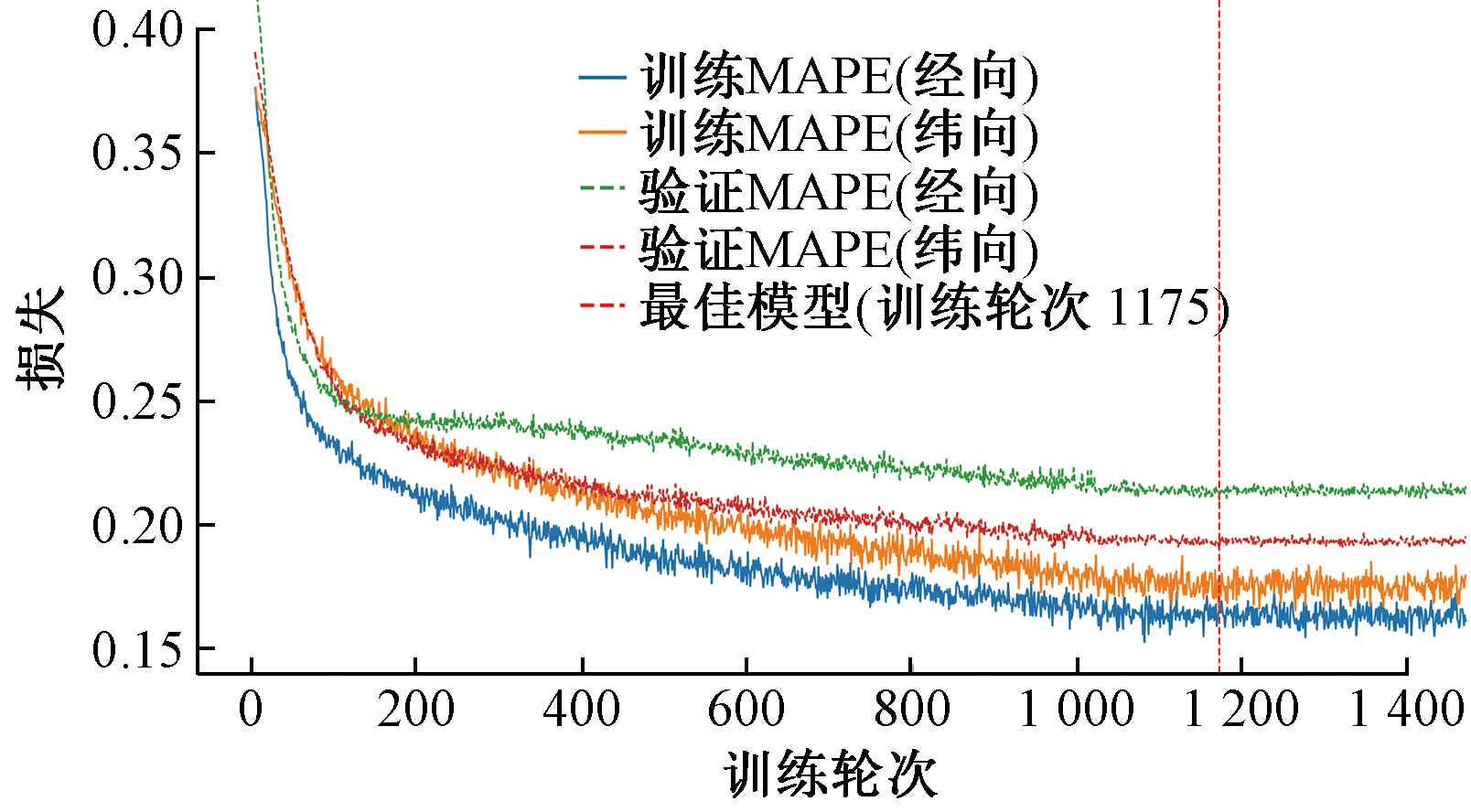
图6

训练和验证损失曲线"

[1] 任海龙. 机织服装标准中纰裂性能测试分析与研究[J]. 现代纺织技术, 2014, 22(1): 55-59, 64.
REN Hailong. Analysis and research on stitch slipping performance test in woven garment standard[J]. Advanced Textile Technology, 2014, 22(1): 55-59, 64.
[2] 王恩清, 赵红芳. 精梳毛织品脱缝问题探讨[J]. 上海纺织科技, 2012, 40(9): 21-22.
WANG Enqing, ZHAO Hongfang. Study on worsted clothing seam slippage[J]. Shanghai Textile Science & Technology, 2012, 40(9): 21-22.
[3] 王立年, 李燕妮, 艾贤丽, 等. 精梳毛织品脱缝程度的影响因素[J]. 毛纺科技, 2021, 49(8): 99-102.
WANG Linian, LI Yanni, AI Xianli, et al. Factors influencing fabric seam slippage of combed wool fabric[J]. Wool Textile Journal, 2021, 49(8): 99-102.
[4] 王建伟. 基于卷积神经网络的图像识别技术优化[J]. 网络安全技术与应用, 2025(8): 64-66.
WANG Jianwei. Optimization of image recognition technology based on convolutional neural network[J]. Network Security Technology & Application, 2025(8): 64-66.
[5] 孟秀萍, 苏工兵, 吴奇明, 等. 基于Halcon多层感知机的织物色差检测研究[J]. 棉纺织技术, 2018, 46(5): 60-65.
MENG Xiuping, SU Gongbing, WU Qiming, et al. Study of fabric color difference detection based on halcon multilayer perceptron[J]. Cotton Textile Technology, 2018, 46(5): 60-65.
[6] 陈益人. 机织物组织与结构[M]. 北京: 中国纺织出版社, 2021:3-6.
CHEN Yiren. Woven fabric weave and structure[M]. Beijing: China Textile & Apparel Press, 2021:3-6.
[7] 陈祝丹. 基于机器学习的材料结构与性能研究[D]. 北京: 北京化工大学, 2023:18-22.
CHEN Zhudan. Study on material structure and properties based on machine learning[D]. Beijing: Beijing University of Chemical Technology, 2023:18-22.
[8] 孟朔, 夏旭文, 潘如如, 等. 基于卷积神经网络的机织物密度均匀性检测[J]. 纺织学报, 2021, 42(2): 101-106.
MENG Shuo, XIA Xuwen, PAN Ruru, et al. Detection of fabric density uniformity based on convolutional neural network[J]. Journal of Textile Research, 2021, 42(2): 101-106.
[9] 王彪, 毋涛. 基于卷积神经网络的面料检索系统[J]. 计算机技术与发展, 2023, 33(9): 52-56.
WANG Biao, WU Tao. Fabric retrieval system based on convolutional neural network[J]. Computer Technology and Development, 2023, 33(9): 52-56.
[10] 陈耀鸿, 李响, 张路驰, 等. 基于MLP的机翼展向截面压力预测算法研究[J]. 气动研究与试验, 2025, 3(4): 10-22.
CHEN Yaohong, LI Xiang, ZHANG Luchi, et al. Research on wing spanning section pressure prediction algorithm based on MLP[J]. Aerodynamic Research & Experiment, 2025, 3(4): 10-22.
[11] 孙思晴. 基于卷积神经网络的织物抗皱性测试方法研究[D]. 杭州: 浙江理工大学, 2021:38-40.
SUN Siqing. Research on the test method of fabric wrinkle resistance based on CNN[D]. Hangzhou: Zhejiang Sci-Tech University, 2021:38-40.
[12] GÜLTEKIN E, ÇELIK H İ, KAYNAK H K. A new approach for classification of differentwoven fabric patterns and thread densities withconvolutional neural networks[J]. TEXTEH Proceedings, 2021, 2021: 88-93.
doi: 10.35530/TT
[13] 魏心如. 基于深度学习的膜材料MOFs的性质预测研究[D]. 北京: 北京化工大学, 2024:22-26.
WEI Xinru. Research on property prediction of MOFs based on deep learning[D]. Beijing: Beijing University of Chemical Technology, 2024:22-26.
[1] 龚琳琳, 李晓茹, 钟安华, 王凯晴, 邓睿曦. 青年女性后背体型表征分析与体型预测[J]. 纺织学报, 2026, 47(05): 212-219.
[2] 杜劲松, 聂家乐. 女装结构平衡与服装压分布相关性研究[J]. 纺织学报, 2026, 47(04): 189-197.
[3] 李宇彤, 于施佳, 韩曙光. 基于多视图的三维人体重建[J]. 纺织学报, 2026, 47(04): 215-224.
[4] 潘隽媛, 李炳贤, 蒋高明. 柔性防刺材料的研究进展[J]. 纺织学报, 2026, 47(04): 225-234.
[5] 张金凤, 李嘉因, 苏云, 田苗, 李俊. 面向智能设计的消防服热防护性能研究进展[J]. 纺织学报, 2026, 47(03): 175-183.
[6] 刘怡鑫, 万美怡, 张宁, 潘如如. 基于特征融合的复杂场景面料图像检索方法[J]. 纺织学报, 2026, 47(02): 188-194.
[7] 邓云涛, 谭艳君, 张洪松, 燕雨, 余秋雨, 林风喜, 王一鑫, 安乐乐. 织物起毛起球等级评定系统[J]. 纺织学报, 2025, 46(11): 102-110.
[8] 朱耀麟, 李政, 张强, 陈鑫, 陈锦妮, 张洪松. 基于近红外光谱和多特征网络的羊毛和羊绒定量检测[J]. 纺织学报, 2025, 46(09): 104-111.
[9] 郑小虎, 杜思淇, 刘永青, 王健, 陈峰. 基于一维卷积神经网络的棉纱线质量预测[J]. 纺织学报, 2025, 46(09): 120-127.
[10] 张晓婷, 赵鹏宇, 潘如如, 高卫东. 基于深度特征融合的格子织物图像检索方法[J]. 纺织学报, 2025, 46(08): 89-95.
[11] 顾孟尚, 张宁, 潘如如, 高卫东. 结合频域卷积模块的机织物图像疵点目标检测[J]. 纺织学报, 2025, 46(05): 159-168.
[12] 梁金星, 李东盛, 李壹帆, 周景, 罗航, 陈佳, 胡新荣. 基于照相测色的纺织品色牢度评级方法[J]. 纺织学报, 2025, 46(04): 119-128.
[13] 王罗俊, 彭来湖, 熊叙一, 李杨, 胡旭东. 基于超级基神经网络的自适应反演非奇异滑模纱线恒张力控制[J]. 纺织学报, 2025, 46(02): 92-99.
[14] 盛锡彬, 赵崧灵, 顾冰菲. 基于标准工时预测的衬衣部件模块生产编排优化[J]. 纺织学报, 2025, 46(01): 154-162.
[15] 刘健, 王程皓, 董守骏, 刘泳汝. 半封闭自由表面式静电纺丝喷头设计与优化[J]. 纺织学报, 2024, 45(11): 215-225.
Viewed
Full text


Abstract

Cited

  Shared   
  Discussed   
No Suggested Reading articles found!