纺织学报 ›› 2026, Vol. 47 ›› Issue (07): 93-103.doi: 10.13475/j.fzxb.20251007401
郭小敏1, 冯意清2, 吕欢3, 王伟4, 董凯5, 缪东洋6, 张瑞云1( )
)
GUO Xiaomin1, FENG Yiqing2, LÜ Huan3, WANG Wei4, DONG Kai5, MIAO Dongyang6, ZHANG Ruiyun1()
摘要:
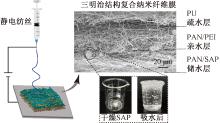
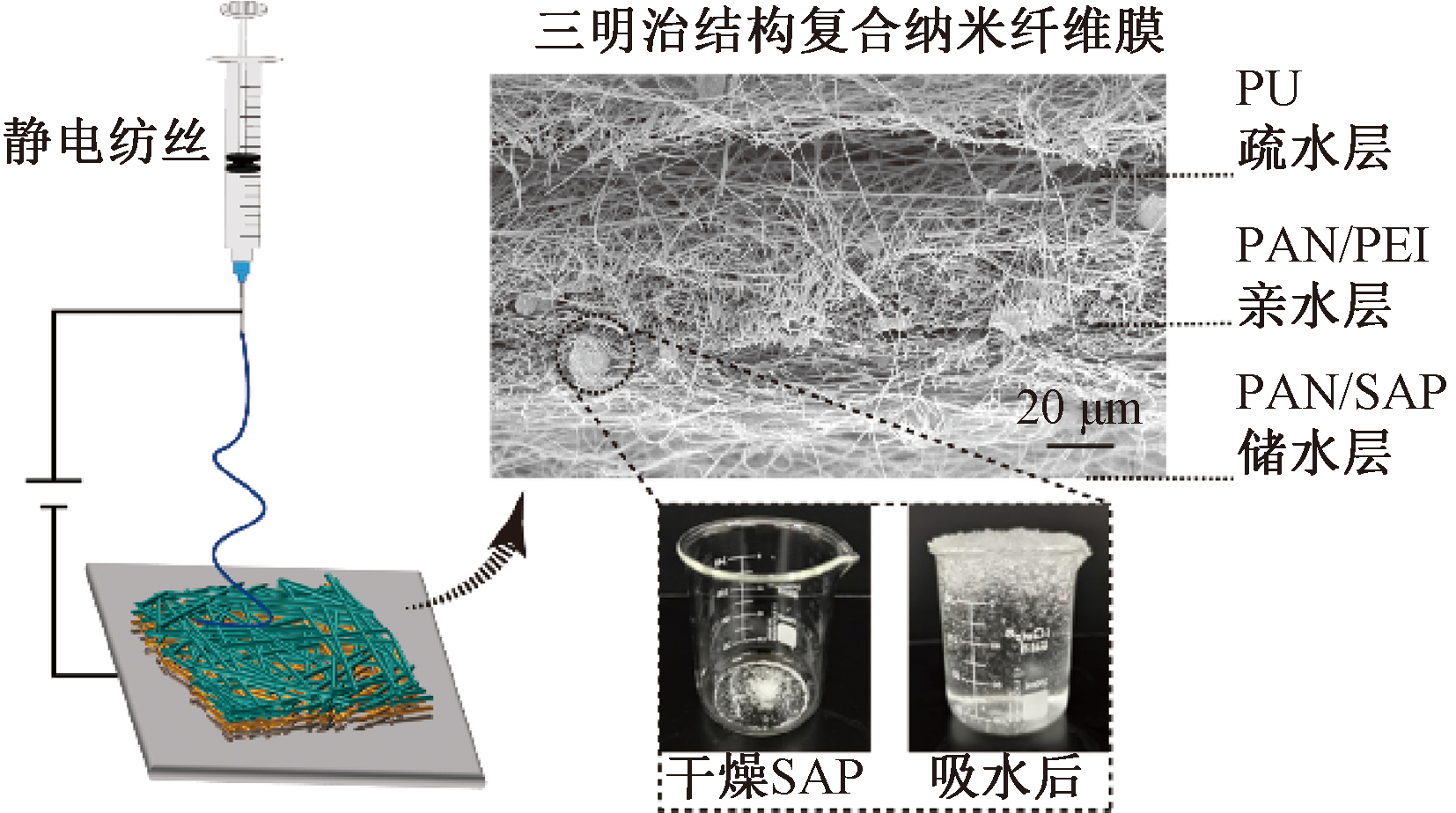
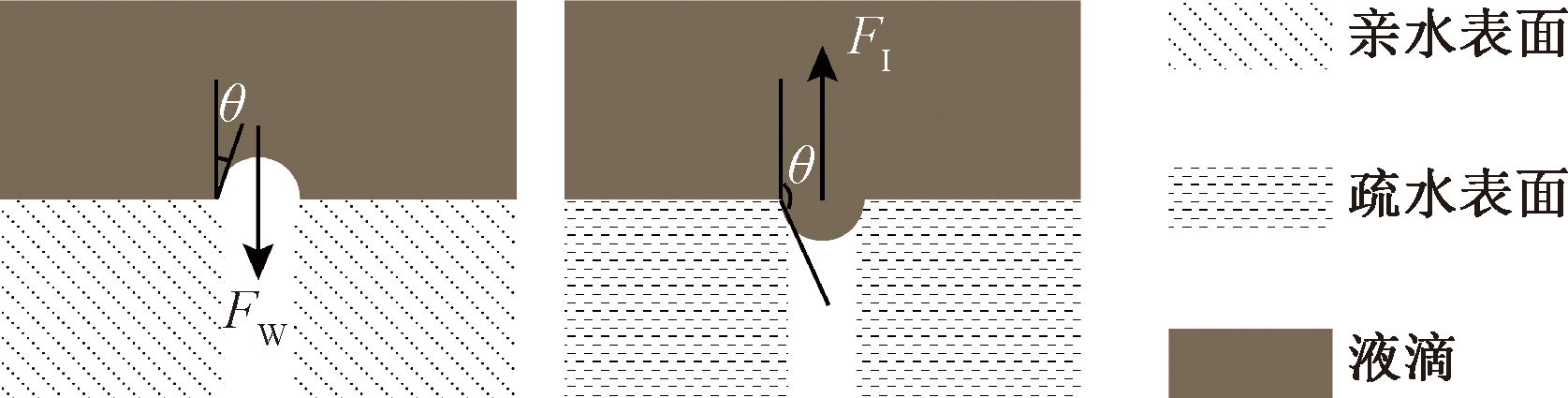
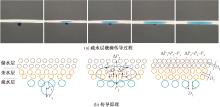
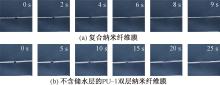
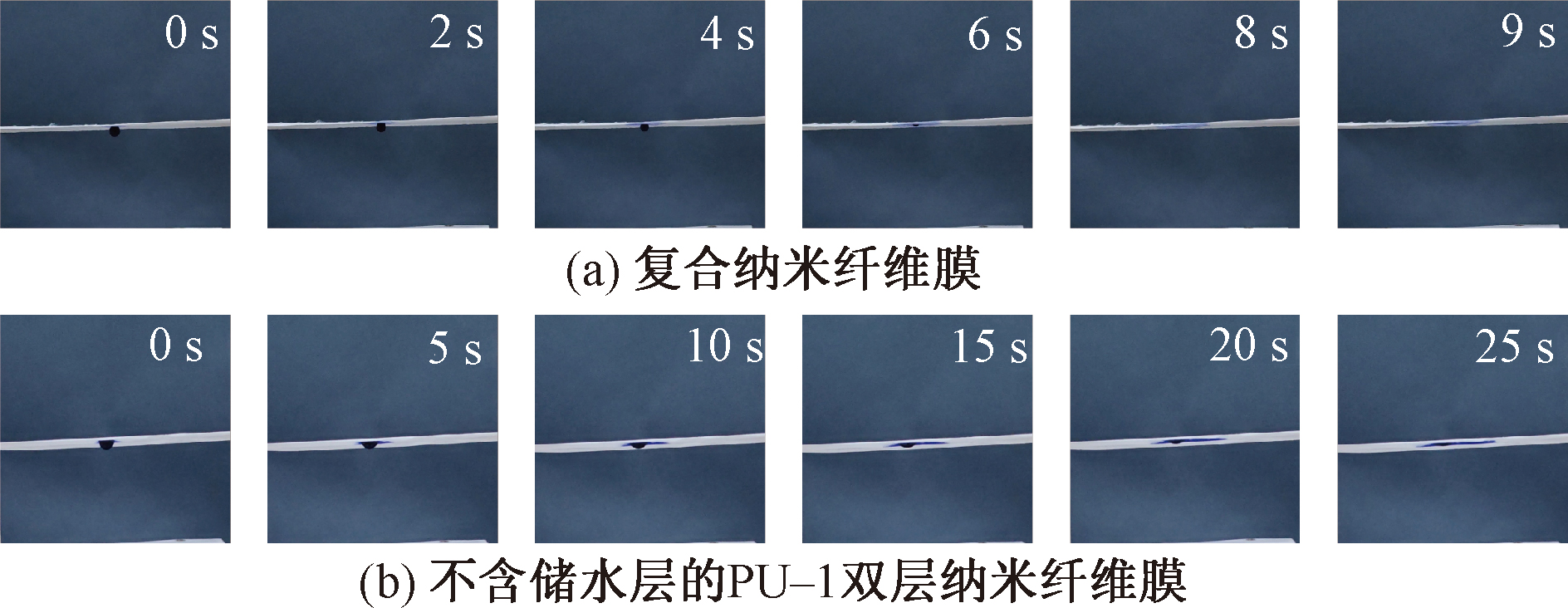
针对当前的单向导液纺织品存在吸湿容量有限、在高出汗速率或高湿环境下使用受限的问题,通过在双层Janus复合纳米纤维膜结构中引入储水层,实现对汗液的单向传导和高效吸附,采用静电纺丝层层组装的方式制备了以聚氨酯(PU)为疏水层、聚丙烯腈/聚乙烯亚胺(PAN/PEI)为亲水层、聚丙烯腈/高吸水树脂(PAN/SAP)为储水层的三明治结构的复合纳米纤维膜。分别探究了SAP质量分数对PAN/SAP纳米纤维膜润湿性能、吸湿性能等的影响,优化了疏水层厚度对PU和PAN/PEI组成的双层Janus纳米纤维膜单向导液性能的调控,并对三明治结构复合纳米纤维膜单向导液性能及吸湿性能进行了研究及机制分析。研究发现:当SAP质量分数为3%时,PAN/SAP纳米纤维膜的吸水率与平衡含水率分别为986.5%和90.8%,达到最优;当疏水层厚度为20 μm时,双层Janus纳米纤维膜表现出优异的单向导液性能;所制备的三明治结构复合纳米纤维膜具备优异的单向导液性能和吸湿能力,其吸湿量相比于无储水层的双层Janus纳米纤维膜和纯棉织物,分别提高了143.8%和129.4%,展现出在运动吸汗领域良好的应用潜力。
中图分类号:
| [1] |
王洪杰, 胡忠文, 王赫, 等. 单向导湿纺织品及其应用的研究进展[J]. 纺织学报, 2022, 43(11): 195-202.
doi: 10.13475/j.fzxb.20210905108 |
|
WANG Hongjie, HU Zhongwen, WANG He, et al. Research progress in one-way water transport textiles and their applications[J]. Journal of Textile Research, 2022, 43(11): 195-202.
doi: 10.13475/j.fzxb.20210905108 |
|
| [2] |
雷福旺, 冯其, 侯奥菡, 等. 聚偏氟乙烯-聚丙烯腈/SiO2单向导湿纤维膜的制备及其性能[J]. 纺织学报, 2024, 45(12): 1-8.
doi: 10.13475/j.fzxb.20231101701 |
|
LEI Fuwang, FENG Qi, HOU Aohan, et al. Preparation and properties of polyvinylidene fluoride-polyacrylonitrile/SiO2 fibrous membrane with unidirectional water-transport function[J]. Journal of Textile Research, 2024, 45(12): 1-8.
doi: 10.13475/j.fzxb.20231101701 |
|
| [3] |
WANG Z C, SONG S Y, YANG J L, et al. Controllable Janus porous membrane with liquids manipulation for diverse intelligent energy-free applications[J]. Journal of Membrane Science, 2020, 601: 117954.
doi: 10.1016/j.memsci.2020.117954 |
| [4] |
LEI L Q, MENG S, SI Y F, et al. Wettability gradient-induced diode: MXene-engineered membrane for passive-evaporative cooling[J]. Nano-Micro Letters, 2024, 16(1): 159.
doi: 10.1007/s40820-024-01359-8 pmid: 38512520 |
| [5] |
LI Z R, WU L L, JIAN C X, et al. Durable asymmetric silk fabric with rapid heat conduction, spectral selectivity and sweat transfer capabilities for effective personal thermal-moisture management[J]. Journal of Colloid and Interface Science, 2025, 689: 137203.
doi: 10.1016/j.jcis.2025.02.211 |
| [6] |
ZHOU W, MIN S Q, ZHAN T H, et al. Highly durable Janus fabrics based on transfer prints for personal moisture management[J]. Small, 2023, 19(36): 2302512.
doi: 10.1002/smll.v19.36 |
| [7] |
MEI G Y, GUO Z G. Special wettability materials inspired by multiorganisms for fog collection[J]. Advanced Materials Interfaces, 2022, 9(14): 2102484.
doi: 10.1002/admi.v9.14 |
| [8] |
YU Z P, ZHAN B, DONG L M, et al. Self-healing structured graphene surface with reversible wettability for oil-water separation[J]. ACS Applied Nano Materials, 2019, 2(3): 1505-1515.
doi: 10.1021/acsanm.8b02346 |
| [9] |
DONG J C, PENG Y D, WANG D, et al. Quasi-homogeneous and hierarchical electronic textiles with porosity-hydrophilicity dual-gradient for unidirectional sweat transport, electrophysiological monitoring, and body-temperature visualization[J]. Small, 2023, 19(14): 2206572.
doi: 10.1002/smll.v19.14 |
| [10] |
LI T T, SUN L, ZHONG Y Q, et al. Silk fibroin/polycaprolactone-polyvinyl alcohol directional moisture transport composite film loaded with antibacterial drug-loading microspheres for wound dressing materials[J]. International Journal of Biological Macromolecules, 2022, 207: 580-591.
doi: 10.1016/j.ijbiomac.2022.02.105 |
| [11] |
MIAO D Y, HUANG Z, WANG X F, et al. Continuous, spontaneous, and directional water transport in the trilayered fibrous membranes for functional moisture wicking textiles[J]. Small, 2018, 14(32): 1801527.
doi: 10.1002/smll.v14.32 |
| [12] |
MIAO D Y, WANG X F, YU J Y, et al. A biomimetic transpiration textile for highly efficient personal drying and cooling[J]. Advanced Functional Materials, 2021, 31(14): 2008705.
doi: 10.1002/adfm.v31.14 |
| [13] |
ZHANG Y F, FU J J, DING Y C, et al. Thermal and moisture managing e-textiles enabled by Janus hierarchical gradient honeycombs[J]. Advanced Materials, 2024, 36(13): 2311633.
doi: 10.1002/adma.v36.13 |
| [14] |
WANG H, ZHU Y J, MIN S Q, et al. Multi-inspired bump-liked medical protective clothing for effectively profuse perspiration management[J]. Chemical Engineering Journal, 2024, 499: 156448.
doi: 10.1016/j.cej.2024.156448 |
| [15] |
YEARGIN S, TORRES-MCGEHEE T M, EMERSON D, et al. Hydration, eating attitudes and behaviors in age and weight-restricted youth American football players[J]. Nutrients, 2021, 13(8): 2565.
doi: 10.3390/nu13082565 |
| [16] | QI L Y, OU K K, HOU Y J, et al. Unidirectional water-transport antibacterial trilayered nanofiber-based wound dressings induced by hydrophilic-hydrophobic gradient and self-pumping effects[J]. Materials & Design, 2021, 201: 109461. |
| [17] |
DAI B, LI K, SHI L X, et al. Bioinspired Janus textile with conical micropores for human body moisture and thermal management[J]. Advanced Materials, 2019, 31(41): 1904113.
doi: 10.1002/adma.v31.41 |
| [18] |
XU B, DING Y L, NI J C, et al. Directional sweat transport of monolayered cotton-fabrics fabricated through femtosecond-laser induced hydrophilization for personal moisture and thermal management[J]. Journal of Colloid and Interface Science, 2022, 628: 417-425.
doi: 10.1016/j.jcis.2022.07.155 pmid: 35932678 |
| [19] |
FENG F, ZHAO Z H, LI J W, et al. Multifunctional dressings for wound exudate management[J]. Progress in Materials Science, 2024, 146: 101328.
doi: 10.1016/j.pmatsci.2024.101328 |
| [20] |
YIN H Y, GUO Y S, LAI S M, et al. Biomimetic three-layer hierarchical scaffolds for efficient water management and cell recruitment[J]. Colloids and Surfaces B: Biointerfaces, 2023, 222: 113081.
doi: 10.1016/j.colsurfb.2022.113081 |
| [1] | 王亚云, 蔺多佳, 高远, 王杰, 夏鑫. 皮芯结构复合纱线电极的制备及其储锂与电致变色性能[J]. 纺织学报, 2026, 47(07): 136-143. |
| [2] | 包安娜, 洪剑寒. 静电纺丝制备辐射制冷纳米纤维材料的研究进展[J]. 纺织学报, 2026, 47(07): 239-246. |
| [3] | 王晓辉, 王宇航, 徐锦龙, 刘金星, 陈哲, 谭晶, 梅锋, 王华平. 熔融静电纺丝泰勒锥成形及纤维可纺性[J]. 纺织学报, 2026, 47(05): 28-36. |
| [4] | 桂振宇, 兰平, 杨晓达, 陈昊, 庄静. 肝素化铜基金属有机框架/聚乙烯醇复合膜的制备及其血液净化性能[J]. 纺织学报, 2026, 47(05): 56-64. |
| [5] | 张哲, 陈卓明, 李帆, 宋文雅, 覃思宇, 侯锦东, 余仡杰. 多功能非对称结构纳米纤维膜的制备及其抗菌抗氧化性能[J]. 纺织学报, 2026, 47(04): 34-42. |
| [6] | 杨鸿杰, 徐丽亚, 汪蔚. 含一氧化氮供体的生物基聚酰胺56纳米纤维膜制备及其性能[J]. 纺织学报, 2026, 47(04): 43-51. |
| [7] | 郭一铭, 喻爽, 赵帆, 王富军. 血管监测用纤维基压电传感器的构建及性能评价[J]. 纺织学报, 2026, 47(03): 118-128. |
| [8] | 陈泳良, 杨潇, 王朝荣, 黄俊鸿, 李彦, 王璐. 静电纺丝-恒应力退火协同构建的湿态稳定型聚乳酸/I型胶原肩袖补片[J]. 纺织学报, 2026, 47(03): 60-69. |
| [9] | 李好义, 田鑫哲, 张毅, 牟文英, 张超, 赵千龙, 杨卫民. 导电各向异性复合心脏补片的熔体静电纺丝/直写构建及体外评价[J]. 纺织学报, 2026, 47(03): 70-76. |
| [10] | 刘金枝, 赵回汇, 吴焕友, 张建明, 高晶. 壳聚糖/聚己内酯取向纳米纤维膜的结构调控与物理引导作用[J]. 纺织学报, 2026, 47(03): 9-17. |
| [11] | 张曼琦, 孙艳丽, 张晓茹, 李博, 刘哲. 共轭静电纺双模态调温织物的制备及其性能[J]. 纺织学报, 2026, 47(02): 153-161. |
| [12] | 孔珂欣, 张怡帆, 卢哲, 王哲. 载钴钌原子无机微纳米纤维的制备及其电催化水分解性能[J]. 纺织学报, 2026, 47(02): 26-36. |
| [13] | 王世杰, 孙辉, 于斌. 聚乙烯醇/牡丹皮提取物复合纳米静电纺丝膜的制备及其抗菌性能[J]. 纺织学报, 2026, 47(02): 56-64. |
| [14] | 孔艳辉, 张琳萍, 毛志平, 徐红. 甲基丙烯酰化明胶纤维膜的制备及其止血性能[J]. 纺织学报, 2026, 47(01): 1-10. |
| [15] | 赵婧雯, 袁香楠, 高晶, 王璐. 聚丙烯腈-普鲁士蓝/月桂酸/环丙沙星光热响应性抗菌敷料的制备及其性能[J]. 纺织学报, 2026, 47(01): 20-28. |
|
||
 京公网安备11010502044800号