纺织学报 ›› 2026, Vol. 47 ›› Issue (1): 1-10.doi: 10.13475/j.fzxb.20250400701
• 纤维材料 • 下一篇
孔艳辉1, 张琳萍1, 毛志平1,2, 徐红1,2( )
)
KONG Yanhui1, ZHANG Linping1, MAO Zhiping1,2, XU Hong1,2()
摘要:
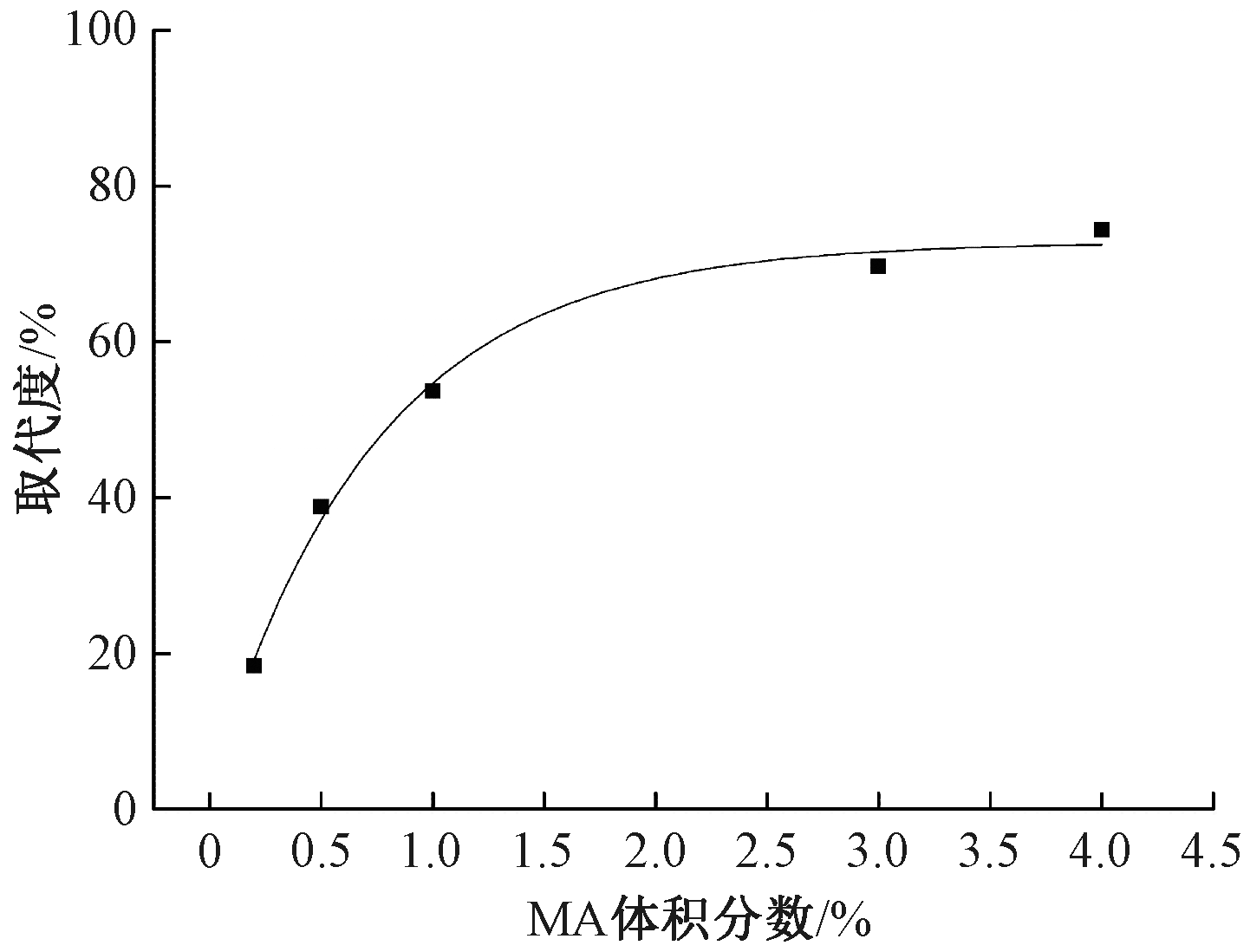
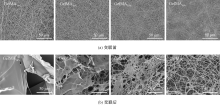
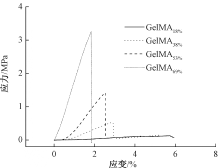
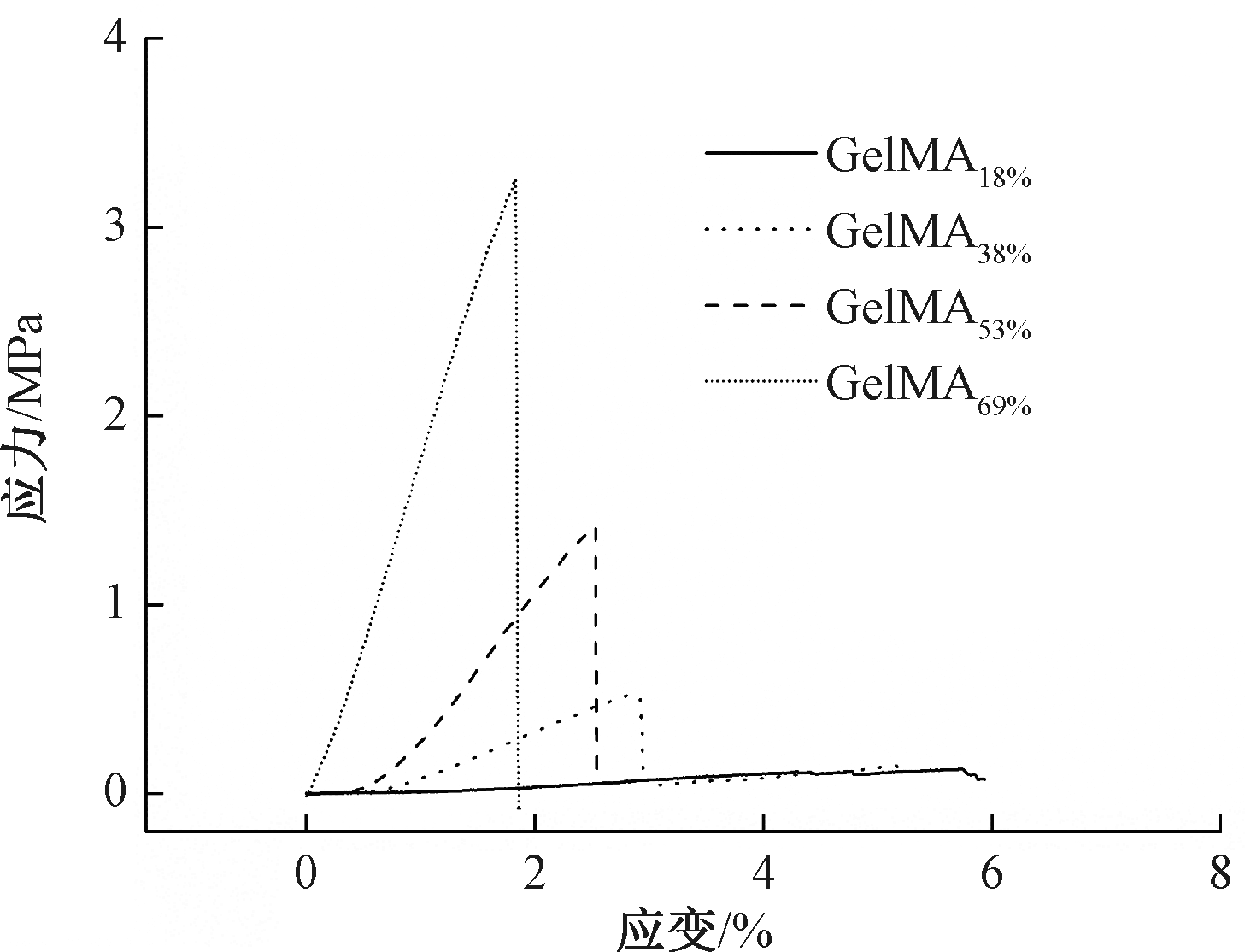
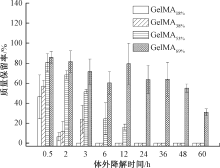
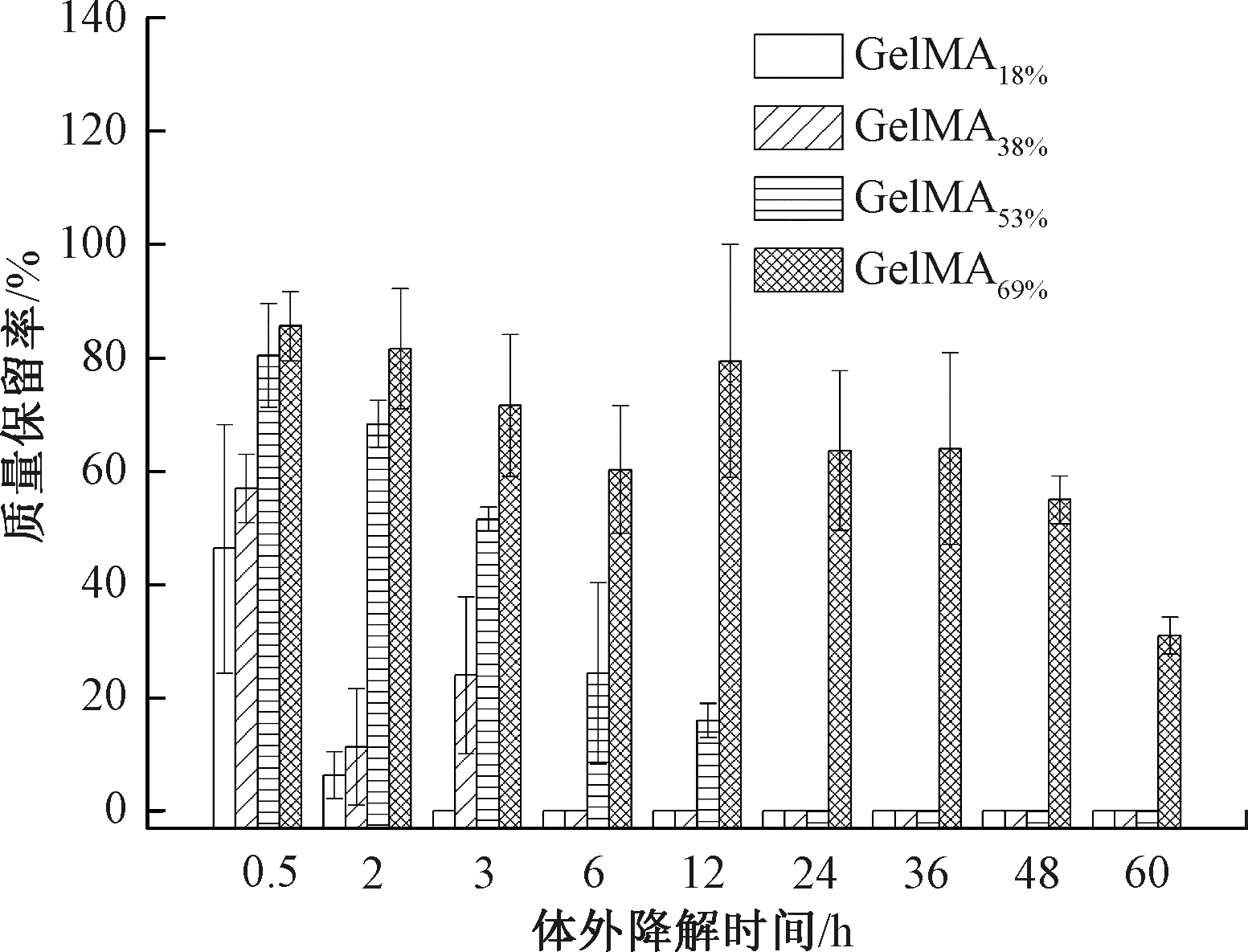
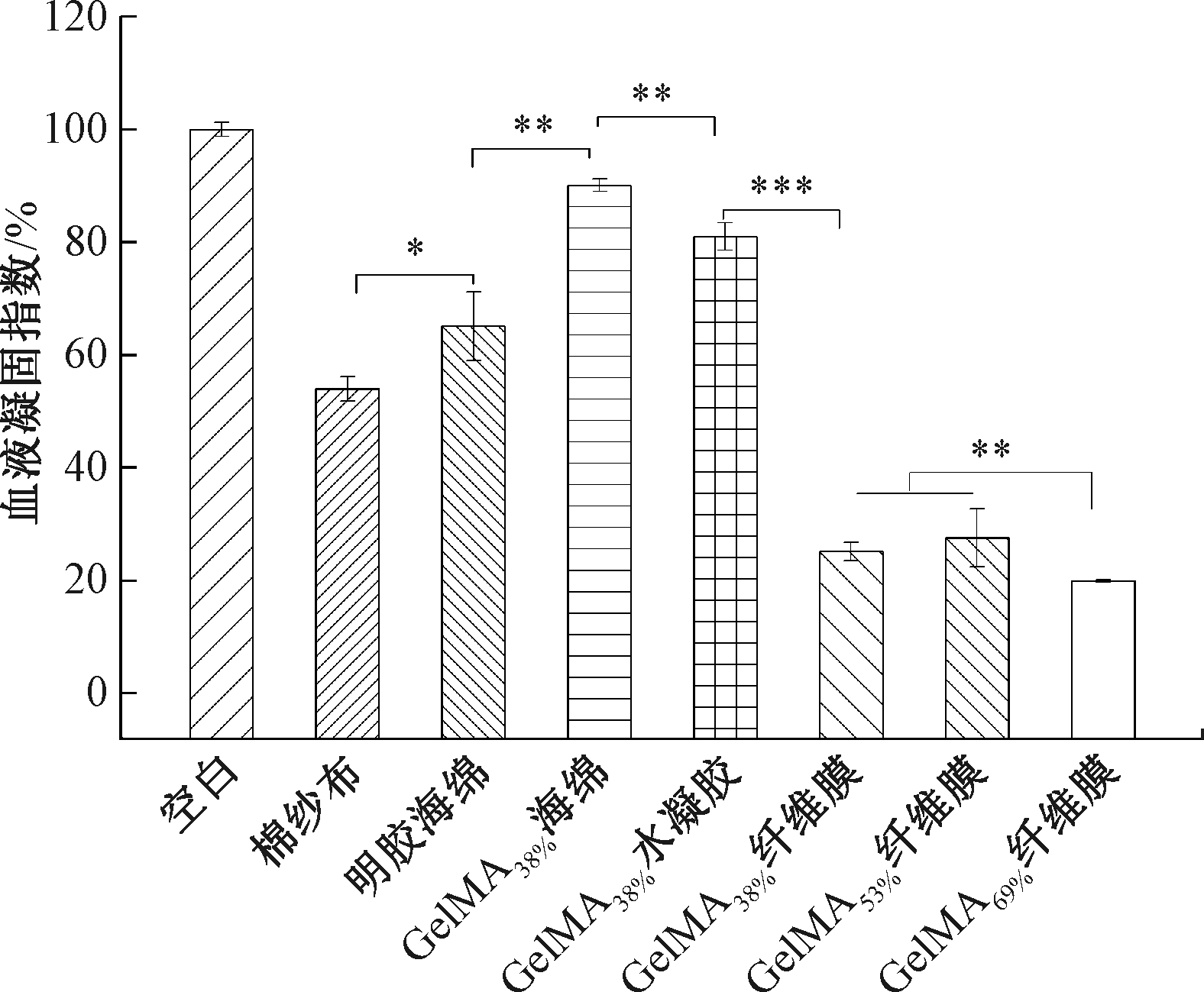
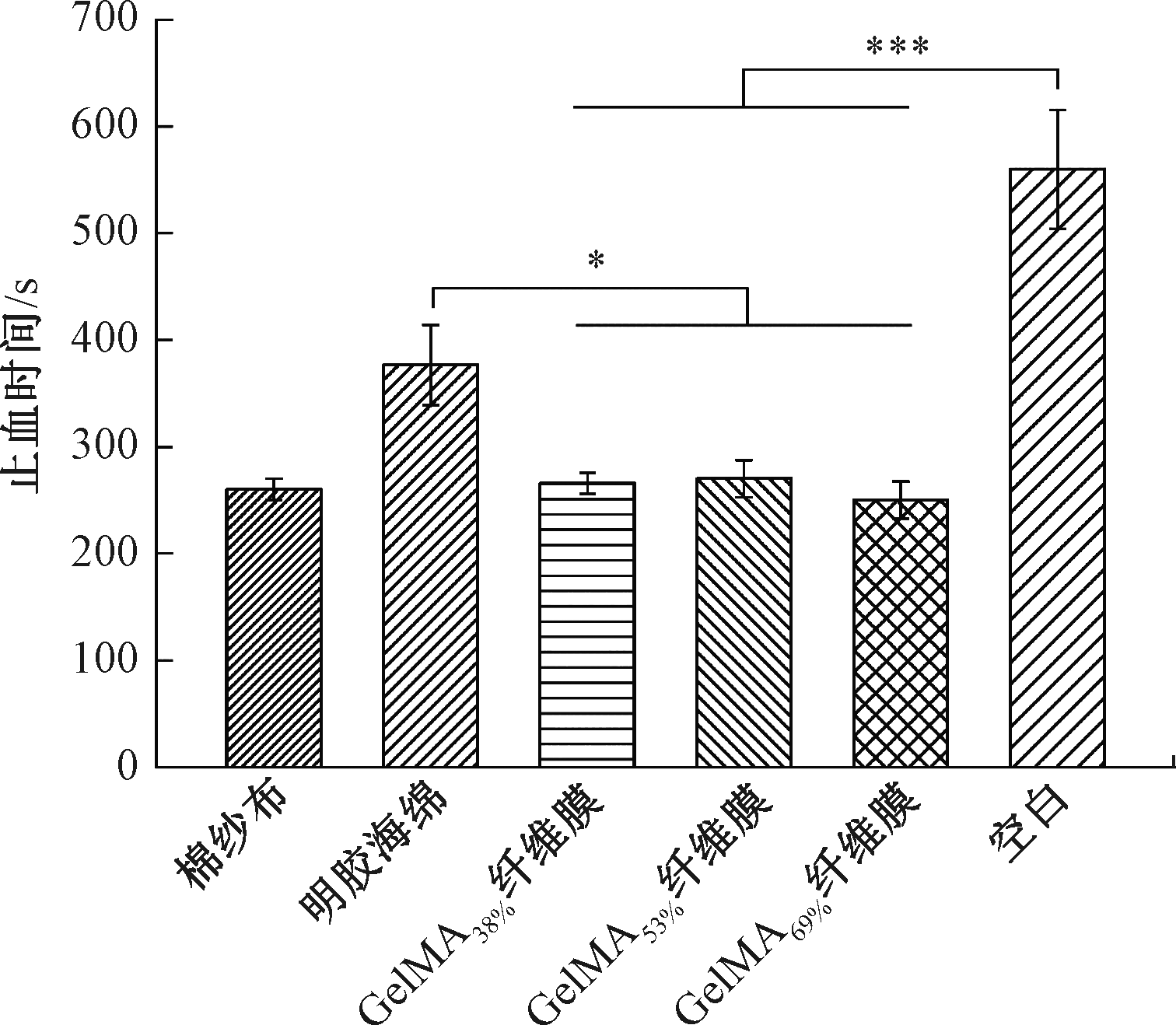
为解决传统明胶基止血材料存在的吸水膨胀导致组织压迫风险、化学交联剂潜在毒性,以及力学强度和降解速率不可控等问题,采用甲基丙烯酸酐(MA)修饰鱼明胶,赋予甲基丙烯酰化明胶(GelMA)可被光引发交联的特性,规避化学交联剂带来的毒性风险。并采用静电纺丝技术将其加工为纤维膜形式,不仅可缓解组织受压风险,又能利用其高比表面积、多孔性、高孔隙率实现快速浓缩血液、凝集血细胞。体外止血测试证明,相比于市售明胶海绵,该GelMA纤维膜的止血时间与血液凝固指数分别缩短至明胶海绵的66.49%和30.69%。通过调控MA的添加量,制备了不同甲基丙烯酰基取代度的GelMA纤维膜,通过微观形貌观察、拉伸性能测试、体外酶解实验等系统性探究了取代度对GelMA纤维膜的影响,成功证明基于取代度(18%~69%)的调控,可得到具备不同降解周期(2~60 h)与拉伸强度(0.13~3.25 MPa)的GelMA纤维膜。这种可定制的力学与降解特性使其能够适配急性出血控制(高取代度、慢降解)与微创手术止血(低取代度、快吸收)等不同临床场景,为开发高效安全的可吸收止血材料提供了创新解决方案。
中图分类号:
| [1] | 石长灿, 赵瑾, 刘雯, 等. 可吸收止血材料的研究与应用进展[J]. 高分子通报, 2018(5): 1-13. |
| SHI Changcan, ZHAO Jin, LIU Wen, et al. Recent development and application of absorbable hemostatic materials[J]. Polymer Bulletin, 2018(5): 1-13. | |
| [2] | 张爽, 徐庆华, 童琳, 等. 可吸收止血材料的研究现状与应用[J]. 中国组织工程研究, 2021, 25(10): 1628-1634. |
| ZHANG Shuang, XU Qinghua, TONG Lin, et al. Current status and applicaton of absorbable hemostatic materials[J]. Chinese Journal of Tissue Engineering Research, 2021, 25(10): 1628-1634. | |
| [3] |
RAJABI N, KHARAZIHA M, EMADI R, et al. An adhesive and injectable nanocomposite hydrogel of thiolated gelatin/gelatin methacrylate/Laponite® as a potential surgical sealant[J]. Journal of Colloid and Interface Science, 2020, 564: 155-169.
doi: 10.1016/j.jcis.2019.12.048 |
| [4] |
GAHARWAR A K, AVERY R K, ASSMANN A, et al. Shear-thinning nanocomposite hydrogels for the treatment of hemorrhage[J]. ACS Nano, 2014, 8(10): 9833-9842.
doi: 10.1021/nn503719n pmid: 25221894 |
| [5] |
DAI N T, FU K Y, HSIEH P S, et al. A biodegradable hemostatic gelatin/polycaprolactone composite for surgical hemostasis[J]. Annals of Plastic Surgery, 2017, 78(3 Suppl 2): S124-S128.
doi: 10.1097/SAP.0000000000001017 |
| [6] |
KOZŁOWSKA J, SKOPIŃSKA-WIŚNIEWSKA J, KACZMAREK-SZCZEPAŃSKA B, et al. Gelatin and gelatin/starch-based films modified with sorbitol for wound healing[J]. Journal of the Mechanical Behavior of Biomedical Materials, 2023, 148: 106205.
doi: 10.1016/j.jmbbm.2023.106205 |
| [7] |
MA Y, LIU C S, YAN J Q, et al. A bacteriostatic hemostatic dressing prepared from l-glutamine-modified chitosan, tannic acid-modified gelatin and oxidized dextran[J]. International Journal of Biological Macromolecules, 2023, 242: 124669.
doi: 10.1016/j.ijbiomac.2023.124669 |
| [8] | XIE X R, LI D, CHEN Y J, et al. Conjugate electrospun 3D gelatin nanofiber sponge for rapid hemostasis[J]. Advanced Healthcare Materials, 2021, 10(20): e2100918. |
| [9] |
XIANG L, CUI W G. Biomedical application of photo-crosslinked gelatin hydrogels[J]. Journal of Leather Science and Engineering, 2021, 3(1): 3.
doi: 10.1186/s42825-020-00043-y |
| [10] |
VAN DEN BULCKE A I, BOGDANOV B, DE ROOZE N, et al. Structural and rheological properties of methacrylamide modified gelatin hydrogels[J]. Biomacromolecules, 2000, 1(1): 31-38.
doi: 10.1021/bm990017d pmid: 11709840 |
| [11] | GUO Y C, WANG Y, ZHAO X H, et al. Snake extract-laden hemostatic bioadhesive gel cross-linked by visible light[J]. Science Advances, 2021, 7(29): eabf9635. |
| [12] | CAO L N, JI Z X, ZHANG B X, et al. Gelatin methacryloyl-based sponge with designed conical microchannels for rapidly controlling hemorrhage and theoretical verification[J]. ACS Biomaterials Science & Engineering, 2023, 9(4): 2001-2013. |
| [13] |
HUI C, GAO Y, YAN B Y, et al. Collocalia birds inspired Janus-structured bandage with strong wet tissue adhesion for rapid hemostasis and wound healing[J]. Chemical Engineering Journal, 2023, 464: 142458.
doi: 10.1016/j.cej.2023.142458 |
| [14] | LIANG Y P, ZHAO X, HU T L, et al. Adhesive hemostatic conducting injectable composite hydrogels with sustained drug release and photothermal antibacterial activity to promote full-thickness skin regeneration during wound healing[J]. Small, 2019, 15(12): e1900046. |
| [15] | KIM M H, LEE J N, LEE J, et al. Enzymatically cross-linked poly(γ-glutamic acid) hydrogel with enhanced tissue adhesive property[J]. ACS Biomaterials Science & Engineering, 2020, 6(5): 3103-3113. |
| [16] |
VYAS K S, SAHA S P. Comparison of hemostatic agents used in vascular surgery[J]. Expert Opinion on Biological Therapy, 2013, 13(12): 1663-1672.
doi: 10.1517/14712598.2013.848193 |
| [17] | DONG R N, ZHANG H L, GUO B L. Emerging hemostatic materials for non-compressible hemorrhage control[J]. National Science Review, 2022, 9(11): nwac162. |
| [18] |
KONG Y H, UNIVERSITY D, TANG H, et al. Asymmetric adhesive and absorbable fiber membrane of methacrylated gelatin-gelatin/acetylcysteine for advanced hemostatic applications[J]. ACS Applied Polymer Materials, 2025, 7(13): 8383-8395.
doi: 10.1021/acsapm.5c00548 |
| [19] |
LOESSNER D, MEINERT C, KAEMMERER E, et al. Functionalization, preparation and use of cell-laden gelatin methacryloyl-based hydrogels as modular tissue culture platforms[J]. Nature Protocols, 2016, 11(4): 727-746.
doi: 10.1038/nprot.2016.037 pmid: 26985572 |
| [20] |
LIANG Q F, GAO F, ZENG Z W, et al. Coaxial scale-up printing of diameter-tunable biohybrid hydrogel microtubes with high strength, perfusability, and endothelialization[J]. Advanced Functional Materials, 2020, 30(43): 2001485.
doi: 10.1002/adfm.v30.43 |
| [21] |
ZHANG Q, QIAN C Y, XIAO W S, et al. Development of a visible light, cross-linked GelMA hydrogel containing decellularized human amniotic particles as a soft tissue replacement for oral mucosa repair[J]. RSC Advances, 2019, 9(32): 18344-18352.
doi: 10.1039/C9RA03009C |
| [22] | 张新宇, 金小培, 朱金唐, 等. 聚乳酸熔喷非织造布热尺寸稳定性提升方法[J]. 纺织学报, 2025, 46(8): 127-135. |
| ZHANG Xinyu, JIN Xiaopei, ZHU Jintang, et al. Improvement of thermal dimensional stability properties of polylactic acid meltblown nonwovens[J]. Journal of Textile Research, 2025, 46(8): 127-135. | |
| [23] |
ALDANA A A, RIAL-HERMIDA M I, ABRAHAM G A, et al. Temperature-sensitive biocompatible IPN hydrogels based on poly(NIPA-PEGdma) and photocrosslinkable gelatin methacrylate[J]. Soft Materials, 2017, 15(4): 341-349.
doi: 10.1080/1539445X.2017.1378677 |
| [24] |
WANG B, JOHNSON A, LI W W. Development of an extracellular matrix-enriched gelatin sponge for liver wound dressing[J]. Journal of Biomedical Materials Research Part A, 2020, 108(10): 2057-2068.
doi: 10.1002/jbm.a.36965 pmid: 32319725 |
| [25] | LEE S Y, JEON S, KWON Y W, et al. Combinatorial wound healing therapy using adhesive nanofibrous membrane equipped with wearable LED patches for photobiomodulation[J]. Science Advances, 2022, 8(15): eabn1646. |
| [26] |
WANG Y D, QIAN Y F, ZHANG Z, et al. Role of ethanol on crosslinking and properties of electrospun gelatin/pullulan nanofibrous membranes[J]. The Journal of the Textile Institute, 2022, 113(11): 2310-2317.
doi: 10.1080/00405000.2021.1979336 |
| [27] |
LU S M, CUZZUCOLI F, JIANG J, et al. Development of a biomimetic liver tumor-on-a-chip model based on decellularized liver matrix for toxicity testing[J]. Lab on a Chip, 2018, 18(22): 3379-3392.
doi: 10.1039/c8lc00852c pmid: 30298144 |
| [28] |
NICHOL J W, KOSHY S T, BAE H, et al. Cell-laden microengineered gelatin methacrylate hydrogels[J]. Biomaterials, 2010, 31(21): 5536-5544.
doi: 10.1016/j.biomaterials.2010.03.064 pmid: 20417964 |
| [29] |
LIU Y X, CHAN-PARK M B. A biomimetic hydrogel based on methacrylated dextran-graft-lysine and gelatin for 3D smooth muscle cell culture[J]. Biomaterials, 2010, 31(6): 1158-1170.
doi: 10.1016/j.biomaterials.2009.10.040 pmid: 19897239 |
| [30] |
SHIH M F, SHAU M D, CHANG M Y, et al. Platelet adsorption and hemolytic properties of liquid crystal/composite polymers[J]. International Journal of Pharmaceutics, 2006, 327(1/2): 117-125.
doi: 10.1016/j.ijpharm.2006.07.043 |
| [31] |
LU X Y, LI X R, YU J Y, et al. Nanofibrous hemostatic materials: structural design, fabrication methods, and hemostatic mechanisms[J]. Acta Biomaterialia, 2022, 154: 49-62.
doi: 10.1016/j.actbio.2022.10.028 |
| [32] | WANG H F, CHENG J Y, SUN F F, et al. A super tough, rapidly biodegradable, ultrafast hemostatic bioglue[J]. Advanced Materials, 2023, 35(10): e2208622. |
| [1] | 赵婧雯, 袁香楠, 高晶, 王璐. 聚丙烯腈-普鲁士蓝/月桂酸/环丙沙星光热响应性抗菌敷料的制备及其性能[J]. 纺织学报, 2026, 47(1): 20-28. |
| [2] | 王世豪, 徐晓禹, 郑挺, 王金星, 姚德刚, 王俊, 叶翔宇, 田慧, 李婷, 朱斐超. 碳纤维非织造材料的研究应用及展望[J]. 纺织学报, 2026, 47(1): 240-249. |
| [3] | 罗家俊, 何耀权, 赵振鸿, 黎锦稻, 赵景, 黄钢, 王先锋. 苯乙烯-乙烯-丁烯-苯乙烯/氟化聚酰亚胺防水透湿纤维膜的制备及其性能[J]. 纺织学报, 2026, 47(1): 38-45. |
| [4] | 凌磊, 陈凯, 高俊, 武丁胜, 汪邓兵, 张春, 凤权. 聚丙烯腈/共价有机框架复合纳米纤维膜的制备及其对Cr(Ⅵ)的吸附性能[J]. 纺织学报, 2026, 47(1): 54-62. |
| [5] | 刘轲, 王雨曦, 程盼, 朱丽萍, 夏明, 梅涛, 向阳, 周丰, 高飞, 王栋. 多孔磺化氢化苯乙烯-丁二烯嵌段共聚物纤维膜制备及其吸附性能[J]. 纺织学报, 2025, 46(12): 1-10. |
| [6] | 王小虎, 包安娜, 魏静雯, 赵晓曼, 韩潇, 洪剑寒. 基于静电纺丝-静电喷涂协同工艺的跨尺度传感纱一步法制备及其应用[J]. 纺织学报, 2025, 46(12): 101-109. |
| [7] | 刘劲扬, 李成才, 朱海霖, 郭玉海, 姜学梁. 非对称结构聚四氟乙烯中空管式纤维膜的制备及油水分离性能[J]. 纺织学报, 2025, 46(12): 11-18. |
| [8] | 厉宗洁, 李腾飞, 鲁一涵, 康卫民. 多功能耦合静电纺多级结构纳米纤维过滤材料研究进展[J]. 纺织学报, 2025, 46(12): 19-28. |
| [9] | 高俊, 凌磊, 陈缘, 武丁胜, 林韩蕾, 李振宇, 凤权. 氨基功能化聚丙烯腈纳米纤维膜的制备及其对Cr(Ⅵ)的吸附性能[J]. 纺织学报, 2025, 46(12): 57-65. |
| [10] | 姚晓军, 徐恩婷, 杨雪媛, 房磊, 包伟, 房宽峻. 聚乙烯吡咯烷酮对聚对苯二甲酸乙二醇酯中空纤维膜结构与性能的调控[J]. 纺织学报, 2025, 46(12): 66-73. |
| [11] | 张慧杰, 李登宇, 周轩, 李秀艳, 汪滨, 徐泉. 磺化聚醚醚酮基铁铬液流电池隔膜的制备及其性能[J]. 纺织学报, 2025, 46(12): 83-91. |
| [12] | 胡新阳, 王宏志. 聚偏氟乙烯-三氟乙烯共聚物摩擦纳米发电织物制备及其输出功率提升[J]. 纺织学报, 2025, 46(12): 92-100. |
| [13] | 梁治, 姬康瑞, 黎张成, 何钰, 王灿, 侯冲. 热致变色纤维膜的制备及其温度传感性能[J]. 纺织学报, 2025, 46(11): 1-8. |
| [14] | 舒祖菊, 袁自钰, 周斐, 黄秀文, 王权, 房显龙, 曹美雪. 载姜黄素核壳结构纳米纤维膜的制备及其缓释性能[J]. 纺织学报, 2025, 46(11): 26-33. |
| [15] | 刘飞, 刘璐, 郑智超, 刘俊宏, 吴德群, 蒋秋冉. 自黏型玉米醇溶蛋白基超细纤维膜的制备及其性能[J]. 纺织学报, 2025, 46(11): 34-42. |
|
||
 京公网安备11010502044800号