纺织学报 ›› 2026, Vol. 47 ›› Issue (1): 132-141.doi: 10.13475/j.fzxb.20250703101
任萧1, 潘林洁1, 姜海霞1, 葛凤燕1( ), 高洪国2
REN Xiao1, PAN Linjie1, JIANG Haixia1, GE Fengyan1(), GAO Hongguo2
摘要:
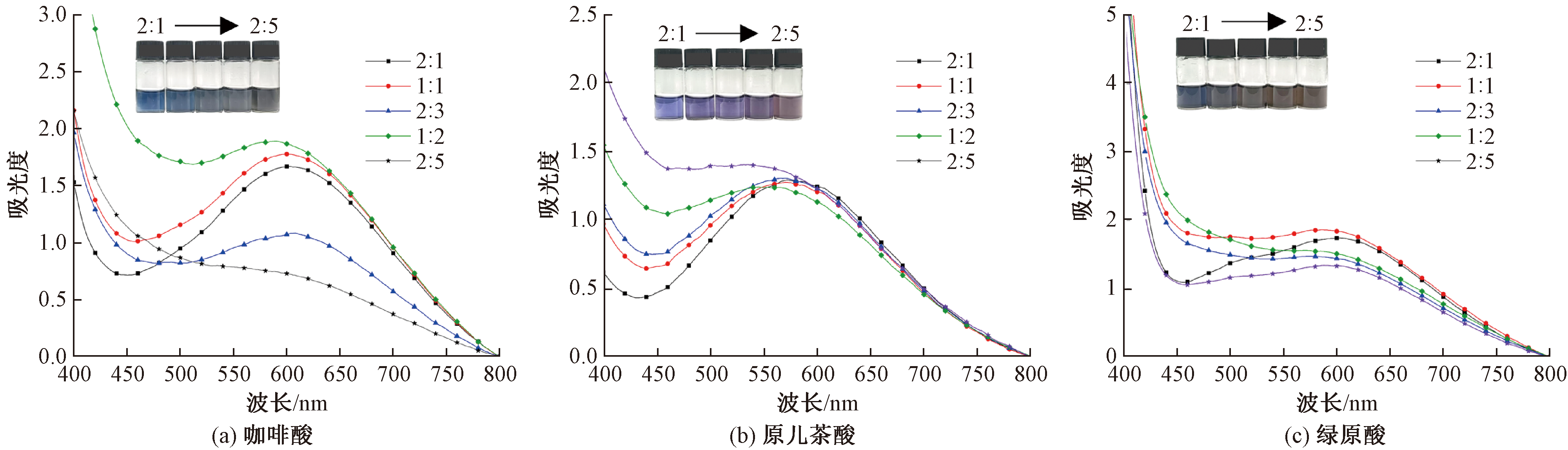
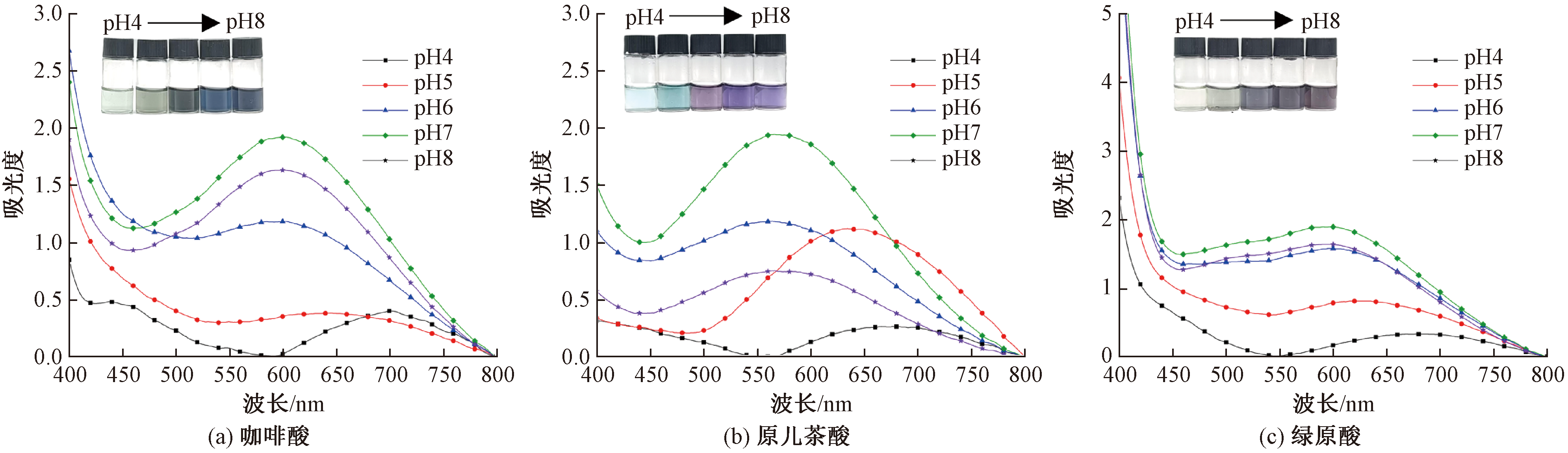
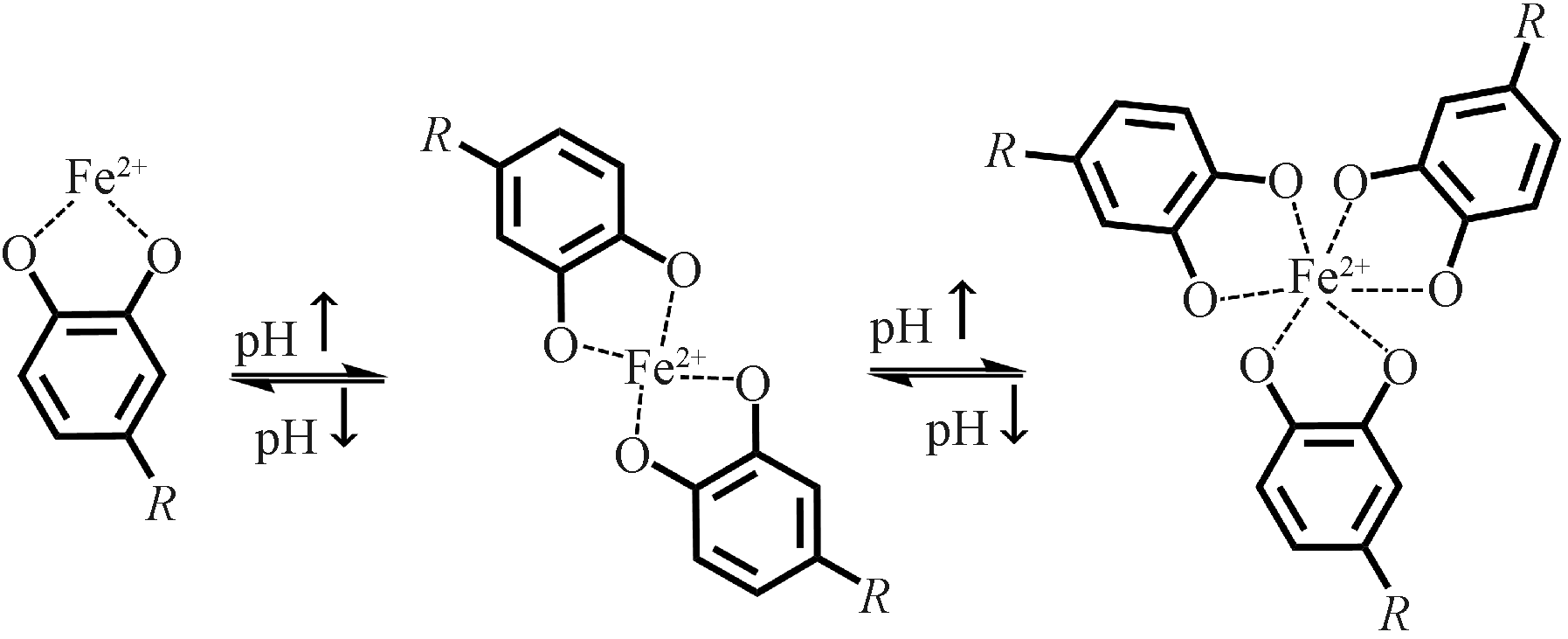
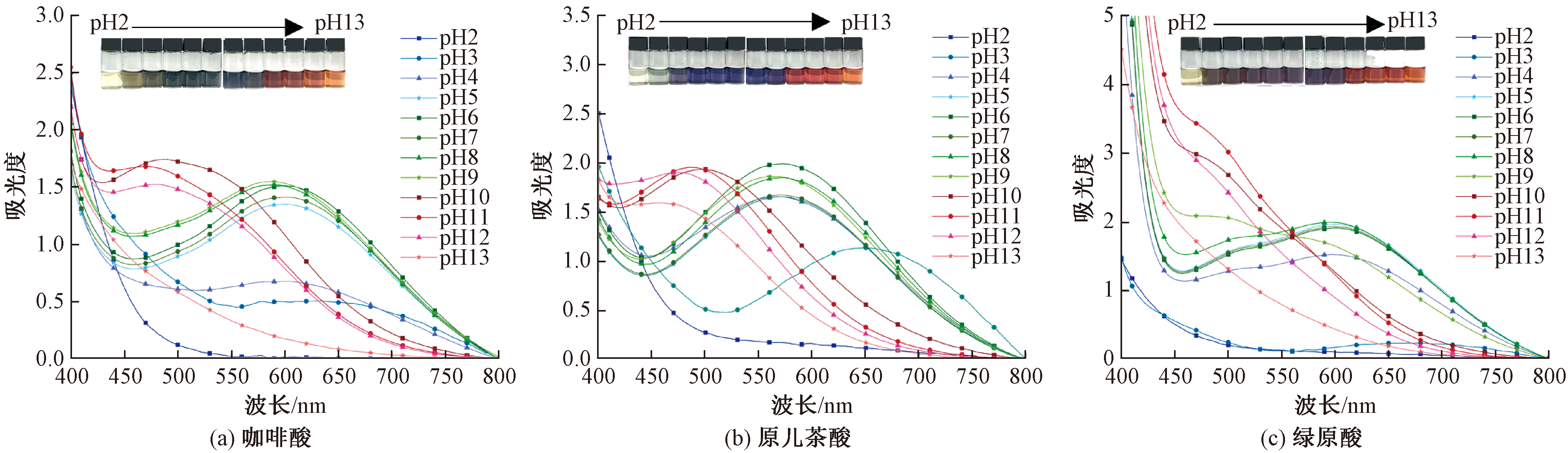
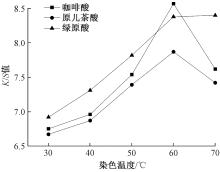
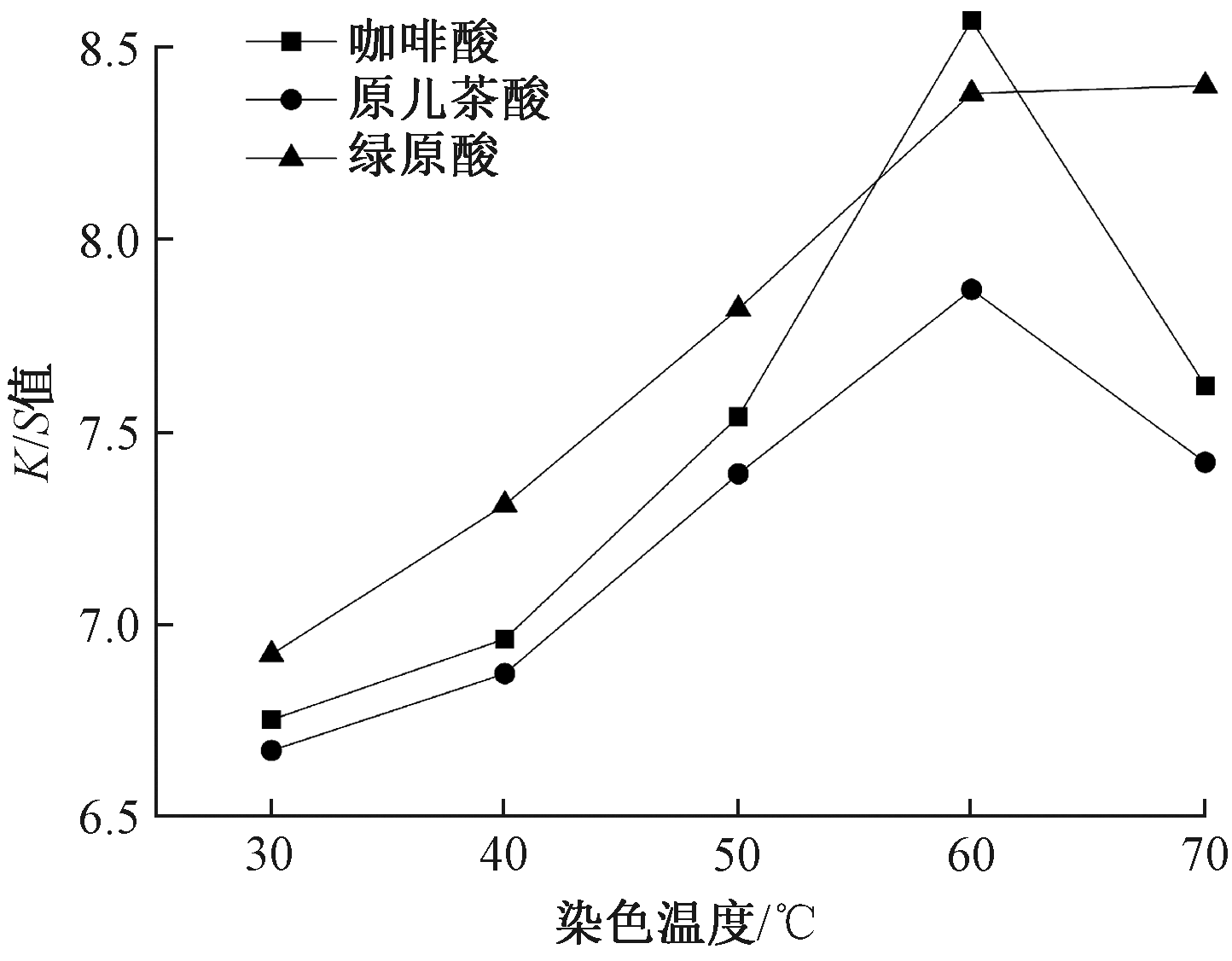
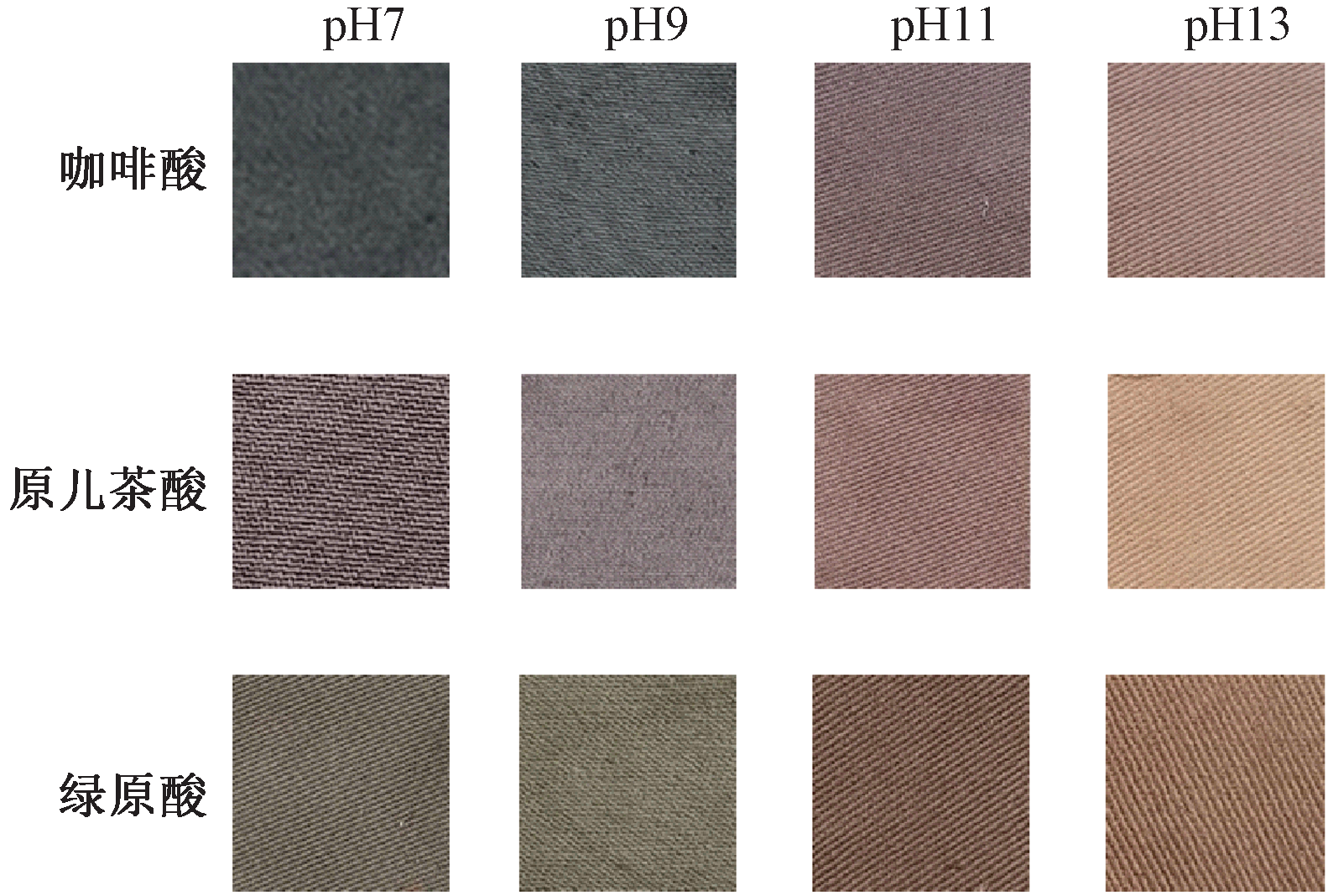
生物质多酚凭借其共轭结构与较强的反应活性,在功能性染料设计中展现出广泛应用潜力。然而,其色系多局限于黄棕色,且功能单一,难以满足实际应用需求,因此需通过结构调控实现多色系与多功能的协同。基于多酚羟基与金属离子间可调控的配位特性,选用植物来源的咖啡酸、原儿茶酸和绿原酸分别与亚铁离子络合,成功制备出具有黑色、紫色和棕色的生物基染料。进一步以支化多胺为桥接剂,在染料与纤维间建立连接,实现了多色系织物的构建。实验结果表明:3种多酚与亚铁离子在量比分别为1∶1(咖啡酸、原儿茶酸)和2∶1(绿原酸)、反应pH值为7时生成的染料量最多且色泽鲜艳;当染色条件为多酚浓度10 mmol/L、温度60 ℃时,织物的K/S值达到最高,经该染料染色的织物具有较好的耐摩擦色牢度(均在3~4级以上),不仅对碱性液体具有响应变色性能,且紫外防护系数(UPF)均大于50,展现出较强的紫外防护性能。
中图分类号:
| [1] | 王秀莲, 熊婕, 王军. 天然食用色素在食品中应用及稳定性研究[J]. 工业微生物, 2024, 54(1): 93-99. |
| WANG Xiulian, XIONG Jie, WANG Jun. Research progress of natural food coloring in food[J]. Industrial Microbiology, 2024, 54(1): 93-99. | |
| [2] |
ZHAO C, LI F Q, YAN S G, et al. Identification and activity assay in vivo and in vitro of novel antioxidant and anti-aging peptides from C-phycocyanin of Limnospira platensis[J]. Algal Research, 2025, 89: 104042.
doi: 10.1016/j.algal.2025.104042 |
| [3] | 王进军, 李诗钰, 苗旺, 等. 微生物红色素的提取、纯化与生物活性研究现状[J]. 食品与生物技术学报, 2024, 43(11): 1-10. |
| WANG Jinjun, LI Shiyu, MIAO Wang, et al. Current status of microbial red pigments extraction, purification, and bioactivity research[J]. Journal of Food Science and Biotechnology, 2024, 43(11): 1-10. | |
| [4] |
QIN Z J, WANG X L, GAO S, et al. Production of natural pigments using microorganisms[J]. Journal of Agricultural and Food Chemistry, 2023, 71(24): 9243-9254.
doi: 10.1021/acs.jafc.3c02222 pmid: 37306193 |
| [5] | 李倍思. 纺织品天然多酚化合物生物染色研究[D]. 天津: 天津工业大学, 2023: 2-25. |
| LI Beisi. Study on bio-dyeing of textiles with natural polyphenolic compounds[D]. Tianjin: Tianjin Polytechnic University, 2023: 2-25. | |
| [6] | 杨陈, 林燕萍. 茶多酚浸染壳聚糖改性棉织物的性能[J]. 塑料, 2025, 54(1): 25-28, 33. |
| YANG Chen, LIN Yanping. Properties of chitosan modified cotton fabric impregnated with tea poly-phenol[J]. Plastics, 2025, 54(1): 25-28, 33. | |
| [7] |
VUTHIGANOND N, NAKPATHOM M, MONGKHOLRATTANASIT R. Metal-free dyeing of cotton fabric using mangrove bark polyphenols via azoic dyeing[J]. Fibers and Polymers, 2018, 19(12): 2524-2532.
doi: 10.1007/s12221-018-8341-6 |
| [8] |
CHEN Z, ŚWISŁOCKA R, CHOIŃSKA R, et al. Exploring the correlation between the molecular structure and biological activities of metal-phenolic compound complexes: research and description of the role of metal ions in improving the antioxidant activities of phenolic compounds[J]. International Journal of Molecular Sciences, 2024, 25(21): 11775.
doi: 10.3390/ijms252111775 |
| [9] |
LIU X L, WANG H C, YANG T, et al. Functions of metal-phenolic networks and polyphenol derivatives in photo(electro)catalysis[J]. Chemical Communications, 2023, 59(92): 13690-13702.
doi: 10.1039/D3CC04156E |
| [10] |
CHEN Z J, FARAG M A, ZHONG Z F, et al. Multifaceted role of phyto-derived polyphenols in nanodrug delivery systems[J]. Advanced Drug Delivery Reviews, 2021, 176: 113870.
doi: 10.1016/j.addr.2021.113870 |
| [11] |
CHENG J, SHEN Y, GU Y L, et al. Metal-polyphenol multistage competitive coordination system for colorimetric monitoring meat freshness[J]. Advanced Materials, 2025, 37(21): 2570184.
doi: 10.1002/adma.v37.27 |
| [12] |
QIN J, GUO N N, YANG J, et al. Recent advances of metal-polyphenol coordination polymers for biomedical applications[J]. Biosensors, 2023, 13(8): 776.
doi: 10.3390/bios13080776 |
| [13] | 焦婷, 王稳航, 程芸, 等. 金属-多酚网络的组装、功能特性及其在食品领域中的应用研究进展[J]. 食品科学, 2022, 43(1): 232-239. |
|
JIAO Ting, WANG Wenhang, CHENG Yun, et al. Construction and functional characterization of metal-polyphenol network and its application in food field: a review of recent literature[J]. Food Science, 2022, 43(1): 232-239.
doi: 10.7506/spkx1002-6630-20200814-182 |
|
| [14] | 朱秋昱, 张斌, 沈晓杰, 等. 季铵盐阳离子改性剂的合成及其在栀子黄染色棉织物中的应用[J]. 现代纺织技术, 2024, 32(1): 80-89. |
| ZHU Qiuyu, ZHANG Bin, SHEN Xiaojie, et al. Synthesis of quaternary ammonium salt cationic modifiers and their application in dyeing cotton fabrics with gardenia yellow[J]. Advanced Textile Technology, 2024, 32(1): 80-89. | |
| [15] |
ZHANG Q X, WANG R, SHI B. Synergistically enhancing hydrogen bonding, hydrophobic interaction and electrostatic association of collagen fiber to flavonoid aglycones for their effective separation by polyethyleneimine modification[J]. Collagen and Leather, 2023, 5(1): 30.
doi: 10.1186/s42825-023-00138-2 |
| [16] | 孙晓楠, 王利君. 媒染对柿漆棉织物颜色与性能的影响[J]. 丝绸, 2023, 60(2): 75-83. |
| SUN Xiaonan, WANG Lijun. Effects of mordant dyeing on color and properties of persimmon lacquer cotton fabrics[J]. Journal of Silk, 2023, 60(2): 75-83. | |
| [17] | 杨子涵, 陈丹丹, 季俊夫, 等. 果蔬汁中多酚介导的非酶褐变研究进展[J]. 食品工业科技, 2021, 42(24): 367-375. |
| YANG Zihan, CHEN Dandan, JI Junfu, et al. Research progress on non-enzymatic browning mediated by polyphenols in fruit and vegetable juice[J]. Science and Technology of Food Industry, 2021, 42(24): 367-375. | |
| [18] | 刘美艳, 潘晓丽, 李学波, 等. 芦荟大黄素金属配合物的抗氧化活性研究[J]. 四川大学学报(医学版), 2021, 52(2): 241-247. |
| LIU Meiyan, PAN Xiaoli, LI Xuebo, et al. Study on the antioxidant activity of aloe-emodin metal complex[J]. Journal of Sichuan University (Medical Sciences), 2021, 52(2): 241-247. |
| [1] | 顾家玉, 张炜栋, 董永春, 孙璇, 徐良军. 银杏叶黄酮对羊毛和蚕丝织物的抗菌整理[J]. 纺织学报, 2026, 47(1): 142-150. |
| [2] | 冯品淇, 张丽宁, 王娜娜, 吕仲, 周存. 低温高效精练剂的制备及其应用性能[J]. 纺织学报, 2026, 47(1): 159-167. |
| [3] | 宋佳怡, 王政驿, 程献伟, 关晋平, 朱亚伟. 液态靛蓝染料的制备及其对棉织物的染色性能[J]. 纺织学报, 2025, 46(12): 133-141. |
| [4] | 候志文, 任泽苹, 王晓宁, 张天骄. 棉织物的壳聚糖/海藻酸盐抗菌阻燃整理及其性能[J]. 纺织学报, 2025, 46(12): 171-180. |
| [5] | 王梁宇, 高晓红, 于彩娇, 张雪婷, 杨旭礼. 还原氧化石墨烯/铜纳米颗粒导电棉织物的制备及其传感性能[J]. 纺织学报, 2025, 46(12): 181-187. |
| [6] | 龙红霞, 吴伟, 刘娅岚, 徐红, 毛志平. 纤维素纤维孔道吸湿溶胀行为的分子动力学模拟[J]. 纺织学报, 2025, 46(11): 155-163. |
| [7] | 叶慧, 丛洪莲, 贺海军. 基于二元脂肪酸的中空涤纶相变纤维制备及其性能[J]. 纺织学报, 2025, 46(11): 188-195. |
| [8] | 张帆, 蔡再生, 刘慧景, 陆少锋, 黄旭明. 高牢固光致变色棉织物的点击化学法制备及其性能[J]. 纺织学报, 2025, 46(11): 196-202. |
| [9] | 王子涵, 李勇, 陈晓川, 汪军, 梁凌杰. 废旧棉织物破碎加工过程的建模与仿真[J]. 纺织学报, 2025, 46(07): 136-143. |
| [10] | 赵强强, 王韩星, 张奉轩, 何瑾馨, 周俊, 周兆昌, 董霞. 聚六亚甲基双胍盐酸盐改性对棉织物耐日晒色牢度的影响[J]. 纺织学报, 2025, 46(04): 109-118. |
| [11] | 黄春月, 黄鑫, 杜海娟, 徐文杰, 杨雪梅, 万科研, 李旭, 高杰. 钼氧簇复合物整理剂制备及其整理棉织物的防紫外线性能[J]. 纺织学报, 2025, 46(04): 138-145. |
| [12] | 廖喜林, 曾媛, 刘淑萍, 李亮, 李淑静, 刘让同. 磷/氮/硅复配协效阻燃棉织物制备及其性能[J]. 纺织学报, 2025, 46(03): 151-157. |
| [13] | 张洁, 郭鑫源, 关晋平, 程献伟, 陈国强. 磷/氮阻燃剂原位沉积对棉织物的耐久阻燃改性[J]. 纺织学报, 2025, 46(02): 180-187. |
| [14] | 袁华彬, 王沂沨, 王家朋, 向永翾, 陈国强, 邢铁玲. 基于山嵛酸和ZIF-8改性的超疏水防结冰棉织物[J]. 纺织学报, 2025, 46(02): 197-206. |
| [15] | 巢探宇, 叶韵, 李娜, 廖思含, 马琪凯, 崔莉. 基于脂肪酶固定化的棉织物易去油污整理及其应用[J]. 纺织学报, 2025, 46(01): 130-137. |
|
||
 京公网安备11010502044800号