纺织学报 ›› 2026, Vol. 47 ›› Issue (05): 1-8.doi: 10.13475/j.fzxb.20250907301
• 纤维材料 • 下一篇
邱虹1,2,3, 陈黎1,2,3, 王丽芳1,2,3, 易珊1,2,3, 唐一卡1,2,3, 王玉平4, 高洪国4, 张雯欣4, 王克毅1,2,3( ), 刘丽芳1,2,3
QIU Hong1,2,3, CHEN Li1,2,3, WANG Lifang1,2,3, YI Shan1,2,3, TANG Yika1,2,3, WANG Yuping4, GAO Hongguo4, ZHANG Wenxin4, WANG Keyi1,2,3(), LIU Lifang1,2,3
摘要:
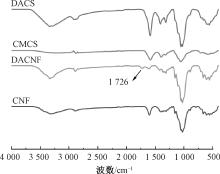
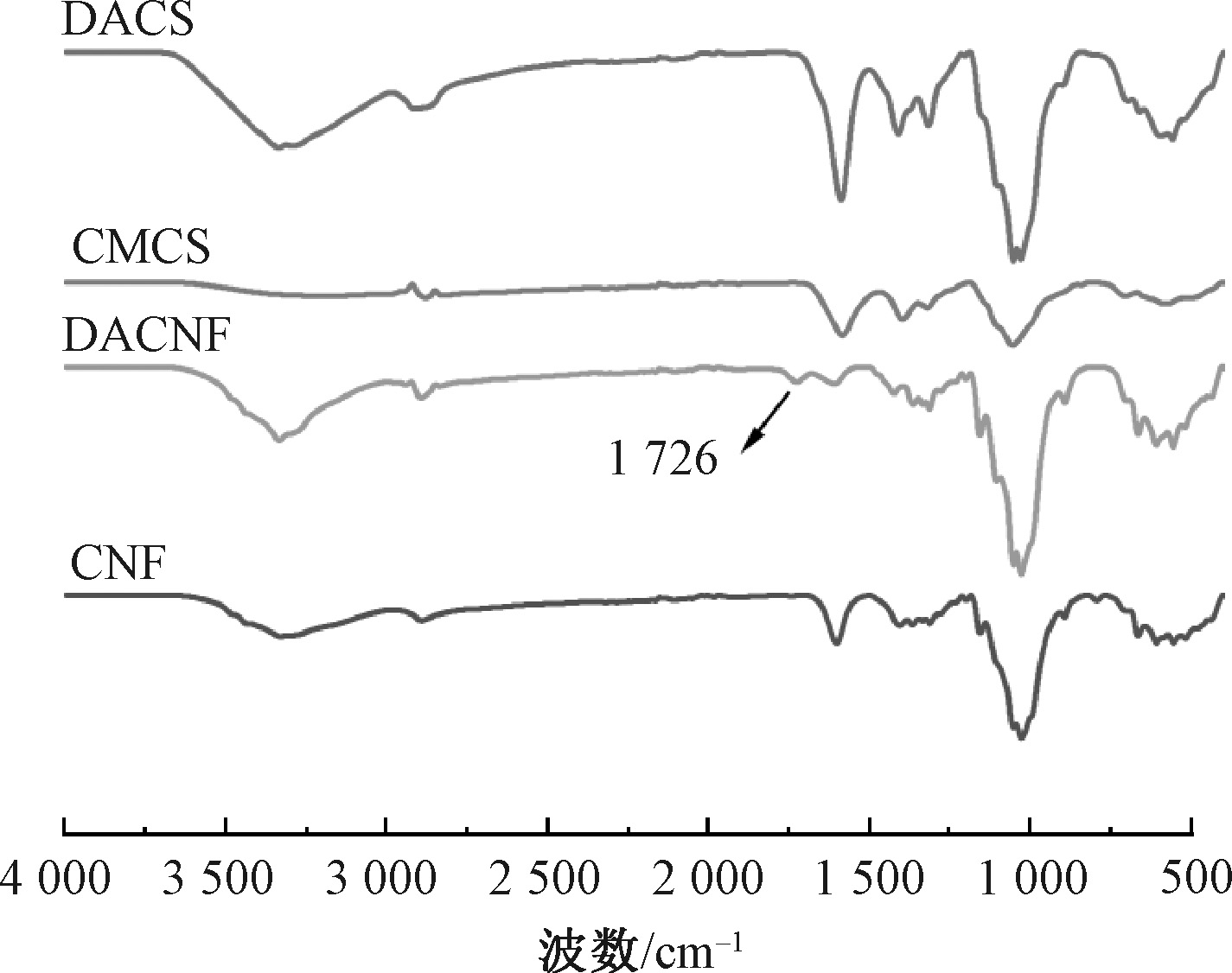
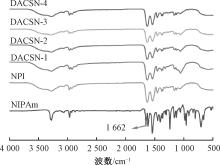
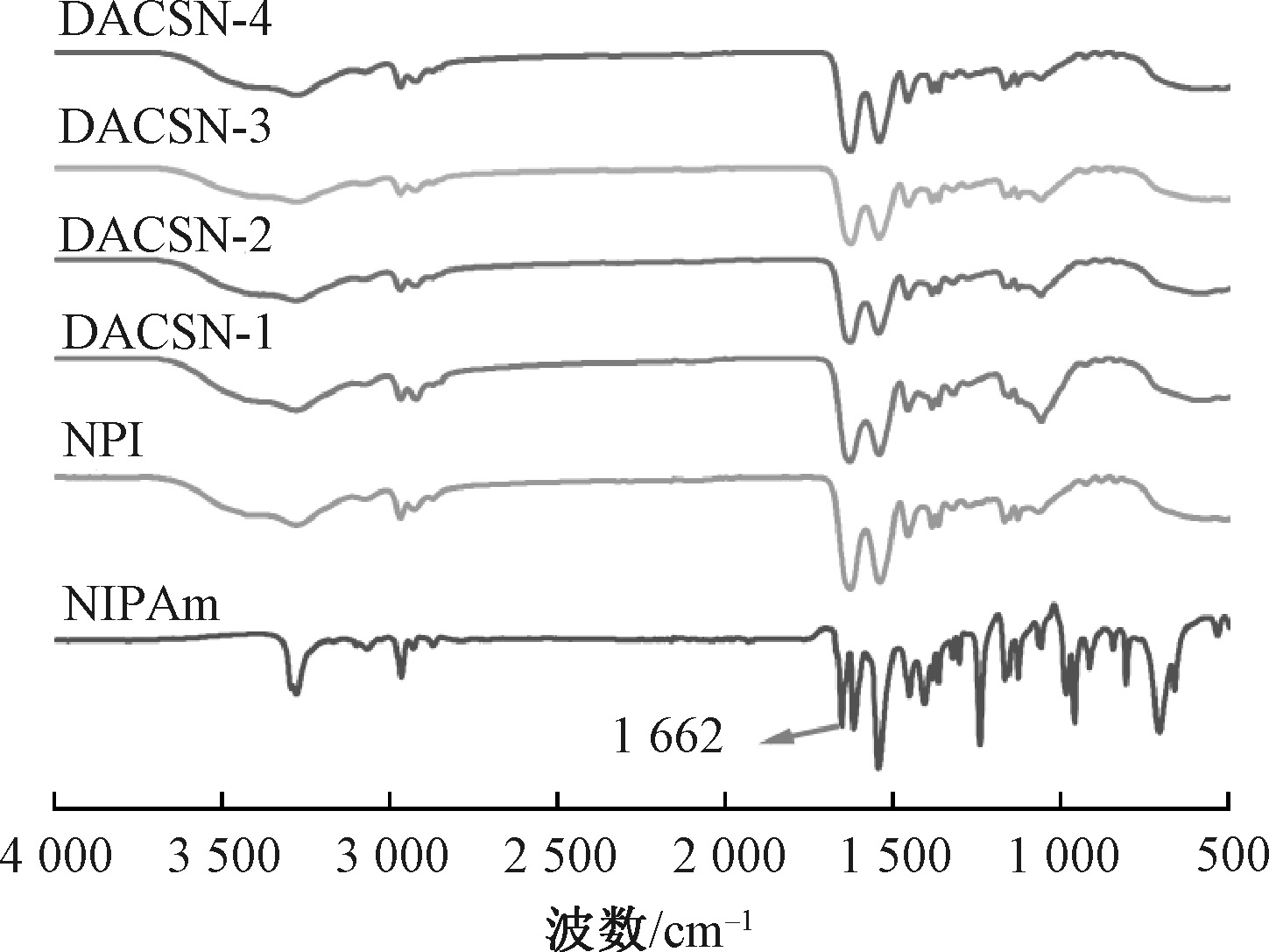
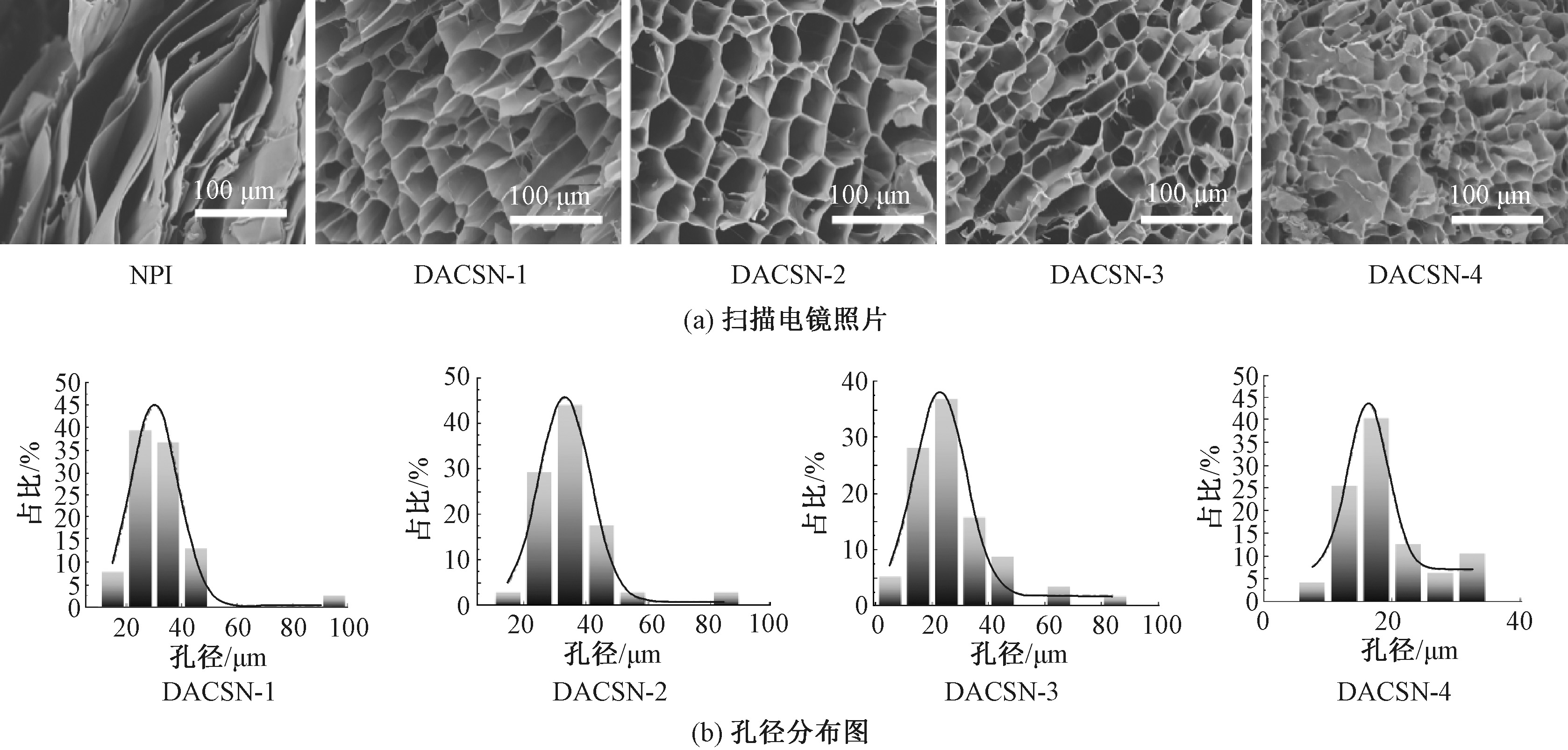
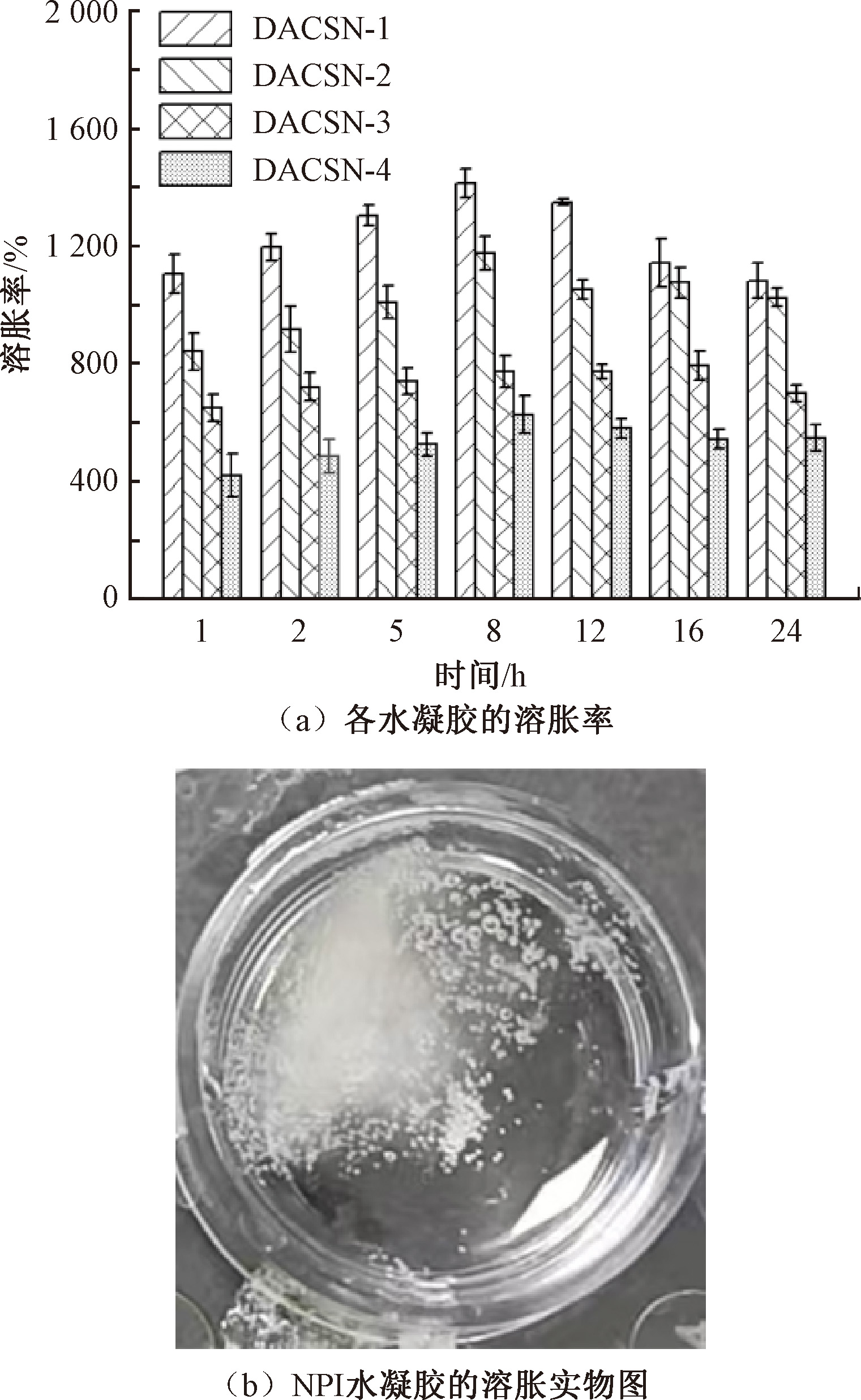
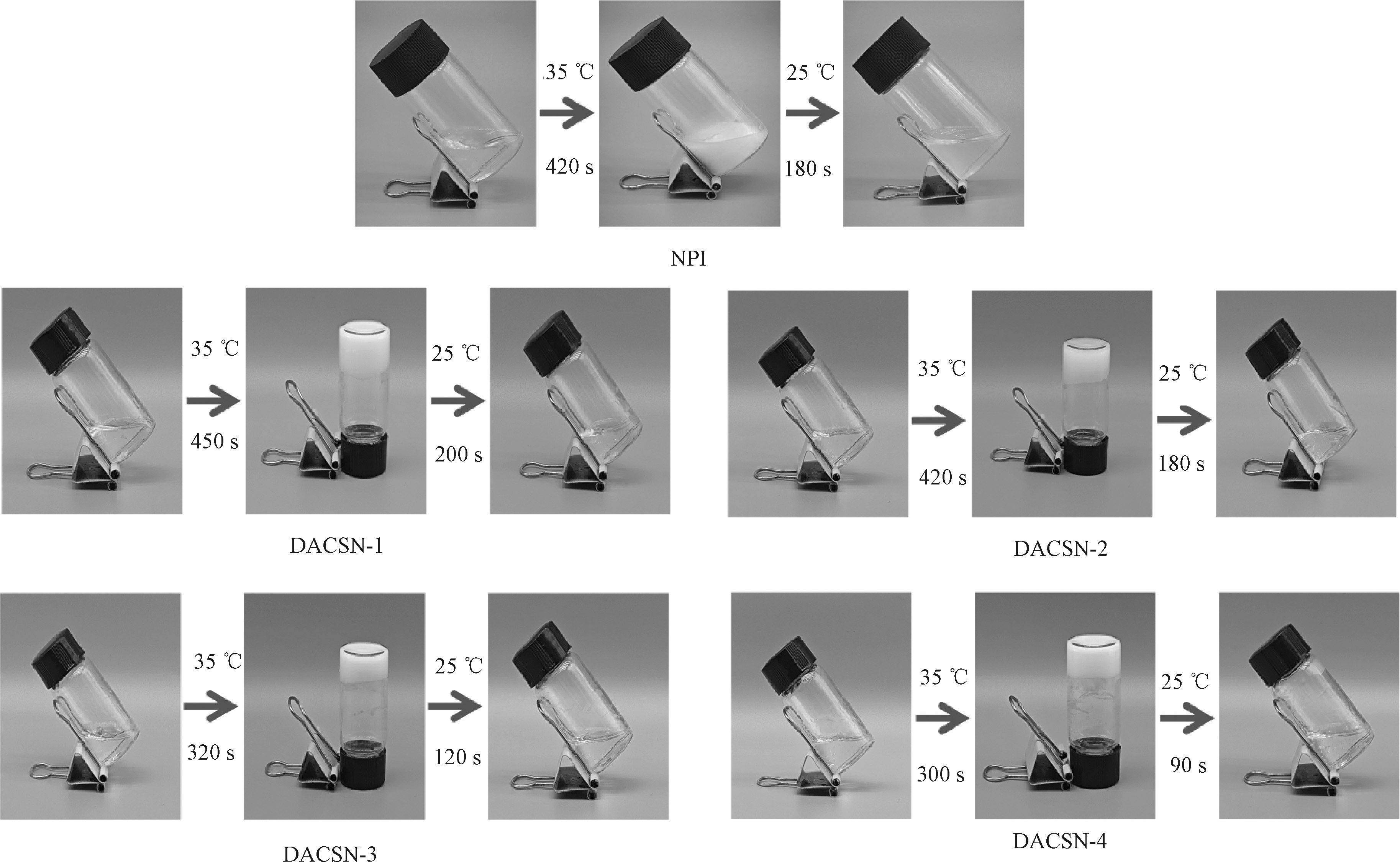
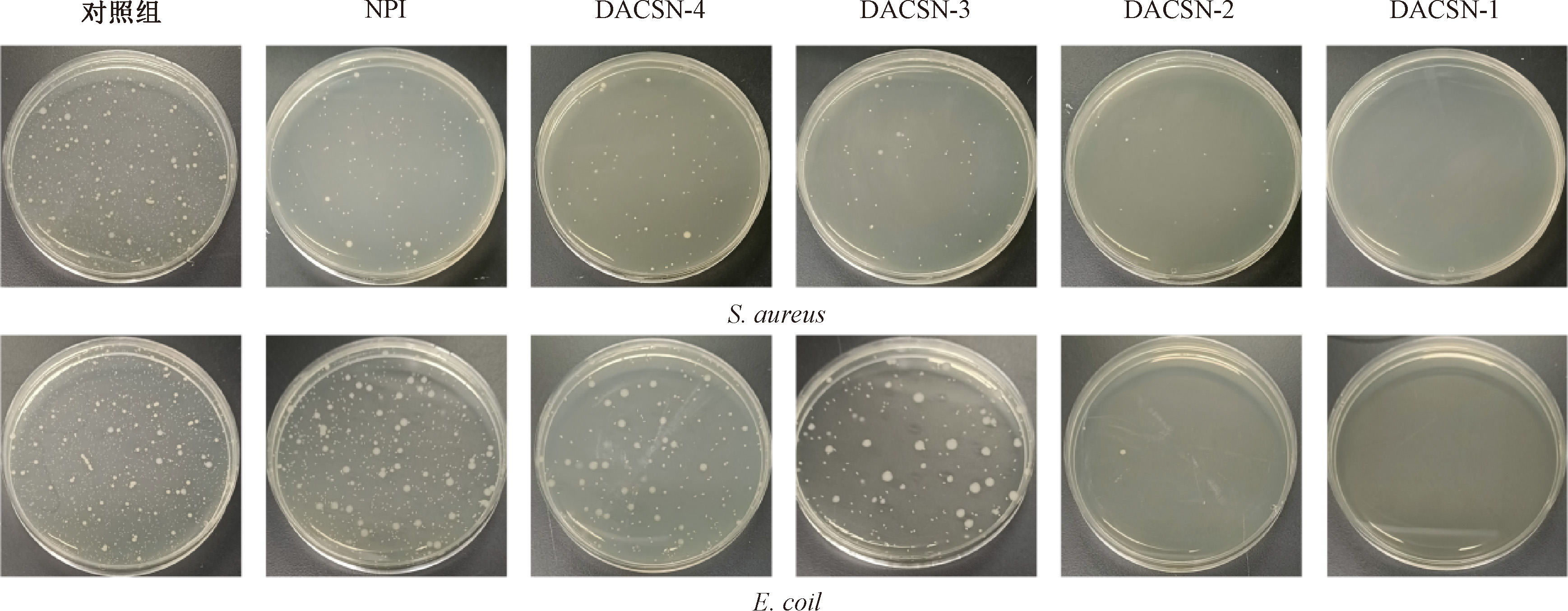
针对传统水凝胶敷料形态固定、难以贴合伤口以及无法迅速智能响应伤口状态等问题,以醛基化纳米纤维素(DACNF)和羧甲基壳聚糖(CMCS)为基体,引入聚N-异丙基丙烯酰胺(PNIPAm)链段,制备一种兼具高溶胀率、抗菌性和快速温度响应性的水凝胶,并采用傅里叶变换红外光谱仪、扫描电子显微镜、差示扫描热量仪等对其结构与性能进行表征。结果表明,该水凝胶具有均匀三维多孔结构(孔径20~80 μm),为水分子和药物提供了进出通道;在8 h内溶胀率达到1 415.4%,有效吸收伤口渗出液并维持伤口湿润环境;对金黄色葡萄球菌和大肠埃希菌的抑制率均达到99.9%,表现出优异的抗菌性能;其溶液-凝胶转变温度约为34 ℃,可在300 s内完成溶液-凝胶的可逆构象转变,液态时可与伤口无缝贴合,在皮肤温度下转变为凝胶,保护伤口,换药时只需局部降温即可转变为液态,实现无痛粘贴与无创伤更换的效果。
中图分类号:
| [1] |
BRUMBERG V, ASTRELINA T, MALIVANOVA T, et al. Modern wound dressings: hydrogel dressings[J]. Biomedicines, 2021, 9(9): 1235.
doi: 10.3390/biomedicines9091235 |
| [2] |
FU X M, ZHENG L, WEN X J, et al. Functional hydrogel dressings for wound management: a comprehensive review[J]. Materials Research Express, 2023, 10(11): 112001.
doi: 10.1088/2053-1591/acfb5c |
| [3] |
LIU Y, ZHANG J X, JIN Y Z, et al. Gelatin methacrylate based liquid dressing with antibacterial and hemostasis properties[J]. Colloids and Surfaces A: Physicochemical and Engineering Aspects, 2024, 689: 133749.
doi: 10.1016/j.colsurfa.2024.133749 |
| [4] |
HE K, QU J Y, CAO Y. Thermo-responsive cellulose hydrogels: a flourishing frontier in material design[J]. Polymer Reviews, 2025, 65(3): 944-974.
doi: 10.1080/15583724.2025.2458305 |
| [5] |
BEI Z W, YE L, TONG Q, et al. Thermostimulated shrinking and adhesive hydrogel dressing for treating chronic diabetic wounds[J]. Cell Reports Physical Science, 2024, 5(11): 102289.
doi: 10.1016/j.xcrp.2024.102289 |
| [6] |
TIAN M L, WAN J J, WANG X, et al. Anisotropic nanocomposite hydrogel dressings with thermo-responsive contraction for actively stimulated tissue regeneration[J]. Chemical Engineering Journal, 2025, 514: 163202.
doi: 10.1016/j.cej.2025.163202 |
| [7] |
LIANG Y, LI M, TANG Y, et al. Temperature-sensitive hydrogel dressing loaded with nicotinamide mononucleotide accelerating wound healing in diabetic mice[J]. Biomedicine & Pharmacotherapy, 2023, 167: 115431.
doi: 10.1016/j.biopha.2023.115431 |
| [8] |
GUAN Q F, YANG H B, HAN Z M, et al. Sustainable cellulose-nanofiber-based hydrogels[J]. ACS Nano, 2021, 15(5): 7889-7898.
doi: 10.1021/acsnano.1c01247 |
| [9] | 余厚咏, 黄程玲, 陈毅, 等. 天然纤维素的多维结构演变及其功能材料研究进展[J]. 纺织学报, 2025, 46(6): 45-55. |
| YU Houyong, HUANG Chengling, CHEN Yi, et al. Review on multidimensional structural evolution of natural cellulose and its functional materials[J]. Journal of Textile Research, 2025, 46(6): 45-55. | |
| [10] | 王璐, 关国平, 王富军, 等. 生物医用纺织材料及其器件研究进展[J]. 纺织学报, 2016, 37(2): 133-140. |
| WANG Lu, GUAN Guoping, WANG Fujun, et al. Research progress on biomedical textile materials and devices[J]. Journal of Textile Research, 2016, 37(2): 133-140. | |
| [11] |
SHAIBIE N A, RAMLI N A, MOHAMMAD FAIZAL N D F, et al. Poly(N-isopropylacrylamide)-based polymers: recent overview for the development of temperature-responsive drug delivery and biomedical applications[J]. Macromolecular Chemistry and Physics, 2023, 224(20): 2300157.
doi: 10.1002/macp.v224.20 |
| [12] | 季秋琳, 韦柏任, 梁爽, 等. 高碘酸钠氧化制备醛基化巴沙木气凝胶的物理性能表征[J]. 林业工程学报, 2025, 10(3): 46-53. |
|
JI Qiulin, WEI Bairen, LIANG Shuang, et al. Characterization of aldolized Balsa wood aerogel oxidized by sodium periodate[J]. Journal of Forestry Engineering, 2025, 10(3): 46-53.
doi: 10.34220/2222-7962-2021-10-4 |
|
| [13] |
DAS A, BABU A, CHAKRABORTY S, et al. Poly(N-isopropylacrylamide) and its copolymers: a review on recent advances in the areas of sensing and biosensing[J]. Advanced Functional Materials, 2024, 34(37): 2402432.
doi: 10.1002/adfm.v34.37 |
| [1] | 张旭, 许云凯, 刘云. 植酸改性茶多酚阻燃涤纶织物的制备及其性能[J]. 纺织学报, 2026, 47(05): 182-189. |
| [2] | 陈黎, 邱虹, 王丽芳, 易珊, 唐一卡, 高洪国, 王美英, 刘丽芳. 季铵化改性纳米纤维素/聚乙烯醇气凝胶敷料的制备及其性能[J]. 纺织学报, 2026, 47(04): 26-33. |
| [3] | 杨鸿杰, 徐丽亚, 汪蔚. 含一氧化氮供体的生物基聚酰胺56纳米纤维膜制备及其性能[J]. 纺织学报, 2026, 47(04): 43-51. |
| [4] | 霍雨辰, 张帆, 翟云云, 刘海清. 纳米纤维素/聚丙烯腈复合隔膜制备及其锂枝晶抑制[J]. 纺织学报, 2026, 47(04): 61-70. |
| [5] | 邵英海, 朴洪伟, 曹继鹏, 张月, 许兰杰, 于学智, 张明光. 天然彩棉/柞蚕短纤维混纺纱的制备及其抗菌性能[J]. 纺织学报, 2026, 47(03): 240-246. |
| [6] | 易珊, 王丽芳, 陈黎, 邱虹, 唐一卡, 张国清, 王美英, 高艳春, 葛秀敏, 刘丽芳. 纳米纤维素基pH响应型抗菌抗氧化伤口敷料的制备及其性能[J]. 纺织学报, 2026, 47(03): 26-34. |
| [7] | 刘鹏碧, 任经岗, 张宽祥, 曹东阳, 刘熙, 郭昌盛. 植酸/苯扎氯铵一步共沉积涂层聚丙烯补片的制备及其抗菌性能[J]. 纺织学报, 2026, 47(03): 77-86. |
| [8] | 王世杰, 孙辉, 于斌. 聚乙烯醇/牡丹皮提取物复合纳米静电纺丝膜的制备及其抗菌性能[J]. 纺织学报, 2026, 47(02): 56-64. |
| [9] | 顾家玉, 张炜栋, 董永春, 孙璇, 徐良军. 银杏叶黄酮对羊毛和蚕丝织物的抗菌整理[J]. 纺织学报, 2026, 47(01): 142-150. |
| [10] | 宋佳怡, 王政驿, 程献伟, 关晋平, 朱亚伟. 液态靛蓝染料的制备及其对棉织物的染色性能[J]. 纺织学报, 2025, 46(12): 133-141. |
| [11] | 候志文, 任泽苹, 王晓宁, 张天骄. 棉织物的壳聚糖/海藻酸盐抗菌阻燃整理及其性能[J]. 纺织学报, 2025, 46(12): 171-180. |
| [12] | 徐丽亚, 汪瑱, 杨鸿杰, 汪蔚. 氧化锌-银/生物基聚酰胺56纳米纤维膜的制备及其抗菌性能[J]. 纺织学报, 2025, 46(07): 37-45. |
| [13] | 余厚咏, 黄程玲, 陈毅, 高智英. 天然纤维素的多维结构演变及其功能材料研究进展[J]. 纺织学报, 2025, 46(06): 45-55. |
| [14] | 李亿鸿, 蔡君怡, 诸葛晓洁, 吴东芮, 滕德英, 俞建勇, 丁彬, 李召岭. 羧基化纳米纤维素增强的柔性透明导电弹性体[J]. 纺织学报, 2025, 46(04): 11-19. |
| [15] | 刘婷, 闫涛, 潘志娟. 香蕉茎秆纤维/抗菌纤维混纺纱的制备及其性能[J]. 纺织学报, 2024, 45(10): 48-54. |
|
||
 京公网安备11010502044800号