纺织学报 ›› 2026, Vol. 47 ›› Issue (05): 18-27.doi: 10.13475/j.fzxb.20250904601
冯笑琳1,2, 魏静雯1,2, 李旭明1,2( )
)
FENG Xiaolin1,2, WEI Jingwen1,2, LI Xuming1,2()
摘要:
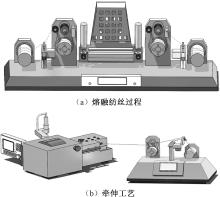
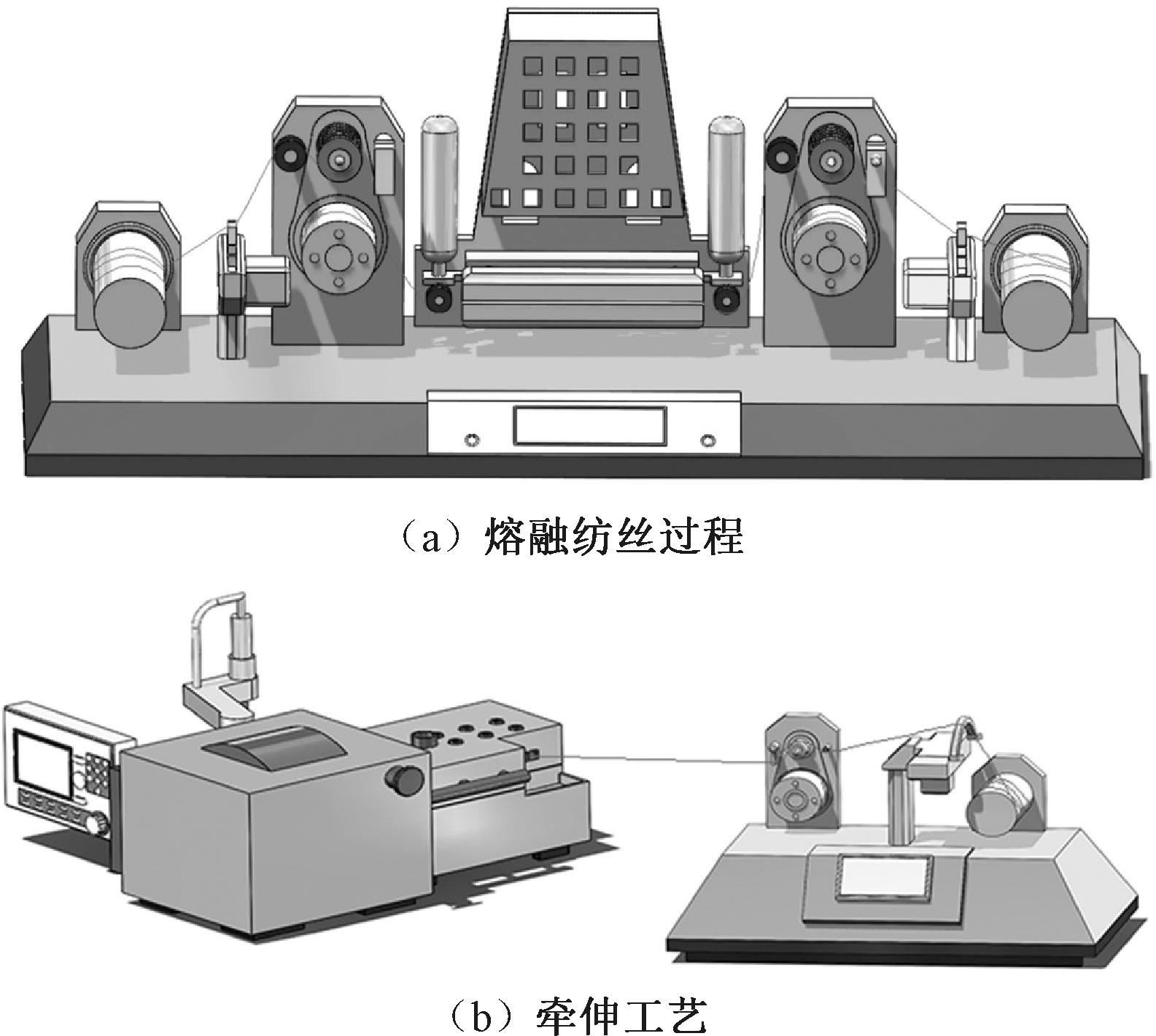
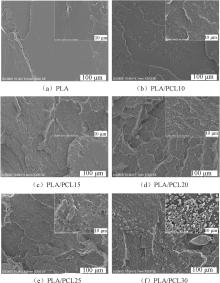
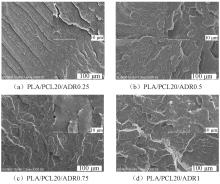
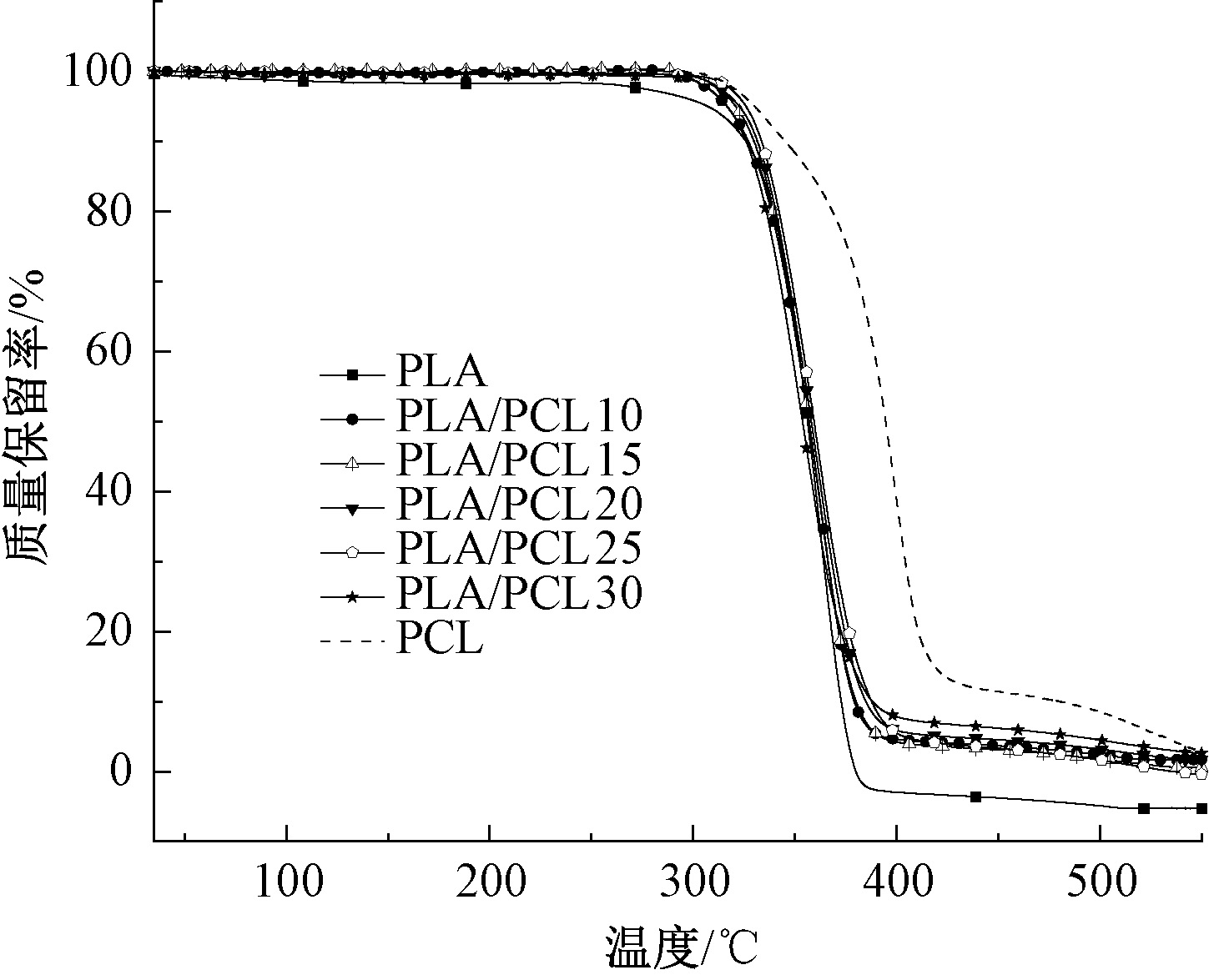
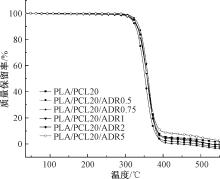
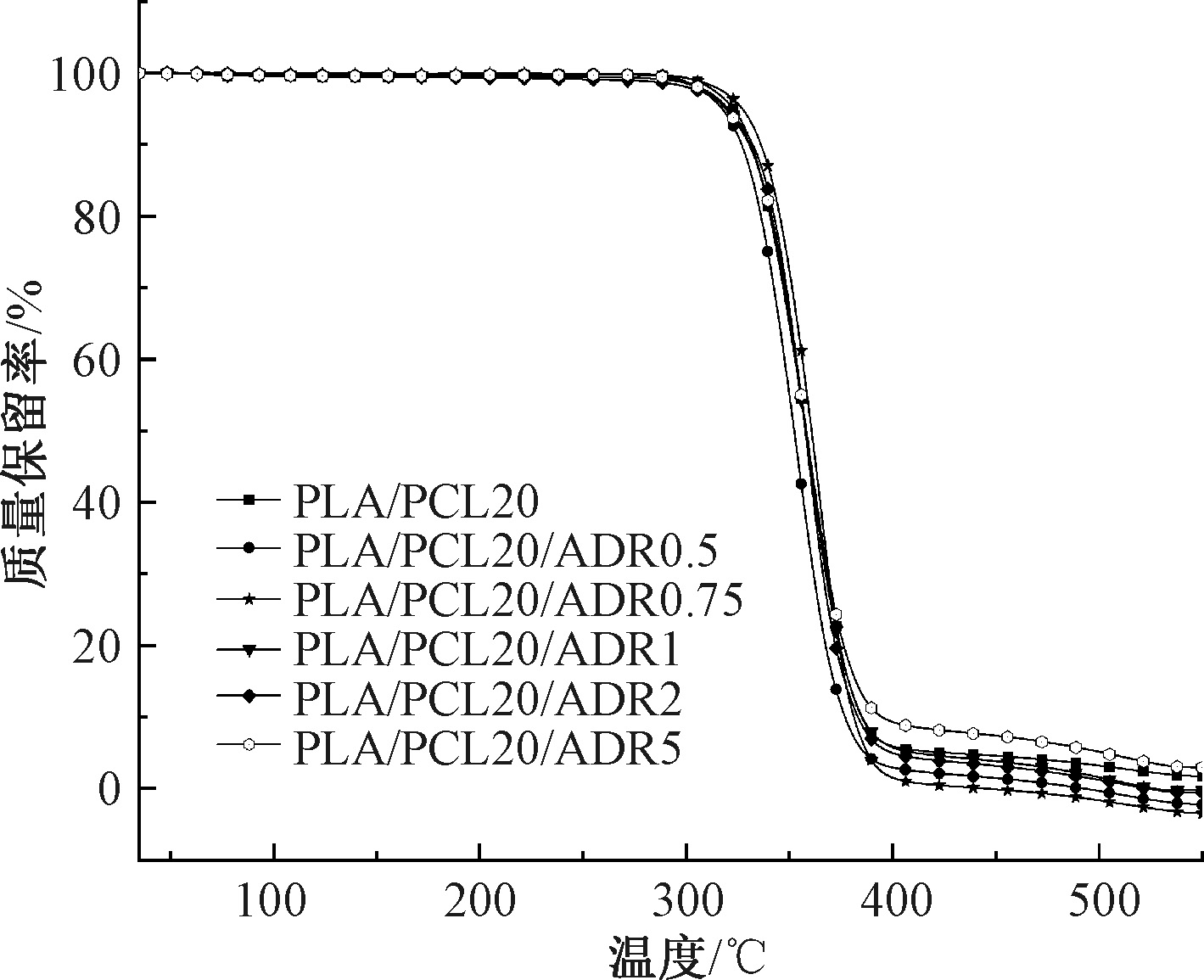
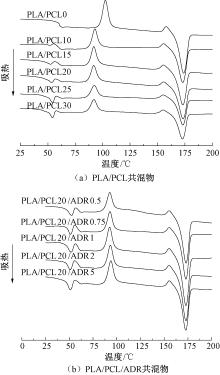
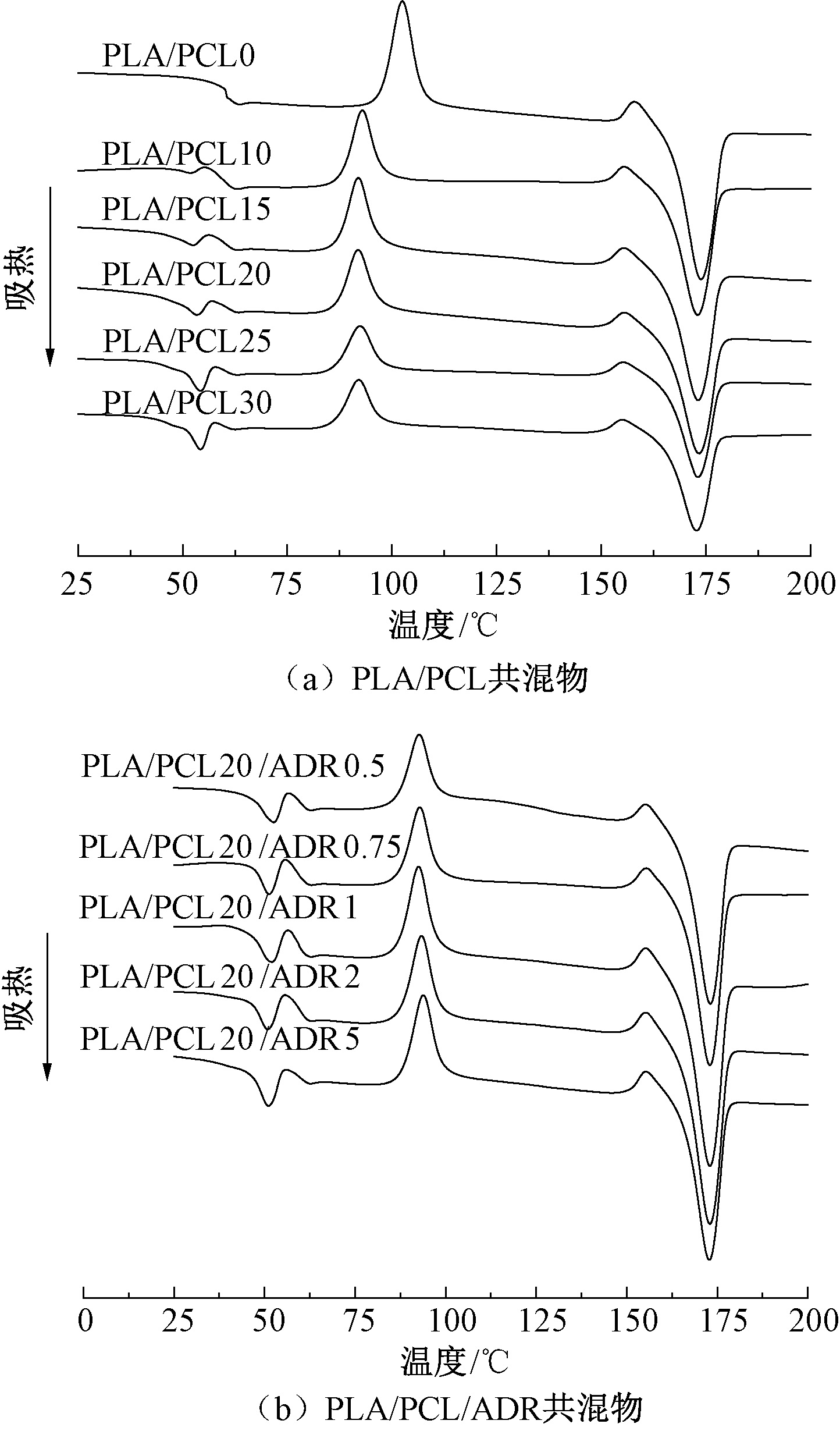
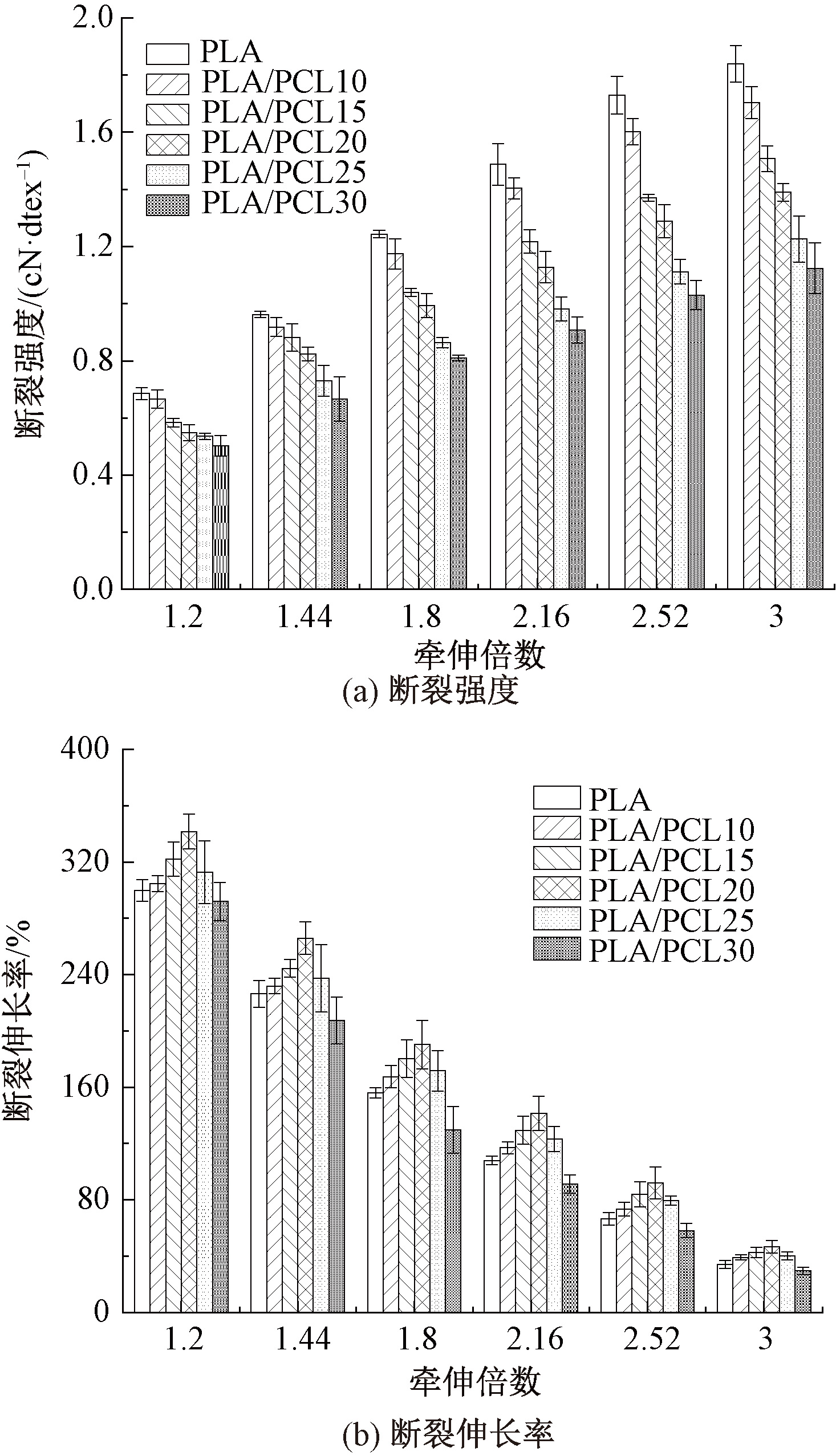
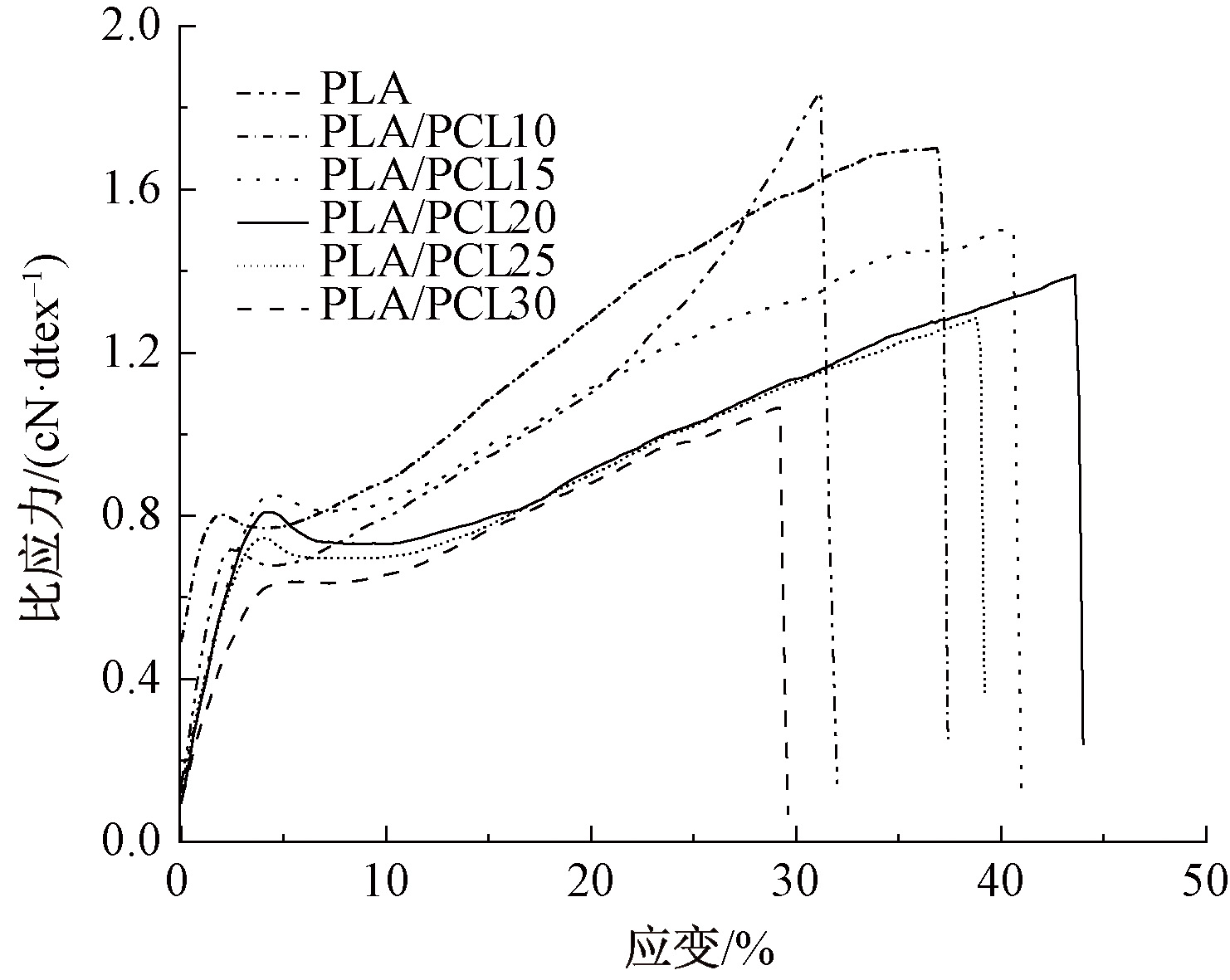
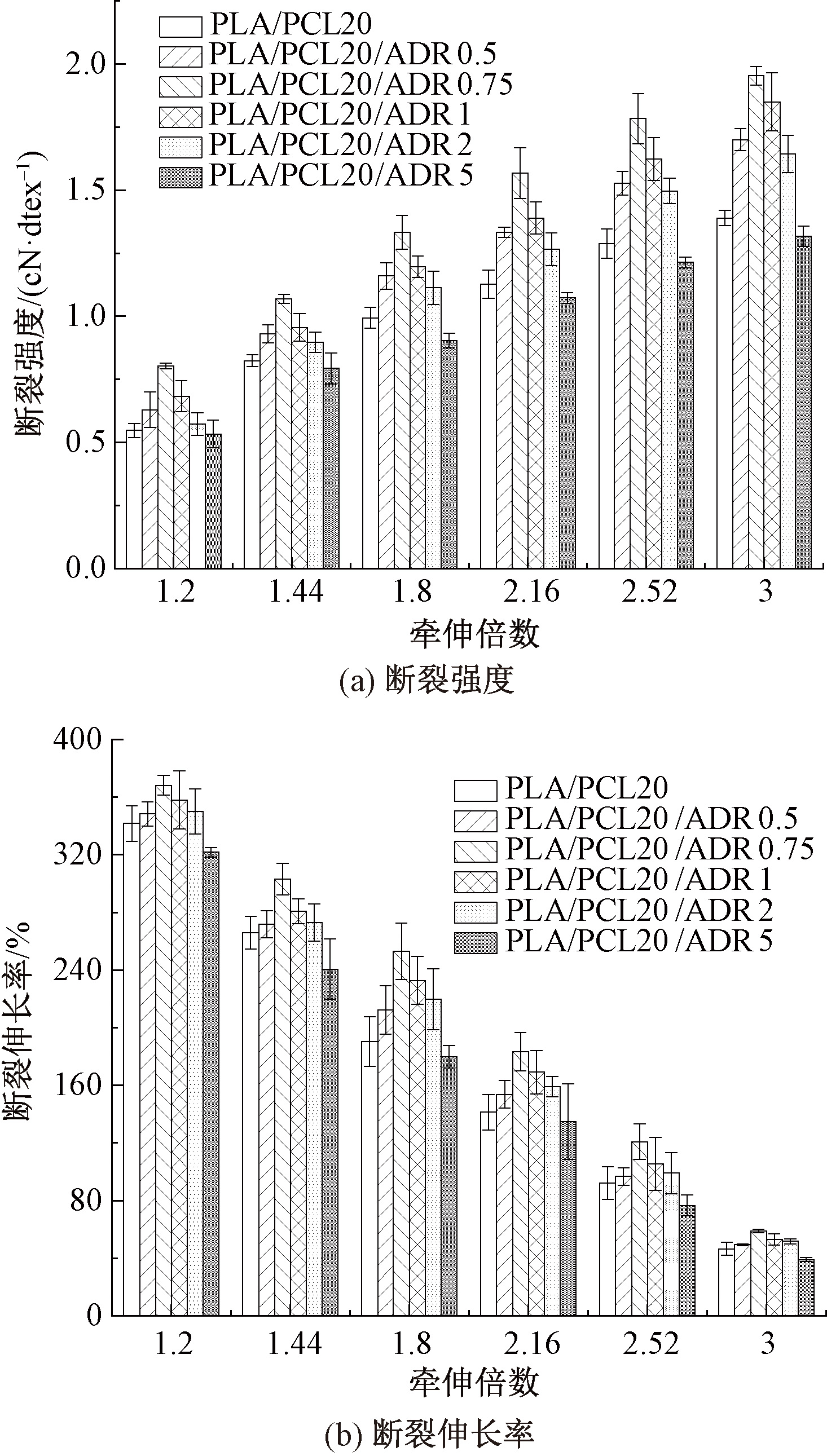
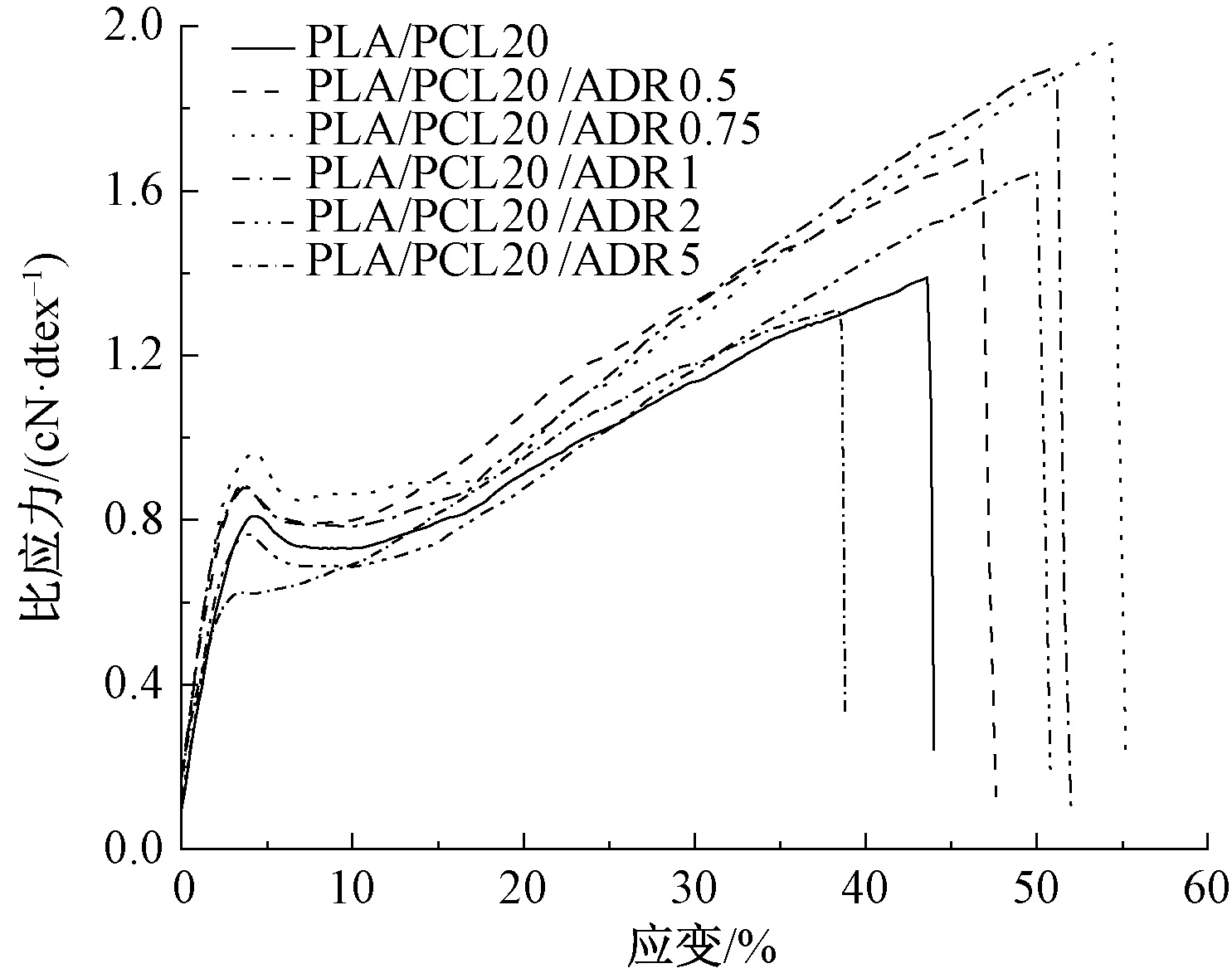
为解决聚乳酸(PLA)纤维脆性大、韧性差的问题,以PLA为基体,聚己内酯(PCL)为增韧相,多功能环氧扩链剂(ADR)为增容剂,通过熔融纺丝及热牵伸工艺制备出PLA/PCL共混纤维以及PLA/PCL/ADR共混纤维。系统分析了共混物的截面形貌、结晶及热学性能,着重研究了PCL质量分数为10%、15%、20%、25%、30%时对PLA的增韧效果,以及在PLA与PCL质量比为80∶20的基础上添加ADR质量分数分别为0.25%、0.5%、0.75%、1%、2%、5%时对PLA/PCL的增容效果以及对纤维力学性能的影响。结果表明:共混纤维随着PCL质量分数的增加,PLA/PCL结晶度和热稳定性都呈现略微提高后下降的趋势;当PCL质量分数为20%、牵伸倍数为3时,相比于纯PLA纤维其断裂强度下降24.46%,而断裂伸长率上升36.73%;当在PLA与PCL质量比为80∶20时加入0.75% ADR,所制备的PLA/PCL20/ADR0.75共混纤维,在牵伸倍数为3时,相较于纯PLA纤维其断裂强度和断裂伸长率分别提高5.98%和72.92%;PLA/PCL20/ADR0.75共混纤维热稳定性得到提升,最大质量损失速率下的分解温度达到367.83 ℃,较纯PLA提高4 ℃左右。通过调整PCL和ADR的质量分数,可以达到PLA纤维增韧的目标。
中图分类号:
| [1] | 乔思杰, 邢桐贺, 童爱心, 等. 不同聚乳酸材料的性能对比[J]. 纺织学报, 2025, 46(3): 27-33. |
| QIAO Sijie, XING Tonghe, TONG Aixin, et al. Comparison of properties of different polylactic acid materials[J]. Journal of Textile Research, 2025, 46(3): 27-33. | |
| [2] | MARTÍNEZ W E C, ACOSTA Y K R, REYES ACOSTA A V, et al. Advances in polylactic acid-based composites as a promising biomaterial for food packaging and biomedical applications: reinforcement strategies, functional enhancements, and future research directions[J]. Sustainable Materials and Technologies, 2025, 45: e01560. |
| [3] |
LI Y C, WANG S, QIAN S, et al. Depolymerization and Re/upcycling of biodegradable PLA plastics[J]. ACS-Omega, 2024, 9(12): 13509-13521.
doi: 10.1021/acsomega.3c08674 |
| [4] |
PLAMADIALA I, CROITORU C, POP M A, et al. Enhancing polylactic acid (PLA) performance: a review of additives in fused deposition modelling (FDM) filaments[J]. Polymers, 2025, 17(2): 34.
doi: 10.3390/polym17010034 |
| [5] | 刘彦麟, 顾伟文, 魏建斐, 等. 耐热聚乳酸材料的研究进展[J]. 纺织学报, 2022, 43(6): 180-186. |
| LIU Yanlin, GU Weiwen, WEI Jianfei, et al. Research progress and status quo of heat-resistant polylactic acid materials[J]. Journal of Textile Research, 2022, 43(6): 180-186. | |
| [6] |
NTRIVALA M A, PITSAVAS A C, LAZARIDOU K, et al. Polycaprolactone (PCL): the biodegradable polyester shaping the future of materials: a review on synthesis, properties, biodegradation, applications and future perspectives[J]. European Polymer Journal, 2025, 234: 114033.
doi: 10.1016/j.eurpolymj.2025.114033 |
| [7] |
VAN DE VOORDE K M, POKORSKI J K, KORLEY L T J. Exploring morphological effects on the mechanics of blended poly(lactic acid)/poly(ε-caprolactone) extruded fibers fabricated using multilayer coextrusion[J]. Macromolecules, 2020, 53(13): 5047-5055.
doi: 10.1021/acs.macromol.0c00289 |
| [8] | 杨皓然, 黄柯柯, 刘钢, 等. 高韧、耐热PLA/PCL共混材料的制备与性能研究[J]. 塑料科技, 2022, 50(5): 1-6. |
| YANG Haoran, HUANG Keke, LIU Gang, et al. Preparation and properties of PLA/PCL blends with high toughness and heat resistant[J]. Plastics Science and Technology, 2022, 50(5): 1-6. | |
| [9] |
MATUMBA K I, MOKHENA T C, OJIJO V, et al. Morphological characteristics, properties, and applications of polylactide/poly(ε-caprolactone) blends and their composites: a review[J]. Macromolecular Materials and Engineering, 2024, 309(8): 2400056.
doi: 10.1002/mame.v309.8 |
| [10] |
刘霖, 寿韬, 廖飞扬, 等. 高韧性生物基聚乳酸/聚氨酯共混物的制备及性能研究[J]. 中国塑料, 2025, 39(7): 1-5.
doi: 10.19491/j.issn.1001-9278.2025.07.001 |
|
LIU Lin, SHOU Tao, LIAO Feiyang, et al. Study on preparation and properties of highly tough bio-based polylactic acid/polyurethane blends[J]. China Plastics, 2025, 39(7): 1-5.
doi: 10.19491/j.issn.1001-9278.2025.07.001 |
|
| [11] | 丁庆谊. 不同类型增容剂对PLLA/PCL共混物的性能和老化的影响[D]. 南昌: 南昌大学, 2024: 5-13. |
| DING Qingyi. Effects of different types of compatibilizers on the properties and aging of PLLA/PCL blends[D]. Nanchang: Nanchang University, 2024: 5-13. | |
| [12] |
LEE J S, HWANG G H, KWON Y S, et al. Influences of carbon nanotube on structures and properties of compatibilized polylactide/polypropylene blend-based ternary nanocomposites[J]. Journal of Thermoplastic Composite Materials, 2023, 36(7): 2815-2835.
doi: 10.1177/08927057221086835 |
| [13] |
WANG B, YE X, WANG B W, et al. Reactive graphene as highly efficient compatibilizer for cocontinuous poly(lactic acid)/poly(ε-caprolactone) blends toward robust biodegradable nanocomposites[J]. Composites Science and Technology, 2022, 221: 109326.
doi: 10.1016/j.compscitech.2022.109326 |
| [14] |
DING W J, ZHOU Y F, WANG W Q, et al. The reactive compatibilization of montmorillonite for immiscible anionic polyamide 6/polystyrene blends via in situ polymerization[J]. Polymer-Plastics Technology and Materials, 2020, 59(8): 884-894.
doi: 10.1080/25740881.2019.1708101 |
| [15] |
SUN C, REN L, QIN Y X, et al. In-situ reaction compatibilization modification ofbiodegradable poly (lactic acid)/poly (3-hydroxybutyrate-co-4-hydroxy-butyrate) blends by multifunctional epoxy compound[J]. Journal of Polymer Research, 2025, 32(2): 46.
doi: 10.1007/s10965-025-04270-x |
| [16] |
YAN T Q, WANG X D, QIAO Y J. Strategy to antibacterial, high-mechanical, and degradable polylactic acid/chitosan composite film through reactive compatibilization via epoxy chain extender[J]. ACS Omega, 2024, 9(25): 27312-27320.
doi: 10.1021/acsomega.4c01849 |
| [17] |
KOUTSOMITOPOULOU A F, BÉNÉZET J C, BERGERET A, et al. Preparation and characterization of olive pit powder as a filler to PLA-matrix bio-composites[J]. Powder Technology, 2014, 255: 10-16.
doi: 10.1016/j.powtec.2013.10.047 |
| [18] | 李晓川, 瞿芊芊, 李旭明. 熔融纺聚乳酸/聚丙烯纤维的制备及其性能[J]. 纺织学报, 2019, 40(3): 8-12. |
|
LI Xiaochuan, QU Qianqian, LI Xuming. Preparation and properties of polylactic acid/polypropylene blend fiber by melt spinning[J]. Journal of Textile Research, 2019, 40(3): 8-12.
doi: 10.1177/004051757004000102 |
|
| [19] | 许义喆. PLA/PCL纤维膜复合载药PVA/SA水凝胶双层皮肤支架的制备及其性能研究[D]. 昆明: 昆明理工大学, 2024: 29. |
| XU Yizhe. Preparation and properties of PLA/PCL fiber membrane composite drug-loaded PVA/SA hydrogel double-layer skin scaffold[D]. Kunming: Kunming University of Science and Technology, 2024: 29. | |
| [20] |
夏学莲, 史向阳, 赵海鹏, 等. 环氧/异氰酸酯扩链增容PBAT/PLA复合材料的机理研究进展[J]. 化工新型材料, 2023, 51(3): 266-274.
doi: 10.19817/j.cnki.issn1006-3536.2023.03.047 |
|
XIA Xuelian, SHI Xiangyang, ZHAO Haipeng, et al. Progress on mechanism of epoxy/isocyanate chain-enlarging compatibilization of PBAT/PLA composites[J]. New Chemical Materials, 2023, 51(3): 266-274.
doi: 10.19817/j.cnki.issn1006-3536.2023.03.047 |
|
| [21] |
欧宗权, 于金超, 潘志娟. 光致变色聚乳酸/聚3-羟基丁酸酯共混纤维的纺制及其结构与性能[J]. 纺织学报, 2024, 45(12): 9-17.
doi: 10.13475/j.fzxb.20230905101 |
|
OU Zongquan, YU Jinchao, PAN Zhijuan. Spinning of photochromic polylactic acid/polyhydroxybutyrate blend fiber and its structure and properties[J]. Journal of Textile Research, 2024, 45(12): 9-17.
doi: 10.13475/j.fzxb.20230905101 |
| [1] | 吕丽华, 潘佳欣, 张多多. 废弃大麻纤维吸声复合材料的制备及其性能[J]. 纺织学报, 2026, 47(05): 133-140. |
| [2] | 林启松, 戴钧明, 查全亮, 徐涛, 吕汪洋. 聚丁二酸丁二醇酯预取向丝与牵伸丝的制备及性能[J]. 纺织学报, 2026, 47(04): 9-16. |
| [3] | 赵立环, 闫子妍, 张蓉, 袁明珠, 聂秀雯, 刘新蕊. 海岛长丝合成革基布的碱减量工艺及其力学性能[J]. 纺织学报, 2026, 47(04): 154-162. |
| [4] | 林晓静, 毛迎, 陈文兴, 吕汪洋. 载姜黄素静电纺丝纤维膜的制备及其抗菌与抗氧化性能[J]. 纺织学报, 2026, 47(03): 217-224. |
| [5] | 李好义, 田鑫哲, 张毅, 牟文英, 张超, 赵千龙, 杨卫民. 导电各向异性复合心脏补片的熔体静电纺丝/直写构建及体外评价[J]. 纺织学报, 2026, 47(03): 70-76. |
| [6] | 刘金枝, 赵回汇, 吴焕友, 张建明, 高晶. 壳聚糖/聚己内酯取向纳米纤维膜的结构调控与物理引导作用[J]. 纺织学报, 2026, 47(03): 9-17. |
| [7] | 张纪超, 刘昱辰, 张豪, 耿嘉骏, 蔡硕, 杨茹梦, 刘莹, 魏朋. 单体组分对萘基液晶聚芳酯纤维结构与性能的调控[J]. 纺织学报, 2026, 47(02): 65-72. |
| [8] | 赵泽文, 吕宽, 苏旭中, 孙丰鑫. 短纤纱力学性能的宏细观耦合分析与数值模拟[J]. 纺织学报, 2026, 47(01): 106-114. |
| [9] | 王瀚文, 李万鑫, 李晨, 喻麟洁, 王文庆, 董振峰, 魏建斐, 朱志国, 王锐. 金属氯化物对聚酰胺66氢键调控及力学性能的影响[J]. 纺织学报, 2025, 46(11): 9-18. |
| [10] | 孙燕燕, 张世韬, 刘衡, 李明远, 蔡正国, 孙俊芬, 陈龙. 聚丙烯/聚对苯二甲酸丁二醇酯共混纤维的制备及其流变与热性能[J]. 纺织学报, 2025, 46(10): 11-18. |
| [11] | 顾戚惠, 阳知乾, 王海楼, 魏发云, 张伟. 机织间隔织物增强水泥基复合材料的制备及其力学性能[J]. 纺织学报, 2025, 46(10): 120-128. |
| [12] | 高敏, 程春祖, 徐中凯, 赵庆波, 张东, 代欣欣. 含硅改性磷氮阻燃Lyocell纤维的制备及其性能[J]. 纺织学报, 2025, 46(10): 19-29. |
| [13] | 侯颖慧, 刘肖燕, 柳东辰, 郝矿荣, 邹婷. 基于体外降解的输尿管支架管的多目标优化[J]. 纺织学报, 2025, 46(09): 154-162. |
| [14] | 高闻语, 陈诚, 奚晓玮, 邓林红, 刘杨. 改性丝素蛋白纤维增强胶原基角膜修复材料的制备及其性能[J]. 纺织学报, 2025, 46(08): 1-9. |
| [15] | 梁锋, 方沿, 张伟华, 唐余玲, 李双洋, 周建飞, 石碧. 基于金属-多酚网络的胶原蛋白基纤维制备及其力学性能[J]. 纺织学报, 2025, 46(08): 10-17. |
|
||
 京公网安备11010502044800号