纺织学报 ›› 2026, Vol. 47 ›› Issue (02): 65-72.doi: 10.13475/j.fzxb.20250908201
张纪超1, 刘昱辰1, 张豪1, 耿嘉骏1, 蔡硕1, 杨茹梦1, 刘莹1, 魏朋1,2( )
)
ZHANG Jichao1, LIU Yuchen1, ZHANG Hao1, GENG Jiajun1, CAI Shuo1, YANG Rumeng1, LIU Ying1, WEI Peng1,2()
摘要:
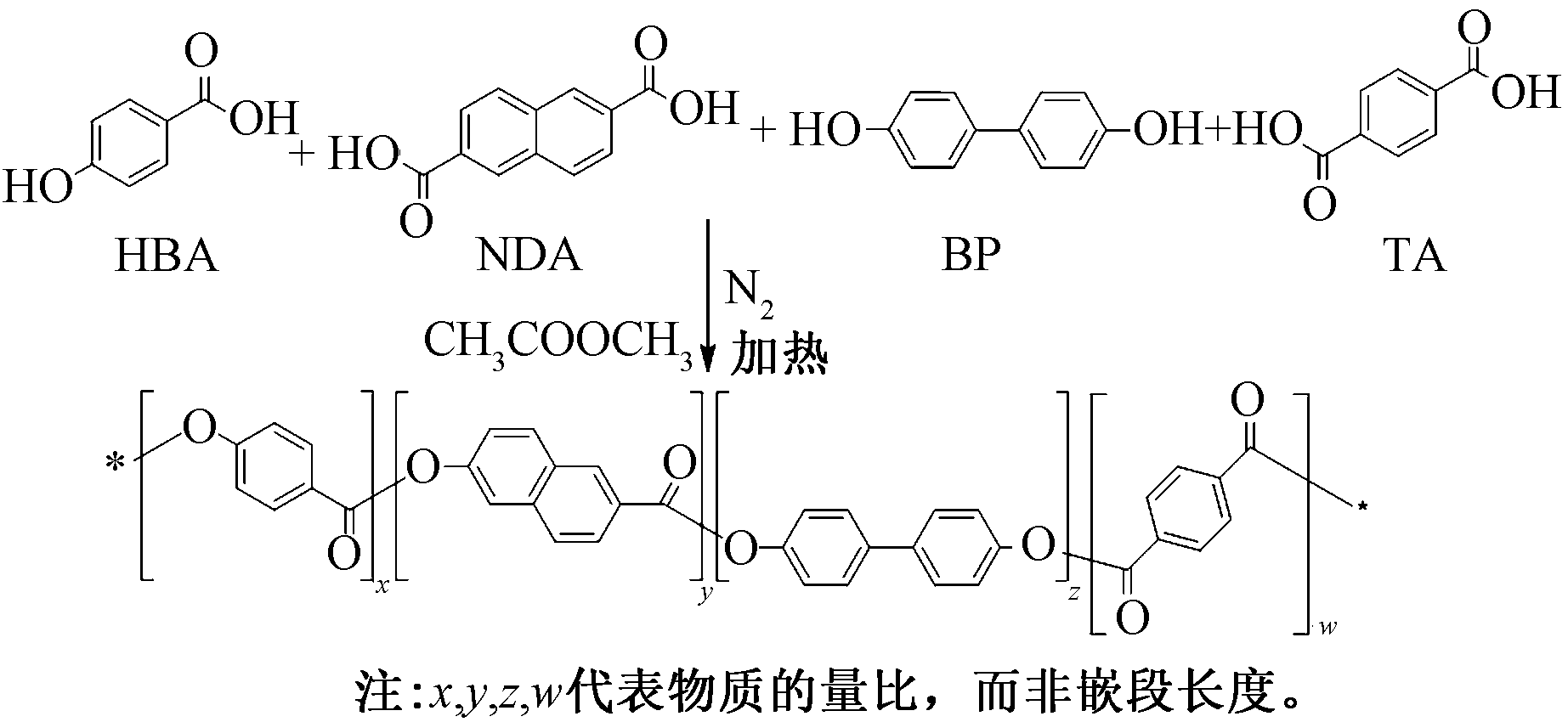
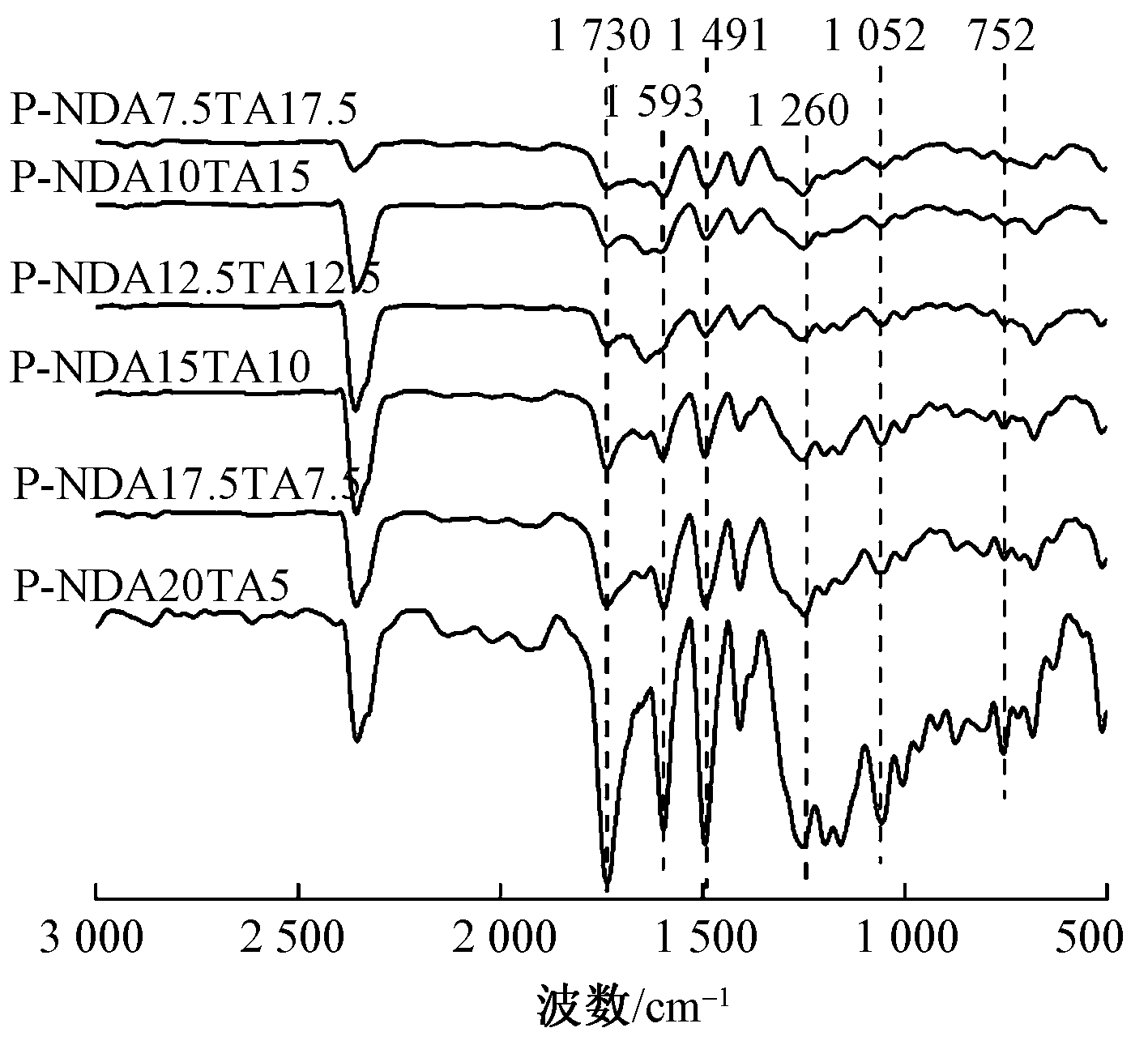
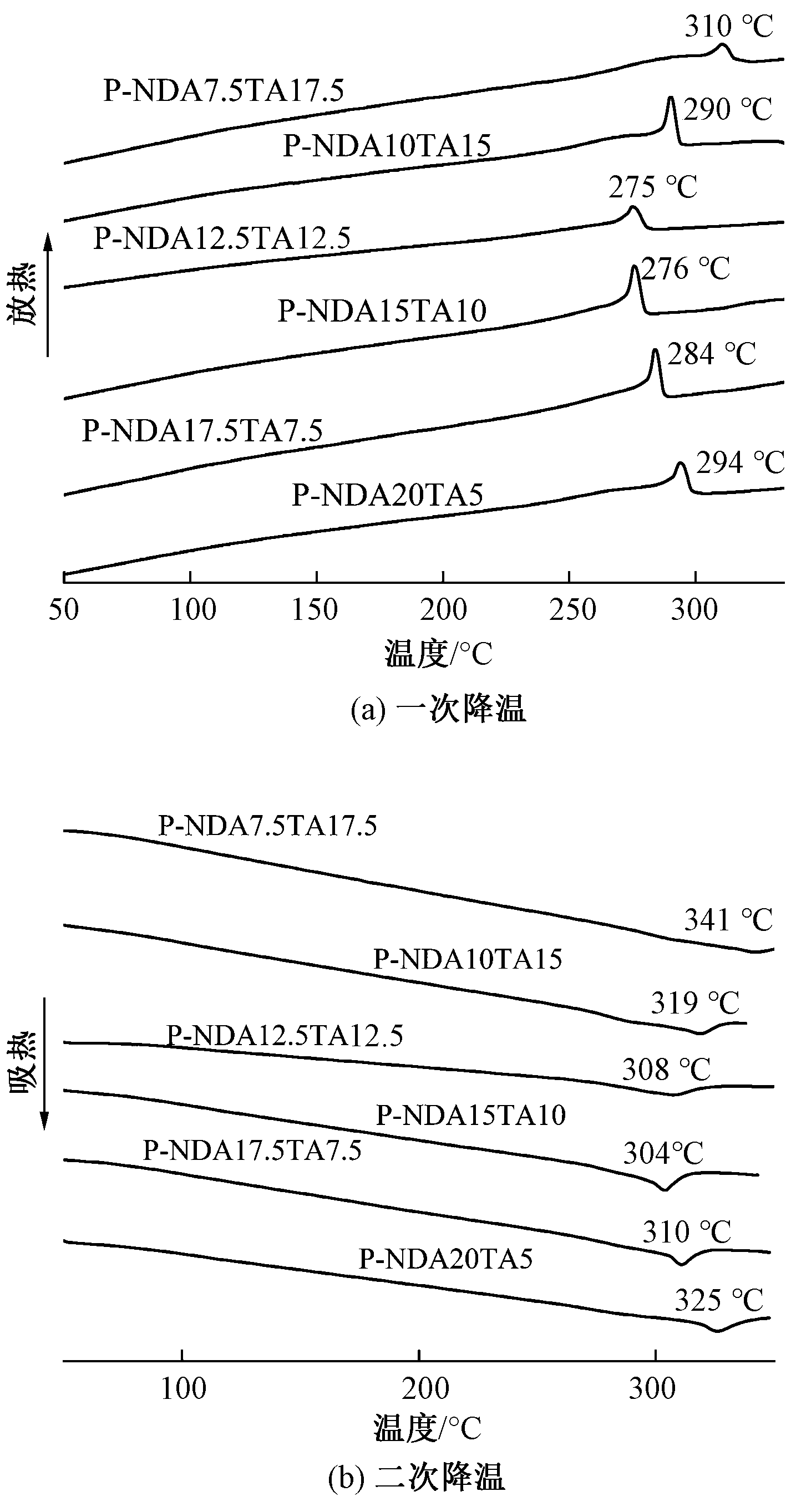
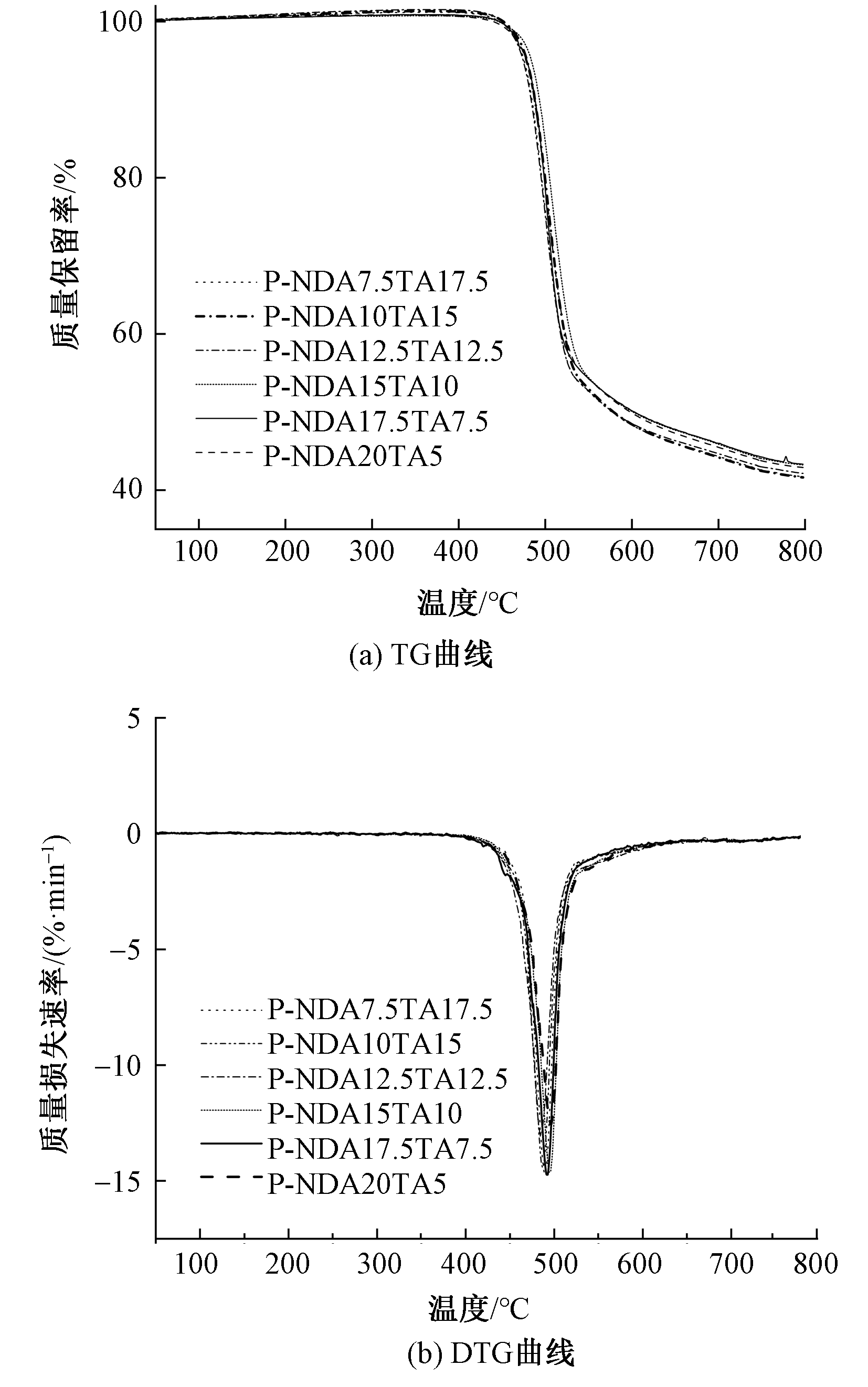
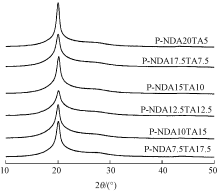
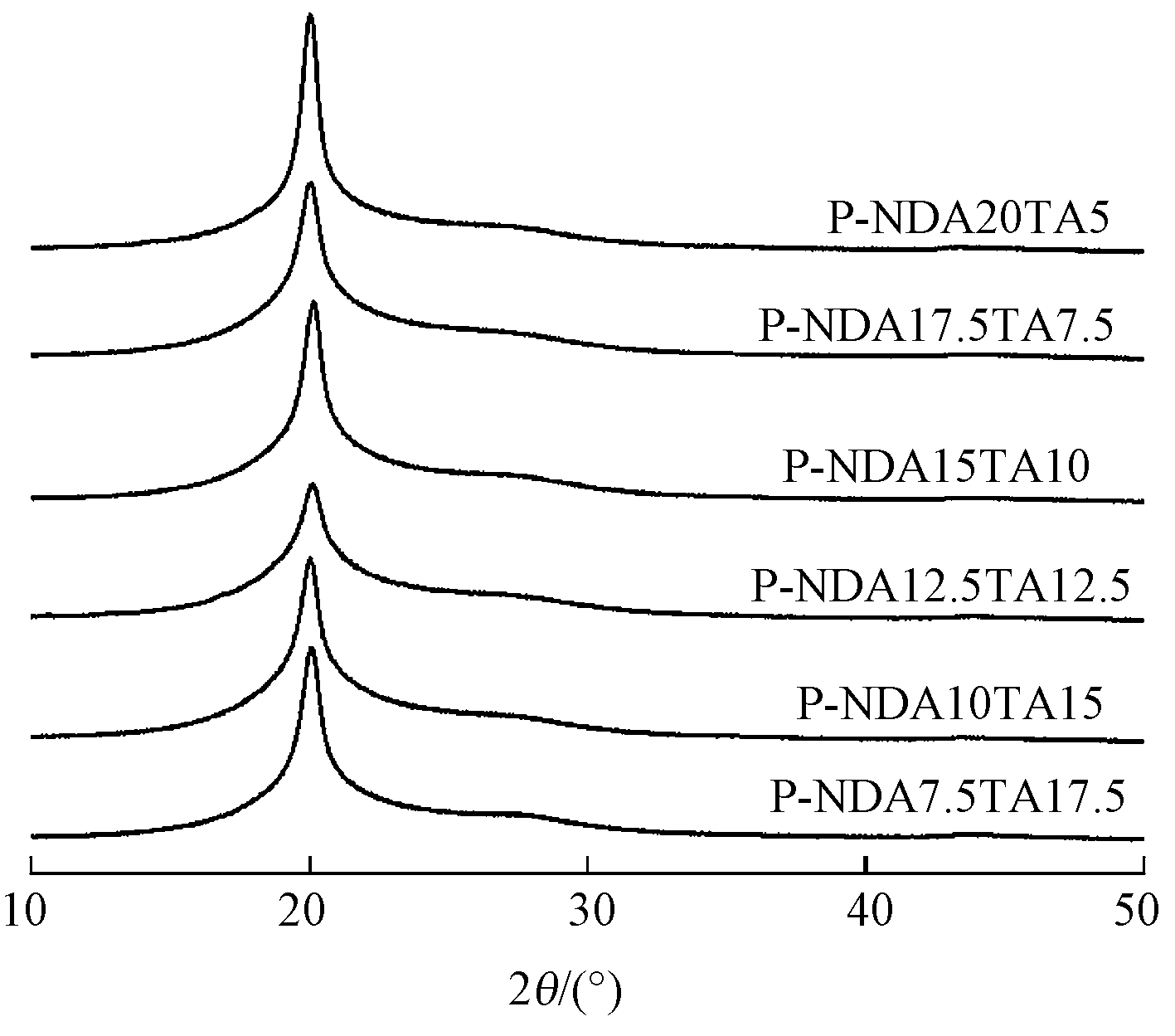
为解决高熔点萘环液晶聚芳酯因熔融温度高、熔体黏度大而导致的加工窗口狭窄、力学性能难以优化的问题,采用熔融缩聚法制备了一系列以6-羟基-2-萘甲酸(HBA)、2,6-萘二甲酸(NDA)、对苯二甲酸(TA)及4,4'-二羟基联苯(BP)为单体的液晶聚芳酯初生纤维,通过系统调节NDA与TA的量比,深入研究其热性能、结晶行为与力学响应。借助差示扫描量热仪、热重分析仪、X射线衍射仪及万能试验机等,系统评估不同单体配比对材料性能的影响。结果表明:所有组成的液晶聚芳酯均保持稳定的晶格参数,晶体结构未因组成变化而发生改变;随着TA占比的增加,材料的熔融温度由341 ℃降低至304 ℃,且700 ℃时的残炭率提高至46.0%,体现出优异热稳定性的同时,加工窗口得到显著拓宽;力学性能表现出明显的各向异性特征,当NDA与TA的量比为10∶15时,所得纤维的断裂强度达到0.78 GPa,较物质的量比为12.5∶12.5的对称组成纤维(断裂强度0.39 GPa)提升了约100%;而高TA含量体系(NDA与TA的量比为7.5∶17.5)的弹性模量高达38.85 GPa,但当NDA的摩尔分数超过17.5%时,材料结晶度急剧下降,导致材料性能恶化。
中图分类号:
| [1] |
CHENG H K F, BASU T Y, SAHOO N G, et al. Current advances in the carbon nanotube/thermotropic main-chain liquid crystalline polymer nanocomposites and their blends[J]. Polymers, 2012, 4(2): 889-912.
doi: 10.3390/polym4020889 |
| [2] |
JEON H B, JEON G W, KIM S Y, et al. Enhanced thermal stability and long-term mechanical durability at elevated temperatures of thermotropic liquid crystal polyester/glass fiber composites[J]. Mechanics of Advanced Materials and Structures, 2022, 29(27): 6060-6069.
doi: 10.1080/15376494.2021.1972367 |
| [3] |
WEI P, LI J J, YAN J F, et al. Preparation and properties of phosphorus-containing thermotropic liquid crystal copolyester fibers with excellent flame retardance and mechanical property[J]. European Polymer Journal, 2024, 218: 113339.
doi: 10.1016/j.eurpolymj.2024.113339 |
| [4] |
HUANG H Z, CHEN L, WANG Y Z. A kinked unit-containing thermotropic liquid crystalline copolyester with low glass transition temperature and broad phase transition temperature[J]. Journal of Polymer Science Part A: Polymer Chemistry, 2009, 47(18): 4703-4709.
doi: 10.1002/pola.v47:18 |
| [5] |
WEI P, LI Z Q, ZHANG Y N, et al. Structure and properties of aromatic naphthalene thermotropic liquid crystal copolyester/MWCNT composites[J]. International Journal of Polymer Analysis and Characterization, 2023, 28(4): 293-306.
doi: 10.1080/1023666X.2023.2211727 |
| [6] | 魏朋, 李志强, 李娇娇, 等. 固相聚合对萘环液晶聚芳酯结构与性能的影响[J]. 纺织学报, 2024, 45(9): 50-55. |
| WEI Peng, LI Zhiqiang, LI Jiaojiao, et al. Influence of solid-state polymerization on structure and properties of naphthalene ring structure aromatic liquid crystal copolyester[J]. Journal of Textile Research, 2024, 45(9): 50-55. | |
| [7] |
PAN X, CHI Z, CHENG D, et al. Solid-state polymerization of a liquid crystalline copolyester derived from 2, 6-naphthalene dicarboxylic acid, terephthalic acid, 4-acetoxybenzoic acid and hydroquinone diacetate[J]. Journal of Macromolecular Science, Part B, 2005, 44(2): 249-259.
doi: 10.1081/MB-200049809 |
| [8] |
WEI P, ZHANG Y N, LI Z Q, et al. Synthesis and properties of high-performance biobased liquid crystal copolyesters modified by small amount of 2, 5-furandicarboxylic acid[J]. Journal of Applied Polymer Science, 2023, 140(35): e54473.
doi: 10.1002/app.v140.35 |
| [9] | 田慧新, 刘俊华, 魏旭萍, 等. Ⅰ型热致液晶聚芳酯纤维的耐热老化性研究[J]. 合成纤维工业, 2022, 45(1): 20-24. |
| TIAN Huixin, LIU Junhua, WEI Xuping, et al. Study on thermal aging resistance of model Ⅰ thermotropic liquid crystalline polyarylate fiber[J]. China Synthetic Fiber Industry, 2022, 45(1): 20-24. | |
| [10] | 董莉. 热致液晶芳香族聚酯的性能研究及应用[J]. 纺织科技进展, 2023(8): 15-18. |
| DONG Li. Performance study and application of thermotropic liquid crystalline polyarylate[J]. Progress in Textile Science & Technology, 2023(8): 15-18. | |
| [11] |
EOM T G, TANG F, SEO M, et al. Aramid nanofiber-reinforced thermotropic polyarylate nanocomposites with improved thermal and long-term mechanical performance[J]. Journal of Materials Science, 2023, 58(37): 14700-14713.
doi: 10.1007/s10853-023-08933-2 |
| [12] |
YANG P P, WU Y F, WANG K X, et al. Enhanced intrinsic thermal conductivity of liquid crystalline polyester dispersed films through hydrogen bond interaction[J]. Polymer, 2024, 309: 127423.
doi: 10.1016/j.polymer.2024.127423 |
| [13] | 黄曾凯. 热致液晶聚芳酯纳米纤维纸的制备及性能研究[D]. 武汉: 武汉纺织大学, 2024: 41-53. |
| HUANG Zengkai. Preparation and properties of thermotropic liquid crystal polymer ester nanofiber paper[D] Wuhan: Wuhan Textile University, 2024: 41-53. | |
| [14] |
HE B A, MA K, WAN H, et al. Structural regulation of TLCP and evaluation of its long-term heat resistance after solid-state polymerization[J]. Polymer Degradation and Stability, 2025, 239: 111405.
doi: 10.1016/j.polymdegradstab.2025.111405 |
| [15] | 周建梅. 向列型热致液晶聚酰胺的结构表征[J]. 高分子材料科学与工程, 2011, 27(7): 111-113. |
| ZHOU Jianmei. Structure characterization of a nematic thermotropic liquid crystal polyamide[J]. Polymer Materials Science & Engineering, 2011, 27(7): 111-113. | |
| [16] | 李志强. 热致液晶聚芳酯结构与性能关系的研究[D]. 郑州: 中原工学院, 2024:1-40. |
| LI Zhiqiang. Study on the relationship between structure and properties of thermotropic liquid crystal copolyesters[D]. Zhengzhou: Zhongyuan University of Technology, 2024:1-40. |
| [1] | 陈欣, 干梦婷, 兰含宇, 赵昕, 张清华. 超临界CO2流体对聚酰亚胺纤维结构及其性能的影响[J]. 纺织学报, 2026, 47(02): 10-17. |
| [2] | 齐梦园, 肖国威, 杜金梅, 许长海, 杨红英. 水性聚氨酯/纳米二氧化硅改性玄武岩纤维织物制备及其性能[J]. 纺织学报, 2026, 47(02): 172-180. |
| [3] | 赵泽文, 吕宽, 苏旭中, 孙丰鑫. 短纤纱力学性能的宏细观耦合分析与数值模拟[J]. 纺织学报, 2026, 47(01): 106-114. |
| [4] | 兰含宇, 陈欣, 梁东旭, 赵昕, 张清华. 高强聚酰亚胺织物在多环境因素下的老化行为[J]. 纺织学报, 2026, 47(01): 151-158. |
| [5] | 史芷丞, 陈凤翔, 王梦云, 白洁, 李娟, 白濛, 伏广伟, 徐卫林. 面向空天应用的高性能无机纤维及制品发展现状及趋势[J]. 纺织学报, 2025, 46(12): 233-242. |
| [6] | 袁颖, 滕凤冬, 曹煜彤, 于俊荣, 李娜, 胡祖明, 王彦. 高模量对位芳纶研究进展[J]. 纺织学报, 2025, 46(11): 238-246. |
| [7] | 王瀚文, 李万鑫, 李晨, 喻麟洁, 王文庆, 董振峰, 魏建斐, 朱志国, 王锐. 金属氯化物对聚酰胺66氢键调控及力学性能的影响[J]. 纺织学报, 2025, 46(11): 9-18. |
| [8] | 顾戚惠, 阳知乾, 王海楼, 魏发云, 张伟. 机织间隔织物增强水泥基复合材料的制备及其力学性能[J]. 纺织学报, 2025, 46(10): 120-128. |
| [9] | 高敏, 程春祖, 徐中凯, 赵庆波, 张东, 代欣欣. 含硅改性磷氮阻燃Lyocell纤维的制备及其性能[J]. 纺织学报, 2025, 46(10): 19-29. |
| [10] | 侯颖慧, 刘肖燕, 柳东辰, 郝矿荣, 邹婷. 基于体外降解的输尿管支架管的多目标优化[J]. 纺织学报, 2025, 46(09): 154-162. |
| [11] | 高闻语, 陈诚, 奚晓玮, 邓林红, 刘杨. 改性丝素蛋白纤维增强胶原基角膜修复材料的制备及其性能[J]. 纺织学报, 2025, 46(08): 1-9. |
| [12] | 梁锋, 方沿, 张伟华, 唐余玲, 李双洋, 周建飞, 石碧. 基于金属-多酚网络的胶原蛋白基纤维制备及其力学性能[J]. 纺织学报, 2025, 46(08): 10-17. |
| [13] | 陈晴宇, 陆春红, 张斌, 晋义凯, 黄琪帏, 王超, 丁彬, 俞建勇, 王先锋. 碳纤维增强水泥基灌浆料的制备及其性能[J]. 纺织学报, 2025, 46(08): 120-126. |
| [14] | 岳航, 鹿超, 王春红, 李瀚宇. 基于主要化学成分的红麻与大麻拉伸强度预测[J]. 纺织学报, 2025, 46(08): 62-70. |
| [15] | 朱雷, 李晓俊, 程春祖, 徐纪刚, 杜心宇. 四硼酸钠/单宁酸交联对海藻酸钙纤维结构与性能的影响[J]. 纺织学报, 2025, 46(07): 28-36. |
|
||
 京公网安备11010502044800号