纺织学报 ›› 2025, Vol. 46 ›› Issue (11): 137-146.doi: 10.13475/j.fzxb.20250100701
费旌源1, 徐乃库1( ), 肖长发2
FEI Jingyuan1, XU Naiku1(), XIAO Changfa2
摘要:
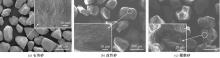
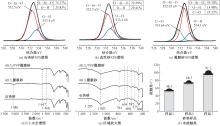
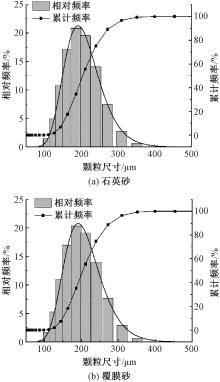
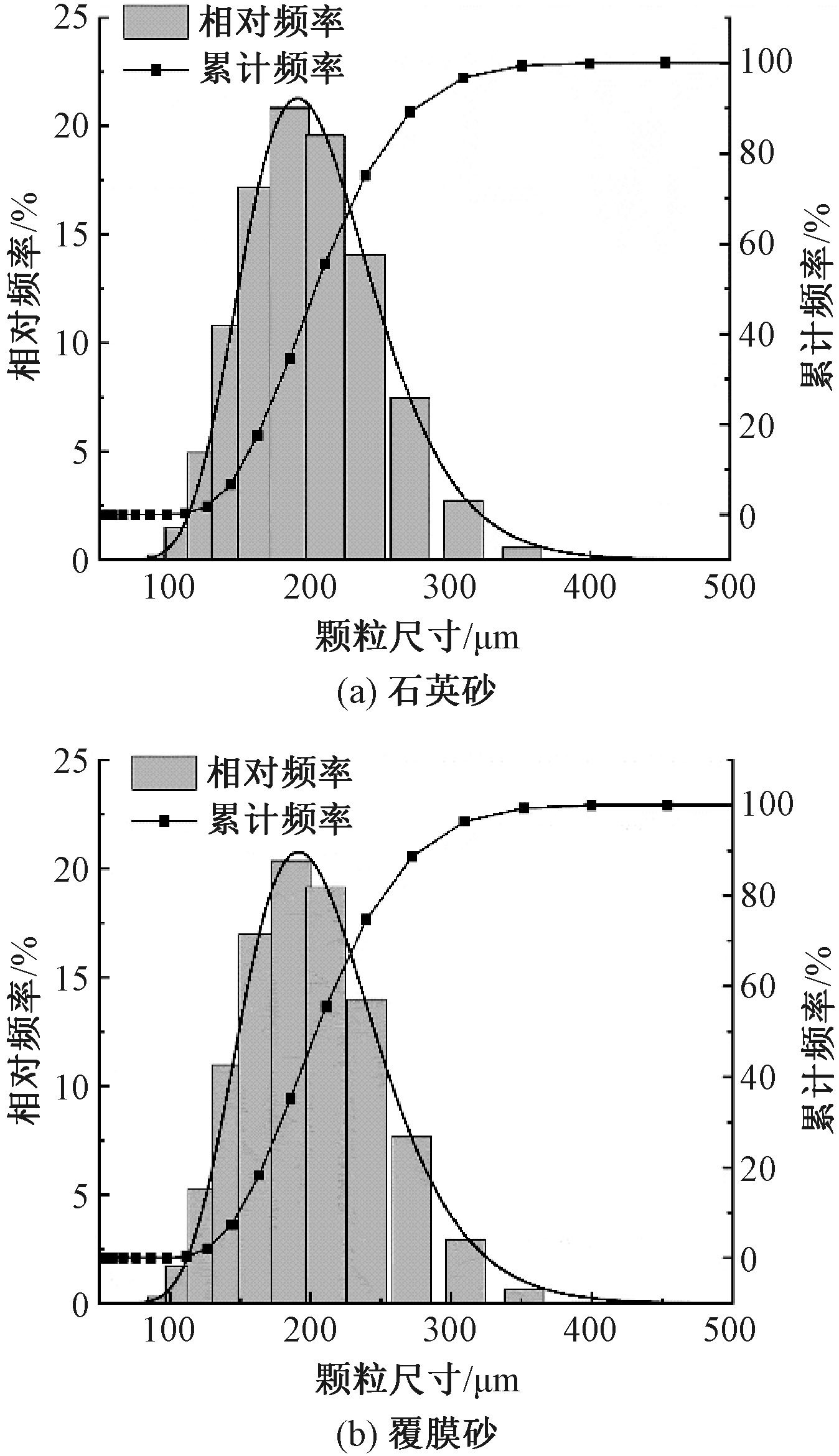
为解决复杂形状芯模制造以及碳纤维复合材料成型后芯模脱模难题,以石英砂为原料,采用化学改性与湿法覆膜法制备覆膜砂,在石英砂表面构筑水溶性壳层。利用水溶性聚合物改性呋喃树脂后,将覆膜砂点黏合为遇水可溃散砂质芯模,设计特殊涂料整理砂质芯模表面,研究其作为模具在中空异形碳纤维复合材料成型中的适用性,并探究该砂质芯模的3D打印成型可行性。结果表明:相比石英砂,覆膜砂制得的砂质芯模的硬度和抗拉强度显著提升,分别达到54.5 HD、2.44 MPa,且遇水快速溃散,便于复合材料成型与脱模;经涂料整理后,芯模表面粗糙度由25.8 μm降至3.5 μm,可有效阻隔树脂的渗入与粘连,使碳纤维复合材料内表面粗糙度低至0.9 μm;改性黏合剂的黏度和表面张力分别为10.8 mPa·s、36.8 mN/m,可在3D打印机喷头中连续、稳定喷射,覆膜砂因合理的粒径分布和优异的流动性,可在3D打印机铺砂系统中铺砂,其壳层中氯化铝可催化黏合剂固化而将其黏合为特殊形状砂型,为3D打印砂质芯模成型碳纤维复合材料创造了条件。
中图分类号:
| [1] |
ZHANG J, LIN G, VAIDYA U, et al. Past, present and future prospective of global carbon fibre composite developments and applications[J]. Composites Part B: Engineering, 2023, 250: 110463.
doi: 10.1016/j.compositesb.2022.110463 |
| [2] |
LI Y C. The development of carbon fiber epoxy resin composite material and its applications in aerospace[J]. Applied and Computational Engineering, 2023, 23(1): 75-80.
doi: 10.54254/2755-2721/23/20230614 |
| [3] | 李兴. 碳纤维复合材料异型管材的力学性能仿真与优化[D]. 上海: 东华大学, 2023:3-10. |
| LI Xing. Mechanical performance simulation and optimization of carbon fiber composite profiled tubular structures[D]. Shanghai: Donghua University, 2023:3-10. | |
| [4] |
GHANBARI A, SEYEDIN S, NOFAR M, et al. Mechanical properties and foaming behavior of polypropylene/elastomer/recycled carbon fiber composites[J]. Polymer Composites, 2021, 42(7): 3482-3492.
doi: 10.1002/pc.v42.7 |
| [5] |
LIN J Y, LIN M C, SHIU B C, et al. Novel composite planks made of shape memory polyurethane foaming material with two-step foaming process[J]. Polymers, 2022, 14(2): 275.
doi: 10.3390/polym14020275 |
| [6] |
WANG S J, JANG J H, KIM J K, et al. Self-healing carbon fiber/epoxy laminates with particulate interlayers of a low-melting-point alloy[J]. Composites Part B: Engineering, 2024, 286: 111792.
doi: 10.1016/j.compositesb.2024.111792 |
| [7] | 严锋, 魏明晖, 杨帅. 气囊顶压碳纤维粘贴试验研究及工程应用[J]. 施工技术, 2018, 47(19): 151-153. |
| YAN Feng, WEI Minghui, YANG Shuai. The application and experiment research of balloon top pressure method in CFRP construction[J]. Construction Technology, 2018, 47(19): 151-153. | |
| [8] |
HODDER K J, CHALATURNYK R J. Bridging additive manufacturing and sand casting: utilizing foundry sand[J]. Additive Manufacturing, 2019, 28: 649-660.
doi: 10.1016/j.addma.2019.06.008 |
| [9] |
UPADHYAY M, SIVARUPAN T, EL MANSORI M. 3D printing for rapid sand casting: a review[J]. Journal of Manufacturing Processes, 2017, 29: 211-220.
doi: 10.1016/j.jmapro.2017.07.017 |
| [10] |
FERRETTI P, SANTI G M, LEON-CARDENAS C, et al. Molds with advanced materials for carbon fiber manufacturing with 3D printing technology[J]. Polymers, 2021, 13(21): 3700.
doi: 10.3390/polym13213700 |
| [11] |
SIVARUPAN T, BALASUBRAMANI N, SAXENA P, et al. A review on the progress and challenges of binder jet 3D printing of sand moulds for advanced casting[J]. Additive Manufacturing, 2021, 40: 101889.
doi: 10.1016/j.addma.2021.101889 |
| [12] |
MOSTAFAEI A, ELLIOTT A M, BARNES J E, et al. Binder jet 3D printing: process parameters, materials, properties, modeling, and challenges[J]. Progress in Materials Science, 2021, 119: 100707.
doi: 10.1016/j.pmatsci.2020.100707 |
| [13] |
MUNASIR, IMAM SUPARDI Z A, MASHADI, et al. Phase transition of SiO2 nanoparticles prepared from natural sand: the calcination temperature effect[J]. Journal of Physics: Conference Series, 2018, 1093: 012025.
doi: 10.1088/1742-6596/1093/1/012025 |
| [14] |
ZHANG X, HU C B, LIN J J, et al. Fabrication of recyclable, superhydrophobic-superoleophilic quartz sand by facile two-step modification for oil-water separation[J]. Journal of Environmental Chemical Engineering, 2022, 10(1): 107019.
doi: 10.1016/j.jece.2021.107019 |
| [15] |
RAJAGUKGUK J, SIMAMORA P, SITINJAK L, et al. NIR luminescence properties of Nd3+ ion doped glasses medium based on Huta Ginjang quartz sand[J]. Radiation Physics and Chemistry, 2025, 229: 112466.
doi: 10.1016/j.radphyschem.2024.112466 |
| [16] |
YIN Z C, WANG Y L, WANG K, et al. The adsorption behavior of hydroxypropyl guar gum onto quartz sand[J]. Journal of Molecular Liquids, 2018, 258: 10-17.
doi: 10.1016/j.molliq.2018.02.105 |
| [17] |
PAPEZHUK M V, IVANIN S N, YAKUPOV R P, et al. Obtaining polyvinylpyrrolidone fibers using the electroforming method with the inclusion of microcrystalline high-temperature phosphates[J]. International Journal of Molecular Sciences, 2024, 25(4): 2298.
doi: 10.3390/ijms25042298 |
| [18] |
BAWAZIR W A, ALSULAMI Q A, KESHK S M A S. Augmentation in proton conductivity of crosslinked poly(vinyl alcohol) through the introduction of polyvinyl pyrrolidone[J]. Journal of Applied Polymer Science, 2023, 140(18): e53812.
doi: 10.1002/app.v140.18 |
| [19] |
ALI I, MELIGI G A, AKL M R, et al. Influence of γ-ray irradiation doses on physicochemical properties of silver polystyrene polyvinyl pyrrolidone nano-composites[J]. Materials Chemistry and Physics, 2019, 226: 250-256.
doi: 10.1016/j.matchemphys.2018.12.084 |
| [20] |
QI L, WENG X L, WEI B, et al. Effects of low-melting glass powder on the thermal stabilities of low infrared emissivity Al/polysiloxane coatings[J]. Progress in Organic Coatings, 2020, 142: 105579.
doi: 10.1016/j.porgcoat.2020.105579 |
| [21] |
AN H, XIANG M, ABULIMITI B, et al. Spectral and dissociation characteristics of aluminum chloride in external electric field[J]. The European Physical Journal D, 2022, 76(5): 86.
doi: 10.1140/epjd/s10053-022-00412-8 |
| [1] | 高龙威, 蒋金华, 陈南梁, 邵慧奇. 经编双轴向碳纤维织物增强复合材料的冲击损伤特性[J]. 纺织学报, 2025, 46(11): 147-154. |
| [2] | 黎靖康, 黄亮, 陈诗诗, 毕曙光, 冉建华, 唐加功. 苄基缩水甘油醚改性环氧类玻璃高分子材料的自修复与再加工性能[J]. 纺织学报, 2025, 46(04): 20-28. |
| [3] | 李麒阳, 季诚昌, 郗欣甫, 孙以泽. 大尺寸异形结构芯模编织策略及纱线轨迹预测[J]. 纺织学报, 2023, 44(10): 188-195. |
| [4] | 吕婧, 刘增伟, 程青青, 张学同. 芳纶纳米纤维气凝胶的研究进展[J]. 纺织学报, 2023, 44(06): 10-20. |
| [5] | 顾力文, 阮艳雯, 李浩. 基于柔性选择性激光烧结3D打印技术的服装研发[J]. 纺织学报, 2023, 44(04): 154-164. |
| [6] | 方周倩, 苗沛源, 金肖克, 祝成炎, 田伟. 碳纤维复合材料孔洞损伤超声波C扫描无损检测[J]. 纺织学报, 2022, 43(10): 71-76. |
| [7] | 程燕婷, 孟家光, 薛涛, 支超. 3D打印纬平针面料的制备[J]. 纺织学报, 2022, 43(09): 115-119. |
| [8] | 吴瑕, 姚菊明, 王琰, RIPON Das, JIRI Militky, MOHANAPRIYA Venkataraman, 祝国成. 碳纤维复合材料无人机叶片的仿真与分析[J]. 纺织学报, 2022, 43(08): 80-87. |
| [9] | 姜雨淋, 王卉, 张克勤. 生物3D打印用丝素蛋白基凝胶墨水的研究进展[J]. 纺织学报, 2021, 42(11): 1-8. |
| [10] | 杨露, 薛涛, 孟家光, 杨豆豆. 3D打印柔性服装面料的负离子功能整理及其性能[J]. 纺织学报, 2021, 42(08): 102-108. |
| [11] | 宋星, 金肖克, 祝成炎, 蔡冯杰, 田伟. 玻璃纤维/光敏树脂复合材料的3D打印及其力学性能[J]. 纺织学报, 2021, 42(01): 73-77. |
| [12] | 王曙东, 马倩, 王可, 瞿才新, 戚玉. 蚕丝蛋白/明胶复合水凝胶的结构与生物相容性[J]. 纺织学报, 2020, 41(11): 41-47. |
| [13] | 张晓会, 杨曈, 马丕波. 基于3D打印的竹节结构中空单丝制备及其压缩性能[J]. 纺织学报, 2019, 40(12): 32-38. |
| [14] | 宋星, 祝成炎, 蔡冯杰, 吕智宁, 田伟. 碱处理对涤纶/光敏树脂复合材料力学性能的影响[J]. 纺织学报, 2019, 40(07): 97-102. |
| [15] | 蔡冯杰 祝成炎 田伟 吕智宁 申晓. 3D打印成型的玻璃纤维增强聚乳酸基复合材料[J]. 纺织学报, 2017, 38(10): 13-18. |
|
||
 京公网安备11010502044800号