纺织学报 ›› 2025, Vol. 46 ›› Issue (12): 57-65.doi: 10.13475/j.fzxb.20250401701
高俊1, 凌磊1, 陈缘1, 武丁胜1, 林韩蕾1, 李振宇2, 凤权1( )
)
GAO Jun1, LING Lei1, CHEN Yuan1, WU Dingsheng1, LIN Hanlei1, LI Zhenyu2, FENG Quan1()
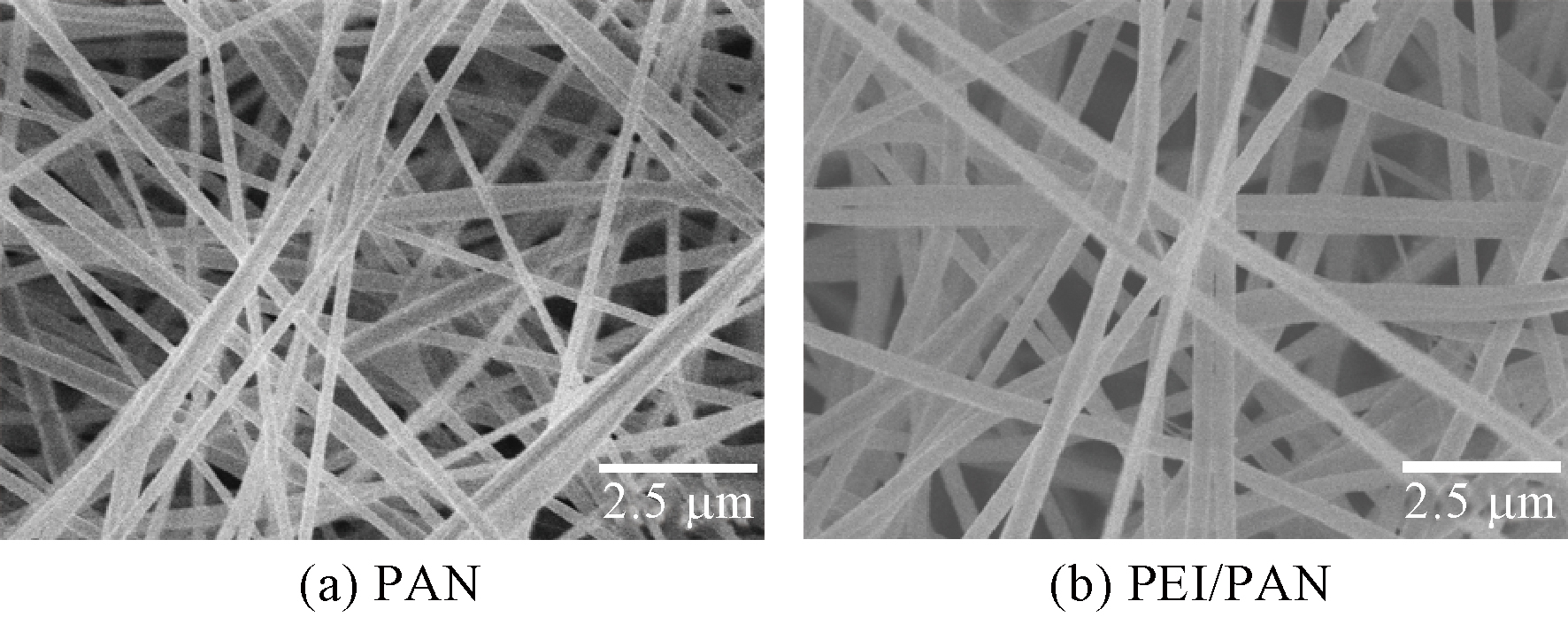
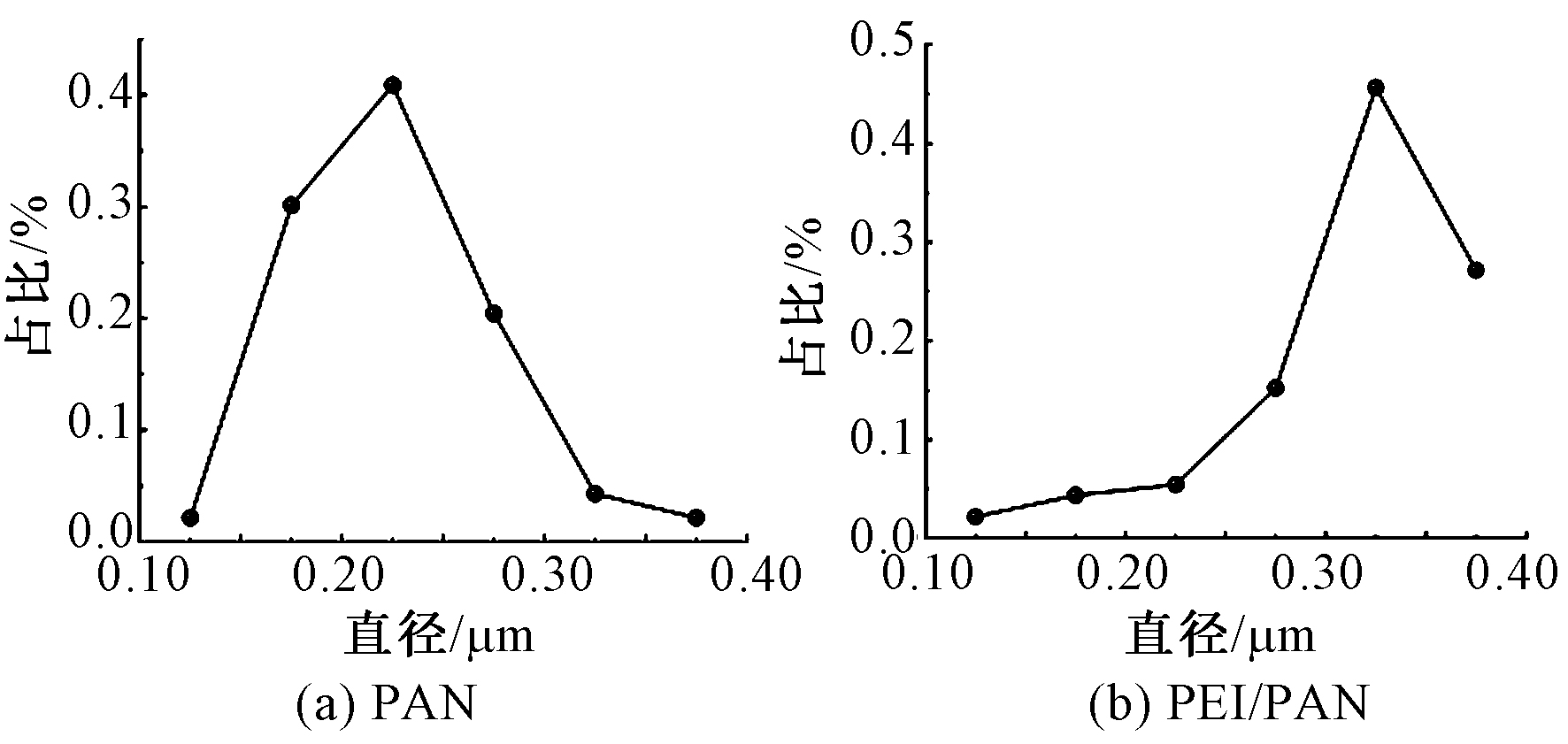
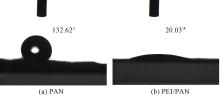
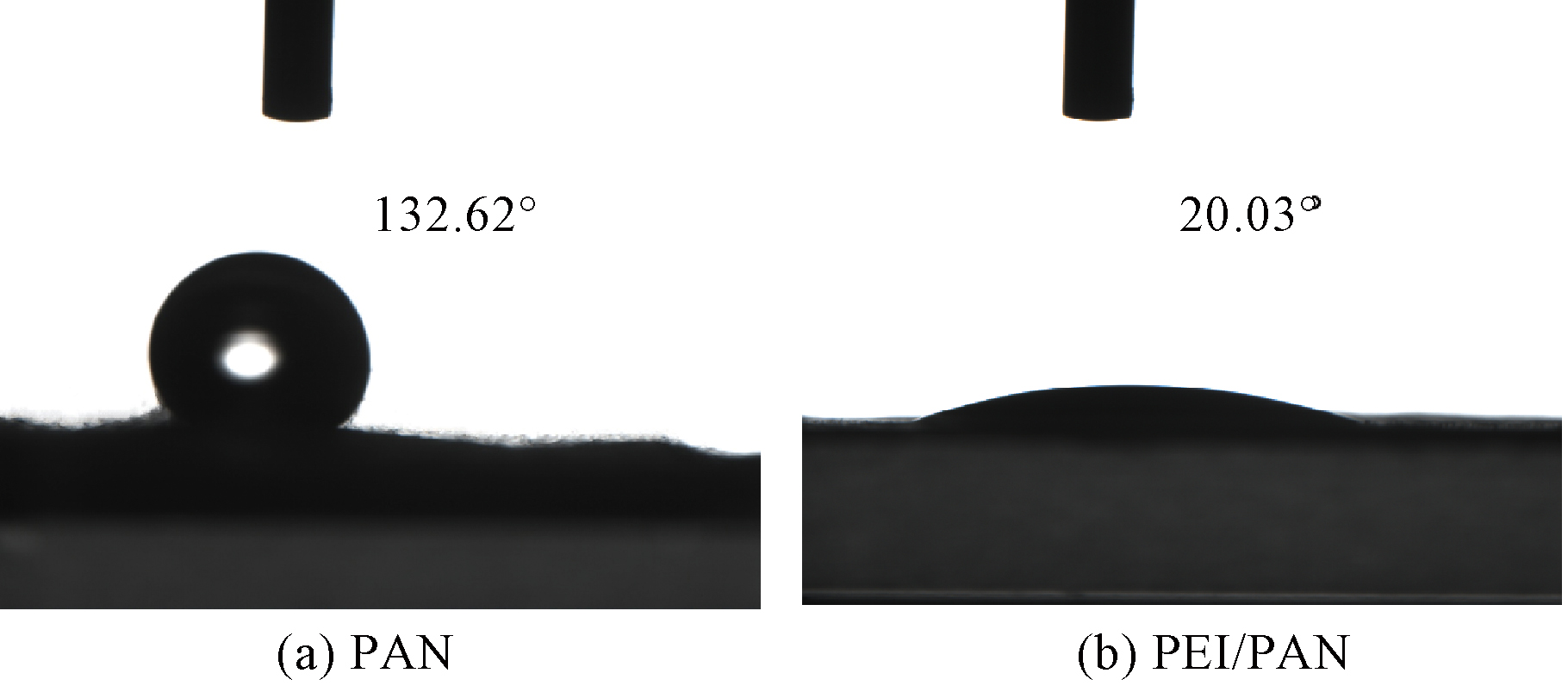
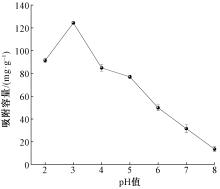
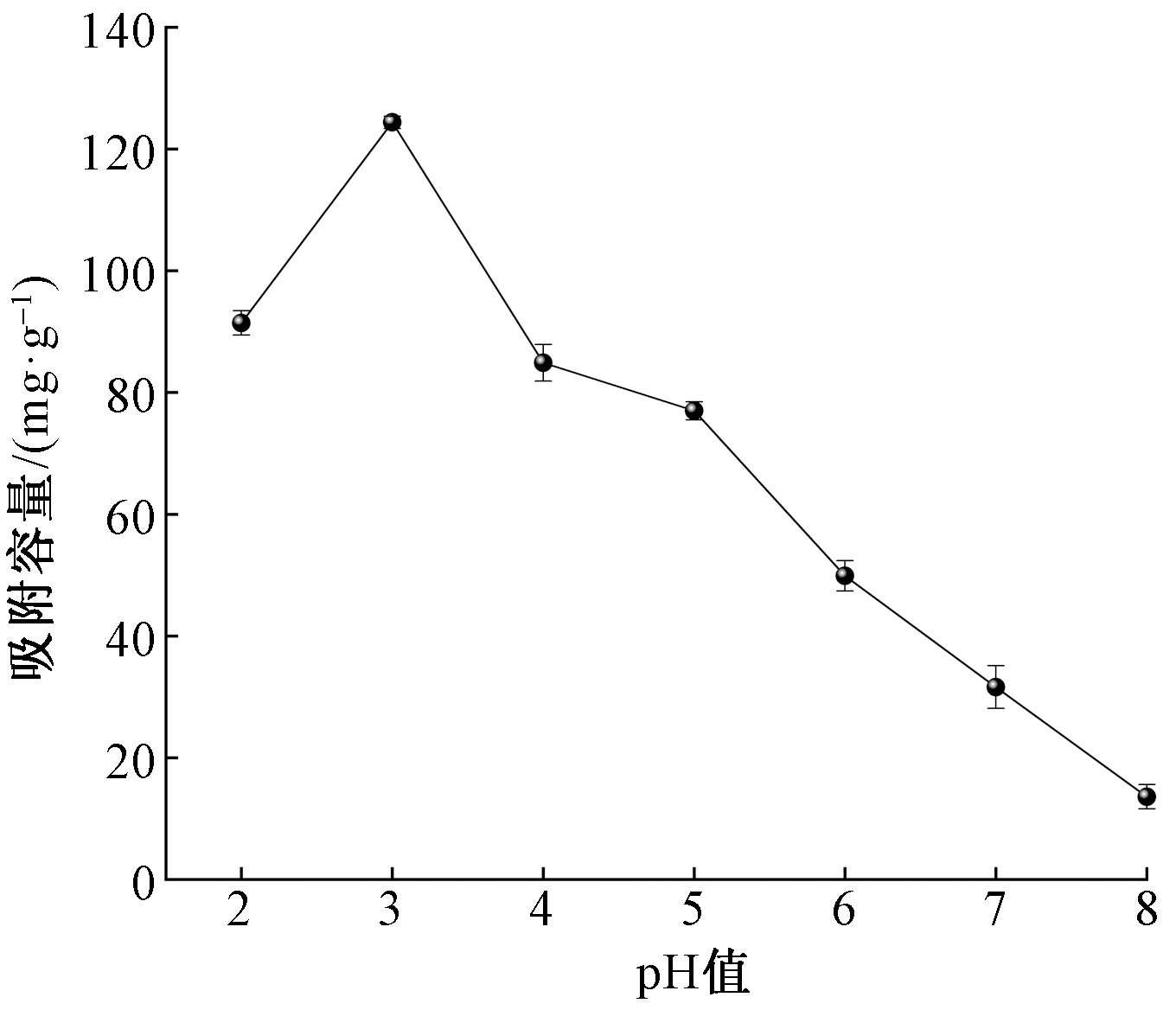
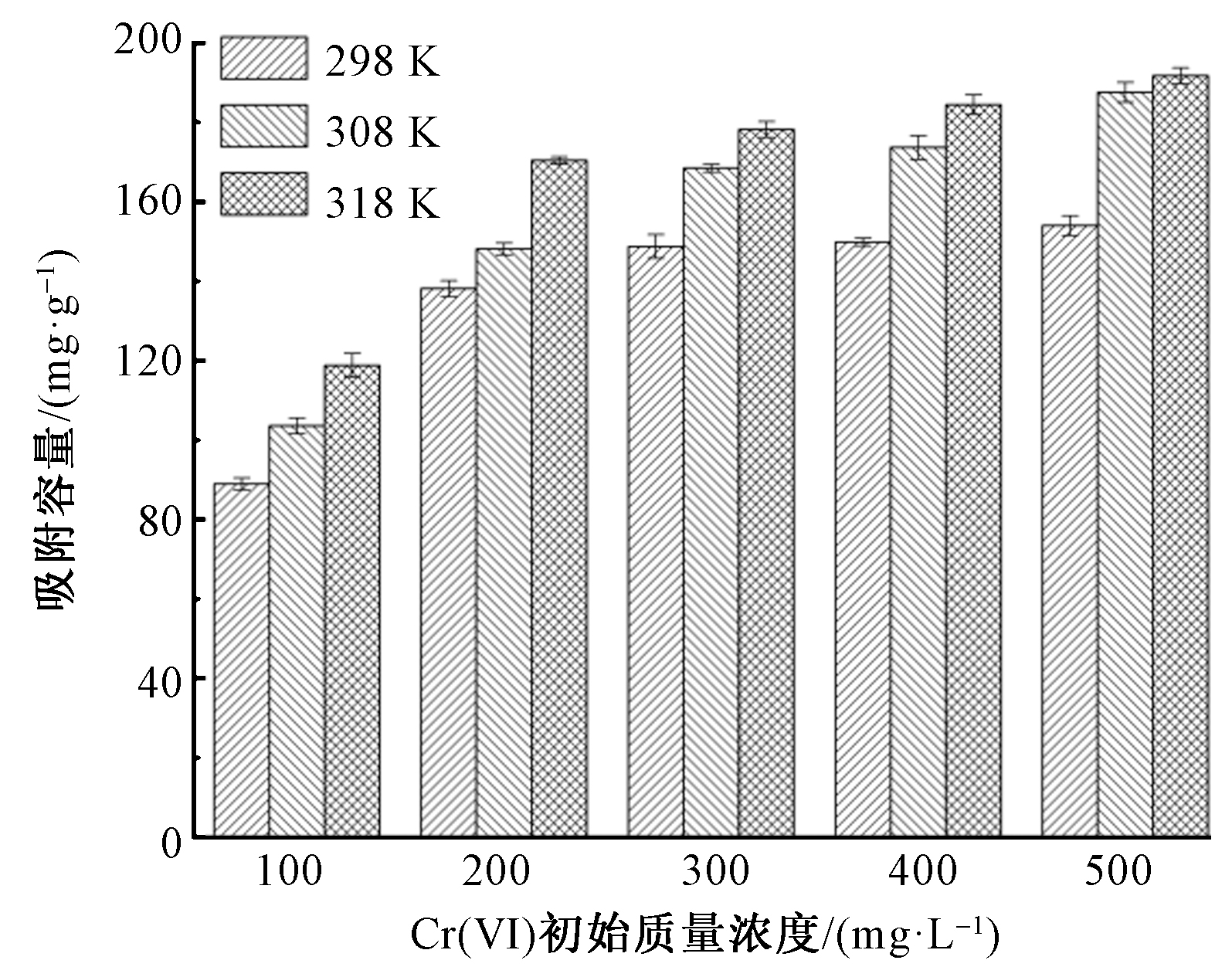
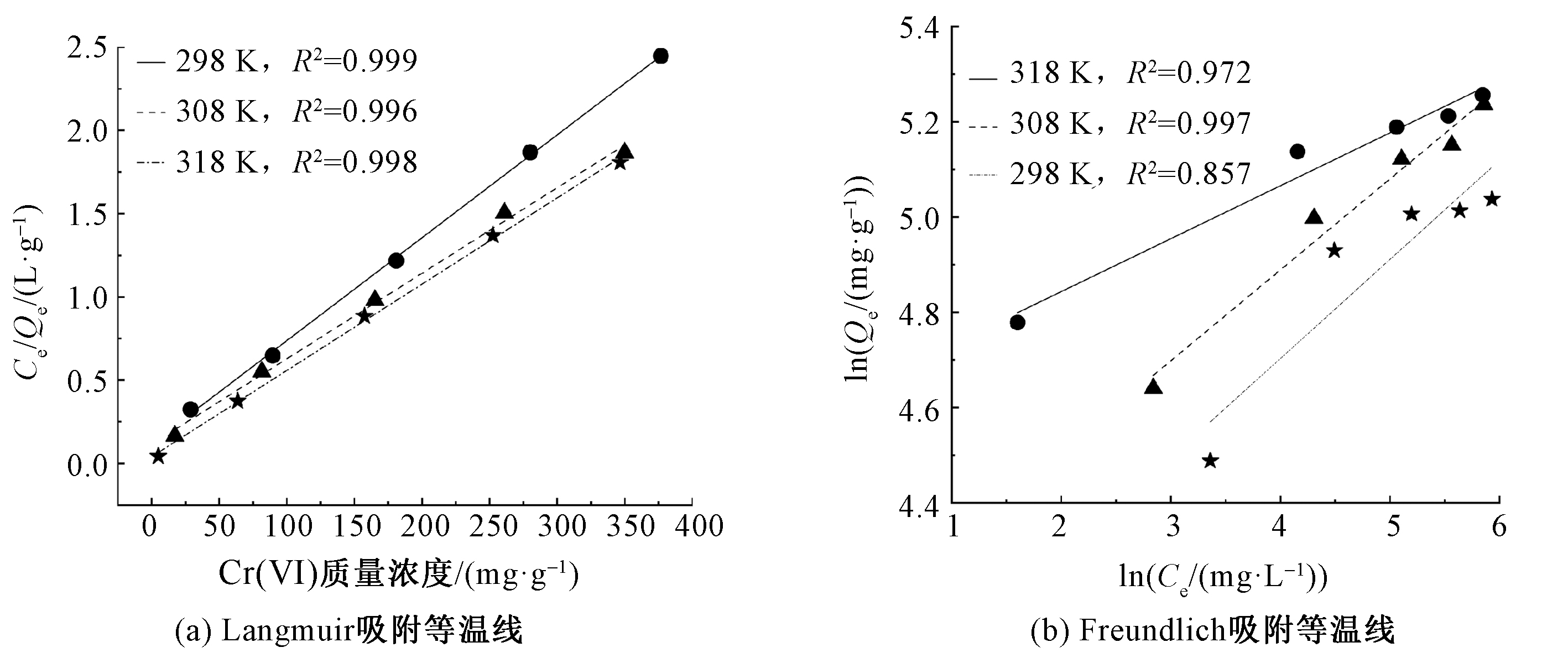
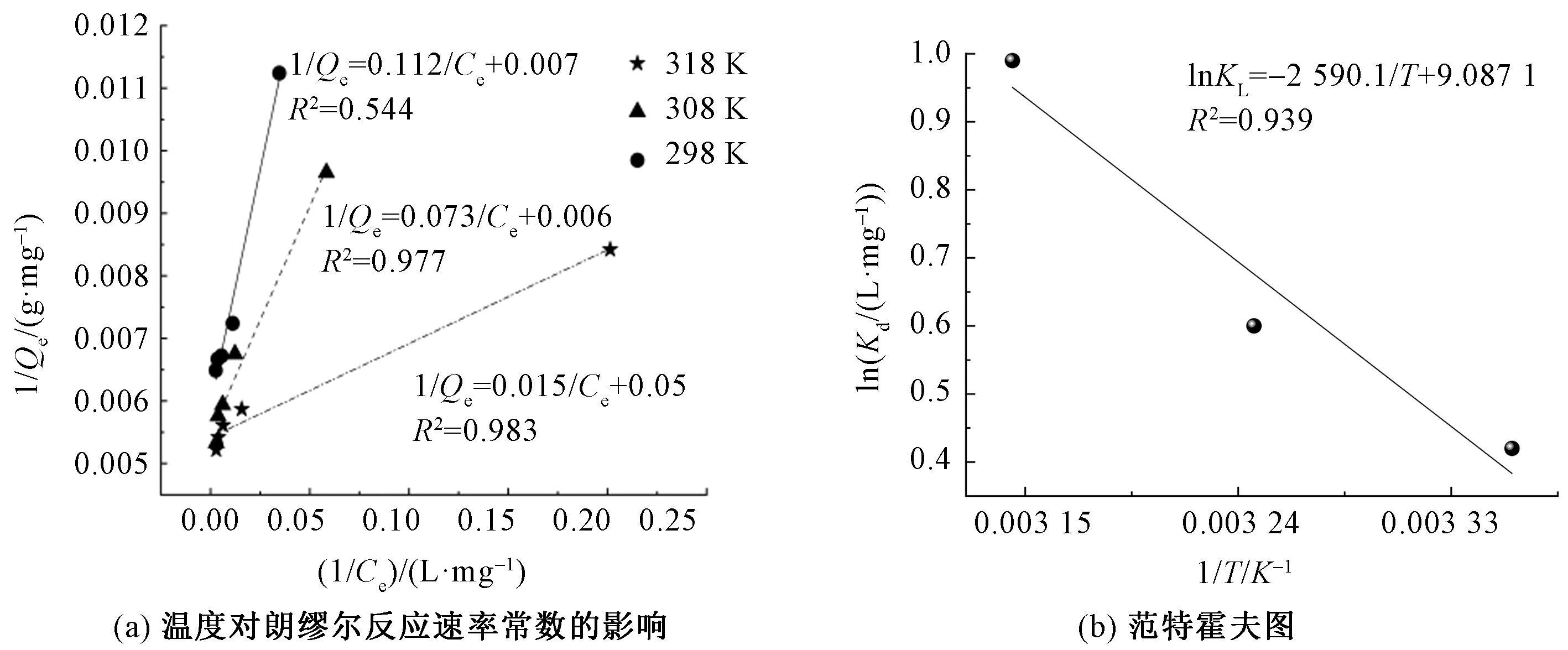
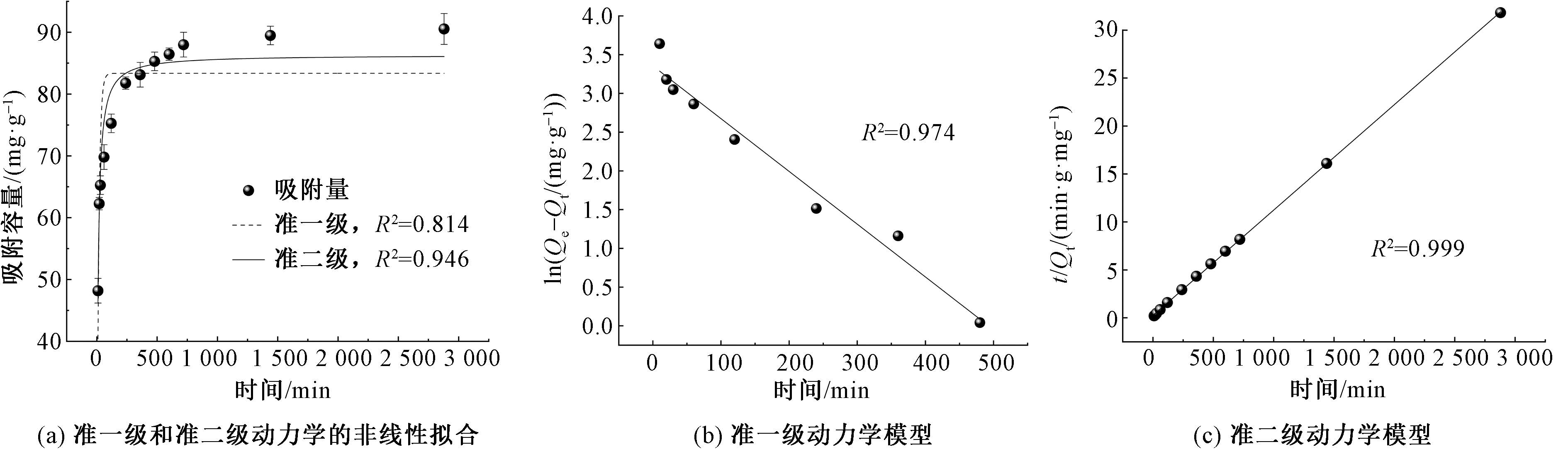
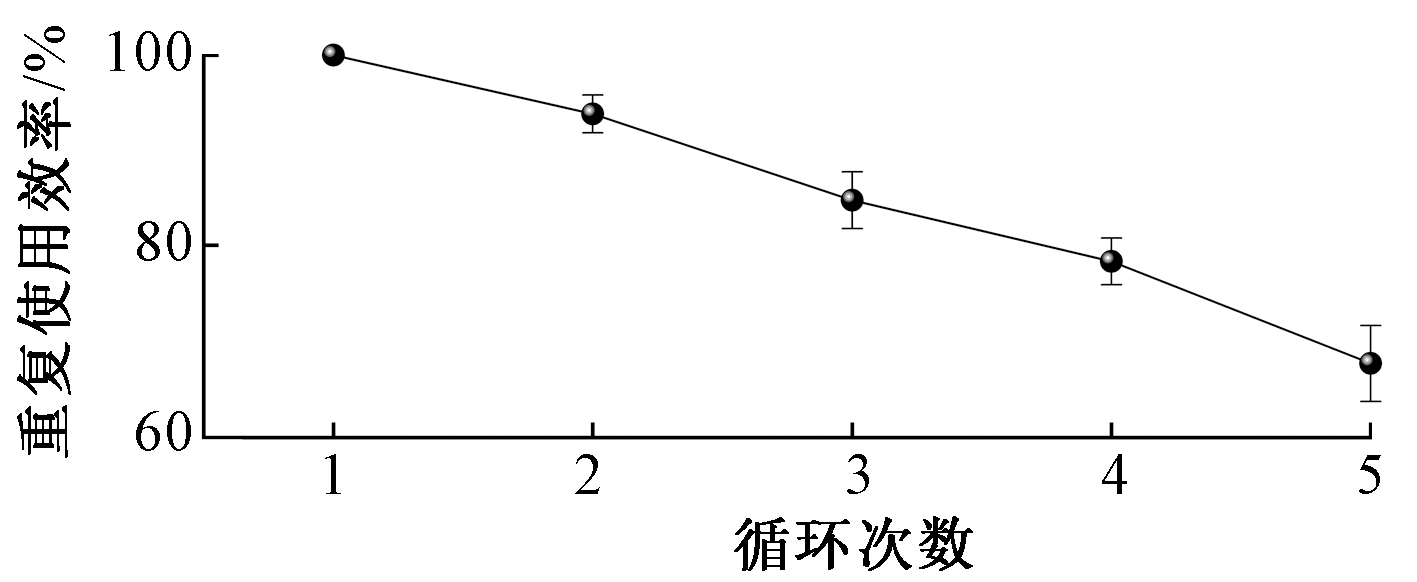
摘要: 针对六价铬离子(Cr(Ⅵ))废水对生态环境和人体健康造成巨大危害的问题,开发高效、快速去除Cr(Ⅵ)离子或降低其毒性的吸附材料具有重大意义。通过静电纺丝法制备聚乙烯亚胺(PEI)/聚丙烯腈(PAN)纳米纤维膜,用于吸附和解毒含Cr(Ⅵ)废水。探究了PEI/PAN纳米纤维膜的形貌和结构特征,测试酸碱值、初始质量浓度、温度和时间与吸附性能的关系,并分析其吸附行为。结果表明:PEI/PAN纳米纤维膜直径均匀、表面光滑;接触角为20.03°,展现出优良的亲水性;在温度为318 K、pH值为3的条件下,PEI/PAN纳米纤维膜对500 mg/L的Cr(Ⅵ)溶液的吸附效果最佳,吸附量可达191.73 mg/g;吸附符合Langmuir吸附等温模型,表明其吸附类型为单分子层吸附;吸附热力学表明,吸附是一种自发的吸热反应,高温对吸附过程具有推动作用;吸附动力学的拟合更符合准二级动力学,表明化学吸附占主导;且重复使用5次后仍能达到首次使用效果的67.56%,具备较好的可重复使用性能。
中图分类号:
| [1] |
MANDAL W, FAJAL S, DESAI A V, et al. Metal-organic frameworks (MOFs) and related other advanced porous materials for sequestration of heavy metal-based toxic oxo-pollutants from water[J]. Coordination Chemistry Reviews, 2025, 524: 216326.
doi: 10.1016/j.ccr.2024.216326 |
| [2] |
THI NGUYEN H, NGUYEN N C, RAY S S, et al. Advanced hydrophilic macromolecule and trivalent complex-based draw solution for heavy metal removal from groundwater using forward osmosis[J]. Journal of Environmental Chemical Engineering, 2025, 13(3): 116275.
doi: 10.1016/j.jece.2025.116275 |
| [3] |
ZHANG R Y, ZHENG Y, ZHANG Q Y, et al. Nitrogen-doped carbon quantum dots based on deep eutectic solvents precursors to detect Cr(Ⅵ) in environmental water[J]. Journal of Environmental Chemical Engineering, 2024, 12(3): 112391.
doi: 10.1016/j.jece.2024.112391 |
| [4] |
WANG D B, WU D S, WEI A F, et al. Scalable, high flux of electrospun nanofibers membrane for rapid adsorption-reduction synergistic removal of Cr(VI) ions in wastewater[J]. Separation and Purification Technology, 2025, 360: 130747.
doi: 10.1016/j.seppur.2024.130747 |
| [5] |
LI Y L, HAI C X, HUO J J, et al. Performance activation mechanism of aluminum-based layered double hydroxides adsorbents for recovering Li+ by pH modulating[J]. Chemical Engineering Journal, 2024, 494: 152919.
doi: 10.1016/j.cej.2024.152919 |
| [6] |
XUE Y R, CHEN N, ZHA Y X, et al. Preparation of mesoporous TiO2/g-C3N4 heterojunction catalyst and visible-light-driven photocatalytic reduction of Cr(Ⅵ)[J]. Journal of Water Process Engineering, 2024, 63: 105513.
doi: 10.1016/j.jwpe.2024.105513 |
| [7] |
CHAKRABORTY P, ROY A, SARKAR S, et al. Synthesis of activated biochar incorporated PVA-silica composite and its application in the adsorption of polycyclic aromatic hydrocarbons from wastewater[J]. Environmental Surfaces and Interfaces, 2025, 3: 55-64.
doi: 10.1016/j.esi.2025.01.001 |
| [8] | 虎龙, 韩晔, 郝雪琪, 等. β-环糊精/聚丙烯腈纳米纤维对中性红的吸附性能研究[J]. 合成纤维, 2024, 53(10): 14-17. |
| HU Long, HAN Ye, HAO Xueqi, et al. The adsorption properties of β-cyclodextrin/polyacrylonitrile nanofibers to neutral red[J]. Synthetic Fiber in China, 53(10): 14-17. | |
| [9] |
RADOOR S, KARAYIL J, JAYAKUMAR A, et al. Efficient removal of dyes, heavy metals and oil-water from wastewater using electrospun nanofiber membranes: a review[J]. Journal of Water Process Engineering, 2024, 59: 104983.
doi: 10.1016/j.jwpe.2024.104983 |
| [10] |
KANG O Y, KIM G H, KIM H C, et al. Facile fabrication of polyacrylonitrile-based carbon nanofibers with multimodal channel using polycaprolactone as sacrificial polymer for boosting ion transfer[J]. Journal of Power Sources, 2025, 639: 236631.
doi: 10.1016/j.jpowsour.2025.236631 |
| [11] | 王杰, 汪滨, 杜宗玺, 等. 磺胺化聚丙烯腈纳米纤维膜的制备及其对Cr(Ⅵ)和Pb(Ⅱ)的吸附性能[J]. 纺织学报, 2020, 41(1): 1-7. |
|
WANG Jie, WANG Bin, DU Zongyxi, et al. Preparation of sulfonated polyacrylonitrile nanofiber membranes and adsorption capacity for Cr(VI) and Pb(II)[J]. Journal of Textile Research, 2020, 41(1): 1-7.
doi: 10.1177/004051757104100101 |
|
| [12] |
QIU Y L, GAN N, LIN Y Q, et al. Heterostructured polyamide membrane with dual-charge effects for ultra-selective nanofiltration[J]. Journal of Membrane Science, 2025, 720: 123774.
doi: 10.1016/j.memsci.2025.123774 |
| [13] |
MA H F, HUANG Y F, TANG J A, et al. Enhanced fluoride removal via adsorption flotation based on La-MOF carrier morphology modulation strategy[J]. Separation and Purification Technology, 2025, 365: 132652.
doi: 10.1016/j.seppur.2025.132652 |
| [14] |
JUNAIDI A, NILAMSARI D N, NARESWARI C, et al. Self S-doped porous carbon from polyphenylene sulfide: kinetic and thermodynamic study of CO2 adsorption and separation performance[J]. Chemical Engineering Journal, 2025, 510: 161861.
doi: 10.1016/j.cej.2025.161861 |
| [15] |
XIANG Y, CHENG C Y, LU K F, et al. Ligand removal and metal exchange tailoring of HP-MOFs for gold recovery from electronic waste[J]. Separation and Purification Technology, 2025, 365: 132647.
doi: 10.1016/j.seppur.2025.132647 |
| [16] |
SHARMA D S, PATEL A P, BARIYA S N, et al. Electrospun PbS/PAN-PANI carbon nanofibers decorated on carbon cloth as pseudo-electrochemical capacitor material[J]. ACS Applied Electronic Materials, 2024, 6(5): 3617-3629.
doi: 10.1021/acsaelm.4c00320 |
| [17] |
ZENG H H, WANG L, ZHANG D, et al. Efficient capture and detoxification of mercury dichloride from wastewater by a PVDF/PEI adsorption membrane[J]. Chemical Engineering Journal, 2023, 468: 143621.
doi: 10.1016/j.cej.2023.143621 |
| [18] |
SHAKIBA M, ABDOUSS M, MAZINANI S, et al. Development of a high-performance core/double-layered sheath nanofibrous membrane for continuous Cr(VI) removal in adsorption-filtration systems[J]. Journal of Environmental Chemical Engineering, 2025, 13(2): 115728.
doi: 10.1016/j.jece.2025.115728 |
| [19] | LIU Y N, GAO Y M, SHI H P, et al. Enhanced absorption capacity and fundamental mechanism of electrospun MIL-101(Cr)-NH2/PAN nanofibrous membranes for Mo(VI) removal[J]. Surfaces and Interfaces. 2024. |
| [20] |
CAO F, WU J L, DAI G L, et al. Electrospun porous polyacrylonitrile nanofibrous membrane grafted with branched polyethyleneimine for efficient adsorption of Cu2+ and Pb2+ from polluted water[J]. Journal of Environmental Chemical Engineering, 2024, 12(6): 114424.
doi: 10.1016/j.jece.2024.114424 |
| [21] |
BASTIDA G A, AGUADO R J, DELGADO-AGUILAR M, et al. CO2 adsorption on cellulose nanofiber-polyethyleneimine functionalized membranes[J]. Journal of Cleaner Production, 2025, 486: 144428.
doi: 10.1016/j.jclepro.2024.144428 |
| [22] |
YU M Y, XU W W, SUN J J, et al. Electrospun chitosan/polymethyl methacrylate nanofiber membranes integrated with polyethyleneimine for enhanced removal of chromium(VI) ions[J]. Journal of Applied Polymer Science, 2024, 141(38): e55959.
doi: 10.1002/app.v141.38 |
| [23] |
MA J W, GAO L W, SHUAI Y T, et al. Superhydrophilic and underwater oleophobic SiO2@PEI-PAN/PVB nanofiber membrane for highly efficient oil-in-water emulsion separation[J]. Journal of Environmental Chemical Engineering, 2025, 13(2): 115953.
doi: 10.1016/j.jece.2025.115953 |
| [24] |
SUN X D, YANG H X, DUAN Z X, et al. Polyethyleneimine modified cellulose nanofiber microgel for rapid and efficient Cr(VI) removal[J]. Cellulose, 2025, 32(4): 2537-2551.
doi: 10.1007/s10570-025-06423-z |
| [25] |
LIU H Y, YE W, ZHANG H, et al. Integration of adsorption, reduction, and filtration in PANI/PVDF nanofiber composite membrane for removal of Cr(VI)[J]. Environmental Science and Pollution Research International, 2024, 31(19): 28695-28705.
doi: 10.1007/s11356-024-33098-z pmid: 38558343 |
| [26] |
LI T T, HUANG Z N, HU M F, et al. Highly effective adsorption, porous and charged CAP@Ui0-66-NH2@PPy hybrid fibrous membrane based on MOFs for Cr(VI) removal from wastewater[J]. Chemical Engineering Journal, 2025, 509: 161213.
doi: 10.1016/j.cej.2025.161213 |
| [27] |
LUO R G, LI R Q, ZHENG Z Z, et al. Efficient Cr(VI) remediation by electrospun composite porous nanofibers incorporating biomass with metal oxides and metal-organic framework[J]. Environmental Pollution, 2024, 351: 124026.
doi: 10.1016/j.envpol.2024.124026 |
| [28] |
SUN H, WANG L, WANG X D, et al. Construction of recyclable magnetic PEI-modified GO/Fe3O4 adsorbents for high-efficient removal of Cr(VI) ions from aqueous solutions[J]. Solid State Sciences, 2024, 154: 107611.
doi: 10.1016/j.solidstatesciences.2024.107611 |
| [1] | 刘轲, 王雨曦, 程盼, 朱丽萍, 夏明, 梅涛, 向阳, 周丰, 高飞, 王栋. 多孔磺化氢化苯乙烯-丁二烯嵌段共聚物纤维膜制备及其吸附性能[J]. 纺织学报, 2025, 46(12): 1-10. |
| [2] | 王小虎, 包安娜, 魏静雯, 赵晓曼, 韩潇, 洪剑寒. 基于静电纺丝-静电喷涂协同工艺的跨尺度传感纱一步法制备及其应用[J]. 纺织学报, 2025, 46(12): 101-109. |
| [3] | 刘劲扬, 李成才, 朱海霖, 郭玉海, 姜学梁. 非对称结构聚四氟乙烯中空管式纤维膜的制备及油水分离性能[J]. 纺织学报, 2025, 46(12): 11-18. |
| [4] | 谢围围, 朱庆鹏, 宋娇娇, 陈志明. 磁性固定化漆酶的制备及其对染料的高效降解[J]. 纺织学报, 2025, 46(12): 163-170. |
| [5] | 厉宗洁, 李腾飞, 鲁一涵, 康卫民. 多功能耦合静电纺多级结构纳米纤维过滤材料研究进展[J]. 纺织学报, 2025, 46(12): 19-28. |
| [6] | 季巧, 于清源, 周爱晖, 马博谋, 徐进, 袁久刚. 细菌纤维素及其复合材料的应用研究进展[J]. 纺织学报, 2025, 46(12): 243-250. |
| [7] | 张慧杰, 李登宇, 周轩, 李秀艳, 汪滨, 徐泉. 磺化聚醚醚酮基铁铬液流电池隔膜的制备及其性能[J]. 纺织学报, 2025, 46(12): 83-91. |
| [8] | 胡新阳, 王宏志. 聚偏氟乙烯-三氟乙烯共聚物摩擦纳米发电织物制备及其输出功率提升[J]. 纺织学报, 2025, 46(12): 92-100. |
| [9] | 舒祖菊, 袁自钰, 周斐, 黄秀文, 王权, 房显龙, 曹美雪. 载姜黄素核壳结构纳米纤维膜的制备及其缓释性能[J]. 纺织学报, 2025, 46(11): 26-33. |
| [10] | 王文淑, 王建刚, 李瀚宇, 王春红, 谭晓璇, 王慧泉. 烷基壳聚糖/聚乙烯醇纳米纤维膜的制备及其止血性能[J]. 纺织学报, 2025, 46(11): 52-60. |
| [11] | 张佃平, 陈琪, 徐登明, 王祚, 王昊. CuO 纳米纤维的制备及其在无酶葡萄糖传感器中的性能[J]. 纺织学报, 2025, 46(11): 61-68. |
| [12] | 郭梦瑶, 吴佳庆, 王迎. 全包覆结构聚氨酯膜条带/棉复合纱制备及其力学性能[J]. 纺织学报, 2025, 46(11): 69-76. |
| [13] | 吴乐然, 吴霓欢, 李林耿, 钟意, 陈鸿鹏, 汤南. 负载厚朴酚的抗菌纳米纤维膜的制备及其性能[J]. 纺织学报, 2025, 46(10): 30-38. |
| [14] | 毛泽, 高俊, 凌磊, 武丁胜, 陶云, 张春, 李申, 凤权. 聚丙烯腈/聚吡咯纳米纤维膜的制备及其对铬离子的吸附性能[J]. 纺织学报, 2025, 46(09): 57-65. |
| [15] | 傅林, 钱建华, 单江音, 林灵, 卫梦蓉, 翁可欣, 吴晓睿. 银纳米线/聚氨酯纳米纤维膜柔性传感器制备及其性能[J]. 纺织学报, 2025, 46(09): 74-83. |
|
||
 京公网安备11010502044800号