纺织学报 ›› 2026, Vol. 47 ›› Issue (03): 77-86.doi: 10.13475/j.fzxb.20251004901
刘鹏碧, 任经岗, 张宽祥, 曹东阳, 刘熙, 郭昌盛( )
)
LIU Pengbi, REN Jinggang, ZHANG Kuanxiang, CAO Dongyang, LIU Xi, GUO Changsheng()
摘要:
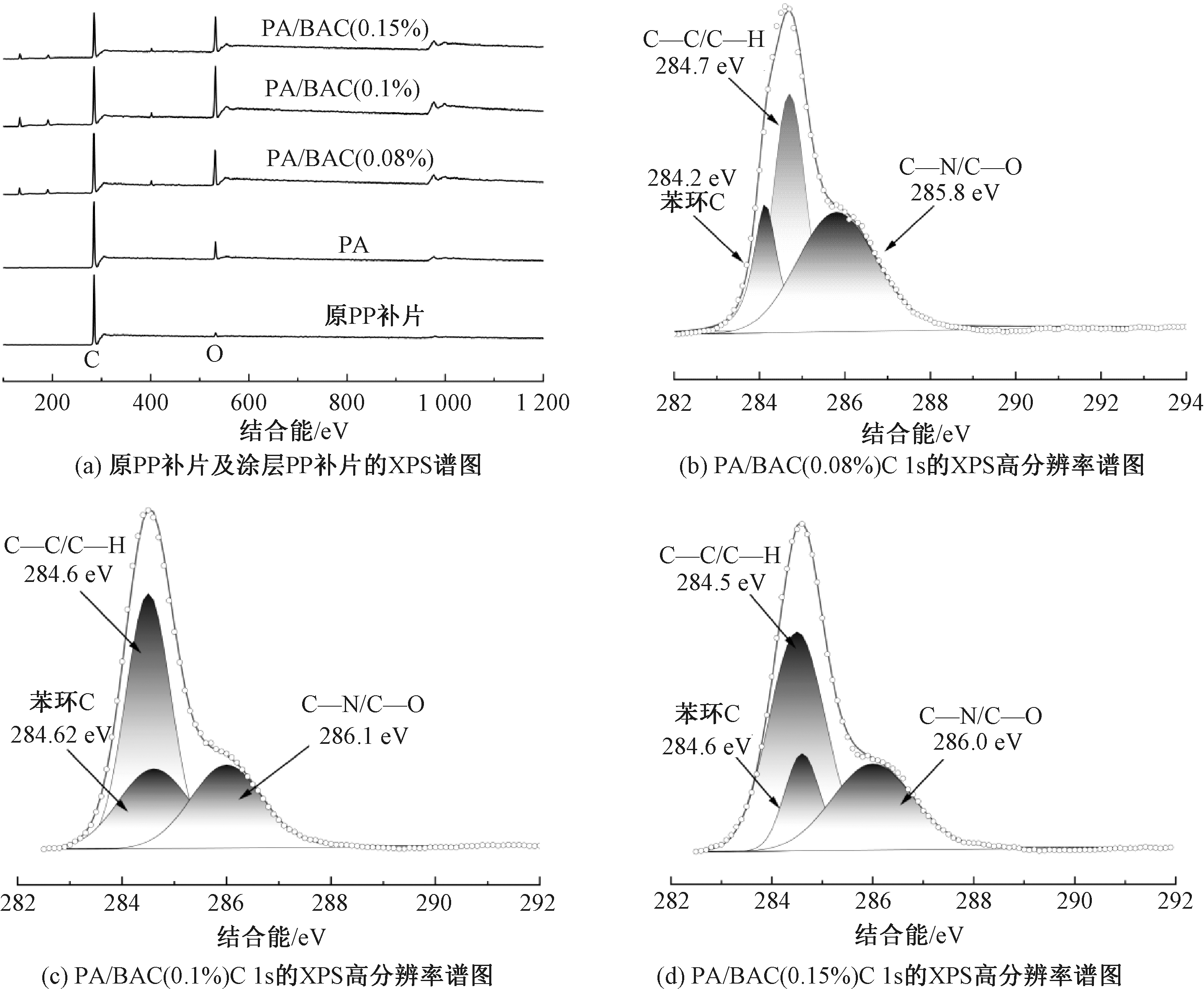
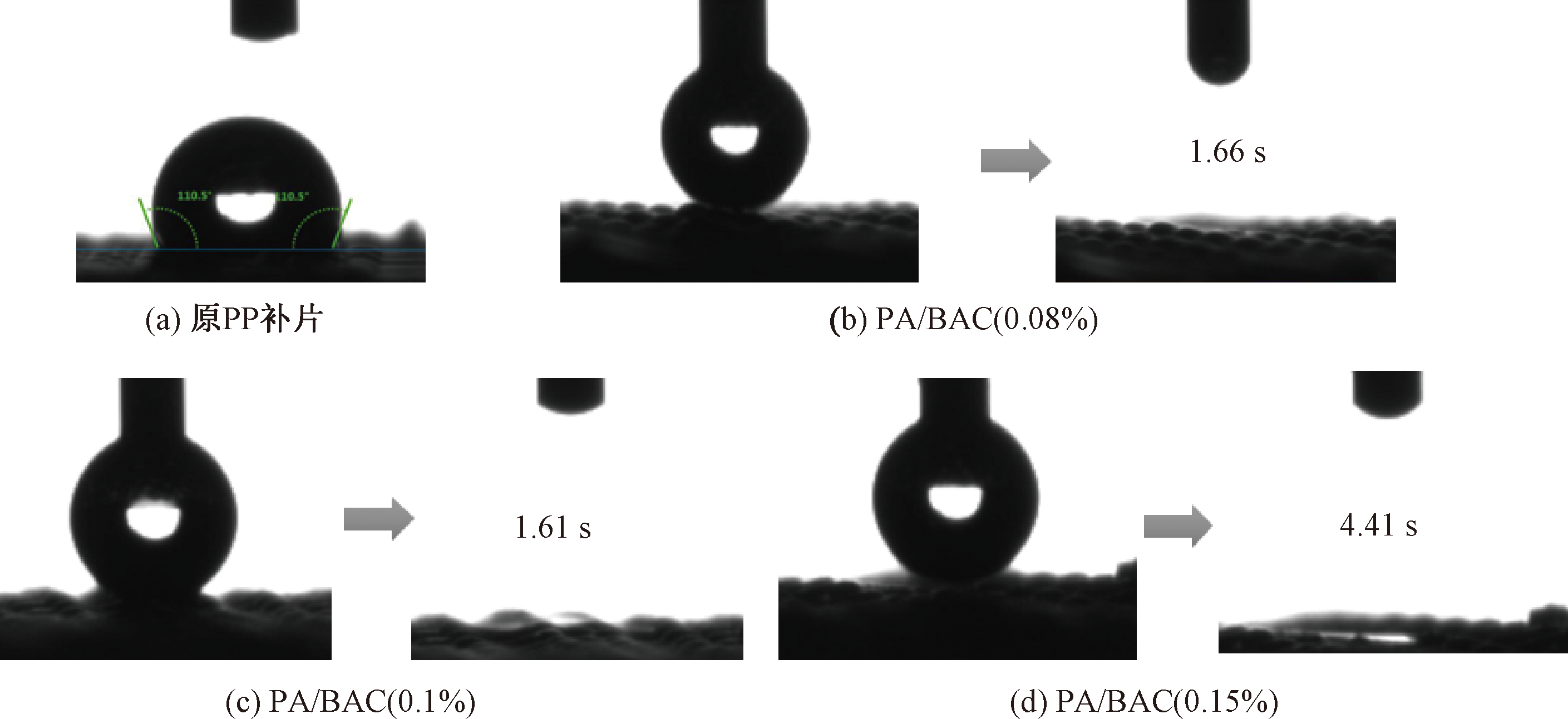
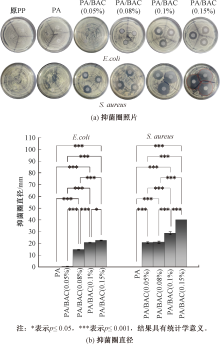
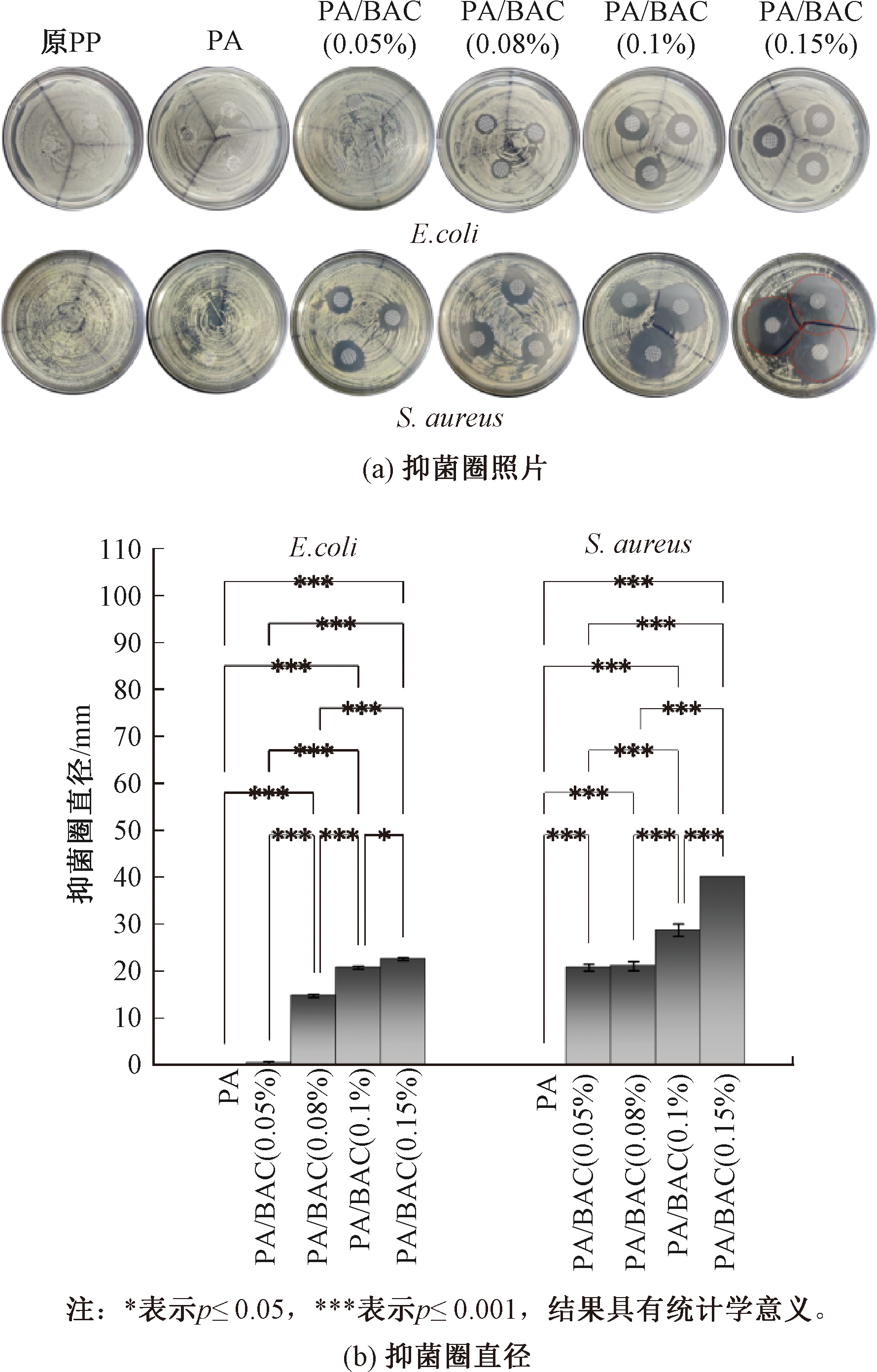
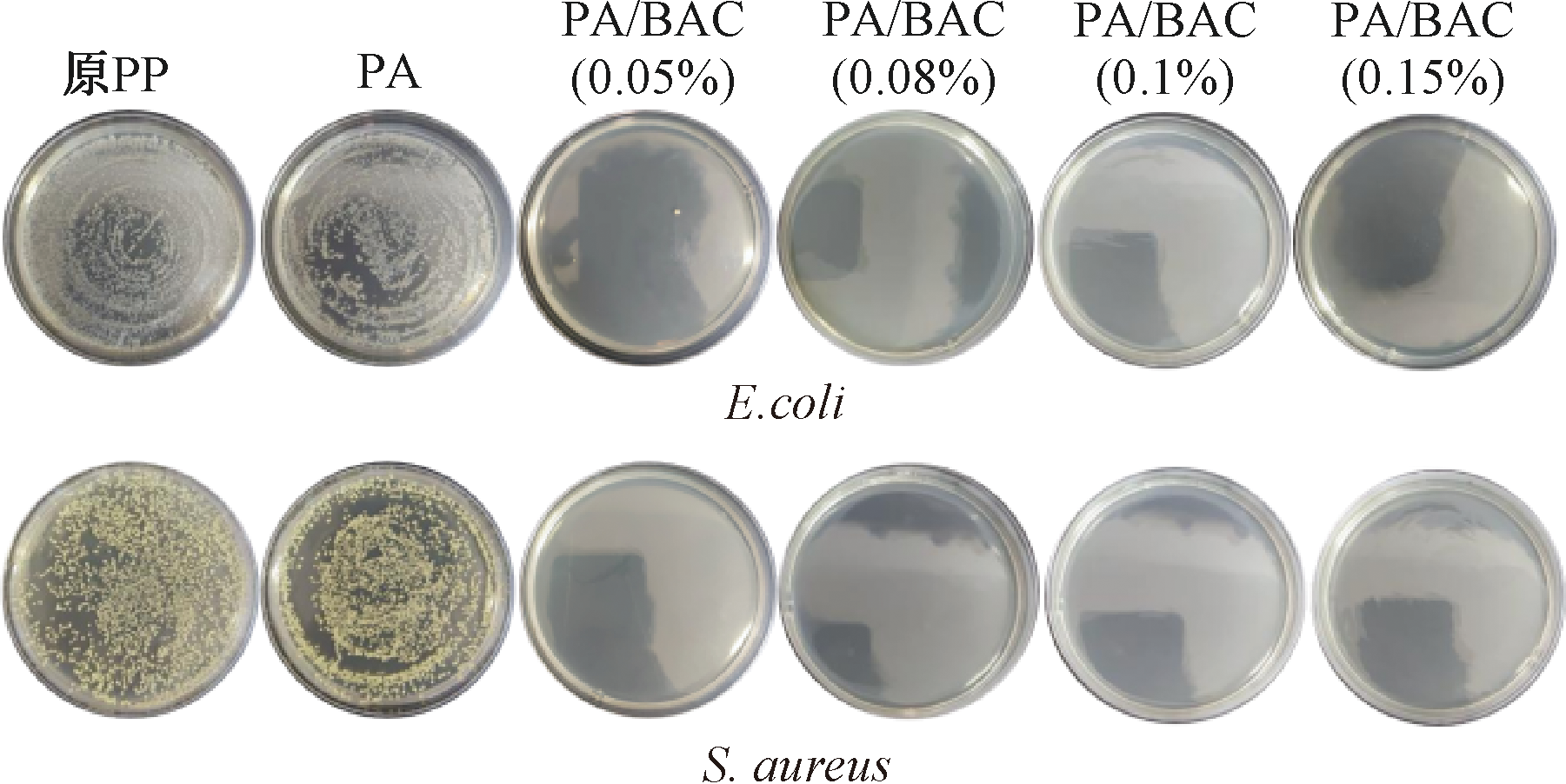
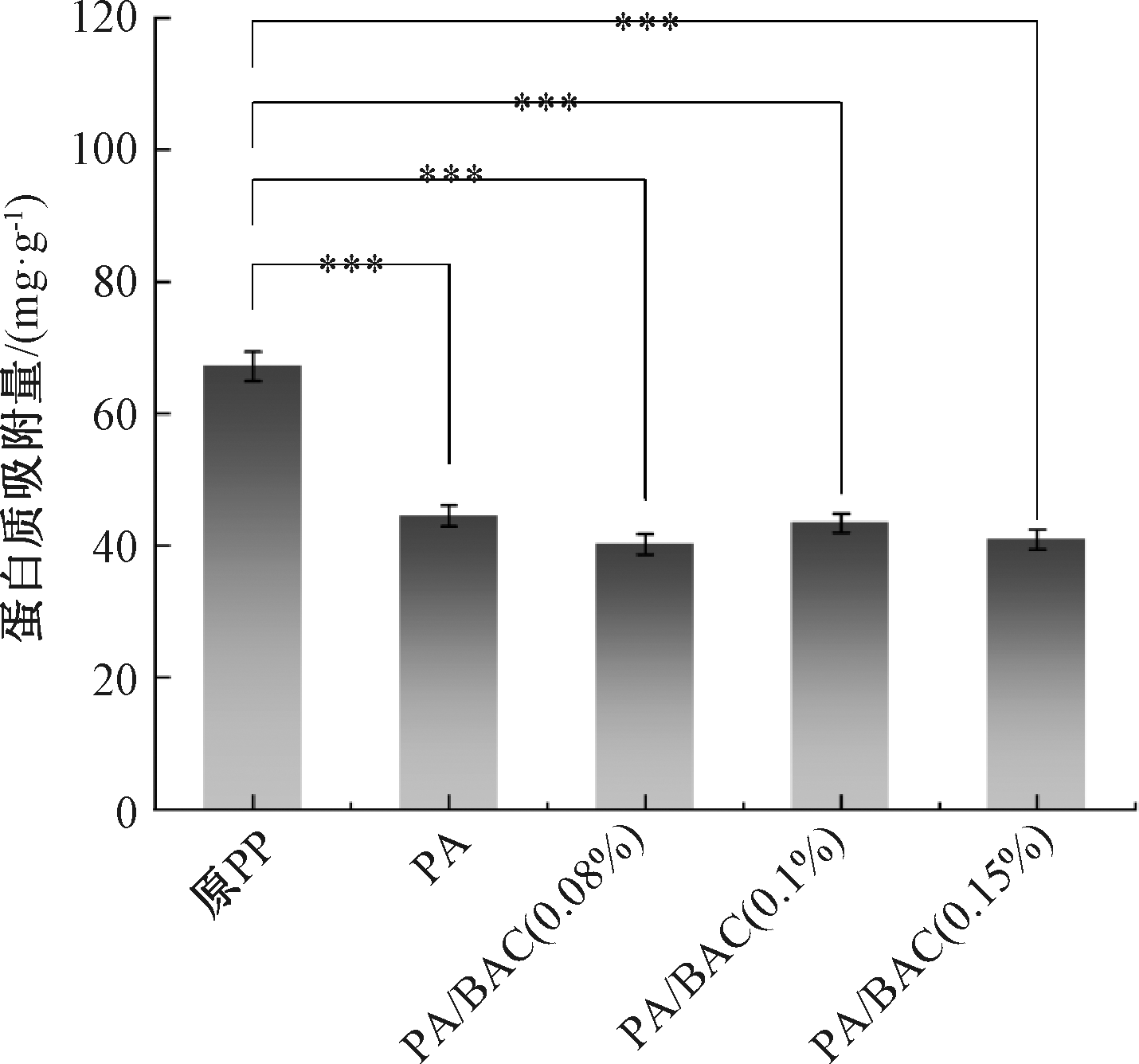
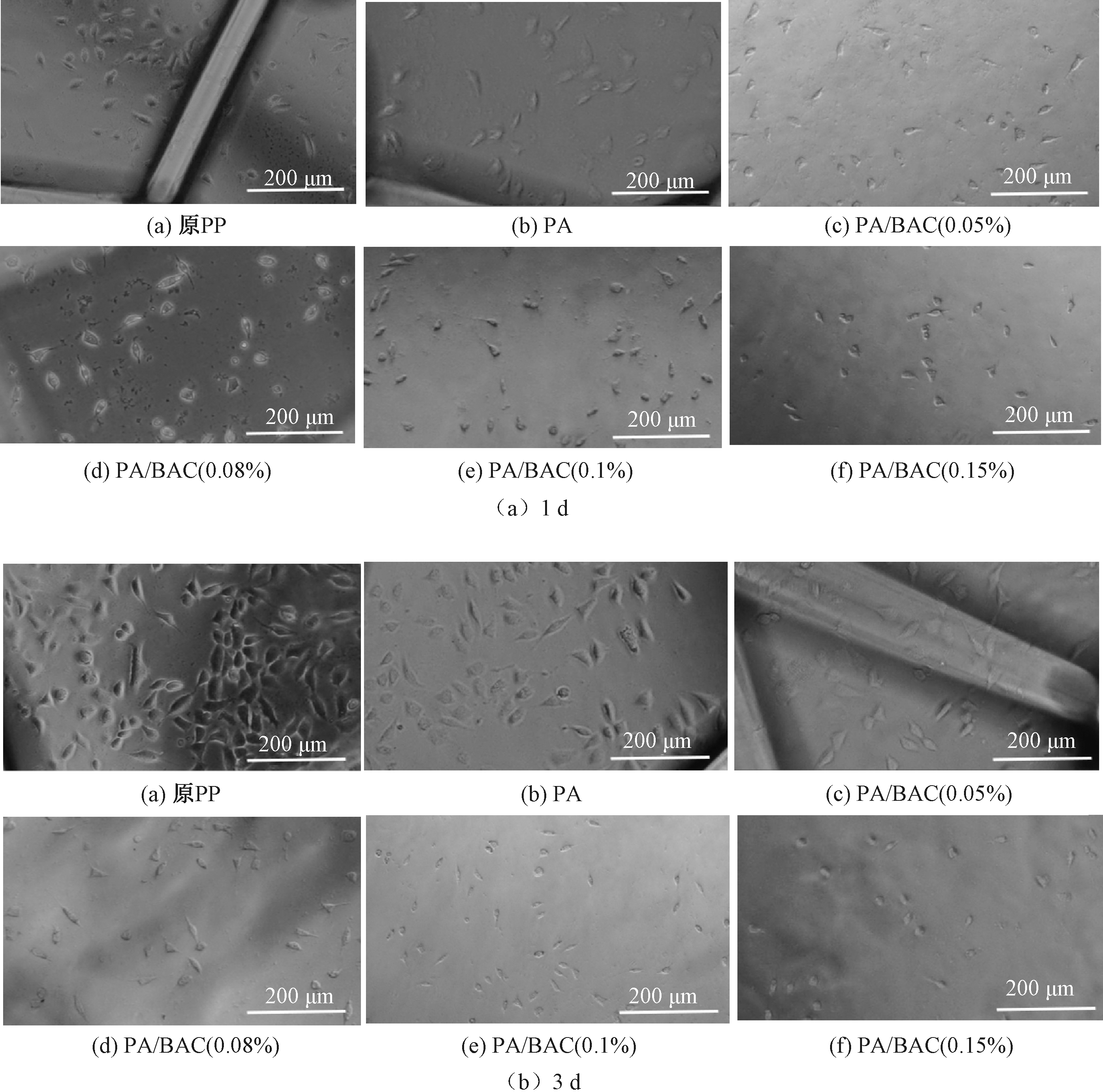
针对在疝修补手术中,传统聚丙烯补片植入后易出现细菌感染、术后粘连等并发症的问题,采用低温等离子体技术与一步共沉积工艺,在聚丙烯补片表面构建植酸(PA)/苯扎氯铵(BAC)抗菌涂层,制备过程仅需4 h。借助场发射扫描电子显微镜、X射线衍射仪、傅里叶变换红外光谱仪、X射线光电子能谱仪、水接触角分析仪等对涂层补片的结构与性能进行表征,并测试其蛋白质吸附量、抗菌性能及细胞毒性。结果表明:补片表面功能化修饰成功,亲水性得到极大改善;与原始聚丙烯补片相比,涂层补片的蛋白质吸附量显著减少;对大肠埃希菌和金黄色葡萄球菌的抑菌率均达99.99%~100%,抑菌圈直径分别为22.5、40 mm;同时,涂层补片还表现出优异的顺应性及较低的细胞毒性。本研究为抗菌疝修补片的开发提供了一种操作简便且具有潜在应用前景的解决方案。
中图分类号:
| [1] | 刘延圈. 一文了解疝气以及护理[J]. 健康必读, 2025(15): 128-129. |
| LIU Yanquan. Understanding hernia and nursing care[J]. Gems of Health, 2025(15): 128-129. | |
| [2] |
SETHI V, VERMA C, GUPTA A, et al. Infection-resistant polypropylene hernia mesh: vision & innovations[J]. ACS Applied Bio Materials, 2025, 8(3): 1797-1819.
doi: 10.1021/acsabm.4c01751 |
| [3] | 王小飞. 聚氨酯凝胶改性聚丙烯补片的制备及性能研究[D]. 成都: 四川大学, 2023: 3-10. |
| WANG Xiaofei. Preparation and properties of polyurethane gel modified polypropylene patch[D]. Chengdu: Sichuan University, 2023: 3-10. | |
| [4] | 刘沁欣. PP/PCL复合疝修补片的开发与性能评价[D]. 上海: 东华大学, 2020: 2-8. |
| LIU Qinxin. Development and performance evaluation of PP/PCL composite hernia repair patch[D]. Shanghai: Donghua University, 2020: 2-8. | |
| [5] |
WEI D D, JIAO G H, TAO Y H, et al. Polypropylene mesh coated with dual cross-linked hyaluronic acid/polyvinyl alcohol composite hydrogel with antiadhesion and angiogenesis properties for abdominal wall repair[J]. Advanced Materials Technologies, 2025, 10(9): 2401786.
doi: 10.1002/admt.v10.9 |
| [6] | 方琴, 周棣华, 蔺虹宾, 等. 植酸添加对铝合金微弧氧化膜组织结构及性能的影响[J]. 兵器材料科学与工程, 2026, 49(1): 111-118. |
| FANG Qin, ZHOU Dihua, LIN Hongbin, et al. Effect of phytic acid addition on microstructure and properties of micro arc oxidation film on aluminum alloy[J]. Ordnance Material Science and Engineering, 2026, 49(1): 111-118. | |
| [7] | 刘强, 程鑫, 游波. 植酸-硅烷改性氧化石墨烯/聚天门冬氨酸酯复合涂层的构筑及其防腐蚀机理[J]. 腐蚀与防护, 2025, 46(5): 15-23. |
| LIU Qiang, CHENG Xin, YOU Bo. Preparation of phytic acid and silane modified graphene oxide polyaspartic acid ester composite coating and its anti-corrosion mechanism[J]. Corrosion & Protection, 2025, 46(5): 15-23. | |
| [8] |
GENG Z J, GUO C P, LU D H, et al. Natural polysaccharide-based injectable hydrogels with tunable mechanical and electrical properties enabled by phytic acid[J]. Carbohydrate Research, 2025, 554: 109555.
doi: 10.1016/j.carres.2025.109555 |
| [9] | 李文秋, 李瑞涛, 杨宗山, 等. 一种新型复合抗菌剂的制备及其抗菌性能研究[J]. 应用化工, 2021, 50(S1): 150-153, 160. |
| LI Wenqiu, LI Ruitao, YANG Zongshan, et al. Preparation and antibacterial properties of benzalkonium chloride-Fe3+-montmorillonite antibacterial agent[J]. Applied Chemical Industry, 2021, 50(S1): 150-153, 160. | |
| [10] | 马珂珂. 非诺贝特对大鼠结膜下组织纤维化的下调作用及其机制研究[D]. 厦门: 厦门大学, 2020: 3-5. |
| MA Keke. Down-regulation of fenofibrate on subconjunctival fibrosis in rats and its mechanism[D]. Xiamen: Xiamen University, 2020: 3-5. | |
| [11] | 王晓燕, 吴晓慧, 蔡碧梅. 苯扎氯铵溶液联合盐酸环丙沙星栓对细菌性阴道炎疗效研究[J]. 中华灾害救援医学, 2024, 11(10): 1159-1162, 1169. |
| WANG Xiaoyan, WU Xiaohui, CAI Bimei. Study on the efficacy of benzalkonium chloride solution combined with ciprofloxacin hydrochloride suppositories in the treatment of bacterial vaginosis[J]. Chinese Journal of Disaster Medicine, 2024, 11(10): 1159-1162, 1169. | |
| [12] |
RAJ R, SHENOY S J, MONY M P, et al. Surface modification of polypropylene mesh with a porcine cholecystic extracellular matrix hydrogel for mitigating host tissue reaction[J]. ACS Applied Bio Materials, 2021, 4(4): 3304-3319.
doi: 10.1021/acsabm.0c01627 pmid: 35014417 |
| [13] |
BREDIKHIN M, GIL D, REX J, et al. Anti-inflammatory coating of hernia repair meshes: a 5-rabbit study[J]. Hernia, 2020, 24(6): 1191-1199.
doi: 10.1007/s10029-020-02122-9 |
| [14] |
YU S, SHI W T, HOUSHYAR S, et al. Preparation and performances of coated polypropylene hernia mesh with natural biomaterials[J]. Colloid and Interface Science Communications, 2021, 45: 100535.
doi: 10.1016/j.colcom.2021.100535 |
| [15] |
QIAO Y S, LI Y, ZHANG Q, et al. Dopamine-mediated zwitterionic polyelectrolyte-coated polypropylene hernia mesh with synergistic anti-inflammation effects[J]. Langmuir, 2020, 36(19): 5251-5261.
doi: 10.1021/acs.langmuir.0c00602 pmid: 32336102 |
| [16] |
HE X D, ZHANG J Y, XIE L W, et al. Phytic acid-promoted rapid fabrication of natural polypeptide coatings for multifunctional applications[J]. Chemical Engineering Journal, 2022, 440: 135917.
doi: 10.1016/j.cej.2022.135917 |
| [17] | DING R, YU L F, PENG P D, et al. Durable and robust antibacterial polypropylene hernia mesh for abdominal wall defect repair[J]. ACS Applied Materials & Interfaces, 2024, 16(20): 25686-25697. |
| [18] |
WEI D D, HUANG Y L, LIANG M, et al. Polypropylene mesh coated with hyaluronic acid/polyvinyl alcohol composite hydrogel for preventing bowel adhesion[J]. International Journal of Biological Macromolecules, 2024, 270: 132061.
doi: 10.1016/j.ijbiomac.2024.132061 |
| [19] | 庄金秋, 梅建国, 张颖, 等. 猪圆环病毒2型Cap蛋白琼脂扩散试验检测方法的建立[J]. 中国动物检疫, 2020, 37(9): 113-117. |
| ZHUANG Jinqiu, MEI Jianguo, ZHANG Ying, et al. Establishment of an agar-gel precipitation test for PCV2 cap protein[J]. China Animal Health Inspection, 2020, 37(9): 113-117. | |
| [20] | 牛世全, 李静, 张雪莹, 等. 一株抗黄芪根腐病芽孢杆菌的筛选、鉴定及抑菌物质的初步研究[J]. 西北师范大学学报(自然科学版), 2021, 57(2): 79-86. |
| NIU Shiquan, LI Jing, ZHANG Xueying, et al. Screening and identification of Bacillus subtilis against root rot disease of Astragalus membranaceus and preliminary study on the antibacterial substance[J]. Journal of Northwest Normal University (Natural Science), 2021, 57(2): 79-86. | |
| [21] |
LI Y, XU Z H, TANG L Q, et al. Nanofibers fortified with synergistic defense route: a potent wound dressing against drug-resistant bacterial infections[J]. Chemical Engineering Journal, 2023, 475: 146492.
doi: 10.1016/j.cej.2023.146492 |
| [22] |
YE S J, WEI D F, XU X, et al. Surface antimicrobial modification of polyamide by poly(hexamethylene guanidine) hydrochloride[J]. Polymers for Advanced Technologies, 2020, 31(8): 1847-1856.
doi: 10.1002/pat.v31.8 |
| [23] |
PANZARASA G, OSYPOVA A, TONCELLI C, et al. The pyranine-benzalkonium ion pair: a promising fluorescent system for the ratiometric detection of wound pH[J]. Sensors and Actuators B: Chemical, 2017, 249: 156-160.
doi: 10.1016/j.snb.2017.04.045 |
| [24] | 乔燕莎, 毛迎, 徐丹瑶, 等. 用于应对疝修补术后并发症的经编补片研究进展[J]. 纺织学报, 2022, 43(3): 1-7. |
|
QIAO Yansha, MAO Ying, XU Danyao, et al. Research progress in warp-knitted meshes for tackling complications after hernia repair[J]. Journal of Textile Research, 2022, 43(3): 1-7.
doi: 10.1177/004051757304300101 |
|
| [25] |
WANG Z Y, HAMEDI H, ZHANG F, et al. Plasma-induced diallyldimethylammonium chloride antibacterial hernia mesh[J]. ACS Applied Bio Materials, 2022, 5(12): 5645-5656.
doi: 10.1021/acsabm.2c00695 pmid: 36446396 |
| [26] |
YAO X, HU W H, LI Y H, et al. Dual dynamic crosslinked hydrogel patch embodied with anti-bacterial and macrophage regulatory properties for synergistic prevention of peritendinous adhesion[J]. Advanced Functional Materials, 2024, 34(34): 2400660.
doi: 10.1002/adfm.v34.34 |
| [1] | 李成才, 朱登辉, 殷向, 朱海霖, 张华鹏, 刘国金, 郭玉海, 刘炳荣. 内密外疏微孔结构膨体聚四氟乙烯管式纤维膜的制备及人工血管应用[J]. 纺织学报, 2026, 47(03): 1-8. |
| [2] | 郭一铭, 喻爽, 赵帆, 王富军. 血管监测用纤维基压电传感器的构建及性能评价[J]. 纺织学报, 2026, 47(03): 118-128. |
| [3] | 邵英海, 朴洪伟, 曹继鹏, 张月, 许兰杰, 于学智, 张明光. 天然彩棉/柞蚕短纤维混纺纱的制备及其抗菌性能[J]. 纺织学报, 2026, 47(03): 240-246. |
| [4] | 杨潇, 章语墨, 李彦, 王璐, 王富军. 糖触抗菌与渗液管理一体化的短纤维重构复合敷料及其性能[J]. 纺织学报, 2026, 47(03): 44-51. |
| [5] | 陈泳良, 杨潇, 王朝荣, 黄俊鸿, 李彦, 王璐. 静电纺丝-恒应力退火协同构建的湿态稳定型聚乳酸/I型胶原肩袖补片[J]. 纺织学报, 2026, 47(03): 60-69. |
| [6] | 席立锋, 张爱军, 贾伟, 马丕波, 蒋高明. 体外膜肺氧合膜织物模型构建与编织损伤机制[J]. 纺织学报, 2026, 47(02): 162-171. |
| [7] | 单梦琪, 杨则琦, 王富军, 王璐, 毛吉富. 织物-凝胶复合心肌补片的制备及其性能[J]. 纺织学报, 2026, 47(02): 222-229. |
| [8] | 王世杰, 孙辉, 于斌. 聚乙烯醇/牡丹皮提取物复合纳米静电纺丝膜的制备及其抗菌性能[J]. 纺织学报, 2026, 47(02): 56-64. |
| [9] | 顾家玉, 张炜栋, 董永春, 孙璇, 徐良军. 银杏叶黄酮对羊毛和蚕丝织物的抗菌整理[J]. 纺织学报, 2026, 47(01): 142-150. |
| [10] | 宋佳怡, 王政驿, 程献伟, 关晋平, 朱亚伟. 液态靛蓝染料的制备及其对棉织物的染色性能[J]. 纺织学报, 2025, 46(12): 133-141. |
| [11] | 候志文, 任泽苹, 王晓宁, 张天骄. 棉织物的壳聚糖/海藻酸盐抗菌阻燃整理及其性能[J]. 纺织学报, 2025, 46(12): 171-180. |
| [12] | 季巧, 于清源, 周爱晖, 马博谋, 徐进, 袁久刚. 细菌纤维素及其复合材料的应用研究进展[J]. 纺织学报, 2025, 46(12): 243-250. |
| [13] | 姚晓军, 徐恩婷, 杨雪媛, 房磊, 包伟, 房宽峻. 聚乙烯吡咯烷酮对聚对苯二甲酸乙二醇酯中空纤维膜结构与性能的调控[J]. 纺织学报, 2025, 46(12): 66-73. |
| [14] | 侯颖慧, 刘肖燕, 柳东辰, 郝矿荣, 邹婷. 基于体外降解的输尿管支架管的多目标优化[J]. 纺织学报, 2025, 46(09): 154-162. |
| [15] | 徐丽亚, 汪瑱, 杨鸿杰, 汪蔚. 氧化锌-银/生物基聚酰胺56纳米纤维膜的制备及其抗菌性能[J]. 纺织学报, 2025, 46(07): 37-45. |
|
||
 京公网安备11010502044800号