纺织学报 ›› 2026, Vol. 47 ›› Issue (04): 136-144.doi: 10.13475/j.fzxb.20250706701
黄昱翔, 潘欣明, 郭明瑞, 王静安, 高卫东( )
)
HUANG Yuxiang, PAN Xinming, GUO Mingrui, WANG Jing'an, GAO Weidong()
摘要:
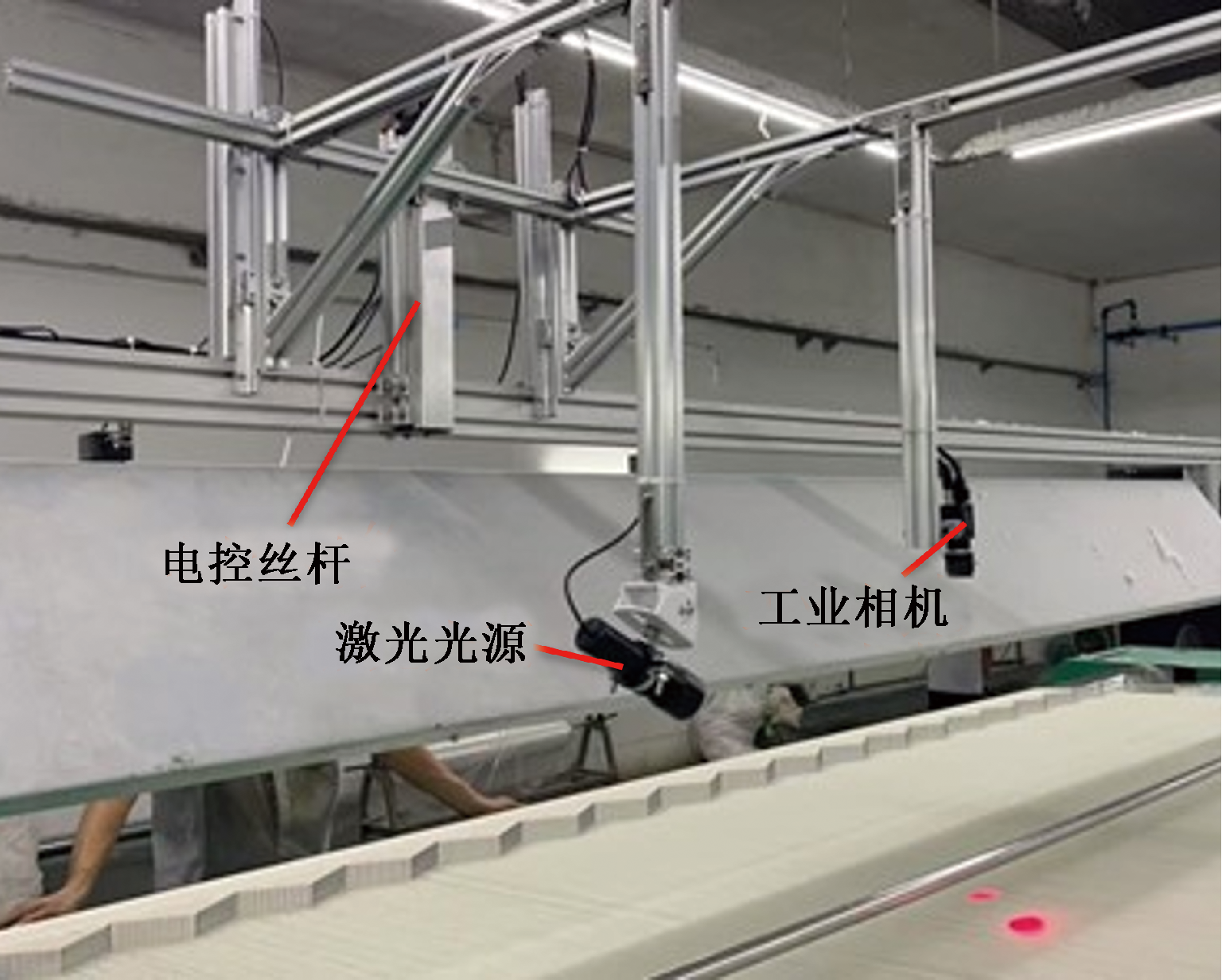
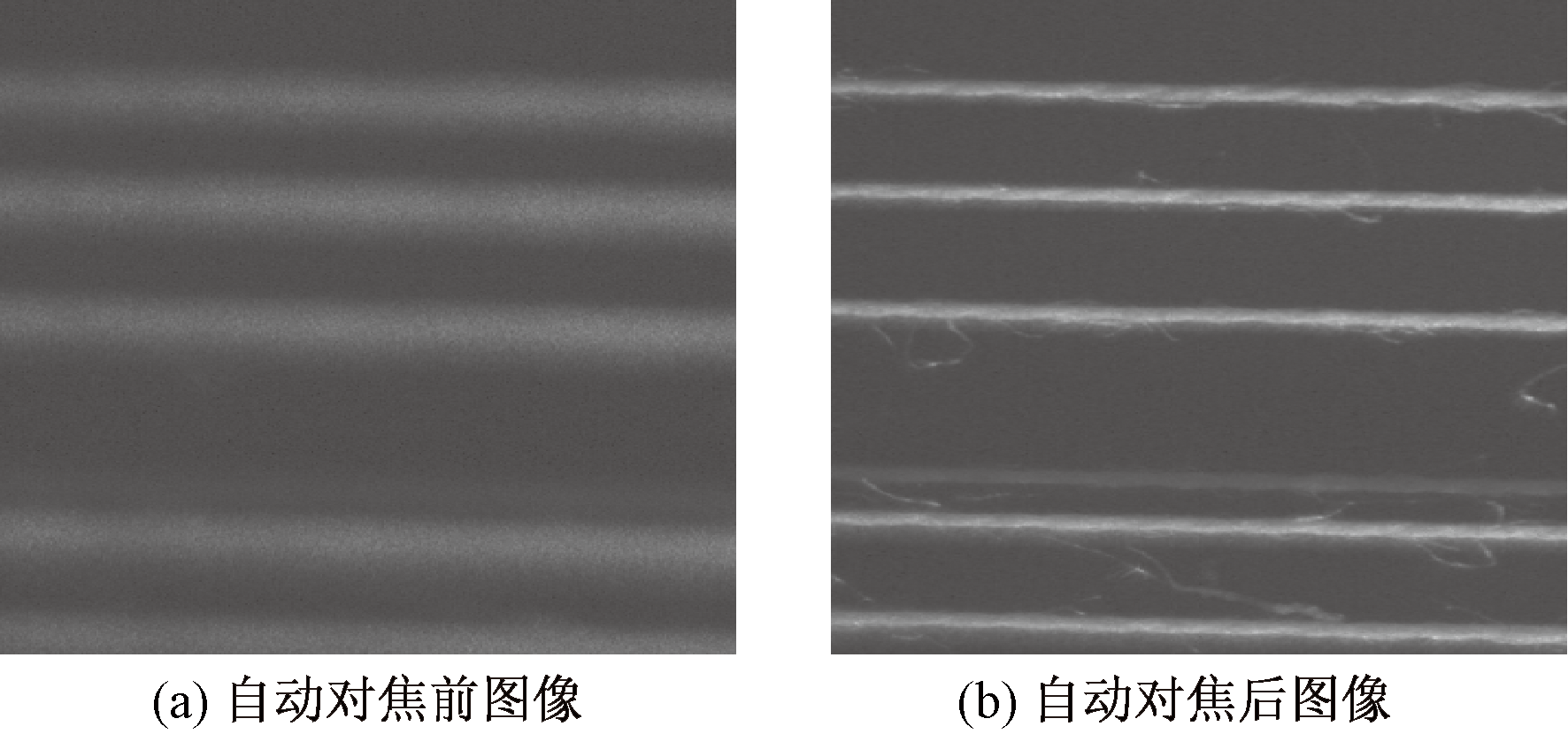
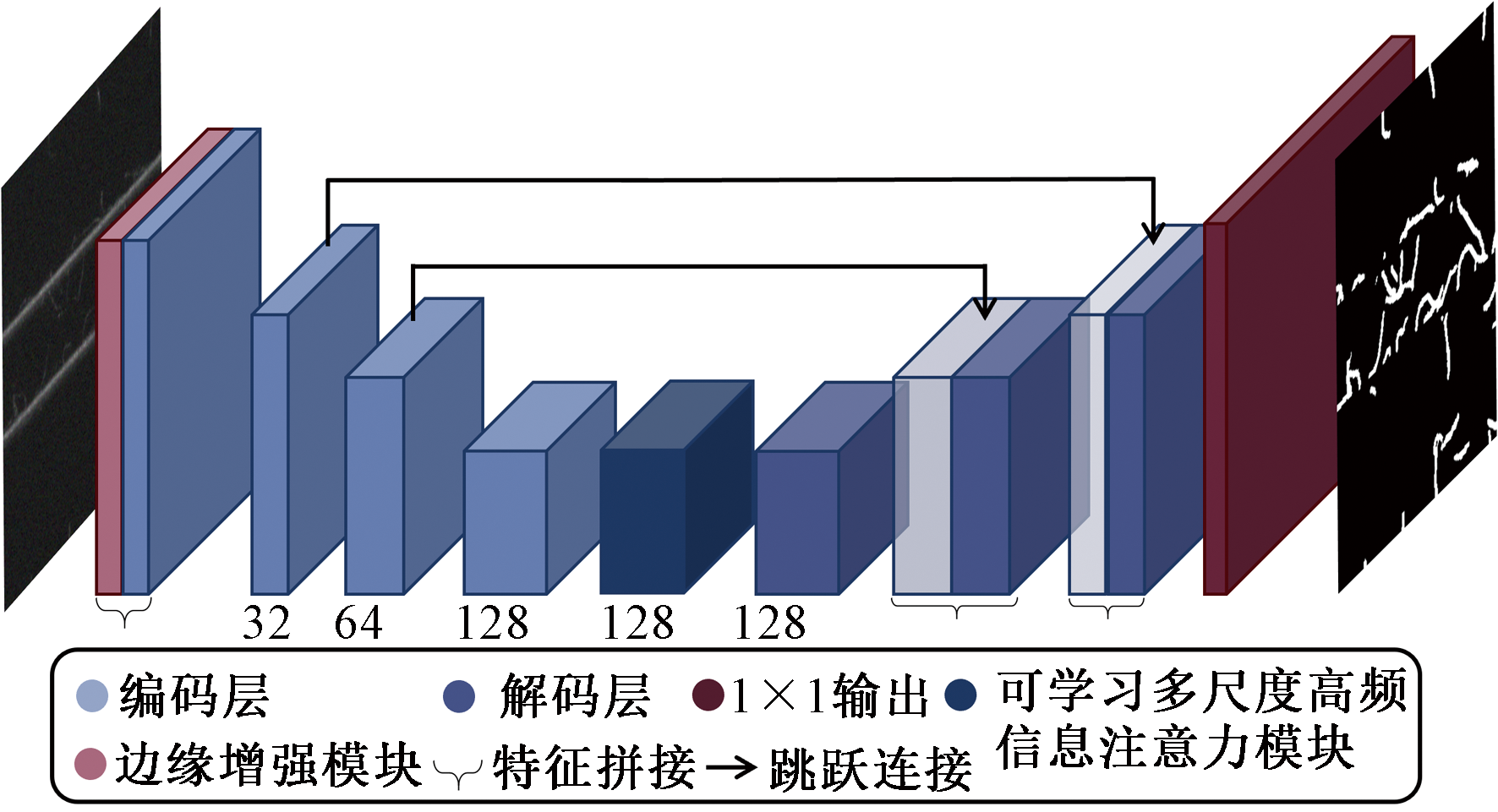
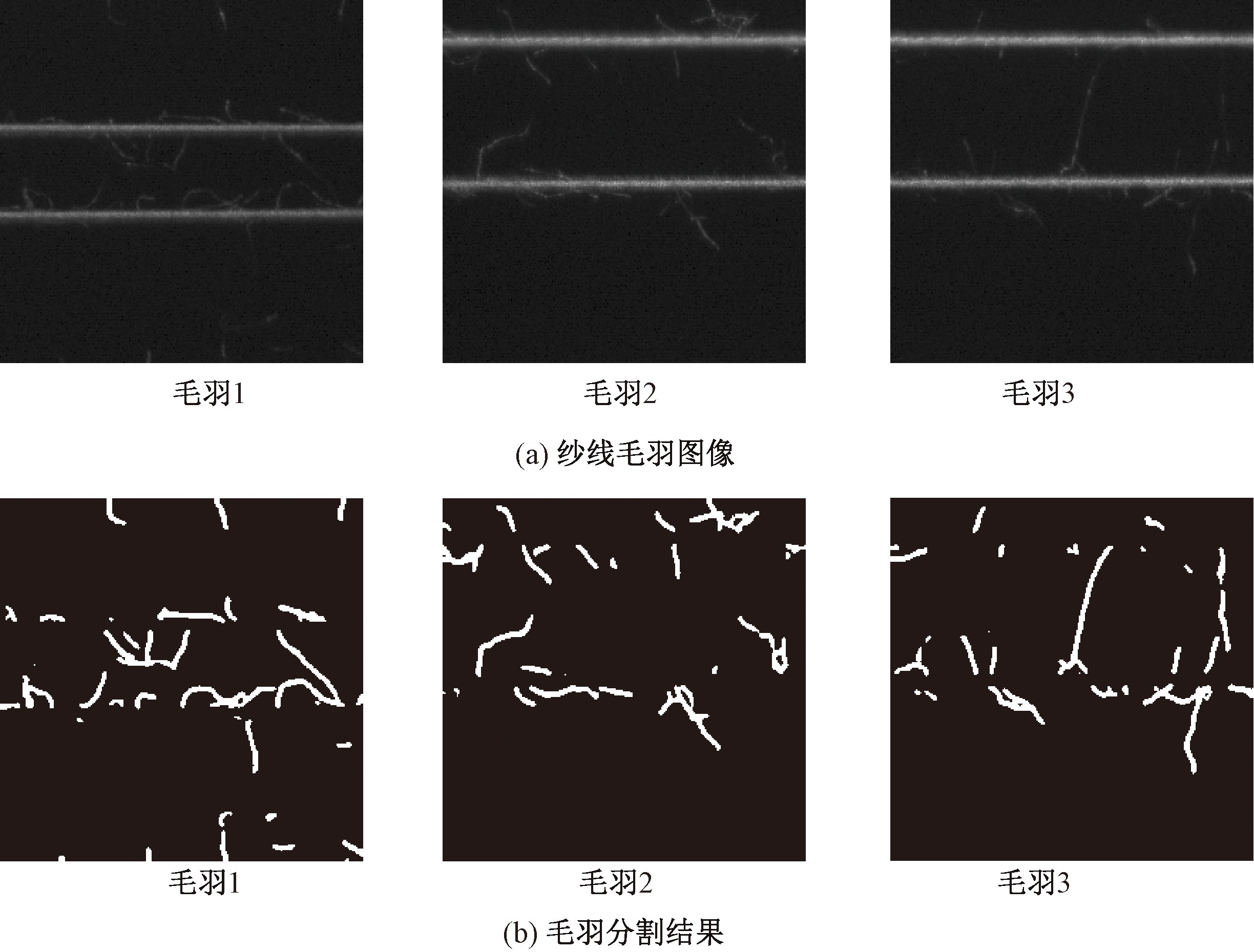
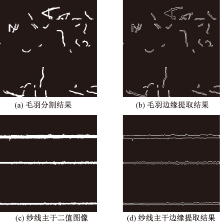
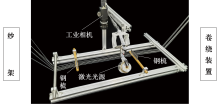
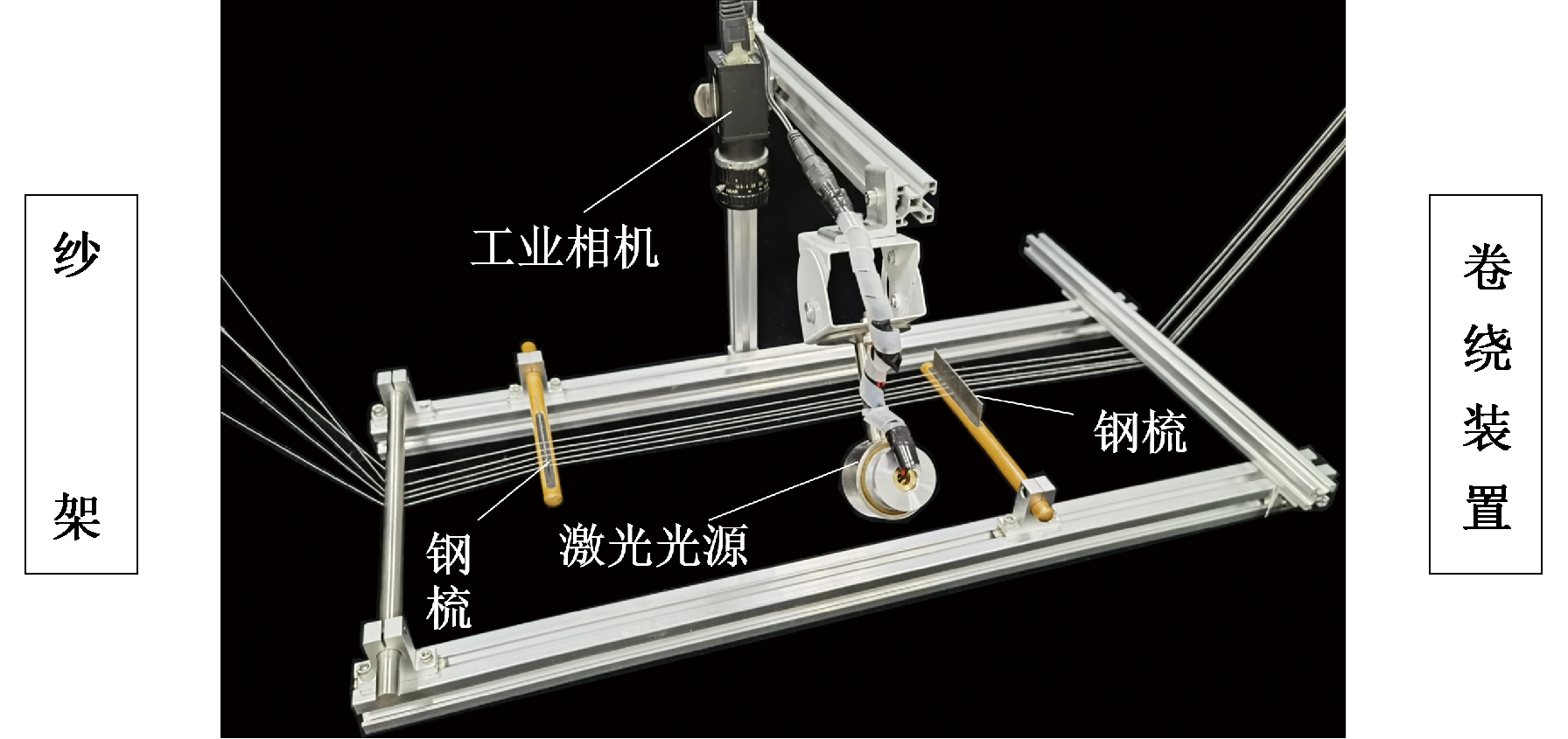
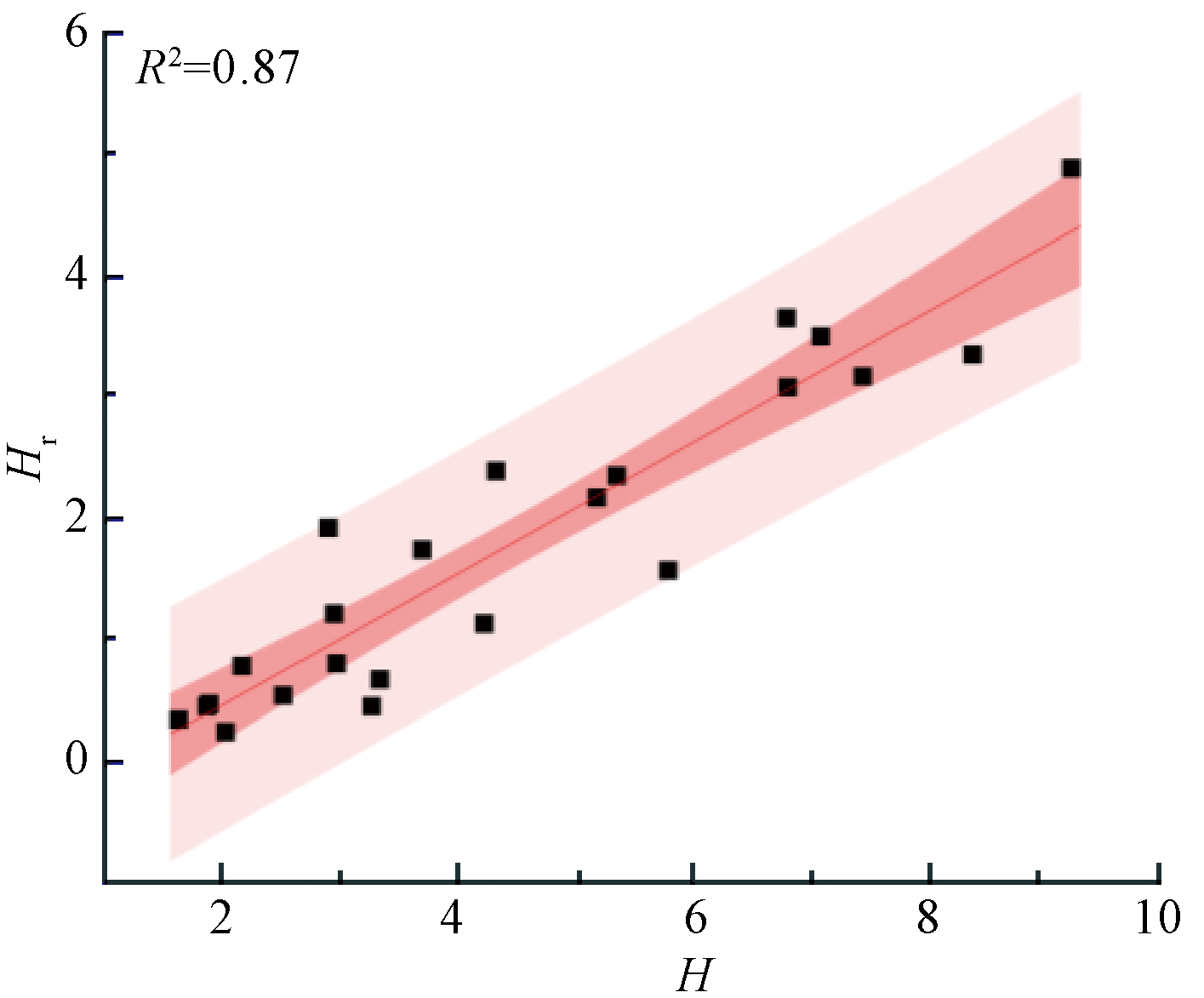
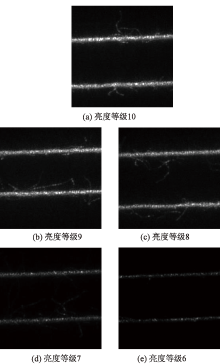
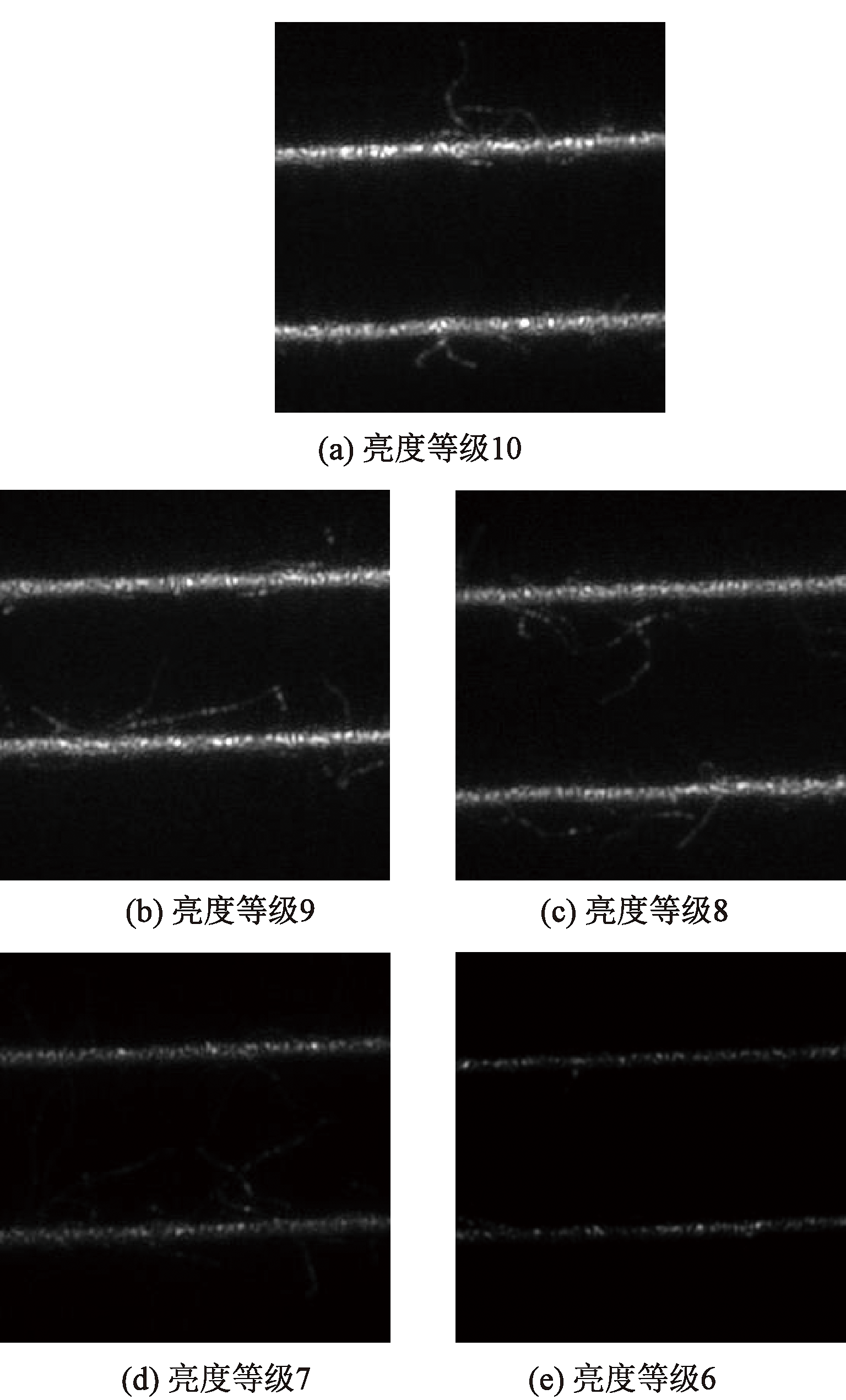
为实现浆纱毛羽在线检测,提出了一种基于机器视觉的浆纱毛羽在线检测方法,包括在线图像采集装置和图像分割模型与毛羽评价指标。首先由工业相机、激光光源、电控丝杆等组成的在线图像采集装置,经自动对焦后连续采集上浆后片纱高清图像;随后将图像输入到所构建的图像分割深度学习模型得到毛羽分割二值图像,并采用阈值分割算法得到纱线主干二值图像;最后分别统计毛羽二值图像和纱线主干二值图像中的边缘像素总数,计算二者比值作为毛羽量指标输出。实验结果表明:所提方法对不同组分、线密度、颜色的纱线毛羽量指标与H指数相关性达94%,回归分析决定系数R2值为0.87,检测时效性超过10帧/s,具有良好的检测精度、实时性和品种普适性;同时,在不同上浆车速及照明亮度下测得结果偏差不超过5%,表明该方法能够适应上浆生产复杂条件并满足毛羽实时检测的需要。
中图分类号:
| [1] | 秦少雄. 纱线毛羽检测仪器的研究及指标探讨[J]. 纺织导报, 2021(11): 58-61. |
| QIN Shaoxiong. Research and index discussion of yarn hairiness tester[J]. China Textile Leader, 2021(11): 58-61. | |
| [2] |
HALEEM N, WANG X G. A comparative study on yarn hairiness results from manual test and two commercial hairiness metres[J]. The Journal of the Textile Institute, 2013, 104(5): 494-501.
doi: 10.1080/00405000.2012.745235 |
| [3] | 马珂, 严凯, 张缓缓, 等. 基于贝叶斯阈值的纱线毛羽检测方法研究[J]. 棉纺织技术, 2021, 49(4): 11-15. |
| MA Ke, YAN Kai, ZHANG Huanhuan, et al. Study on yarn hairiness measurement method based on Bayesian threshold[J]. Cotton Textile Technology, 2021, 49(4): 11-15. | |
| [4] | 李鹏飞, 严凯, 张缓缓, 等. 基于最大熵与密度聚类相融合的毛羽检测[J]. 纺织学报, 2019, 40(7): 158-162. |
|
LI Pengfei, YAN Kai, ZHANG Huanhuan, et al. Hairiness detection based on maximum entropy and density clustering[J]. Journal of Textile Research, 2019, 40(7): 158-162.
doi: 10.1177/004051757004000209 |
|
| [5] | CAO H Y, CHEN Z Z, HU H H, et al. Yarn hairiness measurement based on multi-camera system and perspective maximization model[J]. Journal of Electronic Imaging, 2024, 33(4): 043043. |
| [6] |
JING J F, HUANG M Y, LI P F, et al. Automatic measurement of yarn hairiness based on the improved MRMRF segmentation algorithm[J]. The Journal of the Textile Institute, 2018, 109(6): 740-749.
doi: 10.1080/00405000.2017.1368106 |
| [7] | QIU Z J, WANG J G, GAO W D. A computer-vision-based nondestructive hairiness measurement system on yarn cone transportation line[J]. IEEE Transactions on Instrumentation and Measurement, 2024, 73: 3512513. |
| [8] |
WANG J G, XU B G, LI Z J, et al. Depth recovery of hairy fibers for precise yarn hairiness measurement[J]. Applied Optics, 2018, 57(24): 7021-7029.
doi: 10.1364/AO.57.007021 |
| [9] |
DENG Z M, YU L, WANG L J, et al. An algorithm for cross-fiber separation in yarn hairiness image processing[J]. The Visual Computer, 2024, 40(5): 3591-3599.
doi: 10.1007/s00371-023-03053-z |
| [10] | YANG C H, XU Y, ZHANG J P, et al. Evenness and hairiness measurement of chenille yarn based on an improved pixel difference convolution for the pixel difference network[J]. Journal of Engineered Fibers and Fabrics, 2025, 20: 15589250251338256. |
| [11] |
PEREIRA F, LOPES H, PINTO L, et al. A novel deep learning approach for yarn hairiness characterization using an improved YOLOv5 algorithm[J]. Applied Sciences, 2024, 15(1): 149.
doi: 10.3390/app15010149 |
| [12] |
PEREIRA F, LOPES H, PINTO L, et al. Yarn quality analysis by using computer vision and deep learning techniques[J]. Textile Research Journal, 2026, 96(3/4): 240-265.
doi: 10.1177/00405175251331205 |
| [13] |
DAI J C, REN J, LI S J. PHL-YOLO: a real-time lightweight yarn inspection method[J]. Journal of Real-Time Image Processing, 2024, 22(1): 20.
doi: 10.1007/s11554-024-01595-6 |
| [14] |
PEREIRA F, MACEDO A, PINTO L, et al. Intelligent computer vision system for analysis and characterization of yarn quality[J]. Electronics, 2023, 12(1): 236.
doi: 10.3390/electronics12010236 |
| [15] | BAO J M, JING J F, XIE Y H. A defect detection system of glass tube yarn based on machine vision[J]. Journal of Industrial Textiles, 2023, 53: 15280837231152878. |
| [16] | TANG J L, YANG Z L, ZHANG X Y, et al. Intelligent detection method of yarn hairiness using CenterNet-CBAM[C]// BALAS V E, WU Q.Design studies and intelligence engineering. Amsterdam: IOS Press, 2022: 218-226. |
| [17] | CHOLLET F. Xception:deep learning with depthwise separable convolutions[C]//2017 IEEE Conference on Computer Vision and Pattern Recognition (CVPR). New York: IEEE, 2017: 1800-1807. |
| [18] |
AKRAM F, GARCIA M A, PUIG D. Active contours driven by difference of Gaussians[J]. Scientific Reports, 2017, 7: 14984.
doi: 10.1038/s41598-017-14502-w pmid: 29101392 |
| [19] |
GUO M R, GAO W D, WANG J G. Online measurement of sizing yarn hairiness based on computer vision[J]. Fibers and Polymers, 2023, 24(4): 1539-1552.
doi: 10.1007/s12221-023-00136-5 |
| [20] |
YANG P, SONG W, ZHAO X B, et al. An improved Otsu threshold segmentation algorithm[J]. International Journal of Computational Science and Engineering, 2020, 22(1): 146.
doi: 10.1504/IJCSE.2020.107266 |
| [21] | RONNEBERGER O, FISCHER P, BROX T. U-Net: convolutional networks for biomedical image segmentation[M]//Medical image computing and computer-assisted intervention-MICCAI 2015. Cham: Springer International Publishing, 2015: 234-241. |
| [22] |
ROMERA E, ÁLVAREZ J M, BERGASA L M, et al. ERFNet: efficient residual factorized ConvNet for real-time semantic segmentation[J]. IEEE Transactions on Intelligent Transportation Systems, 2018, 19(1): 263-272.
doi: 10.1109/TITS.2017.2750080 |
| [23] | JIANG J T, WANG M M, TIAN H Z, et al. LV-UNet:a lightweight and vanilla model for medical image segmentation[C]//2024 IEEE International Conference on Bioinformatics and Biomedicine (BIBM). New York: IEEE, 2025: 4240-4246. |
| [24] |
CANNY J. A computational approach to edge detection[J]. IEEE Transactions on Pattern Analysis and Machine Intelligence, 1986, PAMI-8(6): 679-698.
doi: 10.1109/TPAMI.1986.4767851 |
| [25] | XIE K, HOLDER S, GÖPFERT A, et al. An experimental study of motion blur in optical coordinate metrology for dynamic measurements of geometrical features[C]// Proceedings of Joint International IMEKO TC1+TC7+TC13 Symposium. Jena: IMEKO, 2011. |
| [1] | 刘荣芳, 李新荣, 李理, 袁程栩. 基于谐振腔微扰理论的精梳条条干质量在线微波检测方法[J]. 纺织学报, 2026, 47(01): 223-230. |
| [2] | 周宇, 隗兵, 郝矿荣, 皋磊, 王华平. 基于改进U-Mamba网络的聚酯纤维超微结构分割算法[J]. 纺织学报, 2026, 47(01): 72-79. |
| [3] | 庹武, 刘琼洋, 李庆响, 陈谦, 范睿鸽, 李佩. 基于机器视觉与YOLO11n的女西裤尺寸自动测量[J]. 纺织学报, 2025, 46(12): 208-215. |
| [4] | 吴威涛, 韩奥博, 牛奎, 贾建辉, 尹邦雄, 向忠. 基于高泛化性图像生成与分类算法的织物瑕疵检测系统设计[J]. 纺织学报, 2025, 46(10): 227-236. |
| [5] | 任志墨, 张文昌, 李贞逸, 叶贺, 杨春柳, 张倩. 基于双目结构光的纺织圆柱件三维视觉定位方法[J]. 纺织学报, 2025, 46(07): 227-235. |
| [6] | 许纶有, 邹鲲, 吴浩男. 基于机器视觉的浆纱机经轴区断纱故障检测[J]. 纺织学报, 2025, 46(06): 231-239. |
| [7] | 李吉国, 景军锋, 程为, 王永波, 刘薇. 基于机器视觉的玻璃纤维纱团外观缺陷检测系统设计[J]. 纺织学报, 2025, 46(05): 243-251. |
| [8] | 任柯, 周衡书, 魏瑾瑜, 闫文君, 左言文. 基于机器视觉技术的百褶裙动态美感评价[J]. 纺织学报, 2024, 45(12): 189-198. |
| [9] | 刘燕萍, 郭佩瑶, 吴莹. 面向织物疵点检测的深度学习技术应用研究进展[J]. 纺织学报, 2024, 45(12): 234-242. |
| [10] | 任佳伟, 周其洪, 陈唱, 洪巍, 岑均豪. 基于机器视觉的交叉缠绕式筒子纱位姿检测方法[J]. 纺织学报, 2024, 45(11): 207-214. |
| [11] | 陈育帆, 郑小虎, 徐修亮, 刘冰. 基于机器视觉的缝纫线迹缺陷检测方法[J]. 纺织学报, 2024, 45(07): 173-180. |
| [12] | 顾梅花, 花玮, 董晓晓, 张晓丹. 基于上下文提取与注意力融合的遮挡服装图像分割[J]. 纺织学报, 2024, 45(05): 155-164. |
| [13] | 文嘉琪, 李新荣, 冯文倩, 李瀚森. 印花面料的边缘轮廓快速提取方法[J]. 纺织学报, 2024, 45(05): 165-173. |
| [14] | 杨金鹏, 景军锋, 李吉国, 王渊博. 基于机器视觉的玻璃纤维合股纱缺陷检测系统设计[J]. 纺织学报, 2024, 45(05): 193-201. |
| [15] | 白恩龙, 张周强, 郭忠超, 昝杰. 基于机器视觉的棉花颜色检测方法[J]. 纺织学报, 2024, 45(03): 36-43. |
|
||
 京公网安备11010502044800号