纺织学报 ›› 2025, Vol. 46 ›› Issue (10): 103-110.doi: 10.13475/j.fzxb.20240606401
郭艳文1, 夏蕊1, 黄晓梅1,2, 陈红霞1,2, 曹海建1,2( )
)
GUO Yanwen1, XIA Rui1, HUANG Xiaomei1,2, CHEN Hongxia1,2, CAO Haijian1,2()
摘要:
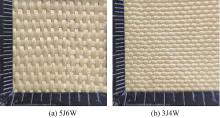
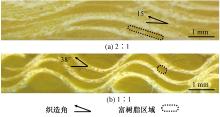
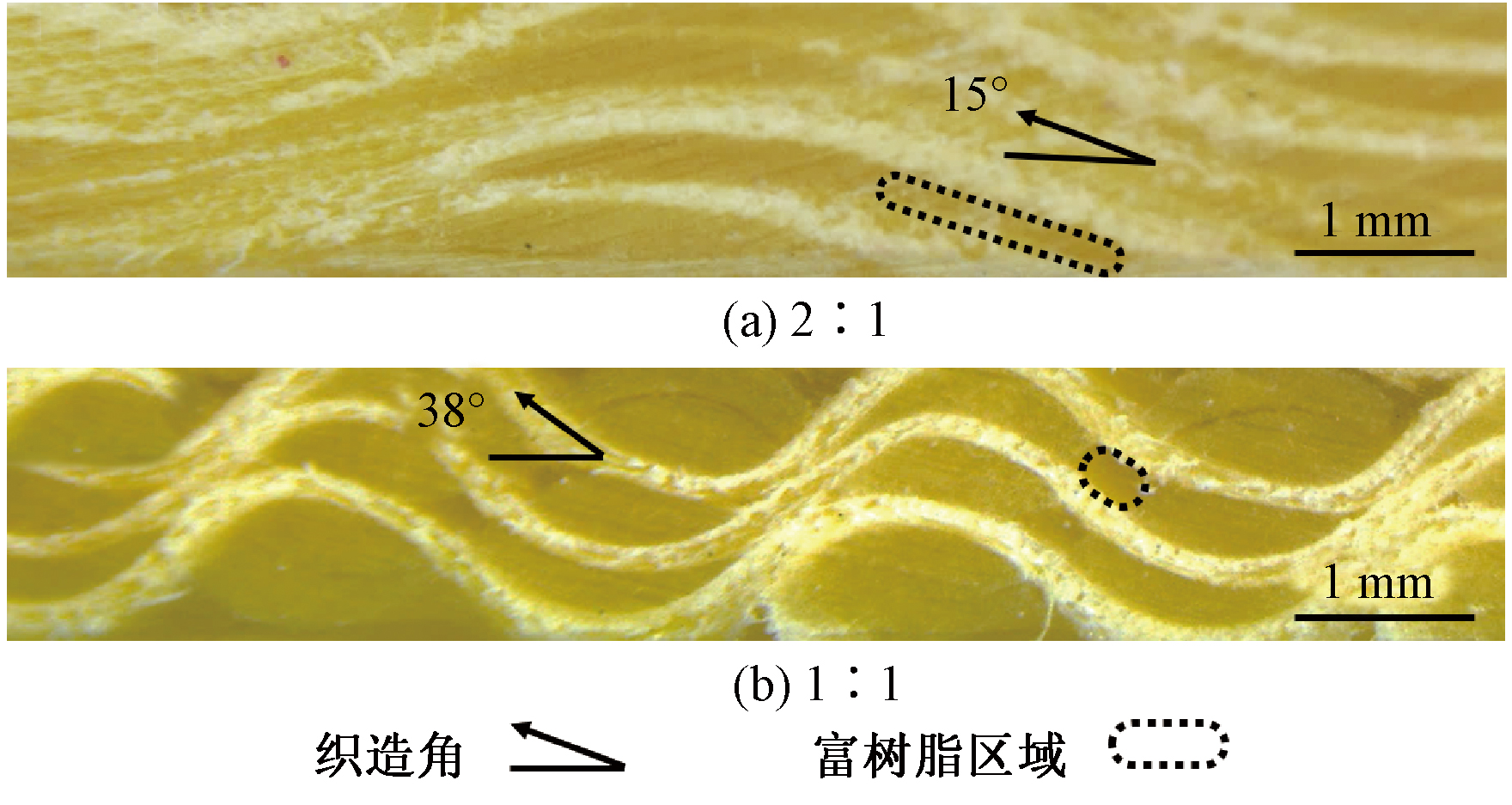
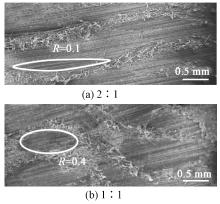
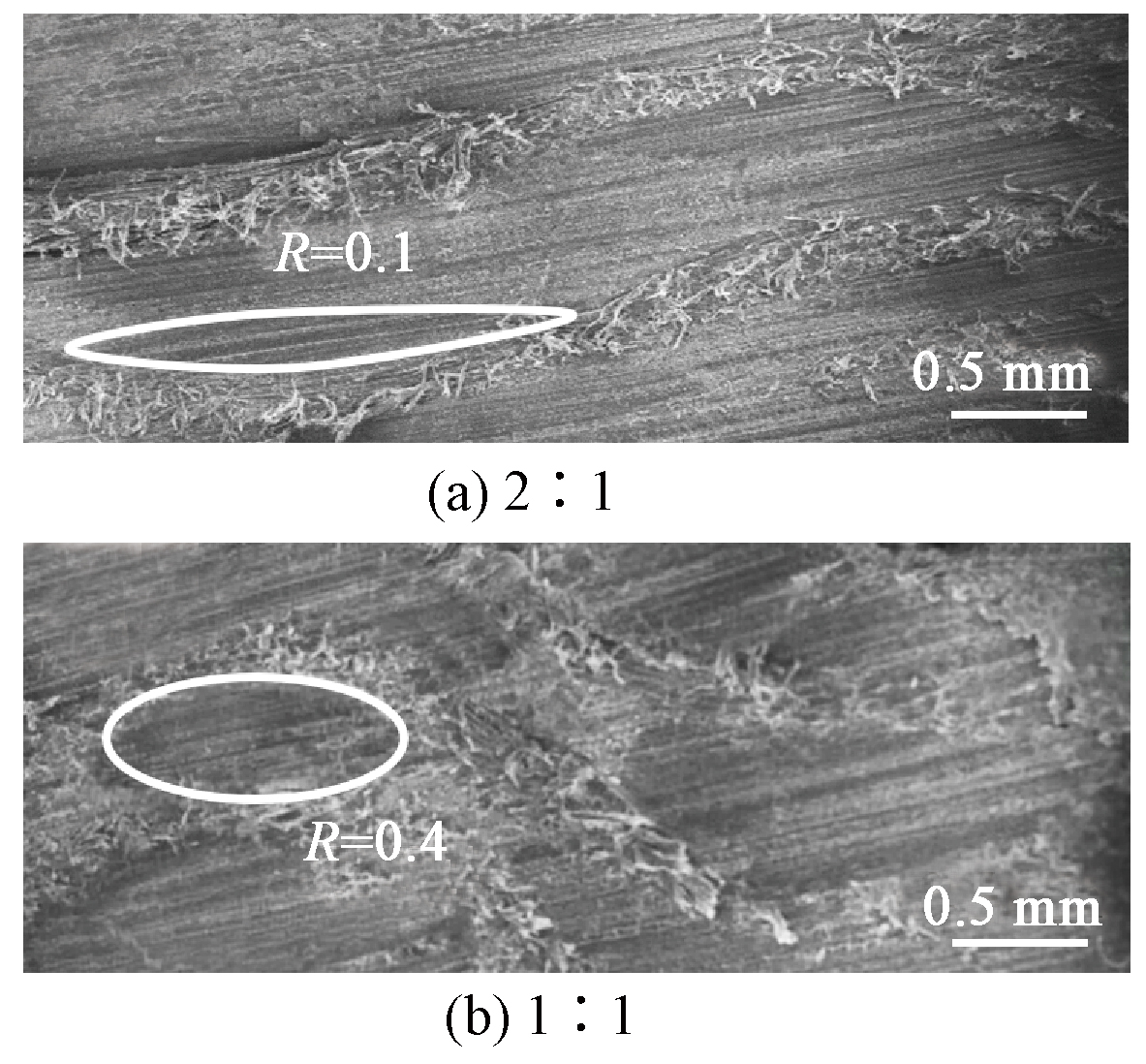
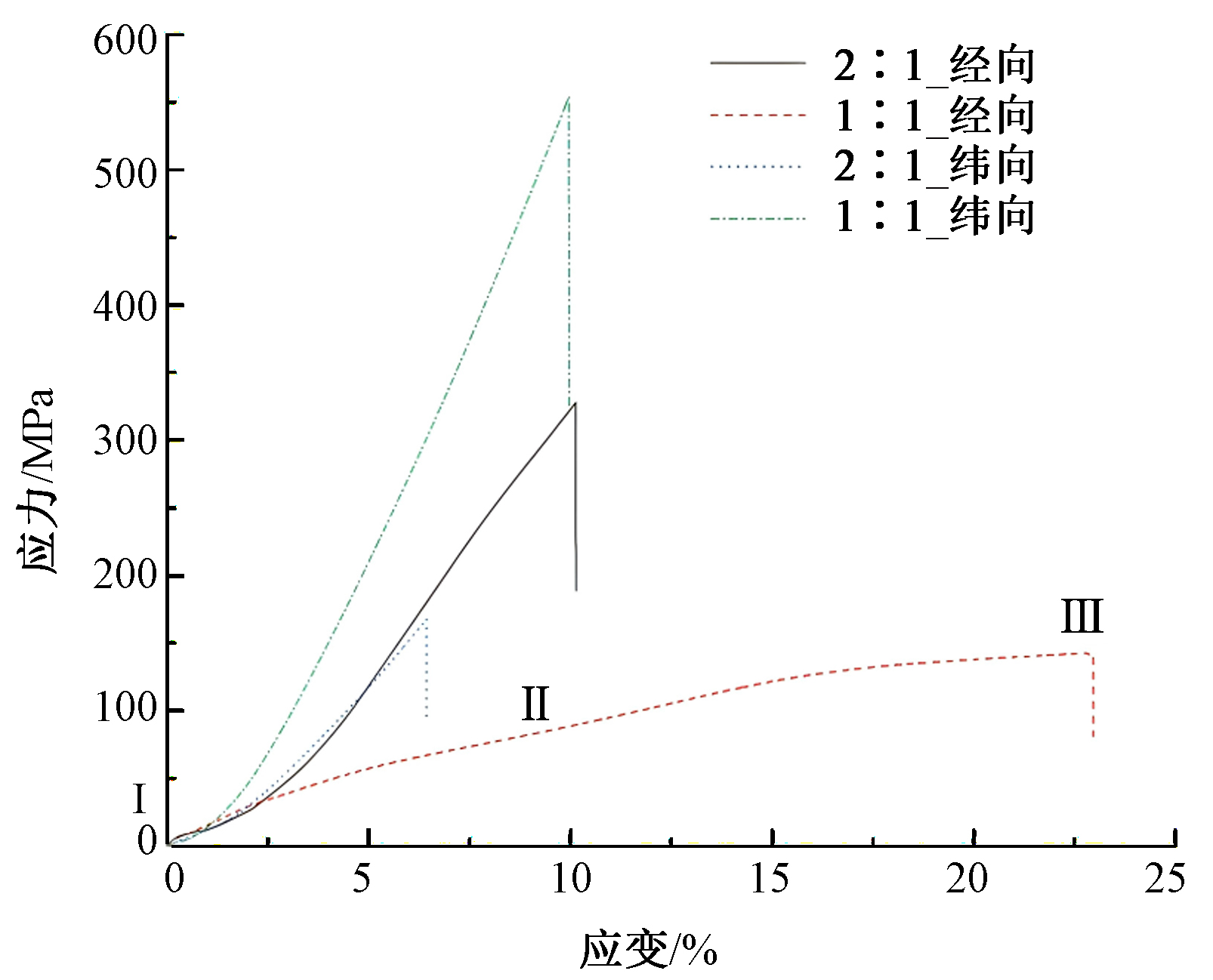
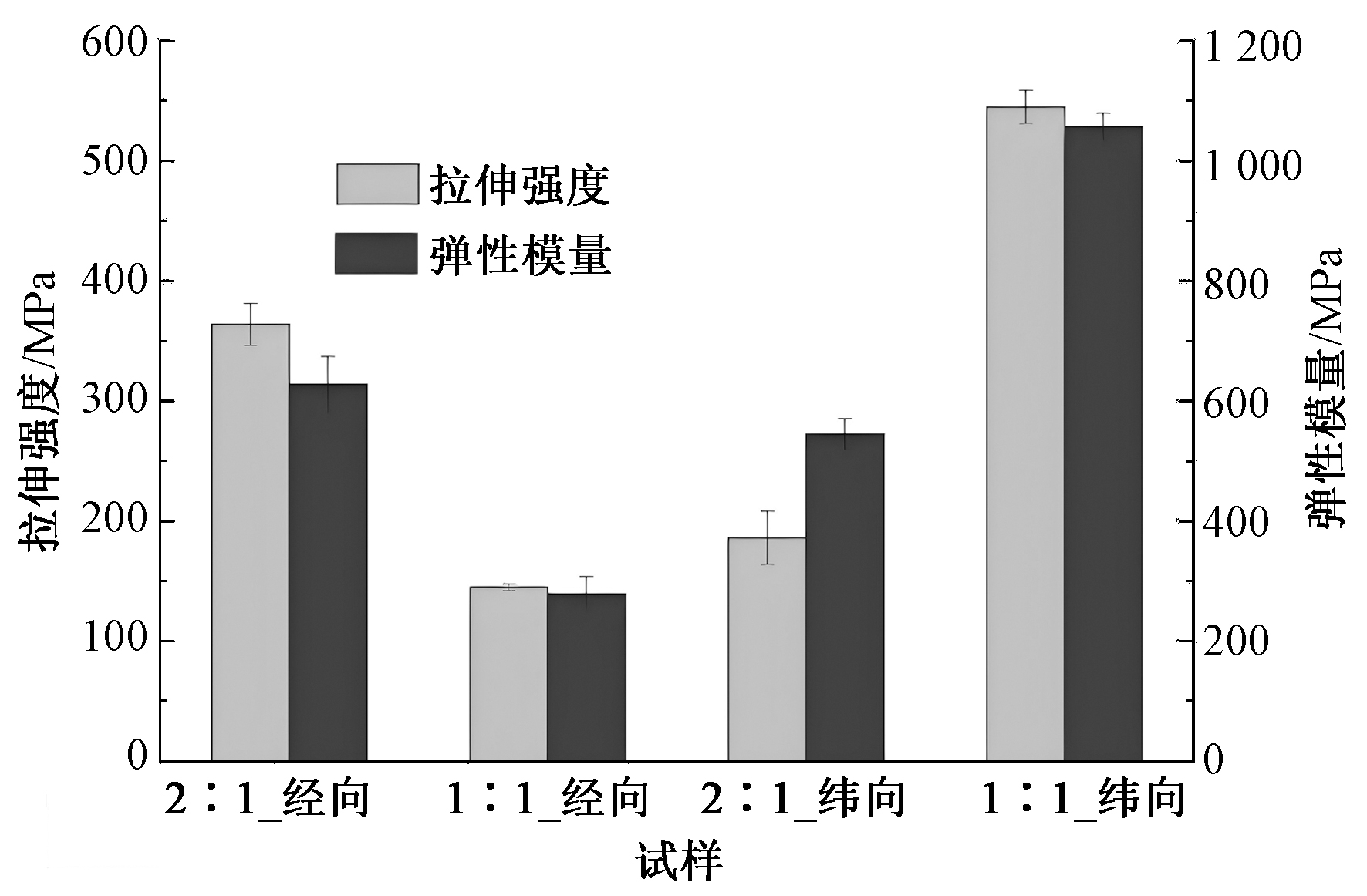
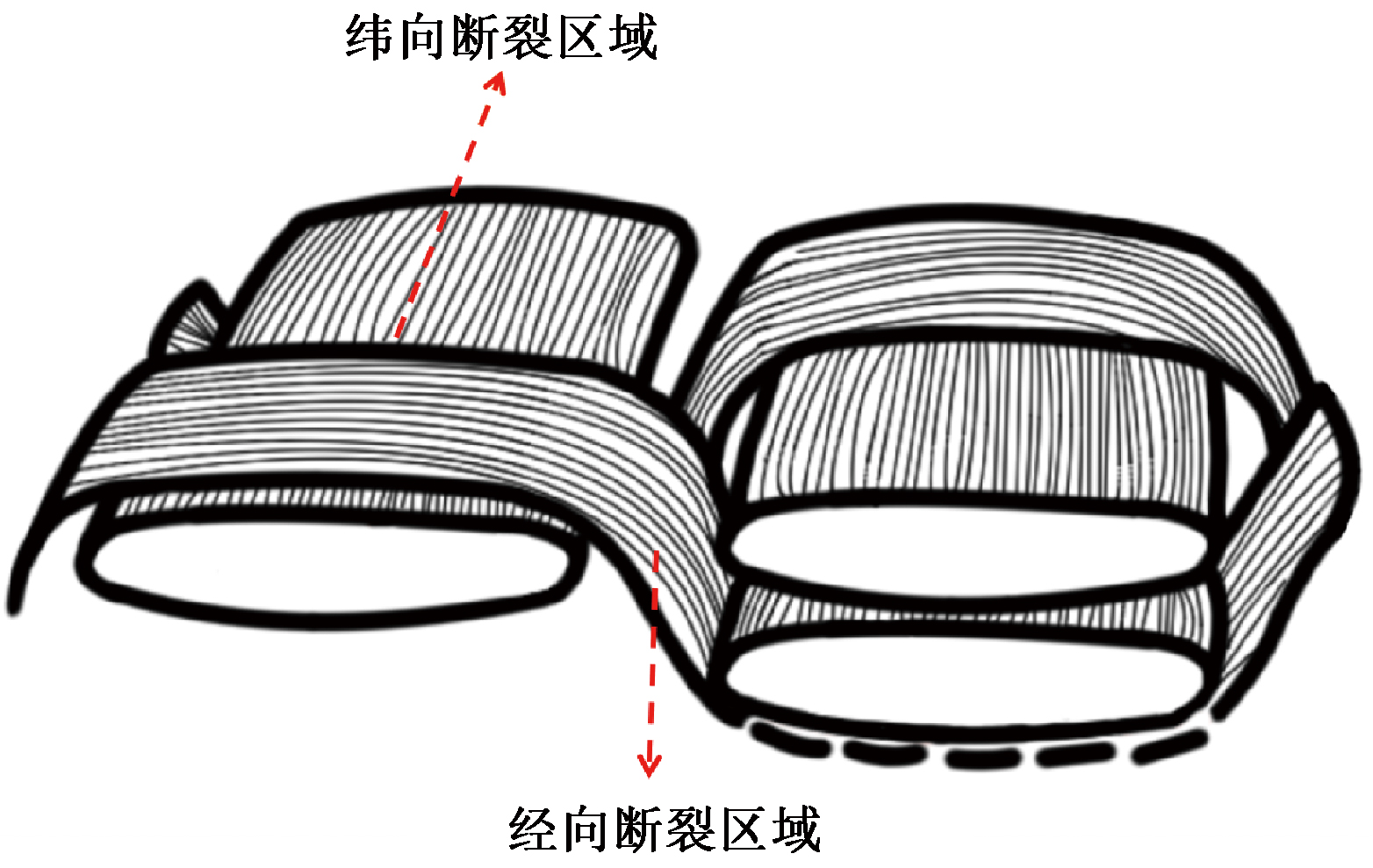
为准确高效预测高性能三维机织复合材料的结构设计与性能,设计了2种经纬向紧度比(2∶1和1∶1)的芳纶三维浅交弯联机织物,并采用真空辅助成型工艺制备芳纶/环氧树脂三维浅交弯联机织复合材料,结合拉伸实验与损伤形貌分析,系统探究经纬向紧度比对三维浅交弯联机织复合材料拉伸性能的影响。实验结果表明,当经纬向紧度比从2∶1变为1∶1时,芳纶/环氧树脂三维浅交弯联机织复合材料的经向拉伸强度从364 MPa降至145MPa,模量从628 MPa降至279 MPa,纬向拉伸强度从186 MPa增至545 MPa,模量从545 MPa增至1 057 MPa。经纬向紧度比可通过调控纱线交织状态、纤维体积含量及界面结合效应,形成差异化的载荷传递路径与失效模式。
中图分类号:
| [1] | 陈利, 赵世博, 王心淼. 三维纺织增强材料及其在航空航天领域的应用[J]. 纺织导报, 2018(S1): 80-87. |
| CHEN Li, ZHAO Shibo, WANG Xinmiao. Development and application of 3D textile reinforcements in the aerospace field[J]. China Textile Leader, 2018(S1): 80-87. | |
| [2] |
MA B L, CAO X F, FENG Y, et al. A comparative study on the low velocity impact behavior of UD, woven, and hybrid UD/woven FRP composite laminates[J]. Composites Part B: Engineering, 2024, 271: 111133.
doi: 10.1016/j.compositesb.2023.111133 |
| [3] | 顾伯洪, 孙宝忠. 纺织结构复合材料冲击动力学[M]. 北京: 科学出版社, 2012: 29-54. |
| GU Bohong, SUN Baozhong. Impact dynamics of textile structure composites[M]. Beijing: Science Press, 2012: 29-54. | |
| [4] | 胡慧娜, 裴鹏英, 胡雨, 等. 三维机织物的分类、性能及织造[J]. 纺织导报, 2017(12): 26-30. |
| HU Huina, PEI Pengying, HU Yu, et al. Three-dimensional woven fabric: classification, properties and production[J]. China Textile Leader, 2017(12): 26-30. | |
| [5] |
LI M R, WANG P, BOUSSU F, et al. A review on the mechanical performance of three-dimensional warp interlock woven fabrics as reinforcement in compos-ites[J]. Journal of Industrial Textiles, 2022, 51(7): 1009-1058.
doi: 10.1177/1528083719894389 |
| [6] |
WANG N, WEN W D, CHANG Y P, et al. Quasi-static mechanical behavior of 2.5D woven variable thickness composites[J]. Composite Structures, 2024, 329: 117759.
doi: 10.1016/j.compstruct.2023.117759 |
| [7] |
DAI S, CUNNINGHAM P R, MARSHALL S, et al. Influence of fibre architecture on the tensile, compressive and flexural behaviour of 3D woven composites[J]. Composites Part A: Applied Science and Manufacturing, 2015, 69: 195-207.
doi: 10.1016/j.compositesa.2014.11.012 |
| [8] |
ABTEW M A. A comprehensive review on advancements, innovations and applications of 3D warp interlock fabrics and its composite materials[J]. Composites Part B: Engineering, 2024, 278: 111395.
doi: 10.1016/j.compositesb.2024.111395 |
| [9] | 曹海建, 钱坤, 魏取福, 等. 三维整体中空复合材料低速冲击性能[J]. 纺织学报, 2009, 30(10): 70-74. |
|
CAO Haijian, QIAN Kun, WEI Qufu, et al. Low-velocity impact property of 3-D integrated hollow sandwich composites[J]. Journal of Textile Research, 2009, 30(10): 70-74.
doi: 10.1177/004051756003000111 |
|
| [10] | 罗超, 曹海建, 黄晓梅. 不同芯材高度三维夹芯复合材料抗低速冲击响应的数值模拟[J]. 纺织学报, 2019, 40(8): 48-54. |
|
LUO Chao, CAO Haijian, HUANG Xiaomei. Numerical simulation on low velocity impact response of three-dimensional sandwich composites with different core height[J]. Journal of Textile Research, 2019, 40(8): 48-54.
doi: 10.1177/004051757004000108 |
|
| [11] | 郭东军, 曹海建, 王建波, 等. 不同纤维间距复合材料弯曲性能有限元分析[J]. 塑料, 2022, 51(2): 113-117, 122. |
| GUO Dongjun, CAO Haijian, WANG Jianbo, et al. Finite element analysis of bending performance of composite with different fiber spacing[J]. Plastics, 2022, 51(2): 113-117, 122. | |
| [12] | MA Z Y, ZHANG P Z, ZHU J X. Comparative studies on the effect of fabric structure on mechanical properties of carbon fiber/epoxy composites[J]. Journal of Industrial Textiles, 2022, 51(S1): 1348S-1371S. |
| [13] | 赵世波, 陈利, 高梓越, 等. 经纱路径对三维机织复合材料弯曲性能的影响[J]. 复合材料学报, 2024, 42(9): 4817-4825. |
| ZHAO Shibo, CHEN Li, GAO Ziyue, et al. Effect of warp yarn paths on bending properties of 3D woven composites[J]. Acta Materiae Compositae Sinica, 2024, 42(9): 4817-4825. | |
| [14] | 许春婷, 曹海建, 高强, 等. 等离子体处理工艺对UHMWPE纤维拉伸性能的影响[J]. 上海纺织科技, 2017, 45(2): 37-39. |
| XU Chunting, CAO Haijian, GAO Qiang, et al. Influence of plasma treatment on tensile strength of UHMWPE fibers[J]. Shanghai Textile Science & Technology, 2017, 45(2): 37-39. | |
| [15] |
KIM H, PARK J. Prediction of mechanical properties for three-dimensional woven composites considering interference between tows[J]. Advanced Composite Materials, 2023, 32(1): 70-96.
doi: 10.1080/09243046.2022.2076023 |
| [16] | 杨志, 焦亚男, 谢军波, 等. 纺织复合材料纤维预制体力学性能测试方法研究进展[J]. 复合材料学报, 2022, 39(4): 1511-1533. |
| YANG Zhi, JIAO Yanan, XIE Junbo, et al. Research progress in testing methods of mechanical properties of textile composite fiber preforms[J]. Acta Materiae Compositae Sinica, 2022, 39(4): 1511-1533. | |
| [17] |
WANG Z J, ZHAO W H, WANG F, et al. Tensile behavior and failure mechanism of 3D woven fabric reinforced aluminum composites[J]. International Journal of Mechanical Sciences, 2023, 244: 108043.
doi: 10.1016/j.ijmecsci.2022.108043 |
| [18] |
NEALE G, DAHALE M, YOO S, et al. Improved crush energy absorption in 3D woven composites by pick density modification[J]. Composites Part B: Engineering, 2020, 192: 108007.
doi: 10.1016/j.compositesb.2020.108007 |
| [19] | 俞巧珍, 熊杰. 织物密度对水泥复合材料界面粘结的影响[J]. 纺织学报, 2005, 26(1): 17-19. |
| YU Qiaozhen, XIONG Jie. Influence of fabric density on bonding of the fabric reinforced cement composites[J]. Journal of Textile Research, 2005, 26(1): 17-19. | |
| [20] | 姚穆. 纺织材料学[M]. 2版. 北京: 中国纺织出版社, 1990: 491. |
| YAO Mu. Textile materials science[M]. 2nd ed. Beijing: China Textile & Apparel Press, 1990: 491. | |
| [21] |
TAMAKUWALA V R. Manufacturing of fiber reinforced polymer by using VARTM process: a review[J]. Materials Today: Proceedings, 2021, 44: 987-993.
doi: 10.1016/j.matpr.2020.11.102 |
| [22] | 李聪聪, 钟林, 金礼月, 等. 深角联芳纶1414织物复合材料拉伸性能研究[J]. 棉纺织技术, 2023, 51(4): 57-63. |
| LI Congcong, ZHONG Lin, JIN Liyue, et al. Study on tensile property of deep angle aramid 1414 3D fabric composite material[J]. Cotton Textlie Technology, 2023, 51(4): 57-63. | |
| [23] |
WANG B, WU Y B, GUO H B, et al. Investigation on off-axis tensile mechanical behaviors of 2D-C/SiC composites[J]. Journal of Materials Engineering, 2017, 45(7): 91-96.
doi: 10.11868/j.issn.1001-4381.2015.000582 |
| [24] |
KALANTAR J, DRZAL L T. The bonding mechanism of aramid fibres to epoxy matrices[J]. Journal of Materials Science, 1990, 25(10): 4186-4193.
doi: 10.1007/BF00581071 |
| [25] |
DAHALE M, NEALE G, LUPICINI R, et al. Effect of weave parameters on the mechanical properties of 3D woven glass composites[J]. Composite Structures, 2019, 223: 110947.
doi: 10.1016/j.compstruct.2019.110947 |
| [26] | 冼杏娟, 李端义. 复合材料破坏分析及微观图谱[M]. 北京: 科学出版社, 1993: 90. |
| XIAN Xingjuan, LI Duanyi. Failure analysis and micrograph of composite materials[M]. Beijing: Science Press, 1993: 90. |
| [1] | 贾琳, 杨奥杰, 张芳铖, 王西贤, 张海霞. 共聚型聚酰亚胺纳米纤维膜的制备及其性能[J]. 纺织学报, 2025, 46(08): 37-44. |
| [2] | 张一帆, 安柳絮, 闫英杰, 邹齐, 刘晓志, 郭俊华, 陈利. 三维机织复合材料T型接头的拉伸性能[J]. 纺织学报, 2025, 46(07): 128-135. |
| [3] | 江文杰, 郭明瑞, 高卫东. 棉/涤纶短纤皮芯纱及其织物的力学性能[J]. 纺织学报, 2025, 46(03): 49-55. |
| [4] | 敖利民, 潘柳菲, 唐雯, 方瑞峰. 四轴系喂入包覆纱的复合结构与性能[J]. 纺织学报, 2025, 46(01): 52-61. |
| [5] | 李天宇, 沈伟, 陈立峰, 竺铝涛. 三维角联锁机织复合材料的制备及其弯曲压缩失效机制[J]. 纺织学报, 2024, 45(08): 183-189. |
| [6] | 张琦, 屠佳妮, 张燕婷, 丁宁宇, 郝佳姝, 彭诗语. 经编贾卡间隔鞋面材料提花层结构对其拉伸性能的影响[J]. 纺织学报, 2024, 45(08): 150-157. |
| [7] | 李久刚, 金鑫鹏, 邓文韬, 秦雪, 张贺, 黄丛, 刘可帅. 氧化铝纱线的合股数与捻度对其强度的影响[J]. 纺织学报, 2023, 44(10): 48-52. |
| [8] | 张华, 刘帅, 杨瑞华. 长丝包覆复合包芯纱拉伸性能建模研究[J]. 纺织学报, 2023, 44(08): 57-62. |
| [9] | 周濛濛, 蒋高明. 玻璃纤维衬经衬纬纬编管状织物的制备及其拉伸性能[J]. 纺织学报, 2023, 44(07): 132-140. |
| [10] | 成悦, 左涵, 安琪, 李大伟, 张伟, 付译鋆. 非可吸收倒刺缝合线握持力及其影响因素[J]. 纺织学报, 2023, 44(06): 66-71. |
| [11] | 陈小明, 任志鹏, 郑宏伟, 吴凯杰, 苏星兆, 陈利. 基于预/主刺协同的针刺织物力学性能提升方法[J]. 纺织学报, 2023, 44(04): 100-107. |
| [12] | 孙晓伦, 陈利, 张一帆, 李默涵. 开孔三维机织复合材料的拉伸性能[J]. 纺织学报, 2022, 43(08): 74-79. |
| [13] | 谷元慧, 周红涛, 张典堂, 刘景艳, 王曙东. 碳纤维增强编织复合材料圆管的扭转力学性能及其损伤机制[J]. 纺织学报, 2022, 43(03): 95-102. |
| [14] | 刘明洁, 林婧, 关国平, BROCHU G, GUIDOIN R, 王璐. 典型纺织基人工韧带及其移出物结构与力学性能[J]. 纺织学报, 2020, 41(11): 66-72. |
| [15] | 刘俊岭, 孙颖, 陈利. 含变异结构的三维机织复合材料的轴向拉伸性能[J]. 纺织学报, 2019, 40(12): 162-168. |
|
||
 京公网安备11010502044800号